

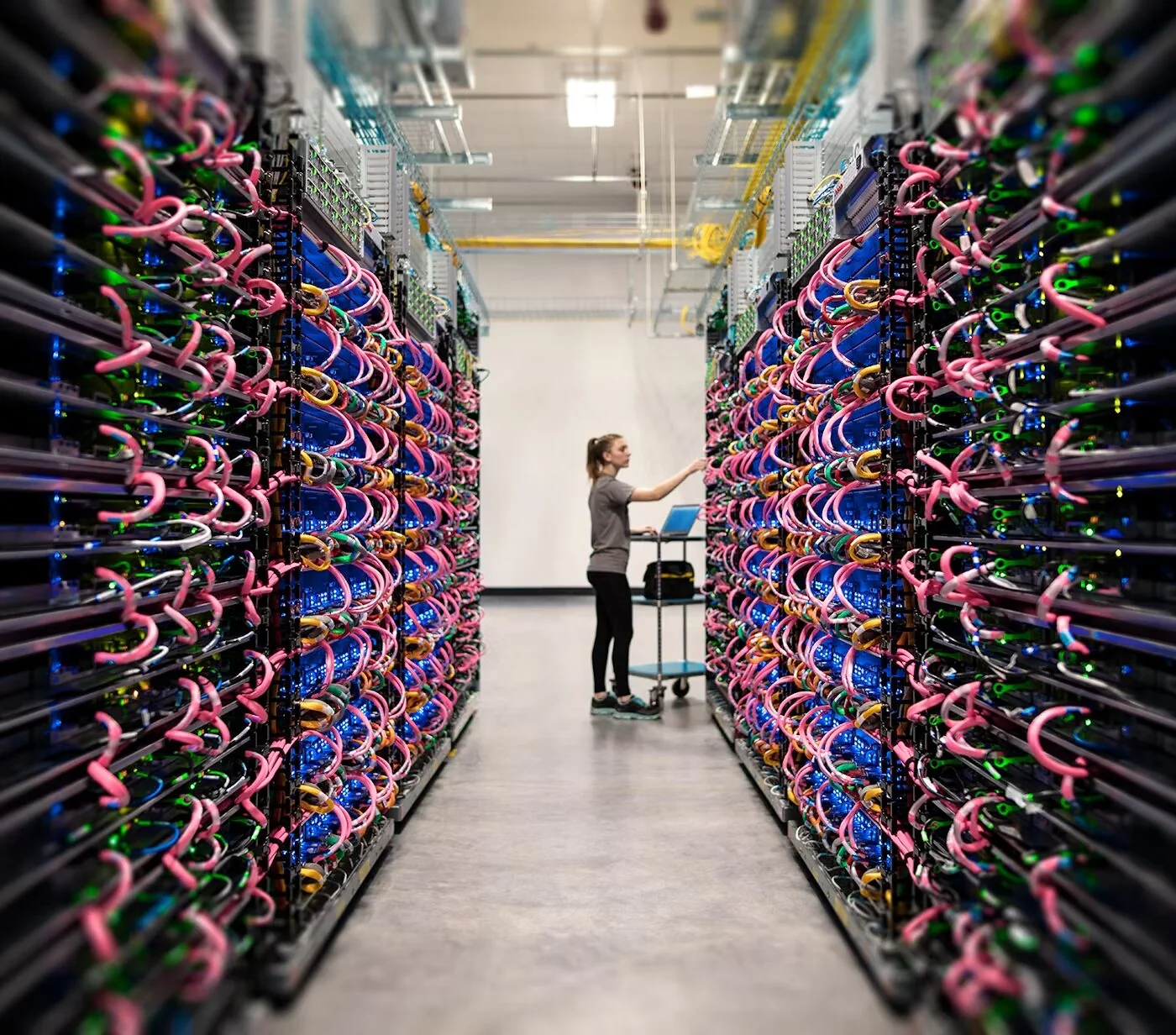
Methodology and conventions
How the database counts, selects and dates each value.
Scope
An operation counts the computation on the server and the data centre; the rest is documented separately.
 Documented separatelyManufactureof servers and chips1.31tCO2eThe motherboard of 8 H100 GPUs, according to NvidiaManufacturing a server
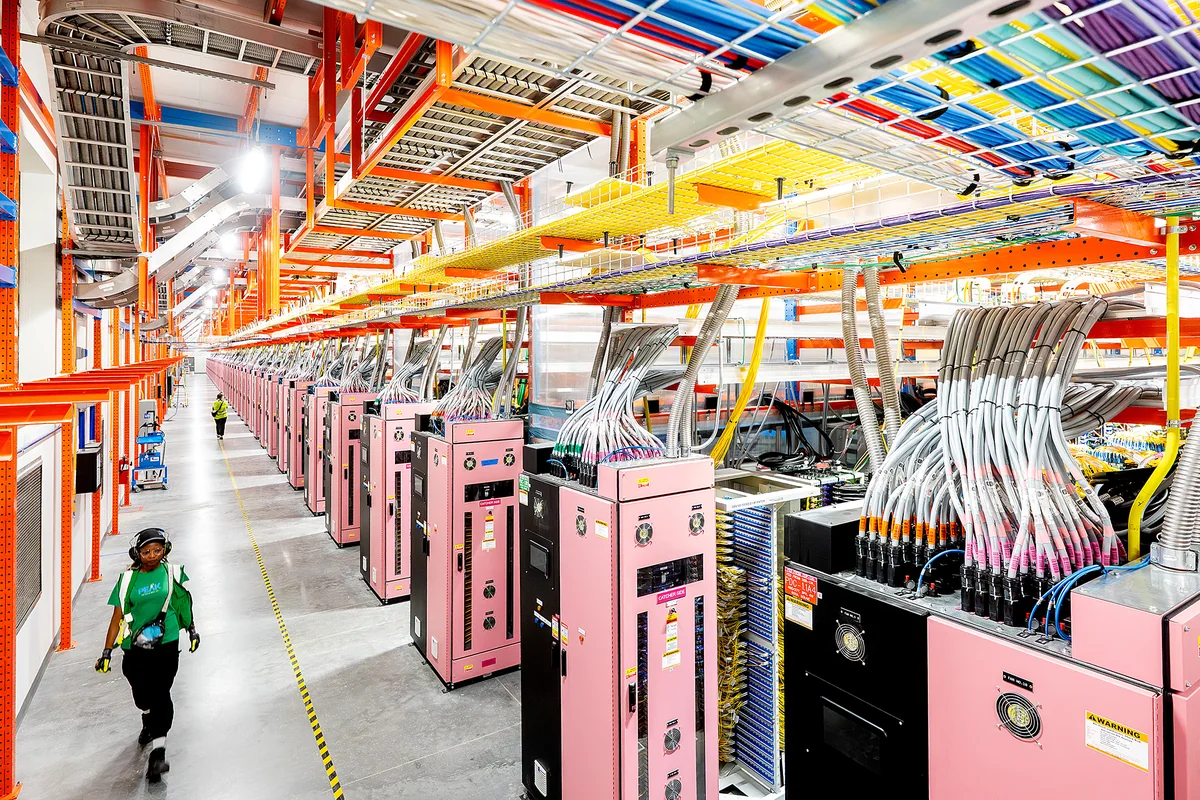 Documented separatelyTrainingof the model552tCO2eper training run, GPT-3, 2020Training a model
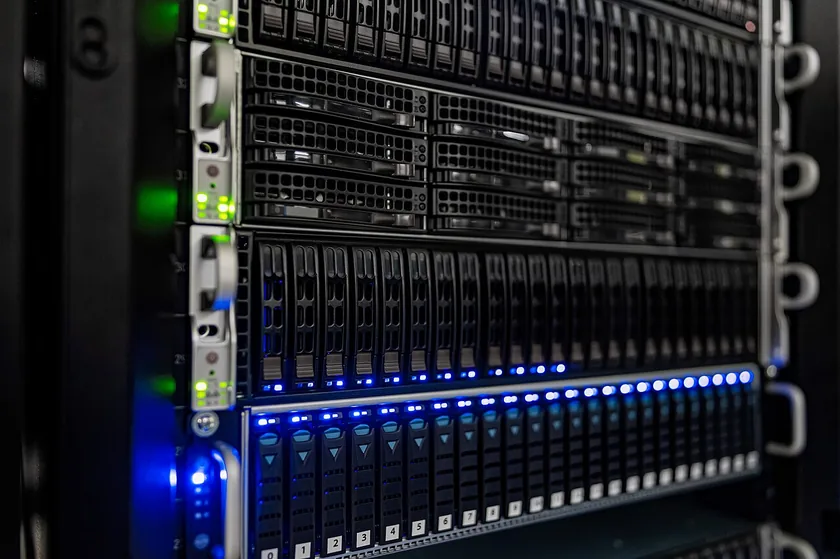 Counted in an operationComputation on the serverchips, host, spare capacity900Whper GPU hourH100 hour
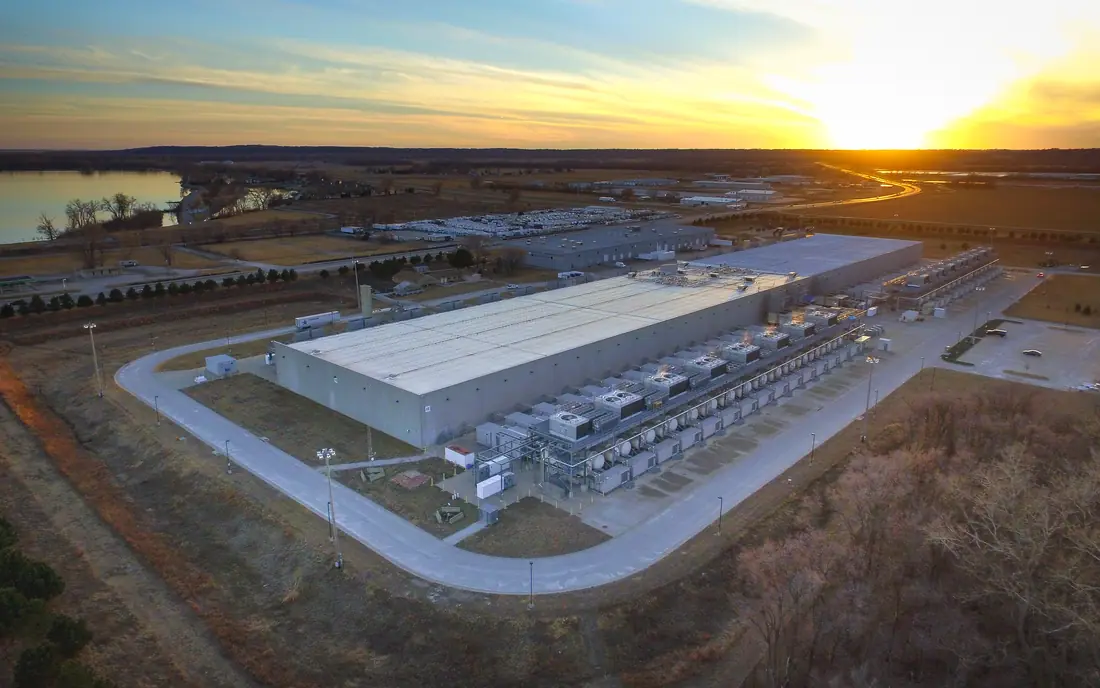 Counted in an operationData centrecooling and losses× 1.10on the electricity of the serversPUE of the data centre
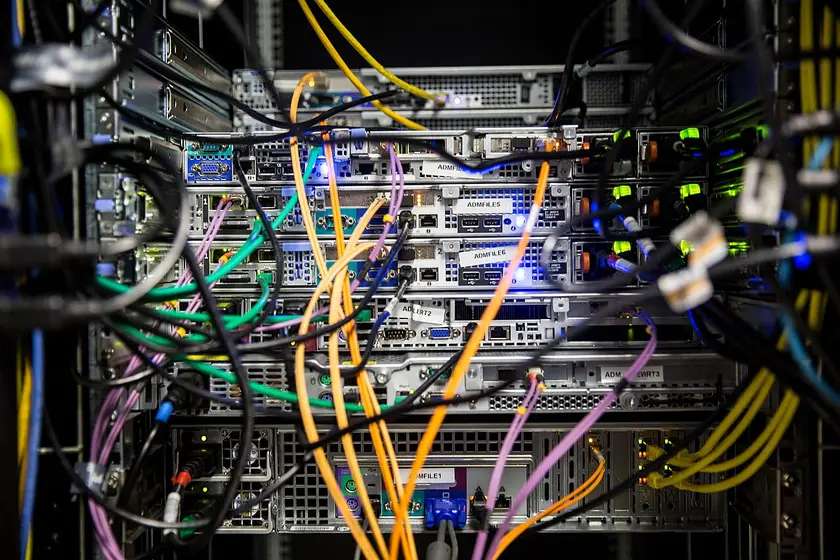 Documented separatelyNetworkinternet, up to the userNo entry in the database
 Documented separatelyDevicethe user's deviceNo entry in the database
Counted and not counted, in detail
The computation of the answer on the servers (the chips, the host, the spare machines) and the data centre that houses them (convention C3). CO2e comes from the electricity and the location of the servers.
The manufacture of servers and chips, model training, the network and the user's device. Each page says so in full; where a source measures them, they have their own entries, which can be compared and are not silently added together: Manufacturing a server, Chip manufacturing, Training a model.
Statuses
From the most reliable to the most fragile
Each value carries a status that says what it rests on; an entry with no selected value is not published.
Database entries by status
150 entries published, from the most reliable status to the most fragile
Definition of each status
| measured | a production measurement, with the same scope as the database, published by an operator or a research team; 7 entries |
|---|---|
| estimated | a model or calculation by the database from measured values; 114 entries |
| published | a figure taken as is from its source, without calculation (the sector, the grid factors); 26 entries |
| convention | a value set by the database, written down, dated, with its alternatives (the data centre, the cache, the typical query); 3 entries |
| working value | a value taken from a source that has not yet gone through the hub's verification chain; 0 entry |
For figures published by others, 6 words: measured, estimated, calculation, published, discarded, outdated; and 3 scopes: same scope, other scope, check (the check is the recomposition of the database from its factors).
Selected value, range, location
Example: quick question
Among the published figures, measurements with the same scope take priority; the range runs from the lowest to the highest of these readings, and the servers are in the default world.
Published values and selected value
Quick question, electricity in Wh; 4 readings with the same scope
Emissions by server location
Quick question, 0.3 Wh, in gCO2e
The 5 selection rules
| The rule | production measurements and models with the same scope take precedence; the database's own calculation from its factors (tokens, data centre) serves as a check, and the gap is displayed |
|---|---|
| The range | the minimum and maximum of the readings with the same scope; failing that, the range published by the source; failing that, none. Never an invented range |
| The location | the world by default (458 gCO2e/kWh); 11 countries and zones; a single source for all (Ember 2025, life cycle, according to the grid of the location, known as location-based), because a ratio between two countries only makes sense within a single source |
| Display | a calculated value is rounded to two significant figures, a published value is reproduced with the precision of its source; the calculation keeps full precision (convention C8) |
| The sector | a published total (a country, a company, the world) is reproduced as it stands, with its year; it is not converted into CO2e with an average factor and is not added to calculated values |
Water
Cooling, electricity, life cycle · convention C6
Water is counted within three scopes, each with its own readings, which are never added together without saying so.
Water consumed per kWh, on site and at the power plant
Published readings, in litres per kWh; the on-site reference value is 1.15 L per kWh, not yet applied to uses
On site, for coolingwater consumed by the data centre · On-site water
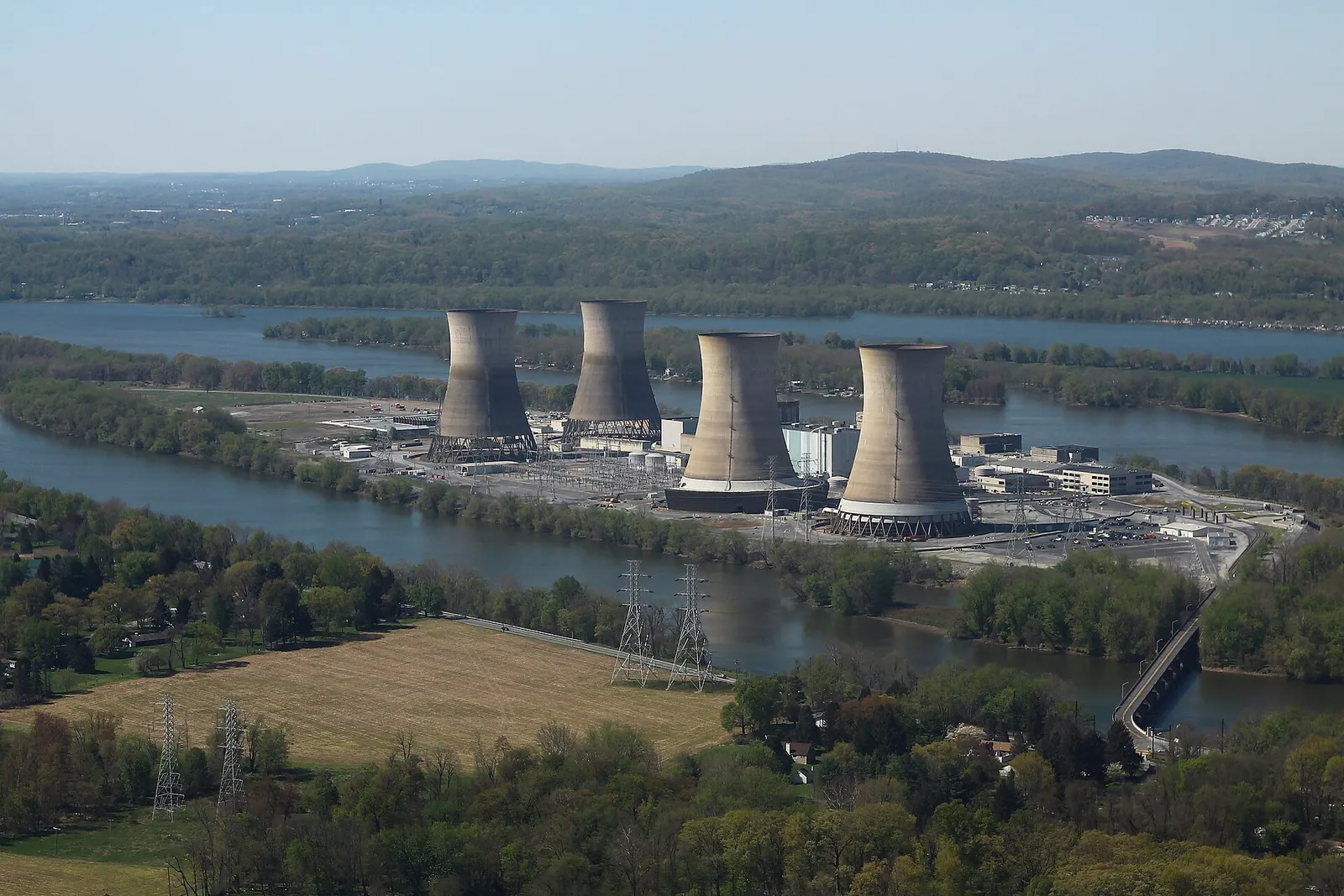
At the power plant, to generate the electricitywater consumed by generation type · Water for electricity generation
Over the whole life cycle, manufacturing includedanother unit, published by a provider · Le Chat, LCA
45 mLper response, Mistral AI, LCA of Large 2
Conventions
What the database sets itself, when no source settles the matter, is written with its date, its reason and its alternatives.
- C1
The standard queryA query counts 100 tokens read and 400 written
100 read, 400 written - C2
The working day and yearA working year counts 220 days and 44 weeks, a personal year 365 days; the task lists of occupations give, as a median, about 2 requests to AI per working day at low adoption, 6 at standard adoption, 21 at intensive adoption, excluding code suggestions
220 days; about 2, 6 and 21 requests per day - C3
The data centreServer electricity is multiplied by 1.10 for the data centre
× 1.10 - C4
The cacheA token re-read from the cache costs 10% of a token read
10 % - C5
The default locationWithout other information, the servers are in the world, at the world average electricity
world - C6
The three watersOn-site water, power plant water and life cycle water are never added together without saying so; the factor remains to be settled
to be settled - C7
Electricity, location-based, on a life cycle basisThe kilowatt-hour is that of the servers' country, on a life cycle basis, from a single source for all countries
Ember and Our World in Data, 2025 - C8
Two significant figuresA calculated value is rounded to two significant figures, a published value is reproduced with the precision of its source; the calculation keeps full precision
2 figures - C9
Calibration against production measurementsThe tokens of the tasks are multiplied by a coefficient: the quick question recomposed from the machine's factors is brought back to its selected value, that of the consensus of published figures (one production measurement by Google, two estimates by Epoch AI and Microsoft, one statement by OpenAI). The code agent hour is not calibrated: its tokens, mostly context re-read from the cache, do not resemble those of a question
× 0.656 (0.3 Wh selected for 0.458 Wh recomposed)
Reason and alternatives for the 9 conventions
C1 The standard query : 100 read, 400 written
A query counts 100 tokens read and 400 written.
Why: Providers do not all say the same thing about a "query"; we set a single definition, with input and output kept separate. Alternatives: 410 and 90 (Watershed's calibration); 1,000 and 400. Since 31 October 2026.
C2 The working day and year : 220 days; about 2, 6 and 21 requests per day
A working year counts 220 days and 44 weeks, a personal year 365 days; the task lists of occupations give, as a median, about 2 requests to AI per working day at low adoption, 6 at standard adoption, 21 at intensive adoption, excluding code suggestions.
Why: Readable benchmarks, drawn from the baskets and not set alongside them. Alternatives: 365 days for personal use; the profiles of the previous version (5, 20 and 80 queries per day), replaced by the task lists. Since 2 November 2026.
C3 The data centre : × 1.10
Server electricity is multiplied by 1.10 for the data centre.
Why: Watershed's default factor for a large operator, consistent with recent data centres; Watershed uses 1.56 for an unknown operator; as Watershed's factors are derived from a Google measurement that already contains its data centre, this × 1.10 may count about 8% twice, a gap below the precision of the factors. Alternatives: × 1.72 from the chips to the full service at Google, never to be combined. Since 31 October 2026.
C4 The cache : 10 %
A token re-read from the cache costs 10% of a token read.
Why: Agents re-read their context at every step; no provider publishes this cost. Alternatives: bounds of 1% and 25%. Since 31 October 2026.
C5 The default location : world
Without other information, the servers are in the world, at the world average electricity.
Why: We almost never know where a query runs. Alternatives: the United States, where most large assistants run. Since 31 October 2026.
C6 The three waters : to be settled
On-site water, power plant water and life cycle water are never added together without saying so; the factor remains to be settled.
Why: Published figures mix three different waters. Alternatives: 1.3 or 3.67 L/kWh for France depending on the source. Since 31 October 2026.
C7 Electricity, location-based, on a life cycle basis : Ember and Our World in Data, 2025
The kilowatt-hour is that of the servers' country, on a life cycle basis, from a single source for all countries.
Why: A ratio between two countries only makes sense within a single source. Alternatives: market-based, with purchase contracts, displayed alongside when published. Since 31 October 2026.
C8 Two significant figures : 2 figures
A calculated value is rounded to two significant figures, a published value is reproduced with the precision of its source; the calculation keeps full precision.
Why: The precision displayed must not exceed that of the sources. Since 31 October 2026.
C9 Calibration against production measurements : × 0.656 (0.3 Wh selected for 0.458 Wh recomposed)
The tokens of the tasks are multiplied by a coefficient: the quick question recomposed from the machine's factors is brought back to its selected value, that of the consensus of published figures (one production measurement by Google, two estimates by Epoch AI and Microsoft, one statement by OpenAI). The code agent hour is not calibrated: its tokens, mostly context re-read from the cache, do not resemble those of a question.
Why: Watershed's per-token factors are themselves derived from Google's measurement (0.24 Wh for the median text query of the Gemini app, related to a query of about 500 tokens, a written token costing 3 times a read token). Recomposed with the database's split (100 tokens read, 400 written), the quick question gives 0.458 Wh; the gap with 0.3 Wh is mainly due to this split. The selected value, 0.3 Wh, also draws on Epoch AI, Microsoft and OpenAI. A single coefficient for now, to be refined by factor family. Alternatives: the raw factors, without calibration, under the "raw factors" setting. Since 2 November 2026.
Calculating a case without an entry
Formula and calculator
A use without an entry is calculated from the nearest entry, with the formula below; the calculator does this for the quick question.
- Electricity of the case = selected value × (database calculation for this case ÷ database calculation for the default case)
- CO2e = electricity × location factor ÷ 1,000
Emissions of the case
0.62 gCO2e
15 Wh of electricity, servers in France
50 × 0.3 Wh = 15 Wh0.015 kWh × 41 gCO2e per kWh = 0.62 gCO2e
The default values: the standard query (C1), 220 days; about 2, 6 and 21 requests per day (C2), the data centre (C3), the cache (C4), the world (C5). The grid factors: Grid electricity.
Reading by an AI
An AI finds the entry, reads its page, calculates its case with the formula above, and cites the database version.
- 1
Find the entryThe table and its synonyms
- 2
Read the entryThe value, the unit, the scope (counted, not counted), the location, the status, the sources
- 3
CalculateWith the parameters (location, quantity, duration) and the formula above
The filesThe JSON and Markdown of each entry, the database CSV, llms.txt
The 3 steps and the files
| Find the entry | the table and its synonyms: "prompt", "query", "a question to ChatGPT" lead to IA-0042; each entry has a stable identifier and a short link, projetcelsius.com/en/ai/database/IA-0042/ |
|---|---|
| Read the entry | the value, the unit, the scope (counted, not counted), the location, the status, the sources: the entry page of each page, or its JSON |
| Calculate | with the parameters (location, quantity, duration) and the formula above; a case is cited with its parameters, the database version (0.4) and the engine version (0.3.1) |
| The files | the JSON and Markdown of each entry, the database CSV, llms.txt |
poser-une-question-rapide.json
{
  "id": "IA-0042",
  "version": "0.3",
  "date": "2026-11-02",
  "designation": "Poser une question rapide",
  "unite": "1 question",
  "statut": "estimé",
  "valeur": {
    "electricite": {
      "valeur": 0.3,
      "basse": 0.24,
      "haute": 0.34,
      "unite": "Wh",
      "fourchette": "releves",
      "publie": false
    }
  }
  …
}
Versions
Version 0.4 · 13 November 2026
A value never changes without its changelog line, and its page flags it for 30 days.
Changelog lines per day
221 changes and 24 address changes recorded since the database was created
Contents of a version and citation
| Current version | 0.4 of 13 November 2026, engine 0.3.1 |
|---|---|
| What a version freezes | each entry carries its version and date; a value never changes without its changelog line (before, after, why, source), and the page flags it for 30 days. A calculated value also changes with the entries it depends on: the citation of each entry therefore carries the database version |
| Citing a version | Projet Celsius (2026). AI Impact Database, version 0.4 of 13 November 2026. https://projetcelsius.com/en/ai/database/. CC BY 4.0 licence. |
| Published versions | 0.1, 0.3, then 0.4 |
Photos: header, Google, press photo, cited document ; manufacturing and life cycle, Mister rf, Wikimedia Commons, CC BY-SA 4.0 ; training, Amazon (AWS), aboutamazon.com, cited document ; server, NOIRLab/NSF/AURA/T. Slovinský, Wikimedia Commons, CC BY 4.0 ; data centre, Chad Davis, Wikimedia Commons, CC BY 2.0 ; network, J. Barande, École polytechnique, Wikimedia Commons, CC BY-SA 2.0 ; device, Jernej Furman, Wikimedia Commons, CC BY 2.0 ; power plant, formulanone, Wikimedia Commons, CC BY-SA 2.0.