

Analyses
Methodological questions, myths checked against their sources, signed positions. Every figure links to its entry and its source.
Hub publications
 Analysis
 Climate Why do estimates of AI's impact differ? Calculated with French electricity, a question to an AI emits 0.012 gram of CO2e; Mistral AI publishes 1.14 gram, more than 90 times as much. Its water use ranges from 0.26 to 45 millilitres depending on the published measurements. These figures are all accurate; they do not cover the same scope. Read the analysis →
 Analysis
 SocietyDoes AI really make us more productive at work?AI saves time for the people who use it, yet that time is almost impossible to find in the accounts of companies and countries. Speaking to French MPs, the head of Mistral AI unintentionally offered one way of explaining the gap.→
 AnalysisClimateHow could AI amplify the climate crisis?One study sets out 2 climate futures for AI: 11% more cumulative CO2 from 2025 to 2040, or 1.4% less. The amount of electricity consumed explains only part of the difference. The rest depends on where that electricity comes from, what AI is used for and its effects on public debate.→
 AnalysisSocietyIs AI making us stupid?None of the studies we have found measures a decline in intelligence among people who use AI. Randomised trials measure a narrower effect: pupils and students who work with an AI that gives the answers get worse results, which did not happen with an AI set up to guide. The studies that made the headlines are among the weakest.→
 Analysis
 UsesWhat is the footprint of my AI use over a year?Counting the electricity of the servers that answer it, a year of regular personal AI use amounts to about 340 gCO2e, or 0.004% of the carbon footprint of a person in France. Depending on the profile, the year ranges from 58 g for occasional use to 180 kg for a developer who hands tasks to agents every day, and the published logs of one intensive agent user reach 4.5 to 6% of a French person's footprint. The difference depends far more on the tasks given to AI than on the number of questions.→
 AnalysisSocietyWhat happens to entry-level workers when AI does their work?Since late 2022, companies have been hiring fewer entry-level workers in occupations where AI could do part of the work. In France, permanent-contract hiring of young people in these occupations has fallen by 28%, compared with 8% in the least exposed occupations, with no rise in departures; this fall does not appear in every country and its cause has not been established. Our reading: the most lasting risk is to training, because the tasks AI does best are often the ones through which beginners used to learn their trade.→
 AnalysisClimateHow do you account for AI in a Bilan Carbone®?In a Bilan Carbone®, AI is classified according to who runs the servers: a purchased service when a supplier runs them, electricity and hardware when the organisation does. Counted by use, the AI of an office-based company accounts for less than one hundredth of a percent of the total, about 30 times less than with the monetary ratio, which covers the provider's entire supply chain. Agents, AI sold as part of a product and in-house servers change the order of magnitude of this item.→
 AnalysisSocietyWhat happens to the data you give an AI?A conversation sent to an assistant stays on its provider's servers for anything from 72 hours to several years, depending on the assistant and the settings. In consumer versions, 6 of the 7 assistants we surveyed use it by default to train their models, and it may be read by people or used for advertising; most business plans exclude training. Court orders, safety review and what a model has already learned are largely beyond the reach of these settings.→
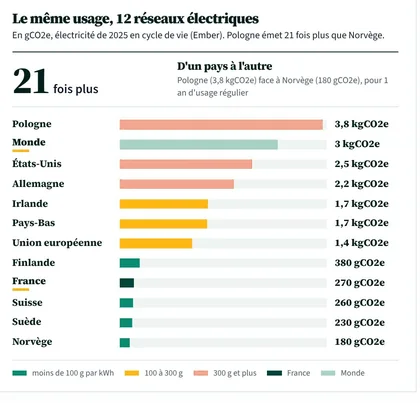
 AnalysisClimateCan AI be decarbonised?For an 2024 AI chip running on the average emission factor of Google's grid, 366 gCO2e per kWh, electricity like France's would cut the emissions of the same computation, manufacturing included, by a factor of nearly 5, and of nearly 7 with the smallest model sufficient for each task; switching to the European Union's average grid would remove only 38%. Model efficiency could remove more: Microsoft researchers consider a factor of 8 to 20 possible, without saying from what starting point, and Google cut the energy of the median Gemini query by a factor of 33 in one year. No lever brings AI down to zero, and these gains have not stopped the electricity consumption of data centres from rising.→
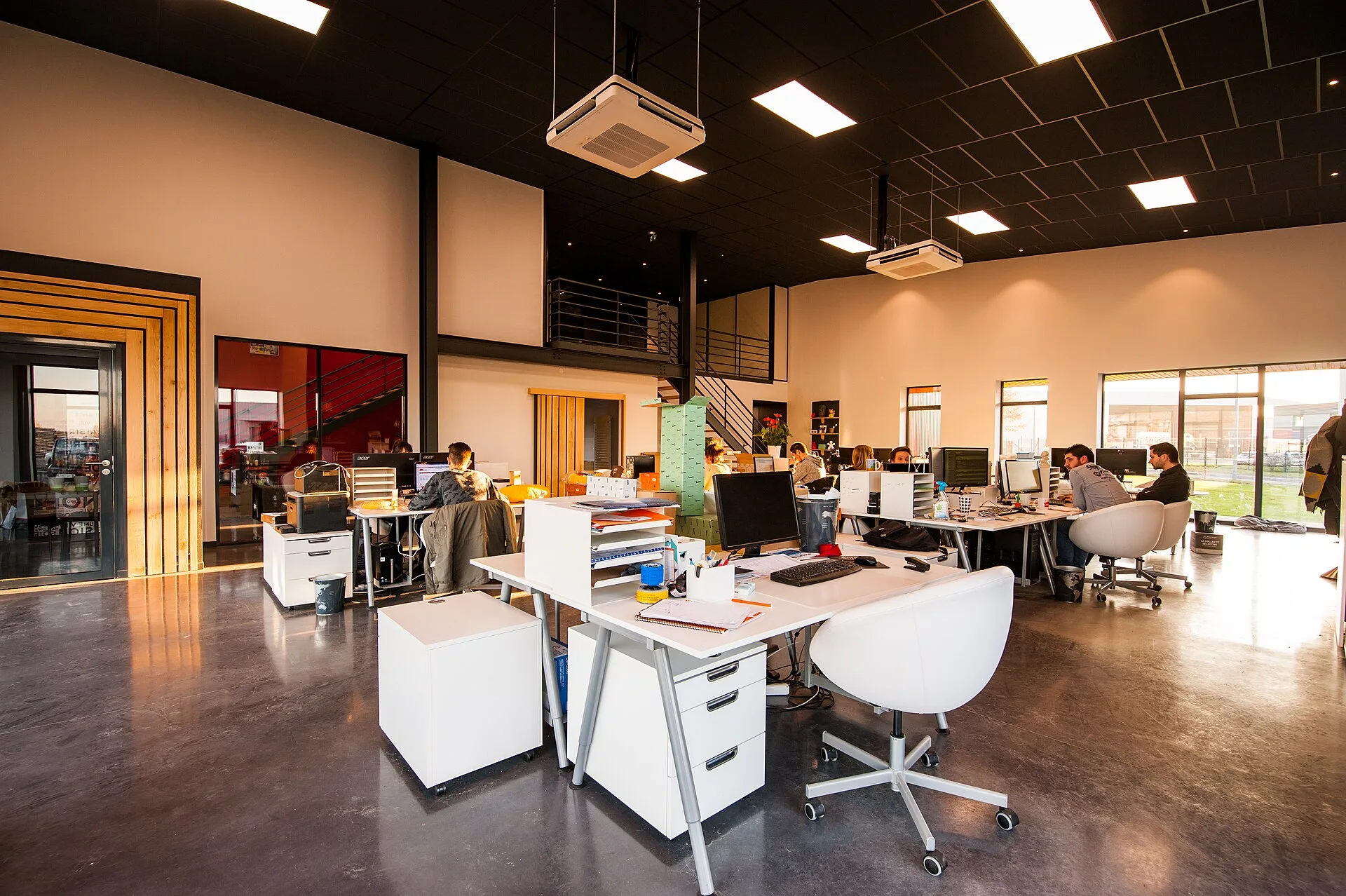 GuideUsesWhich AI use charter should you adopt?An AI use charter sets out which tools to use, which data must never be entered into them, who checks the answers, when to disclose the use of AI and how staff are trained. The 16 published charters we compared agree on data, checking answers and disclosing AI use, and 14 call for restraint in use; none converts the use it governs into electricity or emissions. The model charter proposed here brings their best rules together in 10 articles ready to copy, and adds that calculation.→
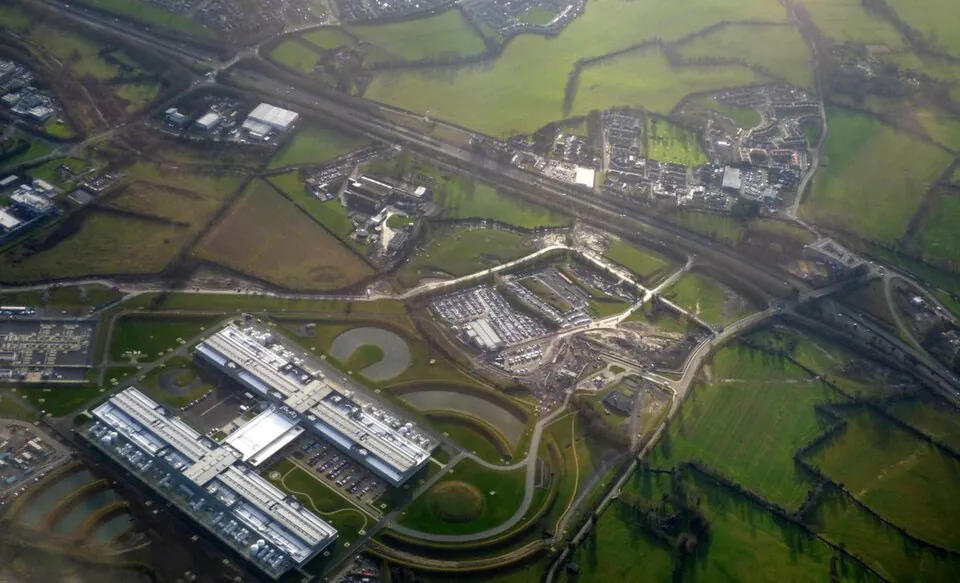 ViewpointSociety Surface AI and deep AI Public debate looks at the AI people can see, the AI of chat windows. Its footprint is decided almost entirely below the surface, in an AI with no interface that can only be detected through the electricity grid.
 →
 Where does this figure come from?Uses "A generated image is a phone charge" The comparison did the rounds of the media in late 2023. It came from a serious study, but from its preliminary version, from the most power-hungry generator, and from a phone charge counted as 12 Wh. →
 Where does this figure come from?Uses "A generated video uses 1 kWh" The figure has circulated since 2025, often attached to Sora. It comes from a real measurement, but one taken on a different, open model, in a particularly heavy version. Measurements of 7 generators range from 0.14 to 415 Wh. →
 Where does this figure come from?
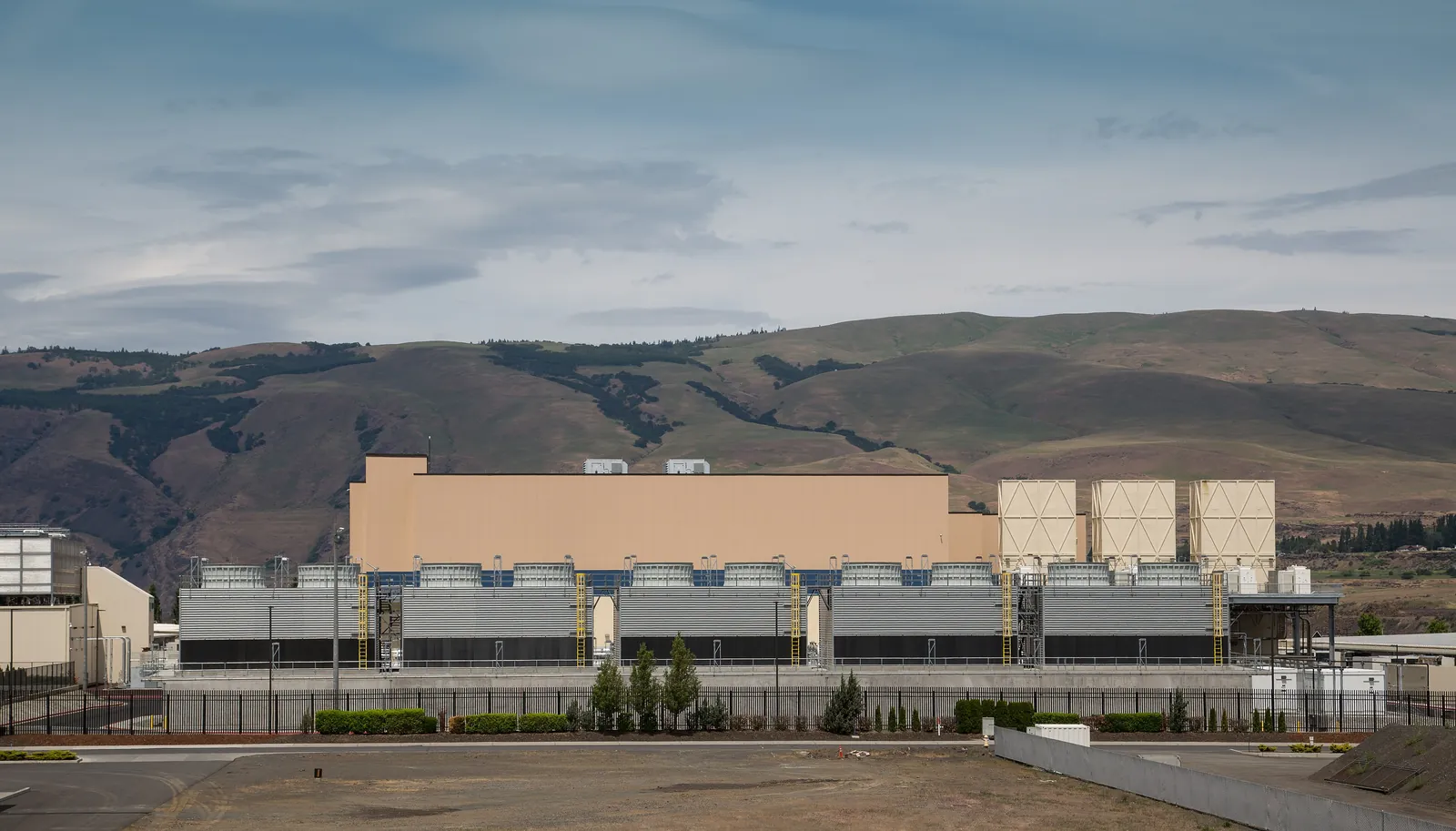
 Water "An email written by an AI is a bottle of water" The comparison comes from a paywalled Washington Post article (September 2024), produced with researchers: we could not check its figure, so we do not use it. The researchers' method is published, and providers have since measured the water used by a question. → Where does this figure come from?
 Electricity "By 2030, AI will consume as much as Japan" The comparison comes from the International Energy Agency. It is correct, with 2 caveats: it covers all data centres, not AI alone, and it is one scenario among several. →
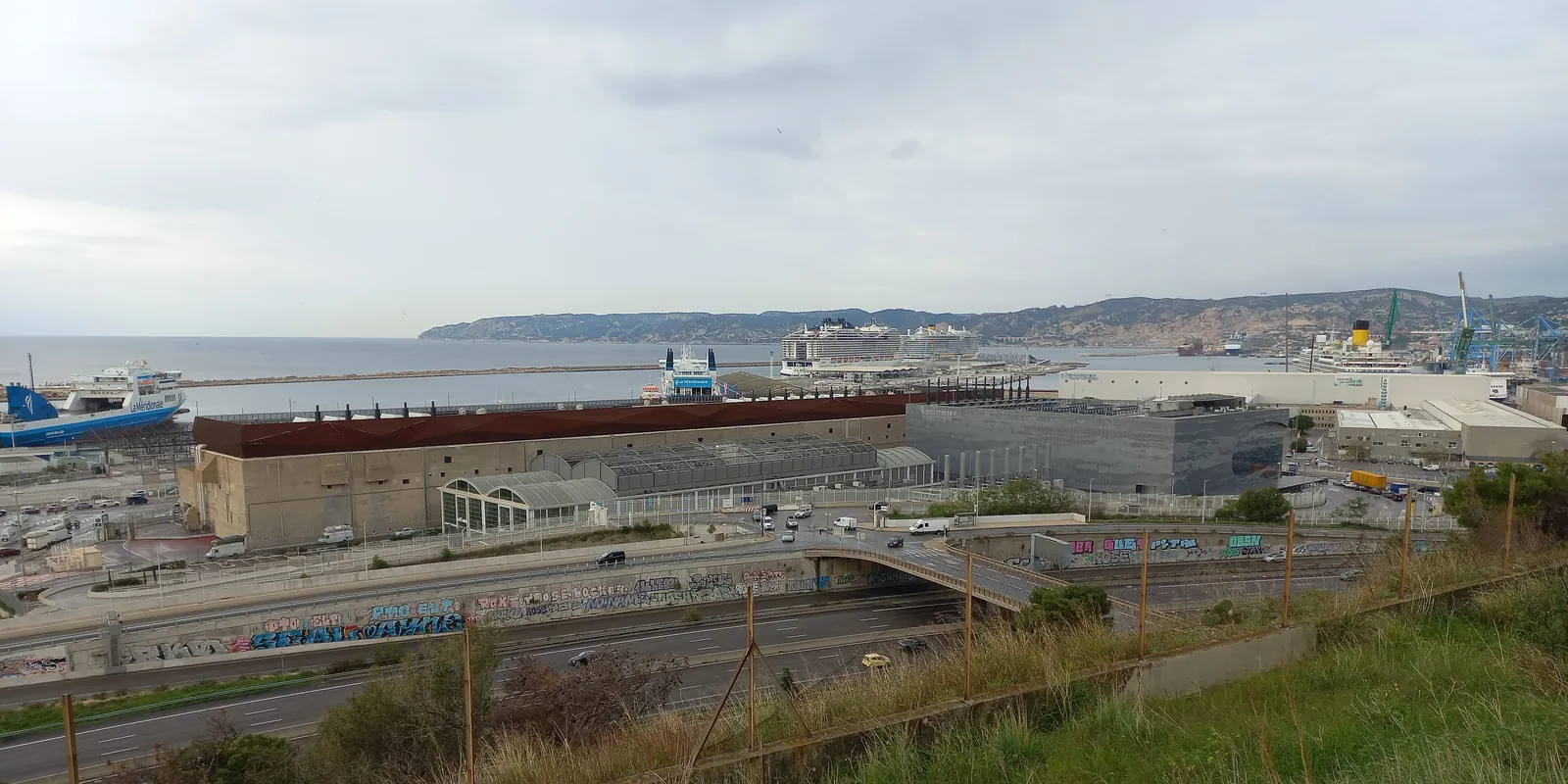 Where does this figure come from?Climate "Meta's electricity emits only 1,358 tonnes of CO2e" In 2024, Meta reports 1,358 tonnes of CO2e for the electricity it buys, the annual footprint of 170 people in France. The same report also gives 5.97 million tonnes. Both of the 2 figures are accurate. →
Across the hub
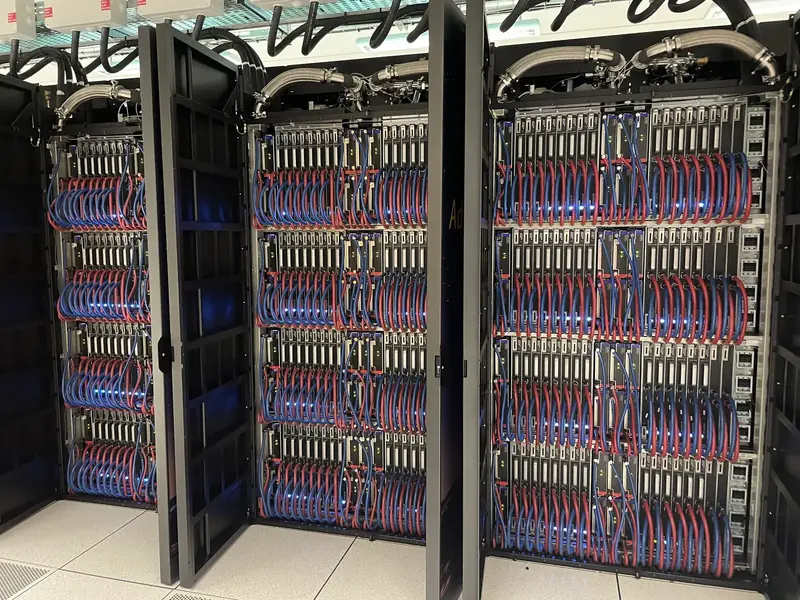 AI Impact DatabaseAll the figures, their methodology and their sources.
 AI Ranking10 assistants rated out of 100: performance, ethics and environment.


 AnalysesYou are hereThe signed pieces: analyses, viewpoints, "Where does this figure come from?".
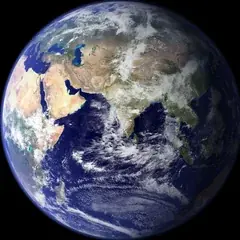 Charts and mapsThe reference visuals, with their data and sources.
 ToolsOpen calculations, your assumptions on the left, the result on the right.
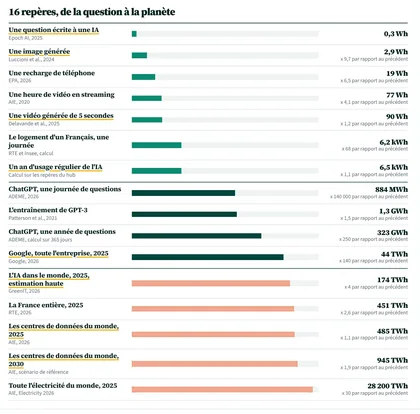



A question about a figure?
An error, a source to add, a methodology question, a press request: write to us. Guillaume Pakula, Clément Reynaud, Sébastien Pierfederici and Alexandre Veilly will reply.
Write to us →
Projet Celsius, which runs this hub, also helps companies measure and reduce the footprint of their AI use.
Accounting for AI in your Bilan Carbone® ↗