
 Water13 November 2026
Can data centres drain a region dry?
6 documented cases, from the basin to a town's water network




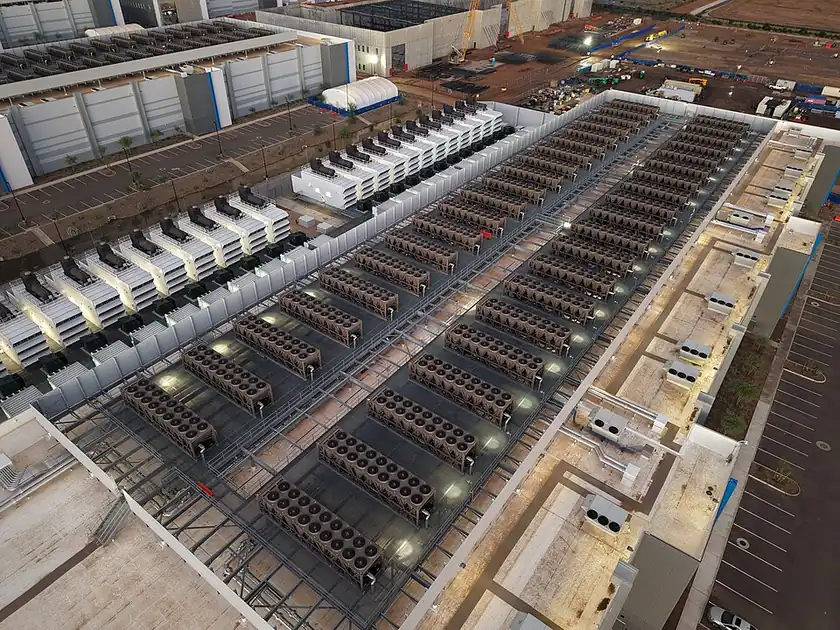
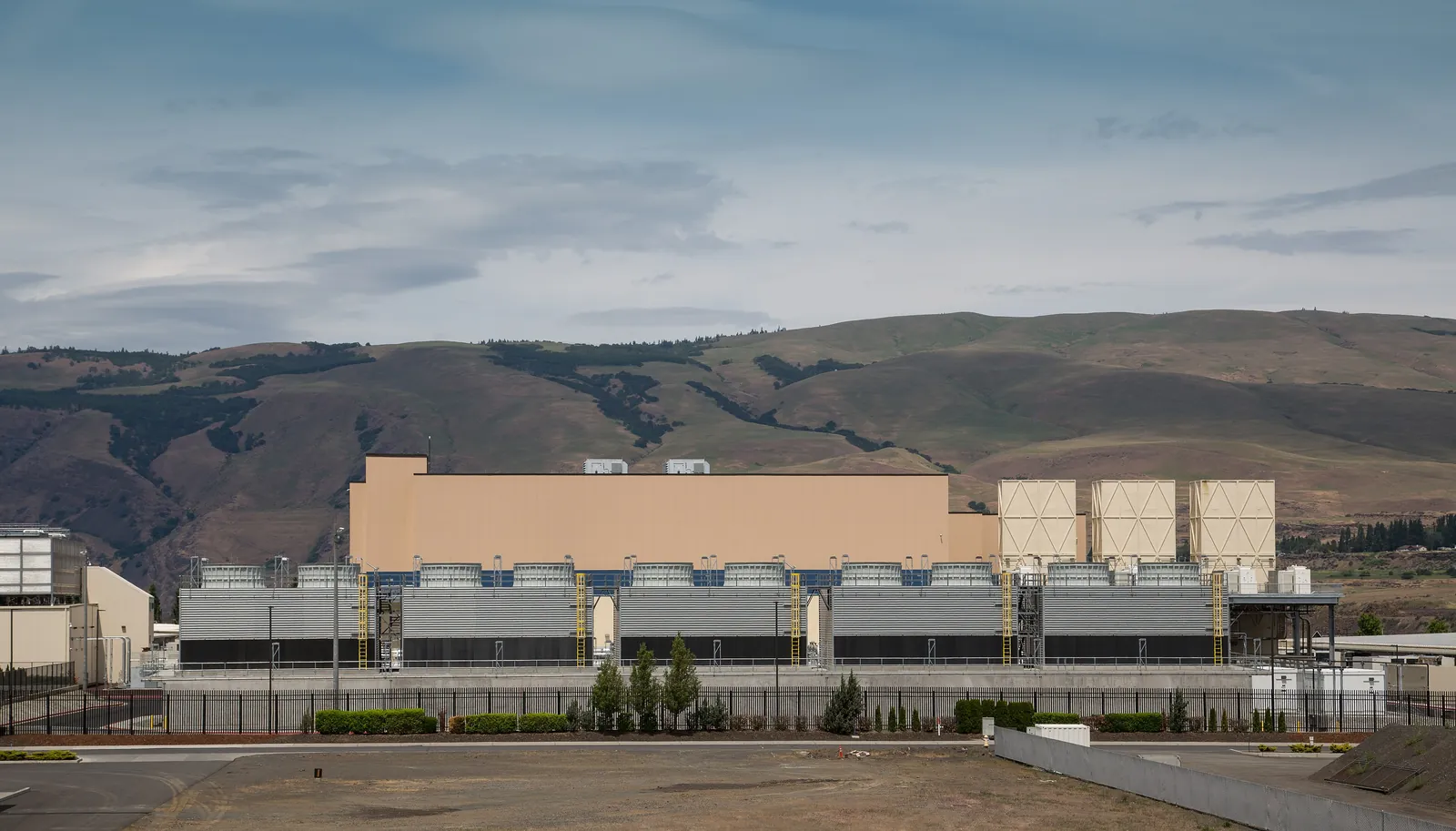
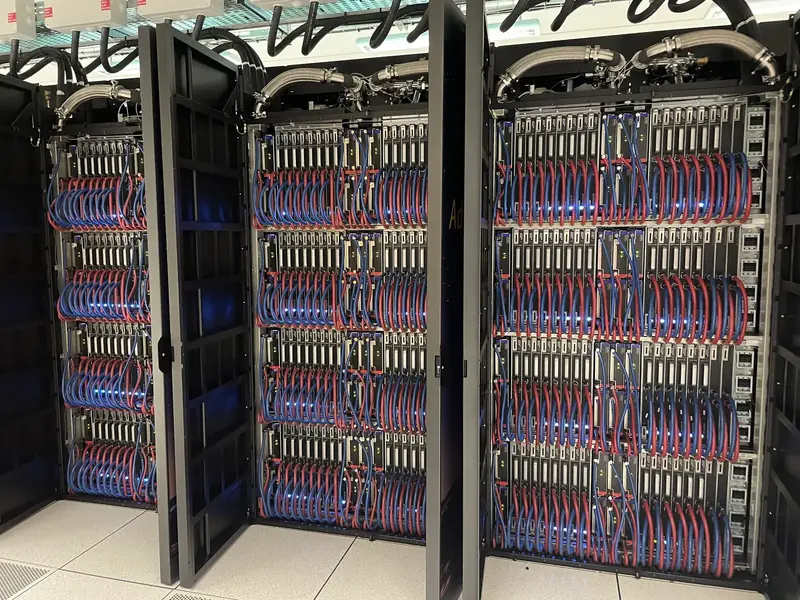
The roof of a data centre, with its cooling equipment and backup generators. Photo Rsparks3, CC0, via Wikimedia Commons.
Data centres worldwide consumed about 560 billion litres of water in 2023, according to the IEA; the question arises city by city. In The Dalles, Oregon, Google's data centres used 29% of the water consumed in the city in 2021; in Colón, Mexico, a Microsoft concession represents 24% of the spring water allocated to the municipality for public and urban use. In the 6 documented cases we have read, none shows a region dried out; in 4, air cooling was chosen, in 3 of these cases after a local challenge or the opinion of the water authority.
Contents
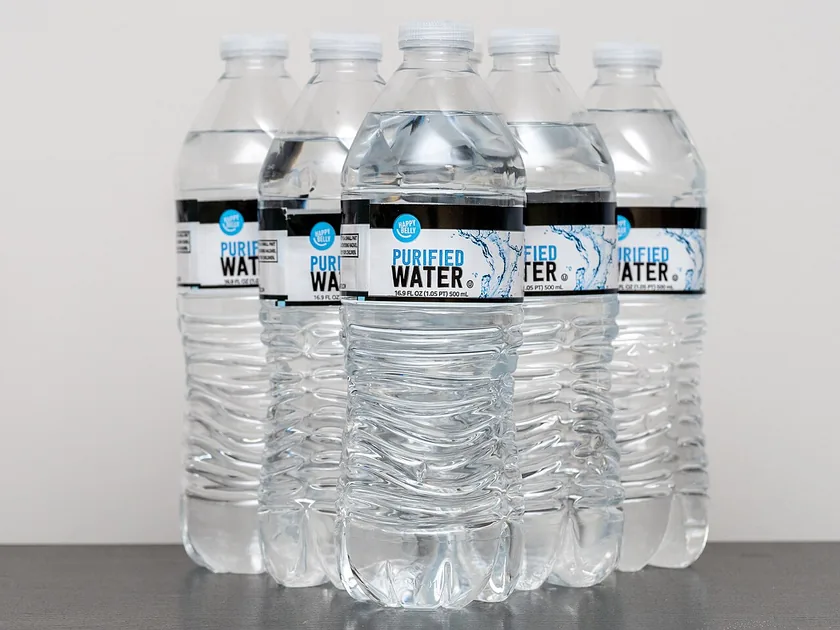
The world's data centres consumed about 560 billion litres of water in 2023, according to the International Energy Agency (IEA), counting the water evaporated on site, that of the power plants that produce their electricity and that of chip manufacturing. For a question put to an AI, water is counted in drops, as detailed in our note on the email water bottle.
These 2 figures do not say what a data centre takes from a region. Water is withdrawn from a river, an aquifer or a drinking water network, and it does not travel well over long distances; the question therefore arises at the scale of the basin and the town that supply the site. We read the public documents of 6 cases where the question was raised, across 3 continents.
In a small town, one site can take a large share of the water
| Site | Operator | Water involved | Set against | Outcome |
|---|---|---|---|---|
| The Dalles, Oregon, United States | 1.34 billion litres supplied by the town in 2021 | 29% of the town's water, 16,000 inhabitants | Figures published after a lawsuit; Google is funding 28.5 million dollars of work on the water network | |
| Colón, Querétaro, Mexico | Microsoft | Concession of 25 million litres per year, for 1 unit out of 2 | 24% of the spring water allocated to the municipality for public and urban use | Drought classed as exceptional from April to July 2024; aquifer already in deficit |
| Talavera de la Reina, Spain | Meta | 665 million litres per year in the initial project, of which 200 for cooling | About 9% of the water available to the town, our calculation | Impact statement of March 2024: dry air cooling, 0.6 million litres per year for cooling |
| Canelones, Uruguay | 7.6 million litres of drinking water per day announced in 2023 | Montevideo water crisis, 2023 | Project cut to a third and air-cooled, approved in July 2024 | |
| Cerrillos, Chili | 169 litres per second planned for the cooling towers | Santiago Central aquifer | Local referendum against in 2020; authorisation partly annulled by the environmental court in February 2024 | |
| Mesa, Arizona, United States | Meta, Google | Up to 1.75 million gallons per day eventually, about 6.6 million litres, according to the deputy mayor of Mesa in 2021 | Colorado basin, in shortage | Water budget for large users, voted around 2019; Google chooses air cooling |
Volumes as published: water supplied by the town, measured, at The Dalles, concession at Colón, projects elsewhere. They cannot be added together.
The best-documented cases show large shares at town scale. At The Dalles, on the Columbia River, in a dry region of Oregon, Google's data centres used 355 million gallons of water from the town network in 2021, about 1.34 billion litres, or 29% of the water consumed in the town. The town had first refused to publish this figure, citing commercial secrecy, and sued the newspaper The Oregonian to block its publication; the figure came out after 13 months of proceedings. For 2024, Google's report gives for this site 461 million gallons withdrawn (1.75 billion litres), of which 361 million consumed, that is, not returned to the environment; it does not give the town's share, and these figures cannot be compared with that of 2021, which counts the water supplied by the town.
At Colón, in the Mexican state of Querétaro, Microsoft bought in 2023 a concession of 25 million litres per year for one of its 2 units: 24% of the spring water allocated to the municipality for public and urban use, according to the National Water Commission. The site draws on an aquifer whose deficit reaches 56.8 billion litres. The volume actually consumed is not published.
At Talavera de la Reina, the Tagus basin authority indicated 7,110 million litres available per year for the town; Meta's initial project, 665 million litres, would have taken about 9%, according to our calculation. After its opinion, the impact statement of March 2024 brought the cooling water down from 200 million to 600,000 litres per year. In none of the 6 cases did we find a document attributing the drying up of a river or an aquifer to a data centre. In Querétaro, the state's secretary for sustainable development states that the water problems predate the arrival of data centres; in villages surrounded by data centres, such as Viborillas, residents report strict rationing, and the volumes attributed to the data centres are not published, according to Mexico Business News.
In 4 cases out of 6, air cooling was chosen
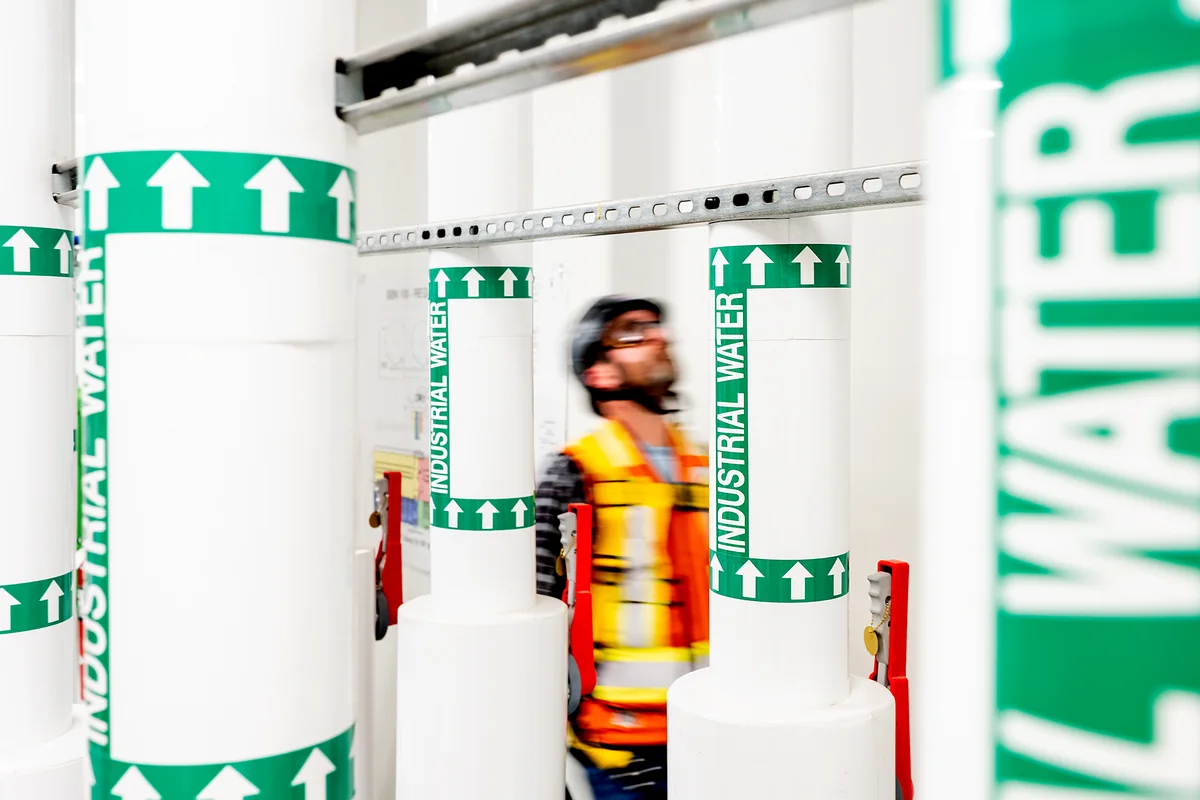
A data centre uses water mainly when it removes its heat by evaporation, in cooling towers. Other systems release heat into the air, with very little water. This is the choice that was made in 4 of the 6 cases, in 3 of them after local opposition or the opinion of the water authority.
- Canelones, Uruguay : Google planned 7.6 million litres of drinking water per day, a figure obtained in court by activists, according to Mongabay in 2023, the year Montevideo ran out of drinking water. The project approved in July 2024 has a single centre instead of 2, air-cooled.
- Cerrillos, Chili : 169 litres per second were planned. After a local referendum against the project in 2020, the environmental court partly annulled the authorisation in February 2024, for lack of proof that there would be no effect on the aquifer; the operator had in the meantime given up using water to cool its servers.
- Talavera de la Reina, Spain : Meta's impact statement brings the cooling water down from 200 million to 600,000 litres per year, with dry air cooling.
- Mesa, Arizona : the city imposes a water budget on users of more than half a million gallons per day, and Google chose air cooling there, as at Canelones and at Waltham Cross in the United Kingdom, classed as high risk by its own method.
Air cooling uses more electricity, especially on hot days, and part of the water saved on site is then evaporated by the power plants that produce this electricity. A 2021 study of US data centres estimates that on-site water makes up only a quarter of their water footprint, the rest coming from electricity; but on-site water weighs more than 40% of their footprint when local scarcity is taken into account, because it is more often taken than that of power plants in stressed basins.
Some of the sites are in water-stressed basins
Water stress, as defined by the World Resources Institute (WRI), compares the water demand of a basin with the renewable water available: it is high above 40%, extremely high above 80%. At least half of the world's population lives in high stress at least one month a year. Our water stress map shows, country by country, a related indicator, that of the FAO, with its own thresholds.
Several measurements place some of the data centres in these basins. In its 2025 financial year, Microsoft, offices included, took half of its water withdrawals in high or extremely high stress areas, according to the WRI tool. In the United States, a fifth of the water consumed on site by servers came in 2018 from basins under medium to high stress. According to a Bloomberg analysis of May 2025, which we could not read and which we cite from its republication by Sherwood News, about 2 thirds of the data centres built or planned in the United States since 2022 are in areas of high water stress.
In France, small volumes, almost all of it drinking water
In France, the 23 operators surveyed by Arcep, which run nearly 160 data centres, withdrew 575,000 m³ of water in 2024, almost entirely drinking water. Adding the water of their electricity, the total reaches nearly 6.5 million m³, the annual consumption of more than 100,000 people. Nearly 20% of the centres studied use cooling that consumes water, and a quarter of those commissioned in the last 4 years.
In Marseille, data centres cool their servers with water from a former mine gallery, non-potable, pumped at about 3,000 m³ per hour according to their operator; the city and a local association contest this use, which could serve other purposes; our analysis of contested projects reads the file for their extension. A bill adopted at first reading by the Senate on 25 March 2026 would allow a planning permit for a data centre to be refused in an area under structural water stress.
Our reading
For us at Projet Celsius, the 6 cases show what the water bottle note left open: a data centre with cooling towers can take a large share of the water of a small town or of an aquifer in deficit, especially in summer, when the resource is at its lowest and cooling demands the most. In the cases we read, this risk has not drained a region dry; it has led to 3 projects being changed, after local opposition or the opinion of the water authority.
Site-level data are rarely public. At The Dalles, it took a lawsuit to obtain them; in Arizona, the water authority does not track the consumption of most data centres; Microsoft and Google publish tables by site or by zone, with methods that cannot be compared. Since 2024, the European Union requires every data centre of 500 kW of IT load or more to report its energy and water each year. The mechanism of water in a data centre, from withdrawal to evaporation, is detailed in our analysis of AI's water.
The volumes of the 6 cases are not of the same kind: water supplied by the town, measured, at The Dalles, a concession at Colón, projects at Talavera, Canelones, Cerrillos and Mesa. For Colón, another figure of 600 million litres circulates in the press without a primary source; we keep that of the National Water Commission as reported by Reuters. The water stress shares of Microsoft and Google rest on different methods and cannot be compared.
Sources
21 documents
- IEA, Energy and AI2025entry 1
- The Oregonian, Google's water use is soaring in The Dalles, records show, with two more data centers to come, December 2022, text republished by WaterWatch of Oregon2022entry 297
- Google, 2025 Environmental Report2025entry 298
- Thomson Reuters Foundation, Thirsty data centres spring up in water-poor Mexican town, September 2024, republished by The Globe and Mail2024entry 299
- Mexico Business News, Querétaro data center boom triggers water, power backlash2026entry 300
- El Español, La clave del aval ambiental a los centros de datos de Meta en Talavera : refrigerar con aire en lugar de agua2024entry 301
- Mongabay, The cloud vs. drought: Water hog data centers threaten Latin America, critics say2023entry 302
- BNamericas, Uruguay approves reformulated Google datacenter project2024entry 303
- BioBioChile, Anulan parcialmente permiso de data center de Google2024entry 304
- Pauta, Tribunal Ambiental anula parcialmente aprobación de Cerrillos Data Center de Google2024entry 313
- KGUN 9, Data centers consume millions of gallons of Arizona water daily2021entry 305
- Cronkite News, Don't blame data centers for Arizona's Colorado River cuts, water experts say2026entry 306
- Siddik, Shehabi and Marston, The environmental footprint of data centers in the United States, Environmental Research Letters2021entry 307
- WRI, Aqueduct 4.0: Updated decision-relevant global water risk indicators, technical note2023entry 308
- WRI, 25 Countries, Housing One-Quarter of the Population, Face Extremely High Water Stress2023entry 309
- Microsoft, 2026 Environmental Sustainability Report, Data Fact Sheet2026entry 15
- Sherwood News, Big Tech is building thirsty AI data centers in highly water-stressed areas, according to Bloomberg2025entry 310
- Arcep, enquête annuelle Pour un numérique soutenable, édition 20262026entry 311
- AFP, Data centres chase water, energy savings as AI race ramps up, February 2025, republished by The Star2025entry 312
- Senate, bill to regulate the siting of data centres on French territory, adopted text No. 732026entry 295
- Delegated Regulation (EU) 2024/1364 on the first phase of a common rating scheme for data centres, March 2024, text reproduced by lagen.nu2024entry 292
Every figure was read in its source; the hub's methodology is described in Methodology and sources.
AI Impact, Projet Celsius, "Can data centres drain a region dry?", 13 November 2026. https://projetcelsius.com/en/ai/analyses/can-data-centres-dry-up-a-region/