
 Hardware14 November 2026
What is AI made of?
The components, the manufacturing locations, the metals and the share of manufacturing in the footprint




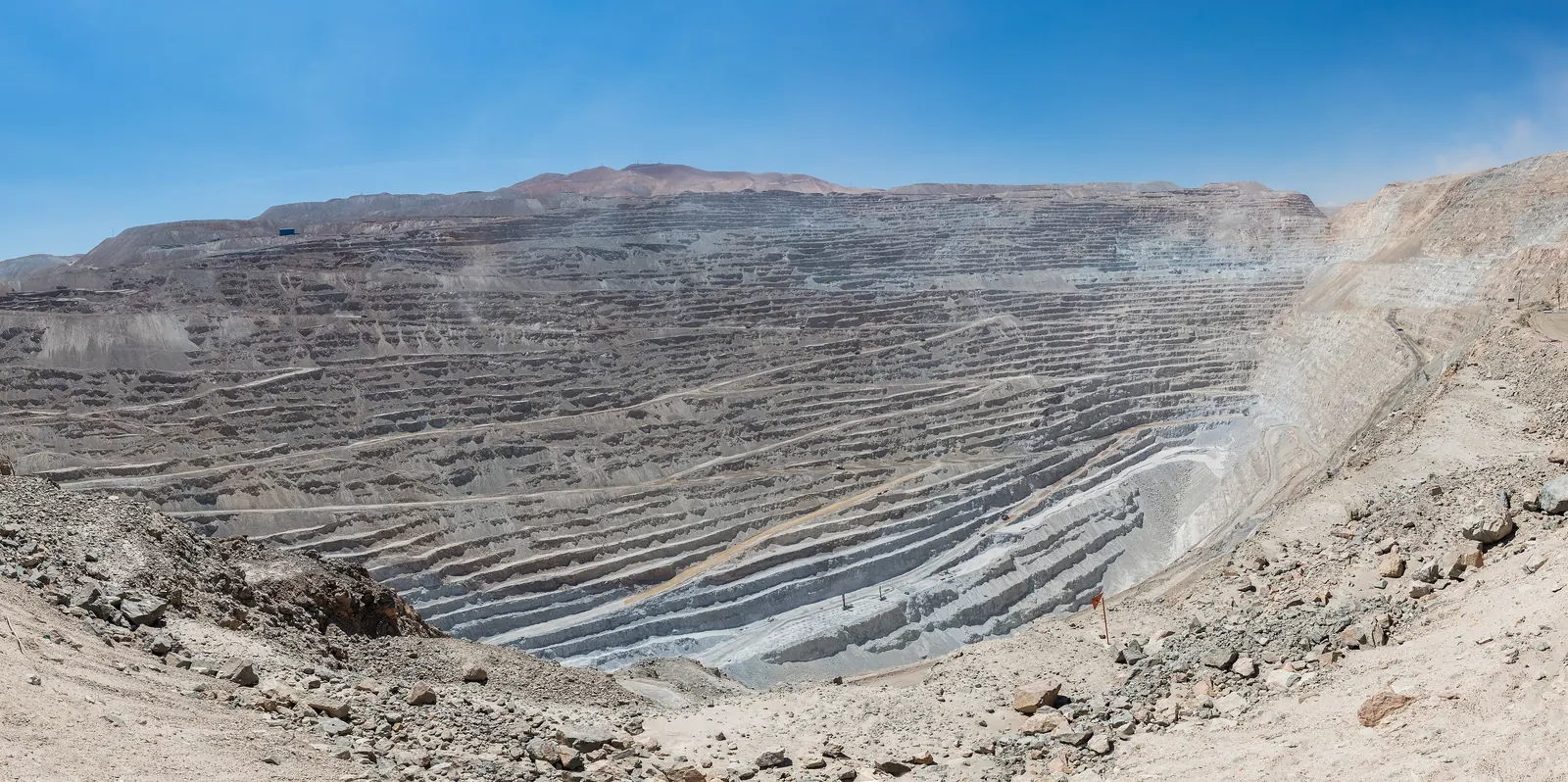
The Chuquicamata copper mine, in northern Chile, in 2016. Photo Diego Delso, CC BY-SA 4.0, via Wikimedia Commons.
An AI runs on servers whose computing chips are fabricated in Taiwan, whose memory is made in South Korea and Japan, and several of whose semiconductor raw materials are produced mainly in China. On the HGX board that carries 8 H100 chips, memory accounts for 42% of manufacturing emissions according to Nvidia, and 49% on the next generation. With the world average electricity mix, manufacturing the server accounts for about 7% of the emissions of one hour of computing; with French electricity, close to half, according to our estimate based on the AI Impact Database.
Contents
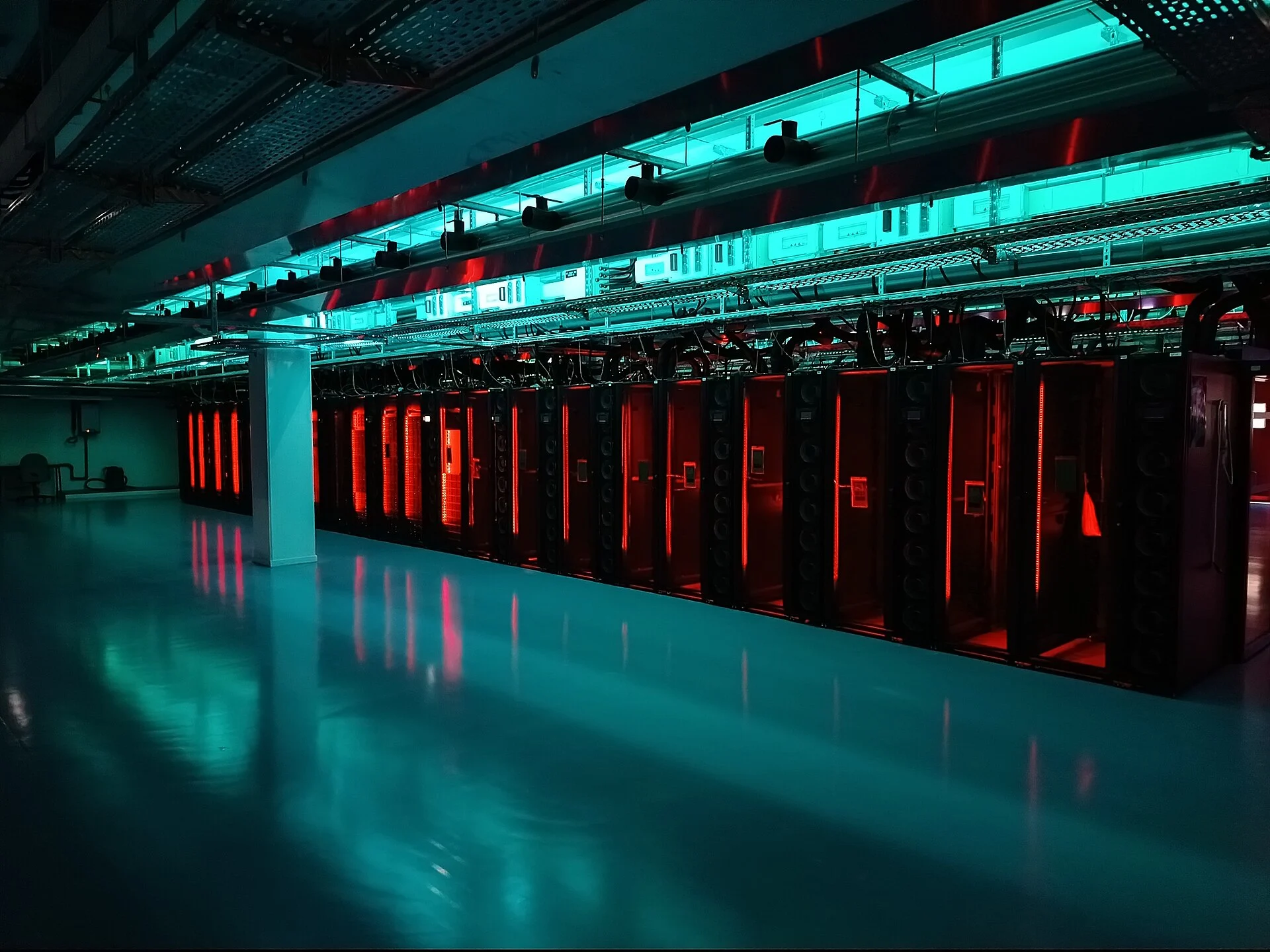
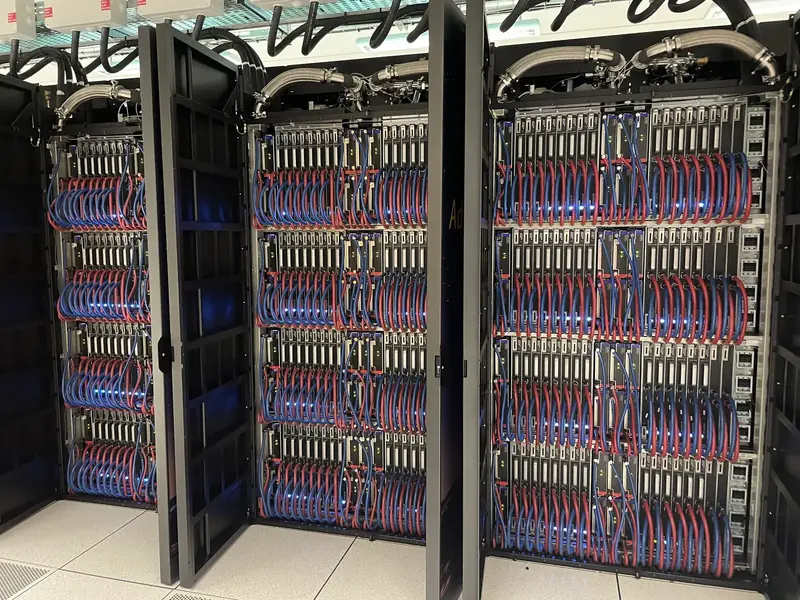
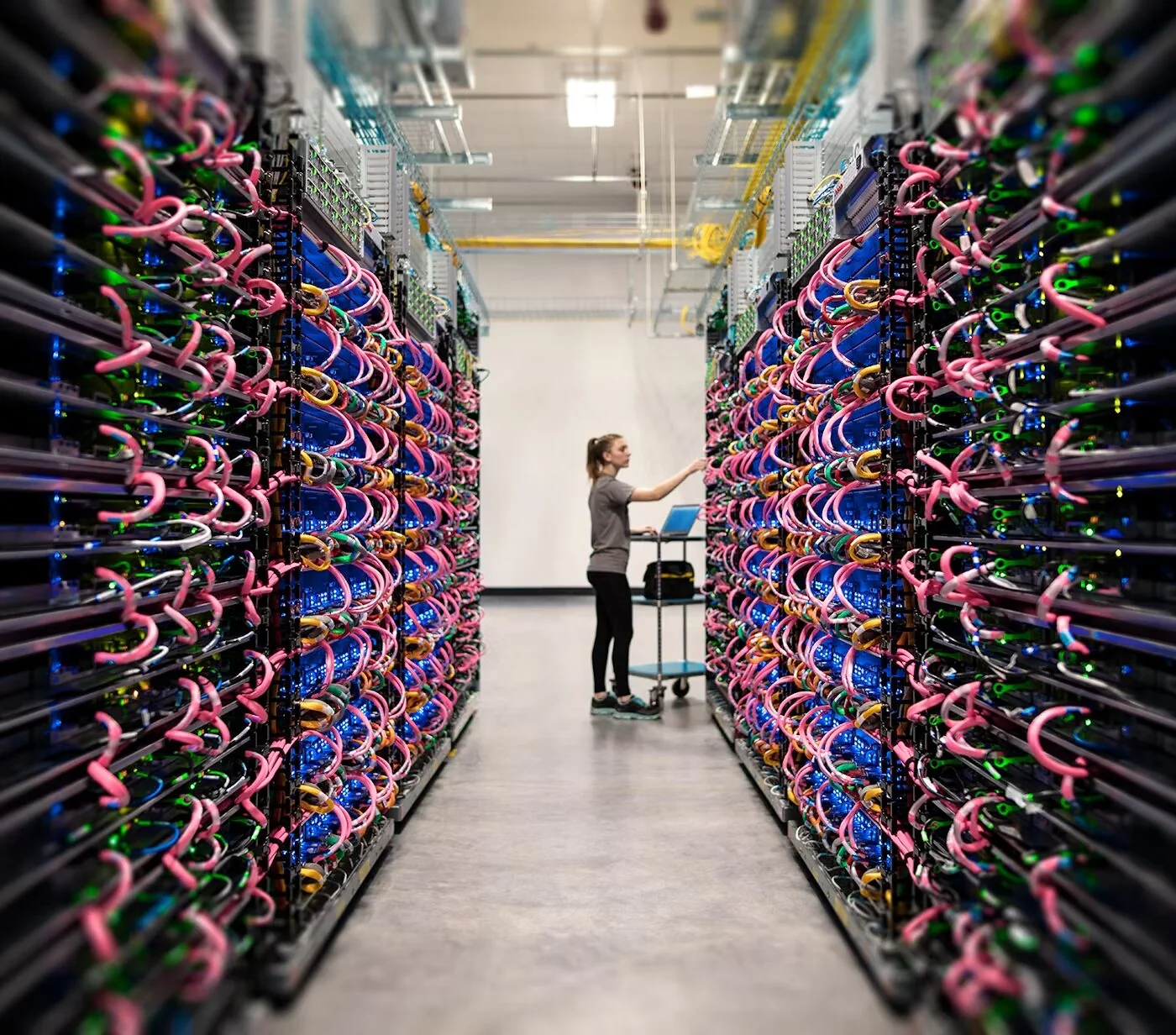
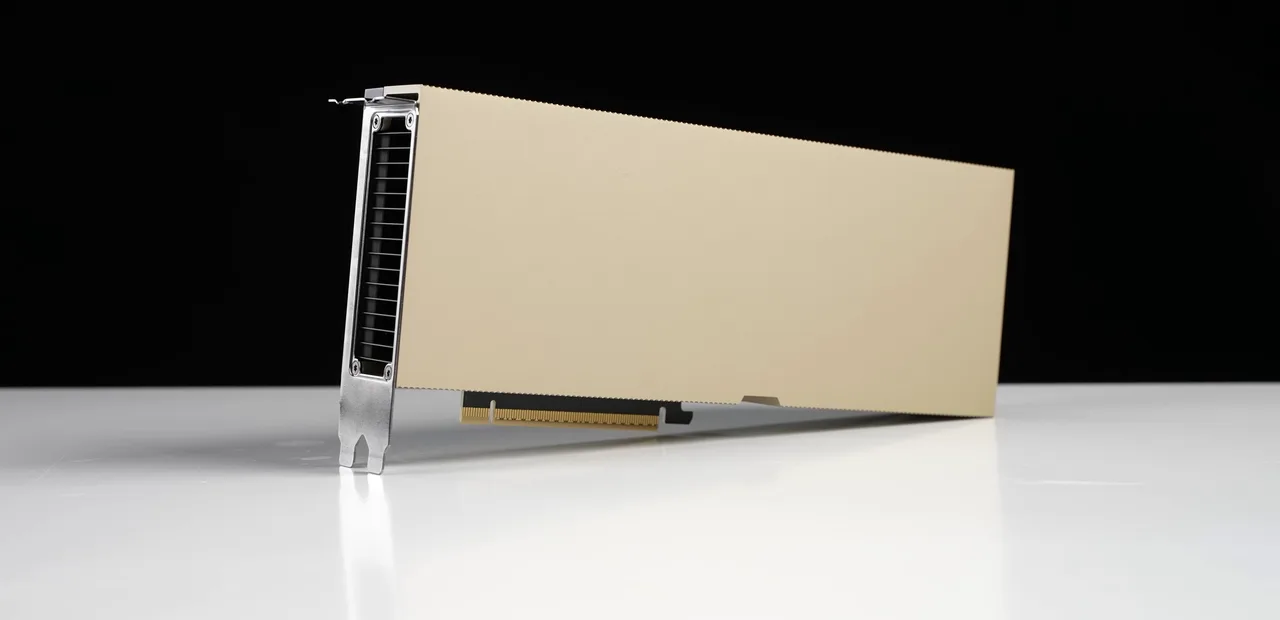
An AI response is computed in a data centre, on a server. In an AI server, the computing chips, each mounted on a graphics card, are grouped 8 at a time on a motherboard, with their memory, their links and their heat sinks; around them, the server adds ordinary processors, working memory, storage, power supplies and fans. Our explanation on graphics cards says what each part does during computation. This page follows their manufacture: what these parts are made of, where they are produced, and how much their manufacture weighs next to electricity.
Components of an AI motherboard and their manufacturing emissions
Since 2025, Nvidia has published the manufacturing footprint of its HGX boards, which carry 8 chips, from raw material extraction to the factory gate. For the HGX H100, it is 1,312 kgCO2e : memory accounts for 42%, integrated circuits 25%, cooling components 18%. For the HGX B200, the next generation, it is 2,274 kgCO2e, 1.7 times more: memory accounts for 49%, integrated circuits 28%, cooling 12%. Assembly and transport account for less than 10% in both 2 cases.
Manufacturing emissions of the memory of an HGX board with 8 chips, according to Nvidia (kgCO2e)
The memory of these cards, known as HBM, is made of memory chips stacked on top of one another and placed next to the compute chip. From one generation to the next, its capacity has more than doubled, and so have its manufacturing emissions. The authors of the life cycle assessment of Google's TPU chips note the same movement: between the TPU v5e and the TPU v6e, the peak computing power of a chip was multiplied by 4.7, and its manufacturing emissions by about 1.8, with a larger chip, more memory around it and 3 times more working memory in the host server. Per computing operation, manufacturing emissions fell by 66%.
The whole server, with its processors, working memory and storage, weighs more: 8,341 kgCO2e for a server with 8 H100 according to a simplified GreenIT study, including manufacturing, distribution and end of life.
Where chips and memory are manufactured
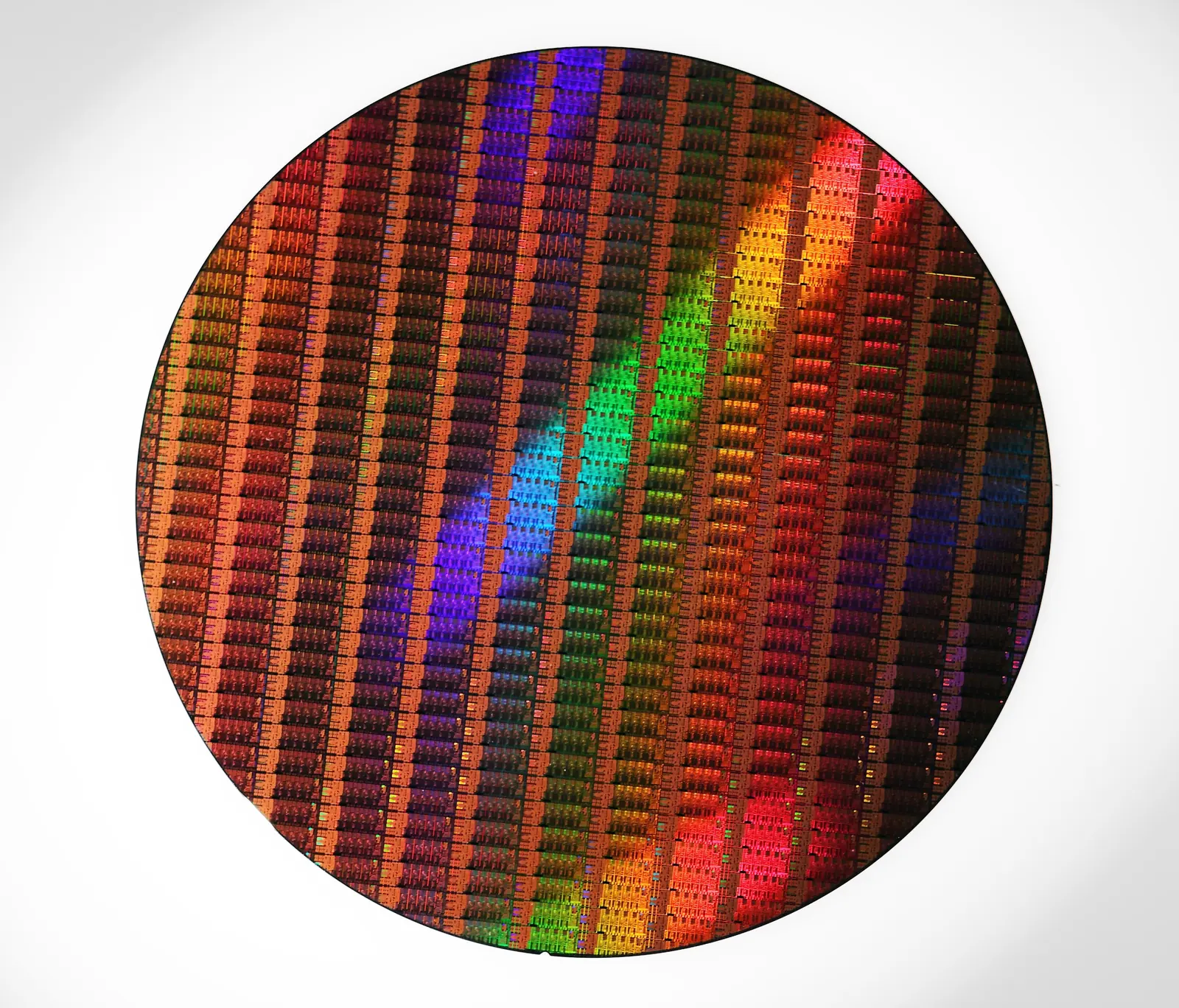
Nvidia and AMD design their AI chips but do not manufacture them. Nvidia's A100, H100, H200 and B200 chips and AMD's MI300X are fabricated by TSMC, in Taiwan, according to Greenpeace East Asia. Their HBM memory comes from SK hynix and Samsung, in South Korea, and from Micron; in its model, Greenpeace attributes to Micron the memory of the H200 and B200, which SK hynix also supplies. According to the American semiconductor manufacturers' association, the SIA, the United States had no production capacity for logic chips fabricated below 10 nanometres in 2022, the fineness of AI chips; it is expected to have 28% in 2032.
Greenpeace East Asia estimates the electricity used to manufacture Nvidia and AMD AI chips at 983.9 GWh in 2024, against 218 GWh in 2023 for Nvidia alone. Taiwan accounts for 375.8 GWh, about 38%, South Korea 315.2 GWh, about 32%, and Japan most of the rest, about 30%. The electricity of these 3 countries was 83.1%, 58.5% and 68.6% fossil-fuel based in 2023. Greenpeace derives 453,600 tCO2e from this in 2024. This is an estimate by model, the only one published for AI chips; it counts the electricity of the factories, excluding the fluorinated gases used in etching and the materials. 983.9 GWh is one fifth to one quarter of the electricity consumed in 2024 by data centres located in France on dedicated sites, 4 to 5 TWh according to RTE.
 Hardware
Electricity for manufacturing AI chips
Electricity used to manufacture the AI chips of Nvidia (2023) then of Nvidia and AMD (2024), in GWh · 2023 and 2024
Source: Greenpeace East Asia, April 2025 · projetcelsius.com/en/ai · CC BY 4.0
Semiconductor factories use ultrapure water to rinse silicon wafers; our analysis of AI's water says what is known about it.
Metals and raw materials
A chip is made of very pure silicon, etched, doped and connected by copper tracks; boards and servers add copper, aluminium, gold in the contacts and rarer metals. As of 14 November 2026, we have found no published composition of an AI server in metals, to the nearest kilogram.
Several semiconductor materials are produced in few countries. According to the United States Geological Survey, the USGS, China produced 99 % of the world's primary gallium in 2024, 750 tonnes out of 760, and remains the leading producer of germanium, which is used in the form of a gas to manufacture certain semiconductors. It banned its export to the United States in December 2024.
The life cycle assessment of Mistral Large 2, published in July 2025 with Carbone 4 and ADEME, is the only one to relate materials to an AI model. After 18 months, server hardware, covering manufacturing, transport and end of life, accounts for 11% of emissions but 61% of mineral resource depletion, the rest coming mainly from computing; the detail is in the chart in this analysis. Mistral AI specifies that the manufacturing of graphics cards had to be approximated there, for lack of manufacturers' data.
Share of manufacturing in the emissions of one hour of computing
The AI Impact Database spreads the manufacturing of a server with 8 H100 over 5 years of service, used at 69%: about 35 gCO2e per graphics card hour. A graphics card hour uses about 0.99 kWh, data centre included.
| Electricity | Electricity for the hour | Server manufacturing | Share of manufacturing |
|---|---|---|---|
| World average, 458 gCO2e/kWh | 454 gCO2e | 35 gCO2e | about 7% |
| France, 41 gCO2e/kWh | 41 gCO2e | 35 gCO2e | about 46% |
Our calculation for one hour of an H100 graphics card, based on the AI Impact Database (0.99 kWh per hour, manufacturing amortised over 5 years at 69% utilisation). Estimates: no measurement of the consumption of an H100 in service is published.
The lower the carbon content of the electricity, the more manufacturing weighs. The Google authors give the same order of magnitude for their chips: about 10% of lifetime emissions if their purchases of carbon-free electricity are not counted, and half for manufacturing and half for electricity if the factories and data centres ran on 90% carbon-free electricity. Our analysis of AI decarbonisation draws out the levers, including the lifetime of the hardware.
Our reading
For us, at Projet Celsius, the manufacturing of an AI is concentrated in few places: a few factories in Taiwan, South Korea and Japan, on electricity grids that are mostly fossil-fuelled, and a few countries for the raw materials. With the world average electricity, it weighs little next to the electricity used for computing; with low-carbon electricity such as France's, it accounts for close to half of the emissions of one hour of computing, and the only published analysis for a model, that of Mistral Large 2, attributes to it the majority of resource depletion. Its share therefore grows as data centres decarbonise. The figures come mostly from the manufacturers and from Google; the etching and memory factories do not publish the footprint of each chip.
The share of manufacturing in one hour of computing is an estimate: the consumption of a card in service is not measured, and the lifetime assumed, 5 years, changes the result. The electricity used to manufacture chips is a Greenpeace estimate by model, excluding fluorinated gases and materials. No metal composition of an AI server is published.
Sources
11 documents
- Nvidia, HGX H100 Product Carbon Footprint Summary2025entry 18
- Nvidia, HGX B200 Product Carbon Footprint Summary2025entry 19
- Schneider, Xu, Benecke, Patterson et al. (Google), Life-Cycle Emissions of AI Hardware: A Cradle-To-Grave Approach and Generational Trends, arXiv preprint2025entry 196
- GreenIT, Impacts environnementaux et sanitaires de l'intelligence artificielle dans le monde en 2025 et 20302026entry 6
- Greenpeace East Asia, Chipping Point2025entry 44
- SIA and BCG, Emerging Resilience in the Semiconductor Supply Chain2024entry 436
- RTE, Bilan prévisionnel 2025, consommation2025entry 8
- USGS, Mineral Commodity Summaries 2025, Gallium2025entry 437
- USGS, Mineral Commodity Summaries 2025, Germanium2025entry 438
- Mistral AI, with Carbone 4 and ADEME, Our contribution to a global environmental standard for AI2025entry 17
- Projet Celsius, AI Impact Database, environmental database of artificial intelligence, engine 0.3.12026entry 144
Every figure was read in its source; the hub's methodology is described in Methodology and sources.
AI Impact, Projet Celsius, "What is AI made of?", 14 November 2026. https://projetcelsius.com/en/ai/analyses/what-is-ai-made-of/
 Water