
 Climate13 November 2026
Will Google and Microsoft keep their 2030 climate pledges?
The pledges, actual emissions since the base year and the reduction that would be needed by 2030




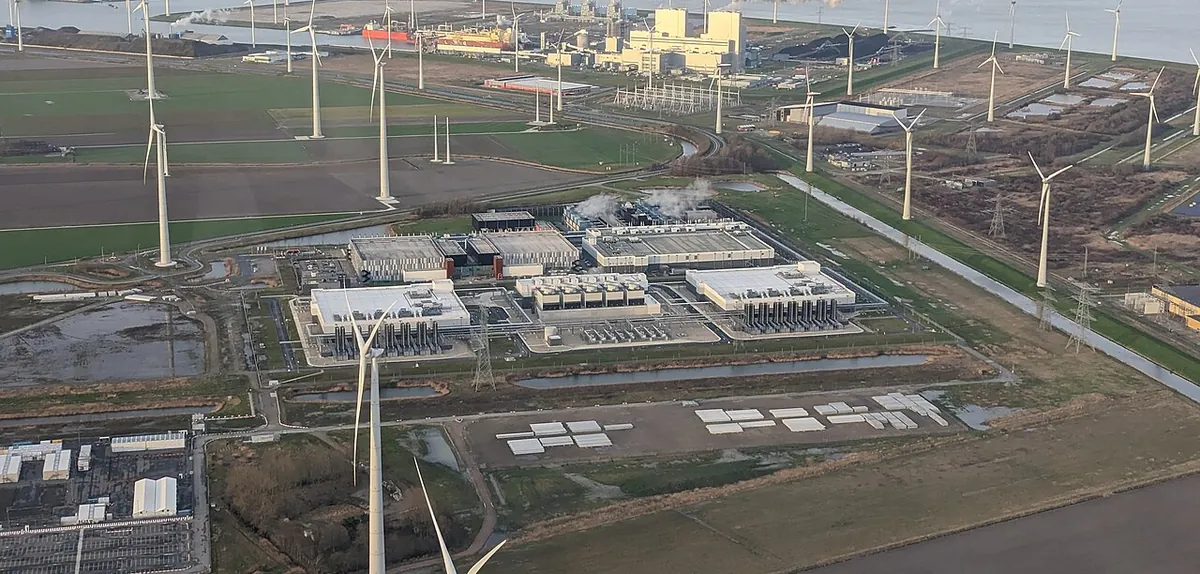
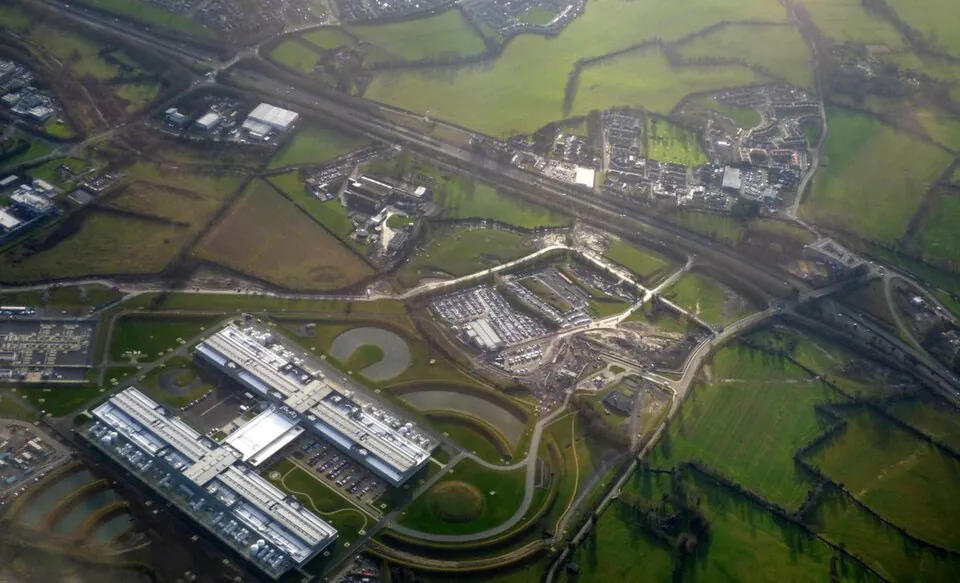
Google's data centre in Eemshaven, the Netherlands. Photo Wvdp, CC0, cropped, via Wikimedia Commons.
Google pledges to divide its emissions by 2 between 2019 and 2030; they have increased by 81%. Microsoft pledges to be "carbon negative" in 2030; its emissions have increased by 58% since 2020. To meet their reduction targets, each would need to cut its emissions by about 70% in 5 years, which is more than 20% a year (our calculation), whereas they increased by 18 and 25% in the last year published.
Contents
In 2020 and 2021, Google and Microsoft made climate pledges due in 2030. Since then, their data centre needs have grown strongly, partly with AI, and so have their emissions. The reports published in summer 2026 make it possible to measure the gap between the promised trajectory and the actual one, and the reduction that would be needed to close that gap in 5 years.
The 2 pledges
Reduce by 50% between 2019 and 2030 the sum of its direct emissions, its electricity counted with its contracts and its value chain, excluding the items Google leaves out of its target (4.4 million tonnes in 2025), then neutralise the remainder with carbon removals. Operate in 2030 on carbon-free electricity 24 hours out of 24 on every grid.
Be "carbon negative" in 2030: bring its direct emissions and those of its electricity counted with its contracts down to almost zero, cut those of its value chain by more than half compared with 2020, and remove from the atmosphere more carbon than it still emits.
According to Google, the Science Based Targets initiative (SBTi) validated its short-term reduction target in 2025, but not its neutrality target: it leaves 50% of residual emissions, whereas the SBTi criteria for a long-term target allow 10%. Microsoft does not publish a quantified target for its total emissions in 2030; we reconstructed it from its 2 targets, at about 6.2 million tonnes of CO2e.
Emissions rising by about 10% a year
Google's emissions, counted as in its target, went from 8.0 million tonnes of CO2e in 2019 to 14.5 million in 2025, +81 %, of which +18% in the single year 2025. Microsoft's went from 12.9 million tonnes in financial year 2020 to 20.3 million in financial year 2025, ended in June, +58 %, of which +25% in the last financial year. For the 2, that is on average about 10% more each year since the base year.
 Climate
Google and Microsoft emissions
Reported greenhouse gas emissions, index 100 in the base year · 2019 to 2025, 2026 editions of the reports
Source: Google and Microsoft, 2026 reports, years published · projetcelsius.com/en/ai · CC BY 4.0
According to Google, the increase comes first from its supply chain: +62% since 2019. It also comes from electricity: Google's consumption rose by 37% in 2025 to reach 43.6 TWh, and Microsoft's was multiplied by 3.4 between financial years 2020 and 2025. Google writes in its 2026 report that reaching its target has become "more complex and challenging than ever". Microsoft attributes the increase in its last year to the expansion of its data centres and to the end of some renewable electricity certificates.
The gap to the promised trajectory
Neither of the 2 companies publishes an intermediate trajectory. To measure the gap, we draw the straight line from the base year to the 2030 target: it is a benchmark, as a company may plan a late reduction. On this benchmark, Google should have been at 5.8 million tonnes in 2025; it is at 2.5 times that level. Microsoft should have been at 9.5 million tonnes; it is at 2.1 times.
| Microsoft | ||
|---|---|---|
| Base year | 2019: 8.0 MtCO2e | financial year 2020: 12.9 MtCO2e |
| 2030 target | 4.0 MtCO2e | financial year 2030: about 6.2 MtCO2e (reconstructed) |
| Promised trajectory in 2025 | 5.8 MtCO2e | financial year 2025: 9.5 MtCO2e |
| Actual in 2025, as counted for the target | 14.5 MtCO2e (18.8 with all of scope 3) | financial year 2025: 20.3 MtCO2e (21.1 according to the GHG Protocol) |
| Reduction needed from 2025 to 2030 | -72%, or -23% a year | -70%, or -21% a year |
| Change over the last year | +18 % | +25 % |
Our calculation, from the 2026 reports of Google (p. 90) and Microsoft (table 1B, p. 4). Promised trajectory: straight line from the base year to the target. Reconstructed Microsoft target: scopes 1 and 2 at zero, scope 3 divided by 2.
To succeed, the trend would have to be reversed from 2026 and emissions cut each year by more than a fifth for 5 years, with electricity demand continuing to rise. Neither Google nor Microsoft publishes in its 2026 report an intermediate trajectory that would show how to achieve this. Valérie Masson-Delmotte considers these targets "compromised" by generative AI, as recalled in the analysis of AI and the climate crisis.
Targets counted with electricity contracts
The 2 targets count electricity with the renewable electricity contracts and certificates bought, and not with the electricity of the grids where the data centres consume. The 2 counts give very different results. With grid electricity, the emissions from Google's electricity went from 5.2 to 15.1 million tonnes between 2019 and 2025, and those of Microsoft from 4.3 to 12.0 million between financial years 2020 and 2025: almost 3 times more. With contracts, they were in 2025 2.8 million tonnes for Google and 2.7 million for Microsoft, that is 4 to 5 times lower.
The count with contracts can change by a factor of 10 for an accounting reason. This happened at Microsoft: by ceasing to buy short-term certificates from existing plants, it saw the emissions of its electricity counted this way go from 0.26 to 2.7 million tonnes in one financial year, while its electricity consumption rose by 24%. This choice brings its count with contracts closer to its count according to the grid, and moves its target further away by the same amount; the note on Meta's 1,358 tonnes details these 2 counts.
Carbon removals planned for the remainder
The 2 pledges end with carbon removals, which take CO2 out of the atmosphere. Google plans to start deducting them in 2030; at the end of 2025 it had contracted removal credits for more than 1.3 million tonnes of CO2 in total, to be compared with a remainder of about 4 million tonnes a year if its reduction target were reached. Microsoft contracted about 22 million tonnes in financial year 2024 and 45 million in financial year 2025, to be delivered over 30 years; these removals are contracted and not yet carried out.
The NewClimate Institute, which assesses the climate strategy of large companies each year, rated in 2025, on the basis of their 2024 reports, the integrity of Google's as "moderate" and that of Microsoft's as "poor". It notes that Google's target allows 50% of residual emissions and that Microsoft's relies largely on removals, which cannot replace a deep reduction in emissions.
Our reading
For us at Projet Celsius, at the pace published in the 2026 reports, Google and Microsoft cannot achieve in 2030 the emission reductions they have set themselves, without a change of trajectory that their reports do not describe. Succeeding would require a reduction of more than 20% a year for 5 years, whereas their emissions are growing by about 10% a year and their electricity needs continue to rise, notably with AI. Their reports have qualities that are useful to the reader: Google publishes its carbon-free electricity hour by hour, and Microsoft stopped buying the short-term certificates that reduced its footprint without changing the electricity consumed. The figure to follow between now and 2030 is the total of their emissions, and those of their electricity counted with the grid, which say what the atmosphere receives.
The straight-line trajectory is our benchmark; the companies do not publish one, and a reduction may come late (new plants, grid connection delays). Microsoft's target for 2030 is reconstructed from its 2 targets. Google recalculated its past emissions in its 2026 report: the increase since 2019 goes from 51% to 53% for 2024.
Sources
5 documents
- Google, 2026 Environmental Report2026entry 13
- Microsoft, 2026 Environmental Sustainability Report, Data Fact Sheet2026entry 15
- Microsoft, 2026 Environmental Sustainability Report2026entry 423
- NewClimate Institute, Corporate Climate Responsibility Monitor 2025, technology sector, September 2025 update2025entry 424
- Valérie Masson-Delmotte, Enjeux environnementaux des data centers, presentation at the general assembly of Essonne Nature Environnement2026entry 94
Every figure was read in its source; the hub's methodology is described in Methodology and sources.
AI Impact, Projet Celsius, "Will Google and Microsoft keep their 2030 climate pledges?", 13 November 2026. https://projetcelsius.com/en/ai/analyses/will-google-and-microsoft-meet-climate-pledges/