
 Society14 November 2026
Are AI models profitable, and who pays when it is free?
Investment by large groups, revenues of model providers, gigawatts ordered, position as of November 2026




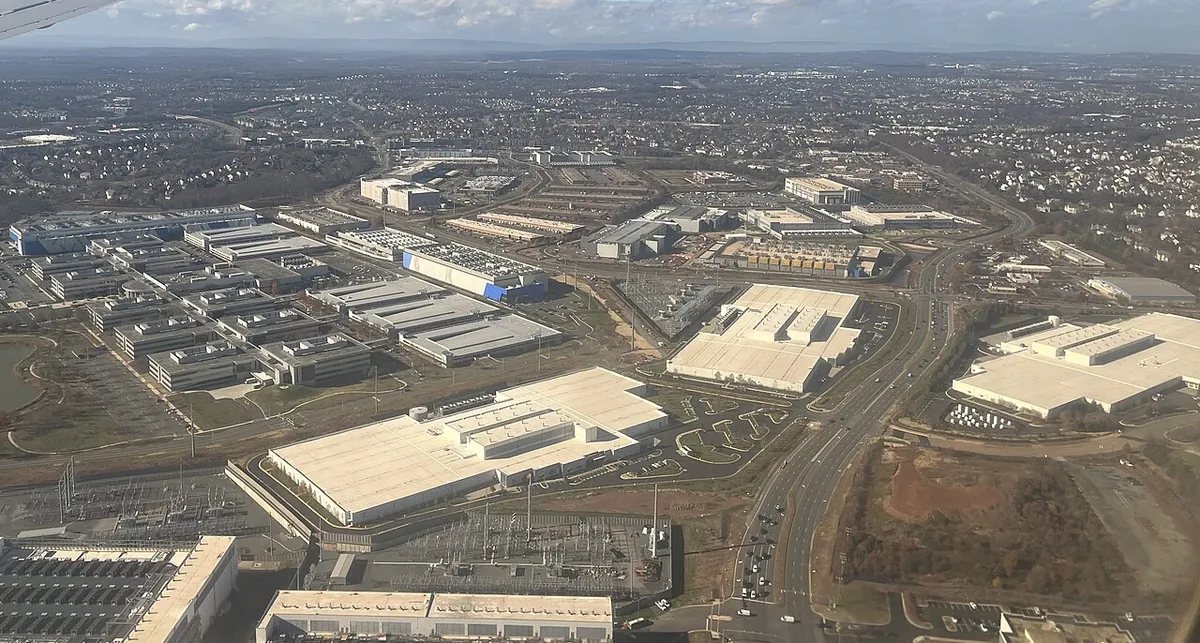
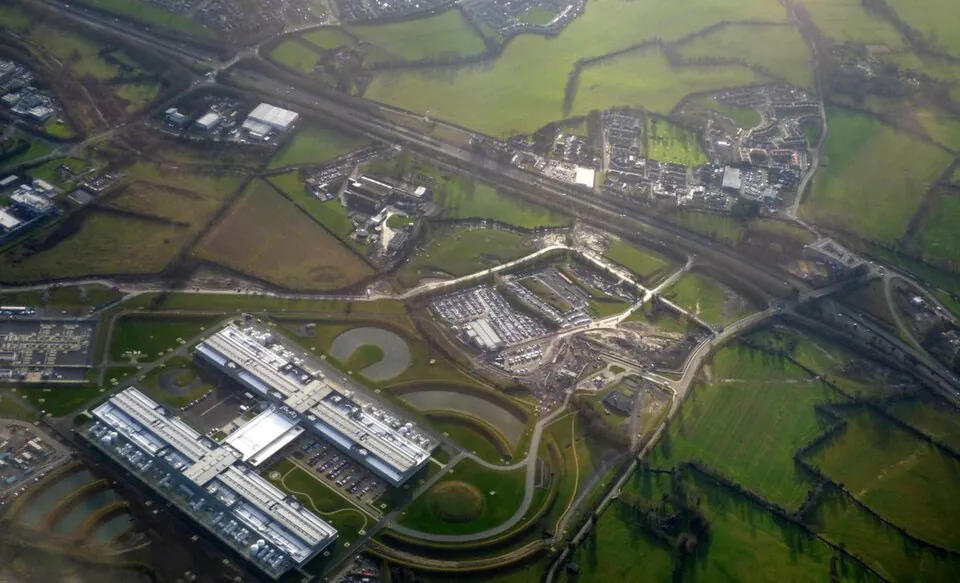
Data centres in Ashburn, Virginia, seen from the air. Photo Theodore Christopher, CC0, cropped, via Wikimedia Commons.
OpenAI is not, and Anthropic does not publish a margin. In the 1st quarter of 2026, OpenAI lost 1.22 dollars per dollar of revenue, excluding share-based compensation, according to The Information, cited by The Decoder. Providers' revenues are growing fast: in spring and summer 2026, Anthropic was at more than 65 billion dollars a year in annualised terms and OpenAI at about 30 billion, but Alphabet, Amazon and Meta, the 3 of them together, plan between 550 and 570 billion dollars of investment in 2026, excluding Microsoft. Free use is paid for by investors, by the profits of large groups and, since 2026, by advertising. At Alphabet, servers are depreciated over 6 years and buildings over 7 to 40 years; the grid connections and power plants built for them also remain, whether or not demand follows.
Contents
The question of AI profitability involves 2 kinds of company. Model providers, led by OpenAI and Anthropic, sell access to their models by subscription or by usage; they do not publish accounts, and their figures come from the business press, which cites documents sent to investors. The large technology groups Alphabet, Amazon, Meta and Microsoft build the data centres; they are listed companies and publish their capital expenditure every quarter. The figures below are, unless stated otherwise, those of 2026, in current dollars.
Revenues and losses of model providers
In the 1st quarter of 2026, OpenAI earned about $5.7 billion in revenue with an adjusted operating margin of -122%, excluding stock-based compensation, according to documents reported by The Information: the company spent $2.22 in operating costs for every dollar it took in (our calculation). Its annualised revenue, one month multiplied by 12, was about $30 billion in May; OpenAI is aiming for more than $40 billion by the end of the year. Anthropic's exceeded $65 billion at the end of July 2026, 7 times higher than a year earlier, according to Bloomberg sources cited by The Decoder. These annualised rates are not accounting revenue: they assume that the latest month is repeated 12 times.
At equal performance, the price charged per token fell each year by a factor of 9 to 900 depending on the task, between 2021 and early 2025, according to Epoch AI; this is a price, not the provider's cost. No provider publishes the cost of a response, and usage per subscriber can exceed what the price covers, as Sam Altman said of the Pro plan (see below).
Investment by large groups in 2026
Capital expenditure planned for 2026 by 3 large groups, and annualised revenue of the 2 leading model providers, in billions of dollars (definitions differ: Amazon excludes finance leases, Meta includes them; Microsoft gives no annual forecast in its press release).
Alphabet plans $195 to $205 billion of capital expenditure in 2026, Amazon about $220 billion, Meta $135 to $145 billion; Microsoft spent $39 billion in the quarter ending in September alone, 2 times more than a year earlier. The 5 largest technology companies invested more than $400 billion in their infrastructure in 2025 and plan more than $700 billion in 2026. This money does not fund AI models alone: it also serves the cloud computing sold to other companies, including the model providers themselves. Google Cloud reports $561 billion of contracts yet to be billed; Microsoft reports $677 billion of remaining commercial performance obligations, all services combined.
This spending weighs on cash: Alphabet had negative free cash flow of $9.1 billion in the 3rd quarter of 2026, and Amazon of $42.4 billion over the last 12 months. In 2024, David Cahn of the Sequoia fund already estimated at $600 billion a year the revenue that AI would need to generate to make the chips bought profitable. In September 2025, the consultancy Bain estimated that $2,000 billion of annual revenue would be needed in 2030 to fund the expected computing, and that $800 billion would be missing, once the savings that AI would allow companies to make are counted.
Funding of free use
ChatGPT had about 1 billion weekly active users in August 2026, most of them on the free plan or on Go, the cheapest of the paid plans. Their questions are paid for in 3 ways.
- By investors, who cover the providers' losses. Part of this money comes from chip suppliers: in September 2025, Nvidia had announced an investment of up to $100 billion in OpenAI, by a letter of intent; in February 2026, Reuters reported that Nvidia was close to completing an investment of $30 billion that would replace this commitment.
- By the profits of the large groups, which fund their data centres with the cash from their other activities: advertising, commerce and software. Part also goes through the debt of financial partners: Meta's Hyperion campus in Louisiana relies on about $27 billion of debt carried by the Blue Owl fund, maturing in 2049, with Meta as tenant.
- By advertising, tested in ChatGPT since February 2026 on the free plan and on Go. It brought in more than $1 billion a year at the end of August; OpenAI is aiming for $2.5 billion by the end of the year.
Paying subscribers and businesses fund the rest. The price of a subscription does not say whether it is profitable: in January 2025, Sam Altman, the chief executive of OpenAI, said publicly that the $200-a-month plan was losing money, because its subscribers used it more than expected.
Lifespan of infrastructure
At Alphabet, 65% of the 3rd quarter 2026 infrastructure investment goes to servers and network equipment, depreciated over 6 years; the remaining 35% goes to buildings, depreciated over 7 to 40 years. If demand does not follow, chips lose their value within a few years; buildings, grid connections and the power plants built to supply them remain.
In 2025, OpenAI announced at least 10 GW of Nvidia systems, by a letter of intent, and signed with AMD for 6 GW, with the first gigawatts of each expected in the 2nd half of 2026. Bain estimates at 200 GW the additional computing needed worldwide in 2030, half of it in the United States. In France, data centre projects had reserved nearly 18 GW of grid connection in May 2026; our analysis on electricity explains what this reservation represents for the grid. Some of the centres planned in the United States will be powered by gas, on site: our analysis of gas gives the figures. A gas plant built for a data centre that runs less than planned keeps emitting if it finds other customers, or becomes a stranded asset.
Our reading
For us at Projet Celsius, the profitability of AI is a financial question, and history will tell whether revenue catches up with spending. What concerns us is what remains in every case: the buildings, power lines and power plants built during these years, and the capacity they reserve on the grid. To assess a data centre project, the useful question is what the territory agrees to host for several decades, whatever the profitability of the operator.
Model providers do not publish accounts: their revenues and margins come from the business press (The Information, Bloomberg), which cites non-public documents, read here in articles that repeat them. Annualised revenues are not accounting revenues. The investments of large groups have different definitions (leasing included or not) and also serve activities other than AI. The gigawatts cited are agreements and estimates, not installed capacity. OpenAI's 2nd quarter 2026 accounts, reported by the Wall Street Journal, could not be verified and are not used.
Sources
16 documents
- The Decoder, OpenAI burned through $1.22 per dollar earned even after stripping out stock-based compensation, citing The Information2026entry 526
- SiliconANGLE, OpenAI says its ad business has already hit $1B in annualized revenue2026entry 528
- The Decoder, Anthropic increases revenue sevenfold, hits annualized rate above $65 billion, citing Bloomberg2026entry 527
- Epoch AI, LLM inference prices have fallen rapidly but unequally across tasks2025entry 442
- Alphabet, transcript of the 3rd quarter 2026 earnings call2026entry 529
- Amazon, 3rd quarter 2026 results2026entry 530
- Meta, Meta Reports Third Quarter 2026 Results2026entry 531
- Microsoft, 1st quarter results of fiscal year 20272026entry 532
- Epoch AI, Hyperscaler capex has quadrupled since GPT-4's release2026entry 533
- David Cahn, AI's $600B Question, Sequoia Capital2024entry 534
- Bain & Company, $2 trillion in new revenue needed to fund AI's scaling trend, 6th Global Technology Report2025entry 535
- Nvidia, OpenAI and NVIDIA Announce Strategic Partnership to Deploy 10 Gigawatts of NVIDIA Systems2025entry 536
- AMD, AMD and OpenAI Announce Strategic Partnership to Deploy 6 Gigawatts of AMD GPUs2025entry 537
- The Register, Meta and Blue Owl finance the Hyperion data center2025entry 538
- TechCrunch, OpenAI is losing money on its pricey ChatGPT Pro plan, CEO Sam Altman says2025entry 539
- CP24, Nvidia close to investing US$30 billion in OpenAI's mega funding round, Reuters source says2026entry 540
Every figure was read in its source; the hub's methodology is described in Methodology and sources.
AI Impact, Projet Celsius, "Are AI models profitable, and who pays when it is free?", 14 November 2026. https://projetcelsius.com/en/ai/analyses/are-ai-models-profitable/