
 Electricity13 November 2026
Is AI reviving gas, or financing low-carbon electricity?
Electricity contracts and projects of data centres by source, region and date of entry into service




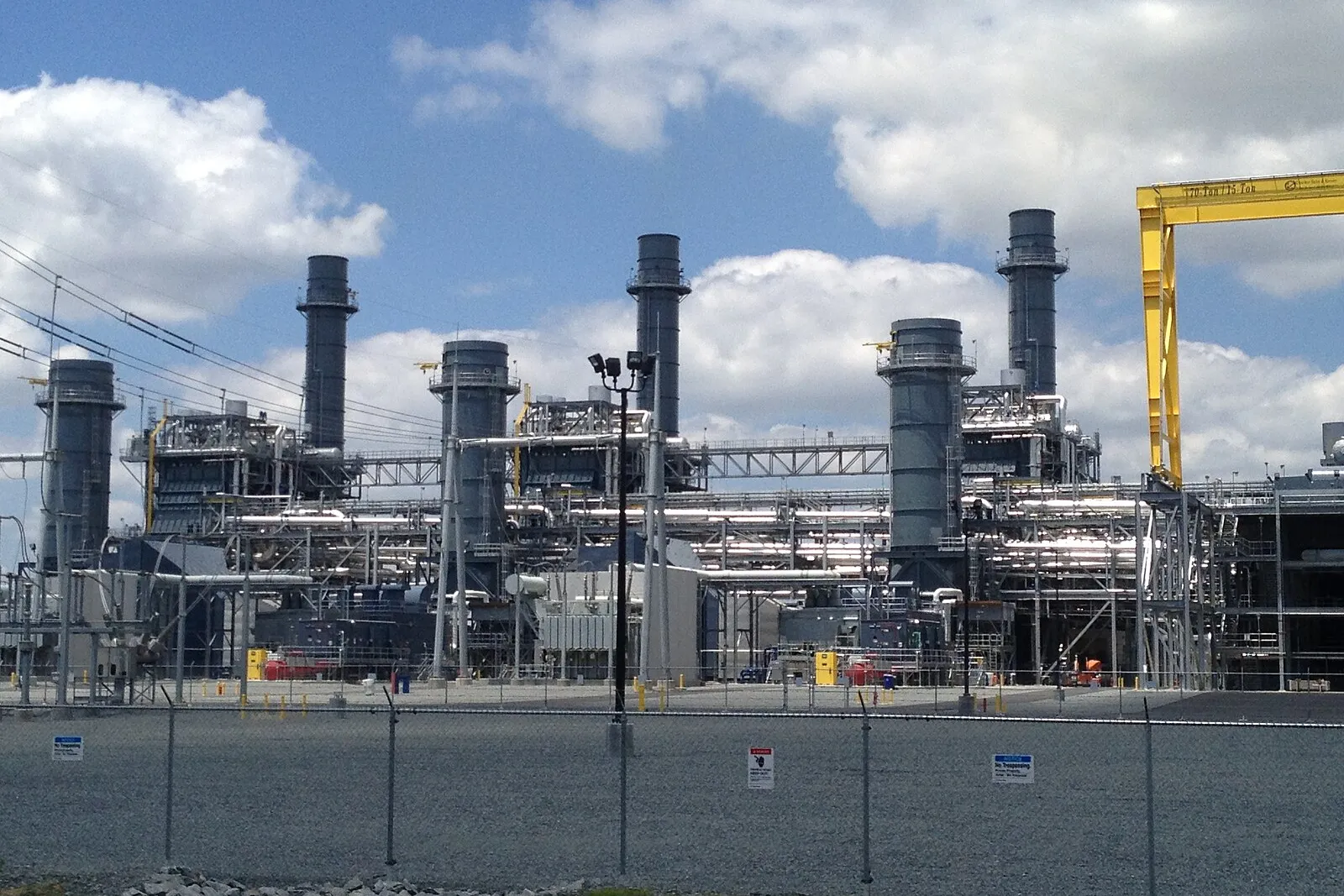
Combined-cycle gas power plant, North Carolina (United States). Photo Peoplepoweredbyenergy, CC BY-SA 4.0, via Wikimedia Commons.
The 2 trends are both under way, in different regions. In the United States, gas is the main source added for data centres by 2030 according to the International Energy Agency, and 210 GW of on-site gas plants are planned, 17 of them under construction; in Europe, renewables and nuclear would supply 85% in 2030. The low-carbon contracts of the large operators are numerous, but many cover existing plants or come into service from 2027, and they are counted over the year rather than hour by hour.
Contents
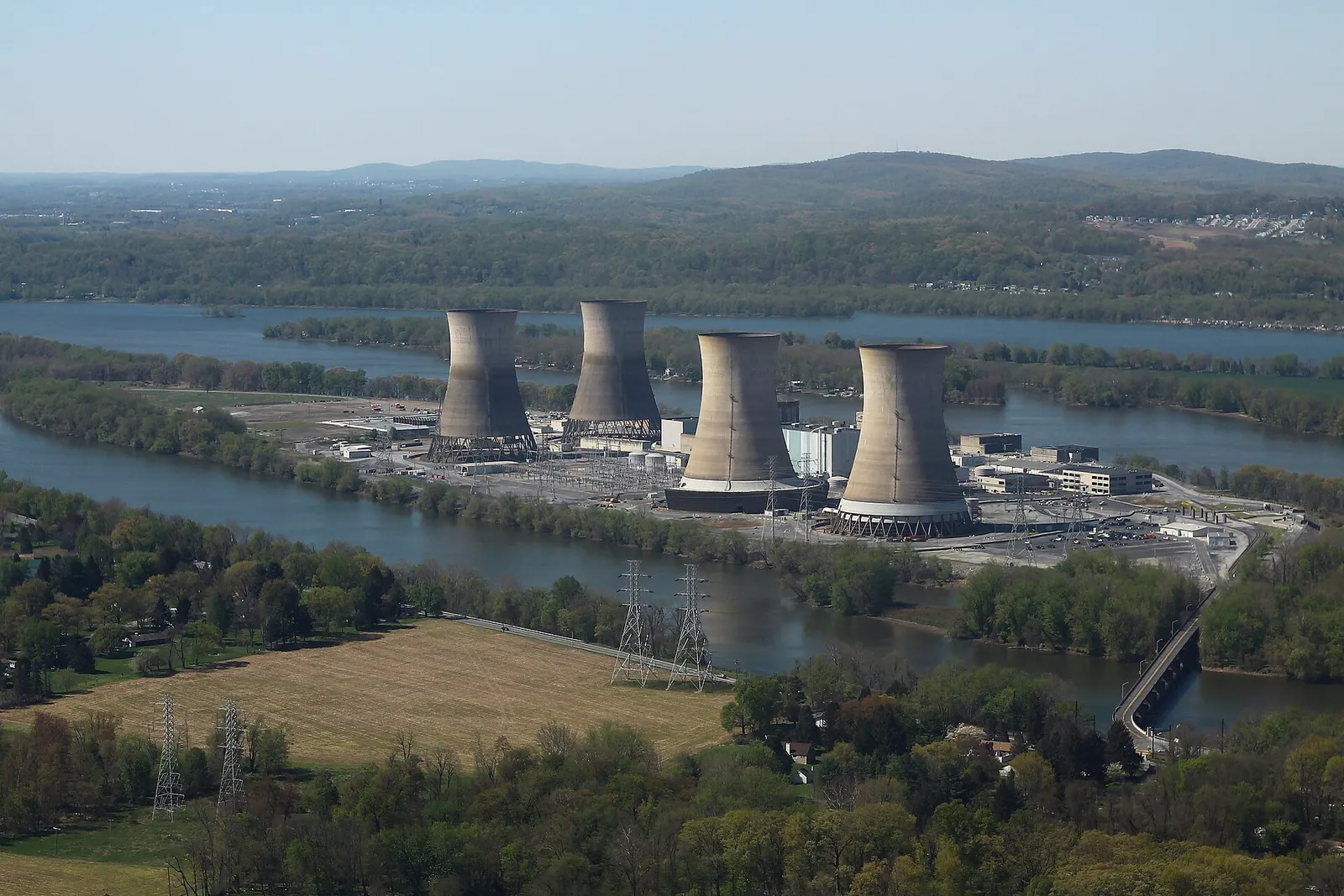
In September 2024, Microsoft signs for 20 years the electricity of a Three Mile Island reactor that its operator is going to restart. In August 2025, the Louisiana energy commission approves 3 gas plants to supply Meta's campus at Richland Parish. Each of these 2 announcements serves as an example for an opposing thesis: AI would finance nuclear and renewables, or it would revive gas.
Our analysis on the electricity shortage recalls the global assessment of the International Energy Agency (IEA) for 2030, about 340 TWh of gas for data centres and 360 of renewables, to which nearly 120 TWh of nuclear is added. Here we look at where each addition takes place, at what time, and what the announced contracts really bring.
Sources added by 2030, by region
The IEA details where the additional electricity for data centres will come from between 2024 and 2030. In the United States, where gas already supplies more than 40% of their electricity, it is the main source added, with more than 130 TWh, ahead of renewables, 110 TWh. In China, where coal supplies about 70%, coal and renewables each add about 90 TWh. In Europe, renewables and nuclear are to supply most of the addition, and 85% of data centre electricity in 2030.
Electricity added for data centres between 2024 and 2030, by source, in TWh (IEA projection, base case):
The gap comes down to the starting grid and to lead times. A reactor or a high-voltage line is counted in years; in the large European hubs, connecting a data centre takes 7 to 10 years on average according to the think tank Ember. Where the grid does not keep up, the operator generates on site. In October 2026, the IEA lists about 210 GW of gas plants planned to supply data centres directly, 190 GW of them at the proposal stage and 17 GW under construction, more than 95% in the United States. The IEA estimates that about 15 to 27 GW of on-site gas could supply data centres in 2030, and doubts that this route is faster at scale, for lack of turbines.
New production from the announced contracts, and date of entry into service
For the climate, a low-carbon contract counts through the new production it brings into being. A restarted reactor or a new reactor adds some; a contract on an existing plant that was already producing for the grid takes the same amount away from other consumers, unless it prevents its closure. The operators' large nuclear contracts fall into these 3 cases.
| Contract or project | Source | Power | New production | Entry into service |
|---|---|---|---|---|
| Microsoft and Constellation, Three Mile Island 1 (Pennsylvania) | Nuclear | 835 MW | Yes, restart of a shut-down reactor | 2027 targeted |
| Google and NextEra, Duane Arnold (Iowa) | Nuclear | 615 MW | Yes, restart of a shut-down reactor | Target start of 2029 |
| Meta and Constellation, Clinton (Illinois) | Nuclear | 1,121 MW | In part: 30 MW of uprate; according to Constellation, the contract avoids closure after 2027 | June 2027 |
| Amazon and Talen, Susquehanna (Pennsylvania) | Nuclear | 1,920 MW | No, existing production (uprates are under study) | Gradual ramp-up until 2032 |
| Google and Kairos Power | Small reactors | Up to 500 MW | Yes, new reactors | First reactor around 2030 |
| Meta and Entergy, Richland Parish (Louisiana) | Gas | 3 combined-cycle plants | Yes, new plants connected to the grid | Approved in August 2025 |
| Microsoft and Chevron, Texas | On-site gas | 2.67 GW | Yes, new plant behind the meter, off grid | 2028 targeted, investment decision expected at the end of 2026 |
| xAI, Memphis (Tennessee) | Gas, on-site turbines | 247 MW, 15 turbines | Yes, on-site turbines, off grid | Authorised in July 2025 |
| Crusoe, Abilene (Texas) | Gas, on-site turbines | Nearly 1 GW, 29 turbines | Yes, on-site turbines, off grid | Ordered in 2024 and 2025 |
| Data4 and EDF (France) | Nuclear | 40 MW, about 230 GWh a year | No, part of the existing fleet | Deliveries from 2026 |
Contracts and projects read in company press releases, regulators' decisions or the secondary reports cited in the margin, as at 13 November 2026. Capacities announced or contracted, none measured.
Of the 5 American nuclear contracts in the table, 3 add new production, 1 keeps running a plant that its operator said was threatened with closure, 1 concerns existing production; none delivers before 2027. Small reactors illustrate the gap between announcement and production: the IEA counts about 45 GW of agreements with data centres at the end of 2025, memoranda of understanding and letters of intent, for first projects expected around 2030. On-site turbines are already running, in Memphis since 2025; but delivery times for large turbines reach 5 years or more according to the IEA.
Renewable electricity purchases are counted over the year
Purchases of low-carbon electricity by contract are massive. Companies announced 55.9 GW of clean electricity contracts in 2025 according to BloombergNEF, of which 49% by Meta, Amazon, Google and Microsoft. Google says it signed more than 12 GW of new clean electricity in 2025; Microsoft and Brookfield concluded a framework in 2024 for about 10.5 GW of new renewable capacity.
These contracts are counted over the year: Microsoft, Meta and Amazon say they cover 100% of their annual consumption with renewable electricity, without publishing, in their latest report, an hourly share for all of their consumption. Google is the only one of the 4 to publish this share: in 2025, carbon-free electricity covered about 65% of the consumption of its data centres and offices hour by hour, against 66% in 2024, despite consumption rising by 37%. The IEA sums it up: electricity bought by contract is often neither produced near the data centres nor when they need it, and the grid often covers it with other sources, such as gas or coal. Our chart of contracts and the grid shows this same gap in emissions, at Meta, Google and Microsoft.
France, a special case
In France, the grid already supplies low-carbon electricity, and data centre contracts concern the existing fleet. Data4 is the first data centre operator in France to sign a nuclear production allocation contract with EDF: 40 MW for 12 years, about 230 GWh per year from 2026. This contract does not add any production; it fixes the price and the origin of a share of existing production. The French question concerns the grid and its grid connections, which is addressed by our viewpoint on hosting data centres.
Our reading
At Projet Celsius, we think the question has no global answer. In the United States, where power is needed quickly and the grid cannot always keep up, the growth of data centres increases gas, through new plants and on-site turbines, almost as much as it increases renewables; in Europe, the added electricity comes mainly from renewables and nuclear, and in France from a fleet that is already low-carbon. The low-carbon contracts announced in the United States add production from 2027, and only in part. To judge an operator's commitment, 3 pieces of information matter: is the electricity new, when does it arrive, and what share of consumption does it cover hour by hour.
The capacities in the table are announced or contracted; none is measured production. The IEA's projections by region date from April 2025 (base case); its October 2026 update raises the share of on-site gas. Several contracts are read in secondary reports (Duane Arnold, xAI); the capacity of the 3 Louisiana plants is not given in the commission's order.
Sources
21 documents
- Ember, Grids for data centres: ambitious grid planning can win Europe's AI race, 19 June 20252025entry 322
- IEA, Energy and AI, full report, 10 April 2025, chapter 2 (electricity supply of data centres by region)2025entry 384
- IEA, Key Questions on Energy and AI, full report, 16 April 20262026entry 385
- IEA, Powering Artificial Intelligence, 14 October 20262026entry 333
- Constellation, press release on the restart of Three Mile Island 1 (Crane Clean Energy Center) and the contract with Microsoft, 20 September 20242024entry 386
- Constellation, One year later, Crane Clean Energy Center still in the spotlight and ahead of schedule2025entry 387
- American Public Power Association, NextEra and Google to restart Duane Arnold nuclear plant, 27 October 20252025entry 391
- Constellation, Constellation and Meta sign 20-year deal for clean, reliable nuclear energy in Illinois, 3 June 20252025entry 389
- Talen Energy, press release on the 1,920 MW contract with Amazon at Susquehanna, 11 June 20252025entry 388
- Google, New nuclear clean energy agreement with Kairos Power, 14 October 20242024entry 390
- Louisiana Public Service Commission, order U-37425 on the Entergy Louisiana plants for Meta's data centre, 20 August 20252025entry 392
- Chevron, Chevron Reports Second Quarter 2026 Results, press release of 31 July 2026 (exhibit 99.1 of a 8-K), 20-year electricity contract with Microsoft (2.67 GW)2026entry 393
- TechCrunch, xAI gets permits for 15 natural gas generators at Memphis data center, 3 July 20252025entry 394
- GE Vernova, Going big: Crusoe ordering flexible gas to support data center growth, 24 July 20252025entry 395
- Data4 and EDF, press release on the nuclear production allocation contract, 4 September 20252025entry 396
- BloombergNEF, press release on corporate clean electricity purchases in 2025, 19 February 20262026entry 397
- Google, 2026 Environmental Report, full report2026entry 398
- Microsoft, 2026 Environmental Sustainability Report, full report2026entry 400
- Meta, 2025 Sustainability Report2025entry 401
- Amazon, 2025 Sustainability Report2025entry 402
- Reuters, picked up by The Star, Chevron signs power supply deal with Microsoft for Texas data center, 22 June 20262026entry 399
Every figure was read in its source; the hub's methodology is described in Methodology and sources.
AI Impact, Projet Celsius, "Is AI reviving gas, or financing low-carbon electricity?", 13 November 2026. https://projetcelsius.com/en/ai/analyses/is-ai-reviving-gas-or-funding-low-carbon-power/