

Focus · AI and climate
AI emissions
The emissions reported by the large operators, and those of AI compared with countries and sectors.
By Projet Celsius
 Where does this figure come from?"Meta's electricity emits only 1,358 tonnes of CO2e"Read the analysis →You are hereAI emissions1.14gCO2efor a Le Chat answer of about one page, over the full life cycleMistral AI, July 2025
 Focus areaScenarios and uncertaintiesThe calculation methods, which put the same question at anywhere from 0.012 to 1.14 gram of CO2e.Open the focus area →
 Focus area2030 trajectories458gCO2e/kWhfor one kWh of electricity in the world in 2025, over the life cycleEmberOpen the focus area →
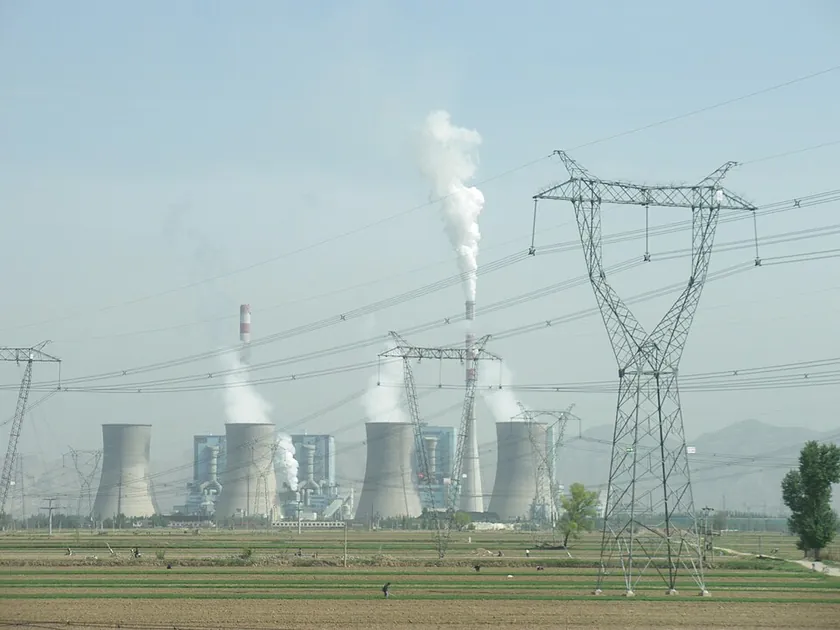
The Shuozhou coal power plant, in Shanxi (China). Photo Kleineolive, Wikimedia Commons, CC BY 3.0
Charts and maps of the focus area
Charts and maps →Focus area
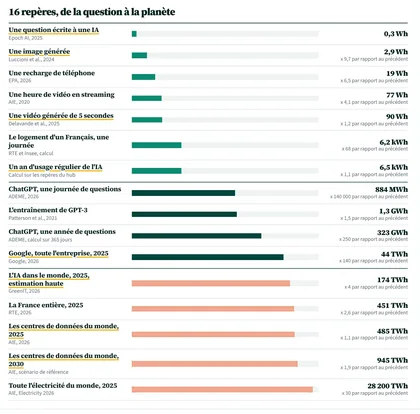
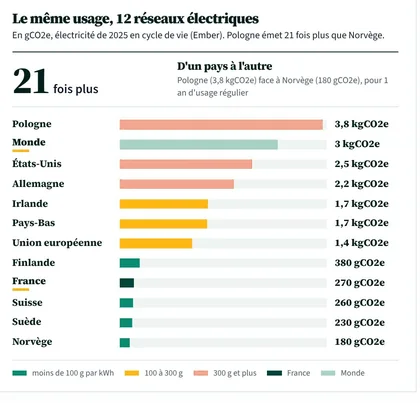
ChartCompany · 2019 to 2025Google and Microsoft emissions+81%for Google, since 2019Google and Microsoft, 2026 reportsKey figureOne question · 2025Carbon footprint of one Le Chat response, life cycle1.14gCO2ea page of text, full life cyclethe same answer: 45 mL of waterMistral Large 2, with Carbone 4 and ADEMEMistral AI, July 2025ChartWorld · 2023 to 2030AI emissions, comparedBelgium, 202498IA, 202599France, 2024367IA, 2030636Aviation, 2023882 Mt99MtAI in 2025, like BelgiumGreenIT; Eurostat; Citepa; ATAGChartCompany · logElectricity emissions, by contract or by gridMetaGoogleMicrosoftdepending on the contractsdepending on the grid1 to 4,400the gap at MetaMeta, 2025; Google and Microsoft, 2026
Analyses and articles
Analyses
Where does this figure come from? Climate20 October 2026"Meta's electricity emits only 1,358 tonnes of CO2e"In 2024, Meta reports 1,358 tonnes of CO2e for the electricity it buys, the annual footprint of 170 people in France. The same report also gives 5.97 million tonnes. Both of the 2 figures are accurate.
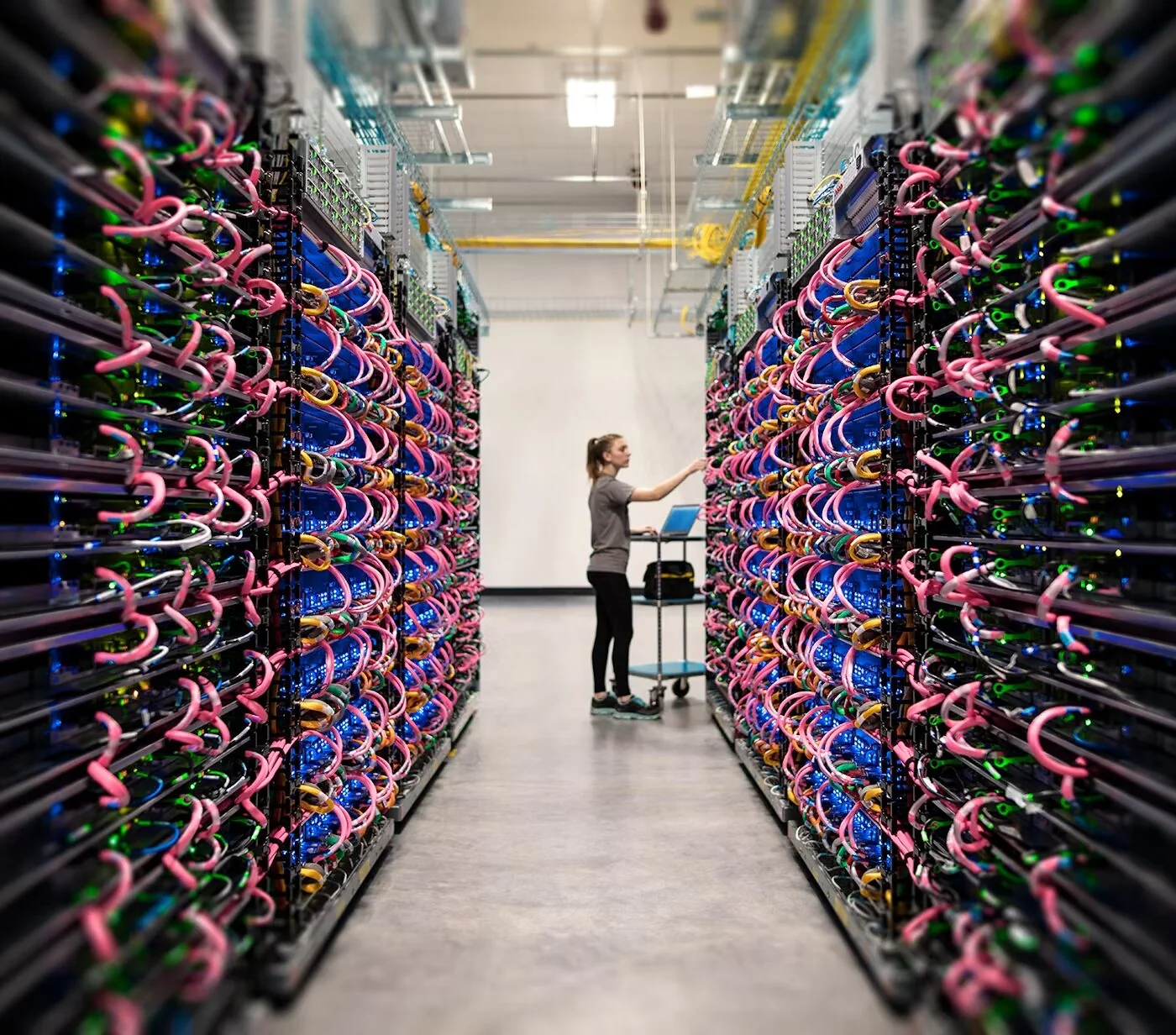 AnalysisClimate12 November 2026Why do estimates of AI's impact differ?Calculated with French electricity, one question to an AI emits 0.012 gram of CO2e; Mistral AI publishes 1.14 gram, more than 90 times as much. Its water use ranges from 0.26 to 45 millilitres depending on the published measurements. These figures are accurate; they do not cover the same scope.
On the Projet Celsius blog ↗

Sources for this focus area
- Google, 2026 Environmental Report, June 2026 ↗
- Microsoft, 2026 Environmental Sustainability Report, Data Fact Sheet, July 2026 ↗
- Meta, 2025 Environmental Data Index, October 2025 ↗
- GreenIT, Impacts environnementaux et sanitaires de l'intelligence artificielle dans le monde en 2025 et 2030, September 2026 ↗
- Eurostat, greenhouse gas emissions (env_air_gge) ↗
- Citepa, Secten 2026 report ↗
- ATAG, Facts and figures, aviation emissions 2023 ↗
Across the hub
 AI Impact DatabaseAll the figures, their methodology and their sources.
 AI Ranking10 assistants rated out of 100: performance, ethics and environment.


 AnalysesThe signed pieces: analyses, viewpoints, "Where does this figure come from?".
 Charts and mapsThe reference visuals, with their data and sources.
 ToolsOpen calculations, your assumptions on the left, the result on the right.




A question about a figure?
An error, a source to add, a methodology question, a press request: write to us. Guillaume Pakula, Clément Reynaud, Sébastien Pierfederici and Alexandre Veilly will reply.
Write to us →
Projet Celsius, which runs this hub, also helps companies measure and reduce the footprint of their AI use.
Accounting for AI in your Bilan Carbone® ↗