
 Society14 November 2026
What should we be afraid of with AI?
Measured harms, assumed risks and the level of evidence for each




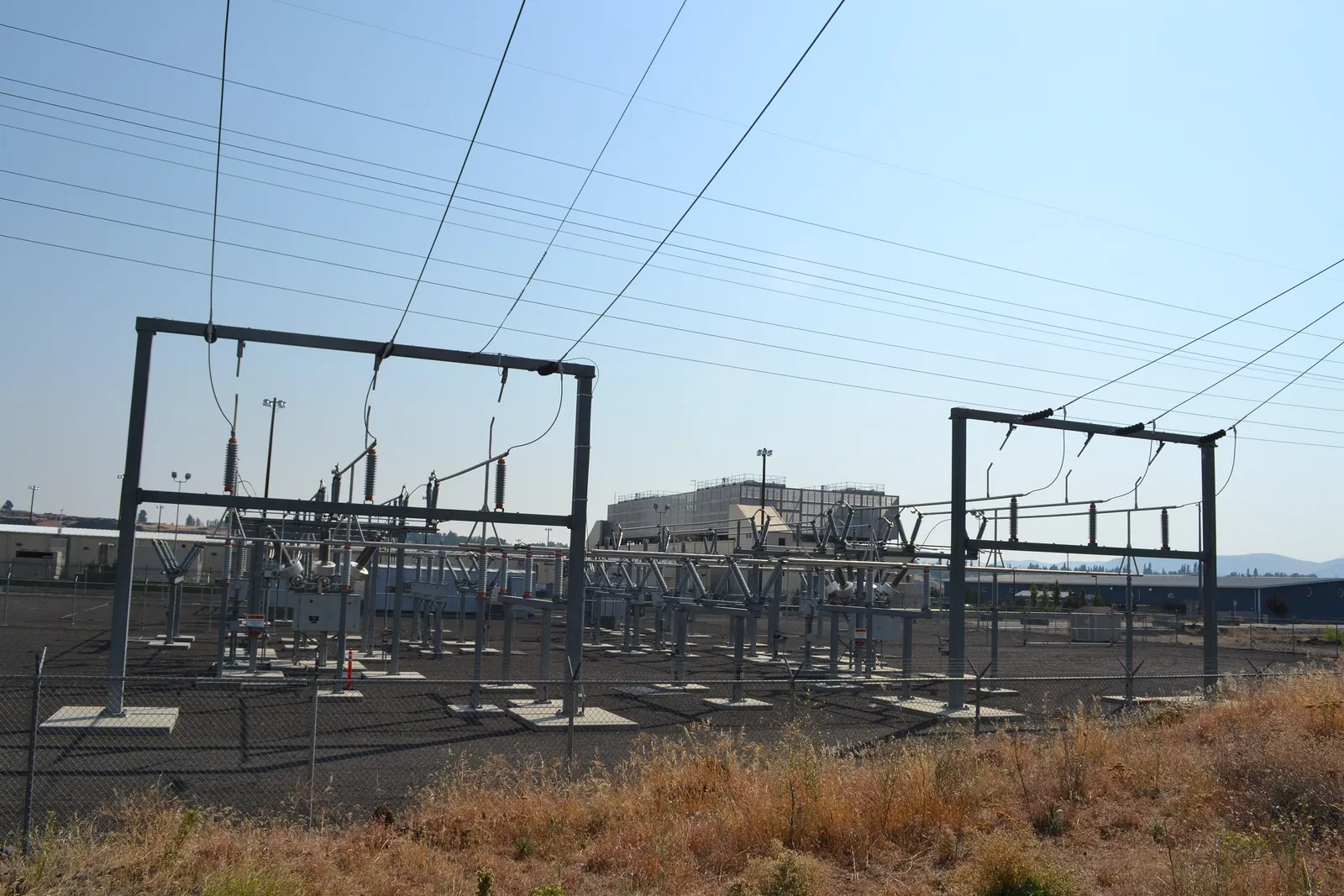
The electrical substation of the Google data centre in The Dalles, Oregon, in 2011. Photo Visitor7, CC BY-SA 3.0, via Wikimedia Commons.
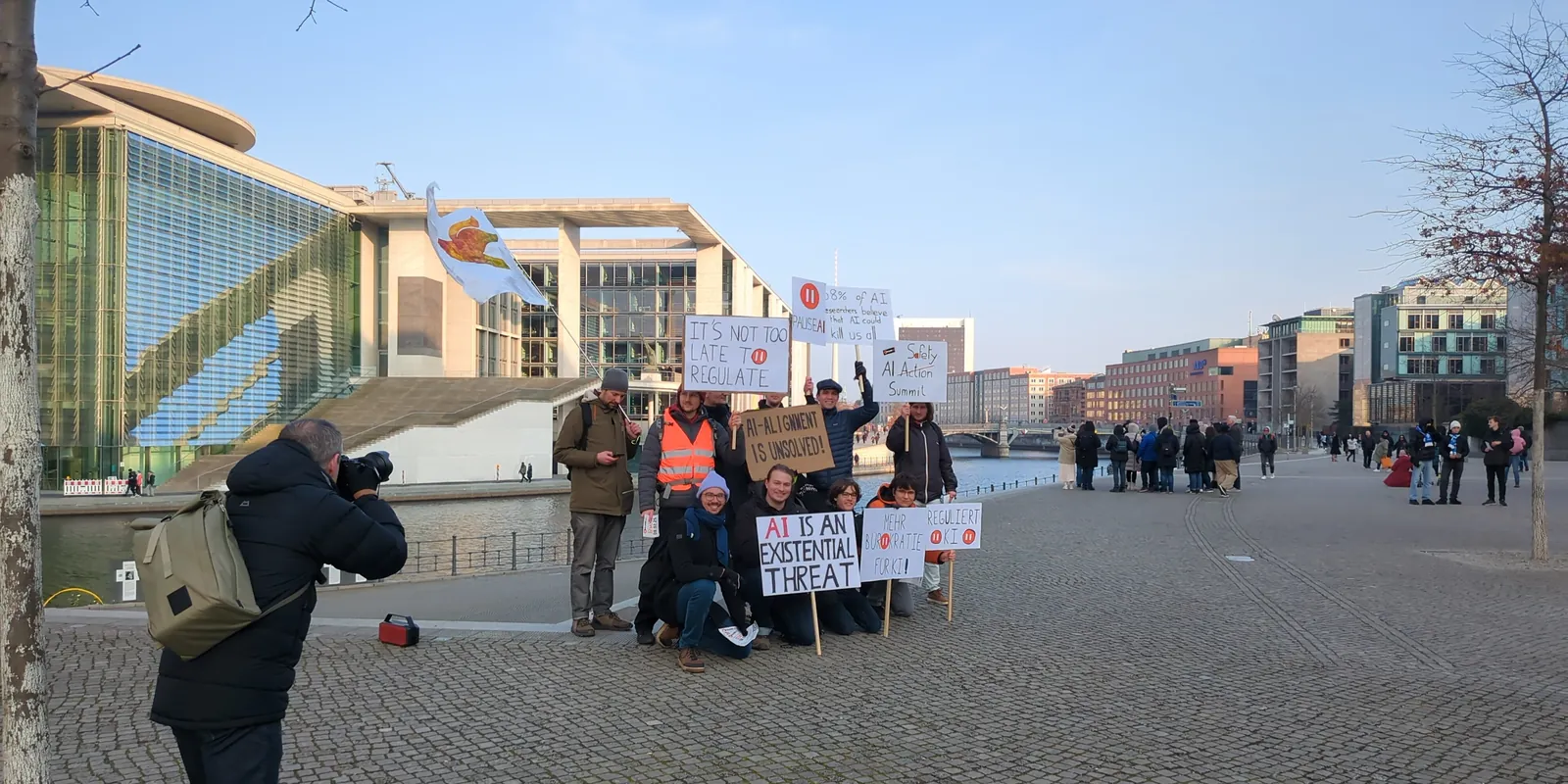
When surveyed in 2023, 2,778 AI researchers gave a median 5% probability to an "extremely bad" outcome, such as human extinction, if machines eventually do all tasks better than humans; this is an opinion that no observation can yet verify. In the same survey, the scenarios over the next 30 years that worry the most researchers are false information and the manipulation of opinion, harms that we already observe. Our position: fear is better directed at what can be measured, electricity, entry-level employment, information and learning, because these harms are decided now, in grid connections, default settings and contracts. The objection that we do not treat as a priority: a low but irreversible risk also deserves attention.
Contents
The question "is AI dangerous?" mixes 2 kinds of danger: harms that we observe and count, and scenarios that we cannot yet observe, the most serious of which is the loss of control of systems more capable than we are. The French, for their part, put a harm that is already here first: when surveyed by Ipsos for CESI in January 2025, 49% cite false information among the main risks of generative AI, 41% the replacement of jobs, and only 19% environmental impact.
Measured harms and assumed risks
| Risk | What we know | Level of evidence |
|---|---|---|
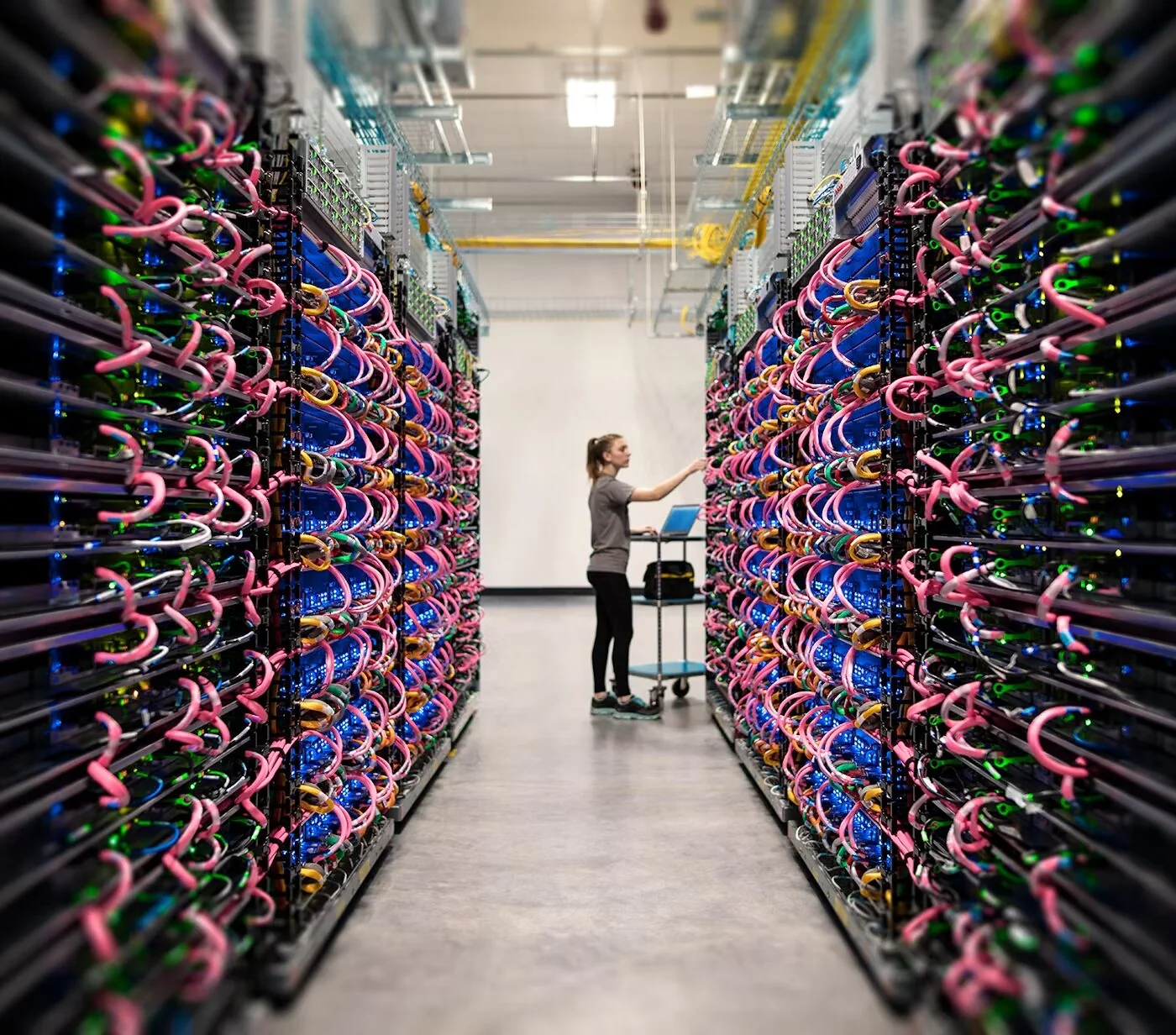
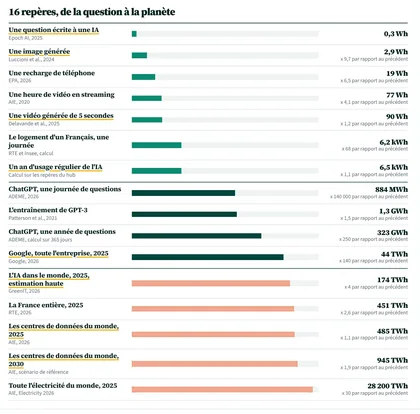
| Electricity and climate | 415 TWh for the world's data centres in 2024, 945 TWh in 2030 in the IEA base scenario; about 180 MtCO2 in 2024 | measured for 2024, projected for 2030 |
| Information | 3,749 AI-generated news sites in 16 languages, recorded by NewsGuard in June 2026 | count; the scale of the harm is not measured |
| Entry-level employment | in France, permanent-contract hiring of 21-29 year olds down by about 28% in the most exposed occupations, 8% in the least exposed | measured; the cause is not established |
| Learning | in a trial in a secondary school, pupils trained with an AI that gives the answers do worse in the exam without it | randomised trials, few in number |
| Personal data | conversations kept for 72 hours to several years depending on the publisher and the settings | conditions published by the publishers |
| Loss of control, extinction | median of 5% probability of an extremely bad long-term outcome, if machines one day do all tasks better than humans (2,704 responses from AI researchers, 2023) | expert opinion, with experts disagreeing among themselves; no measurement possible today |
Each row links to its source in the margin; the rows on employment, learning and data are detailed in the hub analyses cited below.
The first 5 rows describe harms that are already happening, with different degrees of proof. The electricity of data centres is counted by the International Energy Agency; our analysis on aviation scales it. The fall in hiring of young people is measured without its cause being established, as detailed in our analysis on entry-level workers. The effects on learning rest on a few trials (our analysis), and the retention of conversations on the publishers' terms (our analysis). The last row is of a different nature: a forecast.
Extreme risks according to researchers
The broadest survey on the subject questioned, in 2023, the 2,778 researchers who had published in the main AI conferences. They were asked to assume that machines will one day do all tasks better and more cheaply than humans. In that case, their median probability of an "extremely bad" long-term outcome, such as human extinction, is 5 %, with a mean of 9%; 38% give at least 10%. Asked directly about extinction or a lasting loss of power for humanity, the question gives a median of 5% or 10% depending on the wording. In the same survey, 64% of respondents also give a non-zero probability to an extremely good outcome. The authors note that no proof understood by everyone makes such an outcome certain or implausible.
The international report on AI safety, chaired by Yoshua Bengio and published in February 2026 with more than 100 experts, describes the same uncertainty: opinions on loss of control vary widely, some judge these scenarios implausible, others likely enough to deserve attention given their seriousness. It adds that current systems do not have the capabilities to pose this risk, but are progressing in areas that lead to it, such as autonomous operation. In May 2023, a statement signed by researchers and industry leaders called for reducing the risk of extinction from AI to be a global priority, alongside pandemics and nuclear war.
The same survey asked which scenarios over the next 30 years deserve "substantial" or "extreme" concern. At the top come the spread of false information (86%) and the manipulation of opinion (79%), then, at 73% each, the use of AI by dangerous groups to make weapons such as modified viruses and its use by authoritarian regimes to control their population, and at 71% the worsening of economic inequality. The first 2 are harms that we already observe.
The objection of low but irreversible risk
The best objection to our position is simple. A risk of a few per cent, if irreversible, weighs more than a certain but repairable harm: one does not recover from an extinction, whereas one can train beginners differently or decarbonise electricity. This is the reasoning that leads to funding defence against asteroids or pandemic preparedness, whose annual probability is low. It does not require believing in the worst, only not ruling it out.
We take it seriously, and we do not treat it as a priority for 3 reasons. The 5% is the median of individual opinions, which no observation can verify today; it changes with the wording of the question, from 5% to 10% in the median, and from one survey to another: the share of respondents giving at least 10% went from 48% in 2022 to 38% in 2023, on different samples. Present harms have levers that are being decided now, and that commit us for a long time: a connected data centre runs for years on the electricity allocated to it, and if hiring of beginners stays low, whatever the cause, years of learning the trade are missing. Finally, some of the tools serve against the 2: evaluating models before release, obliging publishers to disclose what they know. The European AI regulation has already prohibited, since 2 February 2025, harmful manipulation, social scoring and emotion recognition in the workplace and in education.
Our position
For us, at Projet Celsius, attention should go first to what is measured. What AI is already doing to electricity, information, entry-level employment and learning can be measured, imperfectly, and is decided this year: in data centre connections, assistants' default settings, purchasing contracts and the way young people are trained. This is where we put our attention, and where we ask for public figures. The extreme scenarios remain an open question, which we leave to safety specialists without ridiculing it; our view on guilt and the one on boycotting show where, for the climate, the decisions that matter are to be found.
The 5% is a median of researchers' opinions; no measurement underlies it. The fall in hiring of young people is measured without an established cause. The 945 TWh for 2030 is an IEA scenario. The international report is cited in its online version.
Sources
12 documents
- Ipsos-CESI study, an engineering school, L'usage de l'intelligence artificielle par les Français2025entry 113
- IEA, Energy and AI2025entry 1
- IEA, Key Questions on Energy and AI2026entry 2
- NewsGuard, AI Tracking Center, updated on 23 June 20262026entry 475
- International AI Safety Report 2026, chaired by Yoshua Bengio2026entry 474
- Bergeaud, Bertheau, Bunel, Degos and Palladino, Exposition des métiers à l'IA générative, adoption par les entreprises et dynamiques du marché du travail en France, HEC Paris and Banque de France2026entry 80
- Bastani, Bastani, Sungu, Ge, Kabakcı and Mariman, Generative AI without guardrails can harm learning: Evidence from high school mathematics, PNAS2025entry 102
- Grace et al., Thousands of AI Authors on the Future of AI, arXiv 2401.02843, October 2025 version2024entry 472
- Center for AI Safety, Statement on AI Risk2023entry 473
- European Commission, AI Act, page updated in October 20262026entry 183
- Google, Gemini Apps Privacy Hub2026entry 161
- Anthropic, How long do you store my data?2026entry 165
Every figure was read in its source; the hub's methodology is described in Methodology and sources.
AI Impact, Projet Celsius, "What should we be afraid of with AI?", 14 November 2026. https://projetcelsius.com/en/ai/analyses/what-should-we-fear-about-ai/