
 Uses13 November 2026
Why do reasoning modes and agents use so much more energy?
The text a model writes and rereads, and its energy use, in direct response, in reasoning and in agent mode




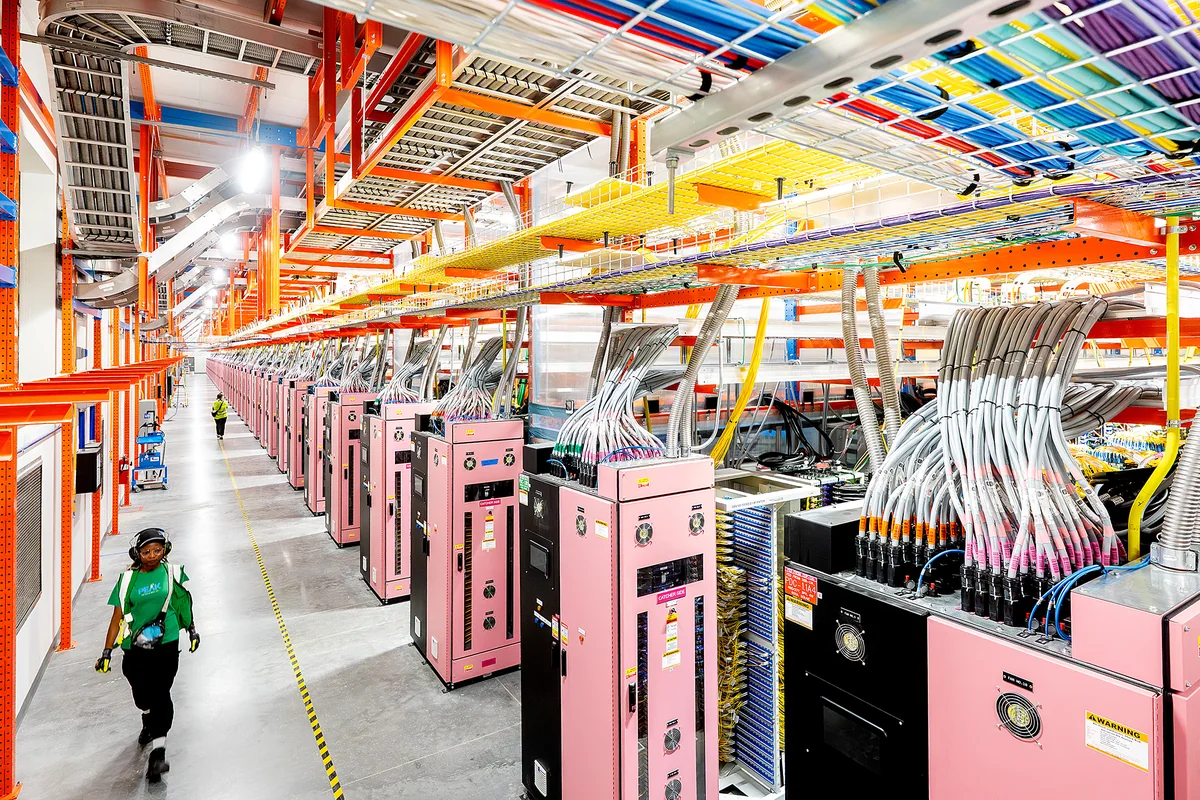
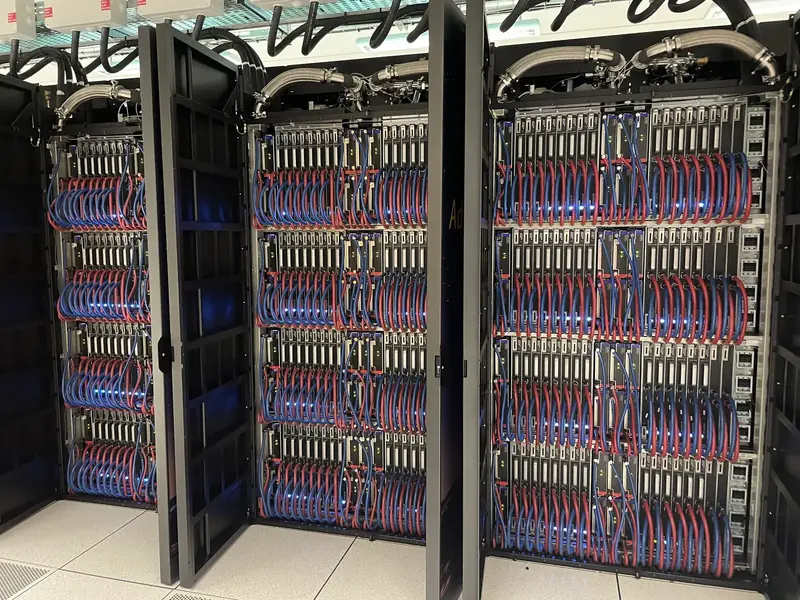
A hall at Project Rainier, where AWS trains and serves Anthropic's Claude models. Photo Amazon (AWS), aboutamazon.com.
A language model writes its answer fragment by fragment, and each fragment, or token, requires a pass through the whole model; at each call, it also rereads all the text it is given. Its energy use therefore follows the length of the text written and reread. In reasoning mode, the model first writes a draft that the user does not see: energy use rises by 92% on average across the open models measured by PEReN, and by 150 to 700 times for the 3 models that Hugging Face measured with and without reasoning, depending on the length of the draft. An agent chains calls and rereads its context each time: on his own use of Claude Code, which he says is more intensive than average, the climatologist Zeke Hausfather estimates one instruction at about 150 Wh, about 600 times the energy of a median question to an assistant (250 to 1,200 times).
Contents
The most frequently cited figures on the energy of AI relate to a short query to an assistant, of the order of 0.3 Wh. At the end of 2025, however, reasoning models handled more than half of the tokens passing through the OpenRouter platform, which mainly serves developers, and agents chain model calls on their own. This explainer follows the text the model writes and rereads in each mode, because the energy depends on it; the analysis of the change over time follows the growth of these uses.
The token, a unit of computation
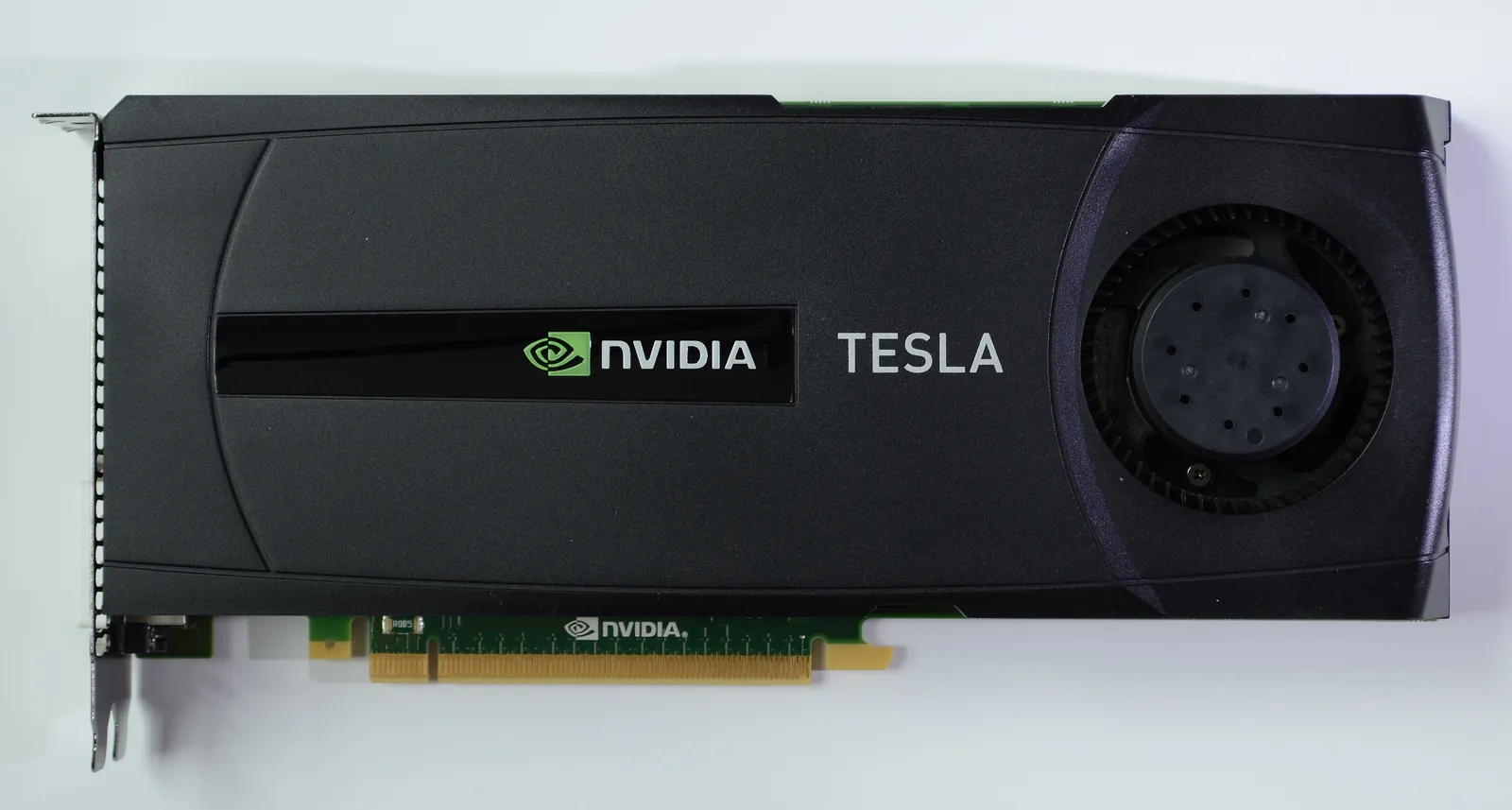
A language model splits text into tokens, fragments of words. It writes its response one token after another, and each token written requires a pass through the whole model, on GPUs (the explainer on GPUs explains why). Before writing, it reads all the text it is given: the question, the previous conversation, the attached documents. The energy therefore has 2 parts, one that follows the length of the text written, the other that of the text read.
Epoch AI estimates 0.3 Wh a query to GPT-4o that writes 500 tokens, and Microsoft estimates the energy of a median query in an optimised deployment at 0.31 Wh. The text read weighs little as long as it stays short. With 10,000 input tokens, about 20 pages, Epoch AI's estimate rises to 2.4 Wh; with 100,000 tokens, to 40 Wh, because the computation for reading grows faster than the length of the text when it becomes long.
Reasoning mode
In reasoning mode, the model first writes an intermediate text, in which it breaks the question down and checks its steps, then its response. The user usually sees only a summary of it, or nothing, but each token of this draft costs as much as a token of the response. Hugging Face measured 3 open models with and without reasoning: they write 300 to 800 times more tokens and consume 154 to 697 times more energy with reasoning switched on, depending on the model. On average, the reasoning models in its ranking consume 30 times more than the models without reasoning, a comparison between families of models rather than between 2 settings.
The gap depends on the length of the draft, and therefore on the task and the setting. PEReN, for Arcep, measured 22 open models: switching on reasoning adds 92% of energy on average, with a 95% interval from -21% to +348%, and 849% on average on programming exercises, against 41% on general knowledge questions. For GPT-5, the estimate by Jegham and co-authors ranges from 2.33 Wh with minimal reasoning effort to 17.15 Wh with high effort, for a question of average length, which is 7 times more. On a simple text task, the IEA counts about 2 times the electricity of a model of comparable size.
 Uses
Reasoning mode multiplies energy use
Energy with reasoning, relative to the same request without, as a multiple · Measurements from 2025 and 2026
Source: Arcep and PEReN, 2026; Hugging Face, 2025 · projetcelsius.com/en/ai · CC BY 4.0
Agents
An agent receives a goal rather than a question. It calls the model, which decides on an action: reading a file, running a search, executing code. The result is added to the context, and the model is called again with the whole, which grows longer at each step. The text reread thus grows from call to call. Anthropic states that its agents consume about 4 times more tokens than a conversation, and its multi-agent systems about 15 times more. On software repair tasks, Bai and co-authors count 1,000 times more tokens for an agent than for a code exchange or reasoning about code, mostly input tokens, that is reread context.
The climatologist Zeke Hausfather logged his own use of Claude Code over 8 weeks in 2026: 1,138 instructions typed, more than 14,000 calls to the model and 3.2 billion tokens. 96% of these tokens are rereads of the context, held in cache, and the text he sees is only 0.4% of the total. According to him, this amounts to 12 calls and 2.9 million tokens on average per instruction. He estimates its energy at 150 Wh per instruction, from 60 to 290 Wh depending on the method for converting tokens into energy and the cost assigned to a cached reread (10% of that of a fresh read in his central estimate, from 1 to 25% in his bounds); this is the estimate of a heavy user, not a study. Microsoft estimates that long reasoning queries and agent queries consume more than 10 times the energy of a median query, and the IEA writes that reasoning, agents and video generation can consume hundreds or thousands of times the energy of a simple text generation, without detailing the calculation. Other published estimates, lower, are detailed in our article on the footprint of Claude.
The 3 modes compared, from 3 sources
| Mode | Text written and reread | Estimated energy | Source |
|---|---|---|---|
| Direct response | about 500 tokens written | 0.3 Wh | Epoch AI, GPT-4o, 2025 |
| Reasoning | 300 to 800 times the tokens of the same model without reasoning | 2.33 Wh (minimal effort) to 17.15 Wh (high effort), average question | Hugging Face, 2025; Jegham et al., GPT-5, 2025 |
| Coding agent | about 2.9 million tokens per instruction, in about 12 calls, of which 96% reread from cache | 150 Wh (60 to 290) | Zeke Hausfather, Claude Code, 2026 |
Estimates from different sources, on different models: orders of magnitude, not the measurement of a single model in 3 modes. Tokens and calls per instruction: averages given by Zeke Hausfather.
From a short response estimated at 0.3 Wh to an agent instruction estimated at 150 Wh, the ratio is about 500, our calculation; Zeke Hausfather himself counts about 600 times a median question. An agent instruction is not a question: it triggers 12 calls to the model on average. The gap comes first from the number of tokens: a longer draft, then a context reread at each call. Over a day, the heavy agent use logged by Zeke Hausfather amounts to about 3 kWh; the analysis of a year of use derives the annual order of magnitude from it, the analysis of tasks by occupation places it next to other uses, and the one on everyday actions quantifies what the choice of mode changes.
Our reading
For us at Projet Celsius, an energy figure "per query" says little if it does not specify the mode. The short response, around 0.3 Wh, is the best-documented and least costly use; reasoning and agents multiply it by 2 to several hundred times depending on the model, the task and the available estimates, and these are the ones spreading. Providers do not publish the energy of their reasoning modes or their agents: the orders of magnitude above come from open models, external estimates and one user's log. For the user, the lever is the same in all 2 cases: the amount of text the model is made to write and reread.
The energy figures quoted are estimates, except the measurements by Hugging Face and PEReN, made on open models and on the GPU alone. The 3 modes in the table come from different sources and models: the gap between them is an order of magnitude. Zeke Hausfather's estimate covers his own use only and depends on the conversion method and the cost assigned to cached rereads. Other estimates of the energy of an agent, made on other uses, give lower values.
Sources
11 documents
- OpenRouter and a16z, State of AI2025entry 466
- Epoch AI, How much energy does ChatGPT use?2025entry 20
- Oviedo, Kazhamiaka, Choukse et al. (Microsoft), Energy use of AI inference, efficiency pathways, and test-time scaling, Joule2026entry 198
- Hugging Face, AI Energy Score v22025entry 26
- PEReN for Arcep, Étude IA et environnement, technical report2025entry 121
- Jegham, Abdelatti, Elmoubarki and Hendawi, How Hungry is AI? Benchmarking Energy, Water, and Carbon Footprint of LLM Inference, version 62025entry 239
- IEA, Energy and AI2025entry 1
- Anthropic, How we built our multi-agent research system, 13 June 20252025entry 328
- Bai et al., How Do AI Agents Spend Your Money? Analyzing and Predicting Token Consumption in Agentic Coding Tasks, arXiv 2604.227502026entry 465
- Zeke Hausfather, The real energy use of agentic AI, The Climate Brink2026entry 120
- IEA, Key Questions on Energy and AI2026entry 2
Every figure was read in its source; the hub's methodology is described in Methodology and sources.
AI Impact, Projet Celsius, "Why do reasoning modes and agents use so much more energy?", 13 November 2026. https://projetcelsius.com/en/ai/analyses/why-reasoning-and-agents-use-more-energy/

 Electricity