

Reasoning mode multiplies energy use
Energy with reasoning, relative to the same request without, as a multiple
Reasoning mode multiplies energy use
Sources
Source: Arcep and PEReN, 2026; Hugging Face, 2025. projetcelsius.com/en/ai · CC BY 4.0
The analysis
- In reasoning mode, the model writes a long intermediate text before answering: energy follows the amount of text produced.
- The 2 studies do not compare the same thing: PEReN switches reasoning on or off on the same models; Hugging Face's average mainly compares families of models.
- For a simple question, the quality gain is uneven across tasks: it is the most costly setting to leave on by default.
The figures
- PEReN, average (22 open models): × 1.9.
- PEReN, code (maximum, one task): × 9.5.
- Hugging Face, average (2 model groups): × 30.
- Hugging Face, same model (3 models, with then without): × 150 to 700.
Assumptions
- GPU energy at the time of the response.
- Open models, measured on GPUs alone.
- Commercial assistants do not publish measurements of their reasoning mode.
More on uses
The whole Uses topic →Charts and maps
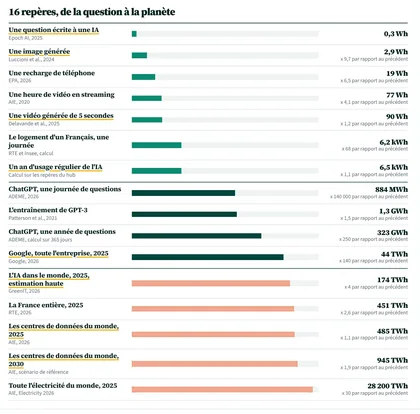
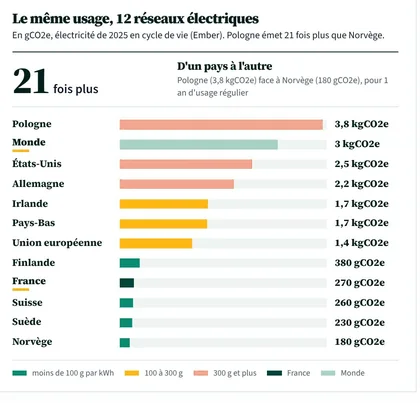
Chart UsesEnergy savings from 4 settings10times as muchsaved by shortening the response rather than the instructionChartUsesElectricity used by a question, an image, a videoabout300timesa 5-second video versus one questionChartUsesElectricity used by a generated video, 7 models measured× 3,000from 0.14 Wh to over 415 Wh per videoChartUsesElectricity by type of AI taskover1,000timesimage generation versus text classification
Analyses
 Where does this figure come from?Uses20 October 2026"A generated image is a phone charge"The comparison did the rounds of the media in late 2023. It came from a serious study, but from its preliminary version, from the most power-hungry generator, and from a phone charge counted as 12 Wh.
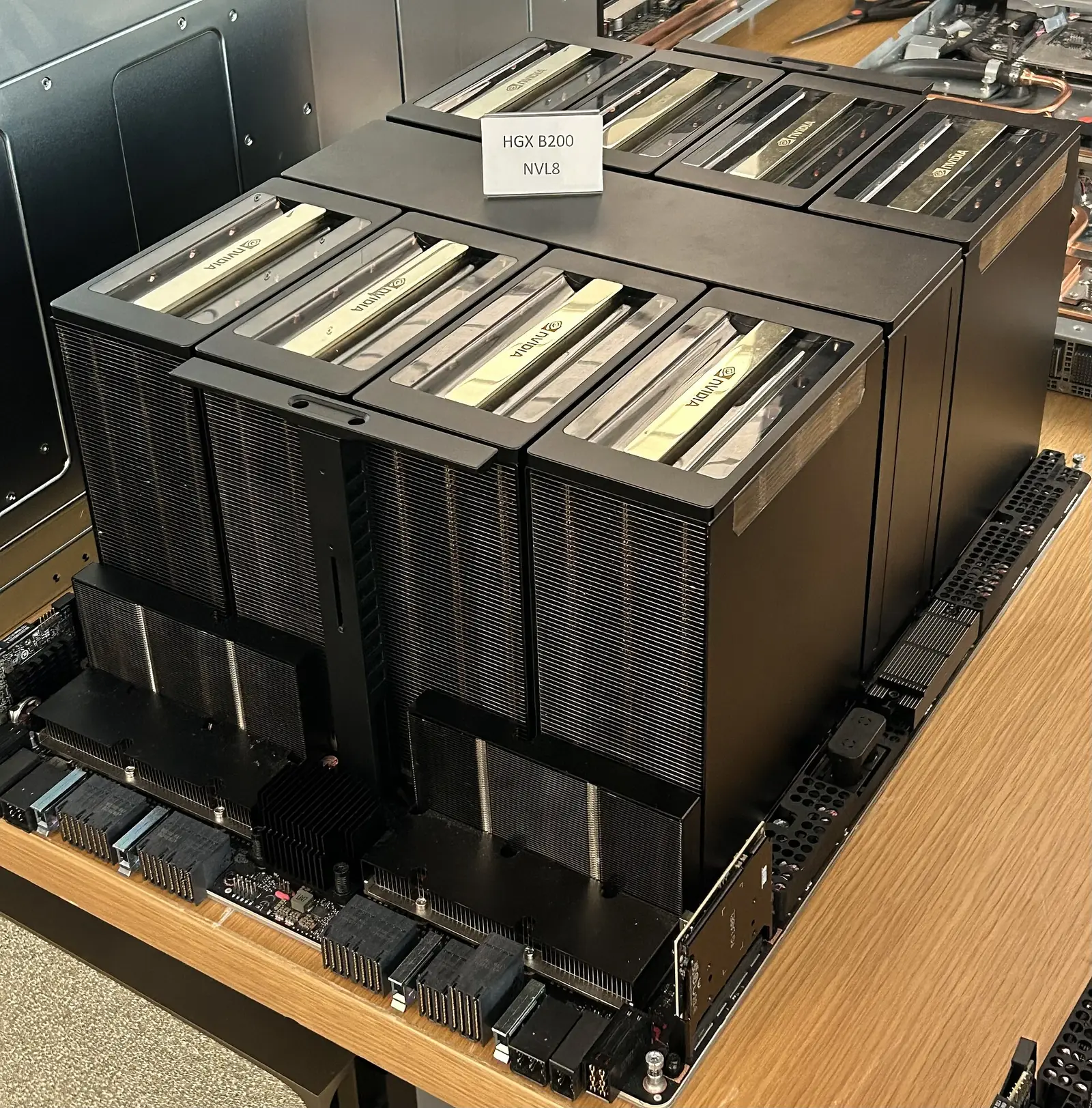 Where does this figure come from?Uses20 October 2026"A generated video uses 1 kWh"The figure has been circulating since 2025, often attached to Sora. It comes from a real measurement, but one made on a different, open model, in a particularly heavy version. Measurements of 7 generators range from 0.14 to 415 Wh.
Tools

On the Projet Celsius blog ↗
 Electricity
Across the hub
 AI Impact DatabaseAll the figures, their methodology and their sources.
 AI Ranking10 assistants rated out of 100: performance, ethics and environment.


 AnalysesThe signed pieces: analyses, viewpoints, "Where does this figure come from?".
 Charts and mapsYou are hereThe reference visuals, with their data and sources.
 ToolsOpen calculations, your assumptions on the left, the result on the right.




A question about a figure?
An error, a source to add, a methodology question, a press request: write to us. Guillaume Pakula, Clément Reynaud, Sébastien Pierfederici and Alexandre Veilly will reply.
Write to us →
Projet Celsius, which runs this hub, also helps companies measure and reduce the footprint of their AI use.
Accounting for AI in your Bilan Carbone® ↗