
 Electricity19 November 2026
Is a data center noisy or dangerous for its neighbours?
Noise, air, accident risk and heat, as read in French project files and compared with Ireland and Virginia
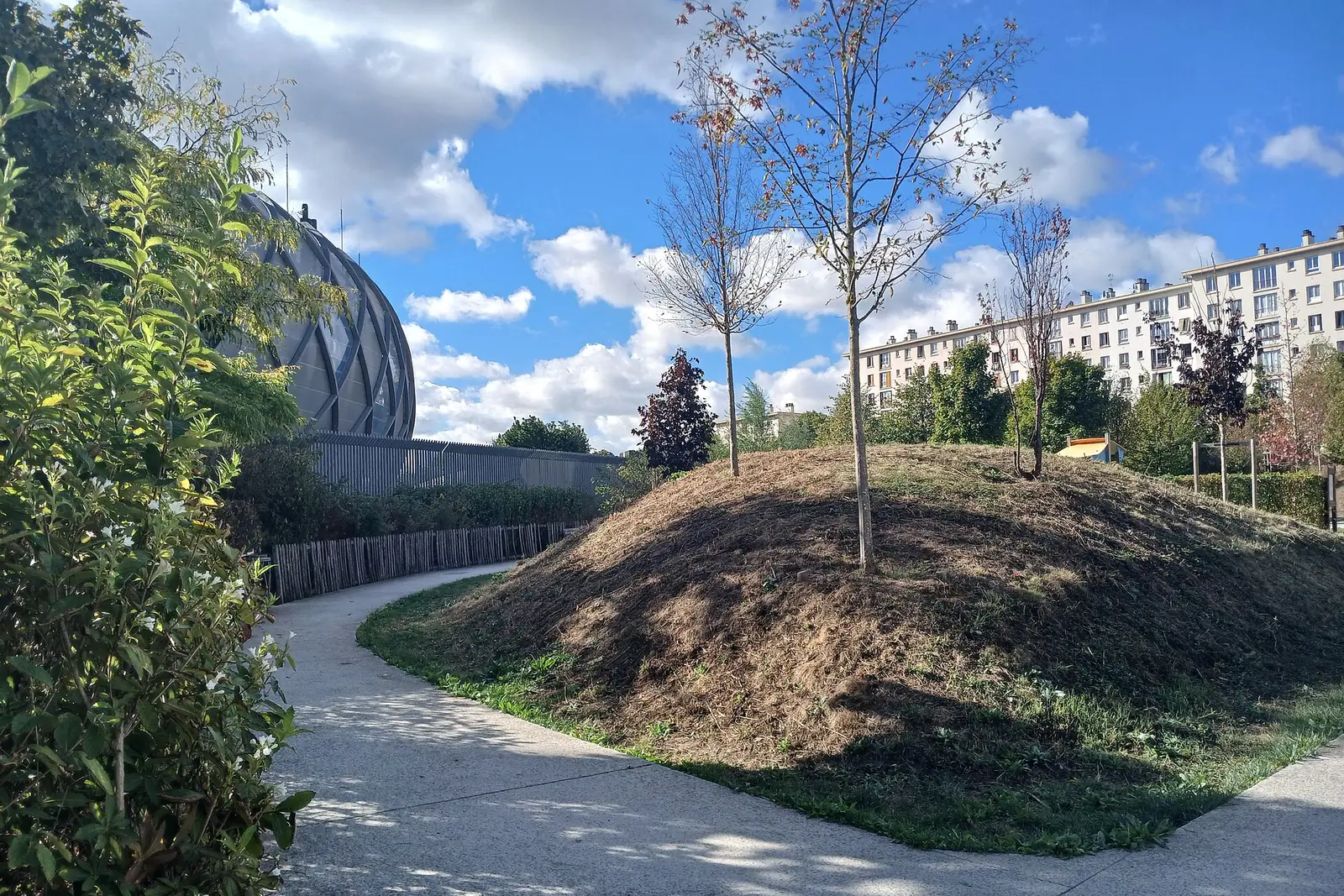
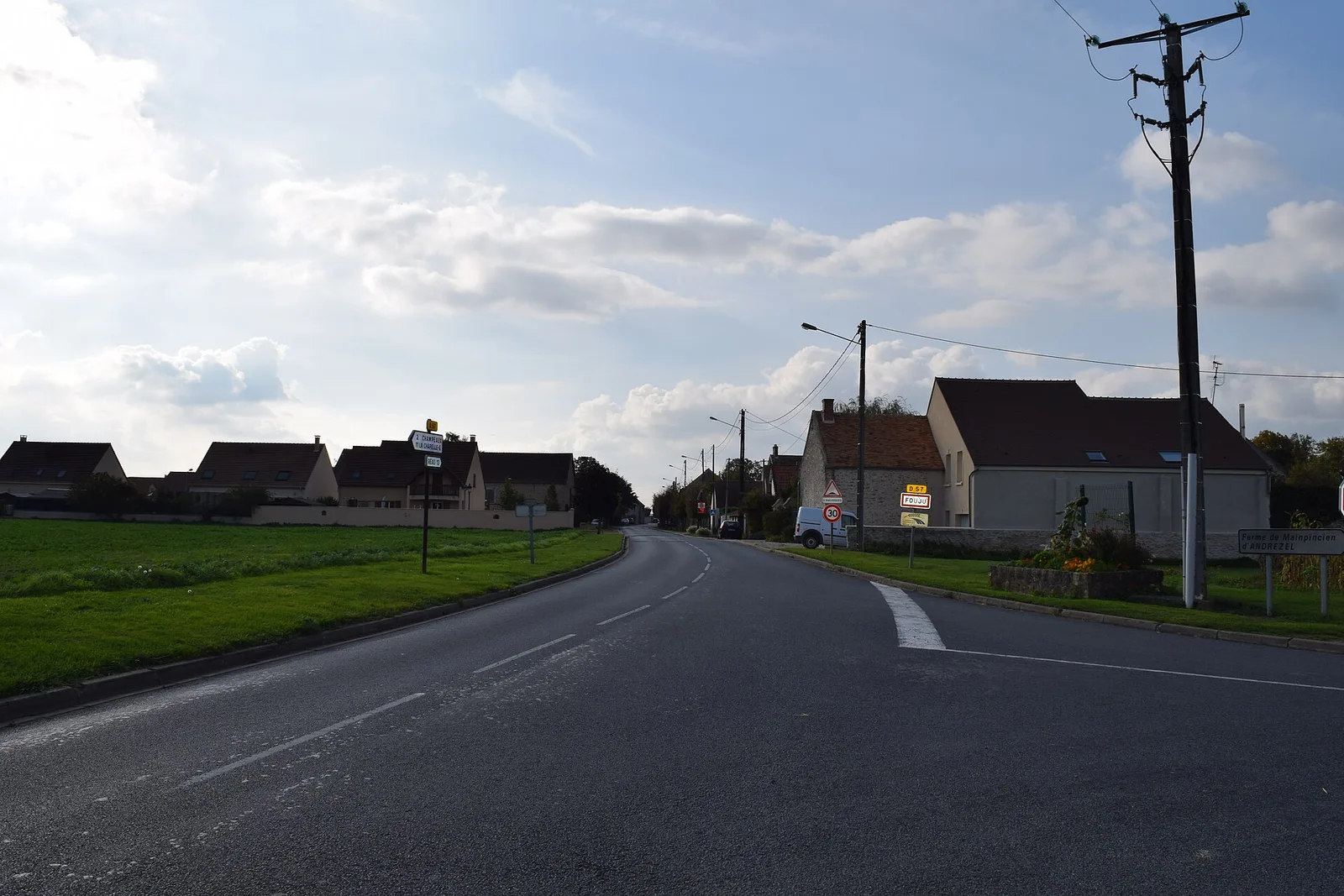
The Paris Digital Park, a Digital Realty data centre campus in La Courneuve (Seine-Saint-Denis), seen from the neighbouring garden in October 2026. Residents went to court there over the noise and risks of a first data centre, built in 2012. Photo Guallendra, CC0, via Wikimedia Commons.
In normal operation, what a neighbour receives from a data centre is mainly the continuous noise of the chillers, transformers and fans, which French impact studies calculate as below the regulatory thresholds: in Meudon, 2.2 dB(A) above the night-time background noise, below the maximum of 3 used by the environmental authority. The gap appears when all the backup generators start at the same time: 14.6 dB(A) at night in Meudon, and nitrogen dioxide above the reference values near Fouju, according to the modelling. These outages are rare but real, 270 hours in Les Ulis in November 2020; the hazard studies keep the effects of a fire within the site boundary, and the effect of the heat released on the neighbourhood is little measured.
Contents
In Meudon, in the Hauts-de-Seine, Equinix plans a data centre on the edge of a wood. A primary school and a hostel are less than 300 metres from the plot. In October 2022, the impact study measured noise at the property boundary, at one point, over 24 hours: 40.5 dB(A) on average during the day, 36.0 dB(A) at night. It is this background noise that the data centre must not exceed by too much. According to the impact study's calculations, taken up by the environmental authority in November 2025:
- in normal operation, the 44 chillers, transformers and fans would exceed it by 0.7 dB(A) during the day and 2.2 dB(A) at night;
- with all 33 backup generators running at the same time, by 9.1 dB(A) during the day and 14.6 dB(A) at night, beyond the maximums of 5 and 3 dB(A).
These values are calculated, as the data centre is not yet built. Most of the figures on the surroundings of French data centres are of this kind. The next infographic sorts each nuisance by what is measured, calculated or only claimed.
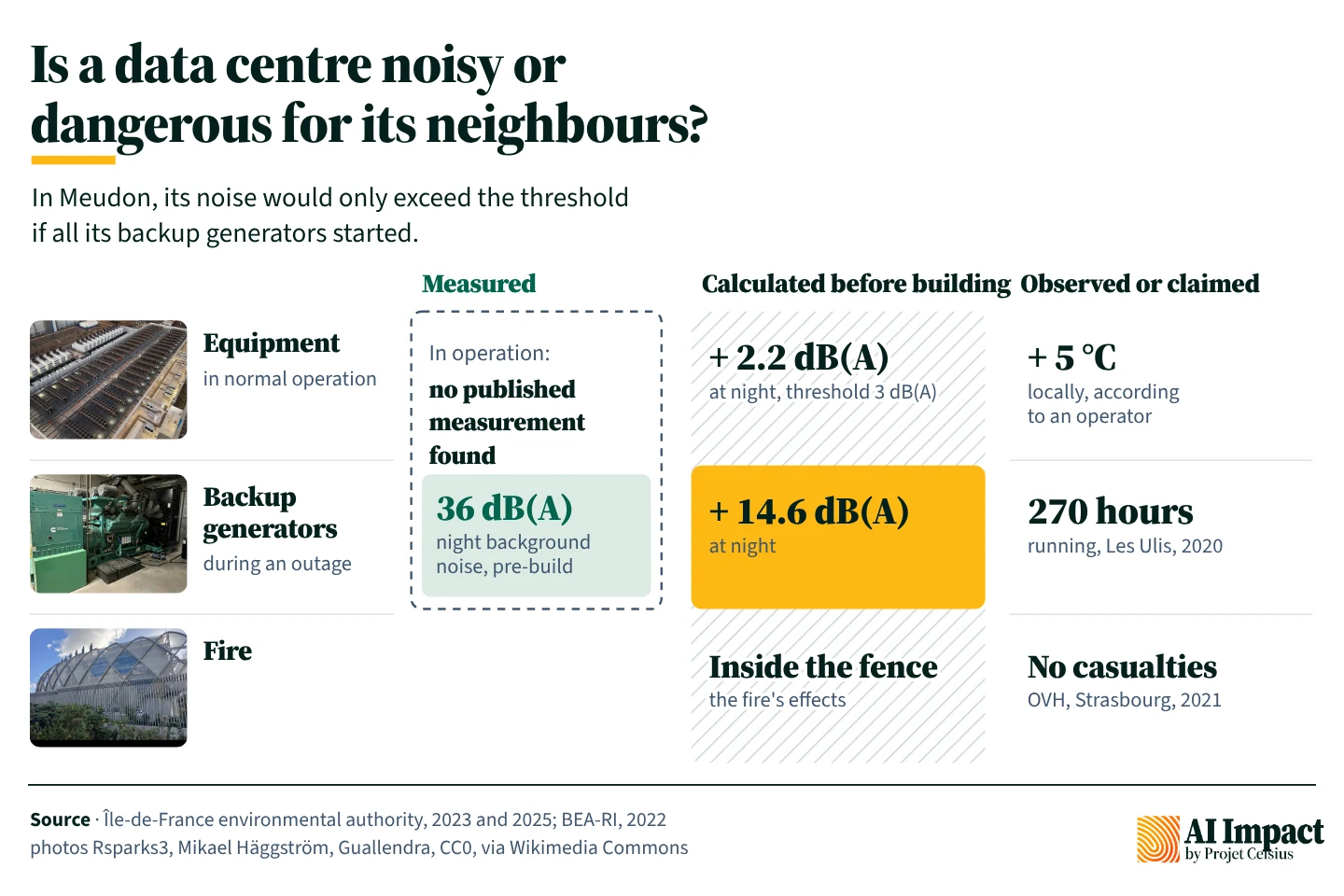
In normal operation, the calculated noise stays below the thresholds
French rules limit the gap above existing noise
In France, a data centre subject to authorisation falls under the order of 23 January 1997 on noise from classified installations. It does not set a single level: it limits the emergence, the difference between ambient noise with the installation and residual noise without it, at the nearest homes (the "zones with regulated emergence"):
- 5 dB(A) during the day and 3 dB(A) at night, on Sundays and public holidays, when ambient noise exceeds 45 dB(A);
- 6 and 4 dB(A) when it is between 35 and 45 dB(A);
- at the property boundary, a level set by the prefect, which may not exceed 70 dB(A) during the day and 60 dB(A) at night.
In Meudon, the environmental authority uses 3 dB(A) at night; with ambient noise of about 38 dB(A) in normal operation, the order would allow 4 (our reading). Decibels do not add up. According to INRS, 2 identical machines make 3 dB(A) more than a single one, and 10 machines 10 dB(A) more. An emergence of 3 dB(A) amounts to doubling the sound energy received; the 14.6 dB(A) calculated in Meudon for backup operation, to multiplying it by about 29 (our calculation), as if going from one machine to nearly 30.
French files conclude that the thresholds are met, with no measurement after commissioning
In Fouju, in Seine-et-Marne, the acoustic study for the Campus IA project defines 5 zones with regulated emergence, including the hamlet of Les Bordes and the future prison. It names the sources (chillers, backup generators, air handling, transformers) and provides for sound traps and acoustic enclosures on the roof. It concludes that the thresholds are met, except for an exceedance of 0.4 dB(A) near the future prison. The environmental authority notes that noise from the additional traffic is quantified neither for construction nor for operation.
We found no published measurement taken after commissioning at a French data centre. The order authorising the first building at Fouju requires a noise measurement no later than 6 months after commissioning, then every 3 years. In 2023, the Île-de-France environmental authority wrote that these installations produce "high levels of noise nuisance, sometimes leading to emergence values above regulatory levels" (our translation), and cited the court complaint by residents near a data centre in the Sentier district of Paris against the noise of its cooling.
Elsewhere, fixed thresholds and exemptions for backup operation
| Rule | France | Ireland | Fairfax County (Virginia) |
|---|---|---|---|
| What is limited | the gap above existing noise, at neighbours' homes | the level, at neighbours' homes | the level, on the neighbouring property |
| At night | 3 or 4 dB(A) gap; 60 dB(A) at most at the property boundary | 45 dB(A) | 55 dB(A) in a residential area |
| Generator tests | during the day, set by the order (Fouju) | during the day on weekdays, limit of 55 dB(A) | exempt from 7 h to 21 h, 2 hours a day at most |
| Grid outage | noise measurements if the cut lasts more than 3 days (Fouju) | 55 dB(A), 10 more than at night | exempt |
France: order of 23 January 1997 and order of 29 July 2026 on the first building at Fouju. Ireland: criteria from the Environmental Protection Agency (EPA) guidance, used in an Amazon licence application in Dublin in 2025. Fairfax: county regulation described in a 2023 acoustic study; the State of Virginia has no noise rule.
In Ireland, the Environmental Protection Agency (EPA) has received 12 complaints since 15 July 2026 about an Echelon data centre in Clondalkin, in west Dublin: a hum at night, for several hours in a row during hot weather, according to the Irish Times. The agency is having noise measured at neighbours' homes; the operator says it removed a generator that a subcontractor was running outside working hours, then treated the rooftop chillers. We did not find their results published as of 18 November 2026.
The gap comes from the backup generators, during tests and above all during outages
Every data centre keeps backup generators to take over if the electricity grid fails: 33 in Meudon, 75 for the first building at Fouju, 613 for the whole campus, or 4,663 MW of thermal power according to the impact study. They run on fuel oil or hydrotreated vegetable oil (HVO). They are tested regularly to check that they start.
A few hours of testing a year, during the day
| Trial | Duration | Generators running |
|---|---|---|
| Monthly | 5 minutes | 1 at a time, during the day |
| Quarterly | 30 minutes | 2 at the same time, during the day |
| Annual | 4 hours | all 75 together, during the day, excluding tests of the other buildings |
| Emissions checks and maintenance | 4 hours a year | unspecified |
Test schedule for the 75 backup generators of the first building at Fouju, set by the order of 29 July 2026: 11 hours a year at most for each generator.
In Meudon, each generator is tested for about 15 hours a year, during the day and not at weekends. At Fouju, air modelling for a test scenario shows an exceedance of the World Health Organization (WHO) guideline value for nitrogen dioxide, as a daily maximum, at the future prison. The stacks of the first building rise to 31.7 m, and each generator has urea-based nitrogen oxide treatment.
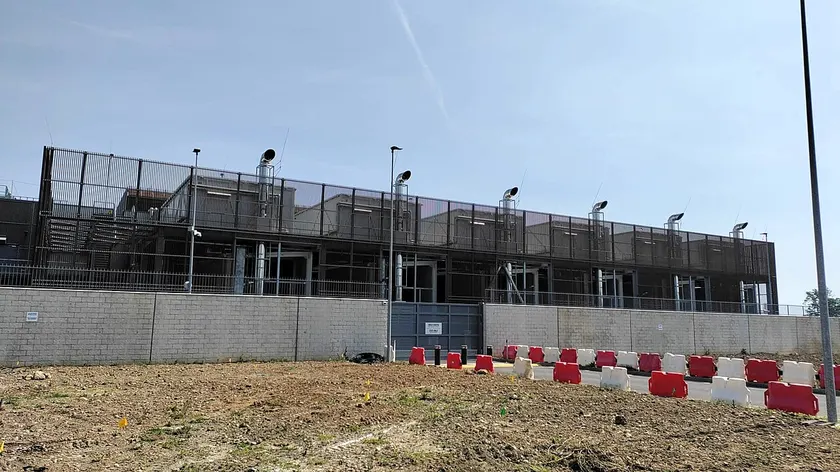
Long outages are little modelled
If the grid fails, all the generators start together. In Meudon, the calculated emergence then rises from 2.2 to 14.6 dB(A) at night. At Fouju, the emergency scenario gives an exceedance of the hourly toxicological reference value for nitrogen dioxide for neighbouring workers, and the file provides no measure to address it. At Petit-Landau, in the Haut-Rhin, the environmental authority estimates that the generators of Microsoft's project could add about 20% to Alsace's current nitrogen oxide emissions (our analysis of contested projects).
- 44 chillers, transformers, fans
- counted: below the maximum of 3 dB(A)
- about 29 times the sound energy of the background noise (our calculation)
- not counted: below the maximum of 3 dB(A)
In Meudon, the air study assumes a one-hour outage; at Fouju, it goes up to 7 days, without adding the neighbouring data centres. The environmental authority points out that the generators of a data centre in Les Ulis, in the Essonne, ran for 270 hours in November 2020, after a fire. 270 hours is 18 years of testing for one Meudon generator (our calculation). It also notes that in Les Ulis and Marcoussis, 16 large data centres may be located within a radius of 5 km, and asks for scenarios in which several sites fail at once. The order for the first building at Fouju requires noise measurements if a cut lasts more than 3 days.
In Virginia, emissions still low and wider permits
In northern Virginia, a team from the Virginia Commonwealth University mapped the reported emissions from the backup generators of 138 data centres, from 2015 to 2023:
- they accounted for 3% of carbon monoxide, 11% of nitrogen oxides and 3% of particulates from the region's stationary sources;
- if they emitted at the maximum of their permits, they could release 10 to 20 times more.
On noise, in 2023 Fairfax County exempted from its limits tests carried out during the day, 2 hours a day at most, and operation during an outage. Since September 2024, it requires new data centres to keep 200 feet (61 m) between the building and a residential area, 300 feet (91 m) for the generators, and a noise study before and after construction. Our guide to the questions to ask about a project details what to ask about these generators.
The risk of an accident generally stays within the site boundary, according to the hazard studies
A data centre stores fuel and batteries. The first building at Fouju can hold 2,030 tonnes of HVO in 25 underground tanks, or 2,200 tonnes of fuel oil if HVO is unavailable. From 50 MW of thermal power, its generators fall under the authorisation regime and the EU Industrial Emissions Directive. For Fouju, the environmental authority observes that the site would have been classified as Seveso had it been declared in a single file.
The most studied risk is the fire of lithium-ion batteries. The Meudon hazard study lists 26 accidents involving this technology in the national Aria database, including 20 fires and 2 explosions. Its 2 modelled fire scenarios stay within the site boundary. The measures planned are 2-hour firewalls, sprinklers and a 960 m³ basin to retain firefighting water.
2 French accidents serve as references:
- on 10 March 2021, the fire at the OVH data centre in Strasbourg destroyed one building and 4 rooms of another, with no deaths or injuries, according to the industrial risk investigation bureau (BEA-RI); the fire started in the battery and inverter rooms, which had no automatic extinguishing;
- in March 2023, a fire hit 1,200 lithium-ion batteries in a data centre in Saint-Trivier-sur-Moignans, in the Ain, the environmental authority recalls.
The smoke from these fires may contain toxic substances, soot, dioxins or chlorinated compounds. For Fouju, the environmental authority considers that their health effects and the follow-up after an accident could have been covered more fully. Refrigerant leaks, estimated at 15 tonnes a year at Fouju, are dealt with in our analysis of the Fouju campus.
The heat released is rarely measured at neighbourhood scale
Almost all the electricity used by a data centre ends up as heat, most often released into the air by the chillers on the roof. The operator Colt, in a reply to the Île-de-France environmental authority, writes that its chillers "locally raise the air temperature by 5 °C" (our translation), before the hot air rises and disperses. This figure is stated, with no published measurement.
The only large-scale measurement is a satellite study, a preprint posted online in March 2026 and revised in April. Its authors compare land surface temperature around data centres worldwide, from 2004 to 2024, before and after they came into service: + 2.07 °C on average, + 1 °C up to 4.5 km away. 3 limitations:
- it measures the temperature of surfaces seen from the sky, not that of the air residents breathe;
- it does not separate the heat from the machines from the effect of a large roof and car parks built on a field;
- we did not find it published in a journal, after review by other researchers.
The Île-de-France environmental authority notes that heat released by data centres grouped in highly built-up areas reinforces the urban heat island. Recovering it reduces this release, but needs a nearby heating network.
Our view
In our view, everyday noise is a design matter, which French rules govern and which measurement after commissioning must confirm. The least documented part of the files is the long outage, when all the generators run, sometimes at several neighbouring sites at once. This is where the calculations exceed the thresholds, and where the studies stop at one hour (Meudon) or leave neighbouring data centres out (Fouju). On a project, 3 questions address these points:
- What noise and air emissions does the file calculate for an outage of several days, including neighbouring data centres?
- When will noise be measured after commissioning, and where will the results be published?
- How far are the nearest homes, schools and healthcare facilities?
Almost all the noise and air figures in this analysis are calculated by the project developers' consultancies before construction; the environmental authorities themselves point out the limits (in Meudon, a single background noise measurement point, over 24 hours). The Clondalkin complaints are still being investigated, and the satellite study on heat has not been peer reviewed.

He holds a PhD in nanophysics from Aix-Marseille Université and an engineering degree from the Institut d'Optique, and co-founded Projet Celsius, where he heads the Marseille office.
His page and articles →Contact him →LinkedIn ↗
An engineer from Polytech Paris-Saclay and Bilan Carbone® methodology lead, he leads the carbon studies at Projet Celsius.
His page and articles →Contact him →LinkedIn ↗Sources
16 documents
- Mission régionale d'autorité environnementale Île-de-France, avis délibéré sur le centre de données de Meudon, 19 novembre 20252025entry 381
- Mission régionale d'autorité environnementale d'Île-de-France, opinion on the project for a data centre campus at Fouju (77), 8 April 20262026entry 347
- Préfet de Seine-et-Marne, arrêté n° 2026-31/DCSE/BPE/IC autorisant l'exploitation du centre de données DC1 à Fouju, 29 July 20262026entry 603
- Mission régionale d'autorité environnementale d'Île-de-France, Les data centers, annual publication of 20232023entry 690
- Arrêté du 23 janvier 1997 relatif à la limitation des bruits émis dans l'environnement par les installations classées, on AIDA (Ineris)2026entry 689
- INRS, Bruit : définitions2026entry 692
- BEA-RI, rapport d'enquête sur l'incendie du centre de stockage de données OVH à Strasbourg le 10 mars 2021, n° MTE-BEARI-2022-0052022entry 691
- Ineris, AIDA, nomenclature des installations classées, heading 3110, Combustion2026entry 379
- European Commission, report COM(2026) 500 on the energy efficiency of data centres in the Union, 21 September 2026 (Council document ST 13443/26)2026entry 276
- Mission régionale d'autorité environnementale Grand Est, press release on the meeting of 19 March 20262026entry 342
Every figure was read in its source; the hub's methodology is described in Methodology and sources.
Clément Reynaud and Alexandre Veilly, Is a data center noisy or dangerous for its neighbours?, AI Impact, Projet Celsius, 19 November 2026. https://projetcelsius.com/en/ai/analyses/is-a-data-center-noisy-or-dangerous/