
Frequently asked questions about AI hardware
AI runs on servers whose graphics cards, memory and metals have to be manufactured, then replaced after a few years. Answers to the most frequently asked questions about this hardware, each with its figure, its source and the page that covers it in detail.
1.Graphics cards and servers
What is a GPU?
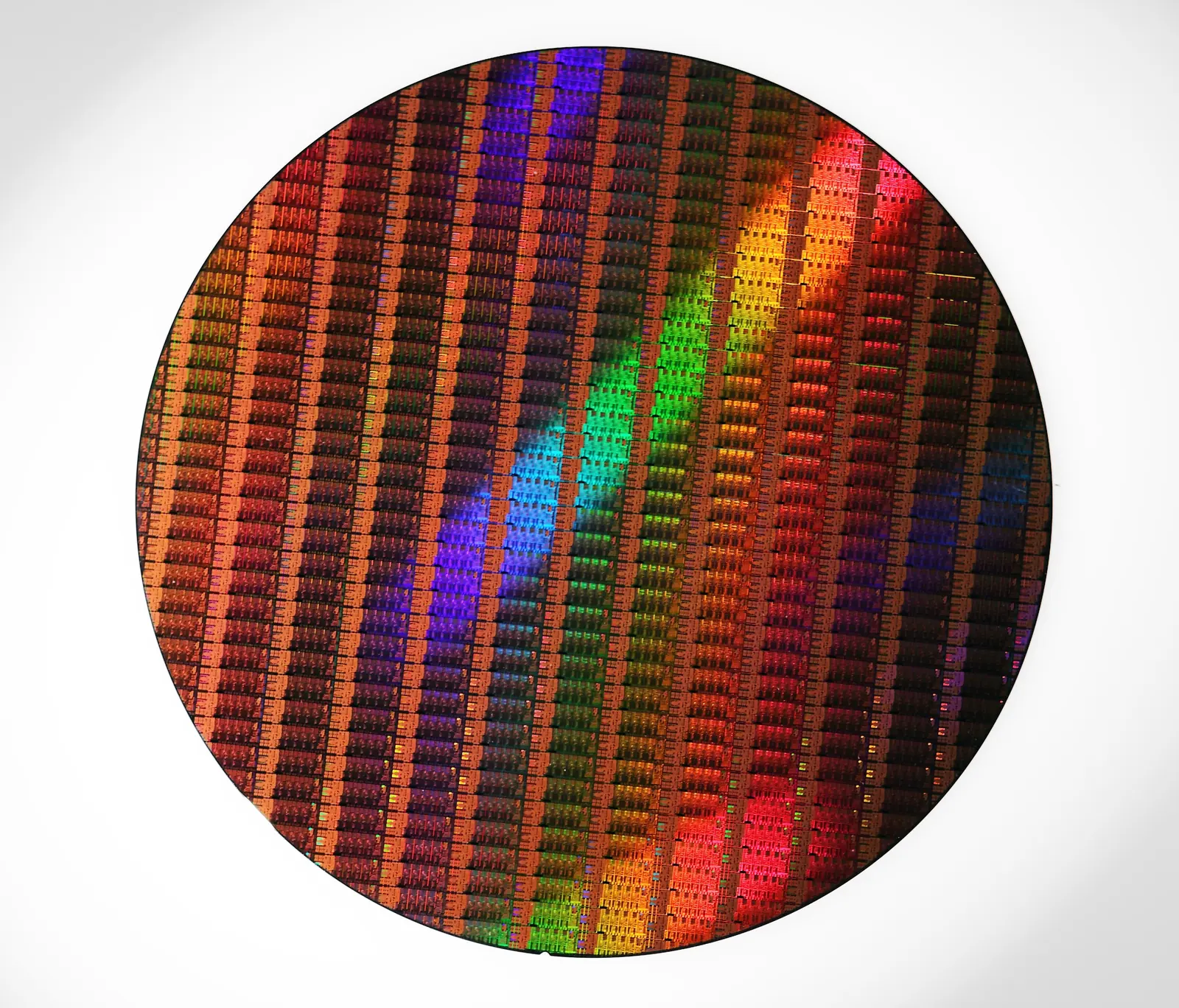
The chip on a graphics card, designed to carry out thousands of calculations at once; today it mainly runs AI.
Details and sources
GPU stands for graphics processing unit. The one on Nvidia's H100 SXM (2022) has 16,896 computing cores, whereas an ordinary processor carries out far fewer operations at once; in early 2025, this generation made up 77% of the installed computing power of Nvidia's AI chips, according to Epoch AI.
Why does AI need graphics cards?
Because a language model performs billions of operations for each word, which a graphics card carries out all at once.
Details and sources
About 140 billion per word for a dense model with 70 billion parameters, according to our calculation; Nvidia's H100 SXM performs up to 989,000 billion per second on 16-bit numbers. It is mostly the reading of its memory, at 3.35 terabytes per second, that limits how fast an answer is written.
Read the analysis →Source: Nvidia, H100 data sheet ↗The electricity of one H100 card hour →
What is the power of an H100 graphics card?
700 W at most for the card alone; with its share of the server, one hour of computing equals about fifty phone charges.
Details and sources
These 700 W are for the AI server version, fitted 8 at a time in a server that can draw up to 10.2 kW, or 1,275 W per card, processors and fans included. Since no measurement in service has been published, the Impact of AI Database uses 900 W on average per card, share of the server included, or 70% of this maximum.
See the database entry →Source: Nvidia, H100 data sheet ↗Why AI needs graphics cards →
How many graphics cards does it take to run an AI model?
Enough to hold the whole model in memory: at least 2 H100 cards for a model with 70 billion parameters.
Details and sources
According to our calculation, these parameters take up 140 GB on 16 bits, against 80 GB of memory per card. Services then handle many requests at once on the same cards, which reduces the electricity per request.
Read the analysis →Source: Nvidia, H100 data sheet ↗The electricity of one H100 card hour →
How many AI graphics cards are there in the world?
About 13 million AI cards in service in 2025, according to estimates: no manufacturer publishes this number.
Details and sources
This is the reconstruction by GreenIT, a French association, in nearly 1.9 million servers. Nvidia alone reportedly delivered about 4.5 million data centre cards in 2025, compared with 1.3 million in 2023.
Read the analysis →Source: GreenIT ↗Semiconductors: the file →
Where are AI chips made?
Mainly in East Asia: Taiwan for the computing chips, South Korea and Japan for their memory.
Details and sources
TSMC etches Nvidia's and AMD's chips; SK hynix, Samsung and Micron produce the memory. In Greenpeace's estimate, the electricity used for this manufacturing in 2024 was split between Taiwan, about 38%, South Korea, 32%, and Japan, 30%.
Read the analysis →Source: Greenpeace East Asia ↗The electricity used to make AI chips →
Are AI chips becoming more efficient?
Yes, but more slowly than the models: the same calculation needs about 10 times less electricity every 8 years.
Details and sources
The operations per watt of graphics cards have doubled every 2.4 years since 2008; the 8 years are our calculation. At Google, 2 generations of chips cut the emissions of a calculation by a factor of 2 to 3 from 2020 to 2024, manufacturing included, while the energy of a median Gemini prompt was divided by 33 in one year (August 2025).
Read the analysis →Source: Epoch AI ↗Is AI using more or less energy over time? →
2.Manufacturing and life cycle
How long does an AI server last?
From 3 to 6 years according to the published assumptions, none of which is a measurement.
Details and sources
GreenIT, a French association, uses 3 years, because the whole server is often thrown away when one card fails. Google spreads the manufacturing of its chips over 6 years, and Meta, Amazon and Alphabet depreciate their servers over 5 to 6 years in their accounts.
Read the analysis →Source: GreenIT ↗Manufacturing spread over each card hour →
Does extending the lifespan of hardware reduce the footprint of AI?
Yes: a chip kept for 6 years rather than 3 removes 8% of the emissions of a calculation, 30% on a low-carbon grid.
Details and sources
This is our calculation based on the life cycle assessment of a 2024 Google chip: 8% with Google's average grid in 2023, 30% with electricity like France's. On such a grid, this lever counts for as much as choosing the smallest sufficient model, 28% according to a 2025 study.
Read the analysis →Source: Google, life cycle assessment of its chips ↗Which AI model for which task →
What is AI made of?
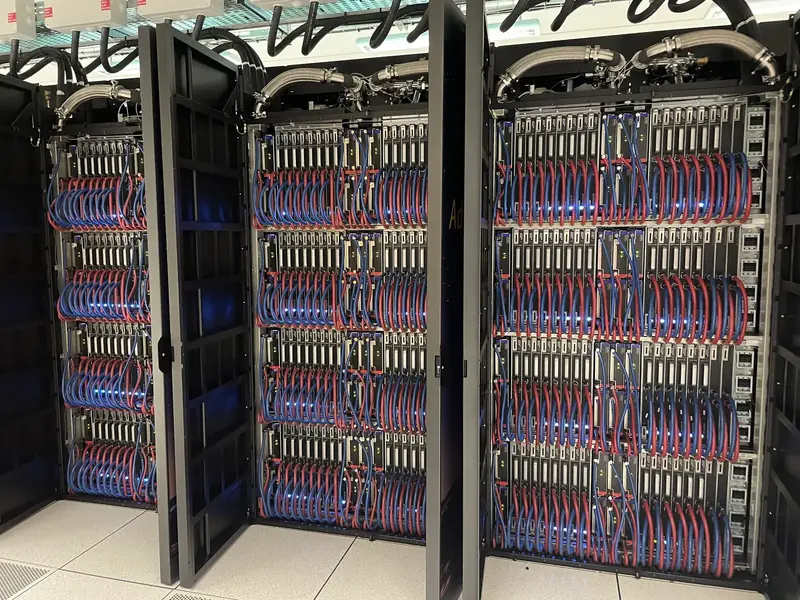
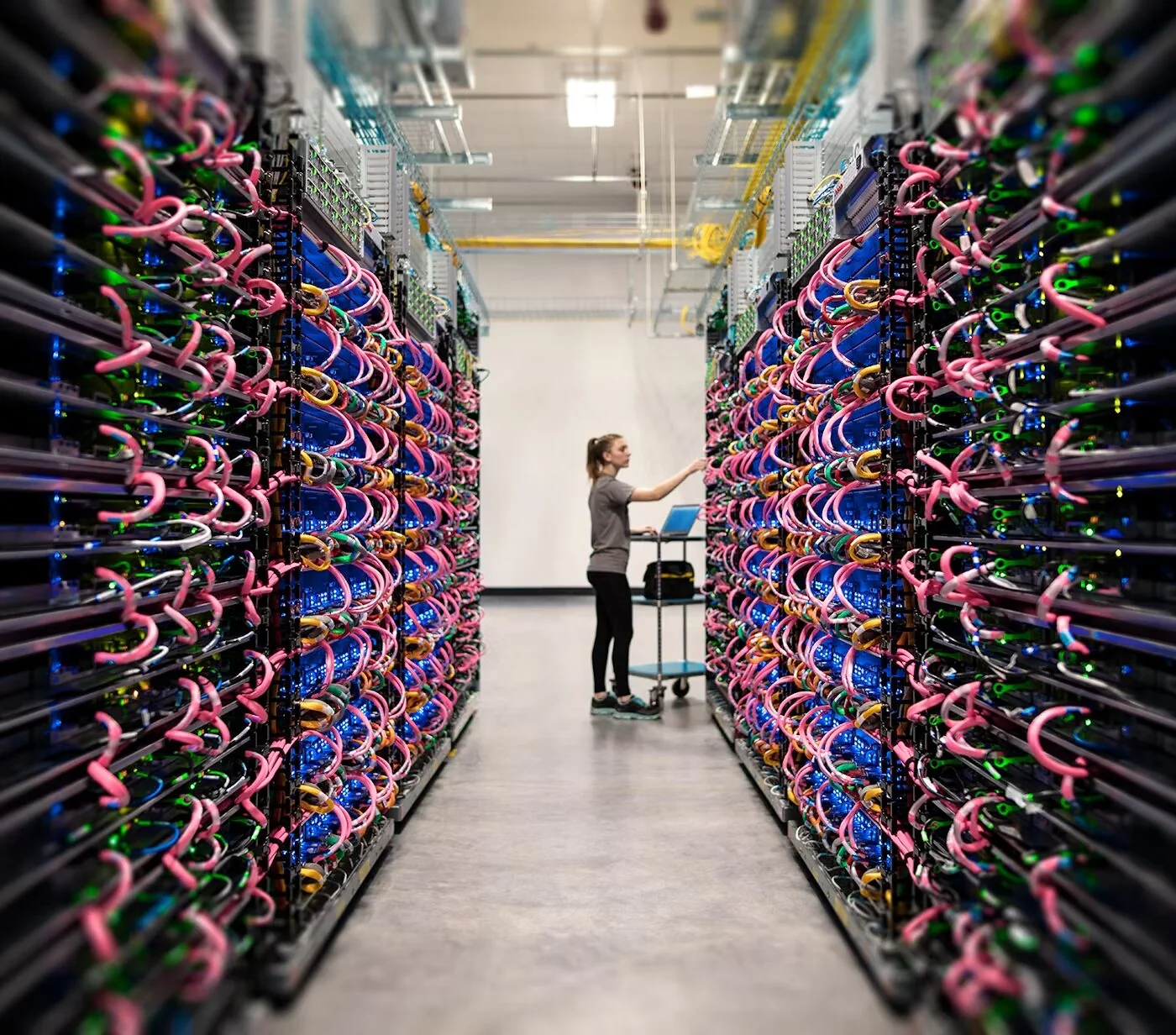
Servers, in data centres: computing chips on graphics cards, their memory, processors and storage.
Details and sources
These parts are made of very pure silicon connected by copper, of aluminium, of gold in the contacts and of rarer metals. As of 14 November 2026, we have found no published breakdown of an AI server down to the kilogram.
What is the manufacturing footprint of an AI graphics card?
From 164 to 235 kgCO2e for an H100 card depending on the method, as much as driving 1,200 to 1,700 km.
Details and sources
Nvidia publishes 1,312 kgCO2e for the motherboard that carries 8 of them, up to the factory gate, or 164 kgCO2e per card. ADEME, the French environment agency, estimates a single card at 235 kgCO2e, and 8 AI cards it assessed range from 61 to 318 kgCO2e each, distribution and end of life included.
Read the analysis →Source: ADEME, the French environment agency, copy hosted by lafibre.info ↗Manufacturing an AI server, by component →
How much does manufacturing an AI server emit?
About 8.3 tCO2e for a server with 8 H100 cards, as much as the annual footprint of one French person.
Details and sources
GreenIT, a French association, estimates 8,341 kgCO2e for an entry-level server, manufacturing, distribution and end of life included. Nvidia publishes, up to the factory gate, 1,312 kgCO2e for the motherboard alone that carries the 8 cards, without processors, RAM or storage, and 2,274 kgCO2e for that of the next generation.
See the database entry →Source: GreenIT ↗Manufacturing an AI server, by component →
What accounts for most of the emissions from manufacturing an AI server?
Memory, which accounts for 42% of the manufacturing emissions of the motherboard carrying the 8 graphics cards.
Details and sources
This is the only part of the server that Nvidia breaks down (2025): memory comes ahead of the computing and networking chips, 25%, and cooling, 18%. On the motherboard of the next generation, the HGX B200, it rises to 49%.
See the chart →Source: Nvidia, HGX H100 carbon footprint ↗Manufacturing an AI server, in the Database →
How much electricity does it take to manufacture AI chips?
About 1 TWh in 2024 for Nvidia's and AMD's AI chips, a little less than one day of electricity consumption in France.
Details and sources
Greenpeace East Asia estimates 983.9 GWh, memory included, compared with 218 GWh in 2023 for Nvidia alone; it is the only published estimate. Drawn mostly from coal and gas in East Asia, this electricity emitted about 453,600 tCO2e, not counting the fluorinated gases used in etching or the materials.
See the chart →Source: Greenpeace East Asia ↗Manufacturing AI chips, in the Database →
Do the figures for a question to an AI include manufacturing the servers?
Not for electricity; for emissions, only some figures, such as those published for Gemini and for Le Chat.
Details and sources
For a median Gemini prompt, the 0.24 Wh measured by Google does not include manufacturing, but its 0.03 gCO2e, calculated with its electricity contracts, adds that of the chips. The 1.14 gCO2e of a 400-token answer from Le Chat includes manufacturing and transporting the servers, with the electricity of the local grid.
See the chart →Source: Google ↗The footprint of an answer from Le Chat →
What is a life cycle assessment of an AI model?
The assessment of a model's impacts on climate, water and resources, from the extraction of materials to end of life.
Details and sources
The only one published by a model developer is that of Mistral Large 2 (Mistral AI, July 2025). Training and 18 months of use add up to 20,400 tCO2e, 281,000 m³ of water and 660 kg of antimony equivalent, the unit of resource depletion, 61% of which comes from the servers' hardware.
See the chart →Source: Mistral AI ↗Life cycle assessment and Bilan Carbone® ↗
Does building data centres count for much in AI's footprint?
Little: less than 1% of the emissions of Mistral Large 2, the only model whose developer has published its life cycle assessment.
Details and sources
For a 2024 AI chip kept for 6 years, Google counts 109 kgCO2e of buildings in 692 kgCO2e of manufacturing and construction emissions, compared with 5,759 kgCO2e for its electricity based on the grid.
Read the analysis →Source: Google, life cycle assessment of its chips ↗The life cycle assessment of Mistral Large 2 →
Does my phone or computer have a bigger footprint than my use of AI?
Yes, for everyday use: a smartphone's footprint equals that of about 70,000 answers from Le Chat, nearly 80 a day for 2.5 years.
Details and sources
A smartphone emits 80.2 kgCO2e over 2.5 years, almost all of it from manufacturing, and a laptop 193 kgCO2e over 5 years, according to ADEME, the French environment agency. The comparison is our calculation, with 1.14 gCO2e per answer from Le Chat, server manufacturing included.
See the chart →Source: Impact CO2, ADEME ↗The footprint of a year of AI use →
3.Metals and waste
What metals does it take to run AI?
Copper, aluminium, gold and rarer metals such as gallium and germanium, around the silicon of the chips.
Details and sources
According to the International Energy Agency, data centres, for all uses, would demand about 512,000 tonnes of copper in 2030, 2% of world demand in 2024, and 11% of 2024 gallium demand. No breakdown of an AI server is published down to the kilogram.
Read the analysis →Source: International Energy Agency ↗Metals and resources: the file →
Does AI use rare earths?
Yes, a little: in 2030, data centres would demand more than 3% of 2024 demand for rare earths used in magnets.
Details and sources
This is the estimate of the International Energy Agency, for all data centre uses, covering neodymium, praseodymium, dysprosium and terbium. We have found no quantity published for an AI server or for an answer.
Read the analysis →Source: International Energy Agency ↗Metals and resources: the file →
How much electronic waste does AI produce?
From 1.2 to 5 million tonnes accumulated from 2020 to 2030, or 2 to 8% of the world's electronic waste in a single year.
Details and sources
This is modelling of generative AI without reduction measures, published in 2024. The world produced 62 million tonnes of electronic waste in 2022, according to the United Nations; the ratio of 2 to 8% is our calculation.
See the chart →Source: Nature Computational Science ↗Recycling and reuse: the file →
Are AI servers recycled?
We have found no published rate for AI servers; about 1 tonne in 5 of the world's electronic waste is recycled in a documented way.
Details and sources
In 2022, 22.3% of the world's electronic waste was collected and recycled in a documented way, according to the United Nations. Reusing, repairing and recycling data centre equipment would reduce generative AI's waste by 16 to 86% by 2030.
See the chart →Source: Global E-waste Monitor, United Nations ↗Recycling and reuse: the file →
4.Training models
How much does training an AI model emit?
From a few dozen to more than 10,000 tCO2e, or up to the annual footprint of more than 1,200 French people.
Details and sources
Published assessments most often count electricity alone: 11,390 tCO2e for the 3 sizes of Meta's Llama, with the electricity of the local grid, and 552 tCO2e estimated for GPT-3. The Allen Institute for AI counts 312 tCO2e for its OLMo models, plus 159 tCO2e of trial runs that other developers do not publish.
See the chart →Source: Meta, Llama model card ↗Training a model, in the Database →
How much electricity does it take to train an AI model?
From a few hundred MWh to several dozen GWh; for GPT-4, as much as about a month and a half of ChatGPT use.
Details and sources
433 MWh for BLOOM, trained in France in 2022, about 1,287 MWh estimated for GPT-3 and 32.8 GWh for GPT-4, data centre included, according to researchers. OpenAI, Anthropic and Google do not publish the electricity used to train GPT-4, Claude or Gemini.
See the database entry →Source: study of BLOOM's footprint ↗Emissions from 4 published training runs →
How many graphics cards does it take to train a large model?
Millions of card hours, for example 10,000 cards for 2 weeks for GPT-3; their number is rarely published.
Details and sources
For GPT-3, researchers estimate 10,000 V100 cards, a far less powerful generation, for 14.8 days. Meta publishes 39.3 million H100 card hours for its Llama models, and researchers estimate GPT-4 at 57 million A100 card hours.
See the chart →Source: Meta, Llama model card ↗The electricity of one H100 card hour →
How much did training GPT-4 emit?
An estimated 15,000 tCO2e or so, as much as the annual footprint of 1,800 French people.
Details and sources
OpenAI does not publish this assessment; it is an estimate by researchers, using the average electricity of the United States (October 2025). Two thirds come from the servers' electricity, one fifth from manufacturing the hardware.
See the database entry →Emissions from 4 published training runs →