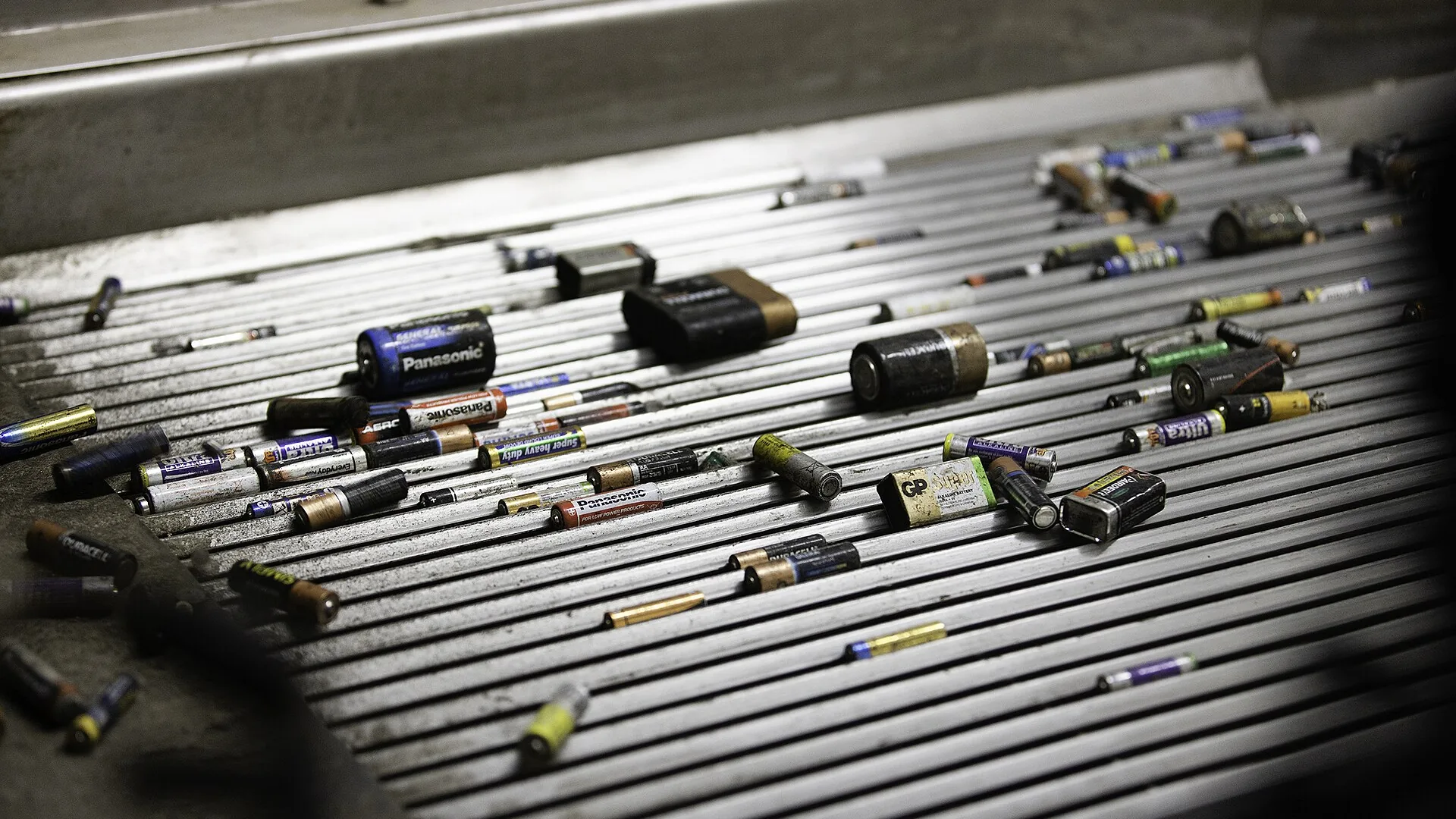

- 17.4 MtCO₂e a year for medical devices in France, more than hospital buildings.
- 252% of the footprint comes from raw materials, rather than packaging or transport.
- 3Since 22 August 2026: mandatory environmental criterion in hospital public contracts.
- 4A single product LCA serves medical device carbon scoring, public contracts and an ecodesign approach.
When carrying out a hospital Bilan Carbone®, the surprise is never heating or transport. It is the pharmacy and operating theatre. Medical devices - from surgical gloves to MRI scanners, through operating theatre sets and prostheses - emit 7.4 million tonnes of CO₂ a year in France. More than all hospital buildings combined.
Until 2025, nobody really had the figures. The Shift Project report published in June 2025 changed everything: for the first time, we know the footprint of medical devices based on physical flows, rather than monetary ratios. And the convergence of three deadlines in 2026 - medical device carbon scoring, mandatory green public contracts, growing use of LCAs - turns a niche subject into a strategic issue for every manufacturer selling to hospitals.
1Key figures: the true impact of medical devices
The French healthcare system emits around 49 million tonnes of CO₂ a year - 8% of the national footprint. And contrary to expectations, most of it does not come from buildings or ambulances. It comes from the products hospitals consume: medicines (9.1 MtCO₂e) and medical devices (7.4 MtCO₂e). Together, they account for a third of the entire healthcare system’s footprint.
The carbon footprint of healthcare in France: the weight of medical devices
The breakdown by source is counter-intuitive. When thinking of a medical device’s footprint, plastic packaging and transport from China come to mind. In fact:
- 52% of emissions come from raw materials (metals, polymers, silicone, cotton)
- 21% come from production (factory energy, industrial processes)
- 12% from transport
- 3% from packaging - the supposed main culprit accounts for almost nothing
A manufacturer optimising packaging in the belief that it is making a significant contribution misses 97% of the problem. The real levers lie in material choices, production energy and the single-use versus reusable model. The good news according to the Shift Project: the levers identified can reduce medical device emissions by 72% by 2050.
Packaging, so often identified as the main culprit, accounts for only 3% of a medical device’s footprint. Raw materials account for 52%.
2The carbon footprint of medical imaging
Imaging accounts for a disproportionate share of the hospital carbon footprint. An imaging department emits around 4,600 tonnes of CO₂e over 10 years according to the Vanderbilt University Medical Center study. MRI alone accounts for 48% of these emissions, CT scans 24%.
Where medical devices’ 7.4 million tonnes come from
Optimising packaging without changing materials = missing 97% of the problem
Per examination, the orders of magnitude are telling: an ultrasound emits around 0.65 kgCO₂e, a CT scan between 2.1 and 4.5 kgCO₂e, an MRI between 8.5 and 13.7 kgCO₂e. Ultrasound is 33 times less emitting than MRI. This is not an argument for prescribing fewer MRIs - it is an argument for decarbonising heavy equipment: helium-free MRI, optimised protocols, preventive maintenance extending machines’ lives.
The French Society of Radiology published a national framework in 2025 for more environmentally responsible imaging, in partnership with ANAP. It is the first operational framework providing institutions with concrete levers: intelligent appointment scheduling (avoiding idle MRI operation), choosing less energy-intensive sequences and environmental criteria for equipment renewal.
3Single-use or reusable: the real trade-off
This is the question every hospital buyer asks. Disposable or washable surgical set? Single-use or fabric gowns? The answer is less straightforward than it appears. Recent meta-analyses - particularly the Journal of Hospital Infection analysis (2023, 19 comparative studies) - show that reusable emits 38 to 56% less CO₂ across the entire life cycle. But three qualifications change everything.
Single-use vs reusable: what LCAs say
Meta-analysis of 19 studies - Journal of Hospital Infection, 2023
Single-use versus reusable: what studies say
No universal answer: each medical device category requires its own LCA
- Sterilisation accounts for 86% of a reusable medical device’s footprint. Autoclaving at 134°C consumes substantial energy and water. In France, with a 90% decarbonised electricity mix, reusable’s advantage is substantial. In a coal-powered country, the benefit diminishes.
- Water is reusable’s weak point. Washing and sterilisation consume significantly more water than manufacturing a single-use product. In water-stressed regions, this is a real trade-off, beyond carbon alone.
- End of life makes the difference. Single-use ends up as DASRI, incinerated at high temperature. Reusable, after hundreds of cycles, allows metals to be recycled.
The verdict: there is no universal answer. An orthopaedic surgery set and an operating theatre gown have nothing in common environmentally. Each medical device category deserves its own Life Cycle Assessment to decide - which is precisely what LCA provides.
Reusable wins on carbon, loses on water, and depends on the electricity mix for sterilisation. Anyone giving you a simple answer is lying to you.
4The three 2026 deadlines that change the picture
Until now, measuring a medical device’s footprint was voluntary. In 2026, three deadlines converge and turn the approach into a necessity.
The accelerating timetable for medical device manufacturers
The medicine carbon score, the first domino
The Ministry of Health launched medicine carbon scoring in Q1 2026, with 18 priority molecules and a 10% weighting in hospital contracts. It uses the Ecovamed methodology. This does not yet cover medical devices - but it is the template they will follow.
The medical device carbon score, under consultation until 16 October 2026
The ministry is working on a carbon score for an initial 18 medical device categories with high hospital consumption, and the DGE has opened a public consultation, until 16 October 2026, on a proposed simplified method for assessing their carbon footprint. Manufacturers already holding environmental data will be able to position themselves immediately. Others will need to wait 4 to 8 months to produce the data - and contracts will not wait.
Since 22 August 2026: mandatory green public contracts
The Climate and Resilience Act of 22 August 2021 provided a five-year transition period. Since 22 August 2026, every hospital public contract must include at least one environmental award criterion (Article L. 2152-7 of the Public Procurement Code) and at least one environmental contract performance condition (Article L. 2112-2). The Legal Affairs Directorate’s factsheet adds two points useful to manufacturers: a purely incentive-based clause such as "the contractor will favour" does not satisfy the obligation, and the DAJ recommends a weighting of at least 10% for the criterion to have a real effect. Manufacturers replying "we do not have this data" will lose points against those who do.

5LCA: the tool addressing all these needs
Material footprints, single-use versus reusable comparison, data for public contracts, inputs for the future medical device carbon score - all these questions converge on the same tool: Life Cycle Assessment (LCA). It is a standardised method (ISO 14040/14044) measuring a product’s impact from raw material extraction to end of life. LCA covers 16 impact indicators (climate, resources, toxicity, water...) - more comprehensive than a simple Bilan Carbone®.
The 5 steps of a medical device LCA
4 to 8 months in total
Most time is spent in phase 2 (supplier data collection)
Medical devices are not industrial products like any others. Four characteristics make their LCA specific:
- Sterilisation dominates reusable’s footprint. The hospital’s electricity mix radically changes the result - the same instrument sterilised in France or Poland does not have the same footprint.
- DASRI: single-use medical devices reach end of life through regulated incineration at a minimum of 850°C, with a high carbon cost.
- The MDR 2017/745 framework: medical devices are governed by the European Medical Devices Regulation, NOT ESPR or the DPP. Environmental obligations come from French law.
- Medical criticality: a material is not substituted to reduce the footprint if doing so compromises patient safety. LCA incorporates this constraint from the scope definition.
The process has 5 steps: scope definition (2-3 weeks), life cycle inventory (4-8 weeks - the bottleneck, particularly supplier data collection), impact assessment (2-3 weeks), interpretation and scenarios (2-3 weeks), and optionally external critical review (2-4 weeks, required by ISO 14044 only if the study supports a comparison disclosed to the public). Total duration: 4 to 8 months. An LCA launched in autumn 2026 will therefore deliver its data in the first half of 2027.
6How much it costs and how to fund it
A full medical device LCA, compliant with ISO 14040, costs between €15,000 and €25,000 excl. VAT depending on product complexity. The upper range covers complex medical devices (imaging equipment, surgical robots); the lower range, everyday medical devices (gloves, swabs, care sets). An external critical review adds €3,000 to €5,000 excl. VAT.
Medical device LCA budget: costs and funding
One LCA serves 3 obligations: public contracts + medical device carbon score + ecodesign
Two funding schemes considerably reduce the bill - and they can be combined:
- Bpifrance Diag Éco-conception: funds 60 to 70% of a first product LCA. Amount payable €5,400 excl. VAT for SMEs with fewer than 50 employees (70%), €7,200 excl. VAT for 50-249 employees (60%). Covers LCA AND ecodesign support.
- Bpifrance Diag Dispositif Médical: less well known but highly relevant. Covers CE marking and can include an LCA component. Can be combined with Diag Éco-conception. An underused scheme among medical device manufacturers.

7Where to start in practice
Here is what a medical device manufacturer can initiate to respond to public contracts now carrying an environmental criterion.
Step 1 - Identify your priority products
Do not launch an LCA across your entire catalogue. Start with high-volume hospital products - those likely to appear in the first 18 categories of the medical device carbon score - and those covered by recurring public contracts. An operating theatre set renewed every 3 years at 200 hospitals takes priority over a niche device selling 50 units.
Step 2 - Prepare your data
LCA is primarily a data exercise. Before commissioning a consultancy, take an inventory: material composition (manufacturing bills of materials), your sites’ energy consumption, transport distances and modes, sterilisation data where applicable. A manufacturer arriving with a clean bill of materials saves 4 to 6 weeks in the inventory phase.
Step 3 - Choose a specialist healthcare consultancy
A consultancy familiar with the medical sector will save 30% of the time compared with a generalist - because it knows the specific databases (SNITEM frameworks, EcoInvent healthcare module), regulatory characteristics (MDR, DASRI, sterilisation) and common pitfalls (underestimated sterilisation footprint, missing supplier data for Asian components).
Step 4 - Anticipate the timetable
A medical device LCA takes 4 to 8 months from launch to results. The environmental criterion has already applied to public contracts since 22 August 2026: a study started in autumn 2026 will deliver its data in the first half of 2027, hence the value of starting with products whose contracts will be renewed first.
8Key takeaways
The carbon footprint of medical devices has moved from a niche subject to a strategic issue within a few months. Three facts sum up the situation in 2026:
- 7.4 MtCO₂e a year in France for medical devices, with 52% from raw materials - rather than packaging or transport. Optimising packaging without changing materials means missing 97% of the problem.
- The medical device carbon score method is under consultation until 16 October 2026 and green public contracts have been mandatory since 22 August 2026. Manufacturers without carbon data will lose contracts.
- An LCA costs €15,000 to €25,000 excl. VAT, but Bpifrance Diag Éco-conception funds 60 to 70%. And every euro invested serves three obligations simultaneously.
- Reduction potential is 72% by 2050 (Shift Project). Manufacturers acting now gain a head start on a structural movement.
Manufacturers launching their LCA now will have their data ready when hospital buyers start requiring it. Those who wait will find themselves without data facing contracts that will not wait. The window is narrow, funding is available and the path is mapped out.