
- 1Medicines account for 29% of healthcare's carbon footprint, the largest source ahead of heating.
- 2Ecovamed (DGE) has measured molecule by molecule since 2025, free of charge, using manufacturers' data.
- 318 priority molecules and a mandatory environmental criterion in public contracts since August 2026.
- 4The Ecovamed matrix and Carebone® are public and free: the real investment remains the carbon footprint assessment.
 at a glance
Carbon scores for medicines: what changes for hospitals
Ecovamed is the first public methodology assigning a specific emission factor to each medicine. The single monetary ratio is over - measurement is now molecule by molecule.
Sources: The Shift Project 2023, DGE/Ministry of the Economy 2025, Climate and Resilience Act
When carrying out a hospital Bilan Carbone®, the surprise is always the same: the largest emissions source is neither heating nor transport - it is the pharmacy. Medicines account for 29% of healthcare's carbon footprint in France (The Shift Project). Until 2025, they were all measured using the same monetary ratio - making comparison or management impossible.
That has changed. The Ecovamed methodology now measures the footprint molecule by molecule for more than 12,000 medicines. A carbon score is entering hospital contracts, and since 22 August 2026 an environmental criterion has been mandatory in public contracts. This guide reviews the figures, tools (Ecovamed, Carebone®) and practical levers - switching administration routes, comparing suppliers, incorporating them into public contracts.
1The figures: why medicines account for so much
Healthcare in France emits around 49 million tonnes of CO₂ a year, or 8% of national emissions. That is equivalent to all air traffic departing from France. Medicines occupy a central place in this total: around 29% of the sector's footprint, ahead of medical devices (21%), then building energy and travel.
Where do a hospital's emissions come from?
Greenhouse gas emissions breakdown for a typical hospital
It is counterintuitive. We imagine heating or transport dominating. But purchases - led by the pharmacy - account for most of the footprint. These emissions occur upstream of the hospital: in chemical synthesis plants, active ingredient transport and packaging. This is called scope 3 - indirect emissions associated with purchases.
The good news is that this is also where the most powerful reduction levers lie. Switching paracetamol from intravenous to oral administration, replacing one anaesthetic gas with another, comparing two suppliers for the same molecule - these decisions have an immediate, measurable impact. But the right data was needed to make them. And that was precisely the problem.
2Why measurement was poor until 2025
Until very recently, the carbon footprint of medicines was calculated using a monetary ratio: so many kgCO₂e per thousand euros spent on pharmaceutical products. A single coefficient for the entire pharmacy. Paracetamol, biological anticancer drugs, volatile anaesthetics - all measured by the same yardstick.
Same molecule, radically different footprint
Why a single monetary ratio is blind
Why is this a problem? Because a medicine's price has almost nothing to do with its manufacturing footprint. A large share of the price reflects intellectual property, R&D and regulated margins - rather than physical processing. A kgCO₂e/euro ratio mechanically overestimates expensive medicines and underestimates high-volume generics.
A few practical examples show the scale of the problem:
- Oral paracetamol: around 38 gCO₂e per 1 g dose. Intravenous: 310 to 628 gCO₂e - up to 16 times more, because of packaging, infusion sets and the cold chain
- Anaesthetic gases: desflurane (banned in the EU since January 2026) had a warming potential 2,540 times higher than CO₂. Sevoflurane, 130 times. Intravenous propofol, several orders of magnitude lower
- With a monetary ratio, these differences were completely invisible. A hospital switching from one gas to another dramatically reduced its emissions - but the dashboard did not move

3What changed in 2025
Two things changed, and they change the picture.
Before / after: pharmaceutical emission factors
What changes with ADEME's March 2025 update - and what Ecovamed adds
Recalibrating emission factors
ADEME updated the emission factors in Base Empreinte in March 2025. The old model (SRIO, 2013-2015 data) had a bias: a medicine manufactured in India but exported through Germany received Germany's carbon intensity. The new MRIO FIGARO model, developed by Eurostat and INSEE, traces actual production chains across 45 countries and 64 sectors.
The result: the pharmaceutical factor falls from 1,600 to 603 kgCO₂e per thousand euros. Down 62%. If your latest assessment predates this, your medicines emissions are probably overestimated by a factor of 2.5. But rest assured: this does not change the ranking of sources. Medicines remain in first place. The instrument's precision is improving, rather than what it measures.
The old factor: 1,600 kgCO₂e/k€. The new one: 603. Your assessment was not wrong - the instrument needed recalibrating.
The arrival of molecule-level data
Even recalibrated, monetary ratios remain sector averages. A single figure for the entire pharmacy does not allow comparison or management. This is where the Ecovamed methodology changes the picture: for the first time, we can measure the carbon footprint of a specific medicine, rather than an accounting category.
4Ecovamed and Carebone®: measurement tools
This is where Ecovamed comes in - the public methodology that finally measures the carbon footprint of a specific medicine. Published by the Directorate-General for Enterprise (DGE) in January 2025, it was developed with CNAM, DSS, DGOS and DGS, based on work by the Ecovamed start-up founded by Sébastien Taillemite.
How Ecovamed works
From manufacturer data to the hospital purchasing criterion
- Active ingredients
- Manufacturing country
- Packaging
- Transport
- Automated calculation
- Full life cycle
- ISO 14067 / GHG Protocol
- Cradle → grave
- kgCO₂e per pack, UCD or DDJ
- Quality score (1-5)
- Comparable between suppliers
- Tender criterion (10-15%)
- 18 priority molecules
In practice, it is a free Excel matrix, downloadable from the DGE website in French and English. The manufacturer enters actual data for its medicine: active ingredients (origin, synthesis process), excipients, manufacturing country, packaging, transport, storage, distribution and end of life. The result is a carbon score expressed in kgCO₂ equivalent per pack, UCD or DDJ - comparable between suppliers for the same molecule.
- Input data: active ingredients, manufacturing country, packaging, transport, storage
- Scope: full life cycle, cradle to grave (ISO 14067 / GHG Protocol)
- Result: kgCO₂e per pack, UCD or DDJ + data quality score (1 to 5)
- Access: free matrix, downloadable from entreprises.gouv.fr
The methodology includes a data quality matrix (pedigree matrix) rating the reliability of each piece of information from 1 to 5. The more specific data the manufacturer provides (supplier audit, production data), the better its quality score - and the more weight its result carries in a tender. It is a virtuous mechanism: it rewards transparency.
In parallel, AP-HP developed Carebone®, an open-source tool made public in October 2024 that helps institutions use this data. And the Ecovamed database now covers more than 12,000 medicines. The tools exist, they are public, they are free.
5The 18 priority molecules and the timetable
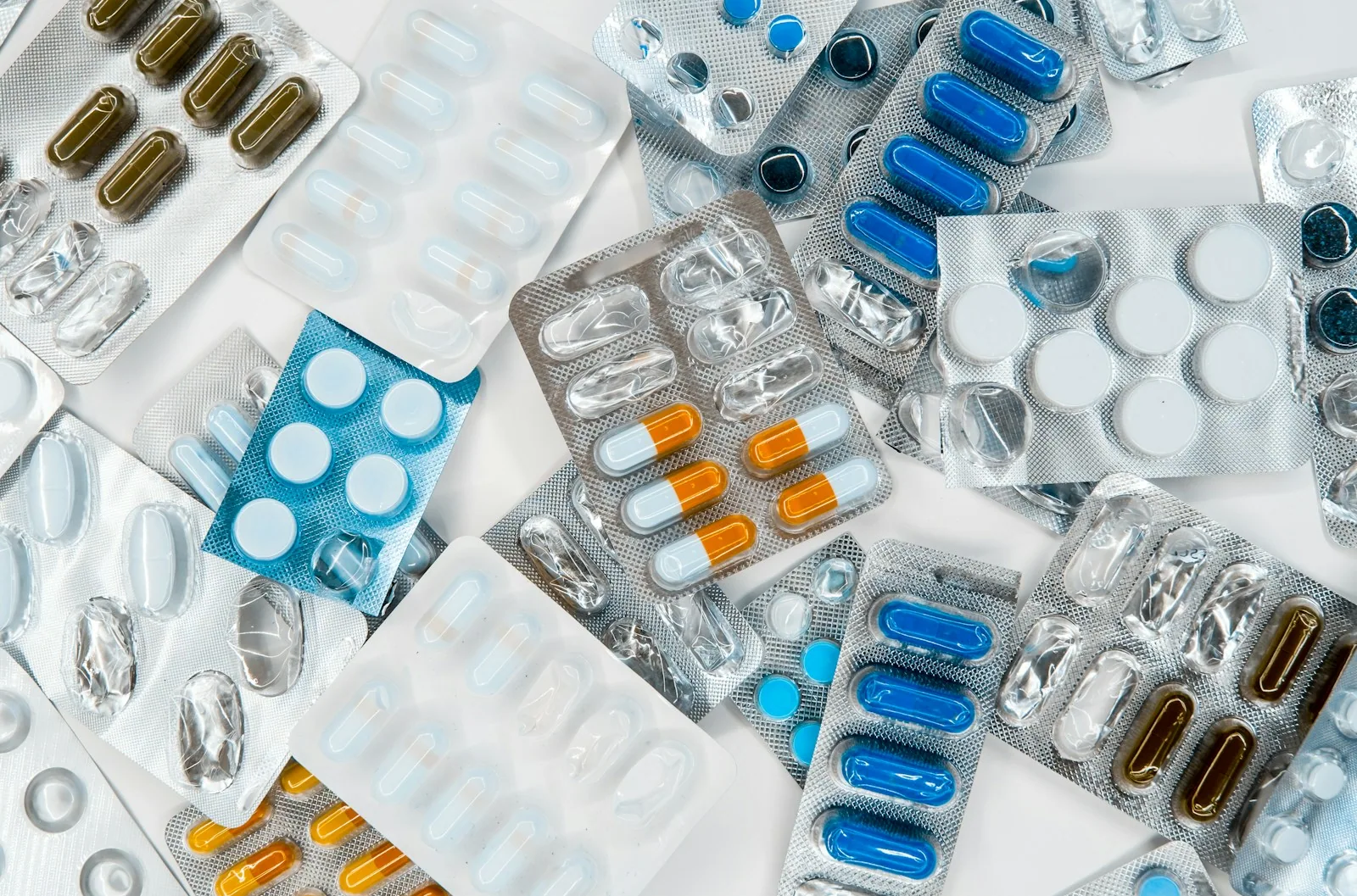
The ministerial note of 29 October 2025 identifies 18 molecules for the launch of carbon scores in hospital contracts. The choice is not arbitrary: these molecules combine high prescribing volumes, real decarbonisation potential and no risk of supply disruption.
The medicines carbon score timetable
Key dates and upcoming regulatory deadlines
They include the main analgesics (paracetamol, aspirin, morphine, fentanyl, oxycodone, tramadol), an anti-inflammatory (ketoprofen), an antispasmodic (phloroglucinol), four proton pump inhibitors (esomeprazole, lansoprazole, omeprazole, pantoprazole), two antiepileptics (lacosamide, levetiracetam), and four commonly used molecules (amiodarone, aripiprazole, furosemide, mycophenolic acid).
The timetable is accelerating - and the preparation window is narrowing:
- January 2025: DGE publishes the Ecovamed methodology (free Excel matrix)
- October 2025: ministerial note authorising carbon scores in contracts, 10% weighting, 18 molecules
- Q1 2026: effective rollout - first contracts incorporating carbon scores
- August 2026: the Climate and Resilience Act makes an environmental criterion mandatory in all public contracts
- 2027+: gradual expansion of the molecule list
6How to incorporate carbon scores into your contracts
If you are a hospital pharmacist, buyer or CSR manager, three steps are enough to get started.
The 18 priority molecules for carbon scores
Therapeutic categories selected by the ministerial note
- Step 1 - Check your assessment: does your latest BEGES use MRIO FIGARO factors (following March 2025)? If not, request a targeted update of the medicines source. The rest of the assessment remains valid.
- Step 2 - Identify your molecules: find molecules on the priority list and their volumes in your purchases. Ask suppliers whether they have already calculated their Ecovamed score. Those that have will be happy to share it - it is a selling point for them.
- Step 3 - Incorporate the criterion: add the carbon criterion to your next contract renewal, even with a modest weighting (10%). The signal sent to suppliers is as important as the criterion itself.
Institutions combining this approach with a climate strategy, work on infectious healthcare waste and LCA of their medical devices cover their three largest emissions sources.
7How much it costs
It is the question that always comes second (just after "are we required to do it?"). And for once, the answer is a pleasant surprise. For measurement tools: everything is free.
What is free, what is not
Measurement tools vs support: the real cost of carbon scores
- ✓Ecovamed matrix (DGE)
- ✓Carebone® tool (AP-HP, open source)
- ✓Database of 12,000+ medicines
- ✓Incorporating the criterion into contracts
- Hospital BEGES with support€15,000 - €30,000
- Climate strategy supportVariable
- Internal collection and coordination time-
- Ecovamed matrix: free, downloadable online (DGE)
- Carebone®: open source, freely accessible (AP-HP)
- Database: more than 12,000 medicines listed
- Incorporation into contracts: no additional cost (criterion added to the rules)
The real investment is your institution's carbon footprint assessment. The Ecovamed score is calculated by manufacturers, rather than the hospital. But to use it, you need an up-to-date carbon footprint assessment with the right emission factors.
A hospital BEGES supported by a specialist consultancy represents an investment of €15,000 to €30,000 depending on the institution's size. Funding is available: Diag Décarbon'Action (Bpifrance) covers part of the support for eligible organisations, and some regions offer additional funding.
The tools are free, the score is calculated by manufacturers, and incorporating it into contracts costs nothing. The real investment is your institution's carbon footprint assessment.
8Key takeaways
Just two years ago, the carbon footprint of medicines was a complete blind spot - everything was measured using the same ratio, with no way to compare or reduce it. In a few months, it has become a measurable, comparable criterion, in public contracts where an environmental criterion has been mandatory since August 2026. For a healthcare institution, the implications are clear:
- Medicines are healthcare's largest emissions source (around 29% of its footprint)
- Monetary emission factors were recalibrated in March 2025 (-62% for pharmaceuticals, MRIO FIGARO model)
- The Ecovamed methodology (DGE) measures the footprint molecule by molecule - free of charge
- 18 priority molecules incorporate carbon scores into hospital contracts from 2026
- An environmental criterion has been mandatory in all public contracts since 22 August 2026 (Climate and Resilience Act)
- The tools (Ecovamed matrix, Carebone®) are public and free - the real investment is the carbon footprint assessment