
- 1The packaging regulation (PPWR) has applied to healthcare products since 12 August 2026.
- 2Packaging in contact with the product is exempt from recyclability and recycled plastic content requirements.
- 3Outer cartons and grouped packaging boxes often remain covered, unless their necessity is demonstrated.
- 4Inventory every packaging level before the exemption reviews in 2032 and 2035 take place.
Regulation (EU) 2025/40, known as the Packaging and Packaging Waste Regulation (PPWR), has applied to healthcare product packaging since 12 August 2026, just as to all other packaging: Article 2 covers all packaging, regardless of the material used. Medicines, medical devices and in vitro diagnostic medical devices (IVDs) benefit from targeted derogations. The 2 main derogations concern packaging in contact with the product, exempting it from recyclability requirements and recycled plastic content thresholds. The rest of the regulation applies, particularly the EU declaration of conformity and substance limits.
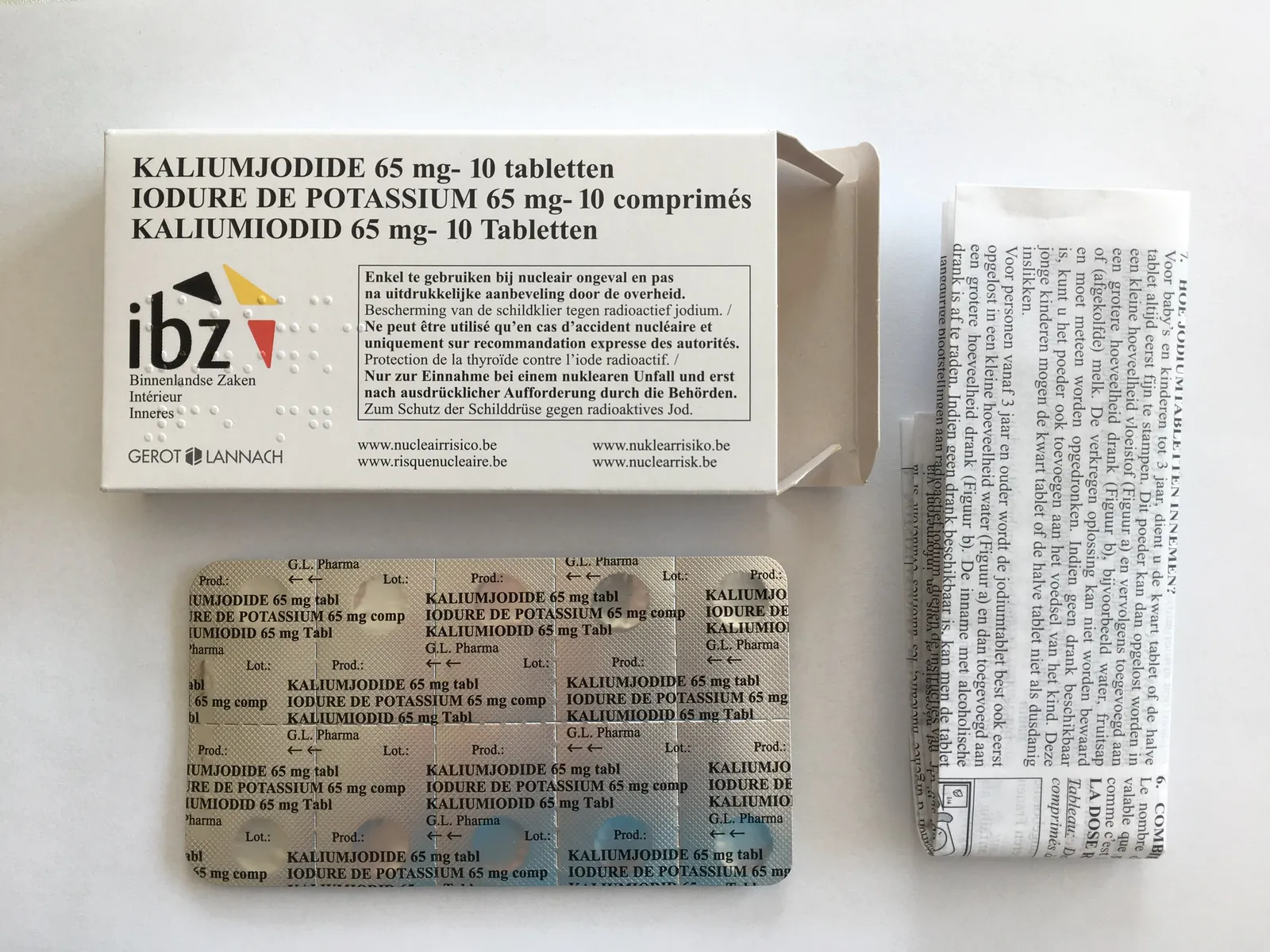
For a pharmaceutical company, medical device manufacturer or healthcare establishment, the rules therefore need to be read separately for each packaging item: a tablet blister has a different status from the outer cardboard carton around it or the transport box sent to the pharmacy. The general PPWR guide covers the rest of the regulation.
1What the PPWR calls healthcare product packaging
The regulation draws on definitions in pharmaceutical and medical device law that regulatory teams already know.
Immediate packaging, outer packaging and transport packaging
A medicine's immediate packaging is the container in direct contact with it: a blister, bottle, tube, ampoule or sachet. Outer packaging surrounds the immediate packaging: in practice, it is the cardboard carton bearing mandatory information and containing the leaflet. These 2 definitions come from Article 1 of Directive 2001/83/EC. The PPWR refers to them and adds its own categories: grouped packaging, such as a box of 10 cartons, and transport packaging, the crate and pallet sent to the wholesaler.
Contact-sensitive packaging
The derogations rely on the concept of contact-sensitive packaging, defined in Article 3 by the category of the packaged product: packaging is contact-sensitive when it is intended for a product covered by a list of texts, including Directive 2001/83 for human medicines, Regulation (EU) 2019/6 for veterinary medicines, Regulation (EU) 2017/745 for medical devices and Regulation (EU) 2017/746 for IVDs. The Commission FAQ equates it, for medical devices and medicines, with packaging in immediate contact with the product.
Infusion bags and pre-filled syringes
The Commission guidance, published in the Official Journal of the European Union on 10 June 2026, resolves a common case: an intravenous bag or syringe, even pre-filled with a medicine or IV solution, is an integral part of the product and is not packaging under the PPWR. Its overpackaging and the box grouping these items, however, fall under the general packaging definition.
The manufacturer that owns the brand
The PPWR assigns responsibility for conformity to the manufacturer marketing the packaged product under its brand: the blister or pouch supplier provides data, but the brand signs the EU declaration of conformity.
2Recyclability and recycled content: the 2 substantive exemptions
Packaging in contact with healthcare products is exempt from the 2 requirements demanding the most work from manufacturers: designing recyclable packaging and incorporating recycled plastic.
Recyclability (Article 6)
Since 12 August 2026, Article 6 has required all packaging to be recyclable under the previous essential requirements until European criteria are established, then designed for recycling under those criteria from 1 January 2030 (or 24 months after they enter into force), and recycled at scale from 2035. Paragraph 11 exempts 6 healthcare-related categories from the entire article: immediate packaging for human and veterinary medicines, contact-sensitive packaging for medical devices and IVDs, a medicine's outer packaging when necessary to preserve its quality, contact-sensitive packaging for infant formula and food for special medical purposes, and packaging for dangerous goods.
Recycled content (Article 7)
Article 7 sets minimum recycled plastic content thresholds for 2030, or 3 years after the act setting out the calculation: 30% for contact-sensitive polyethylene terephthalate (PET) packaging, 10% for contact-sensitive packaging made from another plastic and 35% for other plastic packaging, with higher levels in 2040.
Paragraph 4 exempts the same families, with 2 healthcare-specific additions: medical devices exclusively destined for research use or investigational devices, and packaging for supplies and components used to manufacture a medicine when required to meet its quality standards. The latter case, such as a bag delivering an excipient to a factory, is exempt from recycled plastic content but not recyclability, as Article 6 has no equivalent exemption.
Outer cartons and grouped packaging boxes: areas requiring documentation
A medicine's outer carton is exempt from recyclability only if necessary to preserve the product's quality, for example by protecting a photosensitive medicine from light. This necessity must be demonstrated, and the justification belongs in the technical documentation, supported by the marketing authorisation (MA) dossier. A cardboard outer carton remains outside recycled content thresholds in any case, since they concern plastic only.
What the PPWR requires, packaging item by packaging item
Choose a packaging item: each obligation appears with its status and the article it is based on.
Tablet blister packimmediate packaging
The 2035 review may lift the exemption: 5 pharmaceutical companies are already testing recyclable blister packs with Adelphe (a French producer responsibility organisation).
For medical devices, the text exempts contact-sensitive packaging without expressly mentioning the box grouping 100 sterile pouches. As the Commission equates this concept with packaging in immediate contact, the grouped packaging box, and even more clearly the transport packaging, is very likely subject to all the requirements.
The reviews in 2028, 2032 and 2035
None of these exemptions expires on a fixed date, but 3 reviews are planned. The 1 January 2028 assessment mainly serves to add recycled content derogations where recycling technology is unavailable. The risk of removal comes from the 12 February 2032 report on retaining recycled content exemptions and the review of recyclability exemptions by 1 January 2035 at the latest, through a legislative proposal. Packaging exempt today may therefore lose its exemption over the coming decade, a short horizon for any packaging change started now.
A tablet blister is exempt from recyclability and recycled plastic content, but remains subject to the declaration of conformity, substance limits and minimisation.
3Sorting labels, custom transport packaging and hospital portions: the other derogations
The regulation makes allowances for healthcare on 4 other points, usually subject to conditions.
Sorting labels, subject to conditions
Article 12 provides for a harmonised label showing the packaging's composition to guide sorting. Immediate and outer packaging for human and veterinary medicines, medical devices and IVDs may be exempt if there is no room for it alongside the mandatory information or if it risks compromising the medicine's safe use. Commission guidance also excludes products reserved for professional users: a medical device intended for an operating theatre is exempt, while a self-test sold in a pharmacy is exempt only if there is insufficient space. The act establishing the label, expected by 12 August 2026, has not been adopted: the obligation will not begin before late 2028.
Custom transport packaging for medical equipment
A scanner or imaging machine travels in transport packaging designed for it. Article 15 exempts custom-made transport packaging for medical devices and configurable medical systems from technical documentation and the EU declaration of conformity; it remains subject to substantive requirements. Article 29 also excludes it from reuse targets as packaging designed for large machinery or equipment to the customer's requirements.
Dangerous goods
Flammable laboratory reagents, biological samples and some IVDs: as soon as a shipment falls under the transport of dangerous goods under Directive 2008/68/EC, including in limited quantities, its packaging is exempt from recyclability, recycled content and reuse targets, as confirmed by the Commission FAQ. The exemption depends on the goods transported: packaging approved for dangerous goods does not qualify when carrying an ordinary product.
Individual portions served in hospitals
From 2030, Annex V bans single-use plastic individual portions served on the premises, such as sugar, sauces or coffee cream. Hospitals, clinics and nursing homes will be able to continue offering them where necessary for patient safety and hygiene. This is the annex's only healthcare derogation; our article on packaging banned by the PPWR details the other formats.
4What applies to healthcare products without exemption
The regulation's core has no healthcare derogation, apart from the documentation exemption for custom packaging. The following obligations have applied since 12 August 2026 or arrive in 2030.
The declaration of conformity and technical documentation
Every packaging type must be covered by technical documentation and an EU declaration of conformity prepared by the manufacturer and retained for 5 years, or 10 years for reusable packaging. Until recyclability criteria are published, the declaration mainly attests to requirements already applicable, particularly substances and heavy metals. It also covers exempt packaging, with the claimed derogation and its justification included in the documentation. Packaging must not bear misleading logos either, and any environmental claim about it is governed by Article 14 and environmental claims law (in French).
Substances of concern, heavy metals and PFAS
Packaging must limit substances of concern, and the sum of lead, cadmium, mercury and hexavalent chromium must not exceed 100 mg/kg. However, the PPWR thresholds for per- and polyfluoroalkyl substances (PFAS) concern only food-contact packaging: they do not apply to medicines or medical devices, but do apply to infant milks and oral nutritional supplements prescribed to malnourished patients, which are legally foods.
Minimisation and empty space in 2030
Already required by the previous directive, minimisation is strengthened from 1 January 2030: the weight and volume of every package must be reduced to the minimum necessary. No healthcare exemption is provided: pharmaceutical rules or sterility standards serve as justification, criterion by criterion under Annex IV, rather than an exemption. Commission guidance specifies that marketing presentation no longer justifies additional volume. From February 2028, empty space in sales packaging, including outer cartons, must be minimised, and grouped, transport and e-commerce packaging will be limited to 50% empty space from 2030 at the earliest.
What applies to healthcare packaging, and when the exemptions will be reviewed
Filled dots: the obligations that apply; hollow dots: the dates when the Commission reviews the exemptions for healthcare products.
Reuse of transport packaging
Article 29 requires 40% of transport packaging (pallets, boxes and crates) to be reusable from 1 January 2030, and 100% for flows between the operator's own sites or those of linked or partner enterprises in the EU, as well as deliveries to another company in the same country. Pharmaceutical and hospital logistics are covered without a specific exemption, apart from cardboard boxes, dangerous goods and packaging for large machinery. Delegated Decision (EU) 2026/429 of 25 February 2026, in force since 26 May 2026, exempts pallet wrapping and strapping from the 100% target; MedTech Europe requests the same treatment for the 40% target. Our article on reuse under the PPWR details the targets.
Extended producer responsibility
Finally, healthcare product packaging falls under extended producer responsibility (EPR) under Article 45, with no exclusion for hospital or professional packaging. The regulation also requires an EPR authorised representative in each other State where you sell directly to final users without being established there. The Commission's omnibus proposal of 10 December 2025 would suspend this obligation until 2035, but has not been adopted to date.
5Changing healthcare packaging takes several years
Non-essential outer cartons, boxes and transport packaging must already be recyclable and will be subject to harmonised criteria in 2030. The 2032 and 2035 reviews may extend requirements to immediate packaging, which takes years to change.
For a medicine: stability and marketing authorisation variation
Any change to a medicine's immediate packaging requires stability studies and a variation to its marketing authorisation, country by country. According to estimates published by Leem (the French pharmaceutical industry association) in 2023, with no official schedule of costs, a stability study costs €50,000 to €100,000 and takes 1 to 5 years, while a variation takes 6 months to 2 years to obtain. A recyclable blister project started in October 2026 would therefore be completed between 2028 and 2033. A prescription medicine's outer carton also carries the anti-tampering device and unique identifier required by falsified medicines legislation, which also constrains its redesign.
A blister change started in October 2026 is completed between 2028 and 2033, according to Leem's estimates of stability and marketing authorisation variation times, before the exemption review due by 2035 at the latest.
For a medical device: the sterile barrier
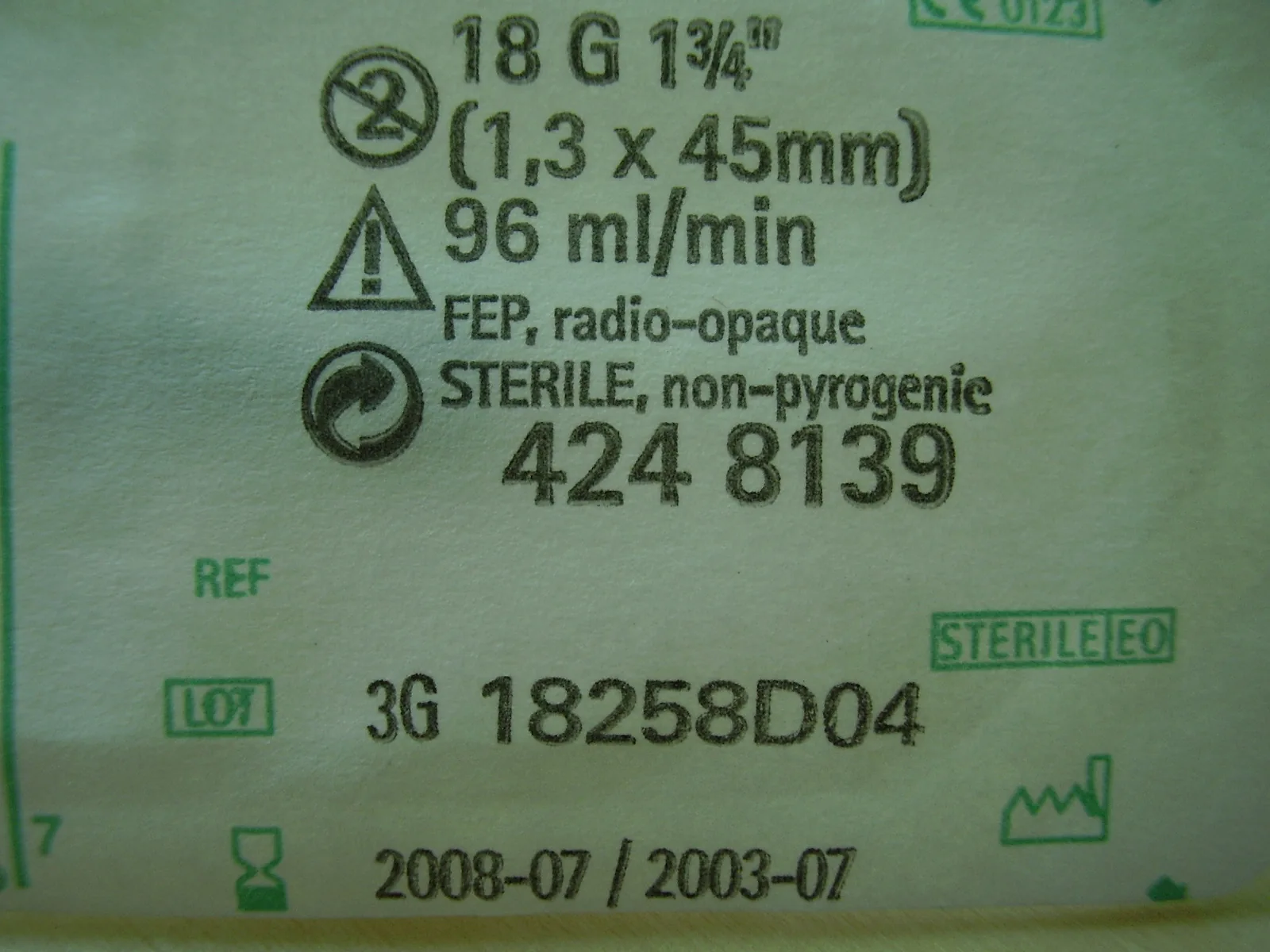
For a sterile medical device, the pouch or tray forms the sterile barrier system, validated under EN ISO 11607.
For a device still covered by a certificate under the previous directive, Medical Device Coordination Group (MDCG) guidance 2020-3 classifies a packaging design modification affecting the device's sterility, stability or microbiological condition, including seal integrity, as a significant change, unless imposed by other Union legislation without worsening the benefit-risk ratio. The device must then be certified under Regulation 2017/745, an assessment that most often takes 13 to 18 months, according to 48% of notified bodies surveyed in Team-NB's 2025 survey. A change to the grouped packaging box that does not affect the sterile barrier has no such consequence.
The scale of medicine packaging in France
Leem's roadmap puts household medicine packaging placed on the French market at 62,000 tonnes per year (2022 data), or 1.2% of household packaging. Half the plastic consists of blisters, and 68% of this plastic had no operational recycling system. The sector has committed to replacing its mono-PVC (polyvinyl chloride)/aluminium blisters with recyclable blisters for suitable products. Adelphe, the household packaging producer responsibility organisation (PRO, éco-organisme in French) supporting healthcare since 2005, has funded trials by 5 pharmaceutical companies since December 2025.
62,000 tonnes of household packaging for medicines per year in France
Breakdown by material, then plastic by format. 2022 data published by Leem (the French pharmaceutical industry association).
According to The Shift Project, packaging production, including leaflets, represents around 8% of emissions associated with medicines consumed in France, and packaging manufacture and transport account for 3% of emissions associated with medical devices. A packaging change may therefore shift impacts rather than reduce them, for example with a thicker single-material blister. A life cycle assessment (LCA) of the device (in French) or a medicine emission factor (in French) can test this.
6In France, the PPWR sits alongside EPR and Cyclamed
The regulation does not replace French extended producer responsibility schemes, which determine who pays for managing packaging at the end of its life.
Household or professional: what the ministerial order of 2 December 2025 determines
France divides packaging between the household packaging scheme and the professional (business-to-business, B2B) packaging scheme. The ministerial order of 2 December 2025 classifies medicines, consumer dressings, self-tests and first-aid kits as household products; medicines specifically designed for hospitals, technical dressings, compresses and other medical devices as professional products. Transport packaging is professional, except packaging for online sales to private individuals; grouped packaging is too, except packs whose units may be sold separately in shops. A ministerial order of 13 July 2026 amended it without changing this classification of healthcare products.
Professional packaging EPR from 1 January 2027
Postponed several times, most recently from 1 July 2026 to 1 January 2027, the professional packaging scheme becomes operational on 1 January 2027, according to the environment ministry's press release of 28 July 2026. A manufacturer of hospital medical devices or pharmaceutical company supplying hospitals must join Citeo Pro, Léko Pro or Twiice, the 3 producer responsibility organisations approved in June 2026, before the end of 2026, or establish an individual compliance scheme. It must also declare its tonnages to calculate its EPR fee (éco-contribution).
Cyclamed, sorting and the leaflet
Cyclamed, the unused medicines scheme, takes back only the medicine and its immediate packaging when medicine remains inside. Empty outer cartons and leaflets go into separate recycling, and medical devices and infectious healthcare waste (in French) follow other schemes. Its collection rate reached 83% in 2025. Cartons already bear the Info-tri label required by the anti-waste law of 2020, with signage shared by Leem, Cyclamed and Adelphe.
7Where to start: an inventory of each packaging item
The safest approach is to work through the packaging bill of materials for each catalogue item and each packaging level, rather than by product family.
- Classify every packaging level, from immediate packaging to pallet, and record the derogation claimed and the article providing for it.
- Document the conditions: the outer carton's necessity for medicine quality, insufficient space for the sorting label and a medical device's exclusively professional use.
- Gather supplier data on substances and heavy metals, which underpin all declarations of conformity.
- Identify transport flows between your sites and to customers in the same country, covered by the 2030 reuse targets.
- Schedule packaging changes around stability, marketing authorisation or notified body lead times.
At Projet Celsius, we see the costliest mistake as interpreting "exempt" as "outside the PPWR": outer cartons, grouped packaging boxes and logistics remain covered, and by around 2031 at the latest public procurement must meet minimum packaging requirements established by the Commission (Article 63) where packaging represents more than 30% of the purchase value, with a possible derogation on public health grounds. Our PPWR support starts from this inventory, and packaging eco-design by 2030 describes the method.
8Key takeaways
- The PPWR has applied to healthcare products since 12 August 2026, with no general exclusion.
- Packaging in contact with the product is exempt from recyclability and recycled plastic content; outer cartons only if they preserve the medicine's quality.
- Declarations of conformity, substances, minimisation, reuse and EPR apply to all healthcare packaging.
- Exemptions are reviewed by 2032 and 2035, a short horizon given stability and certification lead times.
The full PPWR timeline places these deadlines alongside the others, and the regulation's scope helps identify your role as manufacturer, importer or distributor, for each packaging item.
- PPWR regulation: Regulation (EU) 2025/40 of 19 December 2024 on packaging and packaging waste, Official Journal L of 22 January 2025: Articles 2, 3 (definitions, point 49), 5, 6 (paragraphs 11 and 12), 7 (paragraphs 4, 12 and 14), 10, 12 (paragraph 11), 15 (paragraph 11), 24, 25 and Annex V (point 4), 29 (paragraph 4), 39, 45, 63 and 71.
- European Commission: Guidance on Regulation (EU) 2025/40, C/2026/3084, Official Journal C of 10 June 2026, points 1, 6, 10 and 13; Delegated Decision (EU) 2026/429 of 25 February 2026; PPWR FAQ, August 2026 version.
- Healthcare product law: Directive 2001/83/EC, Article 1; Regulation (EU) 2019/6; Regulation (EU) 2017/745, Annex I; Regulation (EU) 2017/746; Delegated Regulation (EU) 2016/161; MDCG guidance 2020-3, revision 1, 2023; EN ISO 11607.
- French law: Ministerial order of 2 December 2025 on packaging of products used by households or professionals; environment ministry press release of 28 July 2026 on professional packaging EPR.
- Sector data: Leem, 3R roadmap for single-use plastic packaging, July 2023; Adelphe, Towards a recyclable blister call for projects, 4 December 2025; Cyclamed, 2025 review, 26 June 2026; MedTech Europe, joint statement on Article 29, 16 March 2026; Team-NB, 2025 survey, May 2026.
- Carbon footprint: The Shift Project, pharmaceutical industry summary, June 2025, English version, and medical device industries summary, June 2025.