

- 1On 18 February 2027, portable batteries inside appliances become replaceable by their users.
- 2A passport follows each e-bike, vehicle or industrial battery above 2 kWh.
- 3Smartphones and tablets may reserve replacement for a workshop, subject to technical conditions.
- 4Test removal on a production unit and document every derogation before February.
On 18 February 2027, the EU Battery Regulation reaches its most visible deadline. Every appliance placed on the market from that date with a portable battery must allow its user to remove and replace it using commercially available tools, subject to exceptions. On the same day, e-bike, e-scooter and electric vehicle batteries, and industrial batteries above 2 kWh, will receive a digital passport accessible through a quick response (QR) code, and a QR code will appear on every battery.
What applies to each battery category on 18 February 2027
User removal covers portable batteries only; the passport covers LMT, vehicle and industrial batteries of more than 2 kWh.
These obligations concern different companies: removability falls on appliance manufacturers and importers, while the passport falls on those placing e-bike, vehicle and industrial batteries on the market. There are many exceptions, and the Commission adopted 6 new ones on 14 July 2026. Smartphones follow their own rules, and several implementing texts are still missing less than 5 months before the deadline.
1The Battery Regulation combines 3 obligations on 18 February 2027
Regulation (EU) 2023/1542 entered into force on 17 August 2023 and applies in stages; on 18 February 2027, 3 of its obligations apply together: removability, QR codes and the passport.
The 5 battery categories, defined by use and weight
The starting point is the battery category, and the regulation distinguishes 5: portable (sealed, 5 kg or less), light means of transport or LMT (25 kg or less, for e-bike or e-scooter traction), electric vehicle (above 25 kg, or for a car, van or bus), SLI for starting, lighting and ignition, and industrial, the default category above 5 kg or for industrial use. A note from the Directorate-General for Risk Prevention (DGPR) and ADEME (the French Agency for Ecological Transition) of 17 August 2026 classifies hoverboards and electric unicycles as LMT, for example, and tool, toy and vacuum cleaner batteries as portable.
What the 2006 directive provided
Directive 2006/66/EC, which applies on this point until 18 February 2027, already required batteries to be readily removable, by qualified professionals independent of the manufacturer where necessary: a manufacturer could restrict replacement to a workshop without having to justify it. The regulation removes this discretion: replacement by the end-user becomes the rule, with professional replacement limited to listed products.
Why Europe wants removable batteries
The regulation gives 2 reasons: to extend appliances' lives and to allow waste batteries to follow their own collection and recycling route. France remains far short on collection: according to ADEME's 2024 report, the regulatory collection rate for portable cells and batteries was 46.6%, above the 45% target but far from the 63% required by the end of 2027 under the regulation (73% by the end of 2030).
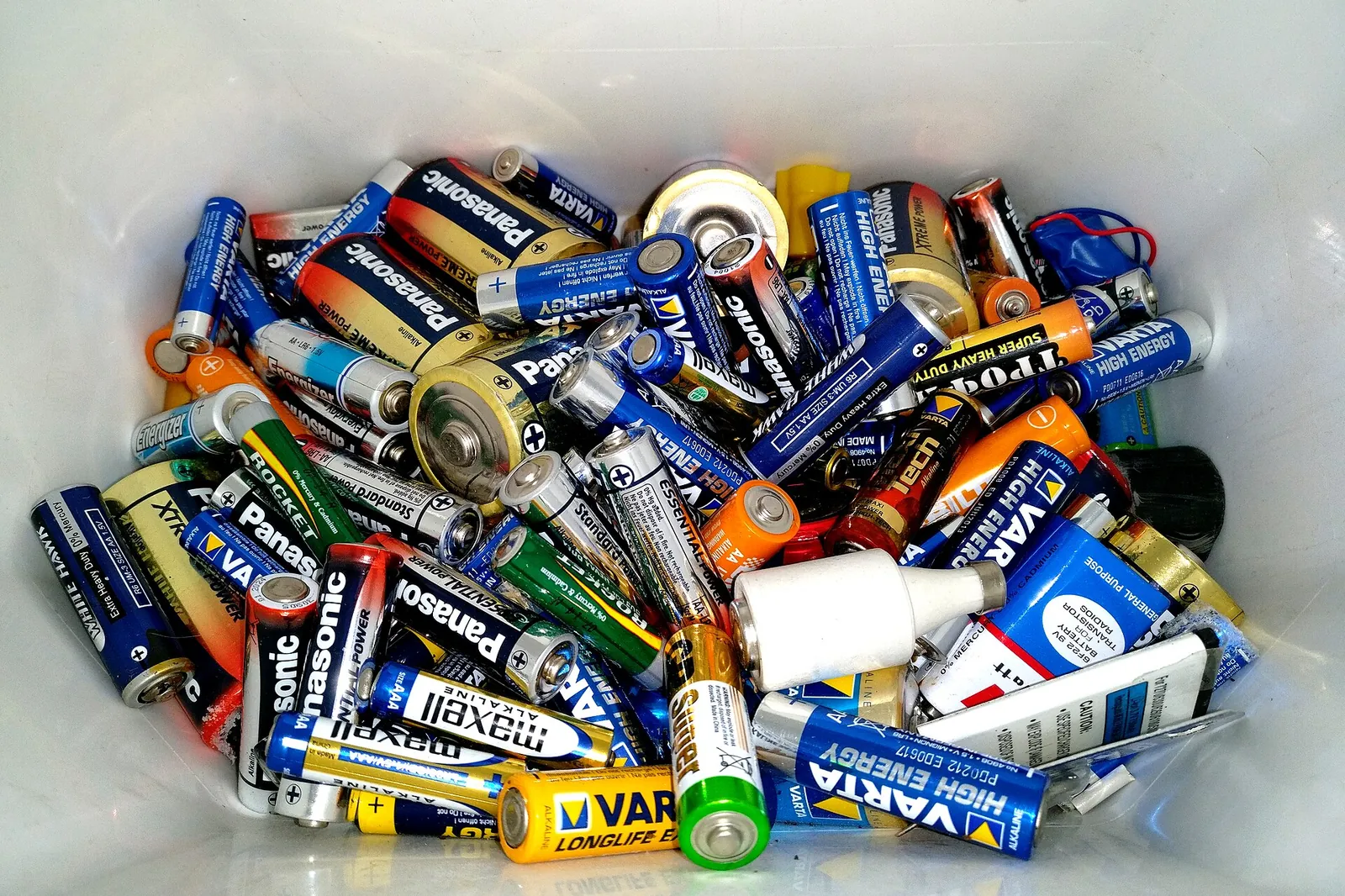
Some batteries still escape collection: an ADEME study estimates that just over 7,500 tonnes of portable batteries were found in mixed municipal waste in 2024, around 20% of the total generated. Small lithium batteries discarded with their products cause fires in treatment centres, a risk the Commission says it considers before granting any exemption.
2Removable batteries: users replace them with commercially available tools
Article 11 covers every company placing a product incorporating a portable battery on the market: the appliance manufacturer or its importer, regardless of the battery supplier. It must ensure the end-user can remove and replace the battery at any time during the product's lifetime, and the obligation concerns the complete battery: users do not have to replace its constituent cells.
Commercially available tools, without heat or solvents
A battery is readily removable when it can be removed using commercially available tools. A specialised tool remains possible if it is provided free of charge with the product; a proprietary tool, hot-air gun to soften adhesive or solvent to dissolve it are excluded. The Commission's guidelines draw on EN 45554: basic tools and those sold to the general public are suitable, while a tool reserved for the manufacturer's authorised repairers is excluded. The reference user is an adult with no particular repair experience.
E-bikes and e-scooters: an independent professional
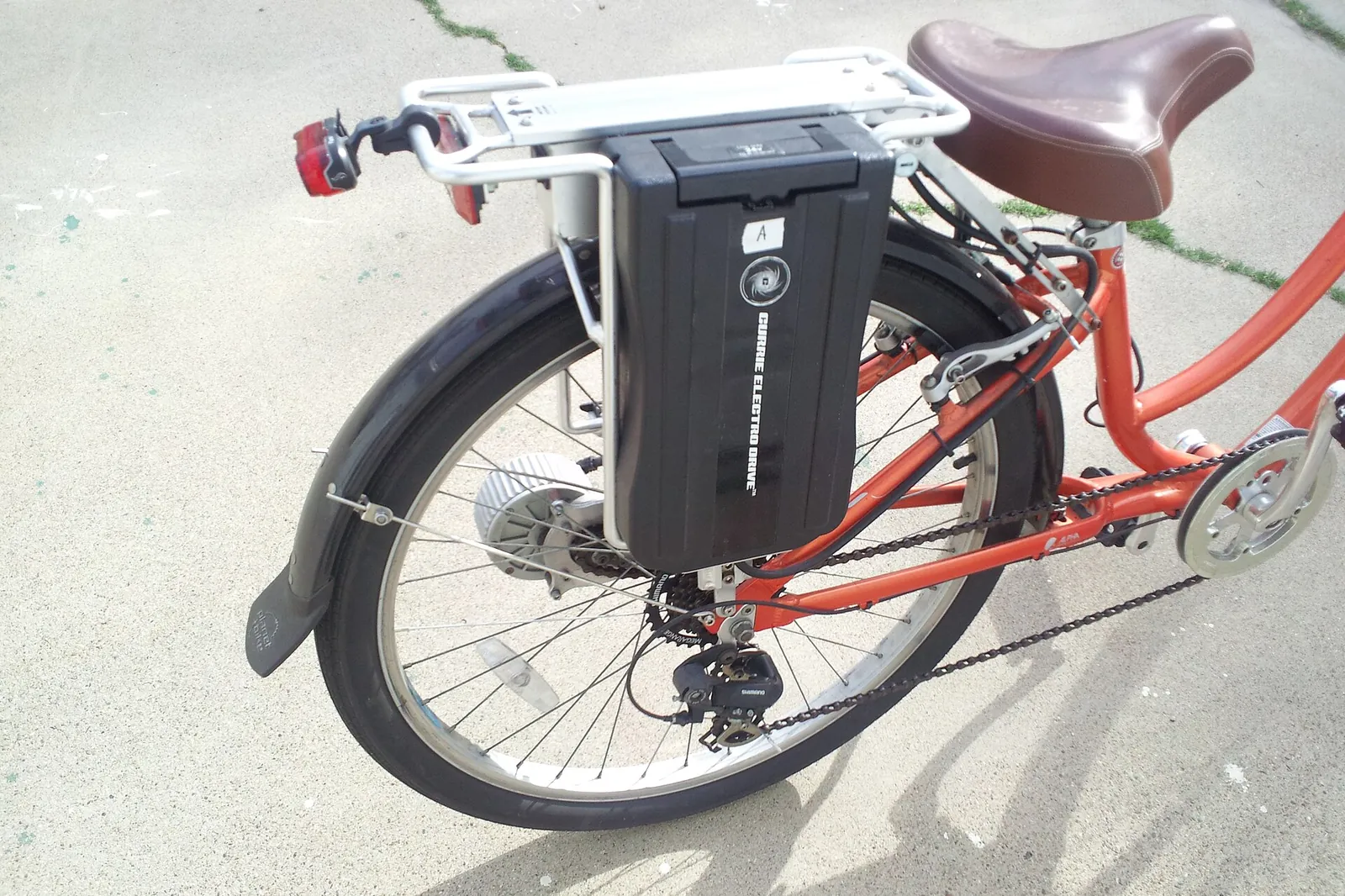
For LMT batteries, those in electrically assisted bicycles, e-scooters, hoverboards or light scooters, the requirement applies to a different person: the battery and each of its cells must be removable and replaceable by an independent professional, meaning a competent commercial repairer with no connection to the manufacturer. In December 2025, the Commission proposed reducing this requirement to modules for safety reasons, and the Council followed on 24 June 2026, although the text has not yet been adopted.
Spare parts, instructions and software
The rule comes with additional obligations: for portable batteries, removal instructions and safety information are permanently published online; for both portable and LMT batteries, the battery remains available as a spare part for 5 years after the last unit of the model is placed on the market, at a reasonable price, and no software may block a compatible battery. The Commission cites parts pairing, which links a battery to an appliance through its serial number, and permits only a notification indicating a non-original battery, without any loss of function.
The rule applies to appliances placed on the market from 18 February 2027: a product already placed on the Union market before that date may continue to be sold, and the Commission clarifies that the spare parts obligation does not cover it. In France, batteries incorporated into appliances also fall under the battery extended producer responsibility scheme (EPR scheme), requiring membership of a producer responsibility organisation (PRO, éco-organisme in French) and display of a unique identifier (IDU, the French EPR registration number issued by ADEME).
E-bike and e-scooter manufacturers have a second project: goods fitted with LMT batteries fall within the Right to Repair Directive (in French), which requires repair to be offered beyond the statutory guarantee, including parts and information.
3Exceptions: an independent professional or no obligation
The regulation provides 2 levels of exception, depending on whether the product may restrict replacement to an independent professional or is entirely exempt because its battery must never be disconnected.
Washable appliances and medical equipment
Article 11 first lists appliances designed primarily to operate in contact with water (splashes, jets or immersion) and intended to be washed or rinsed, where safety requires it, then professional medical imaging and radiotherapy devices and in vitro diagnostic devices. The guidelines give examples: electric toothbrushes, oral irrigators, shavers, trimmers and floor washers, with ingress protection ratings of IPX4 for splashes, IPX5 or IPX6 for jets and IPX7 for immersion.
The rating alone is insufficient: in the product documentation when placing the product on the market, the manufacturer must demonstrate that user replacement would compromise safety and no redesign is possible using the state of the art. A toothbrush using standard batteries, for example, has no reason to claim this exception.
Who must be able to remove the battery from your device?
Answer the questions to assess a product containing a portable battery against Article 11 of the Batteries Regulation.
Is the product a smartphone, mobile phone, cordless phone or tablet?
Products covered by Ecodesign Regulation 2023/1670.
The 6 categories added in July 2026
On 14 July 2026, following a call for applications opened in 2025, the Commission adopted a delegated act adding the following to the list:
- Connected wearables, watches, activity trackers or glasses, too small for safe replacement or with a sealed casing protecting them from dust and impacts;
- Electric toys with a rechargeable battery, until 31 July 2030, when the new Toy Safety Regulation takes over;
- Wireless temperature probes used in contact with food during cooking;
- Equipment for explosive atmospheres under the ATEX Directive, such as certain motors, sensors or pumps;
- Body-worn devices injecting a medicine under the skin;
- Telematics units fixed to the roof of agricultural and construction machinery.
These derogations apply only where safety requires them. Subject to the right of Parliament and the Council to object, the act had not been published in the Official Journal of the European Union as of 28 September 2026, and will enter into force only 20 days after publication. In its position of 24 June 2026, the Council also proposes postponing Article 11's application to 18 August 2028 for these categories alone, on the grounds that redesign generally takes 18 months to 4 years.
When the battery must never be disconnected
The full exemption covers products requiring continuous power for user safety or data integrity where data collection is their main function. The Commission includes cardiac implants, hearing aids, smoke detectors designed for 10 years of uninterrupted use, eCall emergency calls, clock backup cells and payment terminals. An object collecting data in addition to its main function does not qualify.
4Smartphones and tablets: workshop replacement remains permitted
Phones and tablets largely fall outside Article 11: they have their own Ecodesign Regulation, Regulation (EU) 2023/1670, applicable since 20 June 2025, and the Commission's guidelines are explicit: for these products, its requirements take precedence over those of the Battery Regulation.
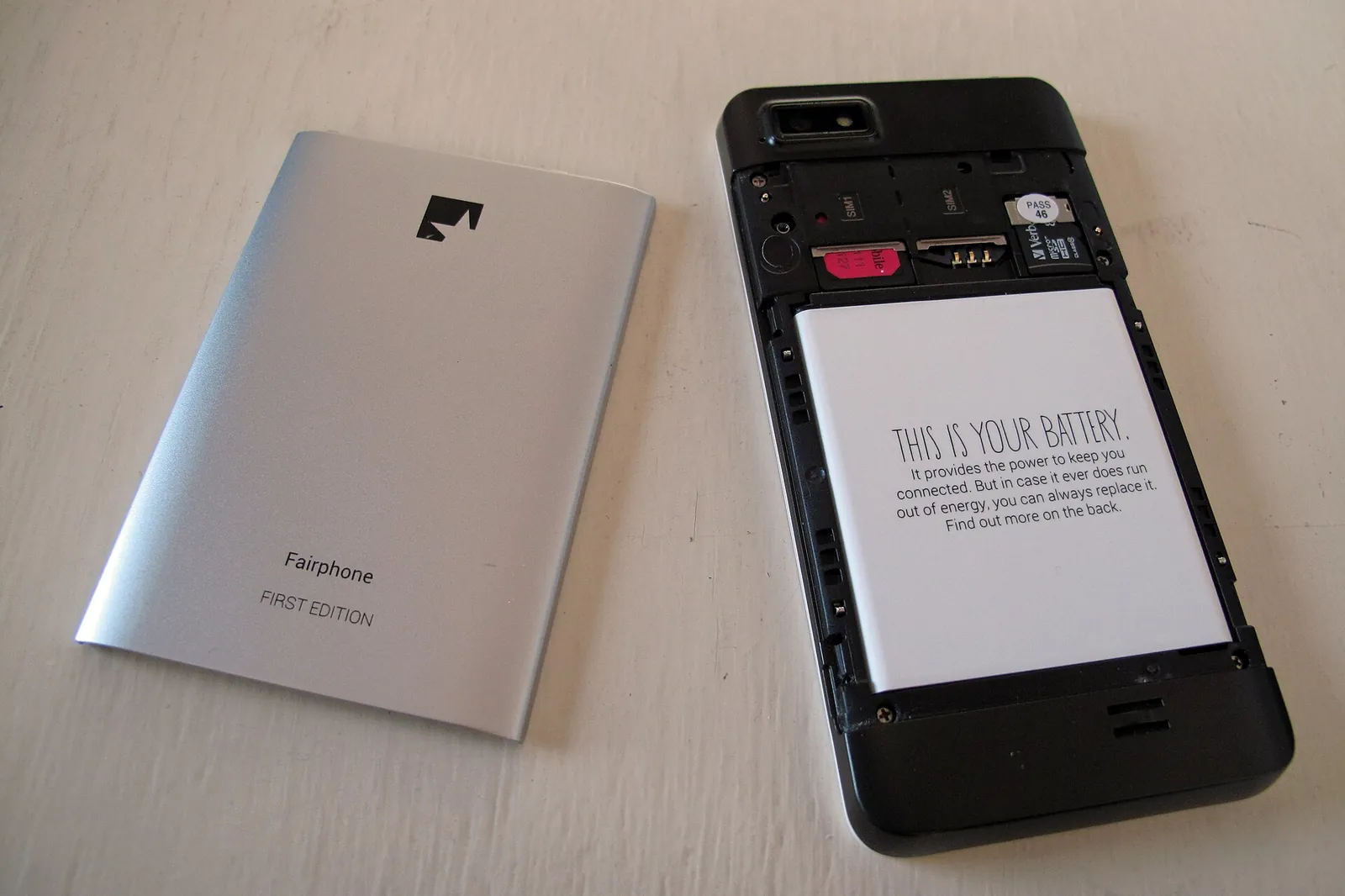
The principle remains a battery replaceable by a layperson, without tools or using basic tools. For a smartphone or another mobile phone, however, the manufacturer may choose an alternative: a battery replaceable by a non-specialist in a workshop using commercially available tools, provided it retains 83% of its capacity after 500 cycles and 80% after 1,000 cycles, and the appliance is dust-tight and protected against immersion to a depth of 1 metre for 30 minutes (IP67). Tablets have the same alternative with a lower protection level (IP42), while cordless phones remain subject to layperson replacement.
For phones, the Ecodesign Regulation takes precedence: workshop battery replacement remains permitted if it retains 83% capacity after 500 cycles and 80% after 1,000, in a waterproof appliance (IP67).
The text balances repairability and durability: a waterproof phone whose battery ages slowly needs to be opened less often. Smartphones and tablets must in any event withstand 800 cycles with 80% capacity, and their batteries remain available as spare parts for 7 years. The guidelines give this precedence only to Regulation 2023/1670, meaning Article 11 applies to a laptop or handheld games console, subject to derogations. Phone and tablet manufacturers also remain subject to the right to repair (in French).
5The battery passport: a QR code and 3 access levels
The battery passport is an electronic record specific to each battery, accessible by scanning a QR code. It is the first mandatory Digital Product Passport (DPP) (in French) in Europe, ahead of those that the Ecodesign for Sustainable Products Regulation (ESPR) (in French) will require product family by product family.
The batteries covered
The passport applies to every LMT battery, regardless of capacity, every industrial battery above 2 kWh and every electric vehicle battery placed on the market or put into service from 18 February 2027. Portable, SLI and industrial batteries of 2 kWh or less do not have one. All batteries, however, will carry a QR code: for those without a passport, it will lead to the EU declaration of conformity and collection instructions.
Who can read which data
Annex XIII to the regulation sets out data access according to who is viewing it: the public sees the model (chemistry, capacity, lifetime, carbon footprint and recycled content); persons with a legitimate interest, repairers, refurbishers, second-life operators and recyclers, also see detailed composition, disassembly and each battery's state of health; authorities and notified bodies consult test reports.
What the battery passport shows, depending on who views it
The QR code links to the unique battery identifier; each audience sees only its own data level.
Dashed outlines mark fields empty on 18 February 2027. The list of persons with a legitimate interest awaits an implementing act, unpublished at 28 September 2026.
The data are not centralised: the operator placing the battery on the market stores them, either itself or through a service provider appointed in writing, and uploads the unique identifier to the European passport registry, operational since 20 July 2026. The passport follows the battery: a car battery repurposed for stationary storage receives a new passport linked to the first, and the passport ceases to exist when the battery is recycled.
A passport still incomplete in 2027
Several fields will be impossible to complete on 18 February 2027. The carbon footprint awaits a methodological delegated act, in draft since April 2024 for electric vehicles, and the declaration will apply only 12 months after its entry into force. Recycled content will be documented only from 18 August 2028 at the earliest, and due diligence information only from 18 August 2027. Above all, the act defining who has a legitimate interest and what they can download, due by 18 August 2026, had not yet been submitted to public consultation as of 28 September 2026.
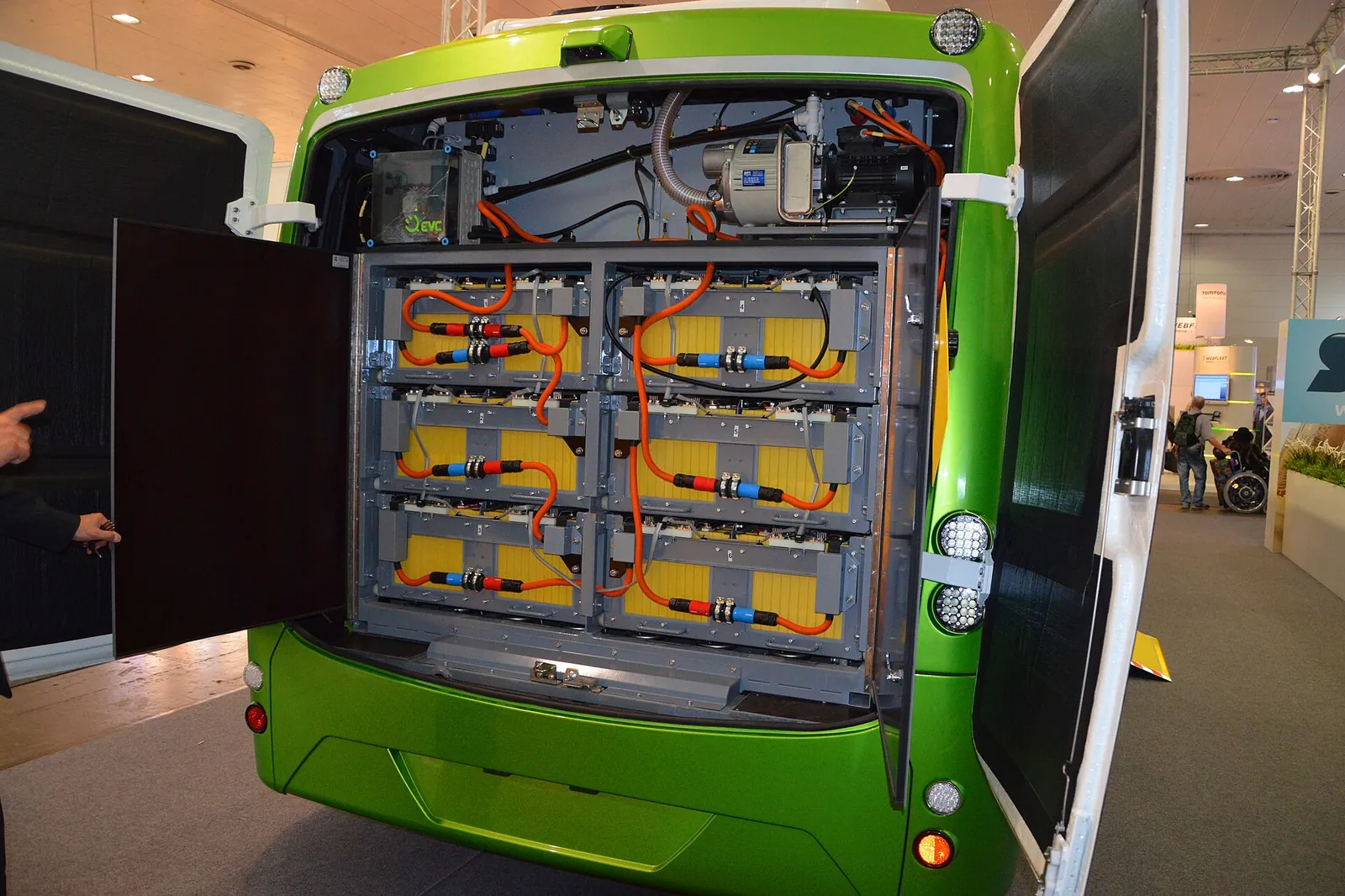
Work therefore starts with data independent of any pending text: identity, chemistry, capacity, durability and disassembly. The carbon footprint is prepared using the regulation's specific method (in French), narrower than a multi-criteria life cycle assessment (LCA) (in French), and our figures on a battery's carbon footprint (in French) show that cell manufacturing determines most of it.
6The timeline after February 2027: fixed dates and delayed acts
After 18 February 2027, the timeline mixes dates fixed by the regulation and variable dates calculated from the adoption of a Commission act.
The fixed dates
- 18 August 2027: due diligence on cobalt, lithium, nickel and natural graphite, following a 2-year postponement voted in 2025, for companies above €40 million turnover; the Commission proposed raising this threshold to €150 million in Omnibus IV, whose agreement awaits Parliament's vote.
- 31 December 2027: 63% collection for portable batteries, then 73% by the end of 2030; 51% by the end of 2028 for LMT batteries.
- 18 August 2031: minimum recycled content of 16% for cobalt, 6% for lithium and nickel and 85% for lead, in industrial batteries above 2 kWh, vehicle and SLI batteries.
- 1 September 2032: new type-approved vehicle types must allow a repairer or authorised treatment centre to remove and replace their traction battery easily, under Regulation (EU) 2026/1738 on end-of-life vehicles.
Dates dependent on a Commission act
Other deadlines await a text: the harmonised label will apply only 18 months after its implementing act; the carbon footprint declaration for electric vehicle batteries, 12 months after its delegated act, followed by industrial batteries; recycled content documentation, 24 months after its calculation methodology. For vehicles, our life cycle assessment of an electric car (in French) shows the battery's share of its footprint.
Batteries Regulation deadlines: fixed or dependent on legislation
The timeline dates are set in legislation. Deadlines in the dashed cards start only after an act is adopted or a vote is held.
Fixed dates
Fixed dates
Dependent on an act or a vote
Postponements proposed in the environmental omnibus
On 10 December 2025, the Commission proposed a targeted revision of the regulation. The Council agreed its position on 24 June 2026: LMT battery replacement at module level, QR codes retained for all batteries on 18 February 2027 and postponement to 18 August 2028 solely for products covered by July's delegated act. In Parliament, the environment committee had not voted as of 28 September 2026, and the plenary session is announced for 23 November. Neither the Commission nor the Council proposes postponing the passport, QR codes or removability for other products.
7Where to start before 18 February 2027
With less than 5 months until the deadline, the work is divided between product teams checking the design and compliance teams documenting derogations and the passport.
- List products and their batteries, and classify each battery into one of the 5 categories, using the DGPR note if unsure.
- Test removal on a production unit: required tools, adhesives, fastenings, online instructions and replacement battery availability for 5 years.
- Document every derogation claimed: wet environment, safety and impossibility of redesign; evidence must be included in technical documentation when placing the product on the market.
- For LMT, industrial and vehicle batteries, assign the unique identifier, gather passport data from cell suppliers and start the carbon footprint calculation with a first battery LCA (in French).
- Check membership of the battery EPR scheme in France, including for batteries sold incorporated into an appliance.
At Projet Celsius, we consider the main risk to be treating removability as a matter of instructions: if the battery is glued in, the answer is redesign, which will not fit into the remaining 5 months. It is better to separate ranges now into compliant products, products eligible for a documented derogation and products requiring redesign, then incorporate the battery into an eco-design process (in French) for subsequent generations. LCA costs (in French) mainly depend on the number of models and supplier data quality, and public funding (in French) may finance part of the work.
8Key takeaways
- On 18 February 2027, portable batteries in appliances become user-replaceable using commercially available tools.
- LMT batteries are replaced by an independent professional; industrial, SLI and vehicle batteries are not covered by Article 11.
- Exceptions cover washable appliances, medical equipment and 6 categories added on 14 July 2026 through an act not yet in force.
- Smartphones and tablets follow Regulation 2023/1670: workshop replacement is possible with a battery retaining 80% capacity after 1,000 cycles, in an IP67 appliance (IP42 for a tablet).
- The passport covers LMT, vehicle and industrial batteries above 2 kWh; several fields still await the relevant texts.
Our Battery Regulation guide explains the 5 categories and each operator's role, while our overview of ESPR, DPP and labelling (in French) places the battery passport among the passports to follow. Our digital passport service covers data collection and footprint calculation.
- Battery Regulation: Regulation (EU) 2023/1542 of 12 July 2023 concerning batteries and waste batteries, Articles 3, 7, 8, 11, 13, 47, 48, 59, 60, 77, 78, 93, 95, 96 and Annex XIII; consolidated version as of 13 August 2026; Regulation (EU) 2025/1561 (due diligence postponement); Directive 2006/66/EC, Article 11.
- Removability and derogations: Commission guidelines, C/2025/214 updated on 14 July 2026, C(2026) 5032; Delegated Regulation C(2026) 5031 of 14 July 2026, unpublished in the Official Journal of the European Union as of 28 September 2026; Commission press release of 14 July 2026.
- Smartphones and tablets: Regulation (EU) 2023/1670 of 16 June 2023 setting ecodesign requirements for smartphones, phones and tablets, Annex II, Parts A, B and D, point 1.1 (5) c) (battery replacement, IP67 for mobile phones and IP42 for tablets), endurance and spare parts.
- Passport: Digital passport registry, Commission press release of 20 July 2026; initiative on access to certain parts of the battery passport, not published in draft as of 28 September 2026.
- Ongoing revisions: Proposal COM(2025) 981 of 10 December 2025; Council mandate, document 11147/26 of 25 June 2026 and press release of 24 June 2026; European Parliament procedure file 2025/0397(COD), accessed on 27 September 2026; Proposal COM(2025) 501 of 21 May 2025 (Omnibus IV), article amending Article 47 of the Battery Regulation, and procedure file 2025/0130(COD).
- Other texts: Regulation (EU) 2026/1738 of 8 July 2026 on end-of-life vehicles, Article 7; Directive (EU) 2024/1799 on the repair of goods, Annex II.
- France: ADEME, Batteries and accumulators: 2024 data (January 2026); ADEME, assessment of batteries in municipal waste; DGPR-ADEME note of 17 August 2026 on battery classification; battery EPR scheme factsheet; French Environmental Code (in French), Articles L. 521-17 and L. 521-18 (administrative penalties, wording resulting from Law No 2025-391 of 30 April 2025, Article 35).