
- 1Regulation (EU) 2025/40 has applied directly in all 27 Member States since 12 August 2026.
- 2Three pillars: waste reduction, reuse (targets from 2030) and 100% recyclability from 2030 at the earliest.
- 3Annex V bans hotel miniatures, disposable on-site plastic packaging, plastic overpackaging and single-use plastic condiment portions in food service, excluding takeaways.
- 4A consolidated packaging inventory comes first: without data, you cannot choose between the options.
4 figures to put the PPWR in context
Regulation (EU) 2025/40 has applied since 12 August 2026 in all 27 Member States.
100%
recyclable packaging
All packaging placed on the EU market, from 1 January 2030
-15%
packaging waste per capita
Compared with 2018: -5% in 2030, -10% in 2035, -15% in 2040
30%
minimum recycled plastic content
Plastic beverage bottles, in 2030 (65% in 2040)
40%
reuse for transport packaging
Pallets, crates, bins (cardboard boxes excluded), in 2030 (70% targeted in 2040)
Packaging that does not comply with the Packaging and Packaging Waste Regulation (PPWR) will no longer be permitted for sale in the European Union. Regulation (EU) 2025/40 establishes this requirement and has been applicable in all 27 Member States since 12 August 2026: packaging becomes a product compliance deliverable, alongside safety or CE marking. Unlike the former 1994 Directive, there is no longer any national transposition to wait for or a separate regime in each country: the Regulation applies directly, everywhere, at the same time.
Understanding the PPWR
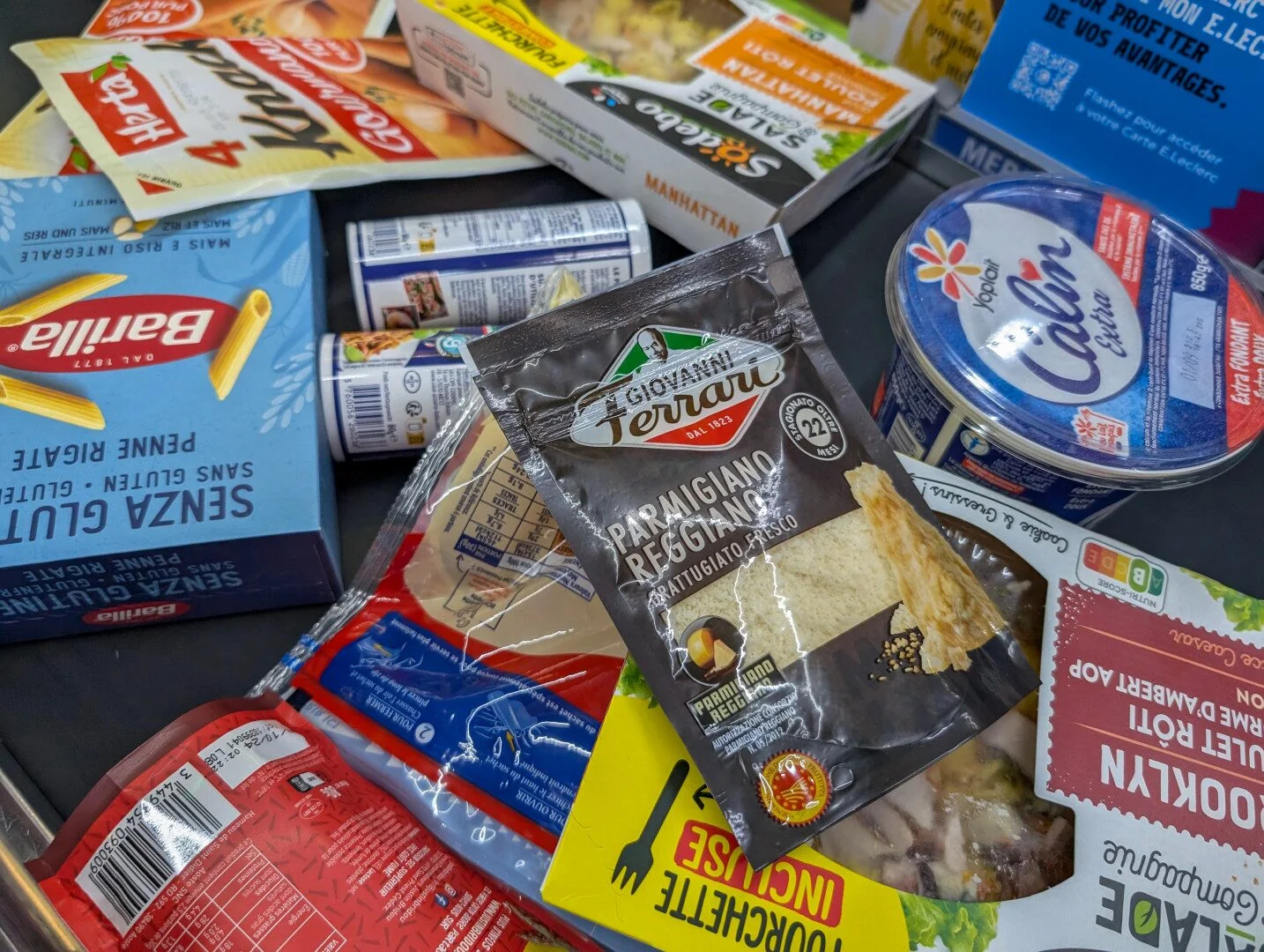
Am I affected?
Brand, importer, online seller: the test, with no size threshold.

When does it apply?
The full timeline: what has applied since 12 August 2026, what arrives in 2030.
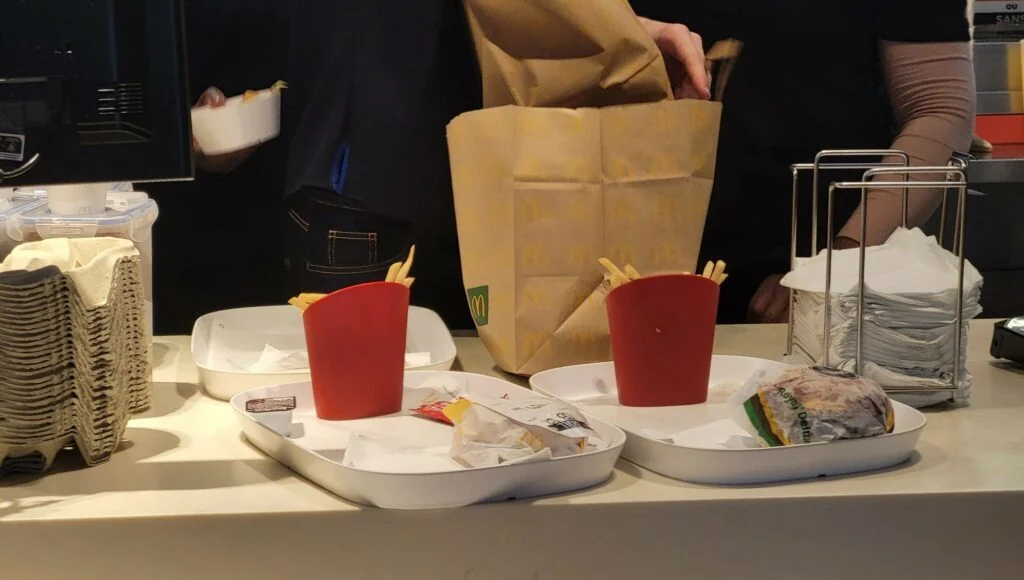
Which packaging is banned?
The 6 single-use formats that leave the market in 2030 (Annex V).
How much recycled plastic?
The mandatory thresholds by material, from 10 to 35% in 2030, raised in 2040.

What are the reuse targets?
40% for transport, 10% for beverages: who is required to comply, and by when.
The Regulation rests on 3 eco-design pillars, treats 6 packaging categories differently, bans certain formats in a dedicated annex and sets a timetable running to 2040. This guide examines what it requires and bans, then sets out the roadmap for completing preparations before the most significant deadline: 1 January 2030. The table of contents below takes you straight to the question relevant to you.
1The PPWR sets EU-wide packaging requirements
The PPWR is the European regulation setting eco-design, reuse and end-of-life requirements for all packaging placed on the European Union market. The official text is Regulation (EU) 2025/40, adopted on 19 December 2024, published in the Official Journal of the European Union on 22 January 2025 and in force since 11 February 2025, available on EUR-Lex. It has been fully applicable since 12 August 2026 and replaces Directive 94/62/EC on packaging and packaging waste, which had been in force for 30 years. An initial product requirement has applied since that date: food-contact packaging may no longer be placed on the market if it exceeds 25 ppb for any per- and polyfluoroalkyl substance (PFAS), 250 ppb for the sum of targeted PFAS or 50 ppm for total PFAS (Article 5(5)). To support operators, the European Commission published an official guidance document in March 2026 and an implementation FAQ, clarifying uncertainties raised since adoption, including calculation of the empty space ratio, the scope of transport derogations and the status of composite packaging.

The legal change is significant: a directive, transposed differently by each State under 27 divergent national regimes, gives way to a regulation applying directly, without transposition, in all 27 Member States at the same time. A brand selling across Europe can now prepare for the product requirements once, against a single, more demanding standard.
From 1 January 2030 at the earliest, packaging that does not achieve at least recyclability grade C may no longer be placed on the Union market.
The European Commission proposed the text in November 2022; the European Parliament and Council negotiated it and adopted it on 19 December 2024. It was published in the Official Journal of the European Union on 22 January 2025 and has applied since 12 August 2026. The stated aim is to replace 27 divergent national regimes with a single framework and make producers fund the collection and recycling of what they place on the market. The French authorised representative requirement comes from Law No. 2026-602 of 8 July 2026, passed by the French Parliament, rather than Brussels.
2Three pillars, three deadlines
The PPWR is organised around 3 eco-design pillars, each with its own quantified milestones, phased between 2026 and 2040.
3 pillars, milestones from 2029 to 2040
01. Source reduction
Packaging waste per person.
02. Reuse
Beverages and transport, including e-commerce, excluding cardboard boxes.
03. Recyclability & recycled content
Harmonised grades and recycled plastic, by category.
2029 : Mandatory deposit and return systems for plastic bottles and cans up to 3 L (90% collection target)
Details by pillar
The same timetable in all 27 Member States, with no transposition.
Less packaging placed on the market per person. Empty space limited to 50% in grouped, transport and e-commerce packaging from 2030 (Article 24).
2030 : -5% packaging waste per person compared with 2018
2035 : -10% per person
2040 : -15% per person
Reuse targets by category: beverages sold by final distributors, transport packaging (including e-commerce, excluding cardboard boxes). Mandatory deposit and return systems for plastic bottles and cans.
2029 : Mandatory deposit and return systems for plastic bottles and cans up to 3 L (90% collection target)
2030 : 10% of beverages in reusable packaging at final distributors, 40% of transport packaging
2040 : Higher targets: 40% for beverages, 70% for transport
All packaging must be recyclable under harmonised grades A/B/C. Minimum incorporated recycled plastic content by packaging category.
2030 : All packaging recyclable (grade A, B or C). Minimum recycled plastic: 30% for beverage bottles and contact-sensitive PET packaging, 10% for other contact-sensitive packaging, 35% for the rest
2035 : Packaging actually recycled at scale; only grades A and B remain permitted in 2038
2040 : Recycled plastic: 65% for beverage bottles and non-contact-sensitive packaging, up to 50% for contact-sensitive packaging
The PPWR aligns with the ESPR on ecodesign and the digital product passport (DPP) on traceability: the same life cycle assessment and product data serve all 3 frameworks.
Pillar 1 - source reduction. The Regulation requires packaging waste per capita to decline along a set trajectory: -5% in 2030, -10% in 2035 and -15% in 2040, compared with the baseline year 2018 (Article 43). For packaging design, Article 24 caps the empty space ratio in grouped, transport and e-commerce packaging at 50% from 1 January 2030 at the earliest (3 years after the implementing act setting the calculation method, if later), ending the use of boxes 3 times too large for their contents.
Pillar 2 - reuse. The PPWR sets reuse targets by category from 2030. Final distributors of beverages must sell 10% of beverages in reusable packaging in 2030, with an aim of 40% for 2040, excluding wine, spirits and milk (Article 29). For transport packaging, including e-commerce packaging (pallets, crates, containers and drums), the target is 40% in 2030, with an aim of 70% for 2040; cardboard boxes are excluded, leaving most parcels outside the target. Member States must also establish a deposit and return system for plastic bottles of no more than 3 L and cans by 1 January 2029, with a 90% separate collection target. The Batteries Regulation (EU) 2023/1542 follows the same approach to product requirements, explained in our guide.
Pillar 3 - recyclability and recycled content. From 1 January 2030 at the earliest, all packaging placed on the EU market must be recyclable (grade A, B or C under harmonised criteria set by delegated acts, with the date moving to 24 months after those acts if they are delayed). A requirement for recyclability at scale is added on 1 January 2035. From 1 January 2038, only grades A and B remain permitted. Alongside this, from 1 January 2030 at the earliest (3 years after the implementing act on the calculation method, if later), minimum post-consumer recycled (PCR) plastic content applies across 4 categories: 30% for single-use plastic beverage bottles (65% in 2040), 30% for other polyethylene terephthalate (PET) contact-sensitive packaging (50% in 2040), 10% for contact-sensitive packaging made from other plastics (25% in 2040) and 35% for other plastic packaging (65% in 2040).
3Packaging requirements and bans depend on the category
The Regulation treats packaging differently by category. Six main categories account for the quantified requirements and format bans, making them central to packaging strategy over the coming years. The interactive infographic below lets you explore each category, its key requirements, its typical banned format and its main milestone.
What the PPWR requires, category by category
The regulation treats packaging categories differently. 6 main categories account for the numerical requirements. Select yours.
Shipping packaging (cardboard, polybags, void fill) is covered by minimisation rules: the PPWR targets excessive material use and empty space in parcels.
Key requirements
- Empty space limited to 50% on 1 January 2030 (Article 24): no more boxes 3 times too large
- Recyclable on 1 January 2030 (grade A, B or C), including inks and adhesives
- Reuse: 40% of transport packaging, including e-commerce, in 2030 (70% target in 2040), excluding cardboard boxes
Banned format(s)
Double walls, false bottoms and unnecessary layers designed to increase the perceived volume.
Main milestone
1 January 2030 (empty space, recyclability, reuse)
Across all categories, packaging will carry harmonised European labelling on its material composition (common sorting pictograms across the 27 Member States), from August 2028 at the earliest.
The main banned formats (Annex V)
Annex V of the Regulation lists the packaging formats banned from 1 January 2030. This annex is the PPWR's most visible measure and the one most likely to attract media attention. It covers hotel miniatures (shampoos, gels and soaps intended for a single stay, regardless of material or capacity), disposable plastic packaging for consumption on the premises in food service, plastic packaging for fresh fruit and vegetables sold in quantities of less than 1.5 kg (unless justified), plastic grouped overpackaging in shops, single-use plastic packaging for individual portions of condiments and sauces in food service (takeaway sales excluded) and very lightweight plastic bags (less than 15 microns thick).
Three cross-cutting requirements that almost always apply too
1. Harmonised European labelling. From 12 August 2028, all packaging must display sorting pictograms common to all 27 Member States (Article 12), defined by an implementing act. Divergent national sorting instructions and separate artwork for each market disappear: for brands selling in several countries, this simplifies matters but requires a single redesign of labels.
2. The declaration of conformity. As with CE marking or the EU declaration of conformity under the Ecodesign for Sustainable Products Regulation (ESPR), the producer signs a formal declaration attesting that its packaging complies with the Regulation. It is a legally enforceable document, kept for 5 years (10 years for reusable packaging) and available to any market surveillance authority. The Digital Product Passport (DPP) (in French) is the natural tool for hosting this declaration and making it readable through a QR code.
3. Stronger extended producer responsibility (EPR) fee modulation. The PPWR requires Member States to modulate EPR fees according to the environmental performance of packaging. In France, CITEO already modulates its fees: non-recyclable packaging may attract a penalty of up to +100%, while 100% recycled packaging may receive a bonus of up to -50%. The PPWR extends and strengthens this approach, making eco-design performance a direct factor in costs.
4Scope and preparation priorities under the PPWR
Three criteria are enough to identify a company's position under the PPWR: does it place products on the European market (a brand, private-label retailer, packaging manufacturer or importer)? Does its packaging fall into a sensitive category (e-commerce, beverages, hotel, restaurant and catering (HORECA), business-to-business (B2B) transport or fast-moving consumer goods (FMCG) primary packaging)? Does it have a usable packaging inventory? The decision tree below combines these three criteria to give a verdict and the resulting priority action.
Am I affected by the PPWR, and how urgently?
3 questions to place your company on the PPWR map: declarant scope, sensitive category and level of internal readiness.
The PPWR is the packaging counterpart to the ESPR for the products themselves (in French). A brand selling textiles that are placed on the EU market is covered by both regimes: the ESPR for the garment and the PPWR for its individual and transport packaging. The timetables overlap (2027 for textile ESPR requirements, 2030 for the PPWR), and the data work can be shared. For the full overview of the seven overlapping regulations in the industrial timetable, see our ESPR/DPP guide to industrial deadlines (in French).
5The cost of inaction, penalties and business risks
The cost of inaction comprises 3 items: additional EPR fee modulation (poorly rated packaging will attract an extra 50 to 100% penalty), the risk of market withdrawal (non-recyclable packaging may no longer be placed on the European market from 1 January 2030 at the earliest) and the loss of public contracts (public buyers already include packaging eco-design criteria).
What inaction on the PPWR could cost by 2030
3 sliders for a rough simulation: EPR penalties, withdrawal risk and return on investment for an ecodesign programme. The coefficients are Celsius working assumptions, rather than official fee schedules: the regulation sets neither quantified penalties nor a probability of withdrawal.
Estimated net savings from the programme: €26k/year. Return on investment: ~56 months.
The calculator below provides an initial estimate of the annual cost of inaction and the return on investment (ROI) of a packaging eco-design programme, based on the volume you place on the market, your current PCR content and the share of your packaging classified as non-recyclable. Its assumptions draw on the CITEO EPR fee modulation schedules for 2024 and Celsius field experience from 2026.
Penalties and other immediate consequences
Each Member State sets its PPWR penalties and must establish its regime by 12 February 2027 at the latest (Article 68). France is preparing its regime (DGPR, the French risk prevention directorate; ADEME, the French Agency for Ecological Transition; DGCCRF, the French consumer protection authority). Beyond these penalties, 3 consequences directly affect business: market withdrawal, which the Regulation assigns to surveillance authorities, and 2 effects outside the penalty regime, EPR fee modulation and exclusion from public contracts.
1. Market withdrawal. The surveillance authority may order the withdrawal of a batch or even a catalogue item if PPWR requirements are not met (recyclability, PCR content or a format banned under Annex V). At European level, this means sales stopping in 27 countries simultaneously. For a high-volume FMCG catalogue item, the cost of withdrawal runs into millions of euros.
2. Additional EPR fee modulation, a financial mechanism separate from penalties. In France, CITEO already applies penalties of up to +100% of the baseline fee for packaging that disrupts sorting or is non-recyclable. The PPWR extends this approach to all 27 Member States and strengthens it. For a producer placing large tonnages on the market, this avoidable extra cost becomes a budget item in its own right, which the calculator above helps estimate.
3. Exclusion from public contracts. This comes from public procurement law: Directive (EU) 2014/24 on public procurement and its French transposition already allow candidates to be excluded for documented environmental breaches. PPWR compliance becomes a de facto eligibility criterion for B2B suppliers to local authorities, hospitals and government bodies, all markets worth protecting.
Reputational risk adds to these consequences: non-governmental organisations (NGOs), including Zero Waste Europe, the European Environmental Bureau (EEB), Fondation Tara and Surfrider, have announced that they will actively monitor implementation. The media will follow, and the first brands identified as non-compliant will make the news.

6Where to start: the 24-month roadmap
The PPWR cannot be handled effectively by the compliance team alone; it affects 4 internal functions at once: packaging and research and development (R&D), procurement and supply, quality, marketing and logistics. The approach has 5 milestones, taking a packaging portfolio that has never been assessed to a compliant catalogue before the deadline of 1 January 2030. Our PPWR support sets out the scope, the documents to collect and the work to organise with your teams.
Where to start: the 24-month roadmap
5 milestones to bring a packaging portfolio into compliance before 1 January 2030. Click a milestone to see the details, internal lead and point to watch.
Start an LCA on 3 to 5 high-volume products. Identify hotspots (PCR, empty space ratio, recyclability) and quantify the potential gains from an ecodesign overhaul.
Milestones 01 and 05 can start today with no dependencies. Milestone 02 (LCA) is a prerequisite for 03 and 04. A well-organised SME or mid-sized company can complete the roadmap in 24 months; large multi-brand companies aim for 36 months to cover the whole portfolio.
The sequence is not linear, as some milestones run in parallel, but the logical order remains the same, with the packaging inventory as the essential starting point. This consolidated inventory remains the critical component: without a portfolio-wide overview of materials, weights, formats and recyclability, redesigns cannot be prioritised. Many manufacturers do not currently have this inventory; the data is held in supplier technical specifications, scattered between procurement and quality. Starting with this inventory avoids redesigns based on the wrong priorities. For French small and medium-sized enterprises (SMEs), the Diag Éco-conception (eco-design diagnostic) from Bpifrance (the French public investment bank)/ADEME (in French) funds a significant share of the cost of an initial packaging project.
What changes for packaging and R&D teams
Packaging design moves from an aesthetic and functional discipline to a set of quantified regulatory design requirements. Design must now incorporate:
- the target recyclability grade (A or B)
- the minimum recycled plastic content (PCR) by category
- the empty space ratio (capped at 50% from 2030 at the earliest)
- compatibility with French (CITEO) and European sorting systems
This means treating packaging life cycle assessment (LCA) (in French) as a design tool, rather than solely a communications tool. The first useful action is to launch a packaging LCA for the main catalogue items (3 to 5 high-volume stock-keeping units (SKUs)). It identifies hotspots, quantifies the gains from redesigning the packaging using eco-design and then provides a basis for forthcoming obligations and voluntary initiatives: the DPP, environmental labelling (in French), EPR fee modulation and the Corporate Sustainability Reporting Directive (CSRD), through European Sustainability Reporting Standards (ESRS) E1. It is the project's most profitable investment. Our packaging eco-design method sets out the process, costs and material choices.
What changes for procurement, supply and quality
Packaging suppliers must now certify the material (exact PCR content and post-consumer certification), recyclability grade and origin. Procurement becomes responsible for the quality of the data used in the declaration of conformity and the DPP. 3 actions are required:
- add PPWR clauses to supplier contracts
- develop a standardised supplier questionnaire (material, PCR and recyclability)
- plan for qualification lead times: changing a supplier of mono-material packaging takes 6 to 12 months in industry
For quality teams, the PPWR declaration of conformity follows the same model as those under the ESPR or for CE marking: signed by a company executive, legally enforceable, kept for 10 years for reusable packaging and 5 years for single-use packaging, and available to any surveillance authority. The quality function must establish the procedures that make this declaration credible: design reviews, recyclability tests and internal audits.
What changes for marketing, digital and logistics
The harmonised sorting pictogram becomes a consistent customer touchpoint across all 27 markets. This is an opportunity to simplify artwork and make eco-design a source of differentiation. For logistics, reuse in closed loops (pallets, returnable crates and reusable films) becomes a matter for the chief financial officer (CFO): in the right use cases, material savings more than offset the initial investment.
7Our view at Projet Celsius
The date everyone remembers is 12 August 2026, when the Regulation began to apply. For packaging design, the decisive deadline is 1 January 2030: banned formats leave the market and the first reuse targets apply, followed, from that date at the earliest, by recyclability for all packaging and the first recycled content thresholds. A packaging redesign cycle (specifications, material sourcing, performance tests, industrial validation and line changeovers) takes 18 to 36 months: a company starting in 2028 will already be late.
The first deliverable is therefore a consolidated packaging inventory, before any legal briefing: for each packaging type, the material, weight, recycled content and recyclability status. Without this data, neither simulations of the 2030 thresholds nor decisions are possible. With it, you can already identify packaging types affected by a format banned under Annex V or a reuse target, and those that will meet the requirements without a design change.
As practitioners, we are convinced that the PPWR favours companies that know their packaging in detail, far more than those that communicate about it. Treated as a set of design requirements, the Regulation leads to lighter, better-rated packaging with lower penalties under modulated EPR fees. We recommend completing the inventory before making any decisions: companies that discover in 2029 that they are behind schedule will find engineering consultancies at capacity.
8Key takeaways
The PPWR makes packaging a product compliance deliverable, alongside safety or CE marking. Decisions are made in Brussels, the figures are legally enforceable and inaction has a cost: additional EPR fee modulation, market withdrawal and lost public contracts. The points to keep in mind are:
- Regulation (EU) 2025/40 has applied directly in all 27 Member States since 12 August 2026, without national transposition.
- 3 pillars: waste reduction (-5 to -15% by 2040), reuse (targets for beverages and transport packaging from 2030, excluding cardboard boxes) and recyclability (all packaging from 2030 at the earliest, grades A and B only in 2038).
- From 1 January 2030, Annex V bans hotel miniatures, disposable plastic packaging for consumption on the premises, plastic grouped overpackaging, plastic packaging for fruit and vegetables of less than 1.5 kg and single-use plastic packaging for individual portions of condiments in food service, excluding takeaway sales.
- 4 internal functions are affected (packaging, procurement, quality, marketing and logistics), extending well beyond legal teams.
- The consolidated packaging inventory comes first: without data, no decisions are possible, and starting there avoids redesigns based on the wrong priorities.
- A PPWR programme pays for itself in 24 to 60 months, depending on the volume placed on the market (sooner at higher volumes), through avoided EPR penalties and material reduction.
Manufacturers starting now will be ready in 2030. Waiting for the final implementing act would leave around 6 months for work that takes 18. The packaging inventory, LCA and internal governance serve the PPWR, ESPR and DPP together: the same work covers all 3 regimes.
Do you sell in several EU countries? Since 12 August 2026, the PPWR has required registration in the national producer register in each country where you place packaged products on the market (Article 44, with existing registers such as SYDEREP, France's EPR register, remaining in use until the PPWR registers are in place) and, if you are not established there, appointment of a local authorised representative for extended producer responsibility (Article 45). There is one representative per country and no single point of registration, even between Member States. In December 2025, under the environmental omnibus, the Commission proposed suspending this obligation for producers established in the EU; the Council rejected that suspension on 24 June 2026, and nothing has been adopted to date. The guide for creators and small shops explains how to make decisions country by country. Check your case in 3 questions. In France, the rule has already been in force since 10 July 2026: every producer not established in France must appoint an EPR authorised representative there (Article L. 541-10-9-1 of the French Environmental Code), for all EPR schemes. Our article on EPR authorised representatives explains who is affected, the costs and the steps to take.