
- 1France's professional packaging EPR starts on 1 January 2027, after 2 postponements, with 3 approved producer responsibility organisations.
- 2Any packaging that is not household packaging is professional packaging: pallets, films, crates, drums and big bags.
- 3Plastic costs nearly 8 times as much as cardboard under the 2027 Citeo Pro fee schedule.
- 4Join a producer responsibility organisation before 31 December 2026 and show your unique identifier in your terms of sale.
A stretch-wrapped pallet arriving at a warehouse carries at least 3 packaging items: the pallet itself, the stretch film that holds the load and the grouping cartons. Until now, the company that discards the packaging has paid for its end of life through its waste collection contract. From 1 January 2027, part of that cost shifts to the companies that place the packaging on the market.
Companies have known of the principle since France's Anti-Waste and Circular Economy Act of 2020 (the AGEC law), but after 2 postponements many have stopped following the scheme. The start date has now been set at 1 January 2027, and ADEME (the French Agency for Ecological Transition) asks companies to join a producer responsibility organisation (PRO, éco-organisme in French) before 31 December 2026.
1How professional packaging EPR works, and how its start date has moved
Extended producer responsibility (EPR, REP in French) rests on a simple principle: whoever places a product on the market finances its end of life. It does so by paying an EPR fee (éco-contribution) to a PRO, an organisation approved by the State that organises or supports collection, sorting and recycling. The system has existed since the early 1990s for household packaging, and more than twenty EPR schemes now operate in France, covering everything from textiles and bedding (in French) to furniture and electrical equipment.
The AGEC law of 2020 extended this principle to professional (B2B) packaging, also called industrial and commercial packaging. This is a change of scale: according to the French Ministry of Ecological Transition, the volume is around 7 million tonnes a year, more than half of the packaging discarded in France.
Who pays whom
The money does not follow the packaging: the producer pays the PRO, which passes on support payments to the collection and sorting operators, and the waste holder (the company that discards its packaging) has those payments deducted from its collection bill, provided it sorts at source. There is therefore no free take-back: the collection bill goes down but remains payable.
Who pays what under EPR for professional packaging
Packaging goes from the producer to the recycler; money goes from the producer to the producer responsibility organisation, which supports those who collect and sort.
Packaging flow
Money flow
There is no free take-back: support payments reduce the collection bill of a company that sorts its packaging waste, without eliminating it, and do not apply to mixed waste.
2 postponements and a new start date
The law provided for a start on 1 January 2025, and the implementing texts then moved it to 1 July 2026. At the end of June 2026, the government announced a further postponement, before setting 1 January 2027 in a press release of 28 July. The ministerial order that confirms this date was put out for consultation in August and had still not been published in the Journal officiel (the French official gazette) as of 6 October 2026, but Citeo Pro has already published its 2027 fee schedule on that basis. Since June 2026, 3 PROs have been approved: Citeo Pro, Léko Pro and Twiice.
2Professional or household packaging: anything that is not household is professional
Any packaging that is not household packaging is professional packaging, meaning packaging that does not end up in a private individual's bin. A ministerial order of December 2025 expressly places the following in this category:
- Pallets and everything used to palletise a load: stretch film, strapping, top covers and layer pads.
- Large containers: big bags, bulk containers, drums, jerrycans, cans and buckets of more than 29 litres, crates of more than 15 litres.
- Transport and grouped packaging that travels between businesses, such as delivery cartons sent to shops.
- Packaging for products reserved for professionals, whatever its size, and point-of-sale advertising that serves as packaging.
Professional or household: where your packaging falls
Click on a packaging item to see its scheme. Any packaging that does not end up in a consumer's home is professional.
Pallets and palletising components are listed in the ministerial order of December 2025. A reusable pallet pays only the first time it is placed on the market.
Of these 10 common cases: 7 professional, 2 household, 1 outside the scheme.
Cases that catch companies out
Most mistakes come down to 3 situations. An e-commerce parcel delivered to a private individual is household packaging, even if it looks like a transport carton. A service packaging item filled at the point of sale, such as a tray at a deli counter, is household packaging too. Conversely, catering has been covered by an EPR scheme since 2023: its packaging falls under Citeo Pro, the only PRO approved for this scope.
Reusable packaging does not pay on each rotation but only once, when it is first placed on the market. The large rental pallet pools (Euro Pool System, International Pallet Pool and La Palette Rouge) have also been approved as individual compliance schemes and handle the end of life of their own pallet fleets.
What stays outside the scheme
A few types of packaging are excluded because they are already covered by another EPR scheme or an earlier agreement: packaging for oils, for certain chemical products, for construction products and materials and for agricultural supplies. Packaging for other hazardous products remains in scope, with a specific rate.
3Who pays the EPR fee: the producer, which is not necessarily the packaging manufacturer
The legislation refers to the producer, a misleading term because it does not necessarily mean the company that makes the packaging. The rule depends on the type of packaging:
- For sales and grouped packaging, it is the company that packs its products or has them made under its brand, including retailers' own brands.
- For transport and service packaging, it is in principle whoever manufactures, imports or distributes the packaging.
- An importer is a producer for what it brings onto French territory, unless it is the end user.
- A micro-business that buys its packaging from a supplier established in France is exempt, as explained in our article for micro-businesses.
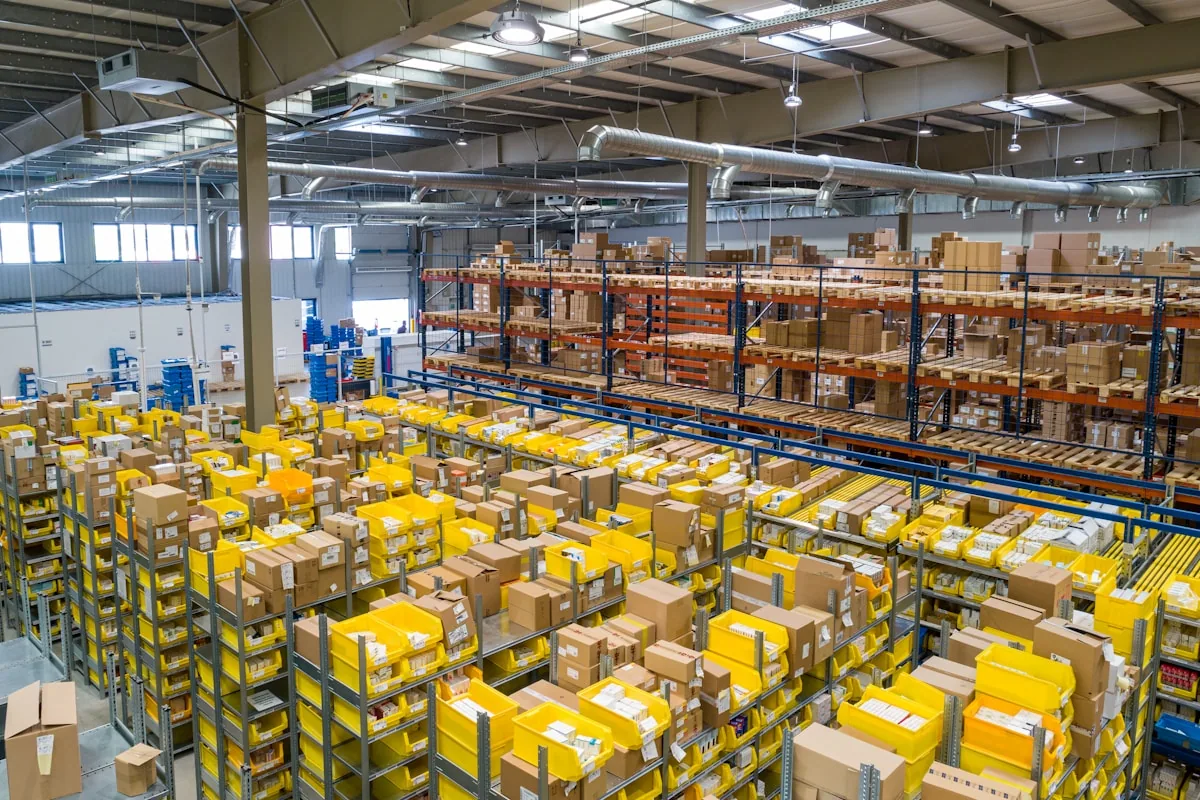
Take a manufacturer of fasteners that sells its products in 5 kg cartons to industrial customers, delivered on stretch-wrapped pallets: the cartons are its sales packaging and it declares them. For the pallet and the film, Citeo Pro's guide to its 2027 fee schedule defines the producer of transport packaging as the company that first makes the packaging available in France. If the manufacturer buys pallets and film from a supplier established in France, in principle that supplier declares them; if it imports them itself, the manufacturer does. This is the first question to settle with your PRO, before even discussing fees.
If you sell in France from another country, there is one more requirement: since July 2026, you must appoint an authorised representative established in France to carry your EPR obligations on French territory. In addition, the Packaging and Packaging Waste Regulation (PPWR) has made EPR mandatory for all packaging in every EU country since 12 August 2026, with a national register of producers in each, as explained in our article on the companies affected by the PPWR.
4How much professional packaging EPR costs, and why plastic drives the bill
Citeo Pro published its 2027 fee schedule on 5 October 2026, ahead of the start on 1 January. It is the scheme's first annual fee schedule (barème) and is markedly higher than the schedule for the second half of 2026, which was published for a start on 1 July and then lapsed with the postponement. Per tonne of packaging placed on the market, excl. VAT:
- Plastic: €281.84 per tonne, against €217.90 in the schedule for the second half of 2026, an increase of nearly 30%.
- Paper and cardboard: €35.47 per tonne, against €34.70 in the second half of 2026.
- Wood and cork: €9 per tonne; steel: €8.90; aluminium and other materials (glass, ceramics, stoneware): €8.
- Small volumes: for up to 4 tonnes a year, a flat annual fee of €240 excl. VAT replaces the calculation by weight, and no tonnage has to be declared. It follows the flat fee of €125 excl. VAT for 2 tonnes or less in the second half of 2026.
The Citeo Pro 2027 fee guide adds a minimum invoice of €240 excl. VAT, payable even if the calculation by weight comes to less. New reusable packaging benefits from a 50% bonus on its fee, and reused packaging on later rotations is exempt, provided it can be shown that it contributed when first made available. As of 6 October 2026, Léko Pro and Twiice had not published a 2027 fee schedule: their schedules for the second half of 2026 were close to Citeo Pro's, with Léko Pro at around €218 per tonne of plastic, but nothing guarantees that the gap will stay the same in 2027.
Estimating your EPR fee at the 2027 rates
Enter your annual tonnages by material. The calculation applies the Citeo Pro 2027 rates; the 2nd half 2026 rates serve as a comparison.
Estimated EPR fee, per year
€1,271excl. VAT
This calculation gives an order of magnitude. The 2nd half 2026 rates, published for a start on 1 July, were rendered obsolete by the postponement. As of 6 October 2026, Léko Pro and Twiice had not published a 2027 fee schedule.
Consider an SME that places 12 tonnes of cardboard and 3 tonnes of plastic film on the market. At the 2027 Citeo Pro rates it will pay around €1,270 excl. VAT per year: €426 for the cardboard (12 × €35.47) and €846 for the plastic (3 × €281.84). At the rates for the second half of 2026, the same bill over a full year would have been around €1,070. Plastic accounts for 20% of the tonnage and about two thirds of the bill, so that is where the savings lie: reduction, a change of material, use of recycled plastic or reuse.
At the 2027 Citeo Pro rates, a tonne of plastic costs €281.84 in EPR fees, against €35.47 for a tonne of cardboard: the cost lever in this scheme is plastic.
Beyond the fee, the scheme sets targets that will shape future fee schedules: in 2030, 85% recycling for paper and cardboard, 55% for plastic and 30% for wood. The PPWR adds a reuse target: from 2030, transport packaging exchanged between 2 sites of the same group, or delivered to another company in France, must be reusable. Article 29 of the regulation excludes cardboard boxes, packaging for dangerous goods, made-to-measure packaging for large machinery or equipment and flexible formats in direct contact with food or animal feed from this target; these exclusions are detailed in our article on reuse targets.
Our article on packaging eco-design sets out the levers within a broader eco-design approach.
5What to do before 1 January 2027, from tonnage estimates to PRO membership
ADEME asks the companies in scope to join before 31 December 2026. The timetable is short, especially if your tonnage data is not ready; our PPWR support can take on these steps.
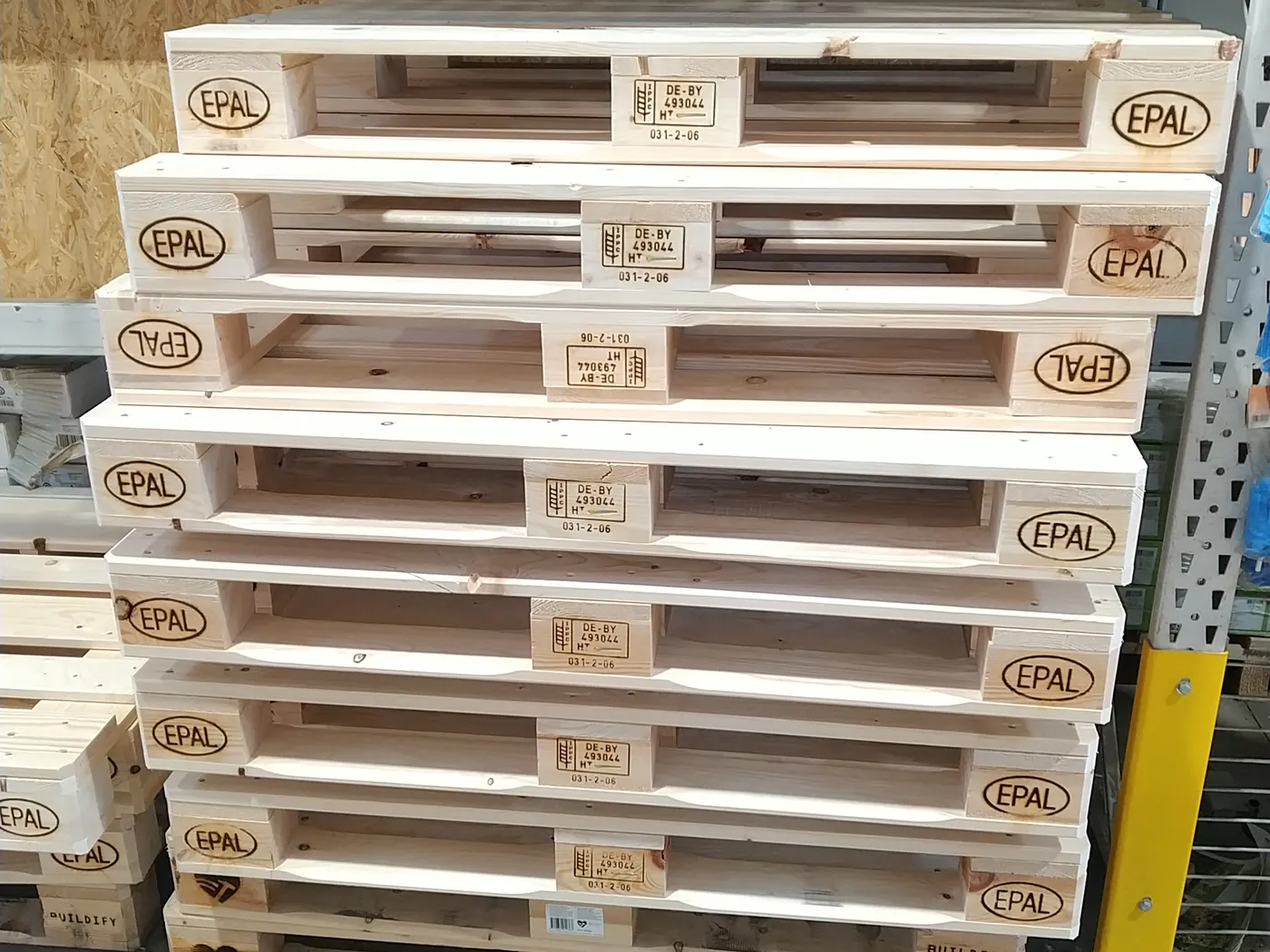
- List your professional packaging and estimate your 2026 tonnages by material: plastic, paper and cardboard, wood, metal. Your suppliers' data sheets and your packaging purchases are enough for a first estimate. If you have carried out a Bilan Carbone® assessment (the French carbon accounting method), these purchases normally already appear in its scope 3 (in French).
- Settle who the producer is for each type of packaging, in particular for pallets and transport film.
- Choose a PRO from Citeo Pro, Léko Pro and Twiice. Compare their 2027 fee schedules (Citeo Pro's is published, those of Léko Pro and Twiice are awaited), their flat fees for small volumes and their services.
- Join and obtain your unique identifier (identifiant unique, or IDU, also known as unique identification number or UIN) from ADEME, then show this EPR registration number in your general terms and conditions of sale (CGV in French) and on your website.
- Prepare the first declaration, expected in early 2027 on the basis of your estimated volumes, and organise sorting at source on your own sites to benefit from the support payments.
Twiice reports longer lead times for obtaining the unique identifier because of the influx of applications: it is better not to wait until December. If you import packaged products or sell from abroad, our EPR authorised representative checker tells you in 3 questions whether an appointment is also required.
6What you risk by doing nothing: penalties and commercial pressure
The French Environmental Code provides for heavy administrative penalties for a producer that does not meet its EPR obligations: a fine of up to €7,500 per tonne of packaging for a company, a periodic penalty payment of up to €20,000 per day, and up to a further €30,000 where there is no unique identifier or no entry in the register.
The most immediate risk is commercial: large customers will ask for your unique identifier in their tenders and contracts, to make sure they are not carrying your obligation; public buyers, who already score bids on the environmental criterion (in French), will follow. Online marketplaces are liable for the EPR obligations of the sellers they host when those sellers are not compliant, and already block accounts without an identifier. At European level, the PPWR makes registration in the register of producers a condition of placing on the market in each country.
7Key takeaways
- The scheme starts on 1 January 2027, with 3 approved PROs: Citeo Pro, Léko Pro and Twiice.
- Any packaging that is not household packaging is professional packaging: pallets, films, large containers, transport packaging and packaging for products reserved for professionals.
- The producer pays: the brand owner for its sales packaging; for transport packaging, the manufacturer, importer or distributor that first makes it available in France.
- The 2027 Citeo Pro fee schedule is published: €281.84/t for plastic (nearly 30% more than in the second half of 2026), €35.47/t for cardboard, and a flat fee of €240 excl. VAT for up to 4 tonnes a year.
- Join a PRO before 31 December 2026, obtain the unique identifier and state it in your terms of sale.
To see how EPR fits into the full set of packaging obligations, our complete guide to the PPWR sets out the European regulation, the PPWR timeline its deadlines and the list of banned packaging formats what leaves the market in 2030.
- Legal basis: French Environmental Code, Article L. 541-10-1, point 2 (AGEC law, Law No. 2020-105); Decree No. 2025-1081 of 17 November 2025 on packaging; ministerial order of 2 December 2025 setting the specifications for PROs; ministerial order of 2 December 2025 on packaging used by households or professionals.
- Timetable: Ministry press release of 28 July 2026; draft postponement order (public consultation of August 2026), not published in the Journal officiel as of 6 October 2026; Ministry page on professional packaging.
- PROs and individual compliance schemes: ministerial orders of 3 June 2026 approving Citeo Pro, Léko Pro and Twiice (Journal officiel of 24 June 2026); ministerial orders of 6 July 2026 approving the individual compliance schemes; ADEME scheme page.
- Fee schedules: Citeo Pro, 2027 fee guide for professional packaging, published on 5 October 2026; Citeo Pro, fee guide for professional packaging, second half of 2026; Léko Pro, fee schedule as of 1 July 2026. Amounts excl. VAT; the 2026 schedules, which lapsed with the postponement, serve as a point of comparison. No 2027 fee schedule had been published by Léko Pro or Twiice as of 6 October 2026. The Ministry, ADEME, Citeo Pro and Léko Pro pages are in French.
- Penalties and unique identifier: French Environmental Code, Articles L. 541-9-5 (penalties), L. 541-10-13 and R. 541-173 (unique identifier).
- European law: Regulation (EU) 2025/40 on packaging and packaging waste (PPWR), Articles 29, 44 and 45, applicable since 12 August 2026.