
- 14 million mattresses are collected each year in France through the EPR scheme.
- 2Lifespan comes first: replacing twice as often doubles the impact.
- 3Ecobalyse adjusts the score according to product durability: from 0.67 to 1.45 for textiles, with the furniture range still to be set.
- 4Furniture method expected in late 2026: prepare the data now.
A €250 mattress, delivered within 48 hours in a metre-high box, tried for 100 nights and refunded if it is unsuitable. The model has established itself within a few years and made bedding more accessible.
This shift is what the expression fast bedding describes, the bedding equivalent of fast furniture, short-cycle furniture, itself modelled on fast fashion. The questions remain: what its impact really is, what happens to a mattress at the end of its life and why the forthcoming regulatory framework favours manufacturers investing in longevity.
1The rolled mattress is not the problem
The French mattress market is worth around €1.5 billion and its structure has changed quickly: online sales exceeded 30% in 2025, compared with less than 10% in 2018, and 60% of buyers spend less than €1,000. France also imports a large majority of the mattresses it consumes, with Poland becoming the leading supplier by volume at the entry level.
One clarification before going further, because confusion is common: the rolled mattress is not the problem. Vacuum compression reduces the volume transported, and therefore the number of lorries per mattress delivered. What raises questions is the rest of the model: very broad ranges renewed quickly, near-permanent promotions and products whose useful life is shortening.
- Entry-level materials: polyester foam lasts 3 to 5 years before sagging, whereas a quality memory foam core or pocket spring approaches or exceeds 10 years.
- Faster replacement: the recommended average remains around 10 years, but low-cost offerings encourage shorter cycles.
- Excessively broad ranges: multiplying products within the same category is the model's defining feature, and regulation is beginning to examine this criterion.
Bedding is not an isolated case. The phenomenon has a name across the sector: fast furniture (or fast bedding for sleeping products), furniture sold at cut prices, replaced with changing interior design trends, whose useful life is shortening. Flat-pack furniture led the way; sofas and mattresses are following. This is also why environmental labelling targets the whole furniture sector, rather than bedding alone.
One blind spot specific to this model remains: the free 100-night trial. A mattress returned after several weeks of use cannot be resold as new for hygiene reasons. Depending on the retailer, it is donated, refurbished where a scheme exists or sent for end-of-life treatment. The return rate is therefore an environmental parameter, rarely published, even though it determines how many mattresses are produced for the same sale.
2The impact occurs during manufacture, then is spread over time
For a complete bed, ADEME uses an indicative figure of 444 kg of CO₂ equivalent, concentrated very largely in material manufacture. A mattress consumes nothing while you sleep on it. The breakdown by item is in our mattress LCA guide.
The consequence is arithmetic: if most of the impact is incurred on the day of manufacture, everything depends on the number of years over which it is spread. A mattress replaced every five years rather than every ten costs the environment twice as much for the same service.
The same mattress, two lifespans
A complete bed accounts for around 444 kg CO2e, incurred during manufacture. The question is over how many years this impact is spread: this is the choice of thefunctional unit - here, a year of sleep.
A bed kept for ten years instead of five, means half as much CO2e per year of sleep, without changing the product.
A mattress lasting twice as long halves its impact, with equal sleeping quality. An LCA compares nights of sleep provided, rather than products purchased.
Three parameters determine a mattress's lifespan, and all can be checked before purchase: foam density (below 25 kg/m³ for polyurethane, sagging occurs quickly), core technology (pocket springs and latex age better than entry-level foam) and the warranty period, which financially commits the manufacturer.
Hotels settled the question long ago for cost reasons: they buy firm, robust mattresses, protected by a topper replaced more often. An LCA reasons in the same way: it compares a service provided over a period, what is called the functional unit, and this is the first decision in a serious study, as with any first product LCA or in the PEF method.
3Where 4 million mattresses end up
The extended producer responsibility scheme works. Ecomaison coordinates collection and treatment of around 4 million mattresses a year, producing 66,000 tonnes of recycled materials in eight dismantling centres. Since its creation, the scheme claims 650,000 tonnes diverted from landfill.
One figure warrants a closer look. Across all flows treated by the producer responsibility organisation in 2025, nearly 2 million tonnes, the recovery rate reaches 98%, split into 47% energy recovery, 46% material recycling and 5% reuse.
4 million mattresses a year: where they end up
Across all flows treated by the producer responsibility organisation in 2025 (1.97 Mt), nearly one tonne in two becomes fuel.
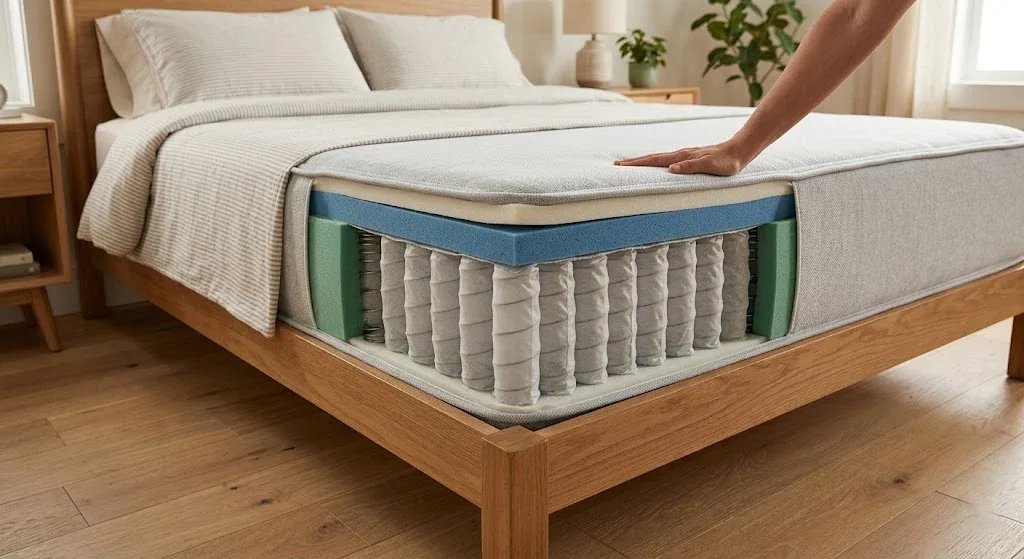
The difficulty is technical. A mattress is a multi-material assembly: spring steel, foams of different densities, latex, textiles, adhesives. Dismantling remains largely manual: steel recycles very well, clean foams become panels or carpet underlay, but anything glued or composite ends up as fuel. Improving this outcome starts at design: fewer adhesives, disassemblable constructions, removable covers, documented composition.
A bonus-penalty system that already exists
This point has an immediate financial consequence, often overlooked by manufacturers. Since the anti-waste law, EPR schemes have applied eco-modulation: the EPR fee paid to the producer responsibility organisation is increased or reduced according to product eco-design criteria. A mattress that is easier to dismantle or contains more recycled material costs less in EPR fees.
For a manufacturer placing several tens of thousands of units on the market each year, this cost item is significant. Above all, it makes eco-design profitable in the short term, without waiting for furniture labelling. Eco-modulation criteria change regularly, and checking them before finalising a new range avoids discovering a penalty after production has started.
4Tomorrow, durability enters the calculation
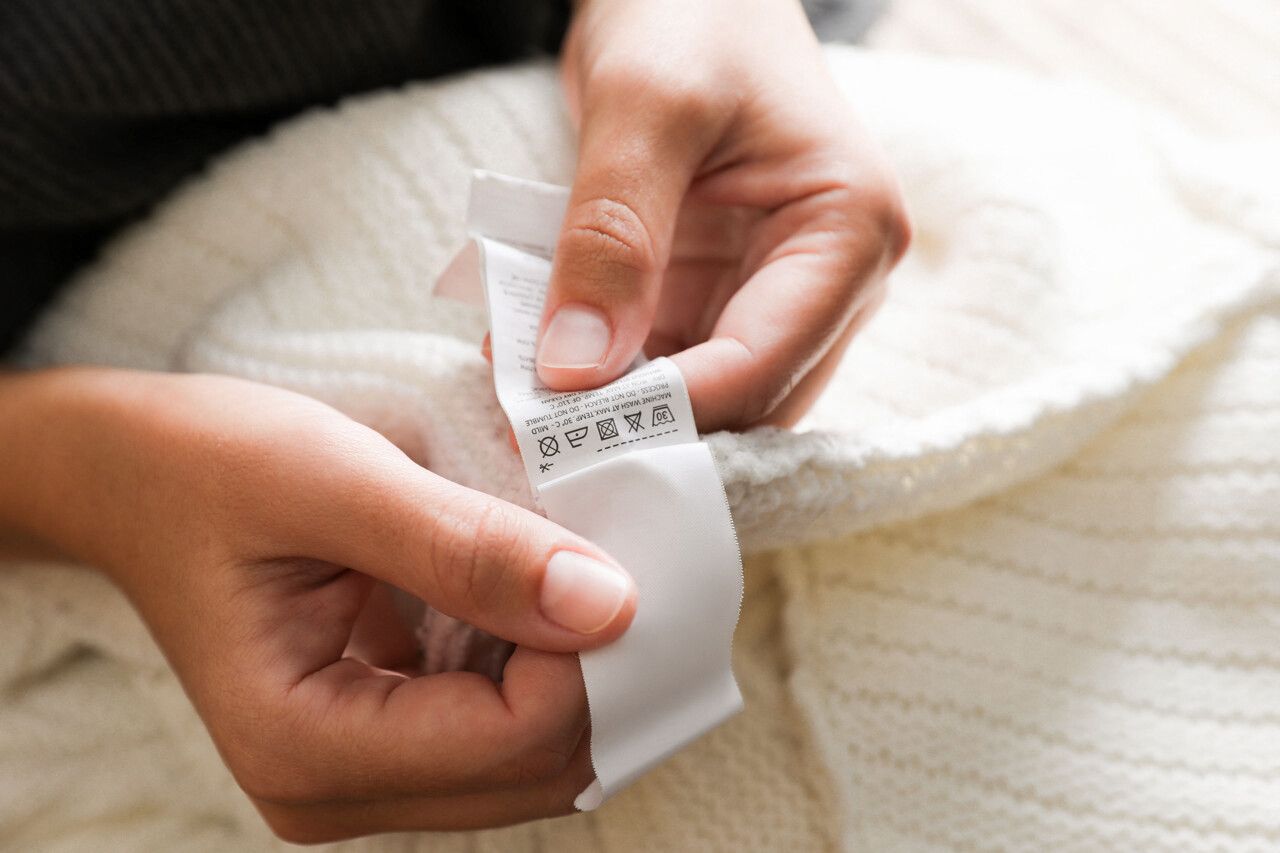
The French environmental cost calculation method does more than add up manufacturing impacts: it applies a durability coefficient. In the textile framework, already in force, this coefficient ranges from 0.67 to 1.45. A durable product has its environmental cost reduced, while an ultra-fast-fashion product has it increased.
For textiles, it considers only non-physical durability, which examines the business model: range breadth and incentives for repair, equally weighted. The draft furniture method adds physical durability, the product's actual resistance measured through tests. This bonus-penalty system targets overproduction. Our Ecobalyse guide explains the tool.
The timetable published by ADEME and the Ministry for Ecological Transition gives dates: trials from 10 March to 19 June 2026, an initial methodological proposal by late 2026, then stakeholder discussions, public consultation and European notification in 2027, with no adoption date set. The full sector-by-sector timetable is detailed here. We are in the phase when voluntary participants are invited to begin pre-rollout to consumers.

Two clarifications directly concern bedding. It is within the priority scope: the document specifically targets furniture EPR categories 4 (bedding, including mattresses) and 11 (upholstered seating and sleeping products). The administration also expects sector proposals on two specific subjects, durability calculations and end-of-life scenarios, the two subjects where a durable bedding manufacturer has most to gain.
This evidence requirement will extend beyond labelling. The European eco-design regulation, the ESPR, provides for a digital product passport for furniture, whose outlines are becoming clearer for the sector, and the expected calculation method relies on the same LCA. Yet a serious product LCA takes a few months, a significant share of which is supplier data collection.
5Where to start
- Model a typical product in Ecobalyse: the tool is public and free, and the furniture module already accepts bedding.
- Build the LCA for the products that matter: these data feed both labelling and the product passport. Indicative prices are detailed here, and approaches exist for tight budgets.
- Document lifespan: foam density, fatigue tests, warranty, availability of parts. Without documented evidence, durability does not count in the score.
- Address end of life at the design stage: disassembly, fewer glued materials, single-material construction where possible. This shifts a mattress from energy recovery to material recycling.
For a French manufacturer producing locally and offering long warranties, this framework turns a commercial argument that is difficult to demonstrate into a quantified, enforceable difference. You still need the data: no furniture labelling requirement has been established to date, but publishing nothing also carries a risk, as textiles show, where a third party has been able, since 1 October 2026, to publish the environmental cost of a garment that its brand does not display.
The difficult part of a bedding LCA is gathering supplier information: foam composition, steel origin, density, recycled content. This collection takes weeks, far longer than the calculation. It does not have to be repeated, however, and then feeds labelling, the product passport and responses to invitations to tender.
6Key takeaways
- Fast bedding comes down to broad ranges renewed quickly and products with shorter lifespans, rather than price or rolled mattresses.
- The impact occurs during manufacture, around 444 kg CO₂e for a complete bed: doubling lifespan halves the impact.
- The EPR scheme treats 4 million mattresses a year, but nearly half the recovered tonnage goes into energy, rather than material.
- The durability coefficient adjusts the score (from 0.67 to 1.45 for textiles, with the furniture range still to be set) and the furniture method is expected in late 2026: data are prepared during the voluntary window.
Bedding shares one point with textiles: eco-design happens at the design stage, rather than at the recycling stage.