
- 1The score is not a carbon score: 16 PEF categories and a durability coefficient.
- 2The furniture method is expected by the end of 2026, with labelling remaining voluntary.
- 3Diag Écoconception funds 60 to 70% of a first support programme for SMEs.
- 4Start collecting supplier data now, regardless of the method.
A single figure on a sofa or mattress label, in shops and online, summarising its environmental impact across its whole life cycle: this is the purpose of furniture environmental labelling, which ADEME and the ministry responsible for the environment are developing along textile lines, regulated since October 2025. As at 1 October 2026, the furniture method has not been finalised: the trial phase closed on 19 June 2026, and a first methodological proposal is expected by the end of 2026. Labelling remains voluntary.
Six furniture families, their standard and their main source of impact
ADEME’s work draws on the BP X30-323 series of sectoral LCA standards; legislation will set the exact labelling scope. Choose a family to see its standard and greatest source of impact.
Mattresses, bed bases, mattress toppers
For a manufacturer, retailer or importer, the questions are practical: how the score is calculated, which products are covered, what timetable to use, how much a first LCA costs and how to fund it. This guide addresses each, from how the score works to the data to gather now, regardless of the method ultimately chosen.
Furniture environmental labelling at a glance
Three answers to understand how the score works before going into detail.
The maximum gap between the scores of 2 furniture items with identical raw costs, depending on durability: in the draft method, the coefficient ranges from 0.5 to 1.5. These parameters have not yet been finalised.
- What is it?
- A rating in impact points (the lower, the better) aggregating the 16 PEF impact categories, divided by a durability coefficient considering robustness and commercial practices.
- Who is concerned?
- The party placing furniture on the French market should be responsible for calculation: manufacturer, own-brand retailer or importer. Legislation will set the exact scope.
- When?
- First proposed method by the end of 2026, consultation and European notification in 2027, voluntary labelling. The Ecobalyse simulator already identifies the greatest sources of impact.
1How is a piece of furniture’s score calculated?
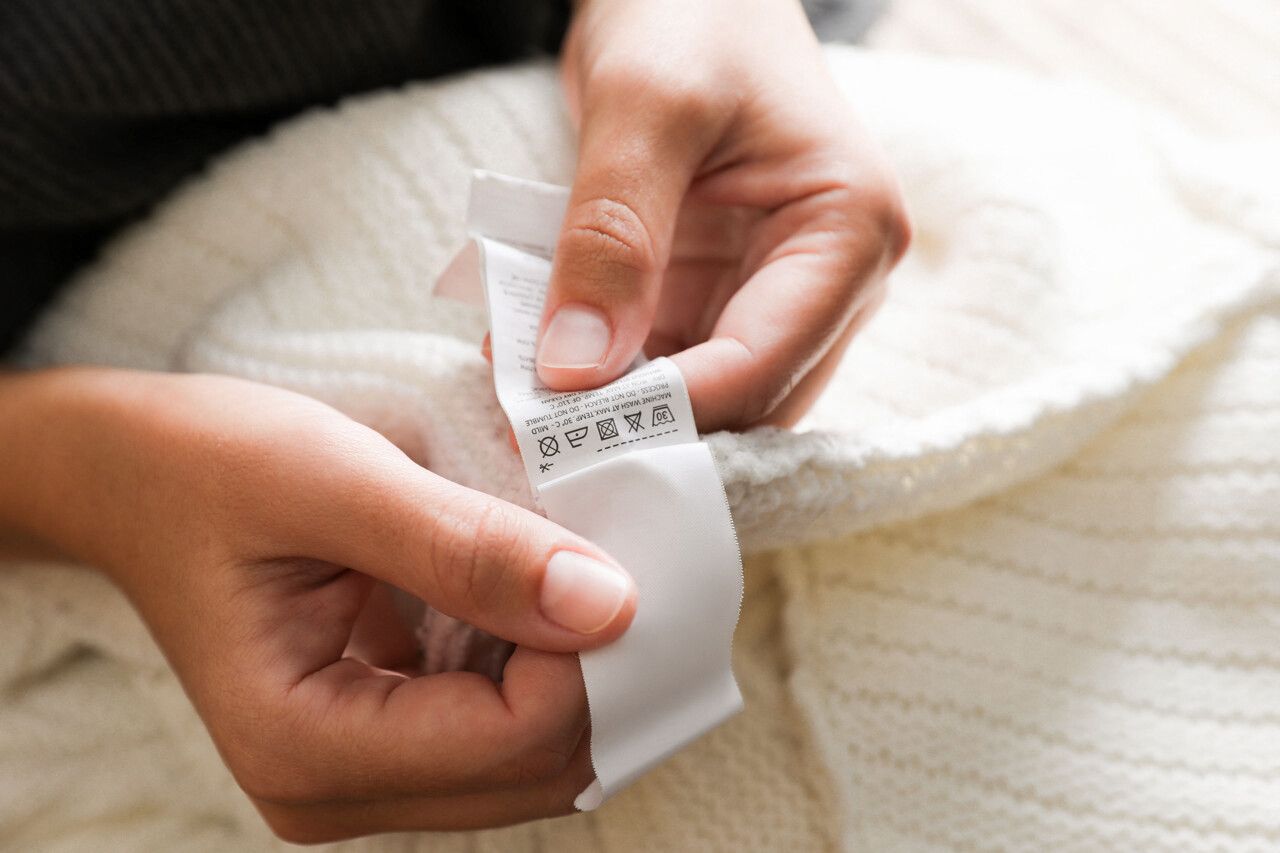
The score summarises a piece of furniture’s environmental pressure across its whole life cycle: raw material extraction, manufacture, transport, use and end of life, over a reference use period specific to each category (8 years for a chair in the Ecobalyse simulator, for example). It is expressed in impact points, and the higher the figure, the greater the impact. For textiles, regulations require a whole number of points, supplemented by the number of points per 100 g, without letters or classes; the furniture format has not yet been set.
Calculation takes place in 3 stages. LCA first produces 16 impact indicators; these are then normalised, weighted and aggregated into a single score; finally, this score is divided by a durability coefficient. Additions outside LCA may be included: for furniture, Ecobalyse has been testing a forest addition since February 2026, still in draft form.
The PEF method’s 16 impact categories
The displayed score is not a carbon score. It aggregates the 16 PEF impact categories (Product Environmental Footprint), the European life cycle assessment method, with weights set by the method: for textiles, climate change accounts for 21%, water resource use for 6.7% and land use for 6.3%. For furniture, 3 categories require particular attention:
16 PEF impact categories, divided by durability
Three stages turning a multi-criteria LCA into a figure readable in shops. Click each stage to see the calculation.
The 3 highlighted indicators require the most attention for wooden furniture. CO₂ alone is not enough.
- Climate change: it affects resin-based panels and polyurethane foams derived from oil.
- Water resource use: it can become significant for a natural latex mattress produced from rubber-tree cultivation.
- Land use: it mainly concerns wooden products, and does not currently distinguish forest management methods, hence the forest addition under study.
The other 13 categories cover acidification, freshwater, marine and terrestrial eutrophication, freshwater ecotoxicity, human toxicity (weighted at 0% for textiles), ionising radiation, ozone depletion, photochemical ozone formation, particulate matter and fossil, mineral and metal resource depletion. A manufacturer reducing only carbon may therefore worsen its score in another category: this is the multi-criteria approach, more demanding than a product carbon footprint assessment.
The durability coefficient, the score’s divisor
The durability coefficient already exists for textiles, where it ranges from 0.67 to 1.45 and rests on 2 equally weighted non-physical criteria: range breadth and incentives to repair (Order of 6 September 2025, Article 6). The furniture method being prepared would add physical durability measured through testing. In the draft published by Ecobalyse, each coefficient, physical and non-physical, ranges from 0.5 to 1.5, and environmental cost is divided by the lower of the 2: the difference between robust, repairable furniture and disposable furniture could therefore reach a factor of 3. These parameters have not been finalised.
The durability coefficient: robustness and commercial practices
In the draft method, physical and non-physical coefficients each range from 0.5 to 1.5, and raw cost is divided by the lower. Numerical example for illustration.
Final score = Raw PEF score÷Durability coefficient
Test levels in BP X30-323 standards, simplified for small businesses.
40% of the non-physical coefficient: parts, services, disassembly.
Range breadth, very low price, promotions, traceability: 15% each.
Oak table, robustness tests passed, spare parts offered.
Oak table, no tests, range renewed every season.
Same wood, same weight, same raw cost: durability alone separates them.
In this draft, physical durability draws on test levels in the "Domestic furniture" standard (BP X30-323-4, revised in November 2023), with simplified treatment for small businesses. Non-physical durability combines 5 criteria: incentives to repair (40%), range breadth, very low price, promotion intensity and displayed traceability (15% each). The commercial warranty is not included at this stage.
An example illustrates the expected effect. Two solid oak tables have the same weight, wood and finish, giving an almost identical raw environmental cost. One has passed the standard’s durability tests and its brand offers spare parts; the other has undergone no testing and belongs to a range renewed every season. With coefficients between 0.5 and 1.5, their displayed scores can differ threefold, depending on the parameters adopted by the method.
Two oak tables with identical raw environmental costs can display very different scores: in the draft method, the durability coefficient ranges from 0.5 to 1.5.
2Which furniture is concerned?
The scheme targets furniture products sold to final consumers in France, but its precise scope will be set by the legislation. Work draws on the BP X30-323 series of sectoral LCA standards, established with ADEME, covering the main product families. As for textiles, responsibility for calculation should fall on the party placing the product on the market, rather than its supplier.
Product categories within the scope
- Bedding: mattresses and bed bases (BP X30-323-10 standard), pillows, duvets and mattress toppers (BP X30-323-18, updated in 2022); our mattress LCA guide details the first.
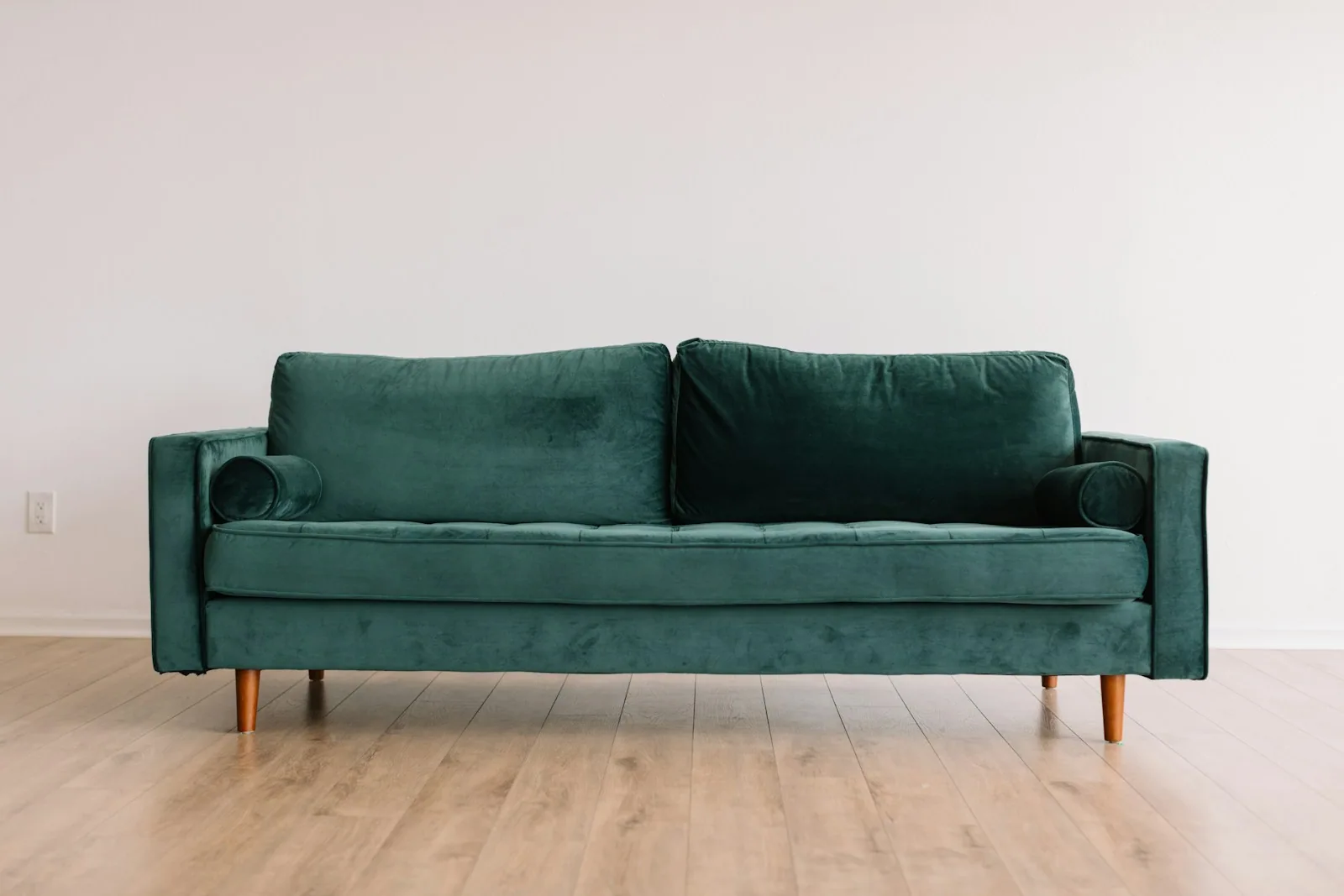
- Upholstered seating: sofas, armchairs, pouffes (BP X30-323-6).
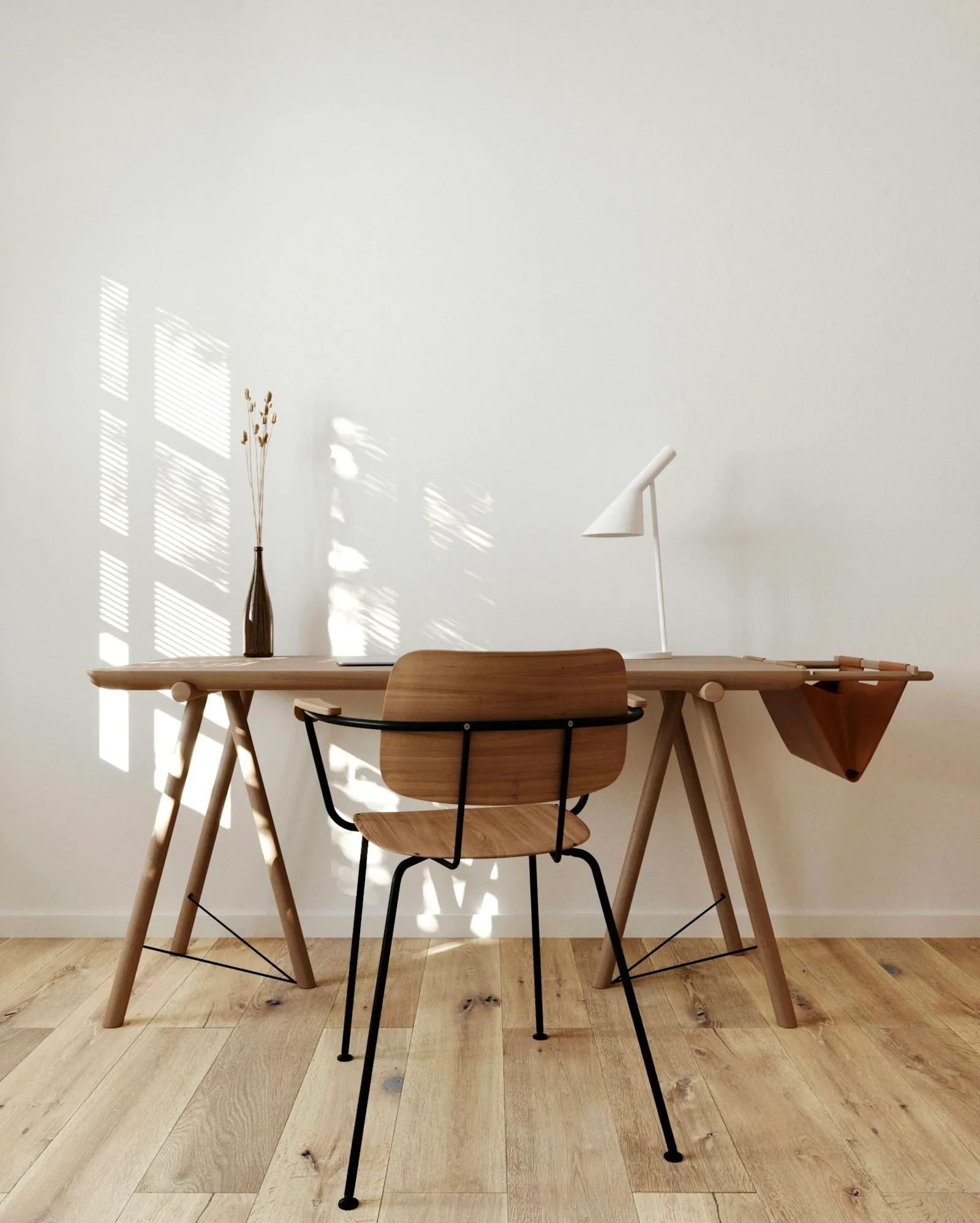
- Domestic furniture: tables, chairs, desks, chests of drawers, wardrobes, shelves (BP X30-323-4, revised in 2023).
- Kitchen and bathroom furniture.
- Garden furniture.
- Children’s furniture: beds, changing tables.
As for the digital product passport, the party placing the product on the French market should make the declaration: the French manufacturer for its own models, a retailer selling under its own brand even if the furniture is made in Poland or China, an importer marketing under its own brand. This is the rule adopted for textiles, which furniture work follows.
Sales to professional customers (hotels, local authorities, offices) are not targeted by consumer labelling. However, purchasing specifications increasingly incorporate environmental criteria, and a product LCA becomes a selling point.
The timetable: a method expected at the end of 2026
The legal framework rests on Articles L. 541-9-11 et seq. of the Environmental Code, arising from Article 2 of the 2021 Climate and Resilience Act, which replaced Article 15 of the 2020 Anti-Waste Act (AGEC). For furniture, the milestones are:
From method development to regulatory framework
The method has not been finalised and labelling remains voluntary; no adoption date has been set. Five milestones to know.
ADEME / FCBA workshops
Enhanced Ecobalyse simulator
ADEME trials
Proposed method
Consultation and EU notification
- March 2024: new version of Eco-meuble, FCBA’s LCA software based on BP X30-323 standards.
- 2025: ADEME and FCBA workshops on the method (end of life, durability, forest), and the first furniture simulator in Ecobalyse.
- January and February 2026: enhanced version of Ecobalyse’s furniture simulator (component-based modelling, durability coefficient), followed by forest additions; the tool remains described as "under development".
- 10 March 2026: ADEME and the General Commission for Sustainable Development open the trial phase, followed by workshops on 26 and 31 March and 26 May.
- 19 June 2026: trials close and written contributions are due.
- By the end of 2026: first methodological proposal, according to ADEME.
- 2027: discussions on a provisional version, followed by a draft regulatory framework submitted to public consultation and notified to the European Commission.
- Adoption of legislation: no date has been set, and no legislation currently provides for mandatory labelling.
- For reference, textiles: notification to the Commission in February 2025, Decree and Order of 6 September 2025, entry into force on 1 October 2025.
Given the textile precedent, where 7 months separated notification to the Commission from the decree, a furniture framework seems unlikely before late 2027 or 2028. This interval leaves time to work, provided you start with what will be useful regardless of the method: product composition and origin data, and durability tests.
3What levers can reduce the score?
Once the score has been calculated, several levers can reduce it. Their exact effect will depend on the method chosen; the mechanisms are already known.
Wood: its origin and type. European wood avoids long transport distances, and recycled wood or recycled panels reduce material impact compared with new wood. FSC or PEFC certification is not taken into account by the PEF method’s "land use" category: this is precisely what the forest addition being prepared seeks to correct.
Design for disassembly. Replacing glued joints with mechanical fastenings (screws, dowels, fittings) facilitates repair, replacement of parts and material recycling at end of life. In the draft method, repair enters the non-physical durability coefficient through incentives to repair, accounting for 40%.
Foams, fabrics and finishes. In a sofa, polyurethane foam can contribute more than the wooden structure. Partly bio-based foams, natural or recycled fibre fabrics and water-based finishes are options to assess case by case, because the result depends on the impact category and the supplier’s actual data.
Robustness and lifespan. Passing the tests in the standard for its category (BP X30-323-4 for domestic furniture, for example) improves the physical durability coefficient. Design choices extending lifespan, such as mortise-and-tenon joints or solid wood rather than particleboard, have the same effect.
End of life. This is modelled through collection and recycling scenarios by material, developed with the sector’s producer responsibility organisations (Ecomaison, Valdelia). Single-material furniture that can be dismantled improves this source of impact. Joining Ecomaison is an extended producer responsibility obligation, with no effect of its own on the score.
4Where do you start in practice?
The longest part of the work remains: gathering supplier data, choosing tools, funding the project and avoiding mistakes when starting.
Where to start: the 4 practical stages
Typical programme: 12 to 18 months from mapping to eco-design. Phase 3 takes most of the time.
List product references, identify materials (wood, foam, metal, textile), document origins and suppliers.
Model 3-5 bestsellers in Ecobalyse furniture to identify hotspots before the formal LCA.
Through Eco-meuble or a specialist consultancy. Supplier data collection accounts for 50-60% of the time.
Substitute materials, design for disassembly, improve the score, prepare the digital passport (around 2030).
Data to collect, supplier by supplier. Precise information is needed for every component of the furniture (wood, foam, fabric, metal, finish): type, mass, origin, process. Nearby suppliers respond quickly; distant and second-tier suppliers much less so. In our experience, collection takes several months for a product involving 5 or more suppliers.
Ecobalyse and Eco-meuble. Ecobalyse (free, public authorities) is the tool in which the furniture method is being developed; for textiles, it hosts the regulatory version of the calculation, and the official declaration portal is linked to it. For furniture, the simulator remains under development and its results cannot yet be displayed within an official framework. Eco-meuble (FCBA, paid) calculates LCAs according to BP X30-323 standards and supports eco-design using actual data. No legislation makes either mandatory, and no result is "legally binding" until the method is published.
How much it costs and how to fund it. The price of an LCA depends on the number of product references and depth of data; in our experience, it ranges from a few thousand euros for a simplified LCA to around fifteen thousand for a complete LCA with eco-design, with no official price schedule. Diag Écoconception, detailed in our funding overview, an ADEME grant administered by Bpifrance for SMEs with fewer than 250 employees, funds 60 to 70% of a fixed 18-day support programme over 10 months, including LCA: the amount payable is €5,400 excl. VAT for a business with fewer than 50 employees and turnover below €10 million, and €7,200 excl. VAT above these thresholds. No critical review is required under the current textile framework.
How much a furniture LCA costs, and how to offset it
Three levels of depth according to need, with no official price schedule. For SMEs, Diag Écoconception funds 60 to 70% of an 18-day support programme.
A sequence in 4 phases. The typical programme spans 12 to 18 months:
- Phase 1, map (2 to 4 weeks): list product references, identify main materials (solid wood, panels, foam, metal, textile), document origins and suppliers.
- Phase 2, simulate (2 to 3 weeks): model 3 to 5 bestsellers in the Ecobalyse simulator to identify the sources of greatest impact.
- Phase 3, LCA using actual data (several months): with Eco-meuble or a consultancy, supplier data collection accounting for most of the time.
- Phase 4, eco-design (ongoing): substitute materials, design for disassembly, pass durability tests and prepare furniture digital passport data.
Five common traps when starting
Five mistakes frequently arise when starting. None is fatal, but all cost time.
Availability of supplier data by stage
The wider the bar, the greater the stage’s contribution to the score. The warmer the colour, the harder it is to obtain the data from the supplier.
- Wood (solid or panels)35-50%Rare if untraced
- Foam / padding15-25%Rare
- Fabrics / coverings10-20%Rare
- Metal / hardware5-10%Default data
- Finishes (varnishes, glues)5-15%Default data
- Transport2-8%Available
- End of life5-10%Default (Ecomaison if EPR)
- Confusing simulation with a declarable score: Ecobalyse’s default values are deliberately conservative, and the furniture simulator is not yet a regulatory version. A representative score requires specific data.
- Forgetting end of life: it counts in the score, and its modelling depends on product design (disassembly, single material).
- Underestimating supplier data collection: it is the longest task, and useful regardless of the method chosen.
- Wanting to calculate everything at once: starting with 3 to 5 bestsellers stabilises the method and processes, and other product references follow faster.
- Communicating an unstable score: until the method is finalised, a published score risks changing. All communication must also comply with the rules governing environmental claims.
What the score does not measure
The French method is ambitious, but it has limitations worth knowing to avoid making the wrong promise.
- Social factors are absent: working conditions in factories or forestry operations do not enter the score.
- Microplastics released during use are not covered: textiles incorporate a microfibre addition, furniture does not at this stage, although synthetic foams and coverings release them.
- Production volume is not measured: the score is calculated per product, regardless of the quantity sold.
- Default values penalise opacity: furniture whose supplier does not provide data receives conservative values, benefiting manufacturers investing in traceability.
These limitations do not diminish the value of preparing your data: sectoral standards exist, the simulator is accessible and the proposed method expected by the end of 2026 will set the rules.
5The three methodological areas still open
From 10 March to 19 June 2026, ADEME ran an official trial phase intended to lead to a first methodological proposal by the end of 2026. 3 subjects account for most of the decisions still open; knowing them helps identify what to look for when the proposal is published.
Area 1 - The forest addition, or how to reflect forestry in the score
Conventional LCA translates wood’s impact into a single category, land use. It does not distinguish a mixed forest managed through selection forestry from a conifer monoculture harvested by clear-cutting, although their biodiversity effects are completely different. ADEME wants to correct this through a forest addition, for which Ecobalyse publishes a first version marked as a draft.
The open questions: what information can estimate forestry impact (origin, species, management method, FSC or PEFC labels, European anti-deforestation regulation)? What traceability can the sector provide? What weight should the addition have in the score? Technical workshops took place on 30 January and 24 September 2025, then on 26 May 2026 on forestry and biodiversity.
Area 2 - Non-physical durability, or how to address fast furniture
The durability coefficient covers more than robustness measurable in a laboratory. It also incorporates non-physical durability: perfectly functional furniture can be discarded because the brand renews its collection, a spare part is no longer available or the style has changed. This is furniture’s equivalent of fast fashion in textiles.
The open questions concern criteria objectively measuring these practices (range breadth, price, promotions, repair) and how to combine physical and non-physical durability. Ecobalyse’s general documentation describes a weighted sum, whereas the furniture draft uses the lower of the 2 coefficients: this is one of the points put to contributors.
Area 3 - The level of detail required from manufacturers
Textiles distinguish mandatory parameters (product type, mass, composition, countries of manufacturing stages) and optional parameters that take a conservative default value if not entered. The calculation is declared on a public portal and checked by DGCCRF, without third-party verification. Furniture must find the same balance, otherwise the scheme would be accessible only to large brands with LCA teams; ADEME refers to an initial calculation level accessible to all parties placing products on the market.
The open questions: at what level of detail should furniture be described so it can be modelled without LCA expertise (configurable main components, default secondary components, cut-off rules)? Which elements should be set by default, such as screws or handles, and which left editable? Could a simplified bill of materials suffice for small brands? If too simplified, the method no longer differentiates products; if too precise, it is accessible to only a few operators.
6The same data will serve European eco-design (ESPR) from 2028
Environmental labelling is not the only legislation concerning furniture. The European Ecodesign for Sustainable Products Regulation (ESPR), which entered into force in July 2024, sets requirements through delegated acts, and its April 2025 working plan indicatively provides for an act on furniture in 2028 and an act on mattresses in 2029, with possible requirements on repairability, disassembly, recycled content and environmental information.
Data gathered for labelling (wood origin and species, recycled material, durability testing, disassembly, recyclability) are the data that will feed the digital product passport provided for by ESPR. Given the application period of at least 18 months after adoption of a delegated act, this passport would not apply to furniture before around 2030; our furniture ESPR guide details this timetable.
The 2 programmes therefore follow closely: a labelling method proposed in late 2026 and regulated from 2027-2028 at best, followed by European furniture requirements from 2028. Manufacturers that have structured their supplier data collection for the first will approach the second with data already reliable.
7Key takeaways
Furniture environmental labelling follows the textile mechanism, with a durability coefficient that would incorporate physical robustness alongside commercial practices. As at 1 October 2026, the method has not been finalised: a first proposal is expected by the end of 2026, and labelling remains voluntary.
- The score is not a carbon score: it aggregates 16 PEF impact categories, including climate, water and land use, with weights set by the method.
- The durability coefficient can have a substantial effect: in the furniture draft, it ranges from 0.5 to 1.5 for both physical and non-physical durability.
- BP X30-323 standards cover the main families (bedding, upholstered seating, domestic furniture), and the declarant should be the party placing the product on the French market.
- Supplier data collection is the longest task and useful regardless of the method chosen.
- Diag Écoconception funds 60 to 70% of an 18-day support programme for SMEs, and the same data will serve the digital product passport around 2030.
Manufacturers starting data collection and durability testing of their flagship products now will be ready to calculate their score as soon as the method is published. The Ecobalyse simulator already identifies the sources of greatest impact, and the textile environmental labelling guide shows how the scheme works once in place.
- ADEME: Furniture trials 2026, phase from 10 March to 19 June 2026; Ecobalyse and its durability documentation, accessed on 1 October 2026.
- Textiles, reference legislation: Decree No 2025-957 of 6 September 2025 and Order of 6 September 2025, in force on 1 October 2025.
- Funding: Diag Écoconception, Bpifrance and ADEME.
- Europe: Ecodesign and Energy Labelling Working Plan 2025-2030, COM(2025) 187, 16 April 2025.
- Sectoral standards: AFNOR, BP X30-323-4 (domestic furniture), BP X30-323-6 (upholstered seating), BP X30-323-10 (bedding), BP X30-323-18 (bedding articles).