
- 1EmpCo, the European anti-greenwashing directive, has not been transposed in France as of 28 September 2026.
- 2Its blacklist targets "eco-responsible", neutrality through offsetting and uncertified labels.
- 3French law already penalises misleading claims, with fines of up to 80% of the campaign budget.
- 4Replace each descriptive claim with a quantified, verifiable fact, on the same medium.
A product page describing a product as "eco-responsible", a bag marked "biodegradable" and a "carbon neutral" advertisement are not governed by the same legislation. Directive (EU) 2024/825, known as EmpCo, added 12 practices to the European blacklist, applicable since 27 September 2026 in countries that have transposed it. France is still awaiting its law, but French law already prohibits "biodegradable" and "environmentally friendly" on products and packaging, regulates "carbon neutral" in advertising and penalises any misleading claim.
The status of 10 common formulations, today and after transposition
Choose a formulation. "After transposition" follows the bill adopted by the Senate, which may still change; example figures are fictional.
"Biodegradable"
on a product or packaging
Legislation: Environmental Code, Article L. 541-9-1; bill, Article 21
For a marketing or quality team, the review therefore proceeds formulation by formulation: which legislation applies, since when and under what conditions it remains permissible, depending on whether it concerns a product or the company and whether it addresses consumers or business customers.
1What the law defines as an environmental claim
The directive defines an environmental claim very broadly: any non-mandatory message in any form, whether text, image, label, brand or product name, stating or implying that a product or company has a positive or zero environmental impact, performs better than others or has improved over time. Legally required information, such as the energy label or Triman logo, falls outside this definition.
Generic or specific: the same medium makes the difference
A claim is generic when its specification is not provided clearly and prominently on the same medium. Recital 9 of the directive lists 12 examples, from "green" and "ecological" to "biodegradable" and "biobased". It contrasts the generic "climate-friendly packaging" with "100% of the energy used to produce this packaging comes from renewable sources", a specific claim that escapes the prohibition while remaining subject to the requirement not to mislead.
A green leaf or a range name may be enough
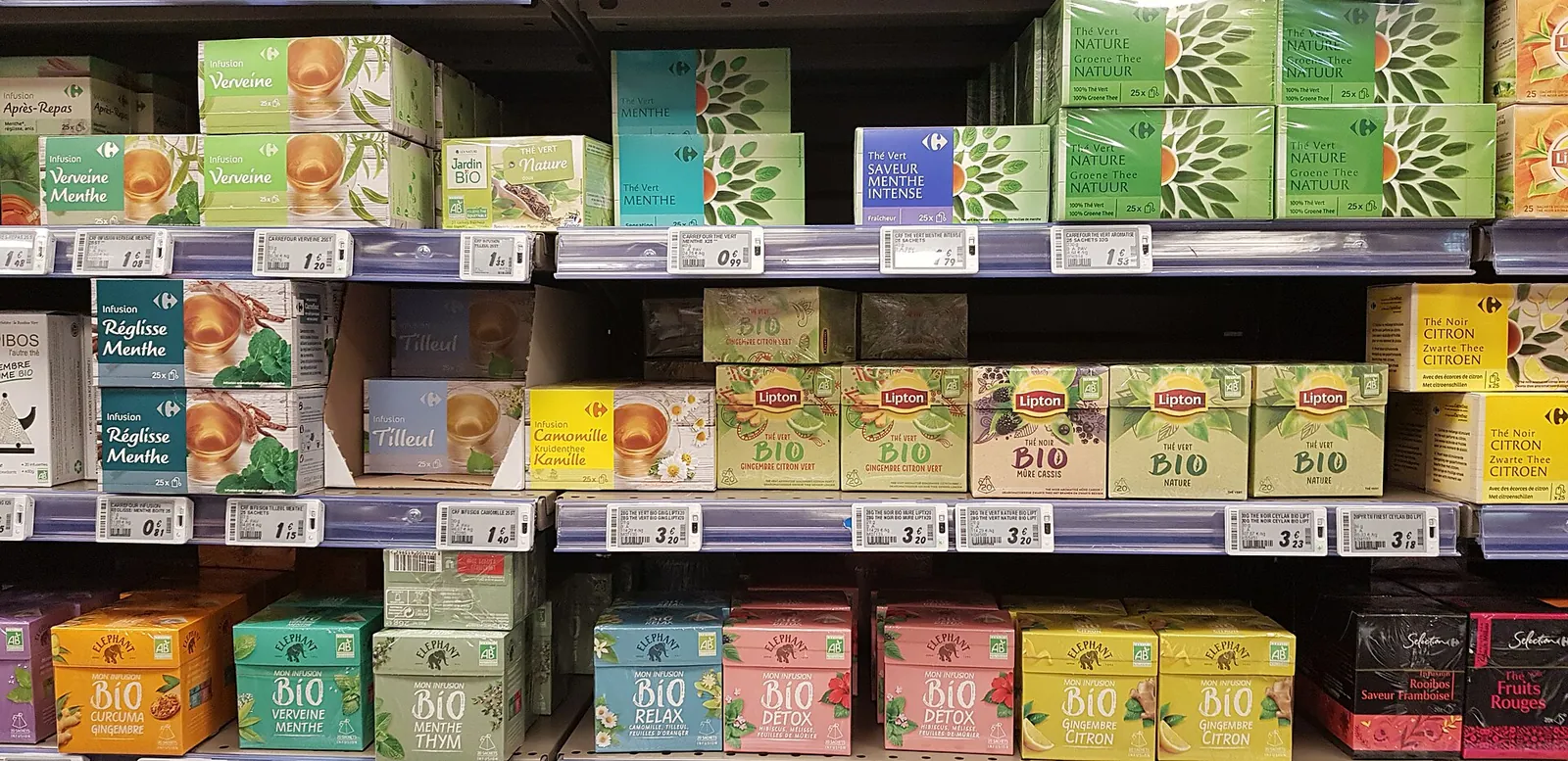
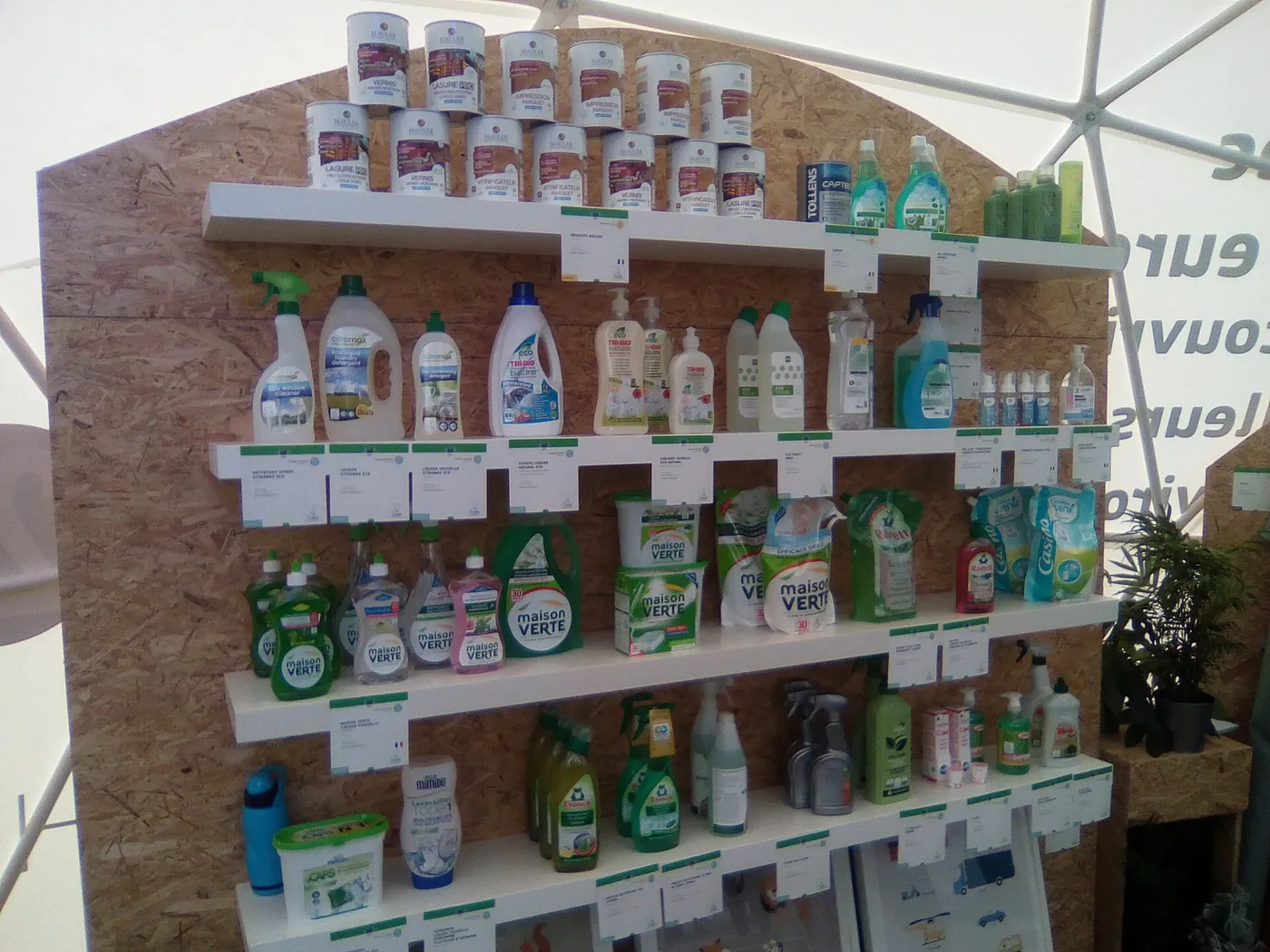
The directive specifies that a phrase combined with colours or images may form a generic claim. The Commission’s questions and answers cite green leaves, water droplets and green backgrounds, and explain that an environmentally suggestive brand name may be assessed as a claim even if it is registered. The term "bio" is an exception: reserved for organic farming by Regulation (EU) 2018/848, it remains usable in that context.
Consumers and business customers
EmpCo amends the 2005 Unfair Commercial Practices Directive, which protects consumers only: business-to-business communications fall outside its scope, and each State remains free to extend that protection. French law already does so, since Article L. 121-5 of the Consumer Code applies the rules on misleading practices to practices targeting businesses. Our article on businesses affected by EmpCo also describes the demand for evidence that reaches B2B suppliers.
2What the EmpCo blacklist prohibits in all circumstances
The blacklist is Annex I to the 2005 directive: a practice listed there is prohibited without having to demonstrate that a consumer was misled. EmpCo adds 12 points: 4 concern environmental claims and labels, 1 concerns legal requirements presented as an advantage and 7 concern the durability of goods and software updates.
Generic claims (point 4a)
Point 4a prohibits a generic claim for which the trader cannot demonstrate recognised excellent environmental performance relevant to the claim. This excellence can be demonstrated in only 3 ways: the EU Ecolabel, an official type I ecolabelling scheme (EN ISO 14024) recognised in a Member State, such as the Nordic Swan or Germany’s Blue Angel, or the highest class under other EU legislation, for example energy label class A for "energy efficient".
The performance must also match what is claimed: under Recital 10 of the directive, the EU Ecolabel does not permit "biodegradable" if its criteria for that product do not address biodegradability. Without a label of this standing, the only option is to specify the claim on the same medium.
An aspect presented as the whole (point 4b)
A claim may no longer refer to the entire product or business when it concerns only one aspect or activity. Recital 11 gives the example of a product marketed as "made with recycled materials" when only its packaging is recycled; the same logic applies to a company presenting solar panels at one site as an initiative covering the entire group.
Neutrality through offsetting (point 4c)
The blacklist also prohibits claims based on offsetting emissions that a product has a neutral, reduced or positive climate impact, using wording such as "climate neutral" or "climate compensated". A claim remains possible if it is based on the product’s actual life cycle footprint; neutrality claimed by a company falls under other rules, detailed in our article on company carbon neutrality.
A legal requirement presented as an advantage (point 10a)
Point 10a, which extends beyond environmental matters, also prohibits presenting a requirement imposed by law on all products in the category in the Union as an advantage. Recital 15 addresses products presented as free of a substance already banned: highlighting "bisphenol A-free" on a baby bottle falls within this rule, since this compound has been prohibited throughout the Union for manufacturing polycarbonate baby bottles since 1 March 2011 and for placing them on the market since 1 June 2011. The point does not apply when the requirement affects only some competing products, for example those manufactured in the Union.
A generic claim is lawful only if the product carries the EU Ecolabel, an official type I ecolabel or the highest class under EU legislation, provided that this performance matches what is claimed.
3Labels and climate targets: the conditions for continuing to display them
Labels and future targets remain possible under specific conditions: the blacklist requires labels to have third-party certification or a public origin, and the directive treats future targets as misleading if they lack a verifiable plan.
Labels without certification (point 2a)
A sustainability label means any voluntary public or private label that distinguishes a product, process or business by its environmental or social characteristics. It is prohibited if it has neither been established by a public authority nor been based on a certification scheme: a scheme open to all traders, whose public requirements are developed with experts and stakeholders, which provides for withdrawal or suspension of the label following non-compliance and whose monitoring is carried out by a third party independent of both the scheme owner and the trader.
Sustainability labels: what determines whether they can stay
Any voluntary label that distinguishes a product or a business by its environmental or social characteristics goes through these 3 questions.
- open to all traders, without discrimination
- public requirements, set with experts and stakeholders
- withdrawal or suspension of the label for non-compliance
- monitoring by a third party independent of both the owner and the trader
The Commission specifies that a company may own its scheme if it meets these conditions and remains open to competitors, that only public authorities in the Union count and that no transition period is provided for existing labels. The DGCCRF (the French consumer protection authority) also considers that a private environmental score that distinguishes a product qualifies as a label, a sensitive issue in textiles, where every score must be accompanied by the environmental cost from 1 October 2026.
Future environmental performance targets (Article 6)
Outside the blacklist, the directive treats a target such as "carbon neutral by 2040" as misleading without a detailed, realistic implementation plan: measurable, time-bound targets, allocated resources and regular verification by an independent expert, whose findings are accessible to consumers. Our climate transition plan guide describes this plan, and our SBTi pathway guide describes a recognised method of setting targets.
Durability and reparability: 7 more practices
The last 7 points on the blacklist concern the lifespan of goods: false durability claims, goods presented as reparable when they are not, a feature limiting their lifespan, software updates whose effects are concealed or falsely described as necessary, consumables needing replacement too early, and deterioration caused by non-original parts that is either concealed or falsely claimed. These rules interact with the Right to Repair Directive.
4What French law already prohibits, before transposition
Several formulations on the list are already prohibited or regulated in France under legislation currently enforced by the DGCCRF and the ministry responsible for the environment.
"Biodegradable" and "environmentally friendly" on a product
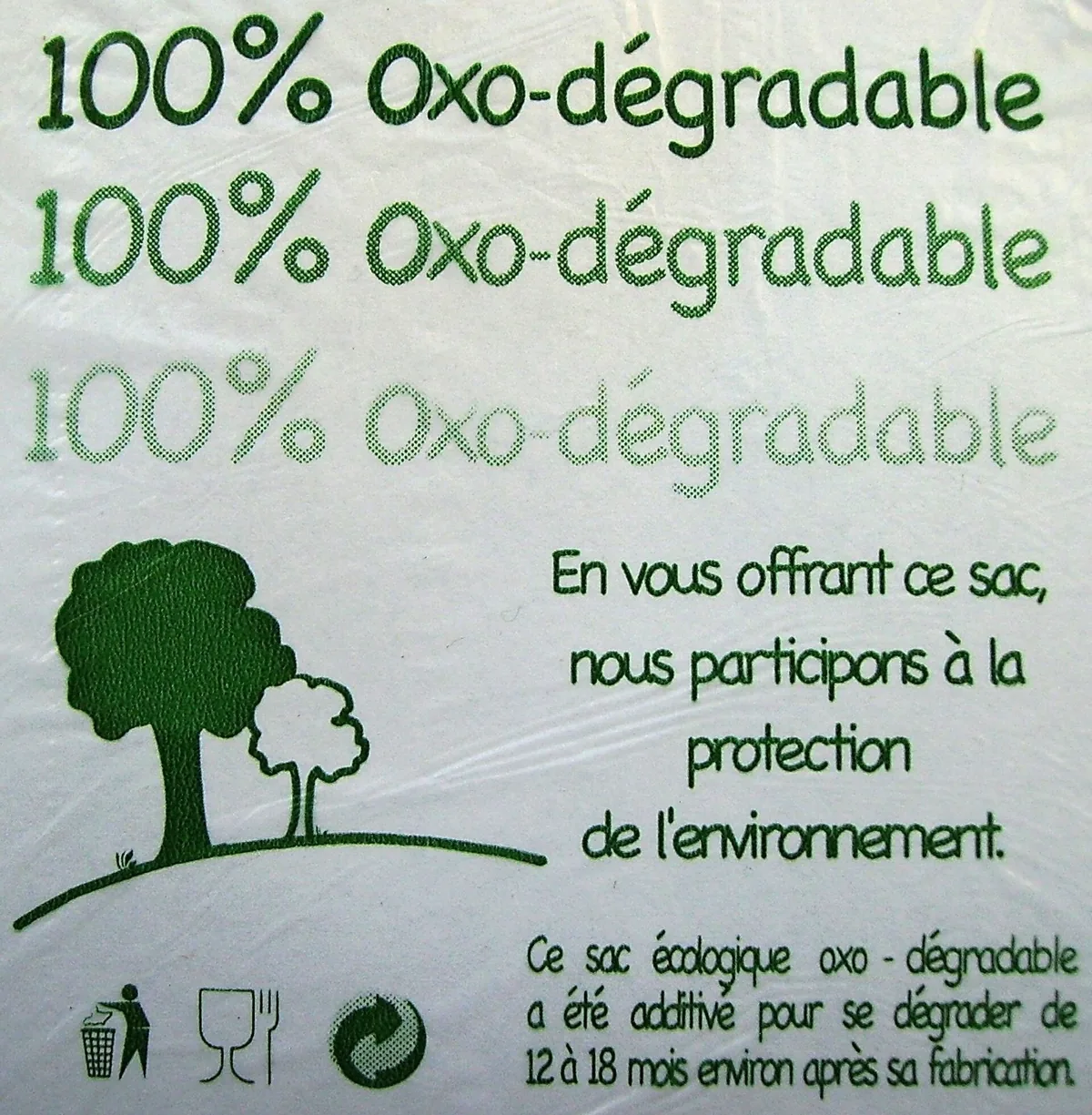
Article L. 541-9-1 of the French Environmental Code, introduced by the 2020 anti-waste law, has prohibited "biodegradable", "environmentally friendly" and any equivalent wording on a consumer product or its packaging since May 2022. The ministry includes "eco-responsible", "ecological", "green", "good for the planet" and "good for the climate" among these equivalents: these words are therefore already banned on products or packaging. The article also prohibits "compostable" on plastic that can only be composted in an industrial facility, and requires any reference to recycled content to state the percentage of recycled material actually incorporated.
The Conseil d’État upheld this prohibition on 31 May 2024, observing that biodegradability standards do not guarantee complete degradation, particularly for microplastics. Since the Climate and Resilience Act of 22 August 2021, non-compliance exposes a company to an administrative fine of up to €15,000 for a legal person (€3,000 for an individual), imposed by the DGCCRF (Article L. 541-9-4-1). Our guides to eco-design with bioplastics and the state of bioplastics detail what can be claimed about these materials.
"Recyclable", "compostable" and "recycled": terminology set by decree
For businesses required to publish the "environmental qualities and characteristics" information sheet, above €10 million in turnover and 10,000 units per year, Article R. 541-228 defines the terminology: packaging is "mostly recyclable" if 5 criteria are met, including recovered recycled material exceeding 50% of the collected waste, and "fully recyclable" above 95%, according to the scheme’s producer responsibility organisation.
Recycled content is expressed as "packaging containing at least X% recycled materials", with no minimum percentage. "100% recyclable" is not wording provided by the decree: a business covered by it must write "fully recyclable". Below the thresholds, the ministry only recommends this terminology, but the claim must remain accurate and, since 12 August 2026, comply with the European packaging regulation.
"Carbon neutral" in advertising
Since 1 January 2023, Article L. 229-68 has regulated "carbon neutral", "climate neutral" and "100% offset" in advertising and on packaging for a product or service. The advertiser publishes a summary report every year: the product’s life cycle footprint under ISO 14067, a reduction pathway over at least 10 years and its offsetting projects, accessible through a link or QR code on the advertisement or packaging. It withdraws the claim if its emissions per unit increase from one year to the next.
Packaging since 12 August 2026
The European packaging regulation permits a claim about a property it regulates, such as recycled content, only if it exceeds its minimum requirements and specifies whether it concerns the unit, part of the packaging or all the company’s packaging (Article 14), with evidence in the documentation supporting the EU declaration of conformity.
How transposition will change these rules
In the version adopted by the Senate, the bill repeals the French carbon neutrality regime in favour of the European prohibition, extends the fine of 80% of advertising expenditure to all misleading environmental claims and rewrites Article L. 541-9-1: "biodegradable" and "environmentally friendly" would remain prohibited on any medium, unless excellent environmental performance is demonstrated and relevant to the claim, relaxing the absolute prohibition introduced in 2020. The penalties would then be those for misleading commercial practices.
The bill leaves Article L. 121-5, which extends these rules to practices targeting businesses, untouched: in its current form, the blacklist would therefore also cover claims made to business customers, beyond the directive. Its commencement date, set at 27 September 2026, will have to be changed by the National Assembly.
5What does the DGCCRF inspect before transposition?
The DGCCRF cannot yet apply the European blacklist: it carries out inspections under French legislation currently in force, which already covers many of the same formulations.
What France already enforces, who does it and the maximum penalties
Maximum penalties for a business as at 28 September 2026. The authority or judge sets the amount case by case; the heights indicate the order of severity.
A directive that is not yet binding on businesses
An untransposed directive does not create a direct obligation between a business and its customers, although a court may interpret French law in its light. France had to transpose the directive by 27 March 2026, and the Commission issued it with a letter of formal notice on 28 May 2026. The bill adapting French law to EU law, known as DDADUE, was adopted by the Senate on 18 February 2026; as of 28 September 2026, no date for consideration by the National Assembly had been announced.
During a webinar on 12 June 2026, the DGCCRF warned that France would very probably not yet be ready by the deadline and that its first inspections would chiefly result in warnings and reminders of the rules rather than penalties. In the meantime, its officers apply the Consumer Code and Article L. 541-9-1, while carbon neutrality falls under the minister responsible for the environment.
What investigators already penalise
Article L. 121-2 of the Consumer Code expressly covers misleading claims about a product’s environmental impact and the advertiser’s environmental commitments: a generic formulation or poorly founded neutrality claim can therefore already be penalised, with the blacklist simply removing the need to prove that it misleads. In 2023 and 2024, the DGCCRF inspected more than 3,000 establishments on this issue, with more than 15% showing serious non-compliance, for wording such as "eco-responsible delivery" or "green concrete block".
These inspections resulted in more than 500 warnings, more than 430 injunctions and more than 70 fines or formal reports. Investigators may demand all evidence substantiating a claim, order it to be changed subject to a periodic penalty payment, reach a settlement with the prosecutor’s agreement or refer the matter to the prosecution service. Our method for substantiating a claim lists the documents to keep ready.
Packaging already printed
According to the Commission’s questions and answers, the new rules also apply to products already manufactured or on shelves, which may be corrected using a sticker or information on the shelf, with authorities able to take compliance efforts into account. The DGCCRF says stocks predating the deadline will be examined case by case.

6What penalties apply to a misleading environmental claim?
The Environmental Code regimes remain moderate: up to €15,000 for prohibited wording on packaging and €100,000 for an undocumented carbon neutrality claim, which may rise to the total expenditure on the operation. Misleading commercial practices account for most of the risk, because the fine is calculated from turnover or the campaign budget.
Up to 80% of the campaign budget
Article L. 132-2 of the Consumer Code punishes a misleading commercial practice with 2 years’ imprisonment and a €300,000 fine, multiplied by five for a legal person, giving €1.5 million. The fine may rise to 10% of average annual turnover or 50% of advertising expenditure, and 80% where the deception concerns the environmental impact of the product or the advertiser’s environmental commitments: for a €5 million campaign, this criterion raises the ceiling to €4 million.
When committed online, the offence carries 5 years and €750,000, or €3.75 million for a legal person. Following a conviction, the judgment is published (Article L. 132-4).
Penalties already imposed
In July 2025, SHEIN accepted a €40 million settlement fine for misleading practices, including a 25% fall in emissions presented without substantiation. On 23 October 2025, following action by 3 associations, the Paris Judicial Court found the way TotalEnergies presented its ambition for carbon neutrality in 2050 and its role in the energy transition misleading, and ordered the messages to cease and the judgment to be published. Competitors and associations can therefore apply to the court without waiting for the DGCCRF.
7What to say instead: a specific, substantiated claim
All these rules follow the same logic: a lawful claim states what was measured, on what and since when, on the same medium, and refers to evidence the company can produce at the investigators’ first request.
The evidence must match the scope of the claim: a supplier certificate is sufficient for a recycled content percentage, a product carbon footprint under ISO 14067 for a climate claim and a multicriteria life cycle assessment for an overall environmental benefit, whose cost depends mainly on the number of product references. For the company itself, a published Bilan Carbone® (the French carbon accounting method) with its scope underpins any climate communication.
A generic environmental claim rewritten, element by element
Example of a cardboard box; the 80% figure is fictitious and must come from the supplier.
"1Cardboard box 2containing at least 80% recycled material, 3mostly recyclable packaging."
At Projet Celsius, we consider the most costly mistake to be treating the list word by word: removing "eco-responsible" from a product page or advertisement while keeping the green background, the "Nature" range name and the in-house logo leaves the claim intact. A useful inventory starts with the media, packaging, product pages, website, advertisements and responses to tenders, and classifies each claim according to the legislation that applies. The greenwashing test scrutinises a formulation, and our EmpCo compliance support handles the complete review.
8Key takeaways
- The EmpCo blacklist targets generic claims, an aspect presented as the whole, neutrality through offsetting, legal requirements sold as an advantage and uncertified labels.
- France has not transposed it as of 28 September 2026: the DGCCRF inspects under French law and says it will initially prioritise education.
- "Biodegradable" is already prohibited on packaging, "carbon neutral" requires a published report and "recyclable" follows the decree’s terminology.
- A misleading claim can cost up to 80% of the campaign budget, 10% of turnover or €1.5 million.
- A lawful claim specifies its subject, quantifies the benefit and rests on evidence ready from publication.
For the timetable, our article on EmpCo application follows the bill’s progress, and our overview of environmental communication places these rules among the other legislation. To test a sentence before publishing it, the PIF method provides a framework with 3 questions.
- EmpCo Directive: Directive (EU) 2024/825 of 28 February 2024, Article 1 (Article 2 definitions, Article 6(2)), Article 4 (transposition and application), Recitals 7 to 15 and Annex (points 2a, 4a, 4b, 4c, 10a, 23d to 23j); European Commission questions and answers, September 2026 version, questions 1 to 18.
- French law currently in force: Environmental Code, Articles L. 541-9-1, L. 541-9-4-1 (Law No. 2021-1104 of 22 August 2021, Article 3), R. 541-227, R. 541-228, R. 541-230, L. 541-15-10, L. 229-68, L. 229-69, D. 229-106 to D. 229-109 (Decree No. 2022-539 of 13 April 2022) and R. 229-110; Consumer Code, Articles L. 121-2 to L. 121-5, L. 132-2 (paragraph 3 introduced by Law No. 2024-420 of 10 May 2024), L. 132-4, L. 512-15, L. 521-1 and L. 523-1; Criminal Code, Article 131-38; Conseil d’État, 31 May 2024, No. 464945. The Légifrance pages are in French.
- Packaging: Regulation (EU) 2025/40 on packaging (PPWR), Article 14, applicable since 12 August 2026; Directive 2011/8/EU of 28 January 2011 (bisphenol A in baby bottles); Regulation (EU) 2024/3190 (bisphenol A in food-contact materials).
- Transposition: Senate DDADUE bill file; Bill No. 2518 transmitted to the National Assembly on 20 February 2026, Articles 20 and 21; Commission infringement procedure of 28 May 2026.
- DGCCRF and judgments: DGCCRF webinar of 12 June 2026; 2023-2024 investigation results, press release of 1 October 2025; SHEIN press release of 3 July 2025; Paris Judicial Court, 23 October 2025, Greenpeace France and others v. TotalEnergies (press release).
- Green Claims: Proposed directive COM(2023) 166, procedure 2023/0085(COD), without formal withdrawal as of 28 September 2026.