

- 1A claim is misleading as soon as it is liable to mislead consumers, with or without intent.
- 2A precise claim names the benefit, the part concerned and the measure.
- 3An honest claim does not suggest more than what the evidence covers.
- 4A substantiated claim has its evidence in hand before publication, not afterwards.
"Eco-responsible delivery", "green breeze block", "preserving the planet": the DGCCRF (the French consumer protection authority) found these wordings in its 2023 and 2024 investigations, which covered more than 3,000 establishments. All of them suggested a general benefit for the environment without saying which. The French Consumer Code requires no intent to deceive: a practice is misleading as soon as it rests on a claim liable to mislead (Article L. 121-2).
Is this claim greenwashing?
Choose a case found by the authorities, or answer for your own sentence.
"Eco-responsible delivery"
Probable greenwashing
It fails on "Precise". Reword it: replace the generic word with the benefit, the part concerned and the figure.
Found by the DGCCRF in 2023-2024: a general benefit suggested, with no significant impact identified.
The test above sets out the 3 questions an investigator asks when looking at a sentence.
1What makes a claim misleading?
An environmental claim is more than a word printed on packaging. The EmpCo Directive (the EU Empowering Consumers for the Green Transition directive) treats as a claim any text, image, symbol, label or brand name that states or suggests that a product or a company has a positive, zero or reduced impact on the environment. A leaf on a bottle or a range name such as "Nature" falls within scope.
What the Consumer Code says
In France, Article L. 121-2 treats as misleading a practice that rests on claims that are false or liable to mislead. These may concern the essential characteristics of a product, including its environmental impact, or the scope of the advertiser's commitments on environmental matters. The text judges the effect on the consumer, not the intent of whoever wrote the sentence.
The EmpCo Directive adds a list of practices banned in all circumstances, applicable since 27 September 2026 in the countries that have transposed it. In France, the transposition bill was adopted by the Senate on 18 February 2026 and has yet to be voted on by the National Assembly. Who is affected and from when it applies are covered separately.
A risk that also reaches large brands
The advertising and environment review by the ARPP (the French advertising self-regulatory body) and ADEME (the French Agency for Ecological Transition), published in October 2024, examined 1,015 advertisements with an ecological argument: 65 did not comply with the advertising ethics rules. They came from companies of all sizes, some of which sometimes used large consultancy agencies. The 2 main reasons correspond to the first 2 questions of the test, detailed below.
Grounds for non-compliance in green advertisements
The 2 main reasons correspond to the first 2 questions of the test.
Where the 3 questions of the test come from
The practical guide to environmental claims of the French National Consumer Council (CNC), reissued in 2023, asks professionals to respect 3 principles: clarity and absence of ambiguity, proportionality of the claim, and the existence of supporting evidence. The PIF test (from the French Précise, Intègre, Fondée) takes them up in the order in which you would check a sentence.
- Precise corresponds to clarity: the sentence says which benefit, for which part of the product and to what extent, with no vague term.
- Honest corresponds to proportionality: what the customer takes away from the sentence, images included, does not go beyond what the company has done.
- Substantiated corresponds to supporting evidence: the evidence exists, is dated and can be found before publication, not after an inspection.
2Does the claim say exactly what, and about what?
A precise claim names the benefit, the part concerned and the measure. The Ministry puts it simply: consumers must understand immediately what exactly the claim relates to. A sentence that prompts a "meaning what?" fails this first question.
Words that say nothing
Among the abusive claims in its 2023-2024 review, the ARPP cites "positive impact", "preserves the planet", "ecological swimming pool", "durable tableware" and "responsible and committed beauty". None says what has been reduced, or by how much. The DGCCRF ordered importers to remove "eco friendly" and "eco responsible" from sunglasses that contained only a share of bio-based material, with no percentage displayed.
EmpCo prohibits these generic claims in all circumstances (Annex I, point 4a), except where the company demonstrates recognised environmental excellence: the EU Ecolabel or an official Type I ecolabel (ISO 14024 standard). Outside that case, the generic word is replaced with the fact it summed up.
The product, the packaging or the company?
The CNC guide points out that "eco-designed" with no further detail refers to the product and its packaging together. "Recyclable" must say what is recycled (the bottle, not the pump) and under what collection conditions, as for any eco-designed packaging. A claim about the company ("committed to the climate") calls for a file covering the whole company, not one plant.
Wordings already banned in France
Some sentences fail before the test even begins. Since 1 January 2022, Article L. 541-9-1 of the French Environmental Code has prohibited, on a product or its packaging, the wordings "biodegradable" and "respectful of the environment", or any equivalent wording. A plastic that is compostable only in an industrial unit cannot carry the word "compostable". A "recycled" wording gives the percentage of recycled material incorporated, as our article on recycled content points out.
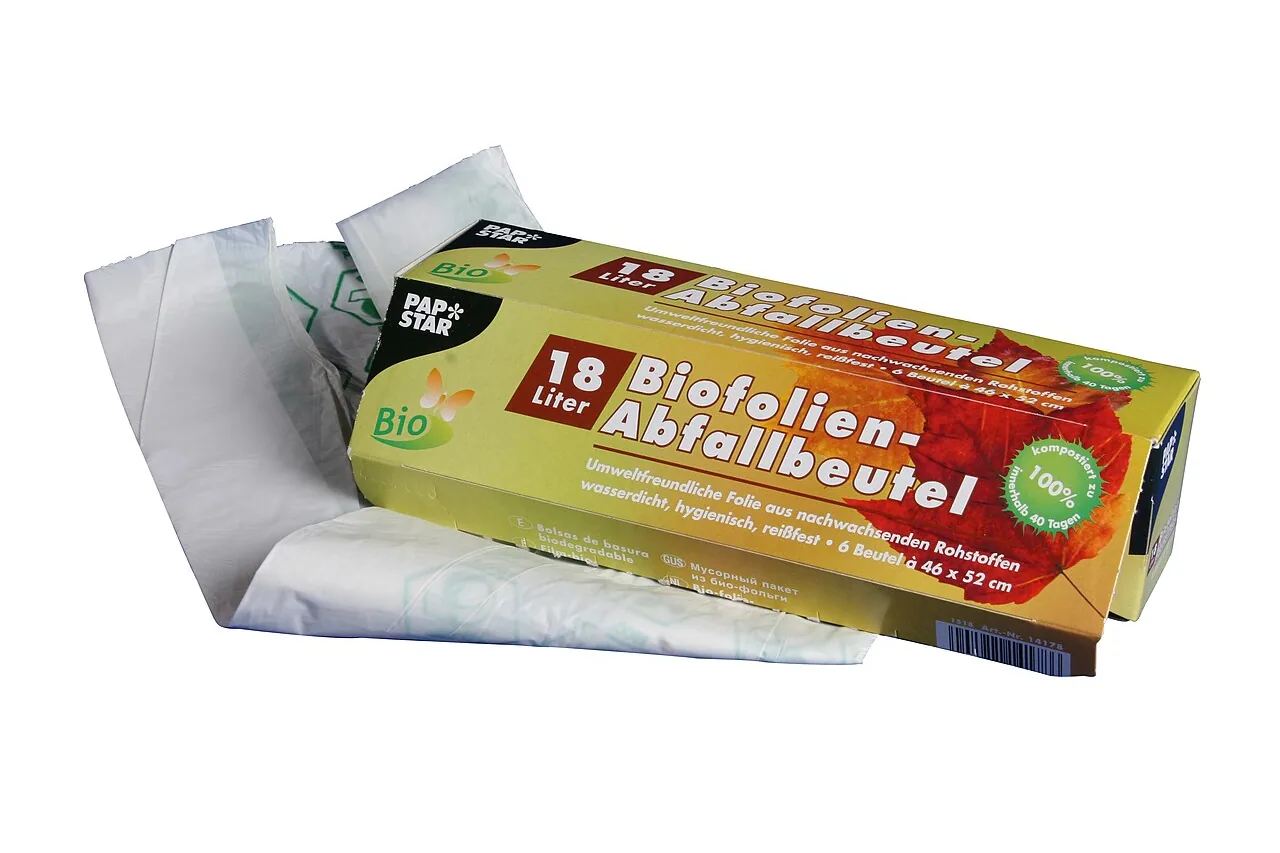
For "biodegradable", the DGCCRF reminds companies that an administrative fine of up to €15,000 can be imposed. Bioplastics are the first affected, because their selling point often lies in that word.
3Does the customer take away more than what is proven?
This is the question of proportionality. The CNC guide asks that a claim express the advertiser's action accurately, in line with its supporting evidence. A sentence that is exact word for word can fail here, if the overall impression promises more than what has been done.
A detail presented as the whole
EmpCo prohibits presenting a claim about the whole product or company when it concerns only one aspect or one activity (Annex I, point 4b). The DGCCRF found a furniture store announcing that the majority of its wood was FSC (Forest Stewardship Council) certified, when this applied to only a minority of products. A recyclable cap promoted on a bottle that is not recyclable follows the same logic.
Colours, images and brand names
The CNC warns that illustrations of the Earth and predominantly green drawings can be misleading. The DGCCRF cites a study carried out by OpinionWay and presented by ADEME in September 2020: nearly half of French people see in "green", "ecological" or "biodegradable" on a pack the guarantee of a more ecological product. Its investigations also target brand names with an environmental connotation, which colour a whole range, in cosmetics as elsewhere.
Neutrality, future targets and legal obligations
3 cases recur under this question:
- Describing a product as "carbon neutral" thanks to offset credits is prohibited by EmpCo (point 4c) and regulated in France by Article L. 229-68, as our article on carbon neutrality explains.
- A target such as "net zero in 2050" requires, according to the EmpCo Directive, a detailed plan with measurable milestones, regularly checked by an independent third-party expert, like a Science Based Targets initiative (SBTi) pathway.
- Presenting as a selling point what the law requires of all products in the category is prohibited (point 10a): the Ministry cites the "bisphenol-free" baby bottle, although bisphenol is banned in baby bottles.
The photos below apply the test to wordings found on real products. The same defect recurs across very different products.
5 wordings found on real products
Choose a photo to read the wording, the question it raises and what would make it hold up.
Laundry detergent strips, Canada, 2021
The wording
"Eco-strips", "Saving the planet one load at a time"
The question: Precise
A general benefit, without saying which or by how much. With no recognised excellence, this is the generic claim that EmpCo prohibits.
What would make it hold up
The gain measured per wash (packaging, transported weight), with its source and date.
Of these 5 wordings, only 1 passes the first 2 questions of the test.
4Does the evidence exist before publication?
The CNC guide sets the timing: professionals must have the evidence required to support their claims from the moment the claims are used, or be able to produce it on request. For a figure, the advertiser must be able to give the origin of the results and the calculation method. The Ministry asks for scientific evidence and recognised methods.
What the DGCCRF rejects as evidence
Investigators have published several rejections, which show what evidence is not:
- Sales brochures from the supplier, presented by an importer to justify "eco friendly": the DGCCRF saw advertising in them, not scientific evidence.
- Around fifteen certificates for wooden toys described as "ecological", some unrelated to the products and others expired since 2013.
- Decarbonisation claims by a chocolate maker, when the new energy source was only at the project stage and the cocoa came via a trader.
- Partners announced as labelled by a tour operator, on a mere declaration, with no supporting document to produce.
Evidence assembled after an inspection arrives too late for a sentence already published.
Evidence in proportion to the sentence
The evidence follows the scale of the claim. A composition or recycled-material wording is justified by a technical data sheet, a material certificate or supplier traceability. A climate wording calls for a calculation: a Bilan Carbone® (the French carbon accounting method) or a life cycle assessment (LCA) depending on whether the sentence concerns the company or the product, and an LCA has a cost that needs budgeting before the campaign. A comparison with a competitor calls for a common method.
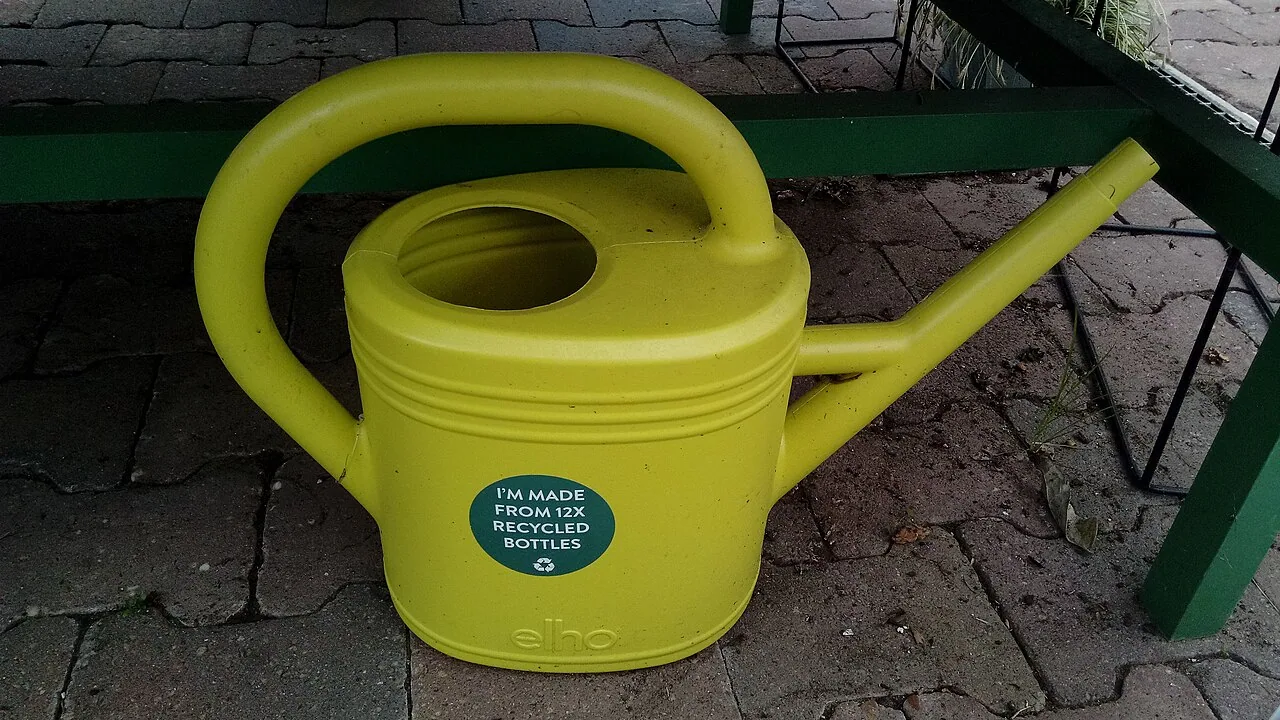
Labels obey the same rule. EmpCo prohibits displaying a sustainability label that is neither based on a certification scheme run by a third party nor established by a public authority (point 2a). Before affixing a logo, you need to know who issues it and who checks it.
5What should you do with a claim that fails the test?
A "no" in the test does not condemn the sentence. Each failed question calls for a different action:
- After a no on Precise, the sentence is reworded: it replaces the generic word with the benefit, the part concerned and the figure.
- After a no on Honest, the promise is scaled back to the exact level of the evidence, images, colours and range name included.
- After a no on Substantiated, the claim is withdrawn while the evidence is gathered, then returns in its justified form.
The table below applies these actions to 5 sentences found by the DGCCRF or targeted by EmpCo. The corrected versions are examples, to be adapted to the evidence each company holds.
Claims flagged by the authorities and a corrected version
The letter says which question of the test fails. "X" is replaced with the figure your evidence establishes.
Where to start
The most-seen materials come first: the home page, packaging and advertisements currently running. Generic wordings and "carbon neutral" claims come next, because a competitor or an investigator spots them first. For packaging already printed, the European authorities have published a common approach on existing stock. Beyond a few dozen sentences, an audit of environmental claims takes an inventory medium by medium.
What a claim that stays online risks
A misleading commercial practice is punished by 2 years' imprisonment and a fine of €300,000 (Article L. 132-2 of the Consumer Code), which the Ministry puts at €1.5 million for a legal entity. The fine can reach 10% of average annual turnover, or 80% of the campaign spending when the practice rests on an environmental claim. Online, the penalties rise to 5 years and €750,000.
In 2025, SHEIN accepted a settlement fine of €40 million, partly for environmental claims it could not justify, including a 25% reduction in its emissions. Most cases are settled earlier, however. Over 2023 and 2024, the DGCCRF sent more than 500 warnings and more than 430 injunctions, and the great majority of the professionals inspected corrected or withdrew their claims of their own accord.
A claim is judged on what the customer understands from it.
At Projet Celsius, we find that the safest sentence is often the most modest: a figure, its scope and its date, with the evidence filed alongside. The test is done at the moment of writing, when correcting costs only a sentence. A company that cannot state anything quantified gains more by reducing its emissions and measuring them than by looking for the right word. The online tool from ADEME complements this test for an entire campaign.
6Key takeaways
- An environmental claim is misleading as soon as it misleads consumers, whether or not the company meant it to.
- A precise claim names the benefit, the part of the product concerned and the measure, with no generic word.
- An honest claim does not suggest more than the evidence supports, images, colours and brand name included.
- A substantiated claim rests on dated evidence, assembled before publication and available to hand to an investigator.
- A sentence that fails is reworded, scaled back to the level of its evidence, or withdrawn while it is proven.
To build the evidence file, see how to substantiate an environmental claim; for all the texts together, see our overview of environmental communication.
- Consumer Code, Article L. 121-2 (misleading commercial practices) and Article L. 132-2 (penalties, version of 12 May 2024), Légifrance (the French government's official legal database).
- Environmental Code, Article L. 541-9-1 (prohibited wordings, from Law No. 2020-105 of 10 February 2020), Légifrance.
- European Parliament and Council, Directive (EU) 2024/825 of 28 February 2024 (EmpCo), Article 1 (definitions, Article 6(2)(d)) and Annex I (points 2a, 4a, 4b, 4c, 10a), Article 4 (transposition and application), EUR-Lex.
- National Assembly, file of the bill adapting French law to European Union law, status as of 17 October 2026.
- French National Consumer Council, practical guide to environmental claims, 2023 edition (PDF), Annex II and the "eco-designed" and "recyclable" sheets.
- Ministry of the Economy, "Businesses: how to promote your environmental action while avoiding greenwashing?", Bercy infos, 4 June 2024.
- DGCCRF, "We are very vigilant about the justification of environmental claims", 5 September 2023.
- DGCCRF, review of the 2023 and 2024 investigations into greenwashing, press release of 1 October 2025 (PDF).
- DGCCRF, penalty imposed on SHEIN, press release of 3 July 2025 (PDF).
- ARPP and ADEME, Advertising and environment review 2023-2024, October 2024 (PDF).
- ADEME, online anti-greenwashing tool, responsible communication website. The Légifrance pages are in French, as are the other French sources above, whose titles are translated here.