

- 1A comparison is checked on 6 elements, from the reference to the date.
- 2Comparing with an identified competitor is prohibited on packaging in France.
- 3A comparative LCA disclosed to the public requires a critical review by a panel.
- 4Write the basis of comparison next to the figure, as the French advertising self-regulator (ARPP) asks.
In an opinion published on 25 March 2025, the Jury de déontologie publicitaire (JDP, the French advertising ethics jury) upheld a complaint against an advertisement by SNCF, the French national railway operator. It said "Travel faster while polluting less" (our translation), backed by a figure: "-95% of CO2 on average" (opinion of 25 March 2025). The jury did not dispute that the TGV, France's high-speed train, emits less on average than the car or the plane. It objected to a comparison with no clear point of reference, a method the public could not find and a scope limited to the CO2 of journeys.
An environmental comparison is checked on 6 elements, and 3 published messages give between 1 and 3 of them
Choose a message: here are the elements it gives, and those it leaves out.
"Keeping it cool with less CO2"
Livery of a freight locomotive, United Kingdom, 2022
elements given
A comparison can therefore be accurate in substance and misleading in form. What gets checked before publication is the whole comparison: the figure, but also the reference, the function compared, the scope and the source. Choosing the reviewer and the details of a review are covered in our guide to the critical review of a life cycle assessment (LCA) (in French) (in French); this article deals with the comparison itself.
1What is a comparative environmental claim?
An environmental claim is comparative as soon as it places a product relative to something else: "30% less CO2", "less plastic", "2 times less water". The EmpCo Directive (Empowering Consumers for the Green Transition) notes that such comparisons are increasingly common and can mislead, as consumers have no way of checking how reliable they are (Directive (EU) 2024/825, recital 6).
The 4 possible references
Everything depends on what the comparison is made with. The reference changes the evidence required and the rules that apply:
- A previous product from the brand, such as "our 2023 detergent", is compared on the same function, using the same method for the 2 versions.
- A market average requires a published, dated and representative average, not a value chosen to make the product stand out.
- An identified competitor, even implicitly, brings the advertisement under the comparative advertising rules of the French Consumer Code.
- Another mode or solution, such as train versus plane or reuse versus single-use, calls for a comparison of complete systems.
The implicit comparative
A message without a figure can still be comparative. "Low carbon", "cleaner" or "less polluting" assume a reference that the message does not give.
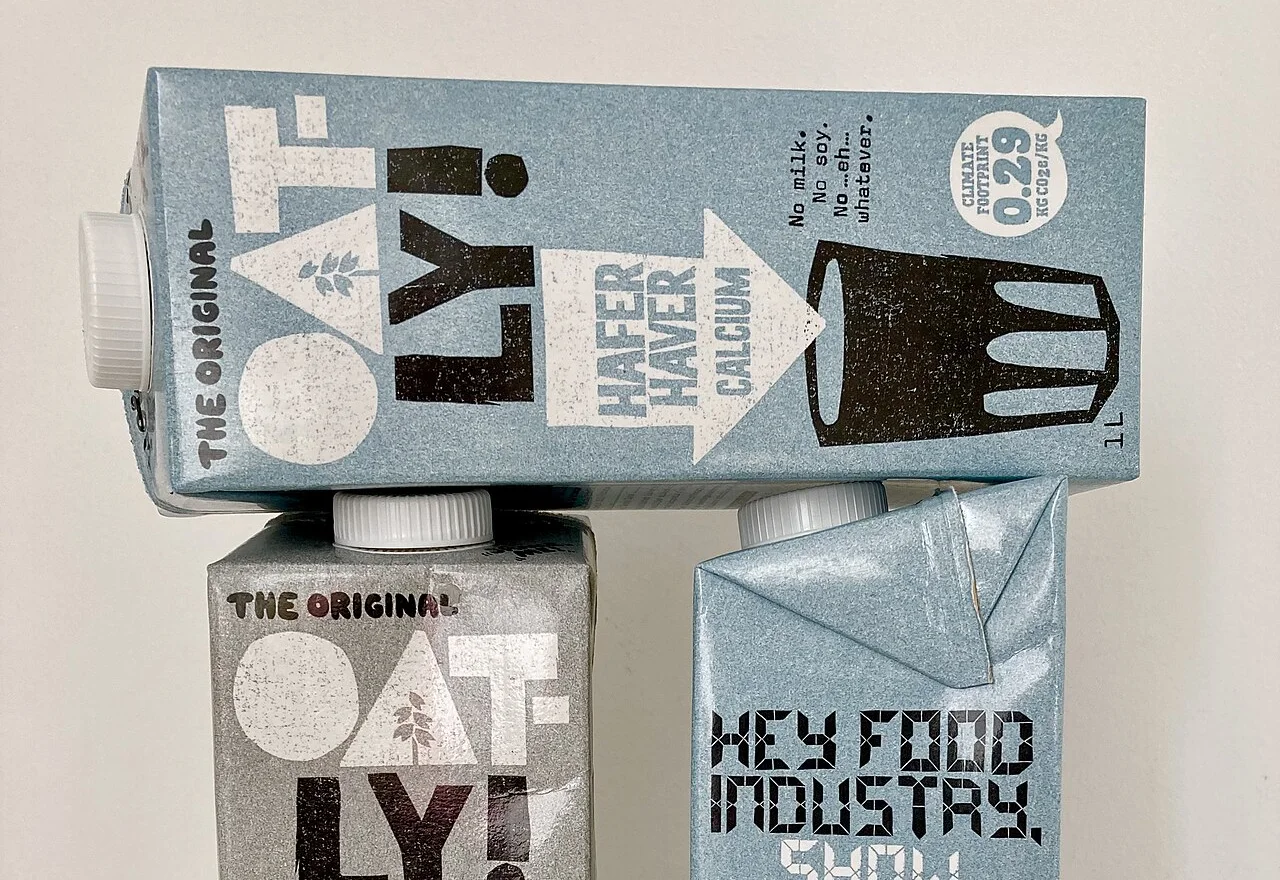
"Carbon neutral", by contrast, is not a comparison but a statement of a different kind, regulated separately, as our article on carbon neutrality explains. Without a reference, a scope and a figure, the statement is neither verifiable nor enforceable, and the directive also prohibits generic environmental claims that are not demonstrated, as our article on prohibited claims details.
2What does the law say about an environmental comparison?
No text prohibits comparing yourself. Several regulate how it is done, and they apply cumulatively within the French and European framework: the French Consumer Code, the EmpCo Directive and advertising ethics rules. A directive reaches companies through the national laws that transpose it, so EmpCo applies only in the Member States that have transposed it, and the French transposition has not yet been passed.
The French Consumer Code
Comparative advertising that identifies a competitor is lawful only if it is not misleading, concerns products that meet the same needs and compares objectively essential, relevant, verifiable and representative characteristics (Article L. 122-1). The advertiser must be able to prove the material accuracy of what it states within a short time (Article L. 122-5).
The same code prohibits including a comparative advertisement on packaging (Article L. 122-4). A comparison with a competitor is therefore reserved for advertising, the website or the point of sale. Any misleading comparison also falls under misleading commercial practices, punishable by 2 years' imprisonment and a €300,000 fine. The fine can reach 80% of the expenditure on the campaign for an environmental claim, as our article on enforcement and penalties details.
The EmpCo Directive
The directive lists environmental characteristics among those on which a trader may not mislead, and prohibits presenting as applying to the whole product a quality that concerns only part of it (Annex I, point 4b). Its recital 6 expects comparisons to concern products of the same function, using a common method and assumptions. A service that compares products must also state its method, the products and suppliers compared and how its data is kept up to date. The directive lists these items among the material information (Article 7(7) of Directive 2005/29, as amended).
Advertising ethics rules
The Sustainable Development recommendation of the Autorité de régulation professionnelle de la publicité (ARPP, the French advertising self-regulatory body) asks that any impact-reduction argument be precise, quantified and accompanied by the basis of comparison used (point 4.6). It also prohibits covering more life cycle stages or more impacts than can be justified (point 3.3). It is on these points that the JDP judged SNCF's 2 advertisements, in 2022 and again in 2025.
The TGV emits less on average, yet 2 advertisements saying so were ruled misleading
The 2 complaints, filed by the air transport federation, targeted the form of the comparison, not its meaning.
Opinion 878/22 · Published 5 December 2022
"Travelling by TGV means emitting 50 times less CO2 than by car and 80 times less than by plane"
What the jury noted
Not disputed. The official method for informing on transport emissions may be used as a basis.
Opinion 1047/25 · Published 25 March 2025, review request rejected
"Travel faster while polluting less" and "-95% of CO2 on average in France and to Europe"
What the jury noted
Not disputed. The TGV emits less CO2 on average than the car or the plane.
Neither of the 2 opinions disputes that the train emits less. They say what a comparison must show the reader: an average announced as such, the term compared, an accessible method and a stated scope. In 2022, the jury even accepted the official method for informing on transport emissions (opinion of December 2022), while noting that it excludes infrastructure.
An average must be announced as an average, and a reference must be named.
3What needs verifying in a comparison?
A comparison is reviewed like a study, because it is its summary. The reviewer starts from the published message and works back to the data, checking that every word of the message matches a documented choice in the study.
What the reviewer checks
The reviewer takes the elements of the opening tool and adds 1 that the message never shows, uncertainty:
- The function compared, or functional unit: 1 wash, 1 kilometre travelled, 1 year of use, and not 1 bottle against 1 bottle of a different size or concentration.
- The reference, named and dated, with evidence that it is representative of what the reader imagines when reading the message.
- The scope, meaning the life cycle stages covered, from raw material to end of life, and what is excluded.
- The indicators: climate alone, as in a carbon footprint assessment, or several impacts, and a check that no ignored indicator worsens sharply.
- The uncertainty, which tells whether the announced gap exceeds the margin of error of the data, and whether the ranking holds when the assumptions are changed.
- The source and date of the study, accessible to the public through a clear cross-reference, as the ARPP expects for an explanation that is too long.
The functional unit alone is enough to change the result, even to reverse its direction. In the constructed example below, a concentrated detergent contains less plastic per bottle, more per litre and less per wash. Only the last unit compares the same service delivered, and it is the one the message must cite.
The same detergent shows -50%, +50% or -25% of plastic depending on the unit chosen
Change the unit: only the comparison per wash compares the same service delivered.
Concentrated detergent
1 litre bottle, 60 g of plastic, 40 washes
Standard detergent
3 litre bottle, 120 g of plastic, 60 washes
Difference for the concentrated detergent, in g of plastic per bottle
-50%Indicators are the point that most often slips through. An electric car performs better on climate and worse on other impact categories, and a comparison that retains only CO2 must say so. ISO 14044 also prohibits weighting the indicators for a comparison disclosed to the public: the reader must see each impact.
A common method, when one exists
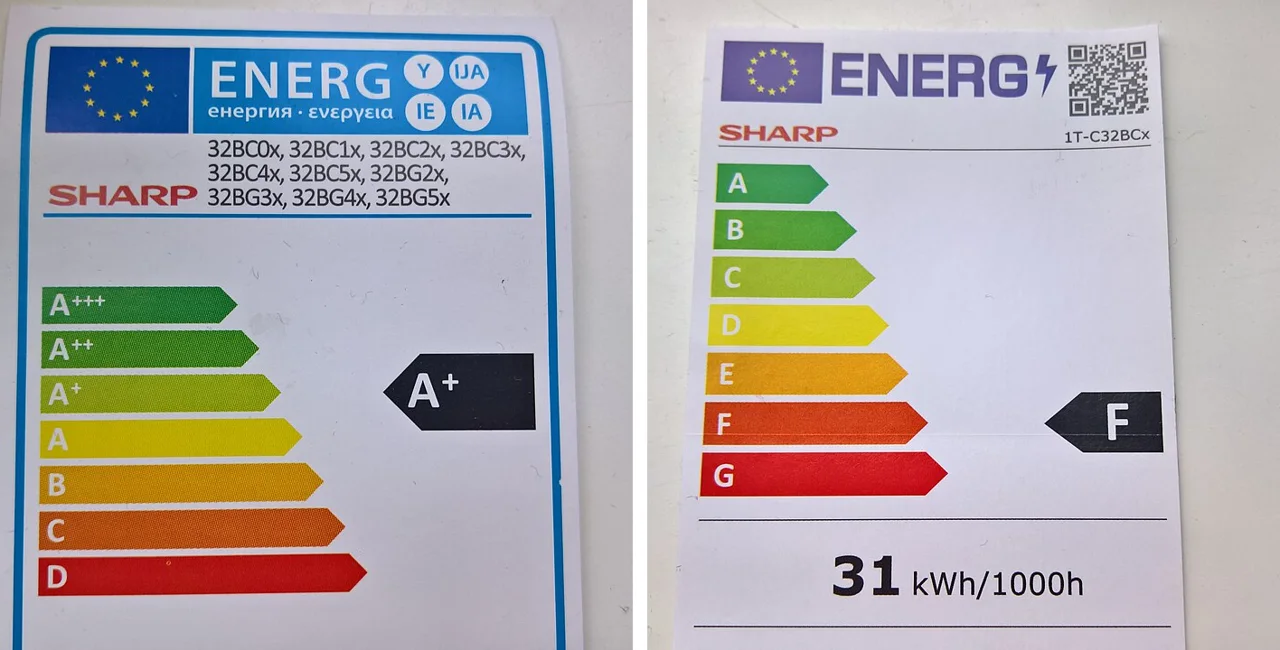
The soundest comparison uses the same method for the 2 products. The European Product Environmental Footprint (PEF) was designed for this, with rules by product category. In France, the environmental cost (coût environnemental) of clothing is calculated with the public tool Ecobalyse, and 2 scores obtained with the same version can be compared. Outside these frameworks, each study makes its own methodological choices, and 2 LCAs of the same product can diverge without either being wrong. A comparison between 2 different studies is valid only if their choices have been aligned and checked.
4Who can verify a comparison?
The rule that is not negotiable is independence: whoever carried out the study cannot verify it. For the rest, the right reviewer depends on how the message will be used, as the tool in our guide to critical review (in French) (in French) shows.
The critical review panel
When an LCA supports a comparative assertion disclosed to the public, ISO 14044 requires a review by a panel of interested parties of at least 3 members. This is the case for a "less polluting than" advertisement based on an LCA. Comparisons published with a panel often reach more nuanced conclusions than a slogan, as the 4 studies in our guide show.
The comparison reviewer
For a comparison with a previous version or an average, an outside expert reviews the study and the message together. The technical consultancy says what the evidence allows you to write, the lawyer gives the legal opinion and the ARPP gives an opinion before any television broadcast, for a company of any size, as our guide to the audit of claims details. 3 questions tell the reviewers apart:
- Have you already reviewed a published comparison, and can you show how you handled the reference and the functional unit?
- Do you review the final message, word by word, or only the study report that supports it?
- What do you do if the announced gap falls within the margin of uncertainty: ask for one more study, or propose a narrower sentence?
5How do you publish a comparison that holds up?
A comparison that holds up states its own limits. The main message carries the figure and the reference, and a clear cross-reference leads to the scope, the indicators and the study. The advertiser's website must show these elements at the moment the message is read, with no dead link, one of the criticisms made in 2025.
Rewording before publication
The most frequent rewordings narrow the message to what the study proves:
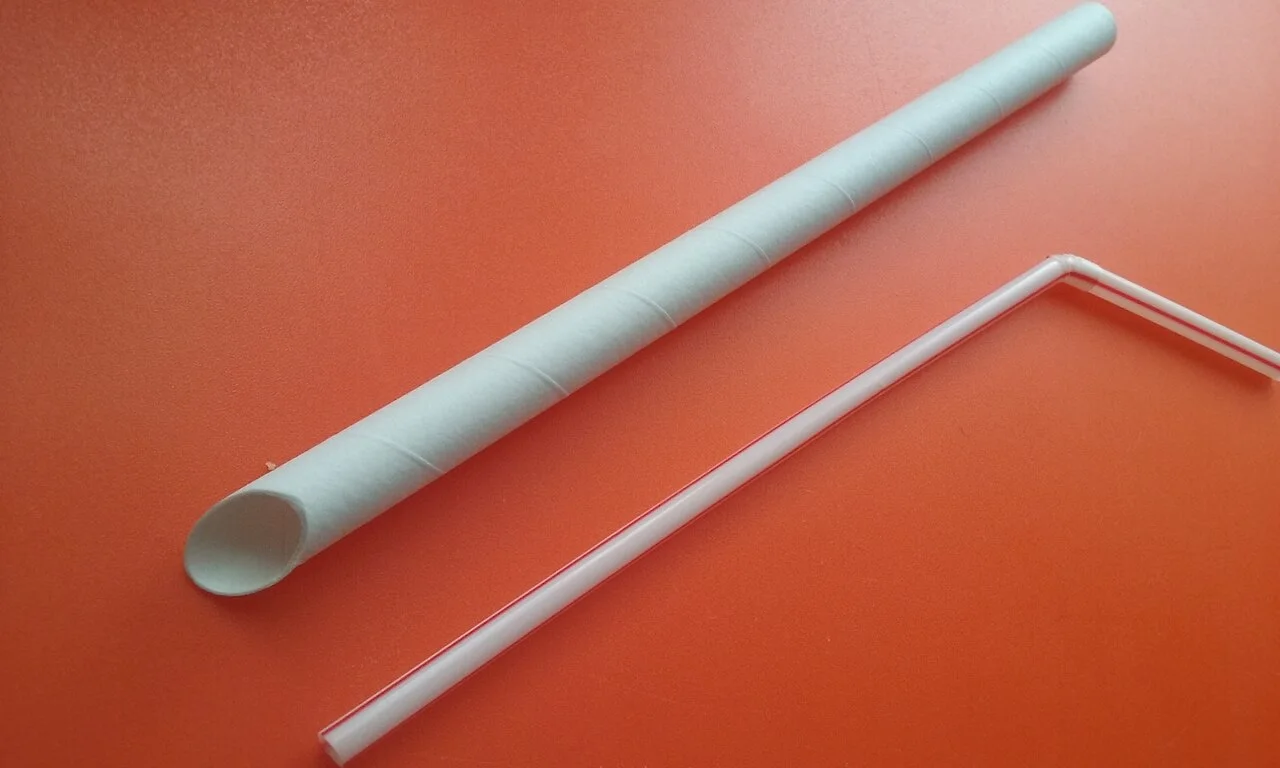
- "Less polluting" becomes "30% fewer greenhouse gas emissions per wash, compared with our 2023 detergent", with a link to the study.
- "80 times less than by plane" becomes an average announced as such, with the typical journey and what the method excludes.
- "The most environmentally friendly on the market" disappears, as a comparison with all competitors on all impacts cannot be proved.
- "Less plastic" keeps the percentage and the unit, at equal volume, and does not suggest a lower overall impact if the study measured only mass, a known pitfall of packaging eco-design.
Timeframe, price and updating
There is no public price list for a verification. For the review of an LCA, our guide to critical review (in French) (in French) gives an order of magnitude for the timeframe: 2 to 4 weeks for a single expert, several months for a panel. The cost depends mainly on the study to be produced: reviewing an existing LCA does not have the same scope as carrying out a first LCA, as our article on the cost of an LCA details. The timeframe follows the availability of data for the 2 products compared, and the comparison is updated when the reference, the product or the method changes.
The figure and its reference are written together in the message, and the details of the method can go through a cross-reference.
For us at Projet Celsius, the question to ask before publishing a comparison is "less than what, on what, and measured how?". A comparison that answers all 3 in the message has a good chance of standing up to an inspection, even when the gap is modest. We carry out comparative LCAs and review those of others, but we never verify a study we have carried out.
6Key takeaways
- A comparative claim is verified as a whole: figure, indicator, reference, function, scope, source and date.
- In France, a comparison with a competitor is prohibited on packaging and must be proved within a short time.
- The ARPP requires the basis of comparison next to the figure, and the JDP rules against averages that are not flagged.
- A comparative LCA disclosed to the public goes through a critical review panel, with no weighting of indicators.
- The reviewer is always external to the study, and the comparison is updated when the reference changes.
To test a sentence, the PIF method asks 3 questions; to build the evidence file, see how to substantiate a claim.
- European Parliament and Council, Directive (EU) 2024/825 of 28 February 2024, recital 6, Article 1 (Articles 6 and 7 of Directive 2005/29 as amended) and Annex, EUR-Lex.
- Code de la consommation (French Consumer Code), Articles L. 122-1 to L. 122-7 on comparative advertising, Légifrance. The Légifrance pages are in French.
- ARPP, Sustainable Development recommendation, version 3, points 2.3, 3.3 and 4.6.
- Jury de déontologie publicitaire, SNCF opinion 878/22, published on 5 December 2022.
- Jury de déontologie publicitaire, SNCF opinion 1047/25, published on 25 March 2025, request for review rejected.
- ISO 14044:2006, Environmental management, life cycle assessment, requirements and guidelines (critical review of comparative assertions).
- European Commission, Recommendation (EU) 2021/2279 on the use of the Environmental Footprint methods, EUR-Lex.


