
- 1No company is neutral: carbon neutrality makes sense only at planetary level.
- 2Since 2023, a "neutral" product in advertising requires an inventory, trajectory and published report.
- 3Once EmpCo is transposed, an offset-based "neutral" product will be banned in all circumstances.
- 4Figures, a date and a scope make a climate claim verifiable.
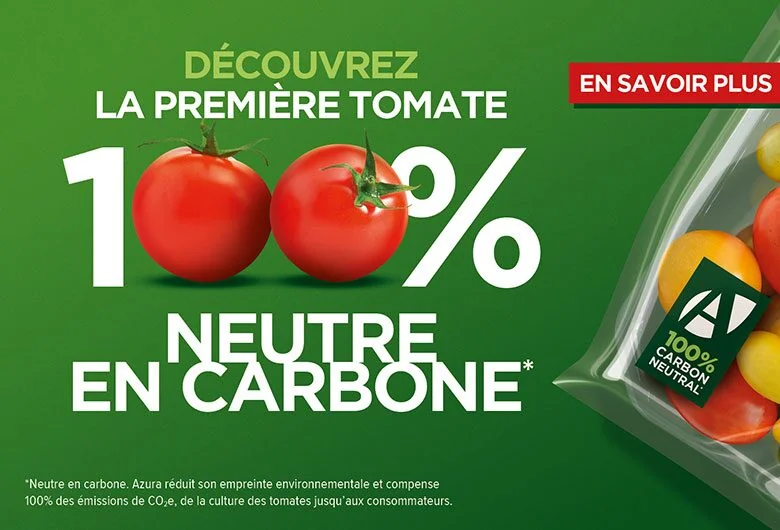
In 2021, "carbon neutral" appeared on company websites, email signatures and even bags of tomatoes. The framework has tightened since: France has regulated the claim in advertising since 1 January 2023, ADEME recommends that no actor claim neutrality, a court ruled TotalEnergies' climate communications misleading in October 2025, and the European EmpCo Directive has applied since 27 September 2026, even though France has not yet transposed it.
Many companies still display the wording, and they are not all in the same situation: everything depends on what the claim refers to, a product or the company, and what supports it, offsetting or measured reductions. In most cases, quantified wording can replace it.

1Can a company be carbon neutral?
Scientifically, no: carbon neutrality is an objective defined at planetary level by the Paris Agreement, a balance between greenhouse gases emitted by human activities and those absorbed by sinks, forests, soils, oceans or capture technologies. France targets this balance in 2050, through its national low-carbon strategy.
Why offsetting does not reset the counter to zero
A company declaring itself neutral generally performs a subtraction: its emissions minus the carbon credits it has bought, giving zero in its inventory. In the atmosphere, the 2 flows do not cancel each other out: the company's emissions have occurred, and a significant share of the CO2 emitted will remain there for centuries, whereas the credits represent either emissions avoided elsewhere or carbon absorbed over several decades by a forest that may burn in the meantime.
Credits fund reductions or removals elsewhere, which has real value for the climate, but they do not erase the company's emissions, which continue at the same pace.
Offset-based neutrality: the displayed calculation and its climate effect
A company emits 10,000 tCO2e in the year and buys 10,000 carbon credits.
Neutrality is measured at planetary level, when global emissions equal global removals: funding credits contributes without making the company neutral.
What ADEME and the frameworks recommend
ADEME has stated since 2021 that, at their own level, companies, local authorities and citizens are not, and cannot become, carbon neutral. It invites them to discuss their contribution to global carbon neutrality. Carbone 4's Net Zero Initiative framework takes the same approach and describes a company's role: contributing to neutrality by reducing its emissions, helping others reduce theirs and developing carbon sinks.
For ADEME, a company cannot call itself carbon neutral at its own level: it contributes to neutrality that can only be measured at planetary level.
2What French law has allowed since 2023
France has not banned the word: since 1 January 2023, the Climate and Resilience Act and an April 2022 decree have regulated it in advertising for a product or service. They cover "carbon neutral" and its variants: "zero carbon", "zero carbon footprint", "climate neutral", "fully offset" or "100% offset".
To use one of these phrases, the advertiser must publish a summary report, accessible through a link or QR code on the advertisement and packaging, containing 3 elements:
- An inventory of the product's emissions over its whole life cycle, from manufacture to end of life, updated annually.
- A reduction trajectory with quantified annual targets over at least 10 years.
- Arrangements for offsetting remaining emissions, with projects meeting minimum standards.
Otherwise, the administrative fine can reach €100,000 for a company, and may be increased to the total amount spent on the campaign. The regime is demanding, since the report commits the advertiser every year and its content can itself be challenged.
The company itself falls under general law
This regime targets only products and services. A sentence such as "our company is carbon neutral" on a website or brochure falls under the general law on misleading commercial practices, enforced by the DGCCRF. Penalties are heavier: a fine of up to €1.5 million for a company, which may be increased to 10% of its average annual turnover or 80% of advertising expenditure for certain environmental claims.
In July 2025, SHEIN agreed to pay €40 million for misleading practices, including an announced 25% emissions reduction without justification.
On 23 October 2025, the Paris Judicial Court also found misleading the way TotalEnergies presented its 2050 carbon neutrality ambition on its website, without specifying that the group was continuing to increase oil and gas production. The judgment concerns the gap between the stated objective and ongoing investment.
3What the EmpCo Directive changes from 27 September 2026
Directive (EU) 2024/825, known as EmpCo, amends European law on unfair commercial practices. Each country was required to transpose it before 27 March 2026, and it has applied since 27 September 2026. Its main contribution is a blacklist: practices prohibited in all circumstances, without judges having to demonstrate that they misled anyone.
Among these prohibitions, 4 directly concern climate claims:
- Claiming a product has a neutral, reduced or positive climate impact through offsetting. The "carbon-neutral" product based on buying credits therefore disappears, even with a report complying with the French 2023 regime.
- Using a generic environmental claim, classic greenwashing territory, such as "climate neutral" or "eco-responsible", without being able to demonstrate recognised excellent environmental performance.
- Displaying an in-house sustainability label based neither on third-party certification nor on a public authority.
- Presenting as valid for the entire company a claim concerning only part of its activity.
And at company level?
The offsetting-related ban targets products, including services. The FAQ published by the European Commission confirms this: offset-based neutrality at company level is not automatically prohibited, but 2 other rules make it highly vulnerable.
First, a "carbon neutral" statement without clarification on the same medium is a generic claim, therefore prohibited unless recognised excellent performance is demonstrated. Second, a future commitment, "neutral in 2030" or "net zero in 2040", must rely on a detailed, realistic plan, with measurable, dated targets, regularly verified by an independent expert whose findings are public.
In France, delayed transposition
France has not yet transposed EmpCo. The transposition bill, adopted by the Senate on 18 February 2026, awaits examination in the National Assembly; on 28 May 2026, the Commission sent a letter of formal notice to 20 Member States, including France. Until then, current French law applies, and judges already interpret it in the light of the Directive; the law may be adopted at any time.
This bill proposes abolishing the French 2023 regime in favour of European prohibitions and extending the penalty of 80% of advertising expenditure to all environmental claims. Our article on EmpCo's application timetable follows the text's progress, while our article on companies affected details the scope.
Carbon neutrality: what you can still say
The same wording is treated differently depending on whether it concerns a product, the company or funding.
4Labels, standards and carbon credits under EmpCo
Many companies feel covered because they have a label, certification or quality credits. These tools retain their value, but none makes a prohibited claim lawful.
In-house labels are prohibited
A "neutral" logo created by the company or a provider without certification by an independent third party is among the practices banned by EmpCo. Labels based on an open, monitored certification scheme, or established by a public authority, such as the EU Ecolabel, remain permitted.
The neutrality ISO standard guides the method without lifting the ban
ISO 14068, whose new version, being published in September 2026, is to replace the 2023 version, describes a serious approach: measure, prioritise reductions within the value chain, offset only residual emissions. It remains a sound methodological framework, but EmpCo's blacklist applies in all circumstances: an offset-based "neutral" product remains prohibited, even when certified under this standard.

Carbon credits can still be discussed as a contribution
Buying carbon credits remains legal, as does saying so. The Directive specifies that companies may publicise their investments in carbon credit projects provided they do not mislead: presenting them for what they are, a contribution to external projects, rather than cancelling their own emissions. In France, the Label Bas-Carbone allows funding of local projects certified by the state.
5What to say instead
A sound climate claim says what was measured, within what scope, what has been reduced since when, and points to evidence: a figure, a date, a scope, a source. It generally combines 3 types of statement, illustrated here with example figures:
- Measure: "Our 2025 emissions total 12,400 tCO2e, including scopes 1, 2 and 3, according to our Bilan Carbone® published on our website." The cost of a full assessment is often lower than imagined, and public funding can cover part of it.
- Reduce: "We reduced our sites' emissions by 28% between 2019 and 2025 and target -50% in 2030, on an SBTi-validated trajectory."
- Contribute: "In addition to our reductions, we funded 3,000 tCO2e of Label Bas-Carbone projects in 2025, without deducting them from our inventory."
For us at Projet Celsius, the best climate claim is one a competitor cannot copy unchanged, because it contains your figures, your scope and your date: "carbon neutral" can appear on anyone's poster, whereas "-28% at our sites since 2019" applies only to you.
6 common claims and their reformulation
The figures in these reformulations are examples: replace them with your own.
To check specific wording, our greenwashing test scrutinises a claim through a few questions, and our method for substantiating a claim details the evidence to gather. The reductions themselves are built from the inventory: reduction levers are found most often in purchases and scope 3.
6"Neutral" still appears on your materials: where to start
The wording often sits where nobody looks for it any more: a "Commitments" page written in 2021, a footer, a product sheet, a standard response to tenders, an email signature or a trade fair banner. Hence the value of a full inventory before any rewriting.
- Start by listing every occurrence across the website, packaging, product sheets, social media, sales presentations and tender responses.
- Then classify each claim according to whether it targets a product or the company, and whether or not it relies on offsetting.
- Remove offset-based product claims and in-house labels without delay: they have no future.
- Reformulate the rest with a figure, scope, date and link to evidence.
- Finally, archive supporting documents: inventory, trajectory, credit purchase and retirement certificates.
Business-to-business communications are affected too: EmpCo protects consumers, but a claim made to a business client often ends up on its website or packaging, and French law on misleading practices also protects professionals. If you prefer to delegate this review, our EmpCo compliance support handles it from start to finish. The PIF method helps identify risky wording before a third party does.
7Key takeaways
- Carbon neutrality is a planetary balance: at its own level, a company measures, reduces and contributes.
- Since 1 January 2023, a "neutral" product or service in advertising requires a published inventory, trajectory and report.
- Once EmpCo is transposed, an offset-based "neutral" product is prohibited in all circumstances, including with a label or standard.
- At company level, the claim is not prohibited in itself, but almost always falls under rules on generic claims and future commitments.
- A sound claim gives figures, a scope, a date and evidence, and presents credits as a contribution.
For the Directive itself, our EmpCo analysis details its content, and our environmental communications overview places these rules within the wider French and European framework.
- Carbon neutrality in advertising (France): Environmental Code, Articles L. 229-68 and L. 229-69; Decrees No 2022-538 and No 2022-539 of 13 April 2022, in force on 1 January 2023. service-public.fr factsheet; Ministry for Ecological Transition.
- EmpCo Directive: Directive (EU) 2024/825 of 28 February 2024, Annex I, points 2a, 4a, 4b and 4c, Article 6(2)(d), Recital 12; European Commission FAQ, questions 6 and 10.
- Transposition in France: DDADUE Bill No 118, Articles 20 and 21, adopted by the Senate on 18 February 2026; Commission letter of formal notice of 28 May 2026.
- Penalties for misleading practices: Consumer Code, Articles L. 121-1 et seq. and L. 132-2.
- Reference positions: ADEME, "Carbon neutrality" opinion (2021) and "Using carbon neutrality arguments in communications" (2022); Carbone 4, Net Zero Initiative framework (2020); ISO 14068:2026.
- Decisions cited: Paris Judicial Court, 23 October 2025, Greenpeace France and others v TotalEnergies (press release); DGCCRF, press release of 3 July 2025 (SHEIN).