
- 1ESPR does not depend on size: the Omnibus trap has not removed product requirements or scope 3 pressure.
- 2Mapping, supplier collection and an LCA cover ESPR, DPP, labelling and client scope 3 in one project.
- 3The declarant places the product on the EU market (brand or importer): establish this in two or three days of auditing.
- 4Starting now gives 18 months of steady progress, instead of six months sprinting against a deadline.
Seven European and French texts govern the environmental footprint of industrial products, with deadlines spanning 2025 to 2031. They are triggered by different criteria: ESPR depends on product type, CSRD on company size, BEGES on workforce in France. This mix of criteria, more than the number of texts, makes the landscape difficult to interpret, even for experienced legal teams.
The essentials at a glance
Seven acronyms, one mechanism: declare a footprint, substantiate it, make it verifiable.
EU framework regulation, ecodesign of all manufactured products
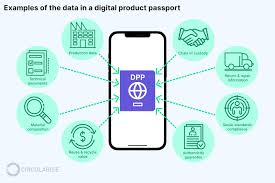
QR code on each product: composition, footprint, traceability
Corporate sustainability report, thresholds raised by Omnibus (1,000 employees)
Carbon border tax on steel, aluminium, cement, fertilisers
The seven texts rest on a common mechanism, applied sector by sector through delegated acts. This article gives definitions, the 2025-2030 timetable, classification points manufacturers most often get wrong and four actions to launch this week.
1The glossary before we begin
Seven acronyms for seven texts that refer to one another. The definitions below are used throughout the rest of the article.
The 7 regulations at a glance
Three boundaries, one common mechanism. Click to see who is affected.
Operator placing products on the European market
Mandatory QR code, access to data on composition, LCA, traceability and end of life.
ESPR (Ecodesign for Sustainable Products Regulation): the overarching regulation. It is the general framework saying "here are the rules to make products more sustainable", without yet specifying which products or when. Precise rules then arrive through delegated acts, sector by sector. It structures the rest of the agenda.
The six other texts sit around it:
- DPP (Digital Product Passport): a product’s electronic identity document, accessible through a QR code. Like the nutritional label on yoghurt, but for the environmental footprint. Industrial DPP guide
- CSRD (Corporate Sustainability Reporting Directive): the mandatory sustainability report for large companies. A key distinction: it operates at company level, rather than product level. CSRD guide for SMEs
- BEGES: the greenhouse gas emissions report, a French requirement since 2010 for companies with more than 500 employees. European Omnibus has not changed it: remember this point; we will return to it. BEGES guide
- Batteries Regulation (EU 2023/1542): the first sector to receive its complete product passport. It is ESPR’s full-scale pilot: everything developed for batteries will serve as a model for others. Complete guide
- Environmental labelling: a number of impact points displayed on the product, without a letter or colour. The scheme has been voluntary for textiles since October 2025
- CBAM (Carbon Border Adjustment Mechanism): the European "carbon tax" on imports of heavy materials (steel, aluminium, cement, fertilisers). In full application since January 2026
The seven texts ask for the same thing: declare an environmental footprint, support it with data and make it verifiable by a third party.
2ESPR: the overarching regulation structuring everything
Regulation (EU) 2024/1781, better known as ESPR, entered into force on 18 July 2024. It replaces the old 2009 Ecodesign Directive, which only covered energy-consuming appliances (the familiar A, B, C-labelled fridges). The change in scale is radical: eventually, almost every physical product placed on the European market may be governed by eco-design requirements.
But ESPR sets almost nothing itself. The text establishes the rules (vocabulary, methods, transitions, general requirements), then refers most of the detail to delegated acts published product family by product family. It follows the same logic as a highway code defining a "motor vehicle" without immediately specifying permissible speeds on each road type.
The same three requirements for every family
For every product family, the delegated act will set three things, always the same:
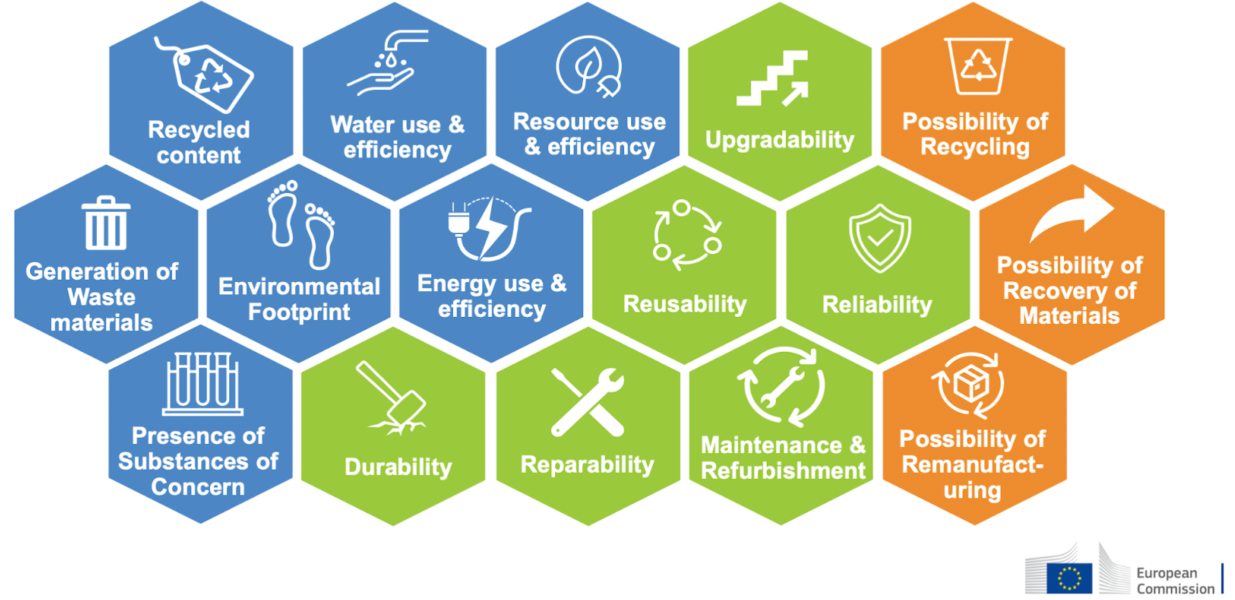
- Environmental performance requirements: durability, repairability, minimum recycled content, maximum carbon footprint
- A digital product passport (DPP) to carry these data and make them accessible
- Consumer information rules
This repeating mechanism makes ESPR predictable once understood in one sector. The approach applied to batteries in 2027 will appear for steel, textiles and furniture on their respective dates.
The 18-month rule (Article 4(4))
When a delegated act is adopted, it does not apply the next day. Article 4(4) of the Regulation requires a transition period of at least 18 months between adoption and entry into force. This is designed to give manufacturers time to collect data, adjust processes and have declarations verified.
This period is shorter than it appears. First data collection from a global supplier chain rarely takes less than four to six months. Modelling and third-party verification add several more months. Of the announced eighteen months, there is therefore rarely more than six months of actual margin. Several battery assemblers experienced this in 2024 and 2025.
3The six families already targeted
We have seen the mechanism. What remains is knowing who it applies to first. The European Commission adopted the ESPR 2025-2030 working plan on 16 April 2025. This document identifies the six priority families receiving delegated acts in the first wave. If your activity falls within one of these six, your preparation horizon is measured in months. If not, your turn will probably come after 2028.
The 6 priority families and their deadlines
ESPR working plan 2025-2030: 6 families, 18 months to comply with each delegated act.
Four families concern finished products, two key intermediates:
- Textiles and clothing - finished product, delegated act expected in 2027
- Furniture - finished product, delegated act expected in 2028
- Tyres - finished product, delegated act expected in 2027
- Mattresses - finished product, delegated act expected in 2029
- Iron and steel - key intermediate, delegated act expected in 2026
- Aluminium - key intermediate, delegated act expected in 2027
These six families are supplemented by two horizontal measures: a cross-cutting repairability requirement and a ban on destroying unsold textiles and footwear for large companies.
The Commission uses three criteria: high potential for environmental improvement, massive volumes on the European market and existing documented value chains (making data collection realistic in the short term). Steel and aluminium, for example, have footprint differences between primary and recycled versions of a factor of four to six: much can be gained, and European producers already engaged in decarbonisation actively pushed for these delegated acts.
The infographic below summarises the six families with their type (intermediate or finished product), expected delegated act date and likely application date. The application column gives the actual deadline: under the 18-month rule, the gap between delegated act adoption and application separates preparation from the effective requirement.
For sectors outside this first wave (ICT, consumer electronics, chemicals), we will see below that the second wave arrives after the 2028 mid-term review. This extra time does not remove the need to prepare: first-wave delegated acts will serve as models for the next ones, and collection work done for the battery DPP or ESPR textiles can be reused as it stands.
4The 2025-2030 timetable, window by window
The following section serves as a diary. The 2025-2030 horizon is divided into four time windows, each with key deadlines and points to watch. Work through them, identify those relevant to you and enter them in your calendar.
Regulatory timeline 2025-2031
The highlighted milestones have the greatest implications for manufacturers.
The timeline below gives an overview of deadlines. Each is explained in detail in the following subsections.
2025-2026: what already applies
The first window, and the most important to know: what is already under way in 2026. Five schemes must be monitored, mandatory or otherwise.
- EV batteries: the carbon footprint declaration was originally due to enter into force in February 2025, but the methodological delegated act (JRC CFB-EV rules) had still not been formally adopted as of 20 July 2026. Effective requirement expected in mid-2027 (12 months after adoption), JRC methodology, third-party verification. Article 7 of the Batteries Regulation 2023/1542 caught many companies off guard. To understand where to start: our battery LCA guide
- February 2026: original date for rechargeable industrial batteries >2 kWh (stationary storage, electric industrial machinery), also postponed to 18 months after the delegated act enters into force
- CSRD: first wave under way (large listed companies >500 employees, 2024 financial year), second wave postponed to the 2027 financial year and limited by Omnibus to companies with more than 1,000 employees and €450 million in turnover
- BEGES: still mandatory from 500 employees in France, with a transition plan mandatory since the 2023 Green Industry Law
- Textile environmental labelling: started in October 2025 voluntarily, with no requirement currently planned; since 1 October 2026, a third party may publish a product’s environmental cost without the manufacturer’s agreement
July 2026: the European registry and first DPP standards
Two technical milestones structure the DPP system’s launch. Implementing Regulation (EU) 2026/1778 of 16 July establishes the European digital product passport registry, launched online on 20 July 2026 (requirement under ESPR Article 13(1)). On 14 July, the Commission cites in the EU Official Journal the first six harmonised DPP standards published by CEN-CENELEC JTC 24 (EN 18216, 18219, 18220, 18221, 18222, 18223, Implementing Decision 2026/1736). These standards set the common technical container (exchange protocols, identifiers, data carriers, API, interoperability) but remain silent on the environmental calculation method, still to be determined by each sector delegated act. For a complete methodological overview (PEF versus ISO LCA, what is fixed and what remains open), see our explanation: which method to calculate a DPP.
2027: the pivotal year for DPP
The second window. 2027 is when the whole system becomes visible and enforceable in a strong sense. On 18 February 2027, the digital passport becomes mandatory for industrial batteries above 2 kWh and electric vehicle batteries. It is the first DPP across all product categories in the European Union. The Commission is testing the system on a pilot sector before extending it to others.
Also in 2027, the textile delegated act should be published, followed 18 months later by application (during 2028 or early 2029). Delegated acts for aluminium and tyres are also expected during 2027. And all European digital infrastructure (central registry, CEN/CENELEC interoperability standards, Battery Pass Consortium) must be operational by then.
2028: mid-term review and first carbon footprint ceiling
The third window. From 2028, several deadlines arrive almost simultaneously. For batteries, a maximum carbon footprint threshold will be imposed on EV batteries: the most carbon-intensive batteries will simply no longer be allowed onto the European market. It is the first footprint ceiling of this type in the Union. The median footprint of an NMC811 battery according to probabilistic modelling published in Nature Communications in late 2024 is 105 kgCO2e/kWh in China compared with 64 in Sweden for the same chemistry. When the threshold falls between the two, some Asian manufacturing chains will have to decarbonise or lose access to the European market.
Also in 2028, several other deadlines arrive in parallel:
- August 2028: mandatory carbon footprint declaration for light means of transport batteries (scooters, electric bicycles)
- 2028: mandatory declaration of recycled content rates for batteries
- Furniture delegated act expected during 2028
- Mid-term review of the ESPR working plan: probable addition of ICT, consumer electronics, chemicals and lubricants (2030-2035 period)
2029-2031: mattresses, recycled content and the second wave
The fourth and final window. The mattress delegated act arrives in 2029. For batteries, two minimum recycled content milestones come into play: the first in August 2031 with 16% recycled cobalt, 85% lead, 6% lithium and 6% nickel. These rates assume a genuinely operational European recycling sector, still far from the case in 2026. Manufacturers that have not secured certified recycled material supplies by these dates will be in breach, with a real risk of a ban on placing products on the market.
This is also when the first delegated acts arising from the 2028 mid-term review arrive (ICT, chemicals, lubricants), with application spanning 2031 to 2035. For manufacturers in these sectors, the preparation window exceeds five years.
5The February 2026 Omnibus and its traps
With this timetable in mind, one recent event remains that confused many companies and needs separate treatment: the Omnibus package. It was adopted by the Council of the European Union on 24 February 2026 and published in the Official Journal on 26 February. It fundamentally changes the scope of the CSRD and the due diligence directive (CSDDD). Three changes should be remembered.
- The CSRD threshold rose substantially. Only companies with more than 1,000 employees and €450 million in net turnover are now covered. Listed SMEs are fully exempt. The direct scope was reduced by around 85%
- The new rules apply to financial years from 1 January 2027, therefore to first reports published in 2028
- French BEGES has not changed. It remains mandatory from 500 employees in mainland France
A direct consequence: a significant number of companies are now outside the CSRD but still within BEGES. Many eased their CSRD effort believing carbon was no longer an issue either. BEGES remains relevant as a separate requirement and continues to include a mandatory transition plan with quantified targets since 2023.
The cascade effect already reaching SMEs
The second effect is indirect: pressure through the value chain. When a major purchasing organisation publishes its sustainability report, it needs supplier carbon data to calculate scope 3. We receive increasing requests from SMEs whose principal client requires product carbon data, because the client is directly covered even though the SME itself is not.
Even after Omnibus, purchasing organisations remaining in scope will continue requesting these data from their entire supply chain. For an industrial SME, the useful question becomes its clients’ scope, rather than its own. Omnibus reduced the number of directly covered companies without reducing the volume of data requested upstream.
6Who is responsible: you or your supplier?
All the requirements we have seen designate someone responsible. A classification error here can cause a year’s delay.
Are you the declaring operator?
3 questions to identify your responsibility under the ESPR.
For battery carbon footprints and the future DPP, the operator placing the product on the European market is responsible, rather than the upstream cell manufacturer. If your company assembles battery packs from cells bought from a Korean or Chinese manufacturer, you must produce the declaration and passport, rather than your cell supplier.
We saw European assemblers discover in early 2025 that they, rather than CATL or Samsung SDI, had to produce the declaration. The same rule will apply to every ESPR delegated act:
- Importer of textiles manufactured in Asia? You are the declarant
- Furniture assembler using imported panels? It is you
- Placing a fabricated steel product on the European market? It is you
The common foundation of the seven texts
These seven texts, their timetables and their distinct declarants converge on the same preparation work.
Whatever the text, preparation follows the same three stages, in the same order:
- Map your value chain: critical suppliers, raw material origins, processing locations and transport modes
- Collect environmental data, primary for processes you control, secondary for the rest: energy consumed, materials used and distances
- Model using a recognised methodology: Ecobalyse environmental cost (derived from PEF) for environmental labelling, ISO 14040 LCA for voluntary eco-design, JRC methodology for batteries, ESRS for CSRD, all very similar in their underlying logic
This makes the project manageable. Mapping and collection work done for the battery DPP in 2026 will also serve textile environmental labelling, voluntary since 2025, a steel product’s carbon declaration in 2028 and any client CSRD scope 3 in parallel. A well-executed product life cycle assessment covers four future requirements. This is precisely why it is better to launch it calmly now than under pressure from a newly published delegated act.
One well-executed product LCA covers four requirements: ESPR, DPP, environmental labelling and client scope 3.
7Four actions to launch this week
You now have all the context. What remains is turning it into an action plan. Here are the four stages we recommend to manufacturers starting out. They are designed to be carried out in order, each creating the conditions for the next. Click a stage below to reveal the detail.
4 steps to get started
The first takes 30 minutes, the last builds a lasting asset. Click a step to see the details.
8Key takeaways
Seven regulations, one project. ESPR structures the framework, delegated acts set sector-by-sector rules and the timetable accelerates from 2027. The good news: work can be shared; one well-executed product LCA covers four future requirements.
- ESPR does not depend on company size. The Omnibus trap has not removed product requirements: French BEGES and purchasing organisations’ scope 3 pressure continue to grow.
- Mapping + supplier collection + a first LCA cover ESPR, DPP, environmental labelling and client scope 3 in one project.
- The declarant places the product on the EU market: under your brand or as an importer. Establish this in 2-3 days of legal auditing, rather than 6 months before the deadline.
- Starting now changes the horizon: 18 months of steady progress instead of 6 months sprinting. Those waiting for the delegated act will arrive late.
9Sources and reference texts
The information in this article comes from official texts and verified institutional sources:
- ESPR Regulation (EU) 2024/1781 of 13 June 2024, published in the EU Official Journal on 28 June 2024, entered into force on 18 July 2024
- ESPR 2025-2030 working plan, adopted by the European Commission on 16 April 2025 (COM(2025) 187 final)
- Batteries Regulation (EU) 2023/1542 of 12 July 2023, entered into force on 17 August 2023
- CSRD Directive (EU) 2022/2464 of 14 December 2022, amended by the Omnibus package adopted by the Council on 24 February 2026
- Green Industry Law No. 2023-973 of 23 October 2023 (strengthening BEGES and mandatory transition plan)
- JRC methodology for calculating battery carbon footprints, European Commission, Joint Research Centre
- Nature Communications meta-analysis (2024) - NMC811 battery carbon footprint by production geography (105 kgCO₂e/kWh China vs 64 Sweden)
- Textiles and footwear PEFCR v3.1, approved May 2025, distinct from the French environmental labelling method