
- 1Textiles voluntary since October 2025, food voluntary since May 2026, furniture under development, no dated obligation.
- 2PEF method with 16 indicators, adjusted in France by a specific durability coefficient.
- 3Initial scoring between €10,000 and €50,000 excl. VAT depending on sector and portfolio size.
- 4Free public Ecobalyse tool, but the real cost lies in data reliability.
Overview 2026 - 2030
A single score per product, rolled out sector by sector
Textiles have been voluntary since October 2025, food since May 2026. Furniture is preparing its method; no obligation is dated.
In this guide: what the score really covers, the detailed sector timetable, actual costs (and amounts payable after funding), and where to start in practice according to your profile.
Environmental labelling changed in nature in 2026. It is no longer a theoretical project promoted by a few pioneering manufacturers, but an operational reality rolling out sector by sector. Textiles have been regulated since October 2025, on a voluntary basis, and their transitional protections ended on 1 October 2026. Furniture awaits an initial proposed method by late 2026. Food has had a public method for voluntary use since May 2026, cosmetics has no public method, and the European ESPR Regulation progressively sets ecodesign requirements for most physical goods. The question is no longer "will this happen?" but "when does it affect me?".
1What exactly are we talking about?
Environmental labelling means communicating a single, standardised environmental score to consumers on manufacturers’ and distributors’ products, voluntarily at present. The simplest analogy: Nutri-Score for food, energy labels for household appliances. The logic is the same - make complex information readable at the point of purchase - but the scope covered is much wider.
The 16 PEF indicators in 3 blocks
- Climate and energy: climate change, ozone layer depletion, ionising radiation, fossil resource depletion. The "carbon" block in a broad sense, the most discussed, but the climate category alone accounts for 21% of textile environmental cost weighting, and the entire block around 37%.
- Water, soils, ecosystems: acidification, eutrophication (freshwater, marine, terrestrial), ecotoxicity, land use, water use. The block always underestimated at the outset - often outweighing carbon for agricultural, cosmetics and textile products.
- Resources and toxicity: particulate matter, human toxicity (cancer and non-cancer), photochemical ozone formation, mineral resource depletion. The block affecting particle-emitting and metal-intensive products; both human toxicities are calculated but weighted at 0% in textile environmental cost.
Three building blocks to remember when starting:
- The PEF method (Product Environmental Footprint): the European calculation framework, adopted and adjusted in France. Environmental cost uses its 16 impact categories (climate change, water consumption, eutrophication, ecotoxicity, resource depletion), reweighted (human toxicities at 0%, stronger ecotoxicity weighting), plus 2 additions outside LCA for textiles (exports outside Europe, microfibres), in a single score per product. Beyond carbon alone: that is its strength and complexity.
- The French durability coefficient: the French characteristic introduced by the Order of 6 September 2025 for textiles. It adjusts environmental cost through non-physical durability criteria linked to the brand’s business model, such as range breadth and repair incentives: cost falls for responsible brands and rises for ultra fast-fashion. The scheme encourages ecodesign broadly, beyond raw material optimisation alone.
- Calculation tools: Ecobalyse for textiles (free, public government tool), also carrying the food method and furniture method under development; Eco-meuble (FCBA, paid) remains furniture LCA software without regulatory status.
A point to clarify now to avoid confusion: environmental labelling is not the Digital Product Passport (DPP). The score is intended for consumers on the shop floor. The DPP is a comprehensive digital file, also intended for market surveillance authorities, repairers and recyclers. The source data overlaps considerably - it all comes from an LCA - but the format and audience differ.
The 16 PEF indicators at a glance
When discussing PEF, we mean 16 impact categories aggregated into a single score. Three blocks explain where a product’s footprint really comes from:
- Climate and energy: climate change, ozone layer depletion, ionising radiation, fossil resource depletion. The "carbon" block in a broad sense, the most discussed, but the climate category alone accounts for 21% of textile environmental cost weighting, and the entire block around 37%.
- Water, soils, ecosystems: acidification, eutrophication (freshwater, marine, terrestrial), ecotoxicity, land use, water use. The block always underestimated at the outset - often outweighing carbon for agricultural, cosmetics and textile products.
- Resources and toxicity: particulate matter, human toxicity (cancer and non-cancer), photochemical ozone formation, mineral resource depletion. The block affecting particle-emitting and metal-intensive products; both human toxicities are calculated but weighted at 0% in textile environmental cost.
PEF’s comprehensiveness makes the method robust against impact shifting (reducing one category while worsening another). It also makes it data-intensive: serious scoring requires supplier traceability that most brands currently understand only partially.
2Who is affected and by what deadline?
Rollout is progressive, sector by sector. Here is the situation in 2026, with dates that may still shift slightly as implementing decrees emerge, but a trajectory now established.
Sector timetable 2026 - 2030
Where does your sector stand?
Textiles and clothing: voluntary since October 2025
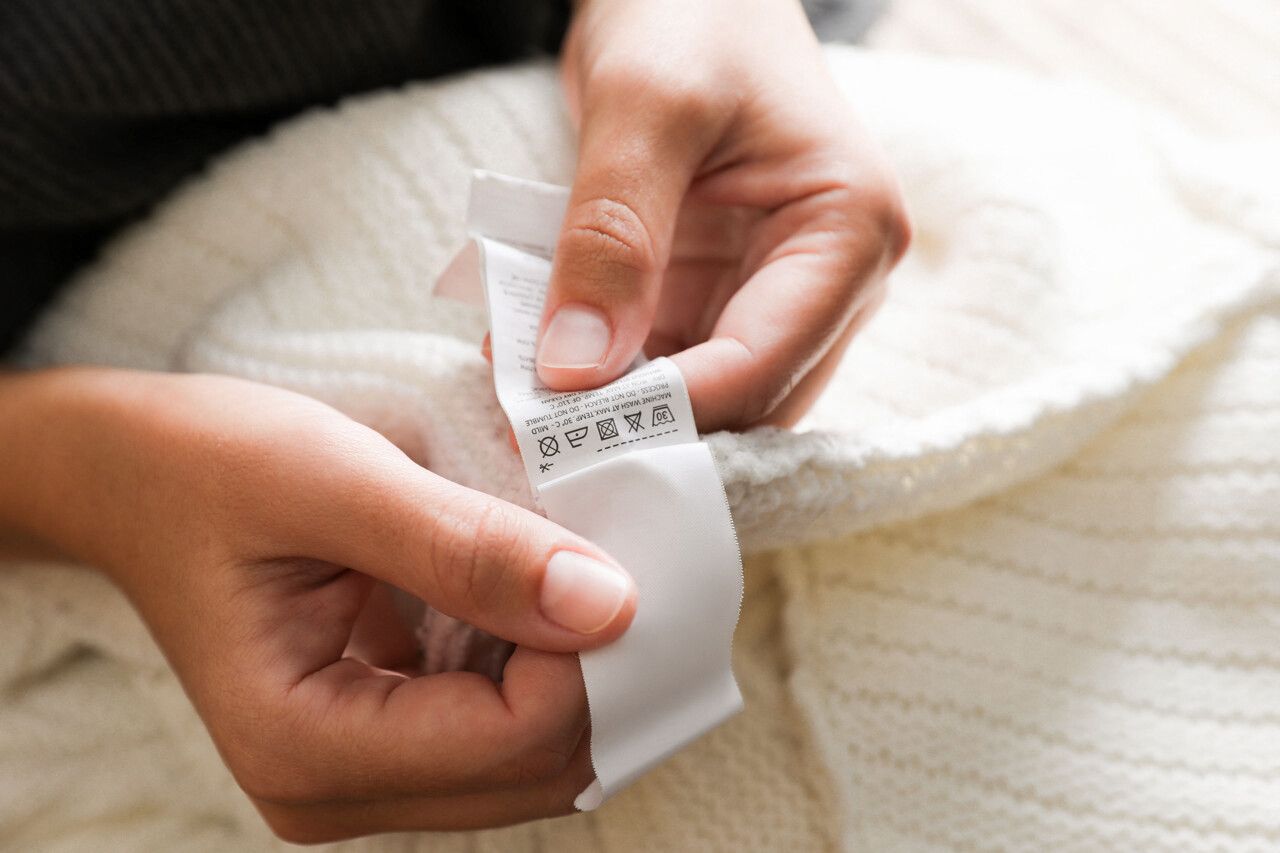
The first regulated sector, on a voluntary basis. The decree does not require anyone to display a score, but sets rules for those who do and opened up third-party publication on 1 October 2026. It covers all companies selling new clothing (or remanufactured clothing) in France, including foreign brands selling on the French market. Excluded from the scheme are footwear, household linen, single-use textiles and clothing incorporating electronic components (they remain within the forthcoming European ESPR scope). Decree No 2025-957 of 6 September 2025 has been published, the timetable is established, and since 1 October 2026, anyone can publish your score in your place if you have not done it yourself, after submitting their calculation to the official portal - and the result will often be unfavourable, through penalising default values for optional parameters. The message for latecomers is blunt but clear: in 2026, silence no longer protects, it exposes!
Operational details, how the durability coefficient works, pitfalls to avoid: see the dedicated textile guide.
Furniture: method expected in late 2026
The second sector in line. It covers manufacturers, distributors and importers of furniture, mattresses, sofas, tables and furnishing articles sold in France. ADEME ran trials from 10 March to 19 June 2026 on a French method built in Ecobalyse and expects an initial methodological proposal by late 2026, with no regulatory text to date - both an opportunity (getting ahead) and a risk (last-minute rush with overloaded suppliers).
Furniture method, Ecobalyse versus Eco-meuble trade-off, Bpifrance funding: see the dedicated furniture guide.
Food: under experimentation
The sector is not subject to an obligation. The public food labelling method was stabilised on 13 May 2026 in Ecobalyse: 16 PEF indicators, 4 additions covering ecosystem services (hedges, permanent grassland, plot size, territorial diversity) that can account for up to 30% of the score, Agribalyse 3.2 data. Its use is voluntary, without a decree or order; Planet-Score and Eco-score remain private scores. Technical trade-offs - how to incorporate seasonality, variability in agricultural practices, labels (organic, HVE, AOP) - make standardisation more complex than for manufactured products.
- What we know: the method exists, the score is expressed in impact points, and labelling is voluntary.
- What we still do not know: the timetable for a possible obligation, announced by no text to date.
- What we recommend: start a pilot product now to calibrate data collection and identify significant sources, rather than waiting for a text to discover you lack the data.
Cosmetics: European PEFCR being piloted
Cosmetics follows a European rather than French timetable. PEFCR Cosmetics has been led by Cosmetics Europe and the European Commission’s JRC since 2023. The v2 pilot phase concluded in late 2024, but no public cosmetics labelling timetable exists, and cosmetics does not feature in the ESPR 2025-2030 work plan. Brands anticipating their cosmetics ecodesign naturally align with what will be required.
Buildings: a dedicated version through RE2020
Buildings have their own environmental labelling format through RE2020, which has required a statutory LCA for new construction since 2022, with carbon thresholds tightening until 2031. No label visible on a shop floor as for consumer products, but a mandatory assessment framework for project owners. Different logic, identical purpose.
Household appliances, electronics, manufactured goods: through European ESPR
The European ESPR Regulation (Ecodesign for Sustainable Products Regulation), which entered into force in July 2024, sets ecodesign and information requirements, including the Digital Product Passport, for most physical goods sold in the EU. Rollout uses delegated acts category by category, beginning with iron and steel, textiles, tyres and aluminium, then furniture and mattresses. The overall horizon: 2027-2030 for most categories identified as priorities.
The case of private purchasing organisations
An often underestimated point in strategic thinking: private purchasing organisations do not wait for decrees. Brands launch their scoring because a distributor (mass retail, premium e-commerce, umbrella brands) requires it to maintain listings, rather than because of regulatory constraints. When B2B customers already request the score, the legal obligation has already arrived - just in an unexpected form. This quiet mechanism moves faster than publications in the Official Journal.
The question is no longer "will this happen?" It has become "when does my sector shift, and do I have the data to keep up?"
3How much it costs by sector
Orders of magnitude vary with sector, product portfolio size and above all supplier data maturity. Here are the market ranges observed in 2026.
Costs by sector
€10,000 to €50,000 gross; Diag Éco-conception covers 18 days of support, with €5,400 or €7,200 payable
| Sector | Gross cost excl. VAT | Bpifrance funding | Diag amount payable | Duration |
|---|---|---|---|---|
| Textiles | €10,000 - €25,000 | Diag Éco-conception, 18 days (60-70%) | €5,400 or €7,200 | 2-4 months |
| Furniture | €10,000 - €30,000 | Diag Éco-conception, 18 days (60-70%) | €5,400 or €7,200 | 3-5 months |
| Food | €15,000 - €50,000 | Diag Éco-conception, 18 days (60-70%) | €5,400 or €7,200 | 4-8 months |
| Cosmetics | €10,000 - €30,000 | Diag Éco-conception, 18 days (60-70%) | €5,400 or €7,200 | 3-5 months |
Recommended pilot product: €5,000 - €15,000 excl. VAT to calibrate the method before rolling out across the catalogue.
Textiles
For a brand with 10 to 50 product references, allow €10,000 to €25,000 excl. VAT and 2 to 4 months for initial full scoring, including expert support. Ecobalyse is free, but making supplier data reliable (exact composition, origin, dyeing and finishing processes) accounts for around 70% of the budget. A pilot product at €5,000 to €10,000 excl. VAT is the right first step to calibrate before rollout.
Furniture
A comparable range: €10,000 to €30,000 excl. VAT for scoring 10 to 50 product references, over 3 to 5 months. The sector’s characteristic: the diversity of materials per furniture item (wood, foam, springs, textiles, metal, electronics for convertible furniture) multiplies data collection. Bpifrance Diag Éco-conception funds 60 to 70% of an 18-day fixed-price support assignment for a first approach (amount payable €5,400 or €7,200 excl. VAT).
Food
More complex: €15,000 to €50,000 excl. VAT depending on product type and agricultural supply chain length. A plain yoghurt has few components but requires tracing back to the agricultural practices behind the milk. A ready meal multiplies ingredients, each with its own supply chain to trace. A pilot product at €8,000 to €15,000 excl. VAT calibrates the effort before rolling out across the range.
Cosmetics
€10,000 to €30,000 excl. VAT for PEF scoring of a few product references, using PEFCR Cosmetics as the framework. Primary data to collect: full composition, ingredient origins (especially surfactants and vegetable oils), detailed packaging, use scenario (rinse-off versus leave-on, frequency, dose per application). A similar budget to textiles for equivalent scope.
Available funding
Three main schemes to know, each with its own starting point:
- Bpifrance Diag Décarbon'Action: 40% funding for a first Bilan Carbone® + action plan, leaving €6,000 excl. VAT payable. The general framework for starting a climate approach, useful as a foundation before product scoring. Details in the dedicated guide.
- Bpifrance Diag Éco-conception: specific to product ecodesign and environmental scoring. Funding of 60 to 70%, amount payable €5,400 to €7,200 excl. VAT depending on company size.
- Regional ADEME funding: some territories offer specific schemes for ecodesign and ecological transition. Check with your regional ADEME directorate.
4What it brings beyond compliance
Most brands experience environmental labelling as a constraint. Understandably - nobody welcomes a compliance cost. But the exercise brings three secondary benefits often exceeding the cost of scoring itself.

- Actual value chain mapping: brands discover through scoring that 40% of their impact comes from a tier 2 supplier whose existence they did not know about. This mapping has strategic value far beyond the displayed score.
- An operational optimisation lever: a process change improving the score and reducing costs simultaneously. Common in textile dyeing, cosmetics packaging and furniture foam choices. The score becomes the trigger; operational savings, the real gain.
- Early competitive advantage: brands already mastering the calculation have a 12 to 18-month lead over those starting under pressure. Private purchasing organisations increasingly examine this indicator for their listings.
Some brands discover, when carrying out their PEF, that 40% of their impact comes from a tier 2 supplier whose existence they did not know about.
A concrete case of indirect ROI
Example of a textile SME with around a hundred product references. Initial objective: display environmental cost under the September 2025 decree for a pilot range of 15 references. Announced budget: €22,000 excl. VAT. What emerged at the end of the assignment: scoring revealed that 35% of the footprint came from a specific dyeing process at a Turkish subcontractor, a process the purchasing team knew about but had never raised at strategic level. Changing workshops (same region, same unit cost, less resource-intensive technique) reduced the score by 22% across the pilot range - and, as a side effect, aligned the brand with the requirements of a premium distributor hesitating to renew its listing. Scoring became the quantified evidence that saved a six-figure annual revenue stream.
This kind of return is common. The business value of scoring regularly exceeds the cost of scoring from the first iteration, provided it is used as a decision-making tool rather than archived as a compliance document. The difference between the two approaches lies in the initial scoping.
5Where to start according to your profile
Three typical profiles, three distinct starting points. Identify yours and adapt the sequence.
Where to start
3 profiles, 3 action sequences - find yours
- 1Pilot product (1-3 references, months 1-2)
- 280/20 rollout (months 3-4)
- 3Catalogue + ecodesign (months 5-6)
- 4Process integration (months 6-12)
- 1Strategic pilot product (3-6 months)
- 2Supplier data structuring (6-12 months)
- 3Voluntary full scoring (12-24 months)
- 1Organisational Bilan Carbone® (climate foundation)
- 2Monitor ESPR delegated acts
- 3Product scoring when a method is published
Profile 1: you are in a regulated sector or one being prepared (textiles or furniture)
The urgency is structural. Your framework is established or nearly so, tools exist, and competitors who have started already have a 12 to 18-month lead. The recommended sequence:
- Months 1 to 2: pilot product covering 1 to 3 representative references to calibrate effort and identify significant sources.
- Months 3 to 4: rollout across the 10 to 30% of references representing 80% of sales volume (Pareto principle).
- Months 5 to 6: score the rest of the catalogue + optimise the worst-scoring references through ecodesign.
- Months 6 to 12: settle the tool into internal use, automate, incorporate it into the product development process (upstream, rather than at the end).
Profile 2: you are in a sector under experimentation (food, cosmetics)
No obligation is announced, but methods are progressing. The pace is more flexible, providing an opportunity to incorporate the exercise into your quality plan on your terms:
- Phase 1 (3 to 6 months): pilot product covering your most strategic reference. Objective: understand how it works, calibrate collection effort, identify ecodesign levers.
- Phase 2 (6 to 12 months): structure supplier data across the entire strategic catalogue. This is the real foundational work, and the most time-consuming.
- Phase 3 (12 to 24 months): voluntarily roll out full scoring, to be ready if a regulatory framework is published.
Profile 3: you are in no sector affected in the short term
You can wait - but systematically. Two risks to monitor:
- Cascade effect through B2B customers: if your product is incorporated into a final product in scope (for example, you sell fabric to a clothing brand), customers will request your data. Better to prepare 12 months ahead than discover the requirement in a tender.
- ESPR cascade: the European regulation will extend the logic category by category through successive delegated acts. The quiet window only lasts until the next delegated act for your sector.
The right approach for this profile: start with an organisational Bilan Carbone® as the first climate building block. This is the data foundation for subsequent product scoring - never wasted time, since other obligations (CSRD, customer requirements) demand it sooner or later.
6Pitfalls to avoid when starting
Five recurring errors emerge from initial sector rollouts. None is fatal, but each costs three to six months.
The 5 pitfalls to avoid
- Starting with the score before scoping: some brands rush to Ecobalyse or a consultancy without stabilising their product bill of materials, supplier base or functional unit. Scoring produces figures, then they discover references cannot be compared. Scope first, score afterwards.
- Underestimating supplier collection: 70 to 80% of an assignment’s time goes into improving upstream data reliability. Brands cutting this work to move quickly end up with a fragile, disputable score unusable in communications. A false economy.
- Confusing PEF and Bilan Carbone®: they measure different things, cover different scopes and produce different deliverables. An organisational Bilan Carbone® does not remove the need for product scoring. Product scoring does not replace an organisational Bilan Carbone®. Both are necessary, ideally in that order.
- Wanting to score everything at once: tempting for a large catalogue. The reality: you learn through scoring, and a failed €5,000 pilot is better than a failed €50,000 rollout. The right pace is iterative.
- Communicating before optimising: displaying a mediocre score "for transparency" has a reputational cost often exceeding the image benefit. Score, optimise the worst-rated references, then communicate. In that order.
- Starting with the score before scoping: some brands rush to Ecobalyse or a consultancy without stabilising their product bill of materials, supplier base or functional unit. Scoring produces figures, then they discover references cannot be compared. Scope first, score afterwards.
- Underestimating supplier collection: 70 to 80% of an assignment’s time goes into improving upstream data reliability. Brands cutting this work to move quickly end up with a fragile, disputable score unusable in communications. A false economy.
- Confusing PEF and Bilan Carbone®: they measure different things, cover different scopes and produce different deliverables. An organisational Bilan Carbone® does not remove the need for product scoring. Product scoring does not replace an organisational Bilan Carbone®. Both are necessary, ideally in that order.
- Wanting to score everything at once: tempting for a large catalogue. The reality: you learn through scoring, and a failed €5,000 pilot is better than a failed €50,000 rollout. The right pace is iterative.
- Communicating before optimising: displaying a mediocre score "for transparency" has a reputational cost often exceeding the image benefit. Score, optimise the worst-rated references, then communicate. In that order.
A simple benchmark for testing scoring quality at the end of an assignment: if your first exercise taught you nothing about your value chain, it was poorly scoped. Good scoring consistently reveals two to three operational surprises - often tier 2 suppliers, sometimes processes thought marginal, sometimes sources underestimated for lack of data. This gap between internal perception and measurement creates the project’s value beyond the displayed figure.
7Key takeaways
Environmental labelling changed in nature in 2026. It is no longer a forward-looking project, but an operational reality rolling out sector by sector at a now-readable pace.
Environmental labelling checklist
- Textiles voluntary since Oct. 2025, food voluntary since May 2026, furniture under development: no obligation is dated, but the direction is clear.
- The PEF method (16 indicators) provides a common basis, reweighted in France and adjusted by a specific durability coefficient.
- Costs lie between €10,000 and €50,000 excl. VAT depending on sector and scope. Bpifrance Diag Éco-conception funds 60 to 70% of 18 days’ support (amount payable €5,400 or €7,200 excl. VAT).
- The public Ecobalyse tool is free. The real cost lies in reliable supplier data.
- The real benefit goes beyond compliance: value chain mapping, operational optimisation levers, advantage with private purchasing organisations.
- For sectors not yet affected: avoid rushing into premature scoring, but start with an organisational Bilan Carbone® as a foundation.
- Textiles voluntary since Oct. 2025, food voluntary since May 2026, furniture under development: no obligation is dated, but the direction is clear.
- The PEF method (16 indicators) provides a common basis, reweighted in France and adjusted by a specific durability coefficient.
- Costs lie between €10,000 and €50,000 excl. VAT depending on sector and scope. Bpifrance Diag Éco-conception funds 60 to 70% of 18 days’ support (amount payable €5,400 or €7,200 excl. VAT).
- The public Ecobalyse tool is free. The real cost lies in reliable supplier data.
- The real benefit goes beyond compliance: value chain mapping, operational optimisation levers, advantage with private purchasing organisations.
- For sectors not yet affected: avoid rushing into premature scoring, but start with an organisational Bilan Carbone® as a foundation.
The right instinct for a leader hesitating to start: do not try to know everything first. A well-scoped pilot product costing a few thousand euros is cheaper than a month of decision meetings based on assumptions. And it provides a concrete answer about the actual effort rather than theoretical projections. Now is when it matters!
Main sources: Climate and Resilience Act (2021), AGEC law (2020), ESPR Regulation (EU 2024/1781), PEF method (Recommendation (EU) 2021/2279), ADEME (Ecobalyse, Base Empreinte), Cosmetics Europe (PEFCR Cosmetics v2), Ecobalyse - ADEME.