

Skip to content
Get in touchFR
Updated in May 2026
Explained

Mandatory environmental labelling: which sectors and which dates?

None to date: textiles have had a framework since October 2025, with voluntary labelling that a third party can publish in your place since 1 October 2026. Furniture awaits its method, announced for late 2026. Everything else is in trials or awaiting an ESPR delegated act. But private-sector clients are not waiting for decrees.

Sébastien Pierfederici
By Sébastien Pierfederici, LCA and eco-design specialist at Projet Celsius, PEF expert and IFC trainer. He helps manufacturers assess product environmental footprints.
April 2026
Updated May 2026 · 4 min
Only one sector has a complete framework in 2026: textiles, since Decree No 2025-957 of 6 September 2025. Labelling remains voluntary, but a third party can now publish your environmental cost in your place. Furniture awaits its method, announced for late 2026. Everything else (food, cosmetics, electronics, manufactured goods) is in trials or awaiting an ESPR delegated act. In several sectors not yet subject to requirements, pressure already comes from private-sector clients who are not waiting for decrees.
Key takeaways
  • 1Textiles are the only sector with a fully defined framework (Decree No 2025-957), with labelling that remains voluntary.
  • 2Furniture awaits its method in late 2026, developed by ADEME in the public Ecobalyse tool.
  • 3Food: a voluntary method since May 2026; cosmetics: no public method.
  • 4Private-sector clients move ahead of decrees: retailers, umbrella brands, premium e-commerce.

1The sector with a framework and the one preparing its method

Textiles and clothing, with a framework since October 2025. Decree No 2025-957 of 6 September 2025 organises voluntary labelling; it does not make labelling mandatory. What changes on 1 October 2026 is that brands' transitional protections end. It covers all brands selling new clothing (or remanufactured clothing) on the French market, including foreign brands. The following are excluded from the scheme: household linen, footwear and accessories, single-use textiles, and clothing incorporating electronic components. The threshold is not turnover but placing products on the French market: an American e-commerce shop delivering clothing to France is covered. For operational details, see the dedicated textile guide.

Tool · diagnosis in 30 seconds

Am I covered by environmental labelling?

Click your sector. Immediate verdict with date, framework and immediate action.

Textile
Regulated voluntary scheme
Reference point
Since 1 Oct. 2025
What applies
Decree No 2025-957 of 6 September 2025. New or remanufactured clothing sold to consumers in France, including by foreign brands; footwear and household linen excluded. Voluntary labelling, regulated if you communicate, publication possible by a third party without your consent since 1 October 2026. Official tool: Ecobalyse (free).
Immediate action
Launch pilot scoring on 1 to 3 products now. Out-of-pocket costs possible with the Bpifrance Diag.
Full textile guide →
Sources: Decree No 2025-957 (textiles), ADEME (food, furniture), ESPR Regulation (EU) 2024/1781, European Commission 2025-2030 work plan, Celsius assignment feedback
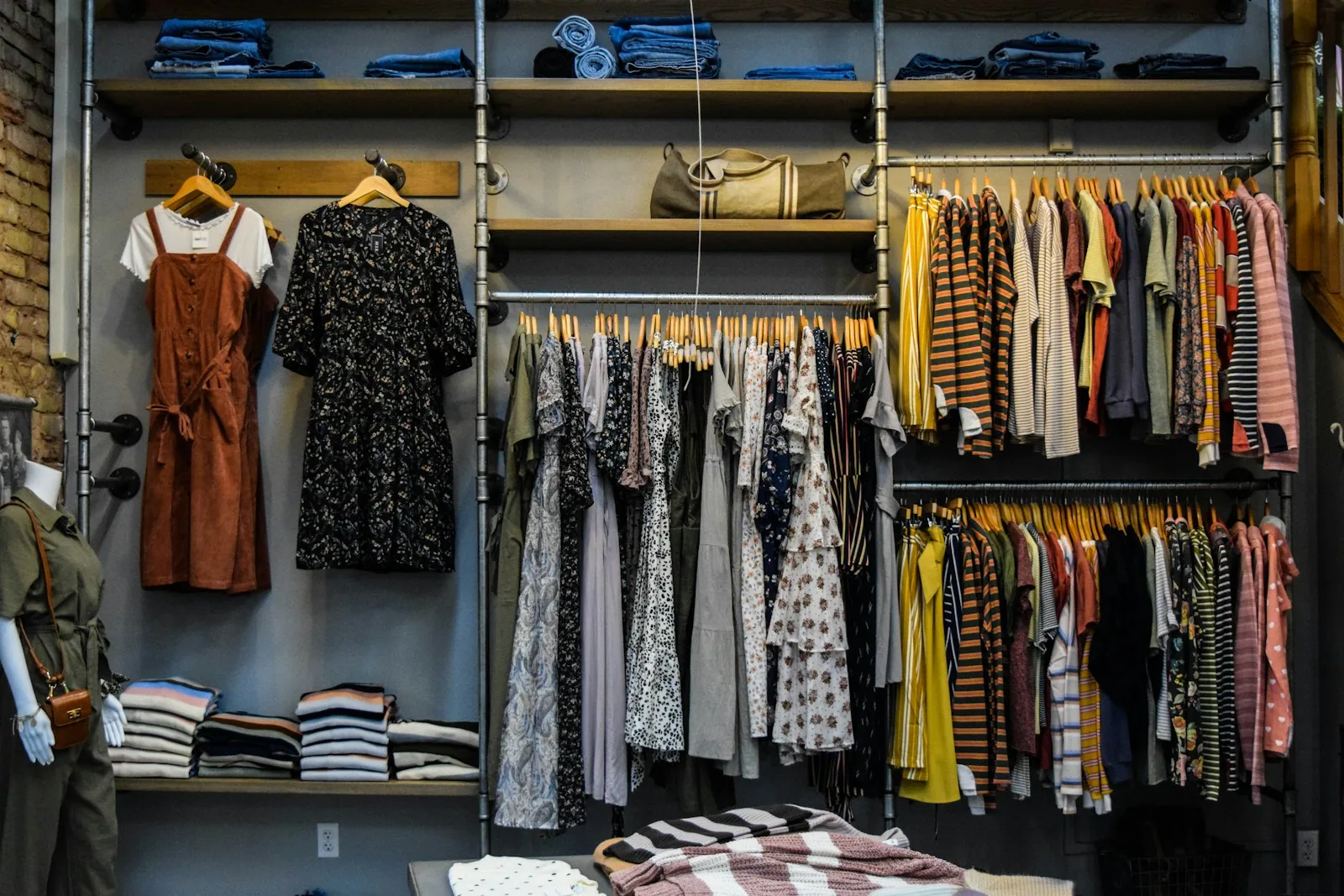
Textile shop section with visible product labels, wide view suggesting in-store scoring
Environmental labelling first plays out on the shop floor: label, score, consumer attention. The timetable for requirements follows commercial reality, sector by sector.

Furniture, method expected in late 2026. The method is being developed; no legal text makes labelling mandatory to date. It covers manufacturers, distributors and importers of furniture, mattresses, sofas, tables and furnishing products. ADEME is developing the method, documented in a furniture section of the public Ecobalyse tool. Details in the dedicated furniture guide.

2Sectors undergoing trials or without a public method

Food: no requirement to date. The public method was stabilised on 13 May 2026 in Ecobalyse (16 PEF indicators and 4 additional indicators on ecosystem services, Agribalyse 3.2 data); its use is voluntary, without a decree or ministerial order. Planet-Score and Eco-score remain private scores. Methodological complexity (seasonality, agricultural variability, treatment of organic/HVE/AOP labels) explains the gap with textiles.

Cosmetics: follows a European rather than French timetable. The PEFCR Cosmetics, led by Cosmetics Europe and the European Commission's JRC, is in pilot phase v2. No public cosmetics labelling timetable exists, and cosmetics are not in the ESPR 2025-2030 work plan. Brands anticipating cosmetics eco-design are automatically aligned.

Buildings: already subject to a dedicated format through RE2020, which requires a regulatory LCA for new construction with carbon thresholds that tighten through to 2031. No consumer shelf label, but a mandatory assessment framework for project owners. A different approach, the same purpose.

3The European ESPR: the wave arriving sector by sector

The European ESPR (Ecodesign for Sustainable Products Regulation), which entered into force in July 2024, sets eco-design and information requirements, including the digital passport, for most physical goods sold in the EU. Rollout takes place through delegated acts, category by category. Priority families in the 2025-2030 work plan: iron and steel (delegated act expected in 2026), textiles, tyres and aluminium (2027), furniture (2028) and mattresses (2029).

Realistic timetable: one ESPR delegated act per category every 12 to 18 months between 2026 and 2030. The trajectory is fixed, while exact dates remain to be confirmed category by category. To follow the full chronology of industrial delegated acts, see the ESPR-DPP timetable.

4The hidden trap: client requirements ahead of decrees

An underestimated point in strategic thinking: private-sector clients do not wait for decrees. At the end of 2025, we supported a cosmetics brand with 60 people, without a public labelling method in its sector, whose main retailer (35% of turnover) requested a full PEF score to retain its listing for the autumn 2026 season. Time allowed: 3 months. Cost absorbed urgently: €22,000 excluding VAT, or 60% more than a project planned in advance. Commercial pressure arrived without any regulatory text.

The right response for a sector not yet subject to requirements: do not wait for the obligation before mapping the maturity of your supplier data. This takes the most time (70% of the work for real scoring) and can be done before any decree. When the obligation arrives or a client requests it, the remaining gap to close is marginal.

5What to do this week, rather than next month

This week: identify which wave your sector belongs to (textiles = framework in place, publication by third parties since 1 October 2026, furniture = method being developed, food = voluntary method since May 2026, cosmetics = no public method, other = monitor through the ESPR plan). Five minutes with the selector above.

Within 30 days: for sectors with a framework or an imminent one, launch a pilot product across 1 to 3 representative products (€5,000 to €10,000 excluding VAT). For sectors undergoing trials, map supplier data maturity across the strategic range; no calculation tool is needed at this stage.

Within 6 months: roll out across the 30% of the catalogue accounting for 80% of volume. Not everything, not immediately. A brand publishing reliable scores for 30% of its range is better placed than a brand publishing 100% with weak data, which will have to correct them under pressure in 6 months.

6Frequently asked questions

7Key takeaways

  • Textiles = the only sector with a complete framework in 2026, since the decree of 6 September 2025. Labelling remains voluntary, but any brand selling in France may see a third party publish its environmental cost, without a turnover threshold.
  • Furniture = method expected in late 2026, with no legal text making it mandatory to date, and a method being developed by ADEME in the public Ecobalyse tool.
  • Food has had a voluntary method since May 2026; cosmetics and electronics still have no public method or await ESPR delegated acts, category by category, over 2026-2030.
  • Private-sector clients move ahead of decrees: retailers and umbrella brands already require scores in sectors not yet subject to obligations.
  • The right response for a sector not subject to requirements: map supplier data maturity (70% of the work) before the obligation arrives or a client requests it.

The practical question is no longer whether environmental labelling will arrive in your sector, but when and through which route. For textiles, it is already established. For furniture, a method is expected in late 2026, with no requirement set to date. For others, regulatory pressure is approaching through ESPR delegated acts, and commercial pressure is often 12 to 18 months ahead of decrees. Anticipating supplier data collection across the strategic range is the only investment that pays off whatever the scenario.

Sources: Decree No 2025-957 of 6 September 2025 (textiles), Ministerial Order of 6 September 2025 (calculation methodology), ESPR Regulation (EU) 2024/1781, Climate and Resilience Act (2021), AGEC law (2020), ADEME Ecobalyse database, PEFCR Cosmetics v2 (Cosmetics Europe + JRC), European PEF method.
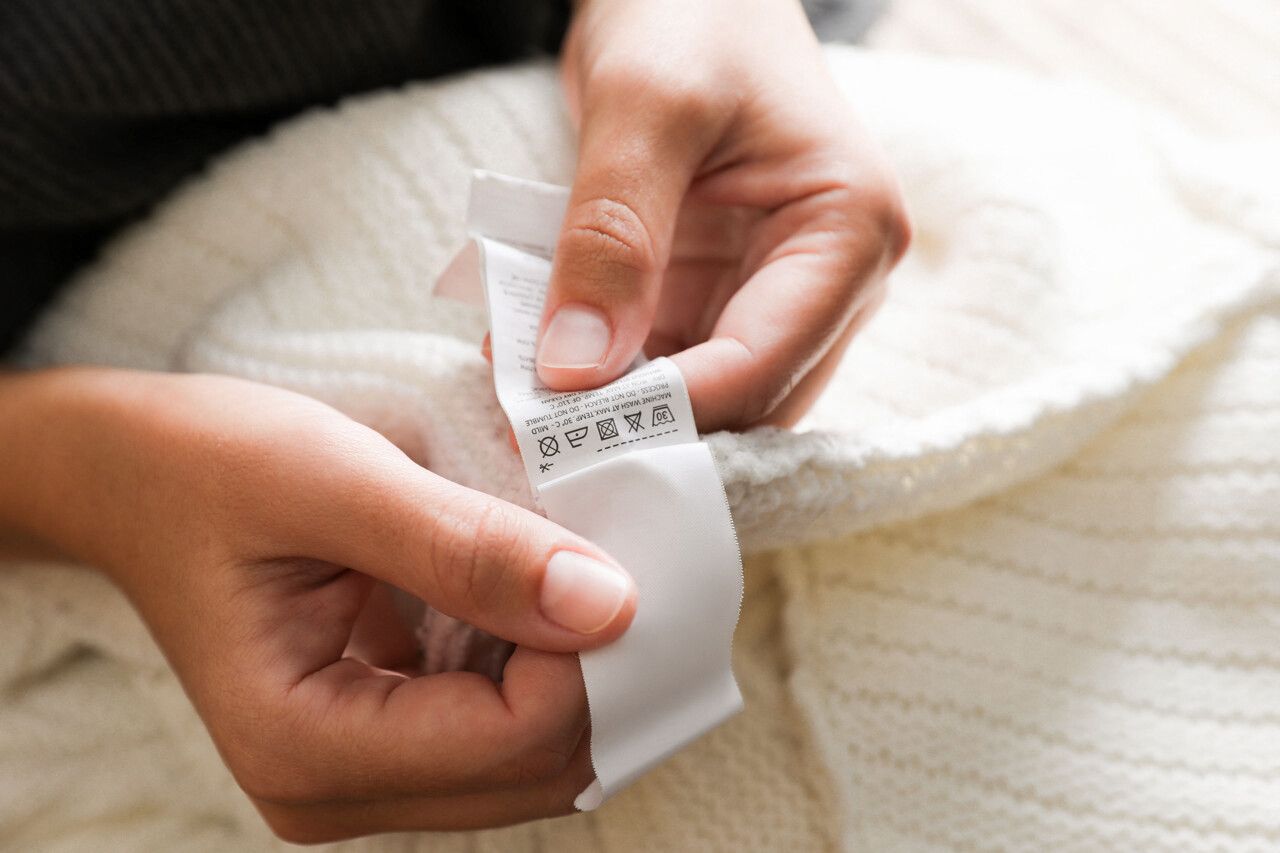
Further resources

Frequently asked questions

Yes, from the first product placed on the French market. The regulations target the market, not the seller's nationality. An American, German or Chinese brand delivering clothing to France falls under the same textile decree rules as a French brand: voluntary labelling, regulated as soon as it communicates.
For textiles, no: the threshold is zero, and a micro-business with a single model is covered, even though labelling remains voluntary. For furniture, no legal text exists yet. The only possible variation may come from a future decree for very small operators, but no exemption is in force in 2026.
No, these are two different things. Bilan Carbone® measures an organisation's emissions. Environmental labelling summarises a product's impact in a single score, the environmental cost, calculated from the 16 PEF method indicators and a few additional indicators. The two complement each other and often use the same underlying data. See PEF versus LCA versus product carbon footprint for the full mapping.
In the short term, yes, but with two risks to monitor. First, the cascade effect through your B2B clients: if your products are incorporated into a final product subject to requirements, your clients will request data. Second, ESPR expansion: your sector could be brought in within 12 to 24 months through a European delegated act. The right response is to start an organisational Bilan Carbone® as a data foundation.
In 2026, only textiles have a complete framework: Decree No 2025-957 of 6 September 2025 organises voluntary labelling since October 2025, and from 1 October 2026 a third party can publish a garment's environmental cost in the brand's place. Furniture follows, with a method expected in late 2026, without a legal text to date making it mandatory. Food has had a public method for voluntary use since May 2026, and cosmetics have no public method. Other manufactured products depend on ESPR delegated acts, expected between 2026 and 2030.
All brands selling new or remanufactured clothing on the French market, including foreign brands, without a turnover threshold. Decree No 2025-957 of 6 September 2025 organises voluntary labelling since October 2025; since 1 October 2026, transitional protections have ended and a third party can publish a product's environmental cost in the brand's place, using penalising default data. Household linen, footwear and accessories, single-use textiles and clothing incorporating electronic components are excluded.
No date has been set for furniture sold in France, and no legal text makes labelling mandatory: it remains voluntary. ADEME trials closed on 19 June 2026, an initial proposed method is expected by the end of 2026, followed by stakeholder discussions, a public consultation and notification to the European Commission in 2027. The scheme will cover manufacturers, distributors and importers of furniture, mattresses, sofas, tables and other furnishing products, without a turnover threshold. Brands can already simulate their scores, and supplier data collection, accounting for around 70% of the work, can begin without waiting for the method.
or: [email protected]

More articles to read

View all →
French environmental cost label for clothing: what changed on 1 October 2026
Regulation

French environmental cost label for clothing: what changed on 1 October 2026

6 min read
Removable batteries and battery passports: who is affected in 2027?
Regulation

Removable batteries and battery passports: who is affected in 2027?

14 min read
BEGES France: mandatory GHG emissions report in 2026
Regulation

BEGES France: mandatory GHG emissions report in 2026

9 min read

No two situations are exactly alike.

Tell us about yours: your situation, deadline and budget. A senior consultant will reply within 24 working hours with an honest assessment.

Let us discuss it within 24 hours →
Our toolkit

A full range of free assessment tools

Cost estimator, obligation and eligibility checkers, footprint calculator.

Estimate costs and impacts
Ref. 2026·BC·0184REPORT · FINANCIAL YEAR 2026Bilan Carbone®complete 1·2·3Presentation to the Executive Committee · 2027 action planCONTENTS01Executive summaryp. 402Scope and methodologyp. 1203Emissions by scopep. 24042027 action planp. 5605Methodological appendicesp. 78VOLUME84 pages · ConfidentialSTANDARDISO 14064 · GHG ProtocolQUOTATION · BC.2026.0184Issued 05·05·2026 · Valid for 30 daysCelsius consultancy · Paris 3rd arrondissementINDICATIVE COST ESTIMATEYour companyMid-sized company · 180 employees · CSRD 2027SERVICEBilan Carbone®Scope 1·2·3 · 13 weeksBPIFRANCE FUNDING · - 60%INDICATIVE RANGE EXCL. VAT€16,800to €22,400PROJECT DETAILS01 · SCOPING3 weeks~€4,20002 · MODELLING8 weeks~€9,80003 · PRESENTATION2 weeks~€4,800Indicative estimate · Refined after scopingSIRET 891 234 567 00012

Bilan Carbone® cost estimator

Your price range in 1 minute, based on 2026 market rates and public funding.

1 minStart
Estimate costs and impacts
AI FOOTPRINT · MONTHLY USEYOUR TOTAL FOOTPRINT4.2 kgCO₂eq for 1,000 typical prompts · May 2026MODEL COMPARISON · 1,000 TYPICAL PROMPTSGPT-4oOpenAI6.8 kgClaude OpusAnthropic2.1 kgGemini ProGoogle4.5 kgMistral LargeMistral AI · FR1.6 kg

AI carbon footprint calculator

The climate impact of your AI queries, by model and task. Ecologits methodology.

3 minStart
Check an obligation
DIAGDÉCARBON'ACTIONACCELERATE THETRANSFORMATIONOF YOUR COMPANYIN ENERGY ANDTHE ENVIRONMENTOFFICIAL SCHEME · BPIFRANCE × ADEMECHECKER · ELIGIBILITYELIGIBLEYou meet the 3 Diag Décarbon'Action criteria.YOUR FUNDING€10,000 excl. VAT€6,000excl. VATAmount payable by you after the Bpifrance subsidyFUNDING BREAKDOWNBPIFRANCE 40%YOU 60%€4,000€6,000SCHEME SUBSIDISED BY

Diag Décarbon'Action eligibility

Check in 30 seconds whether your business is eligible for Bpifrance funding covering 40% of a Bilan Carbone® assessment.

30 secStart
Check an obligation
FRENCH REPUBLICMinistry for the Ecological TransitionLEGAL REQUIREMENTGreenhouse GasEmissions AssessmentArticle L.229-25 of the French Environmental CodeDecree 2022-982 · published 1 July 2022FREQUENCY · 4 YEARSFILING · ADEMECHECKER · BEGES REQUIREMENTREQUIRED720 employees · BEGES requirementPOTENTIAL PENALTY€50,000maximum fine for failing to complete itart. R.229-50OFFICIAL REFERENCE

BEGES checker

Does the BEGES requirement apply to you? An immediate answer, with the deadline and penalty.

30 secStart
Check an obligation
9:42SCANSCANNING DPP...DPP IDENTIFIEDOrganic cotton T-shirtSKU TX-CB-220 · Batch L-26-04781ESPR COMPLIANT42 DATA POINTS · 5 SECTIONSORIGINIndia · GOTSOrganic cottonFOOTPRINT5.2 kg CO₂eqLCA ISO 14040RECYCLABILITY85%Cotton recycling schemeREPAIRABILITY7.5 / 10Accessible partsEND OF LIFETextile recycling scheme (TLC) · Bordeaux/FRRefashion-approved recovery operatorEU · ESPR 2024/178112.05.2026

DPP checker

Is your product covered by the Digital Product Passport?

1 minStart
Check an obligation
COSTENVIRONMENTAL386POINTS257PER 100 GOfficial methodEcobalyse, v7.0.0CHECKER · ENVIRONMENTAL LABELLINGELIGIBLETextiles · voluntary labellingENVIRONMENTAL COST386 ptsT-shirt 150 g · 257 pts per 100 gExample: Ministry for the Ecological Transition FAQ

Textile environmental labelling 2026

Voluntary labelling, but third parties can publish it from October 2026: where do you stand?

1 minStart