
- 15 frameworks overlap in 2026: France's Climate and Resilience Act, DGCCRF, EmpCo, Green Claims and AMF.
- 2EmpCo sets an application date of 27 September 2026, but France has yet to transpose the directive.
- 3French legislation already imposes penalties: the carbon neutrality decree since 2023 and active DGCCRF enforcement.
- 4The strength of the evidence remains decisive as the legal framework changes.
In 2026, environmental communications are governed by 5 overlapping frameworks, rather than a single law. They regulate what a brand may say about the environment: France's Climate and Resilience Act, the French Consumer Code, Empowering Consumers for the Green Transition (EmpCo), the Green Claims proposal and the financial framework. None replaces the others, and each provides a separate basis for penalties. Marketing and CSR (corporate social responsibility) teams nevertheless face the same 5 questions: the map below addresses each in turn and links to its detailed guide.
Understanding the EmpCo directive and Green Claims

What is EmpCo, exactly?
The directive and its 7 banned commercial practices, explained in 2 minutes.

Am I affected?
The 4-question test, sector by sector.

When does it apply?
The 3 key dates, and why you are already exposed.

What am I allowed to say?
Rewording a claim without legal risk, in 4 steps.
The PIF method
Test a sentence in 1 minute: Precise, Honest, Substantiated.
Many teams wait for a "final version" of the framework before acting. The framework will keep evolving, and penalties are already being imposed under existing French legislation. The safest approach is to work on the one element shared by every framework: the scientific substantiation of each environmental claim, also known as a green claim.
1The 5 legal frameworks governing your claims
EmpCo, the European anti-greenwashing directive, has been adopted, with an EU application date of 27 September 2026 (France has yet to transpose it). It is part of a wider framework: focusing on it alone overlooks most of the risk, which is already present in France.
The new framework for environmental claims in France
5 texts add up without replacing one another, each with its own route to penalties. Hover over or tap an instrument for details.
7 new environmental entries in Annex I to Directive 2005/29/EC. Coordinated EU penalty ceiling: at least 4% of turnover (Directive 2019/2161), with France keeping 10%. Reverses the burden of proof.
None of these texts replaces the others: each creates a separate basis for penalties. To understand what applies to you, you need to consider all 5 together. Here they are, from the oldest to the most recent.
Climate and Resilience Act and carbon neutrality decree (France, since 2023)
Article 12 of Law No. 2021-1104 of 22 August 2021, as detailed in Decree No. 2022-539 of 13 April 2022, regulates carbon neutral claims and equivalent wording. To use them in advertising, the advertiser must publish a report setting out the product or service's life cycle carbon footprint, its reduction pathway and the arrangements for offsetting residual emissions. The penalty is a fine of up to €100,000 for a legal entity, which may be increased to the full expenditure on the campaign. The text has applied since 1 January 2023.
Consumer Code and DGCCRF (France, already applicable)
Articles L. 121-2 onwards of the French Consumer Code define a misleading commercial practice as any claim likely to mislead the average consumer. This broad definition covers almost all green claims lacking evidence. In its greenwashing investigations, the DGCCRF (the French consumer protection authority) inspected more than 3,000 establishments in 2023 and 2024, and found serious breaches at more than 15%. The penalty is up to 10% of turnover.

EmpCo / ECGT (EU 2024/825, application on 27 September 2026)
The Empowering Consumers Directive (EU 2024/825), also known as ECGT, was adopted on 28 February 2024. It adds 12 entries to the blacklist (in French) in Directive 2005/29/EC, including 4 directly targeting environmental claims, as well as presenting a legal requirement as an advantage. These practices are now prohibited by their nature, without any need to prove harm. The EU-wide coordinated penalty ceiling (Omnibus Directive 2019/2161) is at least 4% of turnover, with France retaining its 10% ceiling. Our guide to what EmpCo is explains these practices in detail.
Green Claims (EU, suspended but not withdrawn)
Proposed in March 2023, it would have required third-party verification before publication. On 20 June 2025, the Commission announced its intention to withdraw it, and the trilogue scheduled for 23 June was cancelled. However, the 2026 Work Programme, adopted on 21 October 2025, still lists it as `pending`, and several law firms (Latham & Watkins, Hogan Lovells) expect a revised text to return by 2027. Its inclusion in the programme means a return remains possible.
The financial framework: AMF, SFDR, CSRD
In finance, greenwashing falls under other authorities. The AMF (France's financial markets regulator) has tightened its guidance on Article 8 and 9 funds under the Sustainable Finance Disclosure Regulation (SFDR) and the French socially responsible investment (ISR) label. Reports under the Corporate Sustainability Reporting Directive (CSRD) published since 2025 are scrutinised for Net Zero commitments without supporting documentation and partial scope 3 assessments presented as complete. AMF penalties may reach €100 million or 10% of turnover.
All 5 share the same principle: prevent consumers being misled and emphasise evidence. The main change with EmpCo is that vague claims cease to be a grey area and become practices prohibited in all circumstances.
2Consumer-facing environmental claims are in scope regardless of size
Coverage depends on 2 cumulative criteria, neither related to company size: you address consumers (B2C), and your message concerns the environment. If both apply, you are in scope, whether you are a small or medium-sized enterprise (SME) with 8 employees or a listed group. This is a clear difference from the CSRD, which uses workforce and turnover thresholds.
What is your company's profile?
The 5 instruments do not apply with the same intensity depending on your profile. Expand your case to see the main exposure, the key indicator and the priority action.
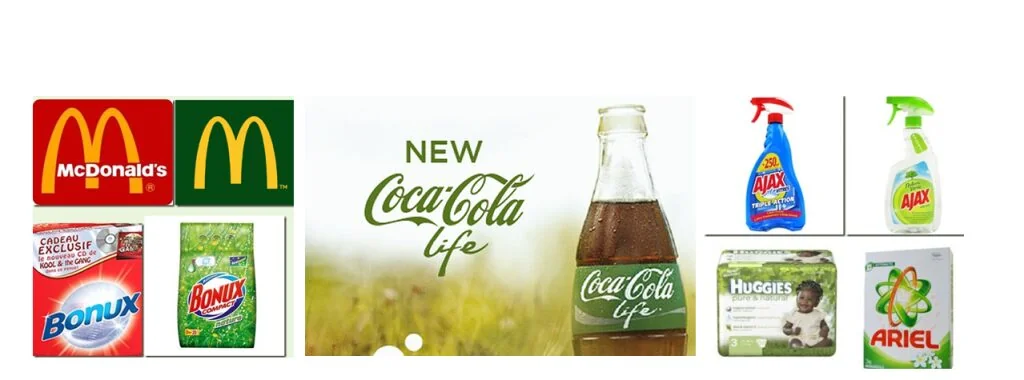
A message can make an environmental claim without using words. A simple green leaf on a bottle, entirely green packaging or a range named "Nature": the imagery serves as a claim, and is often what an inspector examines first. An implicit promise is regulated in the same way as a written one: a green leaf is assessed in the same way as wording, using the PIF method (in French) (Précise, Intègre, Fondée: precise, honest and substantiated).
The 4 typical profiles
The 5 frameworks carry different weight depending on your situation. 4 profiles cover most cases across B2C, business-to-business (B2B), finance, SMEs and micro-businesses, each with its main exposure and immediate action priority. The map above identifies your profile at a glance.
The most misunderstood case is B2B. A purely B2B supplier is subject both to fines, because Article L. 121-5 of the French Consumer Code also applies misleading commercial practice rules between businesses, and to demands for evidence, which arise through 3 channels. Its clients reporting under the CSRD require its scope 3 (in French) data. The Corporate Sustainability Due Diligence Directive (CSDDD, EU 2024/1760) will apply from 26 July 2029 to groups with more than 5,000 employees and €1.5 billion turnover, which will be able to question their suppliers when the information is unavailable elsewhere. Public procurement bodies and private-sector clients also reject incomplete submissions.
For a B2B supplier, the practical question is therefore what its B2C clients require: they are not exempt and pass their evidence requirements down to their suppliers. Suppliers that have not established their evidence base (in French) by the end of 2026 risk losing contracts to those that have.
DGCCRF greenwashing investigations have targeted textiles, where French environmental labelling for textiles already provides some of the expected evidence, as well as cosmetics (see cosmetics eco-design (in French)), furniture and food products. The sector-by-sector assessment examines borderline cases.
3French penalties apply while EmpCo transposition is pending
The timetable has 3 dates, and the risk of misunderstanding lies between the last two. 28 February 2024: the directive was adopted. 27 March 2026: the missed deadline for transposition into French law; the Commission sent France a letter of formal notice, along with 19 other states, on 28 May 2026. 27 September 2026: the application date set by the directive. In France, application awaits the transposing legislation, adopted by the Senate on 18 February 2026 and pending in the National Assembly.
From adoption to application
The Directive allowed 6 months between the transposition deadline and the application date. By 27 September 2026, France had still not transposed it.
Adoption of Directive (EU) 2024/825, published in the Official Journal of the European Union on 6 March 2024.
Deadline for transposition in all 27 Member States. France has not transposed it: the Commission issued a letter of formal notice on 28 May 2026.
EmpCo has applied since this date in countries that have transposed it. In France, the new prohibitions await the transposition law.
It would be costly to assume there is no risk while the French legislation is pending. The carbon neutrality decree (in French) has applied since 1 January 2023, the AGEC law (France's Anti-Waste and Circular Economy Act) already prohibits certain terms ("biodegradable", "environmentally friendly") and misleading commercial practices have long been punishable. In July 2025, more than a year before EmpCo's application date, the DGCCRF imposed a €40 million fine on SHEIN, partly for an unsubstantiated environmental claim.
Directive or regulation: why there is a 2-year gap
The gap between adoption (2024) and application (2026) reflects the nature of the text: EmpCo is a directive. A European regulation applies as written in every country, while a directive sets an objective that each state must incorporate into national law within a specified period, a process called transposition. This explains the timetable spanning 2 years.
France's late transposition offers no protection, for two reasons. First, national legislation already penalises most of these practices. Second, a judge hearing a dispute interprets French law in the light of the directive, through consistent interpretation, and a competitor or association may rely on that interpretation. More precisely, until it is transposed, the directive does not itself create a new prohibition between a business and its clients. However, a claim it prohibits is already vulnerable under current law.
In practice, the European date of 27 September 2026 has passed, and the French transposing legislation remains pending in the National Assembly. Rewording claims, gathering evidence and obtaining validation often take 6 to 9 months: a company that has not started should do so without waiting for the vote. The full timetable and preparations required explain each situation.
4Precise, substantiated claims remain possible
EmpCo targets vague, unverifiable claims; precise, substantiated communications remain possible. The rule is that the evidence must cover the full scope of the claim. A Bilan Carbone® (in French) (the French carbon accounting method) is sufficient for a climate claim, and a multi-criteria life cycle assessment (LCA) for a broad, quantified claim. The word "environmentally friendly" used on its own requires an officially recognised ecolabel, which no LCA can replace.
Test yourself on 12 typical claims
Tap a row to see the proof required and the text that applies.
- Permitted
Proof required: Material traceability: supplier certificates kept on file, rate verifiable for the batch.
ISO 14021 (self-declared claims)
- Permitted
Proof required: Comparable quantified measurement: 2 carbon footprint assessments with the same boundary and method, gap documented.
Art. L121-2 French Consumer Code (accuracy)
- Conditional
Proof required: Recyclability in practice within the French recycling scheme (sorting instructions), not just in theory in a laboratory.
ISO 14021; CNC-ADEME guide 2023
- Conditional
Proof required: Bilan Carbone® or a quantified product footprint + an explicit comparison benchmark.
L121-2; Directive 2024/825
- Strictly regulated
Proof required: BEGES (France's mandatory greenhouse gas emissions report) + reduction pathway + offsetting arrangements, all published (already required in advertising since 2023). It has been banned by EmpCo since 27 September 2026 where it relies on offsetting.
Decree 2022-539; Directive 2024/825
- Conditional
Proof required: Comparison using the same method, data and boundary, with the benchmark cited. A comparison that cannot be verified is a misleading practice.
L121-2; Directive 2024/825
- Conditional
Proof required: Detailed action plan, dated milestones, monitoring that a third party can verify. Without a plan, a future commitment is misleading within the meaning of EmpCo, which has applied since 27 September 2026.
Directive 2024/825
- Conditional
Proof required: Generic claim: you must specify the dimension (lifespan? material? repairability?) and prove it.
Directive 2024/825
- Almost banned
Proof required: Generic environmental claim: banned by EmpCo since 27 September 2026 unless backed by recognised environmental performance (EU Ecolabel or an equivalent official ecolabel). In France, the ban will take effect with the transposition law.
Directive 2024/825; CNC-ADEME guide
- Banned (France)
Proof required: Term banned from products and packaging by the AGEC law, regardless of the proof held.
AGEC law, Art. 13
- Banned (France)
Proof required: Same AGEC ban: the wording is banned from products and packaging in France.
AGEC law, Art. 13
- Banned since Sept. 2026
Proof required: Sustainability labels not based on a recognised certification scheme are banned by the EmpCo directive.
Directive 2024/825
Sources: Directive (EU) 2024/825; AGEC law (France's Anti-Waste and Circular Economy Act), Art. 13; Decree 2022-539; ISO 14021; CNC-ADEME practical guide 2023.
Start by classifying the claim, as the evidence required varies. A factual claim ("30% recycled material") is substantiated by a certificate or an ISO 14021 self-declaration. A comparative claim ("40% lower emissions") requires a baseline, a period and a scope. A global claim ("environmentally friendly", "sustainable") carries the greatest risk: EmpCo prohibits its use on its own, unless supported by a recognised public label (in French).
The 4 levels of proof for a claim
The broader the claim, the higher up the scale you need to go. Tap a level to see a concrete example of what passes and what does not.
4 formulations recur in almost every communication channel. For each, here is the version that no longer meets the rules and the one that does:
- "Environmentally friendly" on its own becomes "packaging made from 80% recycled cardboard", with the rate certified by the supplier. The mandatory Triman sorting symbol must not be presented as an advantage.
- "Low carbon" becomes "1.2 kgCO2e per unit, measured by LCA under ISO 14040, from cradle to factory gate".
- "Natural" becomes "92% natural origin under ISO 16128", with the line-by-line calculation retained.
- "Carbon neutral" or "offset" can no longer be used: state the actual reduction ("-15% vs 2022 on scope 1+2") and show the carbon contribution separately (in French).
The approach is always the same: replace the adjective with the quantified fact. The complete method for substantiating a claim (in French) sets out the 4 steps. The PIF method (in French), standing for Précise, Intègre, Fondée (precise, honest and substantiated), provides a 3-question screening framework to use before every publication.
5Evidence remains decisive as the legal framework evolves
Everything above may change. Green Claims was announced as withdrawn, then listed as `pending`. Transposition is delayed, and delegated acts will arrive by 2030. A strategy based on the legal position at a single point in time will therefore need revisiting at each stage.
Whatever text applies when an inspection takes place, authorities, B2B buyers and judges examine the scientific substantiation of the claim. We therefore advise investing in evidence first, as it will remain useful whatever happens to the texts under discussion.
The 5 reference methods
5 methodological frameworks remain useful as the legal framework develops: multi-criteria LCA (in French) (ISO 14040/14044) for products; Bilan Carbone® scopes 1-2-3 for the company; the European Product Environmental Footprint (PEF) for product comparisons, with its French derivative Ecobalyse used for textile environmental labelling (in French); the ISO 14020 standards for selecting the right claim type; and the ADEME-CNC environmental claims guide as the reference guide for DGCCRF inspections. ADEME is the French Agency for Ecological Transition and CNC the French National Consumer Council. The summary above specifies the scope and use of each method.
5 methods to substantiate an environmental claim
5 methodological frameworks cover most defensible claims. Expand a row to see how each one holds up under an inspection.
Choosing between the 3 claim types (ISO 14020)
The ISO 14020 family classifies claims into 3 types according to their evidence: Type I (a third-party verified label, such as the EU Ecolabel), Type II (a documented self-declaration, under ISO 14021) and Type III (a quantified, verified declaration, such as an Environmental Product Declaration, or EPD). The type determines the evidence to gather. For most marketing claims, teams need to know how to build a properly substantiated Type II claim internally.
3 types of claim, 3 uses
The ISO 14020 family organises environmental claims into 3 types, each suited to a different use. The type you choose determines the evidence you need to gather.
Multi-criteria, based on life cycle assessment (LCA), with regular audits by an independent accredited certification body.

Self-declaration with no third-party certification. Scientific justification and verifiable documentation are required.
Quantified, multi-criteria environmental product declaration (EPD) drawn from a third-party verified LCA. Standardised sector format.
Courts are already addressing this: on 23 October 2025, the Paris Judicial Court found TotalEnergies liable for misleading commercial practices because of its claims of carbon neutrality by 2050. At Projet Celsius, we see EmpCo as a clarification: by prohibiting neutrality through offsetting (in French) and requiring evidence matching the depth of the claim, it restores measurement to a central role. That is the purpose of our support on claims and EmpCo: ensure published messages, the scope of their claims and the supporting evidence are consistent.
6Key takeaways
- 5 frameworks overlap in 2026: France's Climate and Resilience Act and carbon neutrality decree, the French Consumer Code (DGCCRF), EmpCo (EU 2024/825), Green Claims (suspended but `pending`) and the AMF/SFDR/CSRD financial framework. None replaces the others.
- EmpCo sets an application date of 27 September 2026, with no size threshold, but France has not yet transposed it. The French framework already imposes penalties: the carbon neutrality decree has applied since 2023, and SHEIN received a €40 million fine in July 2025.
- You are affected as soon as you communicate about the environment to consumers, through a word, a visual or a green leaf. B2B companies face both fines, as misleading commercial practice rules also apply between businesses, and demands for evidence from their clients.
- 4 formulations need priority review: "environmentally friendly" must be made specific, "low carbon" quantified, "natural" backed by a standard and "offset" can no longer be used.
- Across the different texts, the strength of the evidence remains decisive: ask whether your claims would withstand an inspection tomorrow.
Follow the guide relevant to your question: what EmpCo prohibits, whether you are affected, when the rules apply, how to substantiate a claim (in French) or test a phrase in 1 minute (in French).