
- 1Evidence must exist before publication, and cover the same object as the claim.
- 2"Recycled" requires a percentage, substantiated by a recycled content certificate.
- 3A carbon figure is substantiated by a life cycle assessment, with its method and scope.
- 4Packaging already printed is sorted claim by claim, without destroying the stock.
An environmental claim is substantiated by a document that says the same thing as the sentence, about the same object, and that exists before publication. "Contains 30% recycled plastic" is substantiated by the supplier's recycled content certificate, and a carbon figure by a life cycle assessment (LCA) that sets out its scope. A general term such as "ecological" cannot be substantiated by any measurement: on a product or packaging, it is even already banned in France.
Each claim on a shopping bag and its evidence
Choose a claim on the bag to see what needs to be checked.
The document
It is part of the label: the Blue Angel licence covers it, and the DE-UZ 30a criteria require this threshold.
What to check
That the licence covers this bag. The green badge repeats the figure as "80% post-consumer plastic", a detail that is substantiated by the film supplier's certificate.
The French Consumer Code penalises an environmental claim that is false or likely to mislead, and the 2005 European directive allows a court to require the trader to provide proof that its claims are accurate. The EmpCo Directive has applied since 27 September 2026 in the Member States that have transposed it, according to its timetable. In France, the bill transposing it, adopted by the Senate on 18 February 2026, is still awaiting the National Assembly. The proposed Green Claims Directive, which would have required third-party verification before publication, appears in the Commission's 2027 work programme among the texts to be withdrawn within 6 months, as recalled in the framework for environmental communication in 2026.
1What has to be substantiated, and when?
Everything that suggests an environmental benefit must be capable of being substantiated: the text, but also the logo, the colour or the name of the range. The practical guide of the French National Consumer Council (CNC), published in 2023, draws 2 requirements from this. The evidence is available as soon as the claim is used, and it covers what the sentence asserts, neither wider nor narrower.
Evidence ready before publication
The CNC guide asks traders to hold the evidence needed to support their claims from the moment the claims are used, or to be able to produce it on request. For a figure, the advertiser must give the origin of the results and the calculation method. A supplier brochure or an expired certificate does not count as evidence, as shown by the refusals published by the DGCCRF (the French consumer protection authority), which our 3-question test sets out.
Evidence on the same object as the sentence
The evidence covers exactly the scope asserted. "Recyclable bottle" is substantiated on the bottle as it is thrown away, with its cap and label, and not on the resin of the body alone. A company-level claim ("we are reducing our emissions") calls for a company-wide Bilan Carbone® (the French carbon accounting method), and a product claim for a study of the product. For a claim such as "eco-designed", the guide asks for it to specify whether it refers to the product or to the packaging: without that, it is read as covering the 2.
EmpCo also prohibits presenting a claim that concerns only one aspect or one activity as applying to the whole product or the whole business. Since 12 August 2026, the European Packaging and Packaging Waste Regulation, known as PPWR, also requires a claim about packaging to specify whether it refers to the unit, a part of the packaging or all of the company's packaging.
2What evidence for material and end-of-life claims?
Claims about material and end of life are the most common on packaging, and the most tightly regulated in France. For each one, the document that substantiates it is known in advance. The table below gives that document, who issues it and the point where it fails.
The document to provide and the weak point of each claim
"Recycled": a percentage and its traceability
Since 1 January 2022, a product or packaging described as recycled must state the percentage of recycled material effectively incorporated (French Environmental Code, Article L. 541-9-1). The evidence is a certificate from the material supplier, tied to the batch or the production period. It rests on a traceability method: standard EN 15343 for recycled plastics, on which third-party certifications such as RecyClass are based. A percentage announced "on average over the year" is substantiated over the year, not on a single batch.
On packaging, the European regulation admits a claim about a property that it regulates, such as recycled content, only if the claim goes beyond its minimum requirements. The recycled content of plastic packaging is therefore prepared together with the technical documentation required by the regulation, which also sets minimum recycled plastic content.
"Recyclable": a recycling stream that exists in practice
A recyclability claim says that a stream collects, sorts and recycles the object in practice. The Environmental Code sets 5 criteria: the object is collected close to where people live, it is sorted, it contains no element that hinders sorting or recycling, and it is recycled at industrial scale. The recycled material obtained must also exceed 50% of the waste collected. These criteria open the way to the claim "mostly recyclable", and to "fully recyclable" above 95%.
Companies with a turnover of more than €10 million that sell at least 10,000 units a year publish online a product sheet on these environmental qualities, which serves as the supporting document. For packaging, the producer responsibility organisation (PRO, éco-organisme in French) passes this recyclability information to the producer (Article R. 541-228). The exact vocabulary and its thresholds are set out in the list of prohibited claims.
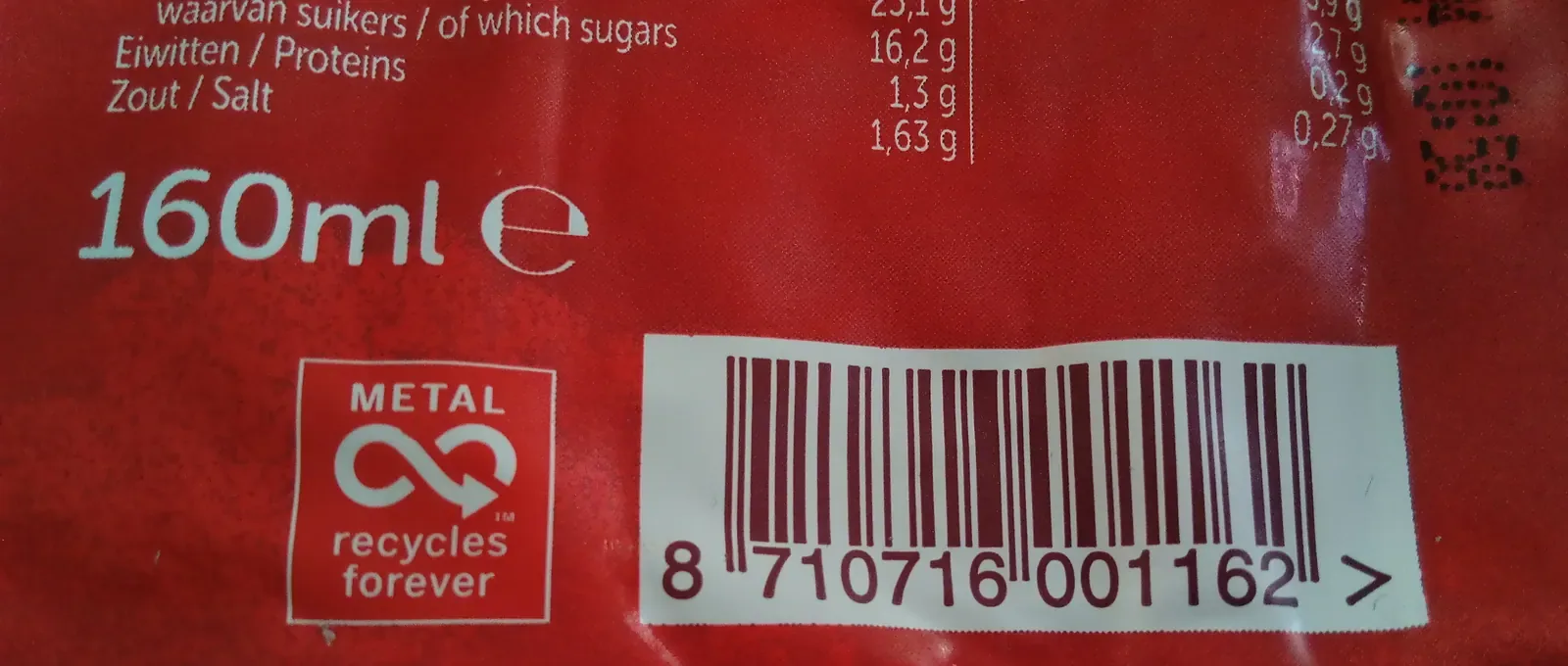
"Compostable" and "biobased": a standard and a laboratory
A plastic that is compostable only in an industrial facility may not carry the claim "compostable", and any compostable plastic carries a notice not to discard it in the environment (Article L. 541-9-1). The evidence is a test certificate on the whole product, and not only on the polymer. Standard NF T51-800 covers home composting of a plastic, and standard EN 13432 industrial composting of packaging.
"Biobased" is substantiated by a measurement of the biobased content: radiocarbon analysis under standard NF EN 16640 or NF EN 16785-1, or material balance under NF EN 16785-2. The CNC guide asks for this content to be displayed when the product is only partly biobased. It points out that a biobased product is not necessarily compostable, recyclable or lower-impact.
3What evidence for a carbon figure or a label?
Claims about climate, comparisons and labels require the heaviest evidence, because they speak for the whole product or the whole company. Some have no sufficient evidence at all.
An impact figure: a study that sets out its scope
"1.2 kgCO2e per unit" or "20% fewer emissions" are substantiated by a life cycle assessment under the ISO 14040 and 14044 standards. When the figure concerns climate only, a product carbon footprint under ISO 14067 is enough. The study must say what it covers: cradle to factory gate or through to end of life, with which data. Third-party verification of the footprint strengthens the file, without being required.
For a streamlined LCA, the order of magnitude observed in 2026 is €5,000 to €10,000 excl. VAT, with no official price list, as our article on the price of an LCA sets out. A study used only to substantiate a claim is scoped to that scope alone, which makes it possible to carry out an LCA on a small budget.
A comparison: the same method on the 2 sides
"Less polluting" or "30% less plastic" compare against a reference that must be named: the former product, the market average or a competitor. The comparison is made on the same unit and the same method on the 2 sides. When an LCA underpins a comparative assertion disclosed to the public, ISO 14044 requires a critical review by a panel of interested parties. The choice between a panel and a single expert and what the reviewer checks are set out in the article on comparative claims.
A label or a general term: a third party, or nothing
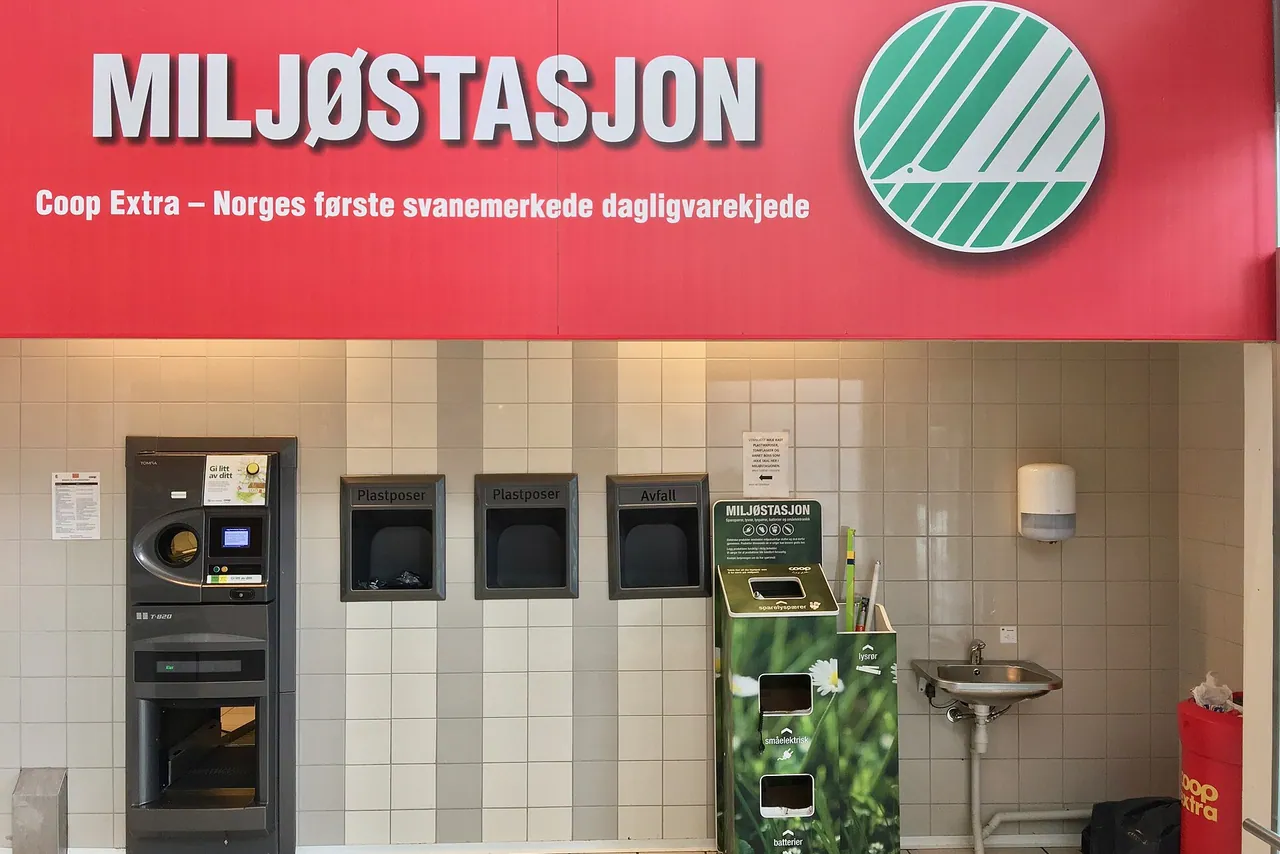
EmpCo prohibits a sustainability label that rests neither on a certification scheme run by a third party nor on a public authority. A general term such as "ecological" is permitted only if the trader can demonstrate recognised excellent environmental performance: that of the EU Ecolabel or of an official type I ecolabel. In France, the CNC guide already treats "ecological", "eco-responsible" and "green" as equivalents of "environmentally friendly", which is prohibited on a product or packaging.
2 cases have no sufficient evidence under EmpCo: the neutrality of a product based on offsetting, and an announced future performance without a detailed plan verified by an independent expert third party. In France, a "carbon neutral" claim remains governed by Article L. 229-68 of the Environmental Code, which requires the emissions assessment, the reduction pathway and the offsetting to be published, as the article on carbon neutrality explains.
No measurement substantiates a general term such as "ecological", and French law already prohibits it on a product or its packaging.
4What does a solid evidence file contain?
The file is built claim by claim, not product by product: a claim repeated across a whole range needs substantiating only once, provided the document covers each product reference. For each claim, a sheet brings together 6 fields that the company must be able to produce on request. They are the wording and where it appears, the scope, the method, the result and its data, the documents signed by third parties, and the review date. The example below fills in one.
Evidence sheet for a bottle with 30% recycled plastic
Example constructed for the article, with no real product.
The claim and where it appears
"Bottle containing at least 30% recycled plastic", on the label, the product page of the website and the catalogue.
The scope
The whole bottle, cap and label included, by mass, over the year's production.
The method
Traceability of recycled plastics under standard EN 15343, from the resin supplier to the bottle.
The result and its data
Body made of 36% recycled PET, weighing 85% of the bottle; cap and label in virgin material. Whole bottle: 30.6%.
The documents signed by third parties
Traceability certificate from the resin supplier, with its expiry date, and declaration for each batch delivered.
The review date
At every change of supplier, recipe or cap, and before the certificate expires.
The scope sets the figure. Calculated on the body alone, the rate would be 36%; the sentence is about the bottle, and so is the evidence.
A document in good order is not enough when it says less than the sentence. Packaging that announces "100% recycled" when the supplier certifies 87%, for example, does not hold up, even with a valid certificate. The document must also cover what is sold: the DGCCRF found a furniture store announcing that "the majority of the wood" was FSC certified, when the certification concerned only a minority of products. And evidence ages, since each certificate has a validity date. For packaging, these documents join the technical documentation under the European regulation, kept for 5 years for single-use packaging and 10 years for reusable packaging.
5How do you reword a claim you cannot substantiate?
A claim without evidence is reworded to say what the document proves, or it is withdrawn. The 4 most common cases are handled as follows, the figures being examples:
- "Ecological packaging" becomes "packaging containing at least 80% recycled material", the wording used in the Environmental Code, backed by the cardboard supplier's certificate.
- "Low-carbon product" becomes "1.2 kgCO2e per unit, cradle to factory gate, according to an ISO 14044 LCA", with the study in the file.
- "Natural formula", on a cosmetic, becomes "92% ingredients of natural origin according to ISO 16128", with the line-by-line calculation of the formula that the cosmetics eco-design guide describes.
- "Carbon neutral thanks to offsetting" becomes a quantified reduction, over a named scope and reference year, and a financial contribution presented separately.
A legal obligation is not put forward as an asset, as with "CFC-free" on an aerosol: EmpCo prohibits presenting a legal requirement as a distinctive feature of the product. When no rewording holds, the claim comes out, which is often the case for general terms on a product without a label. Claims specific to cosmetics are covered in the audit of the claims on a cosmetics carton.
6What should you do with packaging that is already printed?
A stock is sorted claim by claim, not product by product, with 3 questions: is the claim already prohibited in France, is it covered only by EmpCo, does its evidence exist? The tree below gives what follows for each case.
What to do with stock already printed?
For each claim on the stock, answer the questions in order.
1Prohibited in France since 2022? No: question 2.
2Prohibited by EmpCo only? No: question 3.
3Does its evidence exist, on the same object?
Examples: A label with no certification scheme, a legal requirement presented as an asset.
Website and advertising are corrected without delay. In a country that has transposed the directive, the rule already applies to stock: sticker or in-store notice. In France, the law has not been passed.
Directive (EU) 2024/825; CPC network common understanding, 30 June 2026
No destruction. In France, unsold non-food products must be reused, repurposed or recycled, and the European authorities may decline to require destruction.
In France, the claims "biodegradable" and "environmentally friendly" have been prohibited since 1 January 2022, like "compostable" on a plastic that is compostable only in an industrial facility. For these claims, stock printed before the European deadline has no grandfathered status to rely on. For those that only EmpCo prohibits, French law has not yet been passed, but sales in a country that has transposed the directive already follow its rules.
On 30 June 2026, the European consumer protection authorities published a common understanding on old stock, which is not legally binding. They expect companies to come into compliance without delay and in good faith, and begin their checks with online claims and advertising, which are easier to correct than packaging. For stock that is already printed, they may decline to require the destruction or recall of the products.
In France, unsold new non-food products must be reused, repurposed or recycled (Environmental Code, Article L. 541-15-8), which rules out landfilling or incinerating them, as the ban on destroying unsold textiles recalls. A sticker or an in-store notice corrects the packaging until it is reprinted, as the article on inspections and in-store stock sets out.
For us at Projet Celsius, the useful question before printing a claim is simple: which document, issued by whom, substantiates it on this specific product? A claim that has its document withstands changes in the legal text, whether French law is passed tomorrow or the Green Claims Directive returns. We recommend building the file before print approval, at the stage of packaging eco-design, starting with the claims repeated across a whole range. Each document is dated so that you know when to review it, and the cost of this evidence is budgeted at that point, not after an inspection.
7Key takeaways
- An environmental claim is substantiated by a document that says the same thing as the sentence, about the same object, before publication.
- "Recycled" requires a percentage, substantiated by a supplier certificate backed by a traceability method such as EN 15343.
- "Recyclable", "compostable" and "biobased" are substantiated by criteria set by decree or by test standards, on the whole product.
- A carbon figure is substantiated by an LCA that sets out its scope, and a public comparison by an LCA reviewed by a panel.
- Packaging already printed is sorted claim by claim: claims prohibited since 2022 are corrected, without destroying the stock.
To check a sentence before building your file, start with the 3-question test, and to find out who can review all of your materials, see how to choose an audit provider.
- Directive (EU) 2024/825 of 28 February 2024, empowering consumers for the green transition, Article 1 (definitions, Article 6, Annex I) and Article 4.
- Directive 2005/29/EC of 11 May 2005 on unfair commercial practices, Article 12.
- French National Consumer Council (CNC), practical guide to environmental claims, May 2023, and DGCCRF, fact sheet on environmental claims: what to remember, 29 September 2025.
- French Environmental Code, Article L. 541-9-1, Articles R. 541-227 to R. 541-230 (from Decree No. 2022-748 of 29 April 2022, renumbered in 2024), Article L. 229-68 and Article L. 541-15-8.
- French Consumer Code, Article L. 121-2 and Article L. 132-2.
- Regulation (EU) 2025/40 of 19 December 2024 on packaging and packaging waste, Articles 14 and 15.
- Regulation (EC) No 66/2010 of 25 November 2009 on the EU Ecolabel.
- ISO, ISO 14044: environmental management, life cycle assessment, requirements and guidelines.
- European Parliament, Legislative Observatory, procedure 2023/0085(COD), Green Claims, consulted on 11 November 2026; European Commission, 2027 work programme, COM(2026) 710, Annex III, 4 November 2026.
- European Consumer Protection Cooperation (CPC) Network, Common understanding on old stock situations under Directive (EU) 2024/825, 30 June 2026.
- Senate, legislative file for the bill containing various provisions adapting French law to EU law, No. 118 (2025-2026), adopted at first reading on 18 February 2026.
- DGCCRF, press release on the fight against greenwashing, inspections 2023-2024, 1 October 2025; press release on SHEIN's settlement fine, July 2025. The Légifrance, Senate, DGCCRF and ISO (French version) pages are in French.