
- 1In France, "carbon neutral" remains lawful on packaging, provided a report is published.
- 2The bill adopted by the French Senate, if passed as it stands, will make the claim deemed misleading.
- 3Once the law applies, existing stock will not be exempt: a sticker may correct the claim.
- 4Replace neutrality with a measured reduction, quantified on the packaging itself.
Since 1 January 2023, a brand that writes "carbon neutral", "100% offset" or "climate neutral" on packaging must print on it a link or a QR code leading to an annual report. This is required by Decree No. 2022-539, adopted under Article L. 229-68 of the French Environmental Code. The regime is still in force as at 27 October 2026: France has not yet transposed the EmpCo directive (Empowering Consumers for the Green Transition), which has applied since 27 September in the countries that have done so.
What to do with "carbon neutral" packaging
Depending on whether the packaging is due for reprint or already in stock, and on the country where it is sold, as at 27 October 2026.
To do: keep the report up to date, prepare the sticker and keep a written record of each decision.
Sources: French Environmental Code, Articles L. 229-68, L. 229-69 and D. 229-106 to R. 229-110; bill No. 2518, Articles 20 and 21; Directive (EU) 2024/825; Commission, Q&A, Sept. 2026; CPC network, June 2026.
The decision is therefore made pack by pack: already printed or due for reprint, sold only in France or elsewhere in the EU, with or without a published report. What a company-level neutrality claim is worth, and why ADEME (the French Agency for Ecological Transition) advises against it, is covered in our article on carbon neutrality. This one stays with the product and with what is printed on it.
1Is "carbon neutral" still permitted on packaging in France?
Yes, with the report required since 2023
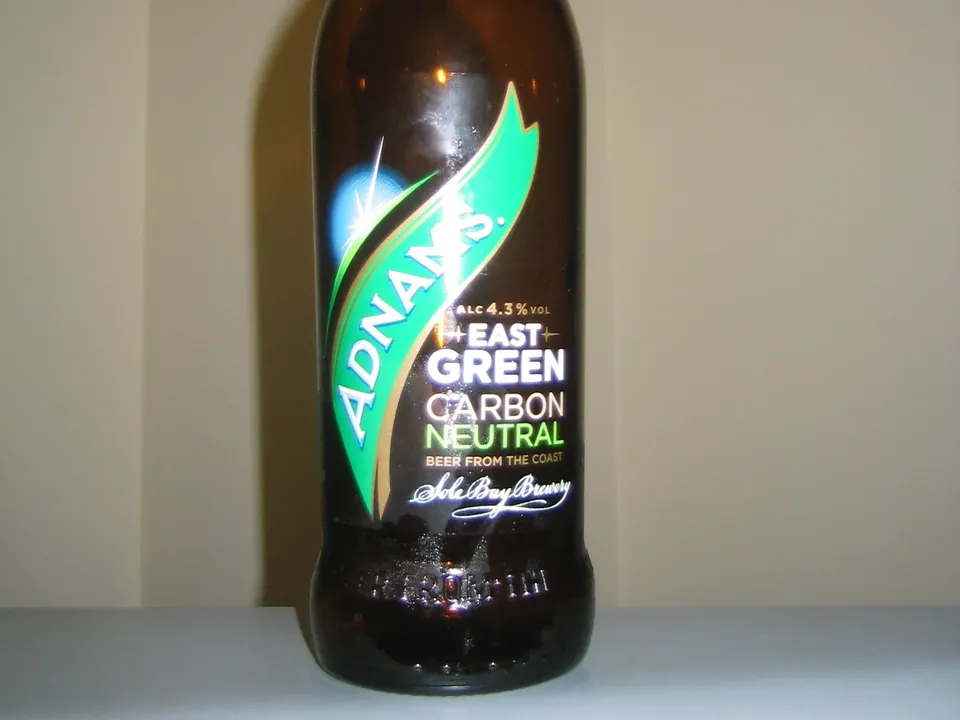
Article L. 229-68 does not ban the claim outright: it bans it unless the brand makes public an assessment of the product's emissions, its approach to avoiding and then reducing them, and the arrangements for its offsetting. The 2022 decree covers claims affixed to packaging, not only advertising. It lists "carbon neutral", "zero carbon", "with a zero carbon footprint", "fully offset" and any wording of equivalent scope.
The DGCCRF (the French consumer protection authority) describes the rule as less a ban as such than a transparency obligation. Enforcement lies with the minister responsible for the environment. After a formal notice that goes unheeded, the minister may impose a fine of €100,000 on a company, which can be raised to the full amount of the expenditure devoted to the operation.
No, in the countries that apply the EmpCo directive
Directive (EU) 2024/825, known as EmpCo, adds to the practices banned in all circumstances the act of claiming, on the basis of offsetting, that a product has a neutral, reduced or positive impact on the climate. It has applied since 27 September 2026 in the Member States that have transposed it, with no transition period, as the Commission's Q&A of September 2026 points out. Our article on the directive's timeline sets out its deadlines.
The claim also falls under a second rule. Even without offsetting, "carbon neutral" is a generic environmental claim, banned unless the company can show recognised excellent environmental performance, such as that of the EU Ecolabel. Our article on who is affected sets out the scope of the directive. A product whose packaging says "neutral" and which is sold in a country that has transposed the directive is therefore already exposed in that country.
What a French court can already penalise
A directive that has not been transposed does not apply directly between a company and its customers. The French Consumer Code nonetheless already prohibits misleading commercial practices, including on the environmental impact of a product, and the courts must read those articles, as far as possible, in the light of the directive. Where the deception rests on an environmental claim, the fine can reach 80% of advertising expenditure. Our article on enforcement and penalties explains who checks what.
A neutrality claim without a report, or with a report that does not hold up, is therefore exposed on 2 fronts at once. The DGCCRF wrote as early as June 2026 that, even with transposition running late, businesses must prepare.
Packaging printed this year may stay on the shelves longer than the French rule that still allows "carbon neutral".
2What must sit behind the QR code?
The QR code is only an address. What makes the claim lawful in France is the summary report it leads to, published on the brand's website or app and updated every year for as long as the product is sold with the claim. It has 3 annexes, in an order set by the decree:
- The assessment of the product's emissions over its whole life cycle, according to the ISO 14067 standard, with its scope, its unit, end of life and the countries where the emissions occur.
- The reduction trajectory for the product's emissions, with quantified annual targets over at least 10 years, and a new trajectory every 5 years.
- The offsetting projects for the remaining emissions, their cost grouped into 3 bands (under €10, from €10 to €40, over €40 per tonne of CO2), and proof that no credit is counted twice.
Report required behind the QR code on "carbon neutral" packaging
and a QR codeThe reportonline,
updated every year
If emissions per unit rise from one year to the next, before offsetting, the claim is withdrawn.
Label Bas-Carbone projects are deemed compliant; "offsetting carried out in France" only if 100% of the projects are located there.
Sources: French Environmental Code, Articles L. 229-68 and D. 229-106 to D. 229-109 (Decree No. 2022-539), in force on 27 Oct. 2026.
The rule that removes the claim
The decree adds a condition that is checked every year: the brand withdraws the claim if emissions per unit rise, before offsetting, from one year to the next. A change of recipe, a higher-emitting supplier or heavier packaging may be enough. The assessment still has to be redone every year with the same method, otherwise the increase does not show.
Eligible offsetting projects
The projects comply with the offsetting principles set by the French Environmental Code and must not harm natural ecosystems. Projects under the state's Label Bas-Carbone (the French government's low-carbon certification label) are deemed compliant. The claim "offsetting carried out in France" is permitted only if all the projects are carried out there.
What the QR code will no longer do
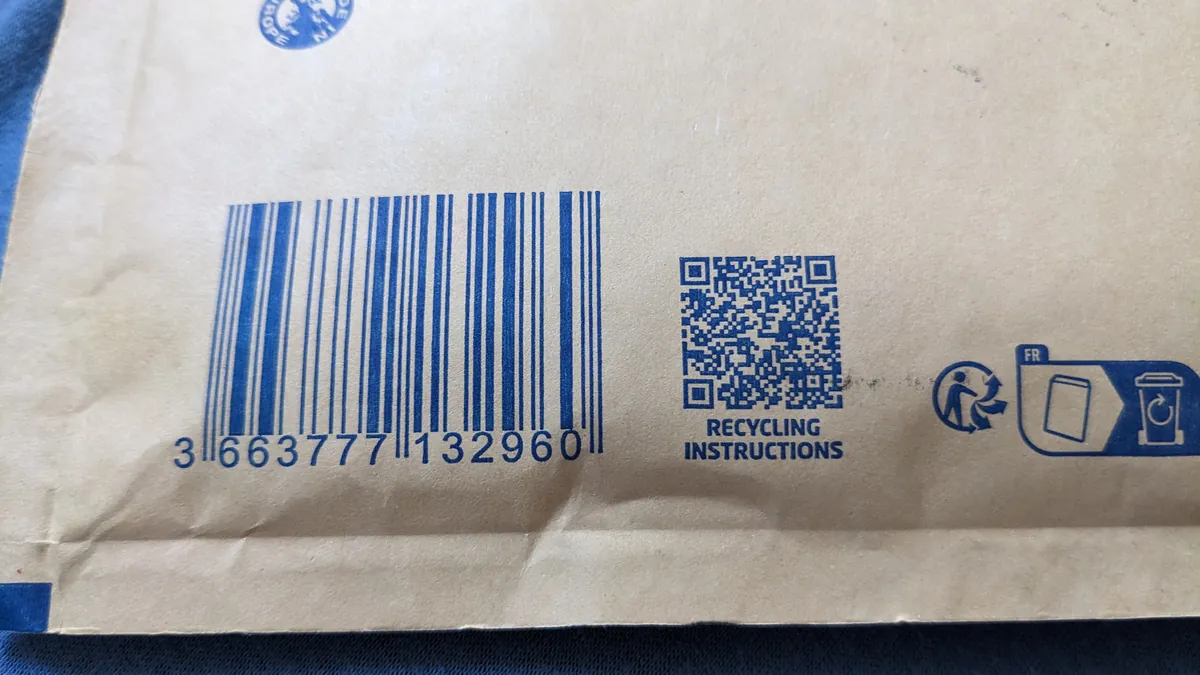
Under the directive, a QR code does not save a claim. For a claim not to be generic, its specification must appear on the same medium, the packaging itself. The DGCCRF made the point in its June 2026 webinar: a web link or a QR code is not valid for specifying a claim. The QR code keeps one use recognised by the Commission, pointing to the detailed plan behind a climate target.
3When does the rule change in France?
France was due to transpose the directive by 27 March 2026 at the latest. The text that does so is a bill adapting French law to EU law, adopted by the Senate on 18 February 2026 and sent to the National Assembly on 20 February. As at 27 October 2026, its file at the National Assembly shows neither a committee report nor a vote.
What the bill changes for the claim
In the version sent to the National Assembly, the text affects the claim through 3 provisions:
- Its Article 21 repeals Articles L. 229-68 and L. 229-69 of the Environmental Code: the report and QR code regime disappears with them.
- Its Article 20 adds to the practices deemed misleading the act of claiming, on the basis of offsetting, that a product has a neutral, reduced or positive impact on the climate.
- The same article extends the maximum fine of 80% of advertising expenditure to any misleading practice based on an environmental claim.
Rules for the "carbon neutral" claim, in France and in the EU
The 2 regimes on a timescale, and the dates that set them.
Sources: Decree No. 2022-539; Directive (EU) 2024/825, Article 4; National Assembly, legislative file consulted on 27 Oct. 2026; bill No. 2518, Articles 20 and 21.
The text brings its Articles 20 and 21 into force on 27 September 2026, a date that has already passed. Unless the National Assembly rewrites it, the new rule will therefore apply as soon as the law enters into force, the day after its publication. The DGCCRF guidance sheet already said so in 2025: transposition will lead to the repeal of the framework set by Article L. 229-68.
Why decide before the vote
Nothing prevents a brand from acting ahead of the law. Packaging ordered today may stay in stock for several months, and the date of the vote is not known. Deciding now what will be reprinted avoids paying for a print run that will have to be corrected with stickers. A reprint is also the moment to check the obligations of the EU packaging regulation and the declaration of conformity it requires.
4What to do with packaging stock already printed?
In France, the question will arise on the day the law is published; in the countries that have transposed the directive, it has arisen since 27 September. Neither the directive nor the bill provides for a stock regime. The Commission is clear: the rules also apply to products and packaging already manufactured, ordered, distributed or on the shelves before 27 September 2026. It also explains how to comply without throwing everything away.
Stickers and shelf information
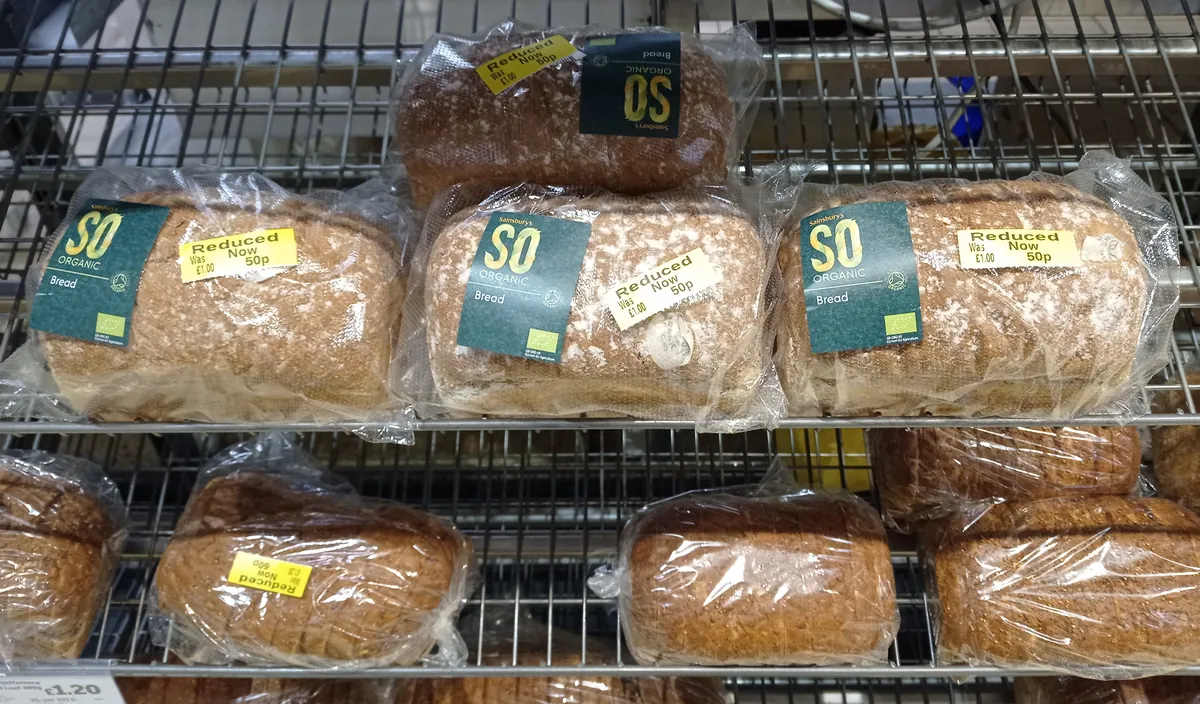
A brand may cover or correct the claim with a sticker, or add information at the point of sale, next to the products from the old stock. The EU consumer protection authorities set out their common approach to old stock in June 2026, which the DGCCRF relayed in August:
- Old stock does not exempt the company: it must bring itself into compliance without delay and in good faith, for its sales to consumers.
- The authorities may take into account packaging cycles, stock volumes, orders already placed and the lifespan of the product.
- They may decide not to require the destruction or recall of the products, where the measure would be disproportionate or needlessly harmful to the environment.
- Among the efforts they expect are written records of the measures taken and of their dates, along with adapting future packaging and orders.
Website, product pages and advertising first
The tolerance covers physical packaging. The same authorities may examine online claims as a priority, since they are quick to correct, along with media other than packaging. The DGCCRF announced in June 2026 that these claims would have to comply as soon as the new rules come into force. A product page that repeats the packaging claim is therefore corrected before the stock.
Packaging sold to businesses
The directive covers only business-to-consumer practices: a transport carton sold to a manufacturer falls outside its scope. The French decree, by contrast, covers any advertising and any packaging carrying the claim, whoever the customer is. Our article on banned claims explains what applies to business customers.
5What can you print instead?
The Commission states it plainly: a brand keeps the right to talk about the climate on its products, if the claim rests on real and verifiable reductions over the life cycle of the product. Wordings that hold up have 3 things in common, a figure, a scope and a date, written on the packaging itself. Our method for spotting unintentional greenwashing helps you reread your own claims.
A measured reduction, on the packaging itself
The Commission gives the model: a product may display a "reduced CO2 footprint" if the specification appears in clear terms on the same medium and rests on real improvements to processes. The directive likewise contrasts "climate-friendly packaging", which is generic, with "100% of the energy used to produce this packaging comes from renewable sources", which is specific. A comparison follows its own rules, set out in our article on the "less polluting" claim.
Climate claims on packaging, before and after rewriting
To remove: "Carbon neutral"
To print: "Carbon footprint of the pack reduced by 15% between 2023 and 2026, over its whole life cycle"Real reduction, same method, specified on the packaging itself (Commission, Q 10).
To remove: "100% offset"
To print: "We fund 2 Label Bas-Carbone projects in France, outside this product's value chain"The funding can be stated, with no effect attributed to the product (directive, Recital 12; ADEME, 2022).
To remove: "Climate-friendly packaging"
To print: "100% of the energy used to produce this packaging comes from renewable sources"The example of a specific claim given by the directive (Recital 9).
To remove: "Carbon neutral by 2030"
To print: "Target: -40% emissions per pack in 2030 compared with 2023, plan verified every year by a third party"Detailed, verified plan; a QR code to this plan is enough (directive, Article 6; Commission, Q 12).
Examples constructed for this article. Sources: Directive (EU) 2024/825; Commission, Q&A, Sept. 2026; ADEME, 2022.
A biomass-based product that stores more carbon than it emits across its value chain may even claim a positive impact, backed by a life cycle assessment. The Commission cites this case as an example of a claim based on the actual footprint of the product rather than on offsetting.
Funded projects, kept separate from the product
The directive does not prevent a brand from publicising its investments in carbon credit projects, provided it does not mislead. The sentence describes what the brand has funded, without attributing any effect to the product. The 2022 ADEME opinion already suggested writing that the company has funded a given number of projects certified under the Label Bas-Carbone in a given region, rather than "CO2-offset product".
A climate target, with its plan
A future target, such as a 40% cut in emissions per pack by 2030, remains possible under the directive with a detailed and realistic plan. A future product neutrality claim based on offsetting would, by contrast, fall under the ban. The plan sets measurable, time-bound targets and the resources allocated, and an independent third-party expert verifies it regularly, with its conclusions made public. For this plan, a QR code is enough. Our article on verifying climate commitments explains this check, and our guide to transition plans how to build the plan.
6How do you substantiate what you keep?
Every sentence kept on the packaging is substantiated before it is printed. For a climate claim, the evidence is the carbon footprint of the product, calculated over its life cycle according to ISO 14067, the standard the decree already requires. A full life cycle assessment is needed when the claim covers impacts other than climate.
The same method, 2 years compared
A reduction is measured between 2 years, or between 2 versions of the product, with the same method on both sides: same boundaries, same unit, same emission factors. A fall obtained by switching database is not a reduction. Our guide to substantiating a claim sets out the file to build, our article on verifying a product footprint what a third party can check, and our article on the cost of an LCA the budget for the measurement.
Example constructed for this article: a brand measures its pack of biscuits at 1.20 kgCO2e (kilograms of CO2 equivalent) in 2023 and at 1.02 kgCO2e in 2026, using the same method, which is 15% less. It may print "carbon footprint of the pack reduced by 15% between 2023 and 2026, over its whole life cycle". It will no longer be able to print "neutral", even by funding projects for the remaining 1.02 kg.
Footprint of a pack of biscuits, measured in 2023 and in 2026
Same method, same boundaries, same unit in the 2 years: the reduction becomes a sentence you can print.
Carbon footprint of the pack over its whole life cycle, in kilograms of CO2 equivalent (ISO 14067 standard).
Example constructed for this article. Rules: European Commission, Q&A on Directive (EU) 2024/825, Sept. 2026, Q 10; Directive (EU) 2024/825, Annex I, point 4c.
The reduction plan behind the figure
The French decree and the directive agree on one point: what counts is the trajectory of the product, not offsetting what is left. A reduction plan quantified item by item, materials, energy, transport, packaging, provides the next figures to print. Eco-design of a product starts from the same measurement, as does the eco-design of its packaging. To have all your claims reviewed at once, our article on choosing a claims auditor lists the questions to ask.
For us at Projet Celsius, the decision that matters is the next print sign-off, more than the wording of the sticker. Reprinting "carbon neutral" today amounts to betting that the National Assembly will not vote before the stock runs out, for a claim that other EU countries already ban. We advise keeping the report up to date for as long as the claim is on the shelves, and no longer reprinting it. The effort is better spent on measuring the footprint of the product: it is the only basis on which a climate claim will hold tomorrow.
7Key takeaways
- As at 27 October 2026, "carbon neutral" remains lawful on packaging in France, with a QR code to a report that is published and updated every year.
- The EmpCo directive already bans the claim in the countries that have transposed it, and French courts can penalise a misleading neutrality claim.
- The bill adopted by the Senate repeals the report regime and makes offset-based neutrality deemed misleading, from its publication if it is passed as it stands.
- Under the new rules, stock is not exempt: a sticker or shelf information corrects the claim, and the authorities may decide not to require its destruction.
- Instead, a measured reduction, quantified and dated on the packaging itself, substantiated by the carbon footprint of the product.
For neutrality at company level and net zero commitments, our article on carbon neutrality takes stock, and the list of banned claims covers the other claims found on packaging.
- France: Environmental Code, Article L. 229-68 and Article L. 229-69, created by Law No. 2021-1104 of 22 August 2021; Articles D. 229-106 to R. 229-110, created by Decrees No. 2022-538 and 2022-539 of 13 April 2022, in force on 27 October 2026; Consumer Code, Article L. 132-2. The Légifrance pages are in French.
- Bill: National Assembly legislative file, bill on various provisions adapting French law to European Union law, adopted by the Senate on 18 February 2026, consulted on 27 October 2026; text No. 2518, Articles 20 and 21.
- European Union: Directive (EU) 2024/825 of 28 February 2024, Recitals 9 and 12, Annex I, points 4a and 4c; European Commission, Q&A on the directive, September 2026, questions 6, 10, 12 and 18; CPC network, common position on old stock, June 2026.
- DGCCRF: webinar "Greenwashing: everything you need to know about the new rules", 12 June 2026; guidance sheet "The legal arsenal against greenwashing soon to be completed", 30 September 2025; news item on products already on the market, August 2026.
- ADEME: expert opinion "Use of the carbon neutrality argument in communications", February 2022.