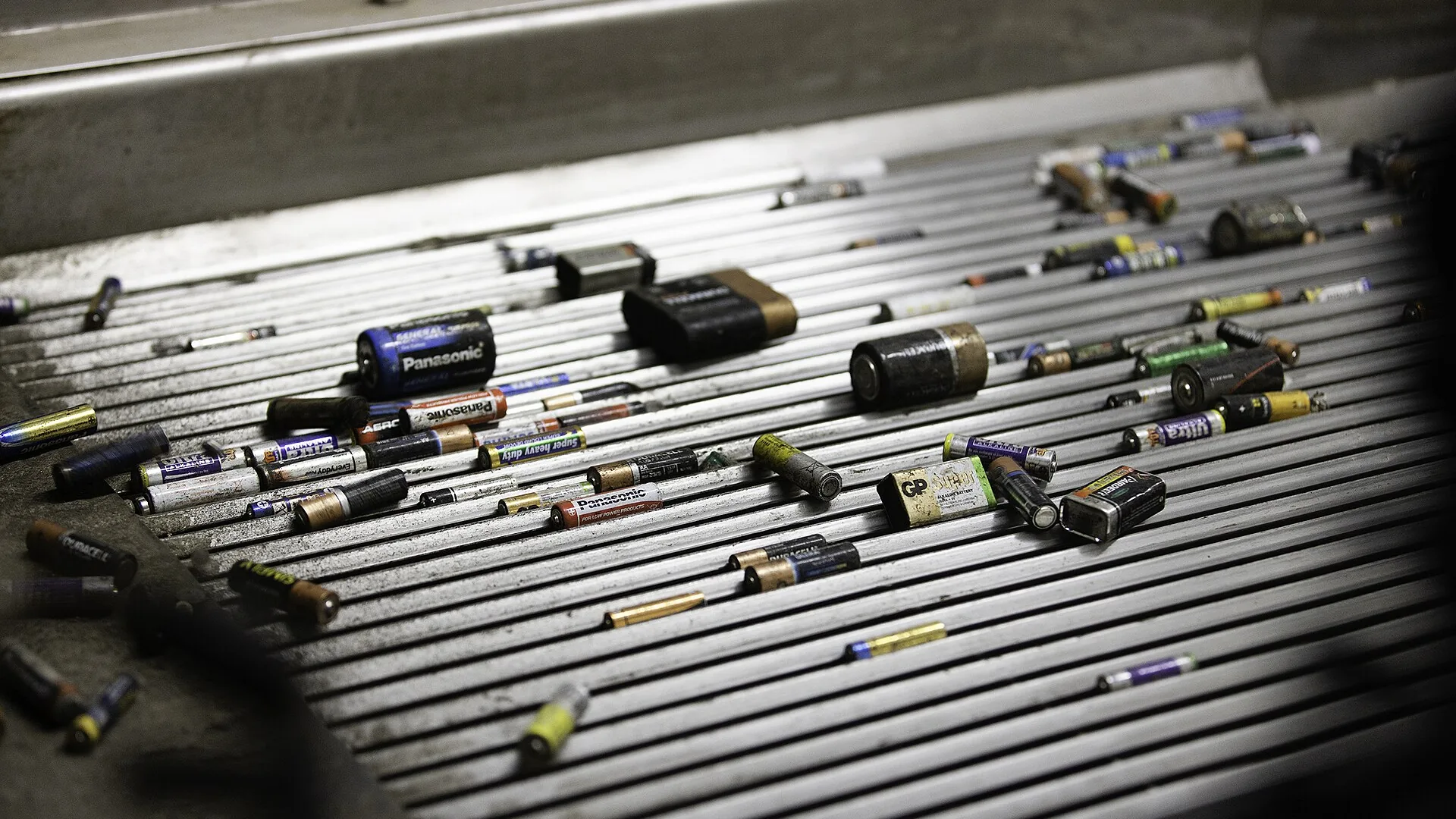

- 1An LCA (life cycle assessment) serves 4 uses: ESPR and DPP requirements, voluntary environmental labelling, scope 3 requested by clients subject to CSRD.
- 2Scoping = 10% of the budget, 80% of the value. Get it wrong and the LCA ends up as a forgotten report.
- 3Bpifrance’s Diag Éco-conception funds 60 to 70%. Remaining cost from €5,400 excluding VAT.
- 4The second LCA costs half as much as the first. The accumulated work then serves the whole catalogue.
When a manufacturer calls us to discuss ecodesign, the first question is almost always the same: "where do we start?" And the answer is almost always the same: with an LCA. Life Cycle Assessment is the tool that quantifies a product’s environmental impact from raw material extraction to end of life. It is the scientific foundation of ecodesign, the mandatory building block of the digital product passport (DPP), and the calculation foundation for environmental labelling. In other words, this is no longer an academic exercise reserved for large groups: it is work most European manufacturers will have to start within the next three years.
One well-executed LCA, four requirements covered
Click a requirement. The same data collection, four regulatory uses.
- Product carbon footprint to publish in the DPP
- Geographical origin of materials and electricity mix
- Durability and end-of-life information to timestamp
This article is designed for someone who has never carried out a product LCA and wants to understand what it is, how much it costs, how long it takes and, above all, how to avoid the mistakes that turn a useful investment into an unusable report. We have included what we would have liked to read before leading our first LCA assignment.
1Product LCA: definition and difference from Bilan Carbone®
LCA, Life Cycle Assessment, is a standardised method (ISO 14040/14044) that measures a product’s environmental impacts from raw material extraction to end of life: manufacturing, transport, use, recycling or waste. Unlike Bilan Carbone®, which looks only at CO₂, LCA covers several impact categories: climate, water, natural resources, air and soil pollution. That makes it a more comprehensive tool, and a more demanding one to carry out.
Bilan Carbone® and LCA: what distinguishes them
Both measure the environmental footprint, but answer different questions. Bilan Carbone® covers the whole organisation over one year, while LCA covers a specific product throughout its life.
In practice, the two tools are often used in parallel: Bilan Carbone® provides a snapshot of the organisation, while LCA informs product ecodesign choices.
The most common confusion: product LCA and Bilan Carbone® are different things. Bilan Carbone® measures the greenhouse gas emissions of an organisation (a company, a site). LCA measures the environmental impacts of a product (a T-shirt, a battery, a piece of furniture). One looks at the company as a whole; the other at an object from manufacturing to end of life. A manufacturer needs both, but they answer different questions. For a detailed comparison, see our dedicated article.
Five stations from cradle to grave, and the data collected at each
LCA is not an opinion: it comprises five standardised measurement points. Below each station are the concrete indicators to send to the modeller.
- kg of materials
- Geographical origin
- Upstream energy mix
- kWh / unit
- Process yield
- Losses & offcuts
- km × mode
- Load factor
- Packaging
- Energy consumed
- Actual lifespan
- Consumables
- % recycled
- % incinerated
- Recycling credits
2Regulation and clients are converging: why this is the right time
Three years ago, a first product LCA was an exercise in conviction: companies did it by choice, to support CSR work or prepare for certification. In 2026, it has become an exercise in anticipating compliance. The ESPR regulation (Ecodesign for Sustainable Products Regulation, EU 2024/1781) changes the scale of the issue: ultimately, almost all physical products sold in Europe will need quantified environmental data.
One well-executed LCA, four regulatory uses covered
The same modelling exercise feeds four distinct frameworks. Not four studies: one inventory, four uses.
The six priority families are already identified: textiles, furniture, tyres, steel, aluminium and mattresses. Delegated acts arrive between 2026 and 2029, with application dates 18 months later. And each delegated act asks for the same thing: an environmental footprint calculated over the life cycle, carried by a digital product passport (DPP). In short, an LCA.
Alongside ESPR, textile environmental labelling has already been under way in France since 2025, with the environmental cost calculated by Ecobalyse, a state method derived from PEF. The Batteries Regulation will require carbon footprint declarations for EV batteries 12 months after adoption of the methodology delegated act (still awaited on 20 July 2026, effective requirement expected in mid-2027). And scope 3 pressure linked to CSRD is pushing purchasing clients to request product data from their entire supply chain.
One well-executed product LCA can therefore serve 4 future uses, regulatory or commercial. This invisible sharing makes the timetable manageable, which is exactly why it is better to start calmly now than in a panic when a delegated act has just landed.
3The four phases of a product LCA
An LCA has four phases, always in the same order. Each has a deliverable, a main risk and a minimum duration. Here is how it works in practice on an assignment, with the friction points we encounter every time.
The 4 phases of an LCA and their actual share of the work
Click each phase to see what happens, the deliverable and the trap to avoid. One alone absorbs 60% of the total effort.
This is the bulk of the work. Collect primary data (your actual consumption) and secondary data (LCA databases) for each flow entering and leaving the system.
Phase 1 - Scoping (defining the right question)
Scoping defines three things. The precise question the LCA will answer, for example: "what is the impact of wearing a T-shirt for 30 washes?" or "what is the impact of storing 1 kWh of energy for 10 years?" This is called the functional unit, and it is the most consequential choice in the whole study. Next, the boundary: do we stop at the factory gate or go to the product’s end of life? Finally, allocation rules: how to assign impact when a process makes several products at once.
A good provider spends 2 to 4 days on this phase with your technical team. That investment seems disproportionate when you are eager to get to the figures, but this is exactly where the quality of the result is determined. We have seen €20,000 LCAs that were unusable because the functional unit had been defined in 30 minutes on the phone.
Phase 2 - Data collection (the longest)
The longest phase, by far. Allow 2 to 3 months for a first LCA, sometimes more if the supplier chain is complex. Calculating is not what takes time; getting the right figures from the right people is. There are two types of data. Your actual data: your factory’s energy consumption, the exact composition of your materials, your suppliers’ transport distances. And sector averages from public databases, which fill gaps when actual data are unavailable.
The sensible choice is to invest primary data collection in the sources that weigh most. If a quick screening shows dyeing accounts for 40% of your textile’s impact (a common result, as our textile life cycle assessment explains), that is where to seek actual data. For minor sources (secondary packaging, last-mile transport), generic data suffice. That is exactly what the article on battery hotspots shows: 80% of collection effort concentrates on 20% of sources.
Phase 3 - Calculating impacts
Once the data are collected, the provider feeds them into calculation software. This is the most technical phase but also the quickest (2 to 4 weeks). The result is your product’s environmental profile: how much CO₂ it emits, how much water and resources it consumes, how much pollution it generates. A full LCA produces around fifteen indicators; for some requirements (such as the Batteries Regulation), one is enough: the carbon footprint.
Phase 4 - Interpretation (what to do with the results)
Many first LCAs rush this phase, which is a pity: it turns a technical report into a decision tool. Interpretation identifies the 2-3 sources concentrating 70 to 80% of the impact (the familiar "hotspots"), tests what happens if a key parameter changes (another supplier, another energy source), and formulates ecodesign recommendations ranked by reduction potential and feasibility.
We have seen €20,000 LCAs that were unusable because the functional unit had been defined in 30 minutes on the phone. Scoping is 10% of the budget and 80% of the value.
4What a first LCA reveals: three misconceptions corrected
The pattern is the same on every assignment: the client arrives with a strong conviction about what "pollutes most" in their product, and the results tell another story. That is the whole value of a first LCA: replacing intuition with figures. Here are the three most frequent surprises.
Where the impact really hides
Three examples where LCA overturns common intuition. Click a product to compare what we imagine and what we measure.
Without quantified data, we optimise the wrong sources. LCA puts effort back where it really matters.
Packaging is rarely the problem. Most manufacturers think packaging weighs heavily. In practice, it represents 2 to 5% of total impact for most manufactured products. What weighs heavily is raw material and manufacturing energy. For a lithium-ion battery, active materials (cathode, anode, electrolyte) account for 40 to 60% of the footprint. For clothing, dyeing and finishing often weigh more than the fabric itself.
Sea transport is marginal. "The cells come from China, so transport must be the problem." No. Intercontinental sea transport of a battery represents 3 to 5% of its total footprint. What weighs heavily in a Chinese battery is not the Shanghai-Rotterdam journey; it is the coal powering the cell manufacturing plant. Same NMC chemistry, same functional product: 105 kgCO₂e/kWh in China versus 64 in Sweden, a factor of 1.6 due solely to the electricity mix. Our battery LCA guide explains this mechanism.
"Natural" is not always better. Conventional cotton can have a greater impact than recycled polyester on several indicators (water consumption, eutrophication, land use). A "paper" cup is not necessarily better than a plastic cup reused 100 times. LCA quantifies these choices rather than leaving them to marketing intuition.
This kind of result is exactly what gives a first LCA its value: it identifies the actual reduction levers, rather than those we imagined. As environmental labelling will make these scores public, it is better to know your hotspots before the market discovers them for you.

5How much it costs and how to fund it
Orders of magnitude vary with the type of LCA and complexity of the chain. Here are the ranges we see on assignments, and it is cheaper than you might think, especially when you know about public funding.
LCA budget: three levels, one funding scheme
Choose the depth of assessment and company headcount. The remaining cost recalculates.
ISO 14040/14044-compliant LCA, usable for ecodesign and ESPR preparation.
Can be combined with Diag Décarbon'Action. Indicative calculation using the midpoint of the chosen level.
Three levels of depth, three budgets
- Screening LCA (simplified): €5,000 to €12,000 excluding VAT, 4 to 8 weeks. Mostly secondary data, results as orders of magnitude. Enough to identify hotspots and guide internal ecodesign. Not enough for public communication or a DPP.
- Full ISO 14040/14044 LCA: €12,000 to €25,000 excluding VAT, 3 to 6 months. Primary data for critical sources, verifiable results. This is the standard for serious ecodesign and preparing for ESPR requirements.
- Complex or multi-product LCA: €25,000 to €40,000+ excluding VAT, 6 to 10 months. Long value chains, multiple suppliers, several product families. Typical of battery, automotive and chemical manufacturers.
These amounts are supplemented by critical review by an independent expert: an additional €3,000 to €8,000. It is mandatory when the LCA serves a published comparative assertion (ISO 14044); textile environmental cost labelling calculated with Ecobalyse does not require it, or for a regulatory declaration (battery DPP). For a first internal LCA, it is not required but recommended if results will be shared with clients or partners.
A reassuring point: the second LCA costs 30 to 50% less. Once the methodology is in place, databases built and supplier contacts established, applying LCA to a second product is much quicker. Across a catalogue of 10 products, the average cost per product falls to €5,000 to €8,000.
Bpifrance’s Diag Éco-conception
The first thing to check before budgeting anything, yet most manufacturers do not know about it! Diag Éco-conception, co-funded by Bpifrance and ADEME, covers 60 to 70% of the cost of an LCA assignment plus ecodesign recommendations for SMEs with fewer than 250 employees. In practice: 70% for companies with fewer than 50 employees (remaining cost €5,400 excluding VAT), 60% for 50-249 employees (remaining cost €7,200 excluding VAT). The assessment includes 18 days of expert work spread over 10 months, screening LCA of 1 to 3 products, and an operational ecodesign plan.
6Five frequent mistakes in a first LCA
After supporting dozens of first LCAs, we see the same mistakes recur. None is technical: all concern scoping, data or expectations. Most frustratingly, all are avoidable.
Poorly scoping the initial question
The most frequent and costly mistake. "Compare a plastic cup and a paper cup" is too vague to start an LCA. "Serve 100 hot drinks over one year in an office of 20 people" is the right question because it includes lifespan and the number of uses. With that wording, we see that a paper cup discarded after every coffee does not have the same impact as a plastic cup reused 200 times. We have seen €15,000 LCAs that were unusable because this initial question had been rushed through in 30 minutes.
Using averages everywhere instead of your actual data
The rushed manufacturer’s reflex: "we do not have supplier data, so we will use database averages." But averages reflect the global average scenario, not your reality. If your supplier manufactures in Sweden using hydroelectricity and you use the global average, your LCA overestimates impact by 40%. And for the DPP or environmental labelling, default data assign conservative upper-bound values, hence a higher (more penalising) score than reality. Getting your actual data is an investment, not a cost.
Launching the full study without quick scoping
Launching a €20,000 full LCA without first doing an €8,000 simplified version is like building without plans. Simplified LCA (or "screening") identifies the major impact sources in a few weeks and enables collection effort to concentrate on what matters. A typical case: a textile SME spent 3 months collecting supplier transport data (3% of impact) instead of focusing on dyeing (42%). Prior screening would have avoided this.
Failing to have the study reviewed by a third party
Many companies skip it to save €3,000 to €8,000. That is a false economy if results will be communicated. An LCA that has not been reviewed by an independent expert has no credibility with a client, regulator or competitor challenging your figures. Under the Batteries Regulation, this third-party verification is mandatory. It is better to plan it from the start than catch up afterwards.
Filing the report without taking action
LCA is not an end in itself. It is a decision tool for ecodesign. The most useful LCAs trigger an improvement cycle: identify major impact sources, change the product (material substitution, process optimisation, longer lifespan), recalculate and check that the improvement is real. Companies that leave the report in a drawer have spent money. Those using it to redesign their product have invested.
Companies that leave the LCA report in a drawer have spent money. Those using it to redesign their product have invested.

7Practical first steps
Four steps, in order. Allow 4 to 8 months for a first full LCA, less if you begin with screening. This is the sequence we recommend to all our clients.
Starting your first LCA: the 4 steps in order
A sequence designed to start this week. Click each step to see the detail and the right approach.
The best-selling product, the one most exposed to regulation, or whose scope 3 data a client requests. Not the whole catalogue: one product to start.
Step 1 - Choose the right product
Start with the product that ticks the most boxes: the best seller (results will represent your business), the most exposed to regulation (in one of the six priority ESPR families, or a candidate for voluntary environmental labelling), or the one whose data a client is requesting for their own scope 3. Do not start with a marginal product or one at end of life: you want the LCA to serve ecodesign too.
Step 2 - Check funding
Before contacting a provider, check your eligibility for Bpifrance’s Diag Éco-conception (fewer than 250 employees, turnover below €50 million). The application form takes 30 minutes, and validation 2 to 4 weeks. Acceptance rates are high. If eligible, the remaining cost falls to €5,400 to €7,200 excluding VAT for a complete assignment. Do not budget anything before getting that answer.
Step 3 - Start supplier data collection
The most time-consuming step, and also the most rewarding. Take your 5 most critical suppliers by volume and presumed footprint. Send a simple questionnaire: composition of supplied products, geographical origin of raw materials, electricity mix of their manufacturing plant. These data will be valid whichever method is used (ISO LCA, PEF, CFP) and whichever requirement materialises first. A six-month head start on collection is a six-month head start on your regulatory timetable! Our life cycle assessment service explains the collection scoping, modelling, report and scenarios delivered to your team.
Step 4 - Choose between screening and full LCA
If you have never carried out an LCA, the simplified version (screening) is the recommended starting point: €5,000 to €12,000 excluding VAT, 4 to 8 weeks, with results sufficient to identify major impact sources and guide ecodesign. If you have a near-term regulatory requirement (battery carbon declaration) or a textile environmental labelling project, voluntary but publishable by third parties, go straight to a full LCA. In both cases, the right contact at the provider is the technical manager who knows the processes and suppliers.
8Key takeaways
Product LCA is no longer a methodological luxury. It is the shared foundation of 4 converging requirements: ESPR and DPP requirements, voluntary environmental labelling and scope 3 requested by clients subject to CSRD. The collection and modelling work you do for one will serve the other three. This makes the work manageable, and makes anticipation worthwhile.
The path is mapped out. An €8,000 screening identifies your hotspots in two months. A full LCA at €15,000-25,000 gives you an asset reusable across your catalogue. Bpifrance’s Diag Éco-conception funds 60 to 70% of it. And the second LCA costs half as much as the first.
Manufacturers launching their first LCA in 2026 will be ready when their ESPR delegated act lands. Those waiting until the last moment will have six months to do eighteen months’ work, and will pay the price of urgency in budget and quality. You might as well start now, while the timetable allows!
9Texts and resources cited in this article
- ISO 14040:2006 and ISO 14044:2006 - Environmental management, Life cycle assessment. International reference standards for LCA methodology.
- ESPR Regulation (EU) 2024/1781 - Ecodesign for Sustainable Products Regulation. European regulatory framework imposing ecodesign requirements and the digital product passport (DPP).
- Batteries Regulation (EU) 2023/1542 - European regulation on batteries and waste batteries. Requires the carbon footprint declaration and battery DPP.
- European Commission, Product Environmental Footprint (PEF) - Recommendation (EU) 2021/2279 and sector-specific PEFCR (Product Environmental Footprint Category Rules). Harmonised method for calculating product environmental footprints.
- ADEME, Base Empreinte - Public database of emission factors and life cycle inventory data for the French context. Reference for environmental labelling.
- Ecoinvent v3.10 (2024) - Life cycle inventory database. More than 20,000 datasets covering global value chains.
- Bpifrance / ADEME, Diag Éco-conception - Public funding scheme (60-70%) for SMEs with fewer than 250 employees. 2025-2026 specification.
- JRC (Joint Research Centre), European Commission - Carbon Footprint of Products (CFP) methodology for batteries. Sector-specific calculation rules for the Batteries Regulation.
- Climate and Resilience Act, art. 2 (France, 2021) and implementing decrees - Legal basis for textile environmental labelling in France.
- Standards and methods - ISO 14040/14044 for the LCA framework, supplemented by impact assessment methods (PEF at European level, ReCiPe).