

- 1The Diag Écoconception is reserved for SMEs that have been active for at least 1 year.
- 2It pays 60 to 70% of a product study costing €18,000 excl. VAT.
- 3Bpifrance appoints the expert: the product and its data are prepared before the discussion.
- 4The follow-up is funded with ADEME aid, at a rate of 60 to 80%.
Yes, if the company is an SME under the EU definition that has been active for at least 1 year, and if the study covers a product, a service or a process. The Diag Écoconception, offered by Bpifrance (the French public investment bank) and ADEME (the French Agency for Ecological Transition), then pays for 60 to 70% of a service costing €18,000 excl. VAT, life cycle assessment (LCA) included. A mid-cap company (ETI in French) or a large company can turn to another ADEME aid, for a project that goes beyond a single product.
On €18,000 excl. VAT, you pay €5,400 or €7,200, depending on 2 thresholds
excl. VAT to pay, small company
Total service: €18,000 excl. VAT
70% grant paid by ADEME, subject to eligibility.
The content of the Diag and its 5 phases are detailed in how to set up an eco-design approach. The scheme is funded by ADEME and run by Bpifrance, in conjunction with the Pôle Écoconception (a French eco-design resource centre).
1Who is eligible for the Diag Écoconception?
Taken together, the pages of Bpifrance, of France Num (the French government's digital support scheme for small businesses) and of the Mission Transition Écologique (the State platform for companies' ecological transition), all in French, set 4 conditions:
- The company is an SME under the EU definition: fewer than 250 employees, and turnover below €50 million or balance sheet total below €43 million. Micro-enterprises are eligible.
- It is up to date with its tax and social security debts, and is not a company in difficulty.
- It can show at least 1 year of activity.
- The product or service is not judged too complex when the application is reviewed or the service is scoped.
The public page on the Diag says who is eligible and what is funded
2 extracts from the France Num page, and what they mean for an application.
Extract from the France Num page (translated)BeneficiariesSMEs within the European definition in force: up to date with their tax and social security debts; able to show at least one year of activity.Not eligible: companies in difficulty.
How to read it
An SME within the European definition, up to date with its debts and active for at least 1 year. A company in difficulty is excluded; a micro-enterprise remains eligible, according to the Mission Transition Écologique (the French government's business support service).
The scheme is open to all sectors, and the study can concern a product, a service or a process: a packaging, a garment or a cosmetic, for example. Company size then determines the grant rate: 70% for a small company, 60% for a medium-sized one.
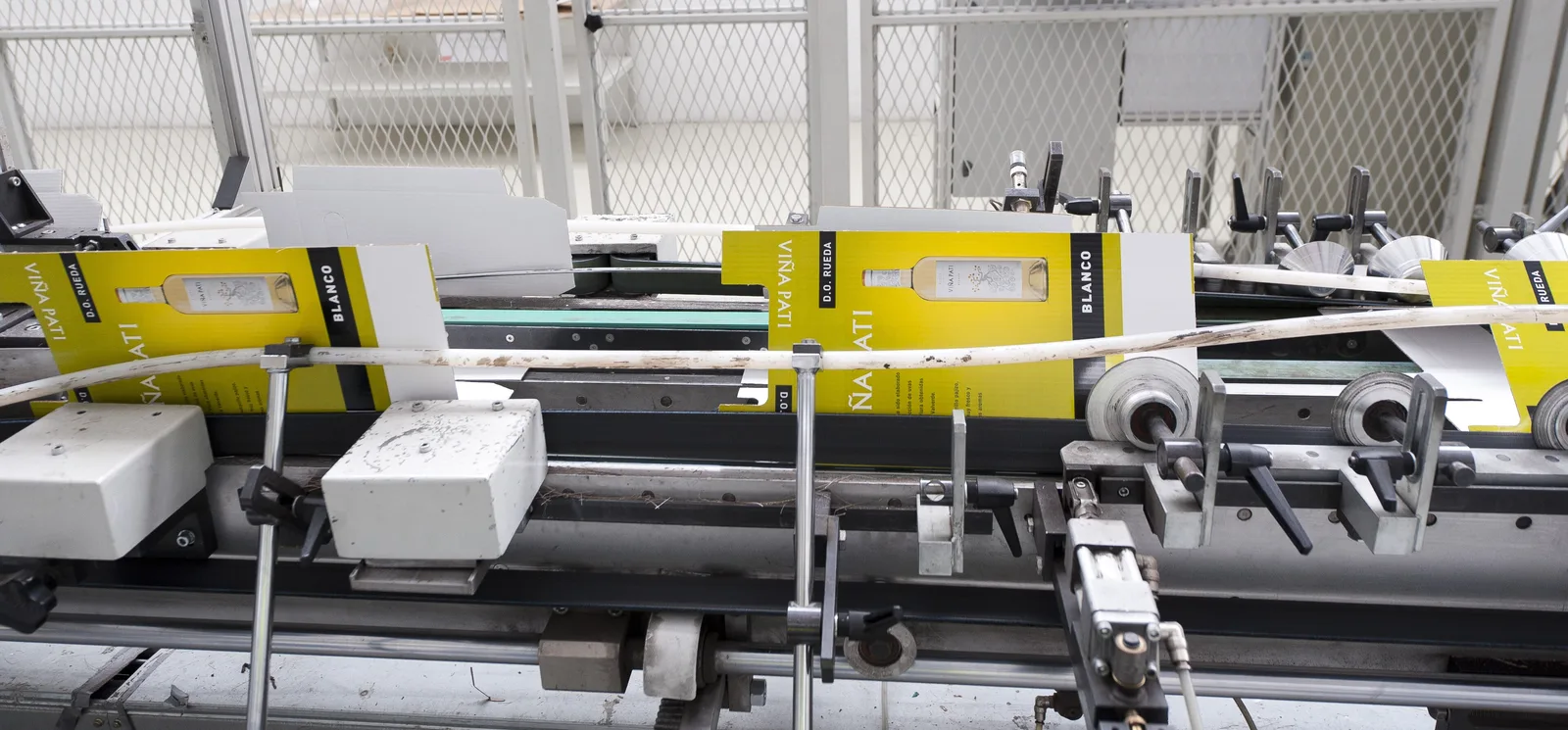
The last criterion is the vaguest. The official pages do not define what makes a product too complex: the question is settled when the application is reviewed, with a Bpifrance adviser. An assembly of hundreds of bought-in components is best reduced to a sub-assembly or a representative model before the discussion.
A product excluded on this ground may fall under an in-depth study supported by ADEME, diagnostic included, since ADEME excludes only the diagnostics that are eligible for the Diag.
2How do you apply?
The Mission Transition Écologique describes 6 steps, from the online check to the launch:
- The company checks its eligibility online, using its SIRET number (the French business establishment registration number).
- It registers its interest on the Bpifrance form.
- An adviser checks eligibility with it and prepares the application.
- The company defines the scope of the diagnostic, the method and the timetable with the expert.
- It formalises its application and validates the terms of the support.
- The diagnostic starts with the expert selected by Bpifrance.
The expert is an engineering consultancy referenced by Bpifrance, and it is Bpifrance that selects it. The official pages on the scheme do not publish the list of these experts. The company therefore does not choose its provider freely. For a study supported by ADEME, by contrast, it consults the engineering consultancies itself and picks its own. Projet Celsius is one of the engineering consultancies referenced by Bpifrance for this Diag; for a given application, it is Bpifrance that appoints the expert.
Before the first discussion, 3 items save time:
- The chosen product, with the reason for the choice: its weight in sales, a customer request or an approaching regulation.
- The manufacturing data available: bill of materials, materials, energy consumption and production scrap.
- The 2 or 3 main suppliers, with a contact able to answer on the origin and composition of the materials.
The data to gather for an assessment are detailed in the guide to a first LCA.
3What does the Diag not fund?
The Diag covers the diagnostic of a product. 4 needs fall outside its scope:
- The implementation of the action plan and in-depth studies fall under ADEME's aid for eco-design studies (in French).
- Investments in production equipment fall under another ADEME aid, the one for eco-design investments.
- A critical review of an LCA, needed to publish a comparison, is not among the 5 phases. It is priced separately, as explained in the price of a critical review (in French) (in French).
- The company's emissions assessment falls under another Bpifrance diagnostic, the Diag Décarbon'Action (Bpifrance's diagnostic of a company's greenhouse gas emissions).
The Diag also provides no ready-to-use proof for a marketing claim: a statement such as "less polluting" requires a verified comparison, under the rules described in proving an environmental claim.

4Which other funding can you combine it with?
ADEME's 2026 conditions (in French) exclude from its own aid the diagnostics that are eligible for the Diag Écoconception, which ADEME says are therefore not meant to be funded directly by it. For an SME, the diagnostic therefore goes through Bpifrance, and ADEME steps in afterwards.
What follows with ADEME
ADEME's aid for eco-design studies funds expenses at a maximum rate of 60 to 80% depending on size, within a limit of €150,000 of expenses: €50,000 for the diagnostic, €100,000 for implementation. It is open to companies of all sizes, which makes it the route for a mid-cap or large company. For them, the study must target a significant roll-out, across a range or a major issue: ADEME rules out the study of a single product that it considers specific or anecdotal. The study must be neither ordered nor started before the application.
The Diag funds the diagnostic, ADEME what follows, Décarbon'Action the company
ADEME does not directly fund a diagnostic that is eligible for the Diag Écoconception, and the same study is not funded twice.
For a mid-cap company, ADEME does not fund the study of a single isolated product.
Diag Décarbon'Action and local aid
The Diag Décarbon'Action (in French) measures the greenhouse gas (GHG) emissions of the whole company, for €6,000 excl. VAT after a 40% grant, for a company with fewer than 500 employees. It looks at the organisation, whereas the Diag Écoconception looks at a product: the 2 answer different questions, as the comparison of a carbon footprint assessment and an LCA shows.
Local aid calls for more caution. The 2025 rules (in French) of Lyon's call for projects, run by the Métropole de Lyon (the local authority of the Lyon area), funded an LCA at 50%, up to €10,000 of aid, and excluded stacking with another scheme covering the same project. The same study therefore cannot be funded twice: you choose the most favourable scheme, or fund 2 different stages. The overview of funding schemes lists the other schemes.
5Is the Diag enough for your product study?
It is enough when the company wants to understand the impact of a product and decide on its first improvements, for example to anticipate the requirements of the Ecodesign for Sustainable Products Regulation (ESPR), the EU regulation, on its product family. It is not enough when the study has to support a verified declaration, an FDES (the French format of environmental product declaration for construction products) or a published comparison. A study that complies with the standard of the programme is then needed, followed by a verification: the budget is detailed in how much an LCA costs and in choosing an FDES verifier, and the export side in EPDs for export.
For us at Projet Celsius, the Diag is the best entry point for an SME that has never assessed a product. It brings together measurement, the training of an internal lead and an action plan, for €5,400 or €7,200 excl. VAT. It is best prepared in advance, then extended with ADEME aid. We carry out LCAs and help companies prepare these steps.
6Key takeaways
- The Diag Écoconception is reserved for SMEs under the EU definition, up to date with their debts and active for at least 1 year.
- It pays for 60 to 70% of a service costing €18,000 excl. VAT, life cycle assessment and action plan included.
- The application goes through Bpifrance, which appoints the expert from the engineering consultancies it has referenced.
- Implementation, investments, the critical review and the carbon footprint assessment are funded separately.
- ADEME does not directly fund the diagnostics that are eligible for the Diag, but supports what follows, at a maximum rate of 60 to 80% depending on size.
To place the Diag within a complete approach, see how to set up an eco-design approach.
- Bpifrance, Diag Écoconception page: profile, terms, amounts and duration; Diag Décarbon'Action page (both in French). Accessed on 17 October 2026.
- Mission Transition Écologique, Diag Écoconception page (in French): steps, remaining cost, eligibility conditions. Accessed on 17 October 2026.
- France Num, Diag Écoconception page (in French), updated on 5 January 2026: phases, beneficiaries, amount. Based on aides-entreprises.fr (CMA France, the national network of chambers of trades and crafts), Etalab 2.0 licence; extracts reproduced.
- ADEME, aid for eco-design studies of products and services, 2026, and eligibility and funding conditions 2026, section 2.3.3 (both in French).
- Métropole de Lyon, rules of the call for projects Transformation durable des entreprises, life cycle assessment, 2025 (in French), Article 4.


