

- 1The regulatory declaration goes through a notified body, which visits the factories.
- 2All production, from active materials to the pack, requires data from the factories.
- 3Electricity counts at the country's average mix, unless a direct line is proven.
- 4Have the study reviewed before submission, on electricity and allocation.
A life cycle assessment (LCA) of a battery can be reviewed by 2 very different third parties, depending on what the result will be used for. The carbon footprint declaration required by the EU Batteries Regulation goes through a notified body, which visits the factories. A study published to compare a product with a competitor's goes through a critical review under the ISO 14044 standard. In each of the 2 cases the file rests on 3 elements: factory data for the cells and active materials, proof of the electricity mix, and a study that documents every choice.
The regulatory declaration goes through a notified body, a published comparison through a critical review
The carbon footprint declaration of an electric vehicle battery, a light means of transport battery or an industrial battery above 2 kWh, mandatory 12 to 18 months after the method enters into force, not adopted at 17 October 2026.
Critical review
ISO 14044 standard, any LCA
- Who carries it out
- An LCA expert independent of the study
- What you receive
- A review report, before the file is submitted
- Source text
- ISO 14044, clause 6
Notified body
European regulation, carbon footprint declaration
- Who carries it out
- A body notified under the Regulation
- What you receive
- A decision on the quality system, then surveillance audits (series) or a certificate of conformity (single unit)
- Source text
- Regulation 2023/1542, Art. 17(2)
The calculation rules, however, have not yet been adopted. The Commission's draft act for electric vehicle batteries was published for feedback on 30 April 2024, and the Joint Research Centre (JRC) published its rules for industrial batteries in April 2025. A manufacturer preparing its file today works from these 2 documents, knowing that they may still change.
1Who reviews a battery LCA: an expert, a review panel or a notified body?
It depends on what the figure will be used for, as with the verification of an in-house carbon footprint assessment (in French) (in French). The EU Batteries Regulation requires a carbon footprint declaration for electric vehicle batteries, light means of transport batteries and rechargeable industrial batteries above 2 kWh. Everything else, whether a published comparison, a customer file or an internal study, is a matter for the standard or the contract.
The notified body, for the regulatory declaration
Article 17 of the Regulation, in its consolidated version of 13 August 2026, excludes self-checking for the carbon footprint. The declaration goes through one of the 2 modules involving a notified body, set out in Annex VIII:
- For a battery manufactured in series, module D1: the notified body approves the manufacturer's quality system after an audit that includes a visit to the facilities.
- Still for series production, it then carries out periodic audits in which it checks at least the carbon footprint values and the correct application of the method, and it may visit without notice.
- For a battery manufactured as a single unit, module G: the body examines the battery, issues a certificate of conformity and affixes its identification number to it.
- In each of the 2 cases, the manufacturer keeps the certificates and decisions for 10 years after the battery is placed on the market, available to the authorities.
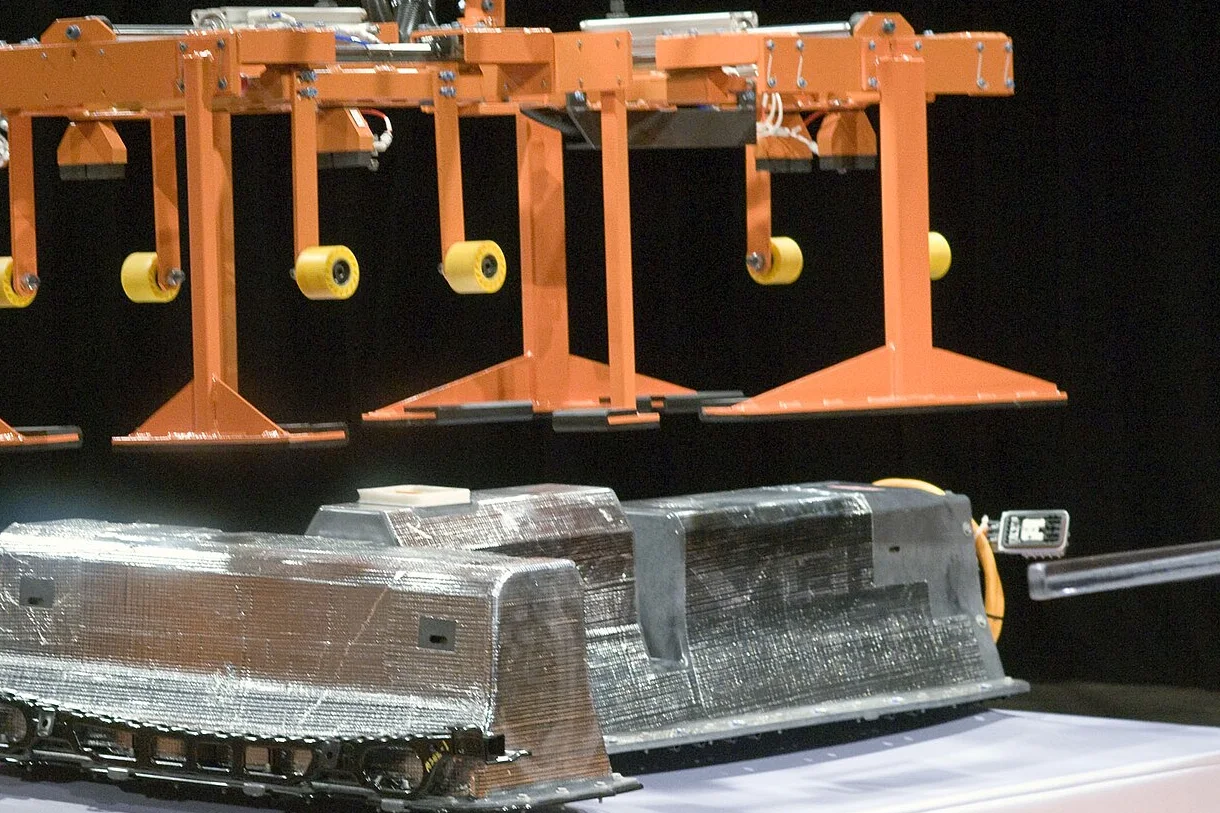
Article 25 of the same Regulation sets out the independence of the body: neither it nor its staff may design, manufacture or distribute the batteries they assess, or carry out any activity that would threaten their judgement. The list of bodies notified under the Regulation can be consulted in the Commission's NANDO database. The provider that calculated the footprint therefore cannot verify it, as with the verification of an FDES (in French) (in French) (the French format of environmental product declaration for construction products).
The critical review, for a comparison or a customer
A critical review follows clause 6 of the ISO 14044 standard. It is mandatory for a published comparison, with a panel of interested parties of at least 3 members, and optional elsewhere under the standard; a customer may nevertheless require it in its tender specification. Our article on choosing an independent expert (in French) (in French) describes how a critical review of an LCA works, and its price (in French) (in French) varies mainly with the number of reviewers.
The 2 routes do not replace each other. A critical review report is not a regulatory verification. The opinion of a notified body covers only conformity with the European method, not a comparative statement, which is governed separately by the rules on environmental claims. A review carried out before submission does, however, serve as a dress rehearsal: it spots the gaps in the file while they can still be filled.
2What does the notified body verify, and under which rules?
The notified body verifies that the carbon footprint declaration complies with the method set by the delegated act, and that act is still missing. For electric vehicles, the draft act and its annex were published for public feedback on 30 April 2024 and received 127 contributions; the initiative page shows no adoption date at 17 October 2026. For industrial batteries, the April 2025 report of the Joint Research Centre, the JRC, serves as the technical basis.
The calculation and verification rules sit in 2 documents, neither of which is adopted
Draft annex to the delegated act, electric vehicle batteries
Commission, published for public feedback on 30 April 2024 (127 contributions)
Draft, not adopted
What it sets for the file
Electricity at the country's average mix, unless generated on site or supplied by a direct line.
A visit by the notified body to the cell, electrode and active material factories.
A new declaration if the footprint increases by more than 10%.
Calculation rules for industrial batteries without external storage
Joint Research Centre, 11 April 2025, EUR 40286
Technical basis, not binding
What it sets for the file
A functional unit tied to the declared lifetime, in cycles or years, for a standard or a custom battery.
The data rules of the draft for vehicles, taken up almost word for word.
For electricity, a reference to the final act on electric vehicles.
What the body checks
Section 3.2 of the draft annex requires it to check that the data are consistent, reliable and traceable and that the calculations are correct. Its checks cover 4 points:
- It checks each secondary dataset and each piece of company-specific data for coverage, precision, representativeness, source and uncertainty.
- It verifies that the electricity modelling rules have been applied, along with unit conversions and estimation methods.
- For a battery manufactured in series, it visits the manufacturer's premises, the cell, anode and cathode plants, and those producing the active materials.
- It identifies uncertainties greater than expected and measures their effect on the total footprint.
It reads 2 documents. The full study contains the inventory tables, datasets, allocation factors and evidence. Its public version gives the footprint by life cycle stage, the data quality rating and the electricity mix used.
A rule that forces you to start again
The draft adds a rule that weighs on the long term: if the footprint increases by more than 10%, through a change of supplier, material origin, process or electricity, the battery becomes a new model. A new calculation and a new declaration are then required, and therefore a new verification.
3Which primary data should you collect for cells and active materials?
All main production is modelled with company-specific data: cathode and anode active materials, electrodes, electrolyte, cells, modules and pack, then distribution. For the most relevant upstream stages, such as cobalt, nickel, lithium or graphite precursors, the manufacturer chooses between a dataset from the Commission's list and one specific to its supplier.
From active materials to the pack, company-specific data are required and the factories are visited
Electrodes and cells
Electrode coating and drying, electrolyte, cell assembly and formation: energy by workshop, yields and scrap, including cells rejected at the end of the line.
Company-specific data: mandatory. Visit: mandatory. Visit to the cell, anode and cathode production sites.
What the factory must be able to show
The collection rules, taken up in the JRC report, are precise and verifiable:
- Data are the average of one year, except for a new line, whose first 6 months may be excluded from collection.
- Energy is measured as close to the workshops as possible, whether for electrode coating, assembly, cell formation or dry-room air conditioning.
- The bill of materials reflects the actual yields of the site, including manufacturing scrap and cells rejected at end-of-line testing.
- A quality system, ISO 9001, ISO 14001 or EMAS, must show that the data were collected and managed correctly.
A supplier that refuses to hand over its full inventory may provide an aggregated dataset, directly or through a third party. The manufacturer must then ensure that the notified body receives from the supplier all the information it needs. According to the report on industrial batteries, this dataset contains at least the footprint per kg or per kWh, by stage, and the content of 16 elements, including cobalt, nickel and lithium. This is the same logic as the carbon data requested from suppliers in a corporate carbon footprint assessment.
For company-specific data on an upstream stage, the report sets a maximum quality rating of 2.5 or 3, depending on whether an acceptable secondary dataset exists. The calculation method, based on the Product Environmental Footprint, known as PEF, and the choice of data are covered in our guide to carrying out an industrial battery LCA, and the heaviest items of a battery show where to concentrate data collection.
4How do you prove the electricity mix used in production?
By default, the draft annex uses the average consumption mix of the country of each factory. It makes only one exception: electricity produced in the same installation or delivered by a direct line, within the meaning of the European Electricity Directive 2019/944. Recital 5 of the draft act rules out contractual instruments, including guarantees of origin and power purchase agreements through the grid, because double counting outside the Union cannot be excluded.
The evidence to gather
To claim directly connected electricity, the study must provide the proof, in the form of these documents:
- The connection diagram showing generation on the site, or the direct line to the factory, without passing through the public grid.
- The annual records of generation and of injection into the grid, since the electricity claimed cannot exceed generation minus injection.
- The records of withdrawal from the grid, because any electricity taken from the grid, even as a top-up, counts at the country's average mix.
- Proof that no certificate attached to this generation has been sold to a third party, failing which it reverts to the average mix.

The Joint Research Centre report on industrial batteries refers to the final act on electric vehicles for the modelling of electricity. A calculation made today with a green power purchase agreement may therefore have to be redone. The country's mix matters, even though materials weigh more, as our article on what makes up the footprint of a battery shows.
5Which pitfalls are specific to batteries?
The pitfalls of a battery LCA come down to 2 things: calculation rules specific to the sector, and a timetable that is not yet fixed.
Rules that change from one battery to another
Several rules do not exist in the general method, or change from one battery category to another:
- The functional unit relates to the energy delivered over the whole life: for an industrial battery, it depends on the declared lifetime in cycles or years, which must be the same as in the technical documentation.
- Economic allocation applies when the prices of 2 co-products differ by more than a factor of 10 in the draft for vehicles, or when their economic values differ by more than a factor of 5 in the report on industrial batteries.
- A 1% cut-off by mass is allowed per component, but the mass difference must be reallocated and reported in the study.
- Recycled content counts only if proven, and end of life follows the circular footprint formula, with default values unless the company's own recycling is proven.
- Process emissions covered by the European carbon market are calculated under Implementing Regulation (EU) 2018/2066, and those from chemical reactions by stoichiometry.
A timetable that is moving
The declaration will apply 12 months after the entry into force of the delegated act and of the implementing act for electric vehicles, and 18 months after theirs for industrial batteries. A study based on a draft may have to be redone on the adopted text: it is better to keep a parameterised model than a fixed result. The same checks apply to any LCA calculated with software (in French) (in French).
6How should you organise the review and the verification?
The critical review covers the study; the verification by the notified body covers the study and the sites. The 2 are prepared with the same file, in an order that avoids back-and-forth.
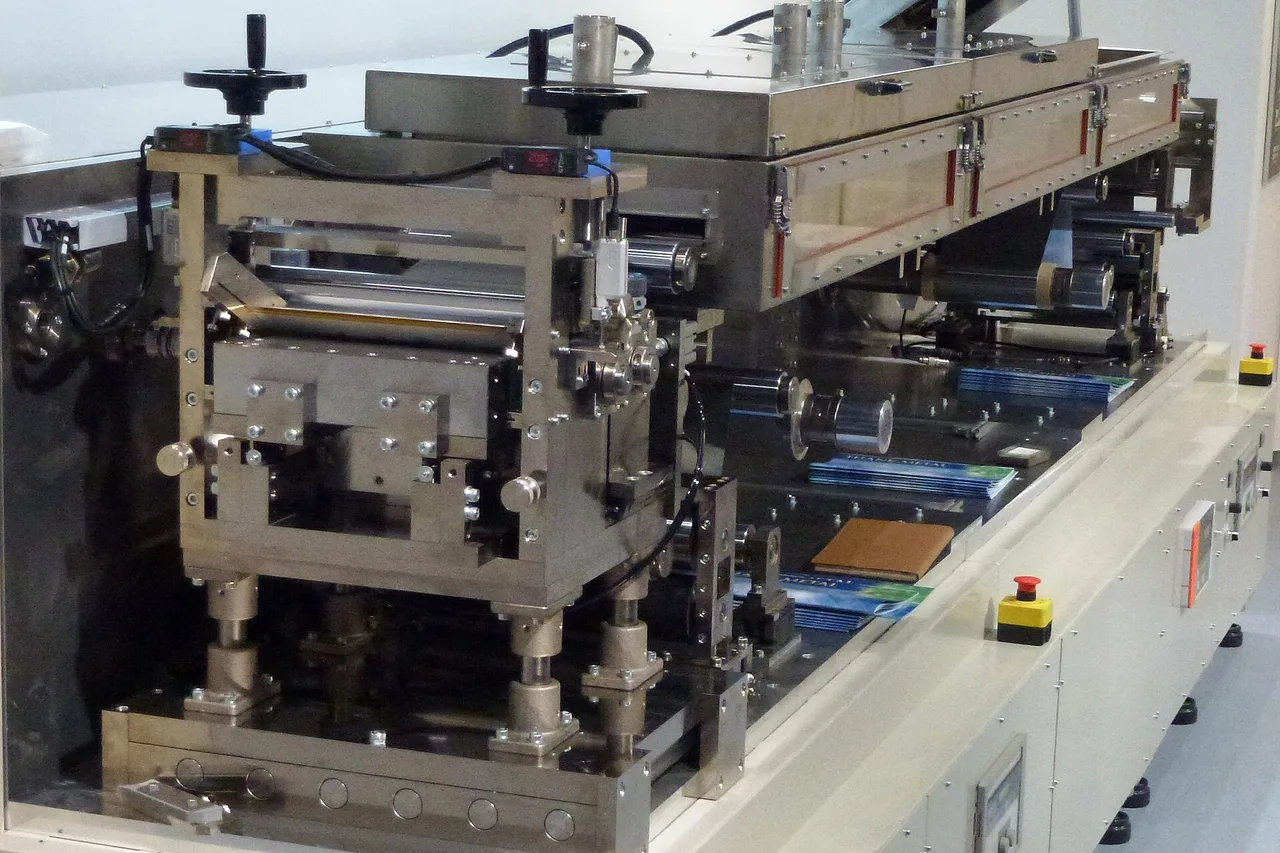
The order of work
Verification takes place in several factories, often in several countries. A working order avoids discovering the gaps on the day of the audit:
- Fix the scope, that is the battery category, the model, the factory and the manufacturing mode, which determines module D1 or G.
- Collect the data of the active material and cell factories, with the suppliers, before modelling.
- Have the study reviewed by an independent expert, on the most exposed points: electricity, allocation, the functional unit and recycled content.
- Correct, then submit the file to a notified body chosen by the manufacturer, allowing for access to the suppliers' sites.
Choosing the notified body
Before signing, 4 points should be checked with the body:
- Its notification covers Regulation (EU) 2023/1542, the battery category and the module concerned, D1 or G, which the NANDO database shows for each body.
- Its audit team includes at least one member who knows the product group and its technology, as Annex VIII requires for module D1.
- It can visit the suppliers' cell and active material factories, often outside Europe, and write its reports in a language the manufacturer accepts.
- Neither it nor its staff has advised the manufacturer on this battery: Article 25 expressly refers to consultancy services.
Cost and reuse of data
There is no public price list for verification by a notified body. The calculation itself follows the orders of magnitude in our article on the cost of an LCA. The declaration also feeds the battery passport and, more broadly, the Digital Product Passport (DPP): data verified once are used several times, up to the DPP calculation method.
At Projet Celsius, the first item we ask for is evidence: the energy records by workshop and the yields of the cell factories, which suppliers are not used to sharing. We carry out LCAs and critical reviews under ISO 14044; verification of the declaration then falls to an independent notified body, which the manufacturer chooses. A team that wants to carry out its own first product LCA can train with our LCA training course.
7Key takeaways
- The regulatory declaration goes through a notified body, which visits the factories; a published comparison goes through a review panel.
- The rules come from a 2024 draft act and a 2025 report, and no text has been adopted at 17 October 2026.
- All production, from active materials to the pack, is modelled with factory data, averaged over 1 year.
- Electricity counts at the country's average mix, unless on-site generation or a direct line is proven.
- Have the study reviewed before submission, on electricity, allocation and the functional unit.
For the Regulation as a whole, see our guide to the Batteries Regulation; for the calculation, our guide to the LCA of an industrial battery.
- Regulation (EU) 2023/1542 on batteries, consolidated version of 13 August 2026: Articles 7, 17 (including paragraph 4 on the language of the reports) and 25, Annex VIII, parts B and C.
- European Commission, draft delegated regulation and annex on the method for calculating and verifying the carbon footprint of electric vehicle batteries, Ares(2024)3131389, published for feedback on 30 April 2024: recitals 5 and 8, annex, sections 2, 2.3, 2.4 and 3; initiative page 13877 consulted on 17 October 2026.
- Joint Research Centre, Andreasi Bassi et al., Rules for the calculation of the Carbon Footprint of industrial Batteries without external storage (CFB-IND), EUR 40286, 11 April 2025, CC BY 4.0; the Centre's page on the carbon footprint of batteries, updated 23 July 2026.
- Directive (EU) 2019/944, Article 2, point 41 (direct line).
- ISO, ISO 14044:2006, clause 6; ISO 14071:2024.
- European Commission, NANDO database of notified bodies.
- Cover photo: Yo-Co-Man, prismatic lithium iron phosphate cells in series and in parallel, 2017, Wikimedia Commons, CC BY-SA 4.0.


