

- 1LCA software calculates what it is given, and does not judge the quantities that you enter.
- 2Database providers publish their own errors, version after version, in lists of known issues.
- 3A mass balance and a hand recalculation catch the unit errors that the software lets through.
- 4A published comparison requires a critical review, and a declaration requires an authorised verifier.
Software for life cycle assessment, or LCA, links processes, adds up flows and applies an impact assessment method to them, without judging what it is given. A consumption of 3.6 MJ entered as 3.6 kWh goes through the calculation without any warning. This type of error exists even in the databases, whose providers publish corrections version after version.
7 checks before an LCA result leaves the company
The 7 checks are done in-house. How the result will be used then decides who must verify it.
Checks done
0 / 7
Use of the result
7 in-house checks still to do.
Review by an outside practitioner
No text requires it, but the reviewer must open the model, not only read the report.
The 7 checks of the tool above are done in-house, before any outside review. Choosing the expert reviewer has its own guide, on LCA critical review (in French) (in French).
1What does LCA software check, and what does it let through?
Expert software such as SimaPro, Sphera LCA for Experts (which has replaced GaBi) or openLCA does the same underlying work as sector-specific tools or the public calculator Ecobalyse. The openLCA manual, for the open-source software published by GreenDelta, describes 3 automatic checks:
- Database validation flags broken links between datasets, for example after importing an external database.
- The supplier check finds products with no default supplier, or with several possible suppliers, a source of results that change from one calculation to the next.
- The impact checks tab lists the elementary flows that the impact assessment method does not characterise, and that lead to the result being underestimated.
The 6 places in a model that the software does not check for you
4. Which quantity, which unit?
The inputs of a process
Each input carries a quantity and a unit, here for hoeing and fertilising. The software converts the declared units, but does not warn about a quantity 10 times too large.
The software also converts units, grams to kilograms or kilowatt-hours to megajoules, provided the declared unit is the right one. It does not check, however:
- The quantity entered, which goes through as it stands: 1,000 kg instead of 1 kg, or megajoules declared as kilowatt-hours, multiply the item without a single message.
- The choice of dataset is not judged: a Swiss or global process used for French production can still be calculated, but is not necessarily representative.
- Errors in the database itself, which pass every validation because the dataset remains consistent with its format.
The exact name of the flows matters too. According to the openLCA manual, "carbon dioxide (fossil)" and "carbon dioxide, fossil" can coexist, and generally only one is characterised.
2Which errors have been publicly documented?
The same model in 2 software packages
In 2015, Ivan Tengbjerg Herrmann and Andreas Moltesen compared SimaPro and GaBi on 100 randomly selected unit processes. Many results were identical or nearly so, but others differed enough to change the conclusions of a study. For a single elementary flow, the gap reached a factor of 109.
According to their 2015 paper, these gaps came mainly from errors in the databases built into the software, not from the calculation. A study published in 2016 in the Journal of Industrial Ecology says so in its title: the choice of software can influence the results.
Database errata
Database providers also publish their errors. For version 3.3 of ecoinvent, the Swiss association that publishes this inventory database keeps a list of known issues. US, Chinese and global cotton production counted its electricity in megajoules without conversion to kilowatt-hours, 3.6 times too much. The anaerobic digestion of slurry had an incorrect mass balance.
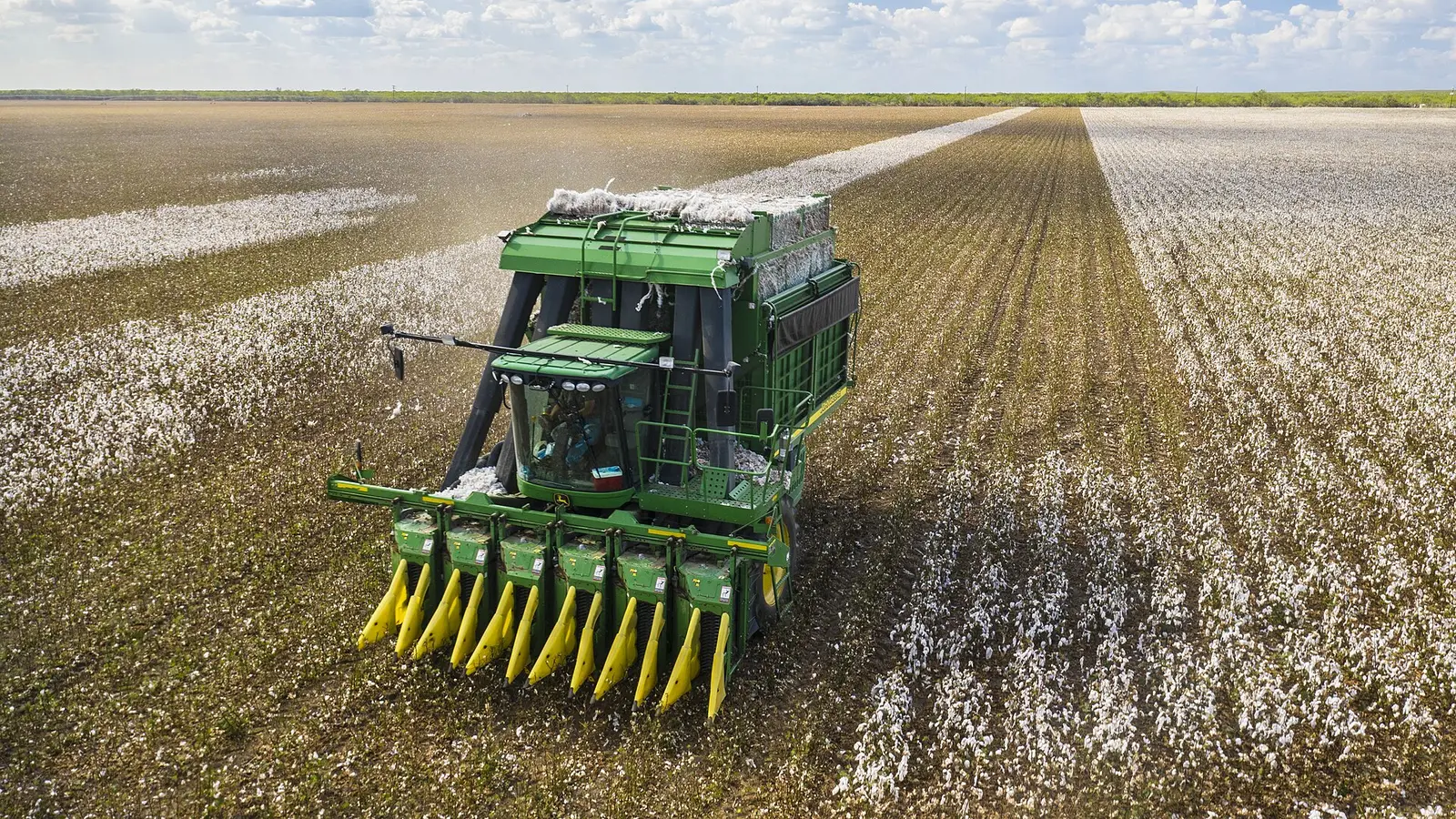
Any LCA of a cotton garment calculated with this version, whether for textile environmental labelling or for a textile eco-design project, therefore inherited this inflated electricity. In September 2024, ecoinvent also reported 2 errors in its version 3.10. The cobalt and anthracene emissions of 2 coke production processes were overestimated, which inflated the toxicity indicators. The volumes of the Brazilian electricity market were 3 orders of magnitude too low.
GreenDelta relayed the alert to openLCA users as early as 12 September, and the correction, named 3.10.1, was announced for early November 2024 with version 3.11. For a study calculated in the meantime, only the list of errata says whether its processes are affected.
3Which checks can you run yourself before releasing a result?
The ILCD Handbook of the European Commission's Joint Research Centre details the checks provided for by ISO 14044: completeness, sensitivity and consistency. It lists material and energy balances among the key checks for spotting errors. 7 tests follow from it, feasible in any software:
- The mass balance checks that the mass going in comes out as product, co-products, emissions and waste, to within a few percent.
- The contribution analysis ranks the processes: the 5 that weigh the most must each be explainable in one sentence, otherwise their data has to be opened.
- The hand recalculation of the main item, quantity times factor: a gap of 3.6 gives away kilowatt-hours taken for megajoules, a gap of 1,000 grams taken for kilograms.
- The uncharacterised flows, listed by the software, must not include any flow that matters for the indicator studied.
- Sensitivity is tested by varying transport, the electricity mix or the lifetime, and the conclusion must hold across the whole range, as in an electric car LCA where the mix shifts the tipping point.
- The comparison with a published value places the result, which must fall in the same order of magnitude as an FDES (the French format of environmental product declaration, EPD, for construction products) for a similar product, as the ILCD Handbook recommends.
- The errata for the version used are read process by process, and an erratum that affects the model requires a recalculation, like the change of version of the EF datasets.
4 data errors, from a factor of 3.6 to a factor of 1,000, and the check that catches them
Error factor on the data concerned, on a logarithmic scale.
Cotton electricity in MJ, read as kWh
ecoinvent 3.3
× 3.6, caught by the hand recalculation
End of life entered for a batch of 10 packaging items
constructed example
× 10, caught by the mass balance
The same flow, from SimaPro to GaBi
Herrmann and Moltesen, 2015
× 109, caught by the comparison with a published value
Volumes of the Brazilian electricity market
ecoinvent 3.10
× 1,000, caught by reading the errata
Take an example constructed for this article: a 250 g packaging item declares 2.5 kg of end-of-life waste. The factor of 10 reveals a quantity entered for a batch of 10 packaging items, and the mass balance detects it before any impact calculation.
These tests need no additional licence and can be learned in an LCA training course. They close off every first product LCA, before the figure feeds an eco-design process.
LCA software calculates exactly what it is given, input errors included.
4Who can verify an LCA result calculated in software?
The 7 checks remain a self-check, even when handed to a colleague who did not build the model. As soon as the result leaves the company, verification is a matter for a third party, as with the verification of a carbon footprint assessment (in French) (in French), and its framework depends on how the result will be used:
- The critical review under ISO 14044, by an independent expert, and by a panel for a published comparison, for example in support of an environmental claim. ISO 14071, published in October 2024, sets out how it is carried out and the competencies of the reviewers.
- The verification of an FDES by an authorised verifier of the INIES programme (France's FDES verification scheme), mandatory since 1 July 2017, detailed in our guide to choosing an authorised verifier.
- The verification of an EPD within an international programme, such as the International EPD System, for an environmental declaration distributed outside France.
- The use of a verified tool, a configurator or declaration generator, checked once and then used within a framework set in advance.
The further the result travels beyond the company, the more independent the verifier must be
Self-checkBefore any release
Who: The model author, or a colleague who did not build it; framework: The checks in the ILCD Handbook
Outside reviewFigure passed to a customer
Who: An outside practitioner who opens the model; framework: No text; the contract
Critical reviewMandatory for a published comparison
Who: An independent expert, or a panel; framework: ISO 14044 and ISO 14071:2024
Programme verificationMandatory for an FDES or an EPD
Who: A verifier authorised by the programme; framework: INIES for an FDES, an EPD programme
Verified tool: an INIES configurator or a pre-verified tool of the International EPD System is checked once, then produces declarations within a framework set in advance.
Configurators and pre-verified tools
At INIES, a configurator is verified like an FDES: the verifier checks the "parent" FDES, then tested configurations. The collective FDES that it produces are deemed verified; an individual FDES produced by the same tool is verified like any other.
The International EPD System distinguishes 3 levels of pre-verified tools. With the most complete, verification of each EPD can give way to an annual verification. The acronyms are explained in our guide to EPD, FDES, PEP and LCA.
5How do you prepare a model for third-party verification?
A reviewer who receives only the report cannot replay any of the 7 checks. For the reviewer to open the model, the file has 5 parts:
- The model itself, in the software's format or an exchange format: openLCA, for example, exports to JSON-LD with the default suppliers.
- The versions of the database, the impact assessment method and the software, with the date of the calculation, so that the same errata can be consulted.
- The assumptions and parameters, with their source and the range tested for sensitivity.
- Your own checks, mass balance, contributions and recalculation of the main item, so that the reviewer starts from what is already verified.
- The log of corrections, including the errata taken into account and the datasets replaced.
Replaying a model takes longer than reading a report. As an order of magnitude observed in 2026, a review by a single expert falls between €3,000 and €5,000 excl. VAT, over 2 to 4 weeks. The rest of the budget is detailed in our article on the price of an LCA, and the trade-offs in our guide to doing an LCA on a small budget.
For us, at Projet Celsius, the most cost-effective check remains the hand recalculation of the dominant item: it catches unit errors, the most expensive ones once the figure is published. We review LCA models built by others and train teams in these checks. Verifying an FDES or an EPD remains a matter for a verifier authorised by the programme.
6Key takeaways
- LCA software checks links, declared units and uncharacterised flows, not the quantities entered or the choice of data.
- Database errors are published by the providers themselves, such as the cotton with 3.6 times too much electricity in ecoinvent 3.3.
- 7 checks can be done without an additional licence, from the mass balance to reading the errata.
- A published comparison requires a critical review by a panel, and an FDES or an EPD requires an authorised verifier.
- A reviewer can verify the model only if they receive the model, its versions and your checks, not only the report.
To choose the expert who will then review the model, see our guide to LCA critical review (in French) (in French).
- GreenDelta, openLCA 2 manual, chapters "Model validation in openLCA", "LCIA checks" and "Exporting databases". Accessed 16 October 2026.
- I. T. Herrmann and A. Moltesen, "Does it matter which Life Cycle Assessment (LCA) tool you choose? A comparative assessment of SimaPro and GaBi", Journal of Cleaner Production, vol. 86, 2015, pp. 163-169, DOI 10.1016/j.jclepro.2014.08.004.
- R. Speck, S. Selke, R. Auras and J. Fitzsimmons, "Life Cycle Assessment Software: Selection Can Impact Results", Journal of Industrial Ecology, vol. 20, no. 1, 2016, pp. 18-28, DOI 10.1111/jiec.12245.
- ecoinvent, Known data issues, ecoinvent 3.3. Accessed 16 October 2026.
- ecoinvent, Coming soon: ecoinvent version 3.11, 2 October 2024, and GreenDelta, "Reported issues for ecoinvent 3.10 from database provider", openlca.org, 12 September 2024.
- European Commission, Joint Research Centre, ILCD Handbook, General guide for Life Cycle Assessment, Detailed guidance, March 2010, sections 7.4.2.11 and 9.3.2 to 9.3.4.
- ISO, ISO 14071:2024, Critical review processes and reviewer competencies, October 2024.
- INIES, The INIES verification programme. Accessed 16 October 2026.
- International EPD System, "Pre-verified tools" page, environdec.com. Accessed 16 October 2026.
- Cover photo: Deni Williams, Itaipu Dam, on the border between Brazil and Paraguay, November 2013, Wikimedia Commons, CC BY 2.0.


