

- 1The verifier must be independent of the calculation and of the tool that produced it.
- 2PACT requires a third party and limited assurance until 2030.
- 3A verified calculation model covers a whole product range for up to 3 years.
- 4Ask the customer what the figure will be used for before ordering the verification.
The PACT methodology, from the Partnership for Carbon Transparency, is the framework for exchanging product carbon footprints between companies, published by the World Business Council for Sustainable Development (WBCSD). Since its version 3 of 30 April 2025, it requires the calculation model to be verified by an independent third party. A supplier that passes the carbon footprint of a product to its customer should therefore expect the next question: has this figure been verified, and by whom?
Which verification applies depends on how the customer will use the figure
The answer depends on what the customer will do with the figure and who calculated it. The sections below start from those 2 questions.
1Which verification does the customer expect?
Behind a "verified" footprint, a customer may expect 4 approaches that do not offer the same guarantee. They share one rule: whoever checks the calculation did not take part in it. Before ordering anything, you need to know which one the customer expects:
- An expert review: a life cycle assessment specialist reads the report and the calculation file, then returns comments. It makes the figure more reliable without a formal statement.
- A critical review, governed by the ISO 14071:2024 standard: it checks that a study based on life cycle assessment complies with the standards, and produces a review report attached to the study. Our guide to choosing a critical review expert (in French) (in French) sets out how it runs.
- Verification under ISO 14064-3, which also applies to a product's greenhouse gas statements (ISO): the verifier concludes with limited or reasonable assurance.
- Verification of a calculation model, required by PACT from 2025 to 2030: the third party checks the tool that produces the footprints, rather than each footprint one by one.
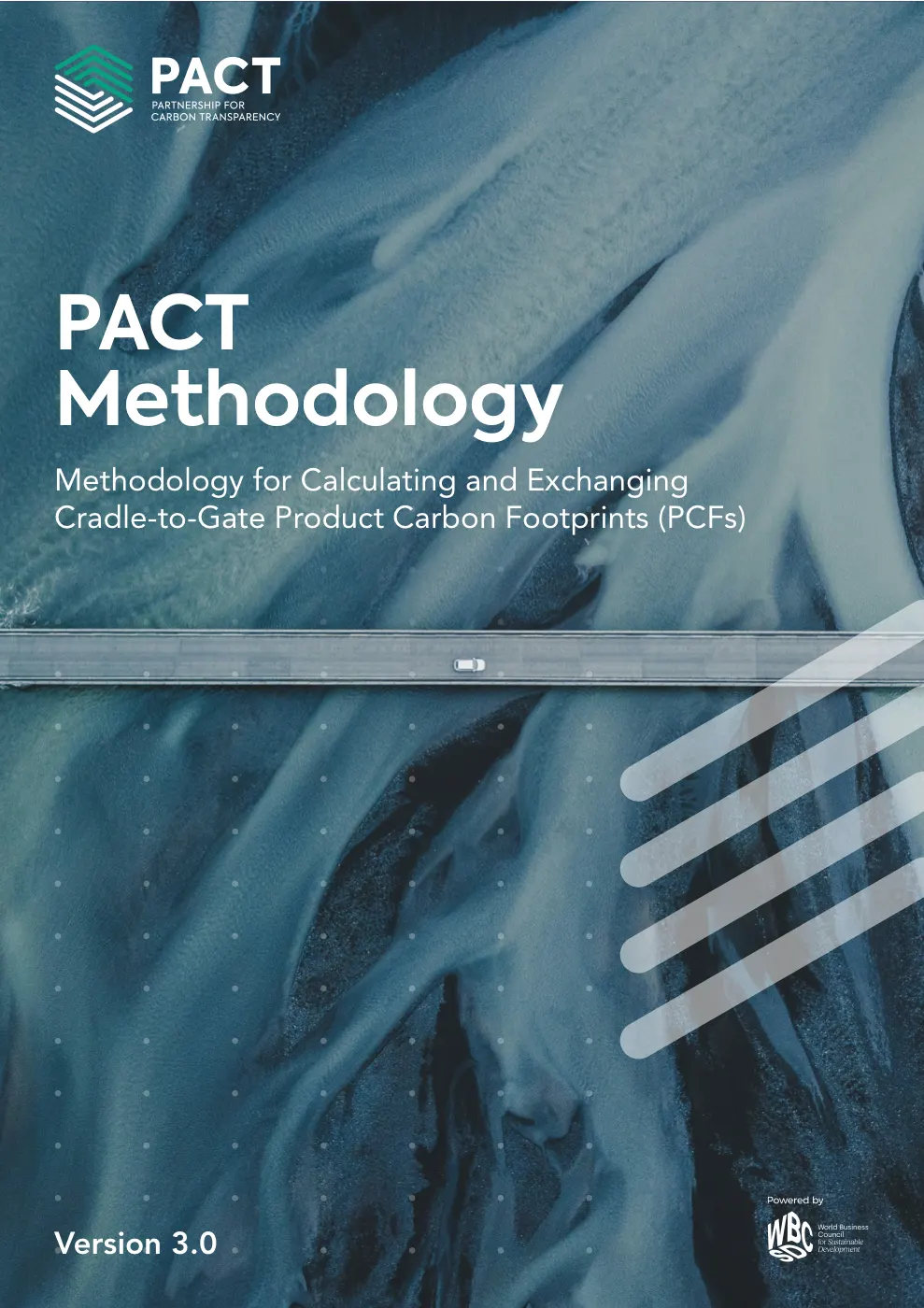
The WBCSD framework for exchanging product carbon footprints. Its section 5 sets out verification: calculation model verified by a third party from 2025 to 2030, limited assurance, validity of 3 years at most, then certification of the programme from 2030.
What ISO 14067 says
ISO 14067:2018 sets the requirements for quantifying the carbon footprint of a product, consistently with the life cycle assessment standards. Confirmed in 2024, it is under revision. It excludes communication of the footprint from its scope: publishing a figure falls under another standard, ISO 14026, which also sets requirements for the verification procedures of communication programmes.
Limited or reasonable assurance
Under limited assurance, the verifier concludes in the negative: nothing has come to its attention suggesting that the calculation does not comply. Under reasonable assurance, it concludes positively, which requires more evidence and testing. PACT requires limited assurance until 2030.
2Is it mandatory, and who requires it?
No general rule requires a carbon footprint passed to a customer to be verified. The requirement comes from the contract, from the standard the customer cites or from the programme in which the figure will be published. The 3 cases are read differently.
The customer's contract and standard
The 2011 GHG Protocol Product Standard requires a product inventory to be assured by a first or third party. A person within the company may do it, provided they stayed outside the calculation and state how the conflict of interest was avoided. PACT goes further and requires an independent third party. A customer that cites either one in its specification therefore sets, without spelling it out, the level of verification expected.
PACT and sector frameworks
PACT methodology V3 organises verification over 2 horizons. The timetable comes down to 4 rules:
- From 2025 to 2030, the company has its calculation model verified by an independent third party, with limited assurance, across the whole cradle-to-factory-gate scope.
- From 2030, the company's footprint programme, with its governance, data and calculations, must be certified by a third party.
- A verification statement is valid for 3 years at most, or until a change of method or tool, and a new verification is required if the footprint varies by more than 10%.
- SMEs follow the same requirements with a 2-year lag, that is from 2027 for verification of the calculation model.
- Any company may exchange a footprint before it is verified, while it prepares, even though PACT writes verification as an obligation.
PACT refers to sector rules where they exist: Together for Sustainability for chemicals, Catena-X for the automotive industry, the Global Battery Alliance for batteries. The graphic below shows what each one asks for, and our guide to the LCA of an industrial battery covers the case of batteries in detail.
Public and regulated declarations
A footprint intended for publication falls under a different regime. An FDES or Product Environmental Profile (PEP), the French formats of environmental product declaration (EPD) for construction products and for electrical and HVAC equipment respectively, goes through the approved verifier of its programme. An environmental claim about a product must be provable, and the EmpCo directive (on empowering consumers for the green transition) prohibits, in the countries that have transposed it, presenting a product as carbon neutral on the strength of offsetting.
Chemicals, automotive, batteries, construction: each sector has its own product footprint rules
Photos, Wikimedia Commons: Pline (CC BY-SA 3.0) ; BMW Werk Leipzig (CC BY-SA 2.0 de) ; Spielvogel (CC0) ; Syced (CC0).
For steel, aluminium, cement, fertilisers, hydrogen and electricity imported into the European Union, the carbon border adjustment mechanism (CBAM) has the actual emissions declared by the importer verified by an accredited verifier. Without verified data, it applies the Commission's default values. For electric vehicle batteries and industrial batteries of more than 2 kWh, EU Regulation 2023/1542 provides for a carbon footprint declaration checked by a notified body. It will apply only once the Commission has adopted its calculation method, which is still awaited.
3How do you choose the verifier?
The criterion that is not negotiable is independence: the GHG Protocol requires the assurer to have been involved in neither the calculation nor the statement. The firm or software vendor that built the model therefore cannot verify it, even if it knows it better than anyone. Competence comes next, then accreditation, where the customer asks for it.
Competence
PACT expects the verifier to have proven experience in carbon accounting, in life cycle assessment or in product footprinting, and knowledge of the ISO 14067, ISO 14064-3 and ISO 14044 standards. A verifier that knows the customer's processes spots an implausible data point faster: sector knowledge counts as much as knowledge of the standards.
Accreditation
Some customers require a body accredited under ISO 14065, the standard for bodies that validate and verify environmental information statements. Others accept a qualified independent expert. Our guide to verifying an in-house carbon footprint assessment (in French) (in French) sets out what accreditation covers. Before signing, these questions help decide between 2 proposals:
- Did the verifier take part, closely or remotely, in the calculation, in the choice of the tool or in the training of the team that produced the footprint?
- Which standards will the statement cite, and is the standard required by the customer among them, with its version?
- How many products or test cases will be recalculated, and on which real data rather than on examples supplied for the occasion?
- What happens if a discrepancy is found: correction time limit, new visit, and effect on the price and on the date of the statement?
4How does the verification work?
A verification starts with a scoping step: the object verified (a product, a range, a calculation model), the standards, the level of assurance and the scope. The verifier then reads the method, recalculates test cases, traces a sample back to the activity data and notes discrepancies. The company corrects or justifies, then receives the statement. What to read in that statement comes down to 7 sections:
A verification statement is read in 7 sections, from the object verified to its validity
Example constructed for the article: typical wording of a limited assurance statement.
5. Conclusion
The section that matters most is the first, the object verified. A statement covering a calculation model covers all the footprints it produces during its validity. PACT retains this route until 2030 to verify at scale.
Lead time and price
No public price list sets the price of a product footprint verification. It depends on the number of products or the complexity of the model, the level of assurance, the number of sites to trace back and the state of the file. The lead time depends mainly on the quality of the file. For the study itself, our guide to the price of an LCA gives benchmarks.
5What should you prepare before having your footprint verified?
A complete file before the first meeting shortens the engagement and avoids back-and-forth. These documents form the core:
- The study report under ISO 14067: declared unit, scope, allocation rules, justified exclusions (3% at most under PACT), assumptions and limitations.
- The calculation file or tool, with the version used and the history of changes since the last calculation passed to the customer.
- The activity data for the chosen year: energy consumption by site, bills of materials, quantities of materials and transport, with supporting evidence.
- The list of emission factors and their sources, with the database version and the Intergovernmental Panel on Climate Change (IPCC) report the global warming potentials come from, the latest one according to PACT.
- The share of primary data in the footprint, which PACT already requires companies to declare, and the data quality rating, which it requires by the end of 2027.
Recurring discrepancies
Verifications often stumble on the same points: global warming potentials taken from an older IPCC report, or an allocation between co-products that changes from one product to another. Electricity counted with a factor that does not match the purchase contracts also recurs, as does biogenic carbon counted without being flagged. The calculation method set out in the guide to the product carbon footprint helps settle these choices before verification, and a first eco-design LCA often lays the foundations of the model.
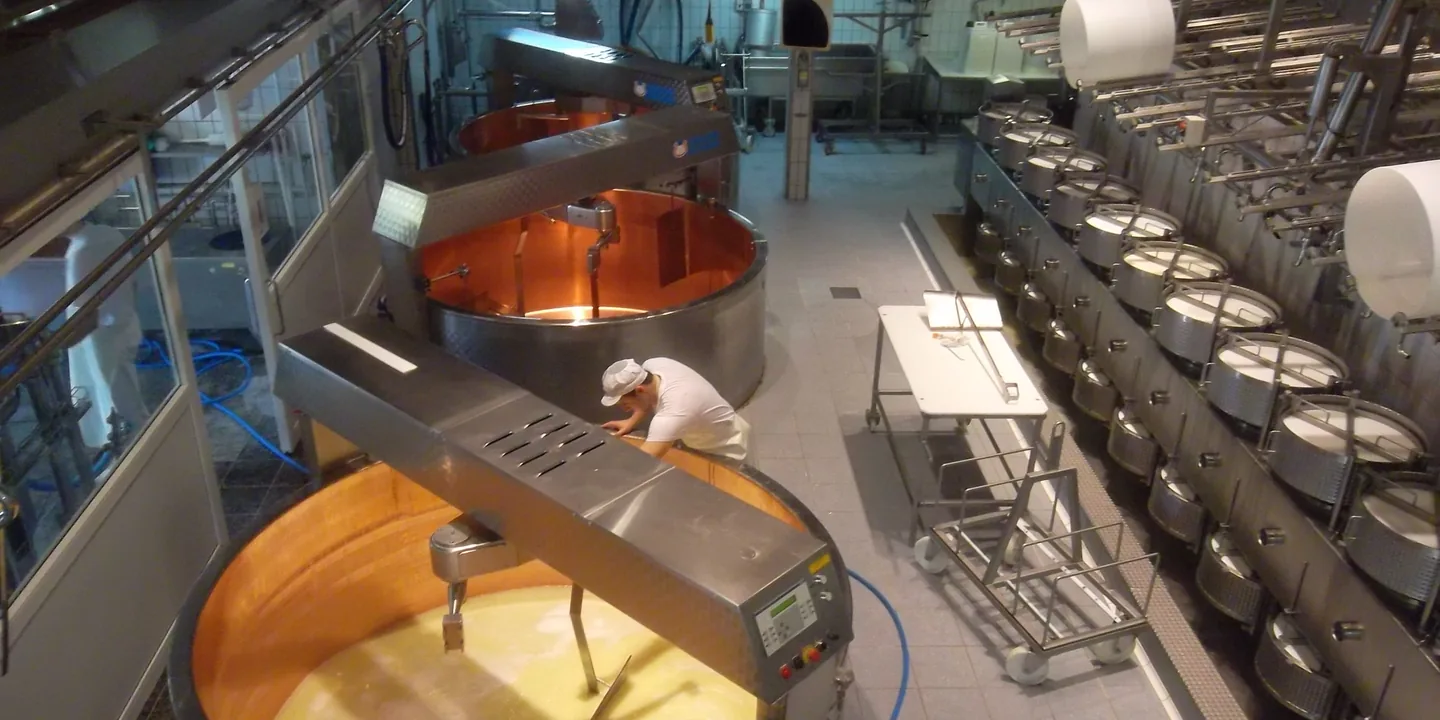
For each figure in the footprint, a verifier looks for the evidence that allows it to be traced back.
Reusing the verification
A footprint that has already been verified does not have to be verified again as long as the model and the data do not change, PACT specifies, and the customer who receives it saves time on its own verification. A supplier preparing its reply to a carbon data request attaches the statement, and a buyer who checks its suppliers' data reads the object verified and the validity date in it. The same file will serve tomorrow for the digital product passport.
For us at Projet Celsius, the first question to ask the customer is about what the figure will be used for: a Scope 3 calculation, a PACT platform or a public communication do not call for the same verification. We then recommend having the calculation model verified rather than a single product, as soon as several product references are requested: the verification then serves the whole range for up to 3 years.
6Key takeaways
- No general rule requires a carbon footprint passed to a customer to be verified: the requirement comes from the contract, the standard or the publication programme.
- The GHG Protocol Product Standard allows internal assurance independent of the calculation; PACT requires an independent third party and limited assurance until 2030.
- From 2025 to 2030, PACT accepts verification of the calculation model, valid for 3 years at most, rather than verification of each product footprint.
- The firm or software vendor that built the calculation cannot verify it; outside a regulated programme, ISO 14065 accreditation is needed only if the customer asks for it.
- A complete file, with an ISO 14067 report, a versioned tool and sourced data and factors, saves more time than anything else.
For the calculation method itself, the guide product carbon footprint: which method? sets out the ISO 14067 rules.





