

- 1An audit examines the evidence behind messages; legal advice comes from a lawyer.
- 2The directive requires an independent third party for labels and future targets.
- 3Compare 3 quotes on the same scope: messages, evidence, rewording, review.
- 4A good report links each message to its evidence and to its new wording.
An "EmpCo audit" is not a standardised service: neither the EU EmpCo directive (Empowering Consumers for the Green Transition) nor French law defines it. Directive (EU) 2024/825 requires an independent third party in only 2 cases, a sustainability label and a commitment on future performance. For everything else, the company must be able to substantiate each message to the DGCCRF (the French consumer protection authority), and it is to prepare that evidence that it calls on a provider.
The right contact depends on the message: advertising, packaging, label or climate
Choose your case: what is needed, who does it, what you receive and the text that requires it.
Check that each mention refers to the element that is proven and uses the permitted vocabulary, before the print proof is signed off.
A technical firm that knows materials, recyclability mentions and packaging rules.
The mentions to keep, to specify or to remove, with the sentence each piece of evidence allows.
The text: Environmental Code, Article L. 541-9-1; Directive (EU) 2024/825, Annex I, points 4a and 4b.
The right contact depends on what the message says and where it is published. A mention printed on a carton, a television spot, an in-house logo and a "net zero emissions by 2040" target call for neither the same review nor the same third party. The following sections cover these cases, then the choice of provider and what the provider must deliver.
1Audit, lawyer or third party: which do you need?
The directive covers any message, image, symbol, label or brand name that states or suggests a positive or zero effect on the environment, or a lower effect than other products. A green leaf on packaging is one, as is a sentence in a corporate communication, and no company size is exempt from the rule.
What an audit of green claims covers
A serious audit starts from the real materials: packaging, product sheets, website pages, campaigns, reports. For each message, it looks for the document that supports it and checks that it covers what the sentence states, on the right product, the right component, the right period and the right criterion. A life cycle assessment (LCA), an emissions assessment, a recycled-content certificate and a supplier data sheet do not prove the same thing.
The lawyer and the ARPP: 2 complementary views
In France, giving legal advice on a regular, paid basis is reserved for professions qualified to do so, lawyers first among them (Law of 31 December 1971, Article 54). The technical firm examines the evidence, and the lawyer provides the legal opinion. The quote states which of the 2 handles each point.
The Autorité de régulation professionnelle de la publicité (ARPP), the French advertising industry's self-regulatory body, operates in a different area. Every television advertisement is submitted to it before broadcast, and it issues an opinion: favourable, to be amended or not to be broadcast (ARPP, roles and missions). For other media, it advises its members and charges other advertisers €520 excl. VAT for one-off advice, covering at most 5 projects reviewed within 72 working hours. It judges the message against its Sustainable Development recommendation, without redoing the technical analysis of the evidence.
The 2 cases where the directive requires an independent third party
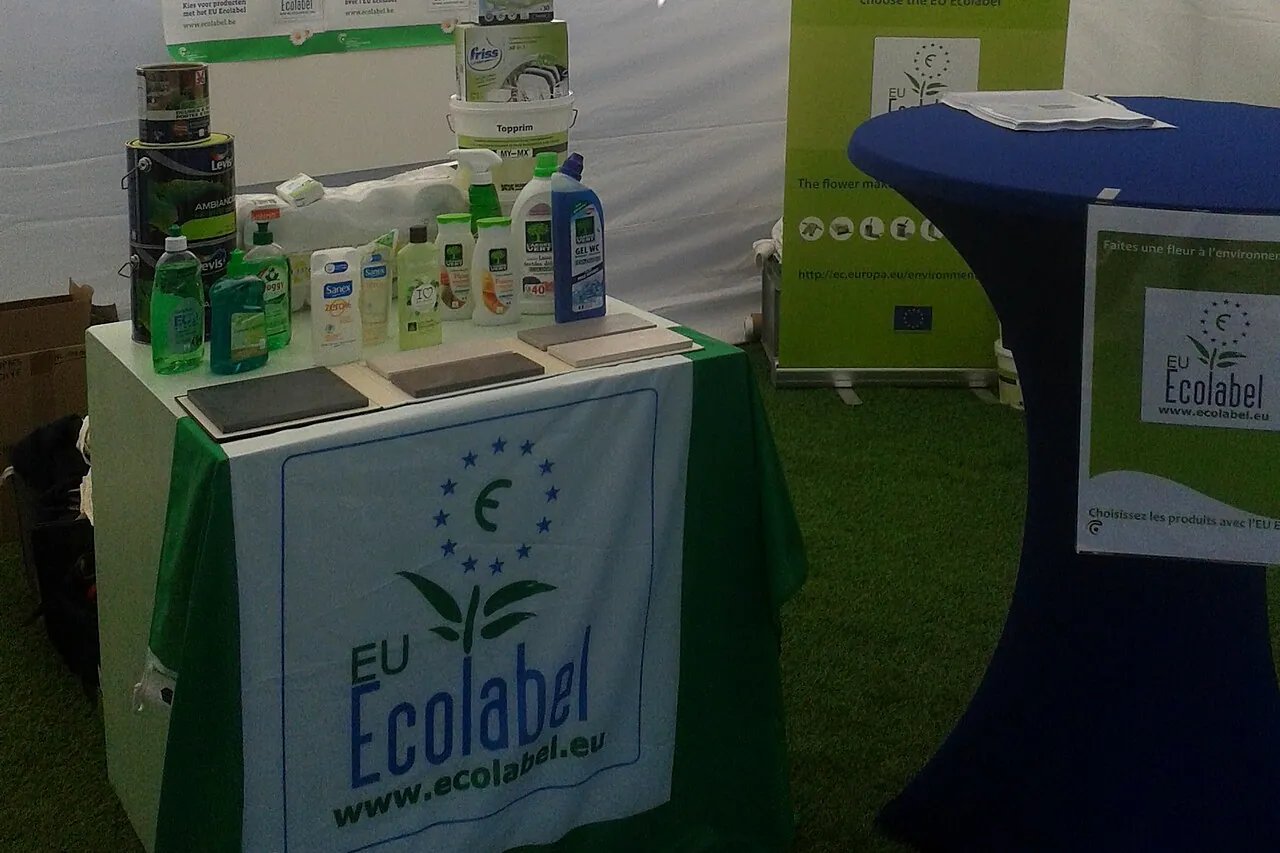
The first case is the sustainability label. Directive (EU) 2024/825 prohibits displaying one that is not based on a certification scheme or has not been established by a public authority (Annex I, point 2a). A certification scheme involves checking by a third party independent of the label owner. In the States that have transposed the directive, an in-house logo that nobody checks from outside can no longer be displayed since 27 September 2026. In France, the transposition bill, adopted by the Senate on 18 February 2026 (in French), is still awaiting the National Assembly.
The second case is the commitment on future performance, such as "net zero emissions by 2040". It must rest on a detailed and realistic plan, regularly verified by an independent third-party expert whose conclusions are public. The Commission specifies that auditors or consulting firms may play this role (Commission questions and answers). They must also not have written the transition plan, the same rule as for the critical review of an LCA (in French) (in French) or the verification of a carbon footprint assessment (in French) (in French).
2Is it mandatory to have your green claims audited?
No, outside those 2 cases. The obligation relates to the outcome: each claim must be accurate and capable of being justified, and the DGCCRF may demand the supporting documents at any time.
What the law already requires
French law does not wait for the transposition of EmpCo, which was due on 27 March 2026 and which the National Assembly has not yet voted on. Misleading commercial practice is an offence punishable by 2 years' imprisonment and a fine of €300,000. The fine may be raised to 10% of average annual turnover, or to 80% of the campaign expenditure where the deception rests on an environmental claim (Article L. 132-2 of the Consumer Code).
Since 2022, the French anti-waste law has banned the mentions "biodegradable" and "environmentally friendly" on a product or its packaging, and carbon neutrality has been regulated in advertising since 2023. A company that sells in Germany or Italy also falls under those countries' new rules, which have applied since 27 September 2026, as our article on who checks green claims explains.
No text requires you to have your claims audited, but each one must be capable of being justified on the day the DGCCRF asks.
What inspections find
In 2023 and 2024, the DGCCRF inspected more than 3,000 establishments on their environmental claims, and more than 15% showed serious failings (review of 1 October 2025). Its investigators issued more than 500 warnings, more than 430 injunctions and more than 70 fines or official reports, for 3 recurring defects:
- Blanket claims, which suggest a benefit for the environment with no identified impact, such as "eco-responsible delivery", "green concrete block" or "preserving the planet".
- Mentions with no supporting evidence, such as "upcycled" on newly imported garments, or production described as decarbonised when the project had not been launched.
- Labels claimed wrongly, such as timber announced as mostly FSC (Forest Stewardship Council) certified when the certification covered only a minority of products.
The DGCCRF also describes evidence files that do not stand up: commercial brochures from the supplier presented as supporting documents, or certificates unrelated to the products and expired since 2013 (DGCCRF interview of 2023). In July 2025, SHEIN agreed to a settlement fine of €40 million, partly because it could not substantiate its environmental claims, including a 25% reduction in its emissions (DGCCRF press release).
3How do you choose the right provider?
The choice is made in 3 steps: check the competence that is not negotiable, ask the questions that set providers apart, then rule out the promises that no audit can keep.
What is not negotiable
The provider must know how to read technical evidence and say precisely what it allows you to write. A certificate for the cardboard of a carton covers neither the jar nor its pump, and an LCA limited to climate change does not justify "eco-friendly". This reading calls for engineering competence in life cycle assessment, carbon accounting or materials. It also calls for knowledge of the texts that set the vocabulary, such as the declaration of conformity under the Packaging and Packaging Waste Regulation (PPWR) for packaging or the environmental labelling rules for a garment.
The questions to ask
5 questions set 2 or 3 firms apart in a single interview:
- Which comparable engagement have you carried out, on which products and media, and can you show an anonymised report line?
- Who, by name, will examine the technical evidence, and who will review the report before it is sent?
- How do you work with our lawyer or our legal department, and on which points do you refer to them?
- What do you do when evidence is missing: request the document from the supplier, propose a narrower sentence or recommend a study?
- Do you propose replacement wording, and do you review the corrected materials before they are printed or published?
The answers to the second and fourth questions set firms apart fastest. A firm that cannot name the person who will read your evidence, or that answers every missing document with a study to be quoted, will sell you time rather than a finished file.
The warning signs
Some promises should give you pause, because no audit can keep them:
- The provider promises an "EmpCo certificate" for the company, whereas the directive provides for certification only for labels.
- It guarantees compliance of the whole catalogue after reviewing a few products, without saying how its reasoning extends to the other product references.
- It proposes an LCA straight away for every message, before looking at the existing evidence and at what each sentence states.
- It would verify its own work, a climate plan or a label that it built, whereas the directive requires an independent third party.
4How does an audit work, and at what price?
A full engagement follows 6 steps, from the inventory of messages to the review of the corrected materials. Market offers do not all cover every step, which often makes 2 quotes incomparable when you look only at the amount.
The same "audit" can cover 1, 3 or 5 of 6 steps
3 typical scopes. Producing new evidence remains a separate engagement.
Step 04: a new study is not part of any audit and is priced separately.
For each message, the document reviewed, what it establishes and what is missing.
The rewording and the final check of the corrected materials.
Which supporting documents and how many exchanges with suppliers are included?
Producing new evidence is handled separately in every offer: an LCA or a measurement takes weeks and is priced separately, after the audit has shown that it was missing.
The quote
A readable quote breaks the work down into 4 items that can be compared from one firm to another:
- It sets the scope examined in product references, media and countries, and says how messages repeated from one product to another are handled.
- It lists the supporting documents studied, the planned exchanges with suppliers and what happens when a document does not arrive.
- It describes the deliverable: one report line per message, the proposed wording and the number of versions reviewed after correction.
- It prices separately the exclusions: legal advice, new studies and the independent verification of a label or a plan.
Lead time and price
No public price list exists for these engagements, and the price of an audit of a range's claims (in French) (in French) is read item by item. The price follows the time spent, which depends less on the number of products than on the number of distinct messages, media and pieces of evidence to gather. 10 product references that share the same mention and the same certificate are handled together, whereas a single product sold in 4 countries with 3 campaigns requires more.
The lead time depends mainly on how quickly the documents are available. A complete file is reviewed in a few days, whereas a file whose evidence comes from several suppliers takes weeks. Before a reprint, the schedule is set backwards from the printer's proof sign-off, and the quote states when the lead time starts to run.
5What does a useful audit report look like?
A useful report can be read line by line. For each message, it gives the medium, the published sentence, the document received, what it establishes, the text that applies and the sentence the evidence allows you to write. A ranking by risk level, without that last column, leaves the hardest part to the marketing team.
A report line links each message to its evidence, then to the sentence it allows
Report extract built for this article: 4 messages, 4 findings, one line open at a time.
- Document received
- Technical data sheet from the carton supplier. The cardboard carton is recyclable. The jar and its pump are not covered by any document.
- Applicable text
- The mention covers the whole package, while the evidence covers 1 element out of 3 (Annex I, point 4b).
- Proposed next step
- "Recyclable cardboard carton, to be placed in the recycling bin": the sentence says what is recycled and how.
3 messages flagged by the DGCCRF, and what follows
The rewordings follow the practical guide of the French National Consumer Council (CNC) and the texts cited above. Here is what a report would propose for 3 messages that the DGCCRF flagged:
- "Eco-responsible delivery" gives way to the fact that the evidence establishes, for example "Delivery by bicycle in Paris", because a general benefit must become an identified benefit.
- "Preserving the planet" is removed, because the directive prohibits the generic claim without recognised excellent environmental performance (Annex I, point 4a).
- "Upcycled" on newly imported garments is removed. If fabric offcuts are genuinely reused, the sentence says so, with the document that proves it.

Word by word, it says what a mention must specify. "Eco-designed" with no further detail covers the product and its packaging, and "recyclable" must say what is recycled and under what collection conditions. Adopted on 20 March 2023, it predates EmpCo, whose rules add to it.
The most frequent gaps
From one file to the next, the same gaps between the message and its evidence come up:
- The evidence covers one component, the carton or the refill, while the sentence refers to the whole product.
- The certificate is out of date, or it covers a different production site from the one that made the product sold.
- An LCA limited to climate change is used as evidence for a general message, such as "eco-friendly".
- A comparison does not say what it compares with or on which criterion.
- A recycled plastic content rate is announced without the certificate for the material purchased.
The 2023-2024 review by the ARPP and ADEME (the French Agency for Ecological Transition) confirms this picture on the advertising side. Over 4 months at the end of 2023 and the start of 2024, 65 of the 1,015 advertisements with an environmental argument were not compliant. 68% of them used vocabulary that misleads the public, such as "positive impact" or "preserves the planet", and 46% overstated the qualities of the product or the advertiser's actions. Our article on banned claims details the list.
6What should you prepare before the first call?
A useful first call can be prepared in an hour, with 4 items:
- Gather 3 to 5 representative materials, printed or as mock-ups, with the website pages and campaigns that reuse the same messages.
- Count the volume to be handled in product references, media and countries of sale: this is what sets the working time.
- Collect the supporting documents already available, even partial ones, such as supplier data sheets, certificates, an LCA or the specification of a label.
- Give the deadline that matters, a reprint, a launch or a trade fair, and the names of your contacts in marketing, product and legal.
Stock that has already been printed is handled separately, including for a company subject to the packaging regulation. On 30 June 2026, the national consumer protection authorities, meeting in the European Consumer Protection Cooperation (CPC) network, agreed a common line. Before imposing penalties, they will take into account stock volumes, shelf life and the feasibility of a correction (European Commission). A website is corrected without waiting, a package at its next print run or with a sticker, without destroying unsold goods.
For us at Projet Celsius, the useful question to put to a provider is "what sentence will you propose in its place?". An audit that stops at the risks leaves the company alone with the most delicate part. We examine the evidence behind the messages, whether an LCA, a Bilan Carbone® (the French carbon accounting method) or a supplier data sheet, and we propose the wording it supports as part of our support on environmental claims. Legal advice remains that of your lawyer, and we never verify a plan or a label that we have built.
7Key takeaways
- No standard defines an EmpCo audit: it examines the evidence behind messages, without amounting to legal advice or certification.
- The directive requires an independent third party only for sustainability labels and commitments on future performance.
- The right provider reads technical evidence, says what it allows you to write and works with your lawyer.
- A comparable quote specifies the scope, the evidence examined, the wording proposed and the reviews included.
- A useful report links each message to its document, its finding and the sentence that can replace it.
To test a sentence before calling anyone, our greenwashing test asks the 3 questions of the PIF method (from the French Précise, Intègre, Fondée: Precise, Honest, Substantiated). To build the file, see how to prove a claim.
- European Parliament and Council, Directive (EU) 2024/825 of 28 February 2024, EUR-Lex.
- European Commission, questions and answers on Directive 2024/825, 22 September 2026 (PDF).
- European Commission, position of the authorities on old stock, 30 June 2026.
- Consumer Code, Article L. 132-2, Légifrance. The Légifrance pages are in French.
- Law No. 2020-105 of 10 February 2020, Article 13, which creates Article L. 541-9-1 of the Environmental Code, Légifrance.
- European Commission, Decision 97/129/EC establishing the identification system for packaging materials, EUR-Lex.
- Law No. 71-1130 of 31 December 1971, Articles 54 and 60, Légifrance.
- DGCCRF, review of the 2023 and 2024 investigations into greenwashing, 1 October 2025 (PDF).
- DGCCRF, sanction imposed on SHEIN, 3 July 2025 (PDF).
- DGCCRF, interview on the substantiation of environmental claims, 5 September 2023.
- French National Consumer Council (CNC), practical guide to environmental claims, 2023 (PDF).
- ARPP, roles and missions and sustainable development advice.
- ARPP, Sustainable Development recommendation, version 3, in force since 1 August 2020.
- ARPP and ADEME, Advertising and environment review 2023-2024, October 2024 (PDF).


