

- 1Since 19 July 2026, destroying unsold clothing has been prohibited for large companies.
- 2Recycling counts as destruction under the European rules, unlike under the AGEC law.
- 3Publishing information on discarded unsold goods is mandatory from the 2025 financial year, across all products.
- 4Every destroyed batch must qualify for a derogation, with evidence kept for 5 years.
Since 19 July 2026, a large company selling clothing, accessories or footwear in the European Union may no longer destroy its unsold goods, including customer returns. The ban comes from the Ecodesign for Sustainable Products Regulation, known as ESPR, and goes further than the AGEC law (France's Anti-Waste and Circular Economy Act), applied in France since 2022: recycling counts as destruction, permitted only in 10 cases defined by the Commission.
Which legislation applies to your unsold clothing and footwear
Select company size, assessed at group level.
250 people or more, or turnover above €50 million and balance sheet total above €43 million, including linked enterprises.
Until the adapting legislation is passed, the 2 texts apply: the EU prohibition and the French hierarchy, with recycling before incineration.
For a French brand, the challenge becomes identifying the rare cases where unsold goods may still be destroyed and the evidence to keep for each. The regulation also requires annual publication of what was discarded, for all consumer products, from household appliances to toys.
1What the EU regulation has prohibited since 19 July 2026
Regulation (EU) 2024/1781 devotes a chapter to unsold consumer products: surplus goods, dormant stock, discontinued lines and items returned during the withdrawal period. Textiles lead the way: according to the European Environment Agency, 4 to 9% of textiles placed on the European market are destroyed before use, up to 594,000 tonnes and 5.6 million tCO2e per year.
The clothing, accessories and footwear in Annex VII
Annex VII identifies the products covered by their customs codes: clothing and clothing accessories, knitted, woven or leather, hats and all footwear. Household linen, bags and small leather goods are not listed. The Commission may extend the list by delegated act, and the regulation invites it to consider electrical and electronic equipment first.
Large companies first
The ban covers every economic operator, from manufacturers to distributors, including importers and logistics providers. It has applied to large companies since 19 July 2026: 250 people or more, or more than €50 million turnover and €43 million balance sheet total. Medium-sized companies follow on 19 July 2030; micro and small enterprises are exempt. The regulation refers to the European definition of small and medium-sized enterprises (SMEs), whose method adds the data of linked enterprises: a subsidiary with 40 employees controlled by a large group does not qualify as an SME.
2Recycling unsold goods becomes destruction
In France, Article L. 541-15-8 of the French Environmental Code, introduced by the AGEC law, prohibits disposal of new unsold non-food goods, meaning landfilling or incinerating them: since 1 January 2022 for products under an extended producer responsibility scheme (EPR scheme), including clothing and footwear, and the end of 2023 for other products. It covers all companies and allows donation, reuse, then recycling. The ministry then estimated that 10,000 to 20,000 tonnes of new textiles were destroyed annually in France.
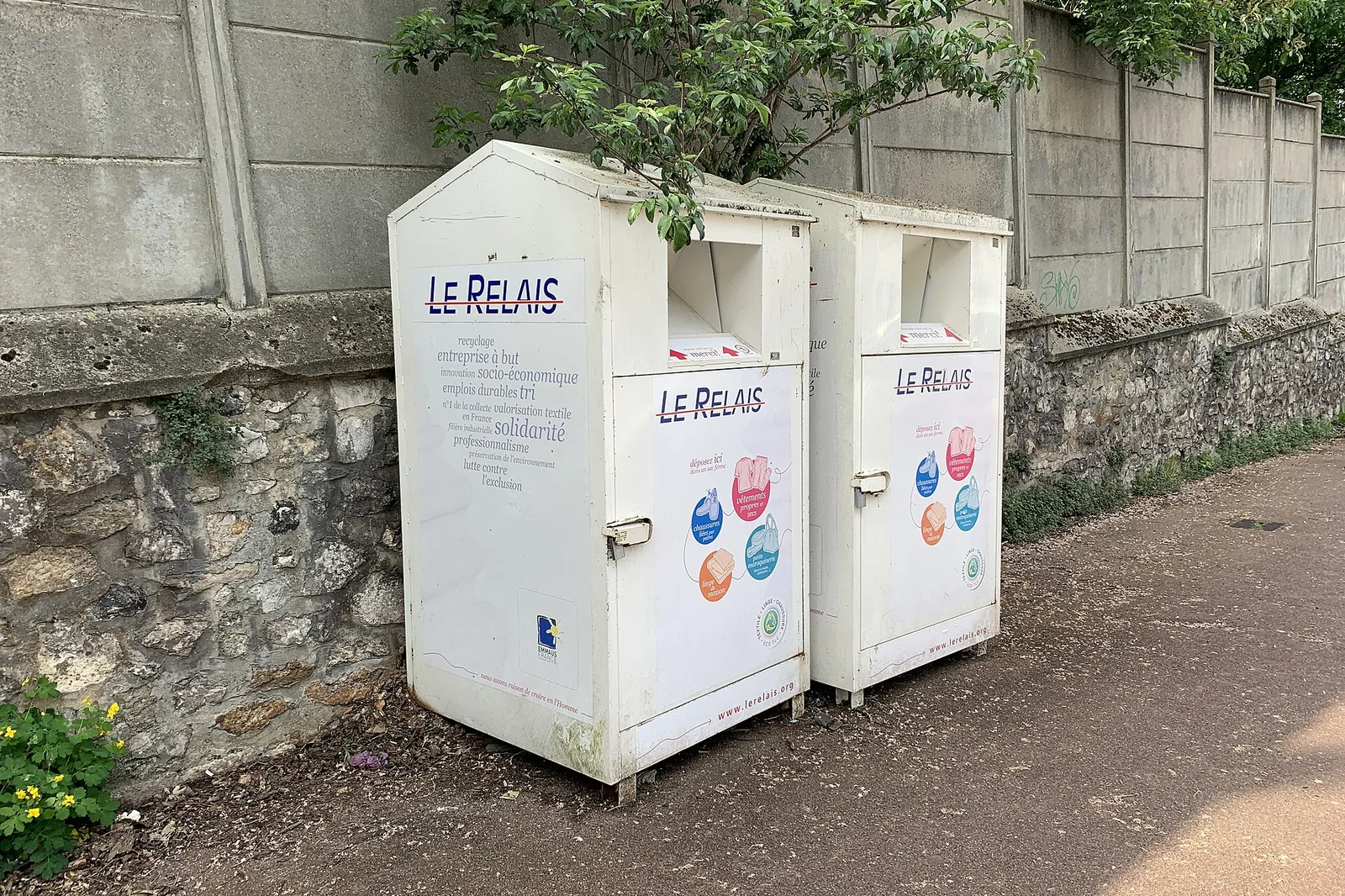
The EU regulation adopts a broader definition (Article 2, point 34, and Recital 55): any discarding of a product as waste is destruction, including recycling, energy recovery and disposal, unless its sole purpose is preparing for reuse. Sending unsold T-shirts to a fibre recycler, permitted by the AGEC law when donation failed, becomes for a large company prohibited destruction unless a derogation applies.
For a large company, recycling an unsold garment is destruction under the EU regulation, permitted only in one of the 10 cases in Delegated Regulation (EU) 2026/296.
The AGEC law and the regulation apply together
The bill adapting French law to EU law, adopted by the Senate on 18 February 2026, would make clothing and footwear subject solely to EU law, removing micro and small enterprises from scope. It awaits examination by the National Assembly as of 28 September 2026. Until then, a large company must comply with the 2 texts: the European ban and the French hierarchy, recycling before incineration. For other products, the destruction ban remains the one under the AGEC law.
The AGEC law penalises a breach with an administrative fine of up to €15,000 for a legal entity, and the decision may be published at the company's expense. The regulation leaves penalties to each Member State, requiring at least fines and temporary exclusion from public procurement, where environmental criteria have been mandatory since 21 August 2026 (in French); authorisation for the DGCCRF (the French consumer protection authority) to enforce it is included in the same bill.
3The 10 cases where destruction remains permitted
Delegated Regulation (EU) 2026/296, published on 22 April 2026, sets the exhaustive list of derogations. Each requires supporting evidence kept for 5 years, supplied to authorities on request within 30 days, and a declaration to the service provider receiving the products; destruction then follows the waste hierarchy, with recycling first.
May this batch be destroyed? The derogation pathway
For a large company, since 19 July 2026. Recycling counts as destruction.
Evidence to keep for 5 years: Quality control procedure prioritising restocking and repair, or batch inspection report documenting the damage. Destruction follows the waste hierarchy, with recycling first, and the service provider receives a derogation declaration.
Dangerous, non-compliant or counterfeit products
A dangerous garment, for example one containing a prohibited substance, may be destroyed on the basis of a safety assessment or test report, as may a non-compliant product whose destruction is legally required. Counterfeits, licensed products whose sales period has expired and products with a protected logo that cannot be removed fall into the same group.
Damaged or defective products
An item that is damaged, soiled or contaminated, including a customer return, may be destroyed if repair is neither possible nor cost-effective, meaning repair costs more than destruction and replacement, including materials, manufacturing, transport and storage. A design or manufacturing defect is sufficient only if repair is technically impossible. The company must then produce a quality control procedure prioritising restocking and repair, or an inspection report for the batch.
Donations without recipients
As a last resort, an unsold item may be destroyed if it has been offered for donation to at least 3 social economy organisations in the Union, or on a page of the company's website, for at least 8 weeks, without finding a recipient. The same flexibility applies to an association unable to find a recipient for a donation and to an item prepared for reuse but left without a buyer.
4What to publish each year, and in which format
Article 24 of the regulation adds a transparency obligation broader than the ban: it covers all consumer products discarded by a large company, including household appliances, furniture and toys.
An obligation running from the 2025 financial year
The first publication covers the 2025 financial year for a 31 December year-end, the first full financial year under the regulation. It must appear at least on an easily accessible webpage; a company subject to the Corporate Sustainability Reporting Directive (CSRD) may also incorporate it into its sustainability statement. The publication gives, by category, the number and weight of unsold goods discarded, the reason and derogation, the share sent for preparation for reuse, recycling, other recovery or disposal, and prevention measures. Donated products are not included, as they are not discarded.
The EU disclosure table for discarded unsold products
Format from Annex I to Implementing Regulation (EU) 2026/2. The 3 rows are a fictional example for a fashion brand, financial year 2028.
± 8,400 units, ± 1,680 kg. Derogation f): damaged returns, uneconomical repair.
1,200 units, 960 kg. Derogation a): prohibited substance detected.
300 units, 240 kg. Discontinued line without a recipient.
2-digit customs code, or 4 digits for a specified list: bags, leather, household linen, household appliances, furniture, toys.
One row per reason for discarding; ± denotes an estimate.
Percentages by weight. The format groups recycling, other recovery and disposal under destruction.
A high unknown share is among the criteria used by authorities for checks.
A European format for financial years beginning after 2 March 2027
Implementing Regulation (EU) 2026/2, applicable on 2 March 2027, requires a common table: customs codes, one row per reason, estimates marked with ± and publication within 12 months after year-end. It applies from the first full financial year beginning after that date, meaning the 2028 financial year for a 31 December year-end. The 2025 to 2027 publications remain due, using a format of the company's choice.
Checks will first target companies publishing nothing, those whose figures appear unusually low compared with their sector or previous years and those declaring a high share of unknown treatment.
5Where to start if you sell clothing
The work is primarily logistical, involving warehouses, shops, customer services and waste service providers.
- Check company size at group level, including linked enterprises, to establish whether the ban applies from 2026 or in 2030.
- Organise outlets before any destruction: sales, clearance, sales in other markets, donation agreements and preparation for reuse.
- Link every discarded batch to its derogation and archive the evidence: safety assessment, inspection report or dated donation offer.
- Obtain each batch's actual destination from waste service providers and publish the 2025 data without waiting for the European format.
At Projet Celsius, we consider the most underestimated point to be the table's unknown column: without a clause requiring the waste service provider to account for each batch's fate, a brand can neither complete its publication nor prove that recycling preceded incineration. Prevention remains the underlying approach, through better planning of purchases and eco-design of collections (in French), particularly as a destroyed garment already contributes to the company's Scope 3 (in French) without having been used.
6Key takeaways
- Since 19 July 2026, large companies may no longer destroy unsold clothing, accessories and footwear; medium-sized companies follow in July 2030.
- Recycling counts as destruction under the EU regulation, whereas the AGEC law has permitted it since 2022.
- Only 10 derogations remain, from dangerous products to donations without recipients for 8 weeks, each with evidence kept for 5 years.
- Annual publication of information on discarded unsold goods covers all products from the 2025 financial year, using the European format from the 2028 financial year for a calendar-year financial year.
Our overview of ESPR, DPP and labelling (in French) explains the regulation's subsequent deadlines, including the Digital Product Passport (DPP) (in French) expected for textiles around 2029. In France, the fast fashion law and environmental cost (coût environnemental) labelling for clothing complete the framework, and a brand claiming zero destruction must be able to prove it under the rules on environmental claims (in French).
- EU regulation: Regulation (EU) 2024/1781 of 13 June 2024 (ESPR), Article 2 (points 34, 36, 37 and 46), Articles 23 to 26 and 74, Annex VII and Recitals 55 to 60.
- Implementing acts: Delegated Regulation (EU) 2026/296 of 9 February 2026 establishing derogations (Official Journal of the European Union of 22 April 2026, applicable on 19 July 2026); Implementing Regulation (EU) 2026/2 of 9 February 2026 on publication arrangements and format (Official Journal of the European Union of 10 February 2026, applicable on 2 March 2027); Commission press release of 17 July 2026.
- Company size: Commission Recommendation 2003/361/EC of 6 May 2003, Annex, Articles 2 and 6.
- French law: French Environmental Code, Article L. 541-15-8 (in French) and Articles R. 541-321, R. 541-323, R. 541-324 and D. 541-320 (Decree No 2020-1724 of 28 December 2020); Ministry of Ecological Transition, the anti-waste law in French people's daily lives (2020); Entreprendre.service-public.fr factsheet on managing unsold goods.
- Pending bill: Bill containing various provisions adapting French law to EU law (DDADUE), Article 50, text No 63 adopted by the Senate on 18 February 2026, sent to the National Assembly (text No 2518) on 20 February 2026.
- Data: European Environment Agency, The destruction of returned and unsold textiles in Europe's circular economy, March 2024.