

- 1No audit is mandatory, but every claim must match the evidence in the product information file.
- 2"Paraben-free" or "PFAS-free" in France: claims to take off the carton.
- 3"Natural" requires 95% natural origin under ISO 16128, according to the ARPP.
- 4Time the audit backwards from print approval, after taking an inventory of printed stock.
In 2020, the DGCCRF (the French consumer protection authority) inspected 1,120 cosmetic products for their claims, and 1 product in 4 carried a misleading or unjustified claim. "Free-from" and "natural" claims topped the list of anomalies, ahead of "organic" and "with" (summary of the DGCCRF survey). On a carton, they sit alongside the statements the regulation requires and those that talk about the environment, and an audit reads them all together, before the printer locks the next print run.
Of 8 common claims on a cosmetic carton, 3 come off whatever the evidence
Pick a claim to see what an audit would do with it.
A single bottle falls under 3 sets of rules. The Cosmetics Regulation governs mandatory statements and product claims, consumer law governs environmental claims, and the French Environmental Code governs sorting signage. Choosing a provider and the form of a report are covered in our guide to choosing an EmpCo audit provider (EmpCo stands for Empowering Consumers for the Green Transition); this article deals with what is specific to cosmetics.
1What is audited on cosmetic packaging?
An audit starts from the print file for each carton and each bottle, not from a list of messages. It records every statement, sorts it into one of the 3 families below and looks for the document that supports it. Regulation (EU) No 655/2013 also covers names, trademarks and images: a drawn leaf counts as much as a sentence.
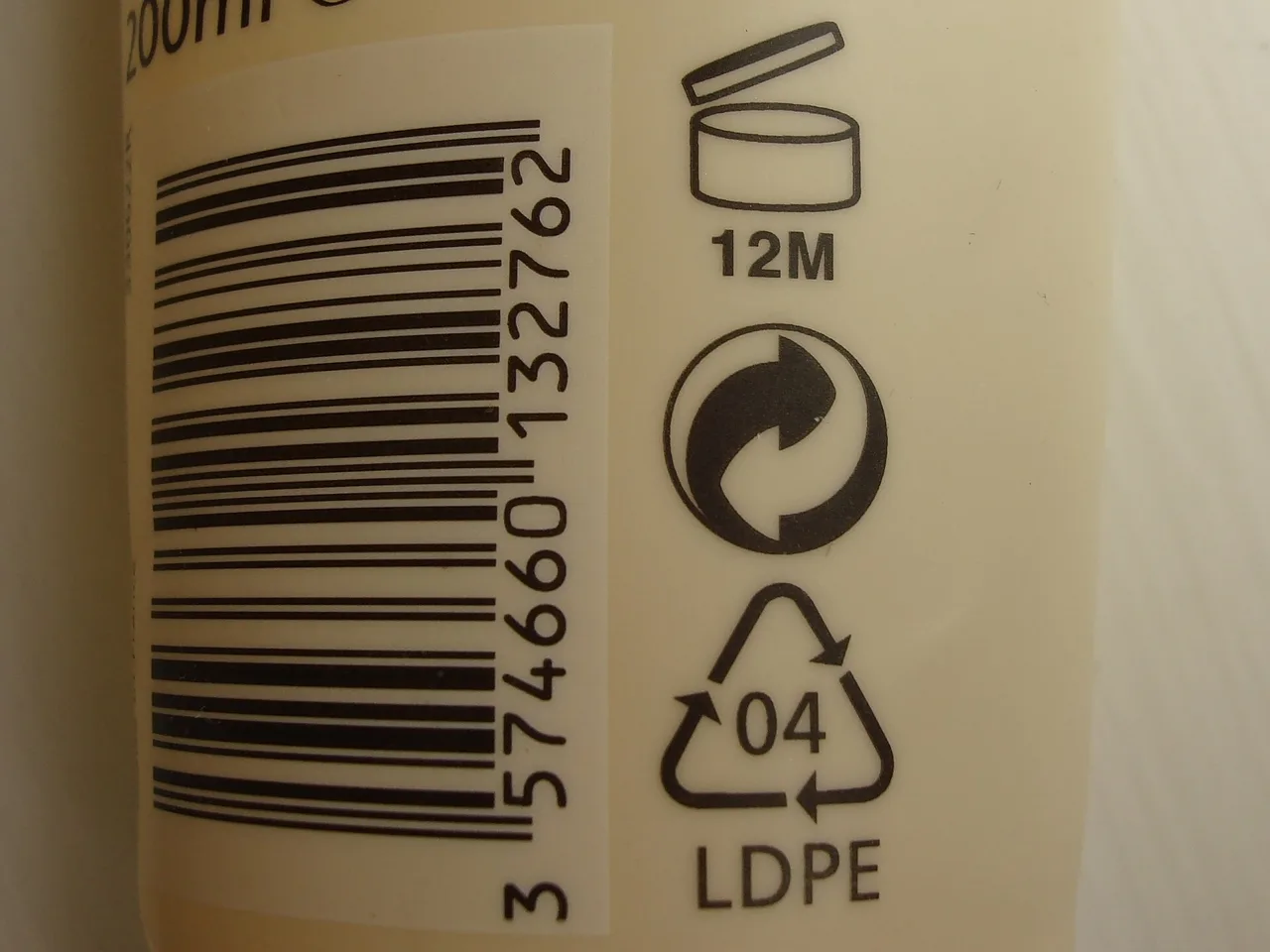
On the back of this bottle, 7 statements fall under 3 different sets of rules
Mandatory statements, product claims and sorting signage share a few square centimetres.
Marker 2 · Product claim
"Desodoriert biologisch", deodorises biologically
The rule. In France, "organic" requires one of 3 conditions, including certified ingredients or a certification (ARPP, point 3.2).
The audit checks. That the word describes a mechanism and does not suggest an organic product.
Statements required by the regulation
Article 19 of Regulation (EC) No 1223/2009 requires indelible, easily legible and visible statements on the container and the packaging:
- The name and address of the responsible person, who keeps the product information file available, and the country of origin for an imported product.
- The nominal content, then the date of minimum durability, replaced by the open-jar symbol followed by a period in months where the product keeps for more than 30 months.
- Particular precautions for use, the batch number and the function of the product, unless it is clear from its presentation.
- The list of ingredients, preceded by the word "ingredients", in descending order of weight, with the word "nano" after any nanomaterial.
These statements are not claims, but the audit reads them, because a carton redesign moves or shrinks them. The Triman (France's compulsory sorting logo), accompanied by the Info-tri (the sorting instructions), is added for any product intended for households and subject to an EPR scheme (extended producer responsibility) in France (Article L. 541-9-3 of the French Environmental Code).
Product claims
Anything that attributes a characteristic or function to the product is a claim within the meaning of Article 20, such as "24-hour moisturising", "paraben-free" or "hypoallergenic". The regulation prohibits attributing to the product characteristics it does not have, and the 2013 regulation sets out the 6 criteria used to judge them. "Not tested on animals" has its own rule: the claim requires that neither the manufacturer nor its suppliers have tested the product or its ingredients on animals, or used an ingredient tested by others.
Environmental claims
A statement that talks about the environment is also subject to consumer law. Since 1 January 2022, the French anti-waste law has prohibited "biodegradable" and "environmentally friendly" on a product or packaging, and requires the percentage of recycled material whenever "recycled" is written (Article L. 541-9-1). The EmpCo directive further prohibits unsubstantiated generic claims and labels without a certification scheme. Its French transposition, due on 27 March 2026, has not yet been passed, and no company size is exempt.
2Is having your claims audited mandatory?
No. No text requires an audit, but the 2013 regulation places an obligation of result on the responsible person. The wording of each claim must comply with the common criteria and match the evidence in the product information file (Article 2). Authorities may request this file at any time, and it is what the audit checks against the carton.
The 6 criteria of the 2013 regulation
The 6 criteria in the Annex to Regulation (EU) No 655/2013 serve as the framework for any cosmetics audit:
- Legal compliance: a claim does not present as an advantage mere compliance with the law, nor approval by an authority.
- Truthfulness: an ingredient that is advertised is present, and the properties of an ingredient are not attributed to the finished product when it does not have them.
- Evidential support: every claim, explicit or implicit, rests on adequate and verifiable evidence, at a level appropriate to the risk for the user.
- Honesty: the stated effect does not go beyond what the evidence demonstrates, and a product does not claim as unique what its competitors also offer.
- Fairness: the claim remains objective and does not disparage a competitor or a legally used ingredient.
- Informed decision-making: the claim is clear and understandable to the average user to whom the product is directed.
What inspections find
In 2020, the DGCCRF inspected 418 establishments, mostly small and medium-sized enterprises. Of 1,120 products, about half led to follow-up action, and one follow-up action in 2 concerned a misleading or unjustified claim. The most frequent were disparaging "free-from" claims, such as "paraben-free", and "natural" written in place of "of natural origin". Next came absence of animal testing promoted as a selling point, when the regulation requires it of everyone, and "sulphate-free" or "fragrance-free" claims contradicted by the laboratory.
Most follow-up actions were corrective measures. Deception remains an offence, however, punishable by 2 years' imprisonment and a €300,000 fine, the fine rising to 80% of campaign spending for an environmental claim. Our article on who checks green claims details these penalties.
3Which claims should be removed, proved or reworded?
For each claim, an audit says whether it stays with its evidence, must be proved, reworded or removed. The worked examples are in the technical document on cosmetic claims, applied since 1 July 2019.
"Free-from" claims
A "free-from" claim must first be accurate: the ingredient is absent and nothing in the formula releases it, which rules out "formaldehyde-free" with a preservative that releases it. It must also be honest. The technical document rules out "preservative-free" on an alcoholic perfume, and "allergen-free", since no product can guarantee that no reaction will occur.
An accurate claim can still be prohibited. "Paraben-free" disparages a group of authorised ingredients, and the technical document asks that it not be accepted. "PFAS-free" (PFAS: per- and polyfluoroalkyl substances) on a cosmetic sold in France presents as a selling point a legal ban in force since 1 January 2026 (PFAS ban). Claims that inform a choice remain acceptable: "alcohol-free" on a family mouthwash, "acetone-free" on a nail polish remover.
A "free-from" claim can be accurate and still prohibited, when it disparages an authorised ingredient or boasts of mere compliance with the law.
"Natural", "organic" and labels
The Cosmetic Products recommendation of the ARPP, France's advertising self-regulation body, reserves "natural", for the whole product, for a formula whose natural content reaches 95% within the meaning of the ISO 16128 standard. Below that, a percentage of natural origin is written, backed by the ISO 16128 calculation. "Organic" requires one of 3 conditions: 100% certified organic ingredients, certification by a body, or a published set of specifications of equivalent stringency.
A label is judged like a claim. The EmpCo directive prohibits displaying a sustainability label that is not based on a certification scheme or established by a public authority (Annex I, point 2a). COSMOS labels, issued by approved certification bodies, and the EU Ecolabel for cosmetic products pass this filter. A house logo in the shape of a leaf, which nobody checks externally, no longer does.
Environmental statements on packaging
On packaging, 4 points come up in almost every audit:
- "Biodegradable" and "environmentally friendly" have been prohibited on a product or packaging since 2022, like other prohibited claims.
- "Recycled" gives the percentage of recycled material incorporated, proved by the supplier's certificate, for the component concerned only, like the recycled plastic content targets of the Packaging and Packaging Waste Regulation (PPWR).
- For companies subject to the decree of 29 April 2022, recyclability is written "mostly recyclable packaging", if 5 criteria are met.
- A quality that applies to the carton does not apply to the bottle and its pump, and the directive prohibits extending it to the whole product (Annex I, point 4b).
The 5 criteria of Decree No. 2022-748 run from collection to end market, and the recycled material obtained must exceed 50% of the mass of the waste collected. The information comes from the producer responsibility organisation (PRO, éco-organisme in French) of the EPR scheme. The Triman, for its part, is sorting signage required in France for all products concerned: it provides the sorting instruction and says nothing about the environmental quality of the product. And the sorting statements will change with the harmonised label under the packaging regulation, required from 12 August 2028, or 24 months after its implementing act if that is published later.
4How do you choose the firm that audits a cosmetic product?
The general criteria, the questions to ask and the warning signs are those of an audit of environmental claims. A cosmetic adds one requirement: the firm must read the product information file as closely as the packaging certificates, because the 2 carry claims on the same carton.
Who does what around the carton
The responsible person and their regulatory department keep the product file and answer for every statement. The technical firm examines the evidence for the claims, cosmetic and environmental, and proposes the wording the evidence allows. The lawyer gives the legal opinion, which the law reserves to the professions qualified to provide it. A life cycle assessment (LCA) is priced separately, and a published comparison goes through a critical review (in French) (in French).
Questions specific to cosmetics
3 questions separate the firms in this sector:
- Do you read the efficacy evidence and the in-use tests in the product file, or only the packaging and raw-material certificates?
- How do you handle a "free-from" claim that is accurate but disparaging, and what wording do you propose in its place on the carton?
- Can you redo a natural-origin calculation under ISO 16128, and check a recycled-content rate from suppliers' certificates?
A firm that does not distinguish a cosmetic claim from an environmental claim will deliver a report that is right on half the carton. A "carbon neutral" carton, for example, falls first under the rules on carbon neutrality.
5How do you time the audit before a reprint?
The print approval (the final sign-off on the printer's proof, bon à tirer in French) sets the date. Once the carton is approved at the printer, a claim can only be corrected at the next print run or with a sticker, whereas a website can be corrected the same day. The audit therefore goes before the print approval, with time to obtain the documents that suppliers have not yet sent.
Between January and September 2026, 4 deadlines affected a cosmetic carton
Pick a point: the card says what changes on the carton.
27 September 2026
Application date of the EmpCo directive
Generic claims and labels without a certification scheme are targeted; in France, transposition has not yet been passed as of 16 October 2026.
Directive (EU) 2024/825, Article 4
The timeline, working backwards
Working backwards from the print approval, the work follows 4 milestones:
- An inventory of product references, cartons and printed stock, with the date of their next print run, which orders everything else.
- A review of the claims and the evidence, carton by carton, then requests to suppliers for the documents missing from the file.
- Rewording of the claims, reviewed by the regulatory department, which checks that the mandatory statements remain legible and in place.
- A review of the corrected artwork before print approval, then an update of the product information file.
No public price list gives the duration or the price of these steps, which are covered in our article on the price of an audit of a range's claims (in French) (in French). The time depends on the number of distinct claims and the evidence to be gathered, more than on the number of product references: shades that share the same carton are reviewed only once. A reprint costs a print run, and it is better to include all known changes in it, among them packaging eco-design and the PPWR declaration of conformity.
The print approval sets the date of the audit, because a printed carton can only be corrected at the next print run.
Stock already printed
On 30 June 2026, the national consumer protection authorities, meeting in the European Consumer Protection Cooperation (CPC) network, agreed a common position. Before imposing penalties, they will take into account stock volumes, shelf life and whether a correction is feasible (European Commission). For a cosmetic, that shelf life is shown on the carton, and a dated, quantified inventory helps defend the sell-through of an earlier print run, without destroying unsold goods.
Documents to gather
A useful first conversation is prepared with 4 sets of documents:
- Print files for each carton and each bottle, with the pages of the website and marketplaces that repeat the same claims.
- The evidence in the product information file, such as efficacy and in-use tests, the natural-origin calculation and the organic or COSMOS certificate.
- Packaging suppliers' certificates, recycled-content rates included, and the recyclability information supplied by the PRO.
- The state of printed stock, reference by reference, and the date of the next order placed with the printer.
At Projet Celsius, the useful question before a reprint is: "which claims on this carton rest on a document in the file, and which on habit?" "Free-from" claims written before 2019 rarely survive the technical document, and environmental claims must now stand up under EmpCo, within the French and European framework. We review the evidence, from a recycled-content certificate to an LCA, and propose the wording it allows. Legal opinion remains the lawyer's.
6Key takeaways
- No audit is mandatory, but every claim on a cosmetic must match evidence in the product information file.
- An audit reads together the mandatory statements, the product claims and the environmental statements on the packaging.
- "Paraben-free" and "PFAS-free" come off, and "natural" requires 95% natural origin under ISO 16128.
- "Biodegradable" has been prohibited since 2022, "recycled" requires a percentage and a label must rest on a certification scheme.
- The audit is timed backwards from the print approval, after an inventory of the stock already printed.
To test a sentence before calling anyone, the PIF method (from the French Précise, Intègre, Fondée: precise, honest, substantiated) asks 3 questions; to build the file, see how to prove a claim.
- European Parliament and Council, Regulation (EC) No 1223/2009 on cosmetic products, consolidated version of 18 May 2026, Articles 19 and 20, EUR-Lex.
- European Commission, Regulation (EU) No 655/2013 laying down common criteria for the justification of claims, 10 July 2013, EUR-Lex.
- Sub-Working Group on Claims, technical document on cosmetic claims, version of 3 July 2017, Annexes III and IV applicable since 1 July 2019 (PDF).
- European Parliament and Council, Directive (EU) 2024/825 of 28 February 2024, EUR-Lex.
- DGCCRF, "Quand les cosmétiques ont des imperfections à corriger" (When cosmetics have imperfections to correct), summary of the 2020 survey, 18 November 2021.
- ARPP, Cosmetic Products recommendation, version 8.
- French Environmental Code, Article L. 541-9-1 and Article L. 541-9-3, Légifrance. The Légifrance pages are in French, as are the DGCCRF and ARPP pages.
- Decree No. 2022-748 of 29 April 2022 on consumer information on the environmental qualities and characteristics of waste-generating products, Légifrance.
- French Consumer Code, Article L. 132-2, Légifrance.
- European Commission, authorities' position on existing stock, 30 June 2026.
- European Commission, Decision (EU) 2021/1870 on the EU Ecolabel for cosmetic products, 22 October 2021, EUR-Lex.
- COSMOS-standard AISBL, presentation of the COSMOS standard.
- European Parliament and Council, Regulation (EU) 2025/40 on packaging, Article 12, EUR-Lex.


