
- 1PFAS, or "forever chemicals", are banned in France in 3 product categories, ahead of any EU-wide ban.
- 2French thresholds apply to fluoropolymers too: a PTFE membrane in a consumer garment exceeds 50 ppm.
- 3The EU restricts selected PFAS, including PFHxA from 10 October 2026.
- 4The EU universal restriction will not apply before 2029, which leaves time to test alternatives.
Since 1 January 2026, France has banned PFAS (per- and polyfluoroalkyl substances) in cosmetics, ski wax and clothing intended for consumers, under French Law No. 2025-188 of 27 February 2025. The European Union already bans several individual PFAS, such as PFOA and PFHxA, and limits their presence in food packaging and firefighting foams. A ban on all PFAS, which is being prepared under REACH (the EU chemicals regulation), has not yet been adopted: the final opinion of the European Chemicals Agency (ECHA) is expected at the end of 2026, and given the procedural time limits the first bans would come in 2029 at the earliest.
PFAS deadlines in France and the EU, from 2020 to 2030
Most of the bans in force date from 2026; the restriction covering all PFAS remains at the proposal stage.
For a manufacturer, importer or distributor, the difficulty is less any single date than the layering of rules: about ten French and European texts, each covering different products, substances and thresholds. The same waterproof garment (in French) can fall under French law, the EU's PFHxA restriction and, in future, the universal restriction. The sections below take these texts one by one, then product by product.
1How the law defines PFAS, and why the scope is so broad
PFAS are nicknamed "forever chemicals" because the bond between carbon and fluorine barely breaks down in the environment. French law defines them by their chemical structure, which explains how broad the scope is.
A single fully fluorinated carbon atom is enough
Decree No. 2025-1376 of 28 December 2025 adopts a structural definition close to the OECD definition and to the one in the draft EU restriction, without the exclusions of the latter: a PFAS is any substance containing at least one fully fluorinated methyl (CF3-) or methylene (-CF2-) carbon atom. This definition covers small molecules such as PFOA, but also fluoropolymers, including polytetrafluoroethylene (PTFE), used in non-stick coatings and breathable membranes, and some of the fluorinated gases used as refrigerants, which fall under the separate F-gas Regulation (in French).

About 266,000 tonnes used in Europe in 2020
According to the opinion adopted in March 2026 by ECHA's Committee for Risk Assessment (RAC), the definition used covers more than 10,000 PFAS, and about 266,000 tonnes were used in 2020 in the European Economic Area: 143,000 tonnes of polymeric PFAS (mainly fluoropolymers), 100,000 tonnes of fluorinated gases and 25,000 tonnes of other PFAS and their precursors. Without restriction, the proposal estimates cumulative emissions from 2025 to 2055 at 4.7 million tonnes. The uses identified range from textiles and packaging to lubricants, refrigerants, electronics and construction.
Health costs estimated at tens of billions of euros a year
In 2019, the Nordic Council of Ministers estimated the annual health costs linked to PFAS exposure at €52 billion to €84 billion for the European Economic Area, an estimate that covers health only and excludes clean-up. In France, Anses (the French agency for food, environmental and occupational health safety) published in December 2025 the results of its national measurement campaign: trifluoroacetic acid (TFA), an ultra-short-chain PFAS, was detected in 92% of the tap water samples analysed.
2France's PFAS ban: 3 product categories covered since 1 January 2026
The law of 27 February 2025 creates Article L. 524-1 of the French Environmental Code, which the decree of 28 December 2025 and a FAQ from the ministry responsible for the environment have since clarified.
Cosmetics, ski wax and consumer clothing
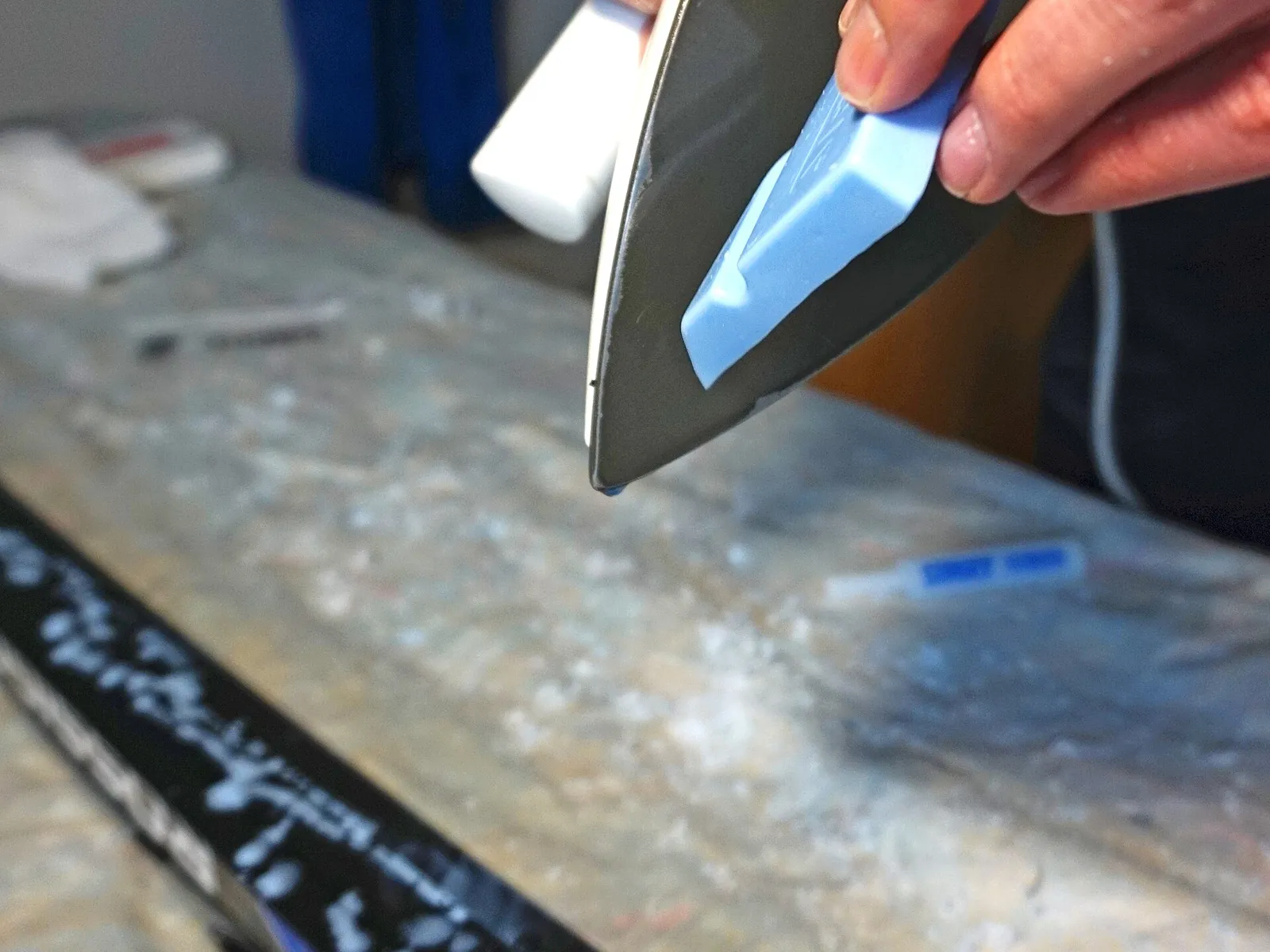
Since 1 January 2026, France has banned the manufacture, import, export and placing on the market of the following products where they contain PFAS: cosmetic products (in French), ski wax for skis and boards, and clothing textiles and footwear, together with waterproofing agents for these products, intended for consumers. Products made before that date may still be placed on the market for the first time, or exported, until 31 December 2026; products already on the market may be resold after that date. The ministry's FAQ states that garments made entirely of leather, leather goods and second-hand items remain outside the scope, and that textiles intended for professionals are covered only from 2030.
Exceptions: protection, defence and recycled textiles
The decree excludes from the ban personal protective equipment (PPE) within the meaning of Regulation (EU) 2016/425, equipment for the armed forces, internal security and civil protection, and the products used to re-waterproof that PPE. It adds an exception specific to French law: a textile or shoe that incorporates at least 20% recycled material from used products may contain PFAS, but only in proportion to that recycled fraction.
The thresholds of 25 ppb, 250 ppb and 50 ppm, polymers included
A product is not regarded as containing PFAS as long as it stays below the 3 cumulative thresholds set by Article D. 525-4: 25 ppb (parts per billion) for each PFAS measured by targeted analysis, 250 ppb for their sum, and 50 ppm (parts per million) for all PFAS together, polymers included. Above 50 mg of total fluorine per kilogram, the company must be able to show that this fluorine does not come from PFAS. The EU Packaging and Packaging Waste Regulation (PPWR) applies the same values to food packaging; a consumer jacket with a PTFE membrane exceeds the 50 ppm threshold and is therefore banned.
All textiles in 2030, except essential uses
From 1 January 2030, the ban will extend to all textile products, including professional ones. The following remain exempt: technical textiles for industrial use and, where no substitute exists, PPE, defence and security equipment, and sanitary textiles for medical use. Cookware, which was in the initial bill, was removed from the text during the debates, so non-stick frying pans are not covered by the French ban.
The French thresholds of 25 ppb, 250 ppb and 50 ppm apply to fluoropolymers too: since 1 January 2026, a PTFE membrane alone has been enough to make a consumer garment non-compliant.
3Industrial PFAS discharges have been subject to a charge since 1 September 2026
The 2025 law also covers discharges from factories into water, through a reduction trajectory and a charge, which the French Finance Act for 2026 has since taken up.
A charge of €100 per 100 grams discharged
Installations classified for the protection of the environment (ICPE in French) that are subject to authorisation and discharge more than 100 grams of PFAS per year into water, directly or through the sewer network, pay a charge of €100 per 100 grams, collected by the water agencies (agences de l'eau). Decree No. 2026-545 of 25 June 2026 lists the 28 PFAS that count towards the charge, including TFA, requires self-monitoring at sites that discharged at least 2 kg in the previous year, and provides for an 80% reduction of the mass counted where it has been treated by a suitable purification technology: for PFAS other than TFA, activated carbon, ion-exchange resins or reverse osmosis.
The charge has applied since 1 September 2026, a date the government confirmed in the French National Assembly. For 2026, the chargeable base is the discharges measured from that date at sites under self-monitoring and, for the other sites, four twelfths of the mass found in the latest measurement campaign.
A 70% cut in discharges by 2028, and a path towards ending them by 2030
Decree No. 2025-958 of 8 September 2025 sets a national trajectory for cutting PFAS discharges to water from industrial installations, from a 2023 baseline: a 70% cut by 27 February 2028, then a path heading towards an end to discharges by 27 February 2030. Flows are measured net, after deducting the PFAS already present in the water the site takes in.
Monitoring under way since 2023
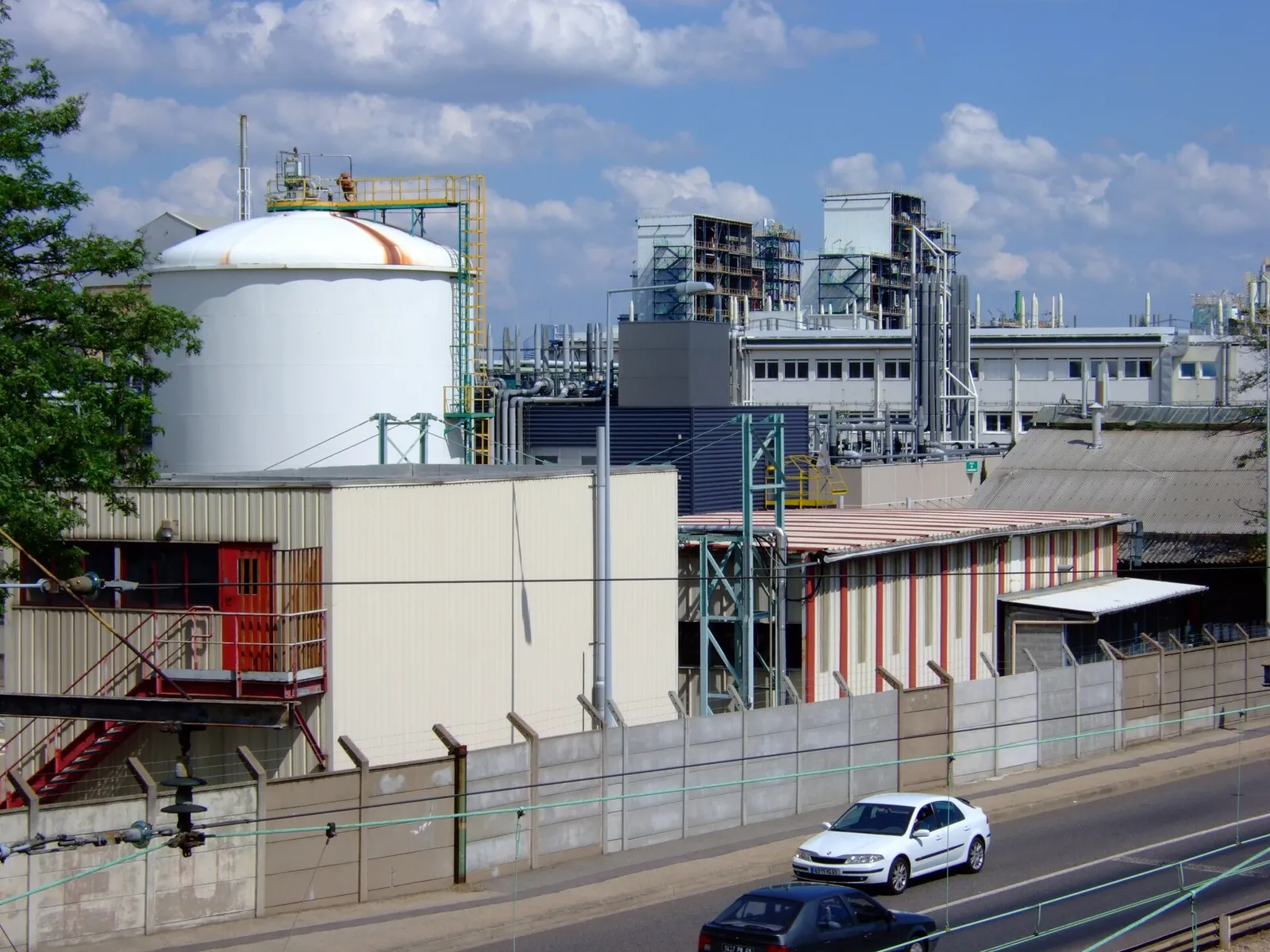
These targets build on the campaign that the ministerial order of 20 June 2023 imposed on authorised ICPE sites in 31 categories, from textiles to chemicals: 3 consecutive monthly rounds of analyses, covering 20 PFAS, any other PFAS used by the site and adsorbable organic fluorine. In Auvergne-Rhône-Alpes, the DREAL (the State's regional environment authority) drew up a status report covering 558 installations. According to the State's roadmap of April 2026, Arkema's PFAS discharges into surface water south of Lyon fell from 300 kg a month in 2022 to about 2 kg on average in 2025, after the company stopped using its perfluorinated surfactant, 6:2 FTS.
4In the EU, individual PFAS are already banned
While the universal restriction is pending, the European Union bans PFAS substance by substance, or restricts them for specific uses.
PFOS, PFOA and PFHxS: persistent organic pollutants
Regulation (EU) 2019/1021 on persistent organic pollutants bans the manufacture and use of PFOS, PFOA and PFHxS, with a threshold of 0.025 mg/kg (25 ppb) and a few temporary derogations. The long-chain perfluorocarboxylic acids (PFCAs), with 9 to 21 carbon atoms, were listed under the Stockholm Convention in May 2025 and are due to join them: the Commission adopted the delegated regulation on 7 September 2026, with application planned for 16 December 2026 if neither the European Parliament nor the Council objects.
PFHxA, from 10 October 2026
Regulation (EU) 2024/2462 restricts, in stages, PFHxA and its salts above 25 ppb, and related substances above 1,000 ppb. Since 10 April 2026, it has covered training foams and the foams used by public fire services. On 10 October 2026, it extends to consumer clothing, footwear and accessories, to paper and cardboard in contact with food, to consumer mixtures and to cosmetics; on 10 October 2027, to other consumer textiles; in 2029, to civil aviation foams. Category III PPE, medical devices and construction textiles are exempt.
Firefighting foams, with deadlines running to 2035
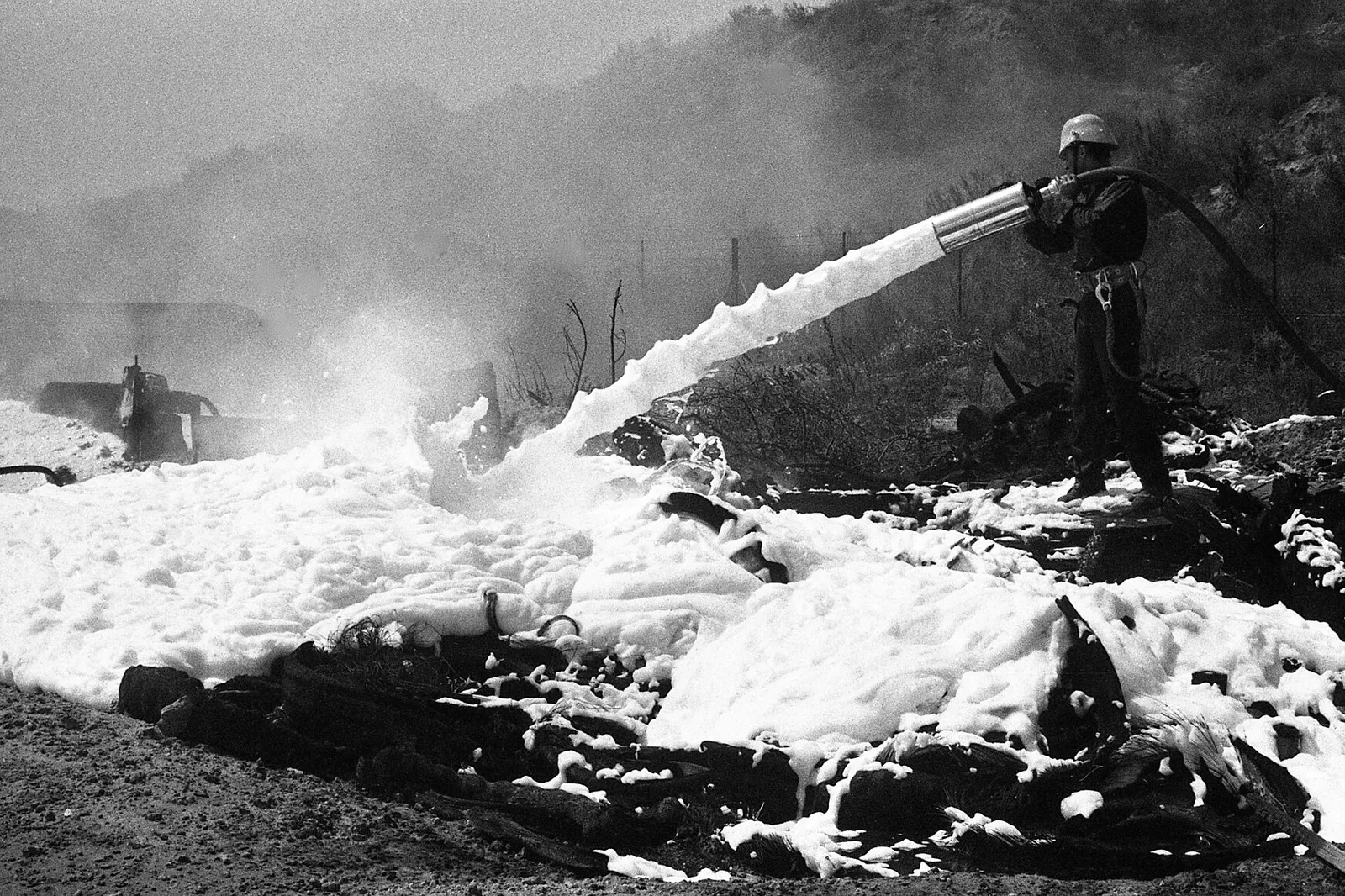
Regulation (EU) 2025/1988 covers all PFAS in firefighting foams, above 1 mg/L. Portable fire extinguishers using fluorinated foam may no longer be placed on the market after 23 October 2026, or 23 April 2027 for alcohol-resistant foams, but those already installed may remain in use until 31 December 2030. The general ban applies from 23 October 2030, while Seveso sites, oil platforms and ships have until 2035. From October 2026, use is limited to flammable-liquid fires, and each user must keep a foam management plan. The universal restriction does not cover foams, which fall under this regulation.
Food packaging, drinking water and toys
Since 12 August 2026, the PPWR has banned food-contact packaging that exceeds the thresholds of 25 ppb, 250 ppb and 50 ppm, set out in our article on PFAS in food packaging; the PPWR timeline shows where this deadline sits among the others. The new Regulation (EU) 2025/2509 on toy safety bans the intentional use of PFAS in toys from 1 August 2030.
5Product by product: which text applies, and when
The same product can fall under several texts at once, with different dates and exceptions, and French law does not always follow EU law: a garment, a food package and an industrial seal are subject to different rules.
Product by product: what France and the EU provide for
Choose a product: each line gives the legislation that applies and its date.
Waterproof jacket
Banned since 1 January 2026, PTFE membrane included; exception for 20% recycled material, pro rata
PFHxA banned in consumer clothing from 10 October 2026
Within the scope of the universal restriction, expected in 2029 at the earliest
Clothing manufactured before 1 January 2026 may be placed on the market until 31 December 2026 and resold after that date.
Imported products
The French ban covers imports as well as manufacture: a brand that has its clothing or cosmetics made outside Europe is responsible for their compliance at the border, and must obtain test results or written commitments from its suppliers. The same reasoning holds for the EU restrictions, which apply to placing on the market wherever the product is made. For a garment, these obligations come on top of those of the French fast fashion law and of the French textile environmental labelling scheme.
"PFAS-free" claims
The EmpCo Directive (the EU directive on empowering consumers for the green transition) adds to the list of commercial practices that are unfair in all circumstances the presentation, as a selling point, of a requirement imposed by law on all products of a category in the EU. The directive was due to apply from 27 September 2026 and has not yet been transposed in France. A ban that applies only in France is not in that category, but a "PFAS-free" statement on a product that can no longer contain PFAS remains exposed to the general rules on misleading practices. On a product that the law does not yet ban, the statement must be backed by test results; our list of banned environmental claims (in French) sets out the rules, and our 3-question test (in French) helps you check how a claim is worded.
6The universal restriction: final opinion due at the end of 2026, first bans no earlier than 2029
The universal restriction would cover all PFAS in all uses, subject to derogations. It follows the restriction procedure of the REACH Regulation, and several stages remain to be completed.
The restriction proposal from 5 countries
Germany, Denmark, the Netherlands, Norway and Sweden submitted the restriction proposal on 13 January 2023. It compares 2 options, each after an 18-month transition: a full ban, or a ban with use-specific derogations, most often of 5 or 12 years and with no time limit for a few uses. The public consultation in 2023 drew more than 5,600 comments; the updated proposal that followed adds 8 sectors and, for some uses, considers use under strict conditions rather than a ban.
Where the REACH procedure stands, and the timeline that remains
Solid bars: completed steps; hatched bars: projection based on REACH time limits and the 18-month transition in the restriction proposal, assuming no delays.
The opinions of ECHA's 2 committees
The Committee for Risk Assessment (RAC) adopted its opinion on 3 March 2026 by consensus. It estimates that a full ban would cut emissions by 96% over 30 years (about 3.3 million tonnes avoided), against 76% with the derogations in the proposal, and it supports only the derogation for PPE. The Committee for Socio-economic Analysis (SEAC) published a draft opinion at the end of March, supporting a ban with targeted derogations; consultation on it was open until 25 May 2026. Its final opinion is expected by the end of 2026; it had not been adopted as of 2 October 2026.
The remaining timetable
Once the SEAC opinion has been delivered, the Commission has 3 months to prepare a draft amendment to Annex XVII to REACH (Article 73), which the REACH Committee of Member States votes on before it goes to the European Parliament and the Council for 3 months of scrutiny. Bans apply after the transition period provided for, which is 18 months in the proposal: even without delay, adoption would come in 2027 or 2028 and the first bans in 2029 at the earliest.
On 15 June 2026, at a high-level dialogue with industry, the Commission said it was considering banning PFAS in consumer goods while preserving critical industrial uses for which no alternative exists.
Fluoropolymers are within the scope of the proposal
The EU proposal includes fluoropolymers, as French law does. For industry, the main issue is technical uses: PTFE and its derivatives are used in seals, cables, filtration membranes, semiconductors and medical devices (in French), where their chemical and thermal resistance is hard to match. The length of the derogations granted to these uses will in practice set the timetable for substitution for many manufacturers.
As of 2 October 2026, nothing is banned under the universal restriction: the rules in force come from targeted texts, and the REACH procedure does not allow the first bans before 2029.
7Where to start: take stock, measure, then substitute
Companies not yet covered by French law are better off preparing for the universal restriction now, because substitution often takes several years, testing and customer qualification included.
Take stock and measure
The first step is to identify the PFAS in your products and processes, going through your range item by item for water-repellent treatments, coatings, lubricants, seals and processing aids. Suppliers do not always declare PFAS that are not classified as hazardous, so total fluorine analysis serves as a first filter, followed by targeted analyses, carried out to standards NF EN 17681-1 and 17681-2, which the ministry's FAQ recommends.
Compare alternatives before substituting
A PFAS-free alternative is not always better for the environment: a less durable water-repellent treatment may require re-waterproofing or more frequent replacement of the product, and a less resistant seal may cause maintenance shutdowns. A comparative life cycle assessment (LCA) (in French) measures these effects before a choice is made; its cost depends on the number of alternatives (in French), and it fits into a broader eco-design process (in French).
- Classify each use by the text that covers it: banned in France, restricted in the EU, or within the scope of the universal restriction only.
- Ask each supplier for a composition declaration and, for the products covered, test results.
- Measure discharges from industrial sites, to anticipate the charge and the 2028 trajectory.
- Test alternatives over the product's real lifespan, under real conditions of use.
At Projet Celsius, we think the costliest mistake is waiting for the universal restriction to be adopted before starting trials: the products covered by French law show that a successful substitution requires durability and performance tests that cannot be completed in 18 months. Our life cycle assessment service compares alternatives across their whole life cycle.
8Key takeaways
- France has banned PFAS in cosmetics, ski wax and consumer clothing since 1 January 2026, and will extend the ban to all textiles in 2030.
- The French thresholds of 25 ppb, 250 ppb and 50 ppm apply to fluoropolymers too, PTFE included.
- The EU restricts specific PFAS: PFOA, PFOS and PFHxS; PFHxA from 10 October 2026; firefighting foams and food packaging.
- The universal restriction awaits the final opinion of the SEAC, due at the end of 2026; the first bans would come in 2029 at the earliest.
Companies not yet covered would do well to take stock of their uses now. For products subject to the Ecodesign for Sustainable Products Regulation (ESPR), the ESPR guide (in French) describes the requirements that will be added, and the guides to cosmetics eco-design (in French) and textile eco-design (in French) cover the requirements for these 2 sectors.
- French law: Law No. 2025-188 of 27 February 2025 aimed at protecting the population from the risks linked to PFAS, Journal officiel (JORF, the French official gazette) of 28 February 2025, Articles 1 and 2; Decree No. 2025-1376 of 28 December 2025, Articles D. 525-1 to D. 525-4 of the Environmental Code; FAQ of the ministry responsible for the environment, May 2026. The French public-body pages cited in this block are in French.
- Industrial discharges: Article L. 213-10-2-1 of the Environmental Code, resulting from the Finance Act for 2026; Decree No. 2026-545 of 25 June 2026; question to the government No. 1461, 16 April 2026; Decree No. 2025-958 of 8 September 2025; ministerial order of 20 June 2023; State PFAS roadmap for Auvergne-Rhône-Alpes, April 2026.
- EU law: Regulation (EU) 2019/1021 and delegated regulation C(2026) 6059 on PFCAs C9-C21; Regulation (EU) 2024/2462 (PFHxA); Regulation (EU) 2025/1988 (firefighting foams); Regulation (EU) 2025/40, Article 5; Directive (EU) 2020/2184, Annex I; Regulation (EU) 2025/2509 (toys); Regulation (EC) No 1907/2006, Articles 71 to 73.
- Universal restriction: ECHA registry of restriction intentions; opinion of the Committee for Risk Assessment and ECHA press release of 3 March 2026; ECHA press release of 26 March 2026 on the draft opinion of the SEAC; European Commission, high-level dialogue on PFAS, 15 June 2026.
- Health and water: Nordic Council of Ministers, The cost of inaction, TemaNord 2019:516; Anses, national campaign to measure PFAS in water, December 2025; report by the French government inspectorates IGAS, IGEDD and CGAAER on drinking water clean-up, May 2026.