

- 1The PPWR provides for no certificate: the manufacturer alone proves that its packaging complies.
- 2Under the PPWR, suppliers are required to provide the manufacturer with the evidence it needs.
- 3Usable evidence names the component, the site, the period and the method.
- 4Sort the documents by requirement before chasing suppliers, with one request per gap.
Since 12 August 2026, Regulation (EU) 2025/40 on packaging and packaging waste (PPWR) requires the manufacturer of a packaging, most often the brand that fills it, to prove its own compliance. The manufacturer applies internal production control and draws up technical documentation, with no notified body involved and no PPWR certificate to obtain. Most of the evidence in this file comes from its suppliers of materials, packaging and analyses, as our PPWR guide points out.
Each PPWR requirement calls for its own evidence, with its own date
Choose a requirement: what the file must show, the document to request and what the reviewer checks in it.
Legal text: Article 5(4)
Having this evidence verified means making sure that it says what the file claims it says, on 4 points: the component, the site, the period and the method. The sections below take these points in the order in which a manufacturer meets them, with an example of a document under review.
1What must PPWR technical documentation contain?
The technical documentation brings together the documents that prove a packaging type complies with Articles 5 to 12 of the regulation. The manufacturer draws it up before placing the packaging on the market, keeps it for 5 years for single-use packaging and 10 years for reusable packaging, and hands it to the authorities within 10 days of their request (Article 15).
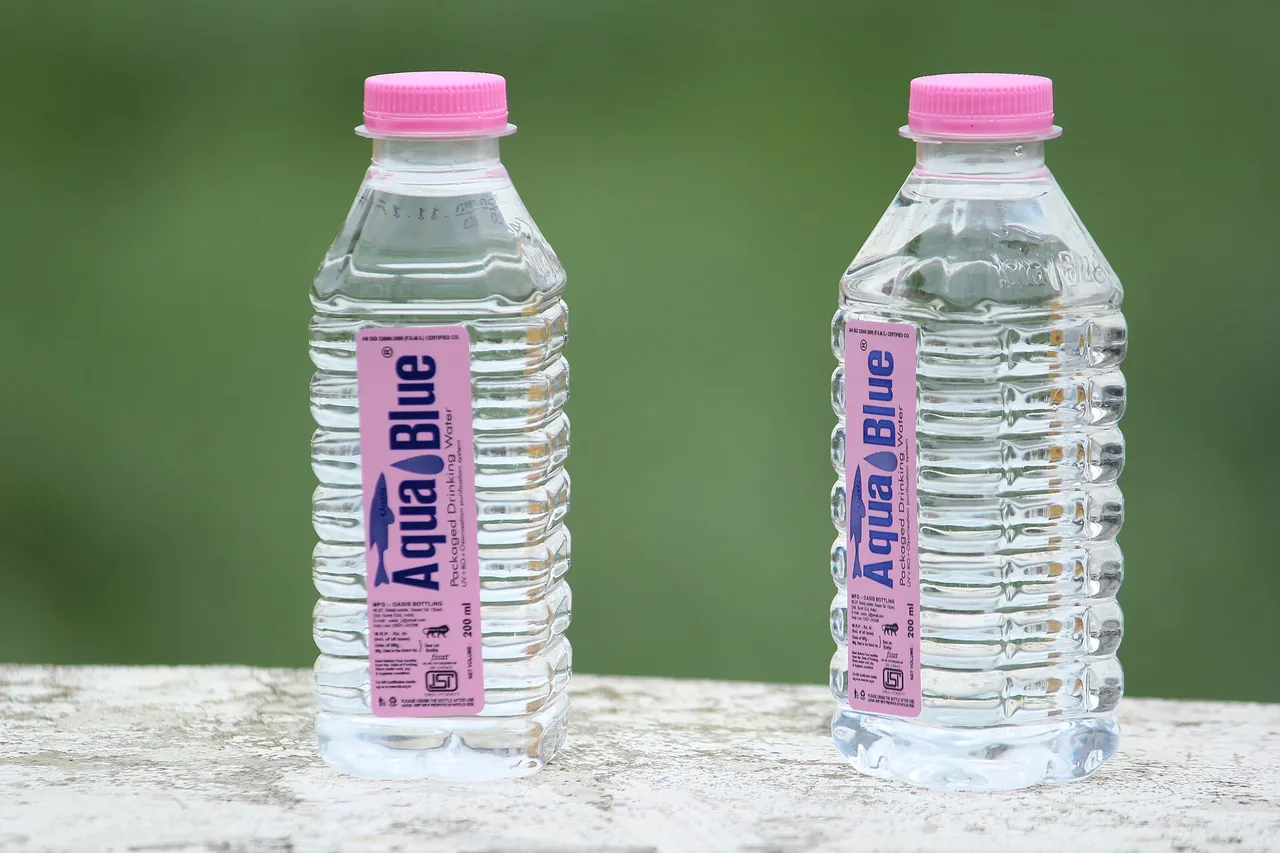
The documents listed in Annex VII
Annex VII describes the procedure, known as module A, and sets the minimum content of the file:
- A general description of the packaging and its intended use, which says which type of packaging each document in the file refers to.
- Design and manufacturing drawings, with the materials of each element, from the body of the packaging to its closure, label and inks.
- The list of standards, common specifications or other technical specifications used to measure or calculate, and the solutions adopted where there is no standard.
- A qualitative description of how the assessments of recyclability, minimisation and reusability were carried out, where they apply.
- Test reports, whether they come from the manufacturer, its suppliers or an external laboratory, with the sample and the method of each test.
- An analysis and assessment of the risks of non-compliance, which say where the file is fragile and how those risks are controlled.
One file per packaging type
The file is kept per packaging type, identified by a type, batch or serial number, and covers the complete unit, with its closure and label. The manufacturer keeps procedures so that series production stays compliant: a change of supplier or material grade may require a new assessment. The EU declaration of conformity then summarises the file in 8 headings, following the Annex VIII model. Reusable packaging, kept for 10 years, also falls under the reuse rules.
What the file must prove from 2026
Not all requirements apply at the same time. Since 12 August 2026, the file mainly proves compliance with the substance limits: 100 mg/kg for the sum of lead, cadmium, mercury and hexavalent chromium. For packaging in contact with food, the 3 thresholds detailed in our article on PFAS (per- and polyfluoroalkyl substances) in food packaging are added. Recyclability and the reduction of weight and volume are still judged under the 1994 rules and their standards EN 13430 and EN 13428, pending the criteria of the regulation. Recycled content only applies from 1 January 2030, as our PPWR timeline points out.
2Do you need a PPWR certificate or a third-party body?
No. The Annex VII procedure is internal production control: the manufacturer ensures and declares, on its sole responsibility, that the packaging meets the requirements, with no notified body and no certificate to obtain. A document titled "PPWR certificate" therefore has no regulatory value of its own. It is worth what the evidence it gathers is worth.
The manufacturer ensures and declares, on its sole responsibility, that the packaging complies. No notified body is involved: heading 7 of the declaration model does not apply. Point 2 lists the documents in the file, from the description of the packaging to the test reports.
What the Commission says
In its guidance document of 10 June 2026, the Commission specifies that the assessment may be carried out by the manufacturer or by a person acting on its behalf, for example a laboratory or a certification scheme. The declaration, for its part, relies on documentation provided by suppliers. Using such a person remains a choice. No harmonised standard has yet been published under the regulation. The standards of the former directive now serve only as guidance, except standard EN 13428 on source reduction, which gives a presumption of conformity until the end of 2029 according to the Commission's FAQ.
Where a third party intervenes or will intervene
For recycled content, the calculation and verification method that the Commission must adopt by 31 December 2026 at the latest may include an obligation to carry out independent third-party audits (Article 7). The Commission's call for evidence of 14 August 2026 mentions a traceability chain and third-party audits where necessary, without naming any certification scheme. For recycled plastic in contact with food, another text, Regulation (EU) 2022/1616, already requires third-party certification of the pre-processing step of recycling.
What the authority may request
In France, the competent authority is the Directorate-General for Risk Prevention (DGPR), according to French customs. Missing, incomplete or erroneous technical documentation is a formal non-compliance (Article 62), which, if it persists, may lead to a ban, withdrawal or recall of the packaging. National penalties must be set by 12 February 2027 at the latest. These rules come on top of those of extended producer responsibility (EPR) for professional (B2B) packaging.
There is no PPWR certificate, only a file that proves compliance document by document.
3Which evidence should you request from suppliers?
Article 16 requires suppliers of packaging and packaging materials to give the manufacturer all the information and documentation it needs, in a language it understands, on paper or in electronic form. The text sets no deadline. The Commission's FAQ infers that a supplier cannot refuse, and asks for reasonable efforts for stocks whose supplier has disappeared: asking the former supplier, or carrying out one's own assessments.
Each link in the chain holds evidence that the manufacturer does not have
Example of a PET bottle: choose a link to see the document it must pass on.
The recycler. It sorts, washes and shreds the collected bottles, then sells recycled flakes or pellets.
The recycled content attestation and the traceability certificate of its site.
The site, the delivery period and the post-consumer origin of the material.
The 3 documents that carry the proof
In most files, 3 types of document carry most of the proof:
- The supplier's declaration of composition, which names the exact material and grade of each element and states the presence and content of regulated substances.
- The recycled content attestation, accompanied by the traceability certificate of the site that produced the material, for the delivery period concerned.
- A laboratory test report, which identifies the sample, the method, the limit of quantification and the result, for example for heavy metals or total fluorine.
For packaging in contact with a sensitive product, the documents specific to sensitive-contact products (food, cosmetics, medicines, medical devices) are added, which Article 16 expressly lists among the documents to be supplied to the manufacturer. The same document may serve 2 requirements, provided it refers to the same component and the same period.
The case of PFAS
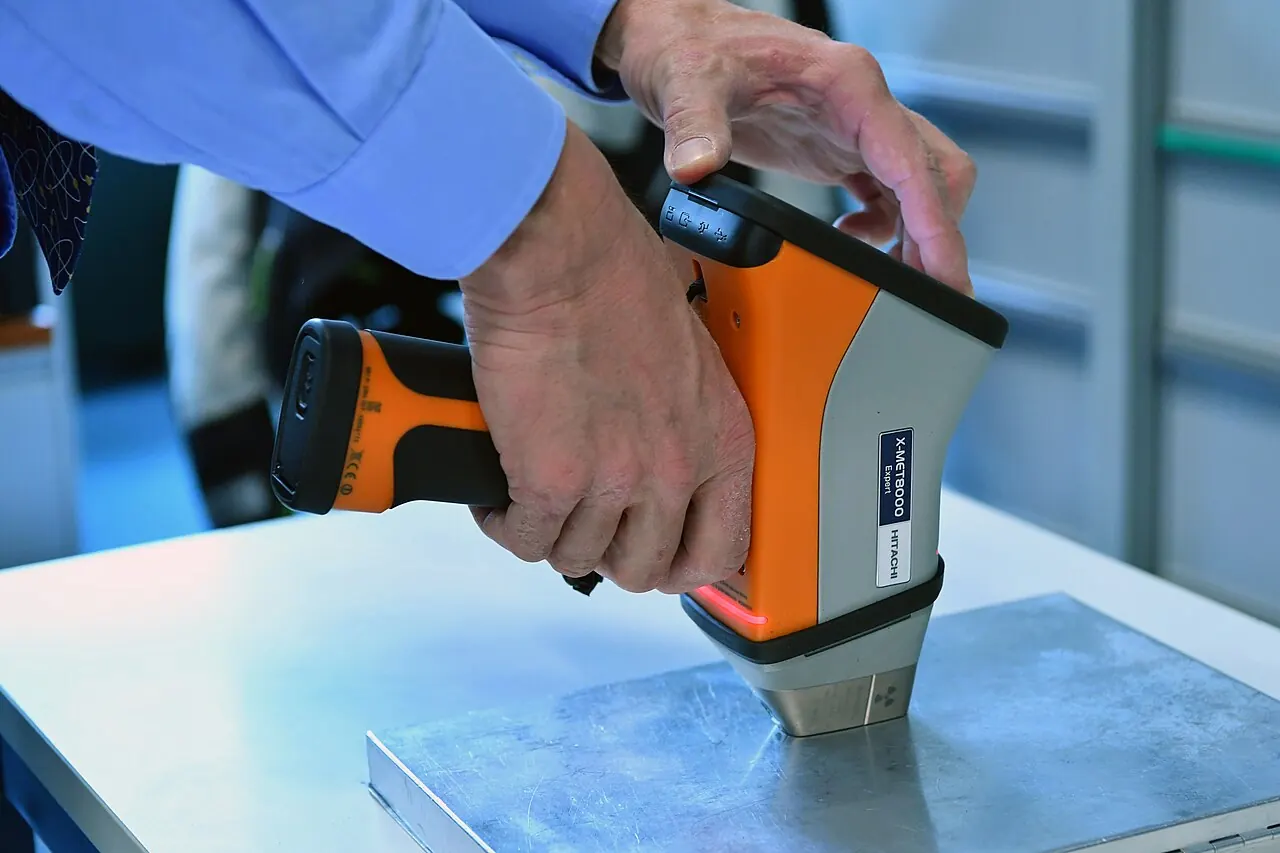
For PFAS, the guidance document recommends 3 steps: measure total fluorine; above 50 mg/kg, check by pyrolysis and chromatography whether that fluorine is organic; then check the thresholds of 25 and 250 µg/kg with a TOP (total oxidisable precursor) assay. According to the Commission, a sample that complies at the first step complies at the next 2 as well: total fluorine below 50 mg/kg is enough.
Above that threshold, Article 5 requires the substance's manufacturer, importer or downstream user to provide evidence on request, so that the packaging manufacturer can draw up its file. The thresholds and their logic are detailed in our article on the PFAS ban, and the claims that can no longer be made on packaging in our list of banned environmental claims.
4How do you choose who verifies the file?
The regulation reserves the review to no profession. The non-negotiable criterion is the ability to link a document to a requirement. A good reviewer knows that a recycling certificate does not prove a heavy metal content, that a food contact declaration says nothing about recyclability, and that a test report applies to one sample, not to a range. The reviewer has not produced the evidence they review, as with a critical review of a life cycle assessment (LCA) (in French) (in French).
Questions to ask
Before signing, 4 questions are enough to compare 2 offers:
- Which requirements of the regulation does the review cover, article by article, and which remain out of scope for lack of a published implementing act?
- Did the provider take part in designing the packaging or in producing any of the evidence it will review?
- What does the deliverable contain: a list of gaps per document, with the text concerned and the document to request from each supplier?
- Who writes to the suppliers for the additional collection, and how are the new documents incorporated into the file and the risk analysis?
Warning signs
Some offers promise more than the regulation makes it possible to deliver:
- A "PPWR certificate" or a "conformity label" issued at the end of the review, whereas the regulation provides for neither.
- Validation of an entire range on the basis of a single sample, or of a single supplier declaration valid for all sites.
- Guaranteed compliance with the 2030 requirements, whereas the acts that will set the recycled content method and the recyclability classes have not been published.
The same reflexes apply to an audit of environmental claims, which also links each message to its evidence, to having a carbon footprint assessment verified by a third party (in French) (in French), or to choosing a verifier for an FDES (in French) (in French) (the French format of environmental product declaration for construction products).
5How does a documentary review work?
A review of supplier evidence follows 4 steps:
- An inventory of the packaging types and their components, with, for each, the supplier, the production site and the requirements that apply on the date of placing on the market.
- A document-by-document review, checking that each piece of evidence refers to the right component, the right site, the right period and the right method.
- Additional collection from suppliers, with a precise request for each gap rather than a general questionnaire sent to the whole chain.
- An update of the file and of the non-compliance risk analysis, then of the EU declaration of conformity if a document changes.
5 supplier documents reviewed: as received, as they prove
Example built for the article. Choose a gap: the reviewer's finding and the document to request again.
Recycled content, Article 7. The material was delivered by site B of the same group: the certificate does not cover the site that produced the material.
"Traceability certificate for site A, valid from 1 January to 31 December 2026."
"Traceability certificate for site B, which delivered batches 26-114 to 26-131, valid from 1 January to 31 December 2026."
To request again: the certificate of the delivering site, or written evidence that site B falls within the scope of the certificate received.
One document reviewed, line by line
A review line links a document to a requirement and says what is missing for it to prove anything. The example below is built for the article: 5 gaps that recur in supplier evidence, each with the line as it arrives and as it proves.
What the gaps have in common
In these 5 cases, the document exists, but it does not refer exactly to the packaging in the file: another site, another grade, another period, a sample with no reference. A precise request, gap by gap, generally obtains the right version from the same supplier, whereas a general questionnaire sent out to the whole chain brings back the same generic declarations.
Timing and price
No public price list exists for a review of supplier evidence. The workload depends on the number of packaging types, the number of suppliers and the quality of the documents already gathered. To give an idea, in a constructed example: a PET (polyethylene terephthalate) bottle with its cap, label and ink has 4 elements. If it touches food, heavy metals and PFAS alone already give 8 review lines, each backed by a document from a named supplier. The additional collection, which follows the pace of supplier replies, generally sets the real timing. The 10-day deadline for replying to an authority therefore assumes a file that is already complete.
6What should you prepare before the review?
A review goes faster when the manufacturer has already sorted its documents by packaging type and by requirement. The items to gather:
- The list of packaging types placed on the market since 12 August 2026, with their type or batch numbers and the countries of sale.
- The bill of materials of each packaging, from the body to the closure, label, ink and adhesive, with the supplier and production site of each.
- The documents already received, sorted by requirement, with their issue date, validity period and the component they refer to.
- The purchase specifications, to check that they require suppliers to pass on their evidence and to report any change of material or site.
- The name of the person who signs the EU declaration of conformity, and of the person who answers the authorities within the 10-day deadline.
For a micro-enterprise that buys its packaging, the packaging supplier, if established in the same Member State, becomes the manufacturer within the meaning of the regulation (Article 3), a case covered in our article for micro-enterprises. A seller established outside France has other obligations, and an importer checks that the foreign manufacturer has drawn up the technical documentation and keeps it available for 5 or 10 years. What falls to each role is detailed in our test am I affected by the PPWR.
At Projet Celsius, a useful review starts with the requirements that already apply, substances and PFAS, before those of 2030 whose methods are not published. We recommend asking each supplier for one document per requirement and per site, rather than a global declaration, and keeping a record of each request, which will show the effort made if a document is missing. Our PPWR support organises this review and the collection that follows it, and our guides on packaging eco-design prepare the 2030 requirements.
7Key takeaways
- The manufacturer alone proves compliance of each packaging type, through its technical documentation and with no certificate to obtain.
- Suppliers must provide the manufacturer with the necessary information and documents, and cannot refuse according to the Commission.
- Usable evidence names the component, the site, the period and the method; a generic declaration proves nothing.
- Since 12 August 2026, the file mainly covers substances and PFAS; recycled content is added in 2030, together with the new recyclability and minimum weight criteria.
The document that summarises this file, the EU declaration of conformity, is covered in our article on what it must contain, and the packaging that the regulation bans in our list of banned packaging.
- European Parliament and Council, Regulation (EU) 2025/40 of 19 December 2024 on packaging and packaging waste, OJ L of 22 January 2025: Articles 3, 5 to 12, 15 to 22, 36 to 39, 62, 68, 70 and 71, Annexes VII and VIII; corrigendum of 22 May 2025.
- European Commission, communication C/2026/3084, guidance document concerning Regulation (EU) 2025/40, OJ C of 10 June 2026, sections 2, 5, 6 and 7.
- European Commission, DG Environment, PPWR, Frequently Asked Questions, second edition, 3 August 2026 (it reflects only the views of its authors).
- European Commission, call for evidence Ares(2026)7895997 on the calculation and verification of recycled content, "Have your say", 14 August to 16 September 2026.
- European Commission, Regulation (EU) 2022/1616 on recycled plastic materials and articles intended to come into contact with foods.
- Direction générale des douanes et droits indirects (French customs authority), news item on the entry into application of the PPWR, 10 August 2026 (competent authority in France). Accessed 16 October 2026.


