
- 1Join Citeo Pro, Léko Pro or Twiice by 31 December 2026, then declare your packaging tonnages.
- 2Working out which packaging you are the producer of is the step that calls for outside help.
- 3Without membership, fines of up to €7,500 per tonne, and customers who demand the unique identifier.
- 4For an SME or a mid-cap, handling EPR alongside the PPWR inventory avoids paying 2 times.
Projet Celsius, which wrote this article, is one of the providers compared. Each provider is described from its public pages as of 6 November 2026, and none has paid to appear here.
Which support to choose for B2B packaging EPR in France?
Choose a step: who does it for you, and at what price level.
For each item of packaging, we establish who declares it: you or your supplier. The producer is not necessarily the company that manufactures it, but the first to place it on the market in France.
The timetable is set by the press release of the French Ministry of Ecological Transition of 28 July 2026, which states that every operator concerned must have joined a producer responsibility organisation by the end of the year. Joining itself comes down to a single form. The time goes elsewhere: working out which packaging the company is the producer of, and how many tonnes it declares.
1What must a company do before 31 December?
The professional (B2B) packaging scheme, one of the French extended producer responsibility (EPR) schemes, requires whoever places professional packaging on the market to finance its end of life. It starts on 1 January 2027, after several postponements, and our article on EPR for professional packaging sets out its scope and fees. For an affected company, the work falls into 4 steps:
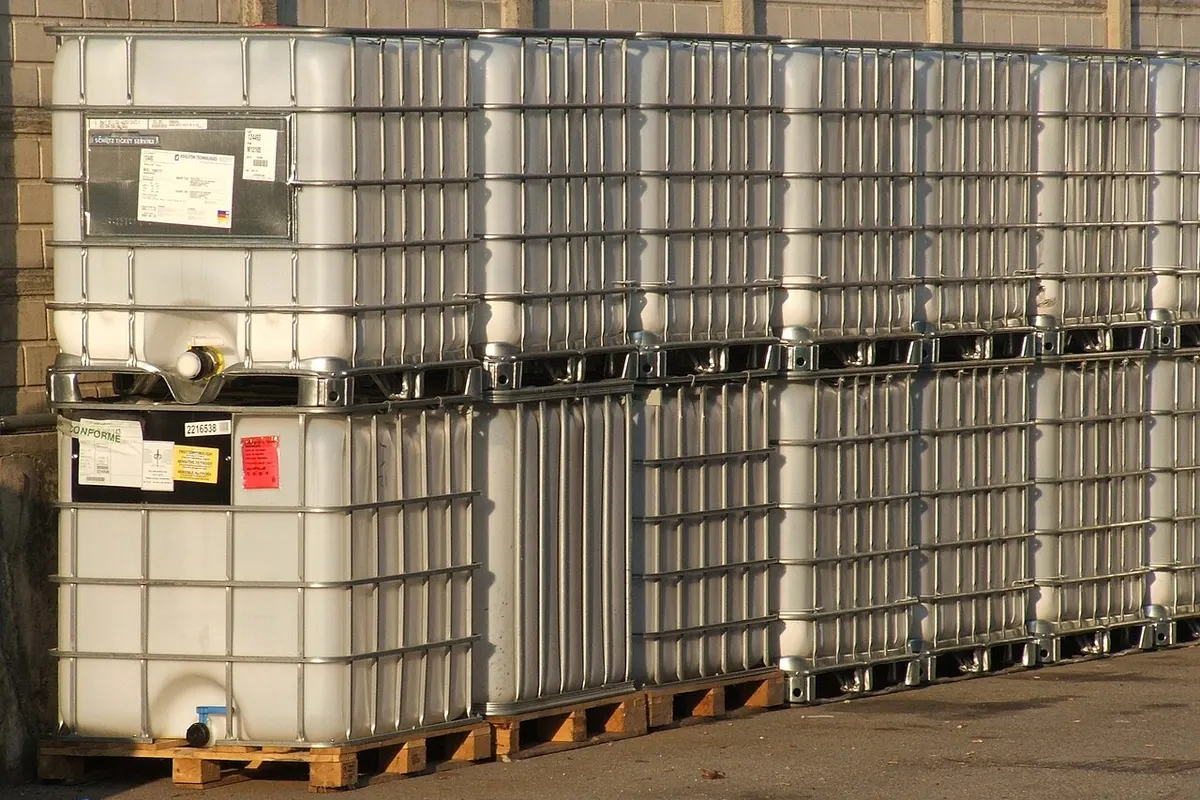
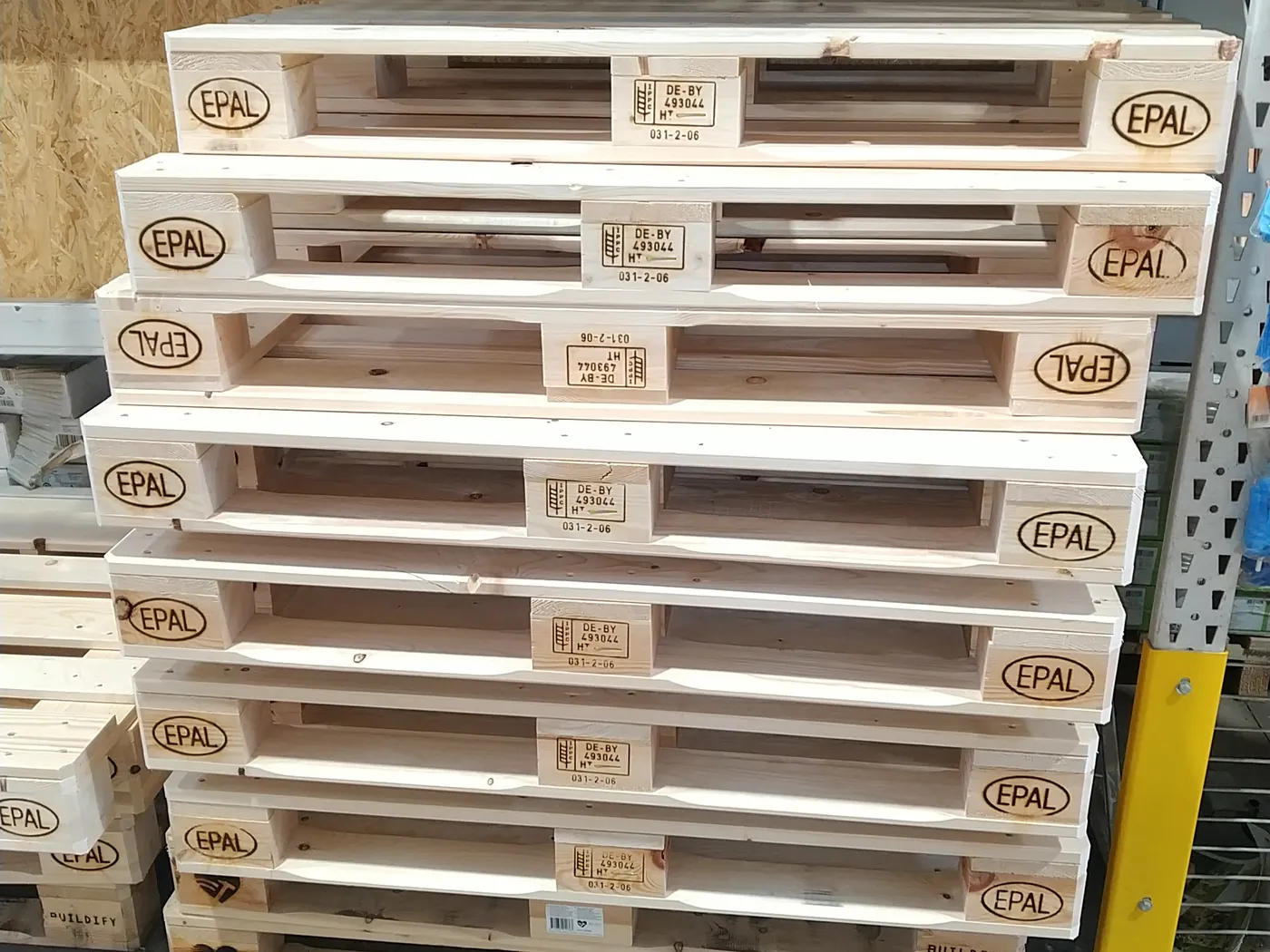
- List the packaging it places on the market that does not end up with a private individual: pallets, stretch film, shipping boxes, big bags, drums, crates.
- Establish, for each item, whether it is the producer within the meaning of the scheme, or whether its supplier declares it.
- Join one of the 3 approved producer responsibility organisations (PROs, éco-organismes in French), Citeo Pro, Léko Pro or Twiice, before 31 December 2026, and receive its unique identifier (identifiant unique, or IDU), the EPR registration number issued by ADEME (the French Agency for Ecological Transition).
- Declare its tonnages by material (plastic, paper and cardboard, wood, metal) and pay the EPR fee (éco-contribution) from 2027.
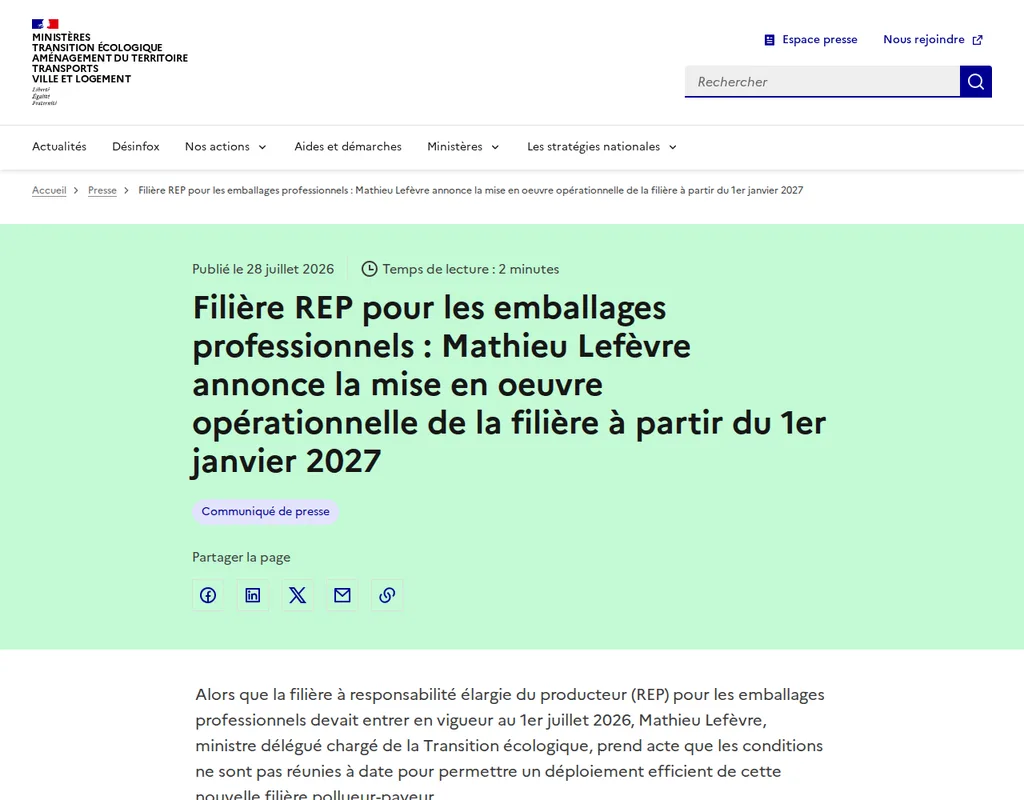
The minister delegate postpones the scheme, planned for 1 July 2026, to 1 January 2027, and asks the PROs to publish their 2027 fee schedules from September. Every operator concerned must have joined a PRO by the end of the year.
Choosing a PRO
The 3 PROs cover the same scope. Until 31 December 2026, food service falls under Citeo Pro alone; its members sign a new contract for 2027. Their 2027 fee schedules have been published since October 2026, and the differences lie mainly in plastic, from €259 per tonne at Léko Pro to €281.84 at Citeo Pro. Below 4 tonnes a year, a flat fee of €200 to €240 excl. VAT replaces the weight-based calculation.
The first declaration is not due on the same date everywhere. Citeo Pro requires it in January and February 2027, based on actual 2026 tonnages. Twiice expects it before 28 February 2027, and Léko Pro from January 2028, for the year 2027. Our article on choosing a PRO (in French) compares the household packaging scheme, which follows the same logic.
Displaying your unique identifier
The PRO issues each member a unique identifier, which the company must show in its general terms and conditions of sale (CGV in French) and on its website. Our article on the EPR number explains where to find it and how it is structured.
2Can you join and declare without help?
A company that knows its packaging can do everything itself. Membership is completed online on the PRO's portal, and each PRO publishes a fee simulator, a guide and free information sessions. If all your packaging leaves the same warehouse and is bought from 2 or 3 suppliers, your purchase invoices are enough to estimate your 2026 tonnages by material.
Who is the producer of professional packaging?
3 questions about a given item of packaging, and who must declare it.
1. Where does the packaging end up?
2. What does this packaging do?
3. Where does the empty packaging come from?
You are the producer
The packaging that contains your product, sold under your brand, is yours: you join a PRO and declare it. The only exception: a micro-enterprise that has it made under its brand by a supplier established in France, which then declares it.
Sources: Regulation (EU) 2025/40, Article 3; ministerial order of 2 December 2025; Citeo Pro, 2027 fee guide.
Who is the producer?
This is the trickiest question, because the producer is not necessarily the company that manufactures the packaging. For packaging that contains the product, it is the company that first makes the packaged product available in France: the brand that packs it or has it manufactured, or the importer. For a pallet or transport film, it is whoever first makes them available in France: the French supplier, or the company itself if it imports them. The test above gives the answer for one item of packaging, but an SME often places dozens on the market.
The cases that call for help
The work becomes more complicated in 4 situations:
- Packaging bought abroad, or an imported product that is already packaged: the company becomes the producer of what it brings in, often without realising it.
- A group of several companies: each legal entity joins and declares in its own name, and flows between subsidiaries blur who places what on the market.
- Packaging that serves both business customers and private individuals, such as a box sold in shops and online: the tonnage must be split between the 2 schemes.
- Tonnages that cannot be found in the management system: the company has to work back from suppliers' technical data sheets, item by item.
Micro-enterprises have a narrow exemption. The EU Packaging and Packaging Waste Regulation (PPWR) grants it only to a micro-enterprise that has packaging made under its own name or trade mark by a supplier established in the same country. That supplier then becomes the producer. A micro-enterprise that imports, or that fills neutral packaging with its products, remains in scope. Our article on the obligations of a micro-enterprise covers these cases in detail.
3What does a company risk if it does not join?
The French Environmental Code provides for an administrative fine of up to €7,500 per tonne of packaging for a company that fails to meet its EPR obligations, and a periodic penalty payment of up to €20,000 per day. The same article sets a fine of up to €30,000 for a company that has not registered or does not display its unique identifier. These amounts are those of EPR: no penalty specific to the EU Packaging Regulation has yet been passed in France.
Large customers already ask their suppliers for the unique identifier, to make sure they are not carrying their suppliers' obligation. Online marketplaces, which are liable for the EPR of the sellers they host, pay the EPR fee in place of a seller without an identifier and recharge it to that seller, as our article on the EPR number explains. Late membership remains possible, but the fee is due on all packaging placed on the market since 1 January 2027.
Where must your EPR number be shown?
For each medium: the rule, the article that requires it and an example.
The general terms and conditions of sale
Art. R. 541-173, first paragraph
Every producer states its number there. Without general terms of sale, it puts the number in another contractual document given to the buyer.
Example wordingEPR unique identifiers: FR123456_01KQTR (household packaging)
The website
Art. R. 541-173, second paragraph
With the legal notices, in easy, direct and permanent access, like the SIRET and the VAT number.
Example wordingLegal notices · SIRET 123 456 789 00012 · EPR IDU: FR123456_01KQTR
The reply to the buyer
Art. L. 541-10-10
Every seller gives the buyer who asks for it the producer's number, even if it is only a reseller.
Example wordingOur supplier is registered under FR654321_05PWLA (electrical)
A number missing from the terms of sale or the website exposes you to a fine of up to €30,000, on top of the penalties for failing to join.
An incorrect declaration is costly too. A company that declares packaging whose producer is its supplier pays 2 times for the same tonne. One that forgets its imports faces a back-payment of fees. A Government amendment, adopted by the Senate on 16 February 2026 in the bill adapting French law to EU law, would raise the fine to 1% of worldwide turnover and add a back-payment of fees over 3 years. As of 6 November 2026, the National Assembly had not debated the text in plenary session.
Working out which packaging you are the producer of takes far more work than joining the PRO.
4Which providers help prepare for EPR?
5 types of provider help companies prepare for EPR, from multi-scheme consultancies, which serve groups, to the PRO, which is free for its members. Lawyers and authorised representatives step in for specific cases.
Multi-scheme consultancies
Multi-scheme consultancies, such as GAC Group or Leyton, work with mid-cap companies (ETI in French) and groups already covered by several EPR schemes. GAC Group describes flow mapping, a responsibility matrix, supplier questionnaires and assistance with membership and declarations; Leyton starts from an audit of existing declarations. Their strength is coverage of every scheme within a single arrangement. Neither of the 2 publishes prices: everything is on quotation.
Consultancies that combine EPR and the PPWR
Projet Celsius works with SMEs and mid-caps that must both join the EPR scheme and comply with the EU Packaging Regulation. The engagement starts from an item-by-item packaging inventory: for each item, the supplier, the material, the weight, who the producer is and the evidence that shows it. The tonnages by material and the membership application follow from it, then the PPWR declarations of conformity and technical documentation.
The company joins and files its declaration in its own name. We do not sell EPR work on its own, and we do not give legal advice. Sébastien Pierfederici, who leads these engagements, is an LCA trainer at IFC, and the firm holds Qualiopi certification (the French quality certification for training providers) for its training activities, including its PPWR training. The price, on quotation, depends on the number of packaging items and companies: it is given in the section on prices.
Specialist EPR consultancies
The consultancy RecycleMe is one of the few to publish an entry price for professional packaging EPR: from €700 excl. VAT for a half-day. It delivers a scoping note, a map of obligations, a budget estimate, the membership application, the unique identifier and the filing of the declaration. Beyond the half-day, the fixed fee depends on the number of product references, flows and companies. This offer suits an SME that wants a short scoping exercise.
Online declaration services
The REP·Pro service prepares the membership application and the declaration file online, from the tonnages the company enters: €390 for the packaging file, then €190 a year for follow-up. It also compares the 3 PROs and offers a console for chartered accountants. The company files the declaration itself. The service assumes the tonnages are known, with no item-by-item packaging inventory.
Your PRO and your trade federation
The 3 PROs support their members free of charge, the EPR fee aside. Twiice states that membership takes 10 to 20 minutes at no cost, with a short diagnostic questionnaire and an EPR fee calculator. Citeo Pro offers a fee simulator, webinars and a diagnostic, and Léko Pro a portal shared between household packaging and professional packaging, with online training.
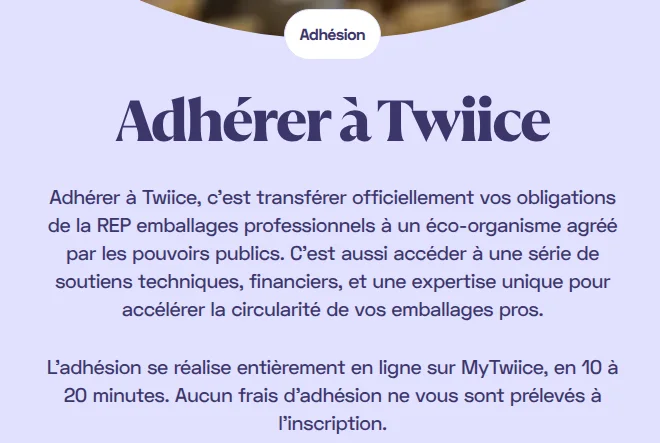
Membership is completed online, in 10 to 20 minutes, with no membership fee; the unique identifier arrives within 72 working hours, subject to its issue by ADEME. Citeo Pro and Léko Pro also offer online membership; Citeo Pro states that the identifier will not be issued before 1 January 2027.
Trade federations, such as the CGF for wholesale trade, also publish guides for their members. These tools serve everyone. They do not tell you, item by item, whether you are the producer.
Lawyers, and authorised representatives outside France
A lawyer is useful when the question becomes a legal one: a customer and a supplier each saying the other is the producer, or a contract clause that needs revising. The law firm Kohen Avocats publishes on these questions and offers a preliminary review at €80 incl. VAT, its general offer.
Since July 2026, a seller established outside France must appoint an authorised representative established in France to take over its obligations. EPR Representative advertises this from €190 excl. VAT per year per scheme for small volumes, and REP·Pro at €300 for set-up, then €590 per scheme per year. For a group that sells in several countries, our article on packaging EPR in Europe describes the providers present from one country to the next.
5How much does EPR cost an SME, support included?
There are 2 separate costs. The EPR fee is due to the PRO every year, on a public fee schedule. For an SME that places 12 tonnes of boxes and 3 tonnes of plastic film on the market, it comes to about €1,270 excl. VAT a year at Citeo Pro's 2027 rates, of which €846 is for the 3 tonnes of plastic. Below 4 tonnes, the flat fee of €200 to €240 excl. VAT applies.
Support, by contrast, is paid for once, then at a lower level each year:
- At the PRO, support is free: membership, simulator, guides and webinars are included.
- An online declaration service costs €390 per file, then €190 a year at REP·Pro (price checked on 6 November 2026).
- Scoping by a specialist consultancy starts at €700 excl. VAT for a half-day at RecycleMe; multi-scheme consultancies work on quotation.
- At Projet Celsius, a simple PPWR compliance engagement costs in the region of €5,000 excl. VAT. With EPR, the files and follow-up, it reaches €10,000 to €15,000 excl. VAT, depending on the number of product references and always on quotation.
What drives the price of support is the number of packaging types, suppliers and companies to cover, far more than the tonnage. Reusable packaging pays only when it is first placed on the market, as our article on reuse targets explains. An inventory carried out for EPR, then again for the PPWR, costs 2 times. A full PPWR diagnostic, on a broad packaging portfolio, costs more than a simple compliance engagement: our article on choosing a firm for a PPWR audit covers this in detail.
6Who to choose, by packaging profile and company size?
The right choice depends mainly on what the company already knows about its packaging:
- A small company that buys pallets and film in France and sells under its own brand can join on its own, using its PRO's simulator and guide.
- An SME that knows its tonnages but wants a clean file can use an online declaration service, for €390 per file at REP·Pro.
- An SME or a mid-cap that imports, has several companies or does not know who is the producer of what will benefit from support from a consultancy, once.
- A group covered by several EPR schemes, or selling in several EU countries, needs a multi-scheme consultancy, and an authorised representative wherever it has no company.
For us at Projet Celsius, EPR is not handled separately. The EU Packaging Regulation has required, since 12 August 2026, the manufacturer of each item of packaging to be identified, and its definition of the producer is the one the PROs apply to French EPR. The same list serves the 2 obligations, and drawing it up 2 times means paying 2 times for the same work.
For an SME or a mid-cap that imports or has several companies, we recommend a technical consultancy for the inventory, and that is the work we do: the list of your packaging, with its producer, its evidence and its weight. The tonnages to declare follow from it, and the same inventory serves PPWR compliance. Your team then takes over the annual declarations on its own. Other providers suit other profiles better: its PRO for a small company with simple packaging, a multi-scheme consultancy for a group present in several schemes or several countries.
7Key takeaways
- Every company that places professional packaging on the market in France must join Citeo Pro, Léko Pro or Twiice by 31 December 2026.
- Before declaring, you need to know which packaging you are the producer of and how many tonnes you place on the market.
- Without membership, the fine can reach €7,500 per tonne, and both customers and marketplaces demand the unique identifier.
- Support ranges from €0 at the PRO to more than €10,000 excl. VAT at a consultancy, depending on the number of packaging items, suppliers and companies.
- For an SME or a mid-cap, handling EPR alongside the PPWR inventory avoids doing the same work 2 times.
For the rest of your packaging obligations, our article Am I affected by the PPWR? sorts them out in a few questions, and the PPWR timeline gives the deadlines.
- French Ministry of Ecological Transition, press release of 28 July 2026 announcing the operational launch of the professional packaging EPR scheme from 1 January 2027: ecologie.gouv.fr
- ADEME, page on the professional packaging scheme (EPRO) and page on the unique identifier, consulted on 6 November 2026: filieres-rep.ademe.fr
- Decree No. 2025-1081 of 17 November 2025 on packaging and establishing the professional packaging EPR scheme: Légifrance. The Légifrance pages are in French.
- Ministerial order of 2 December 2025 on the packaging of products used by households and/or professionals: Légifrance
- Ministerial orders of 3 June 2026 approving Citeo Pro, Léko Pro and Twiice (Official Journal of 24 June 2026): Citeo Pro, Léko Pro, Twiice
- French Environmental Code, Article L541-9-5 (EPR administrative penalties): Légifrance
- Regulation (EU) 2025/40 on packaging and packaging waste, Articles 3, 44, 45 and 68: EUR-Lex
- French Senate, amendment No. 513 rect. to the bill adapting French law to EU law, adopted on 16 February 2026: senat.fr
- Law No. 2026-602 of 8 July 2026, Article 5 (authorised representative of producers established outside France): Légifrance
- Citeo Pro, 2027 fee guide for professional packaging, 5 October 2026: citeopro.com; Léko Pro, 2027 fee schedule: leko-organisme.fr; Twiice, 2027 fee schedule, 15 October 2026: twiice.org
- Published offers and prices, consulted on 6 November 2026: GAC Group, Leyton, RecycleMe, REP·Pro, EPR Representative, Kohen Avocats, Twiice