

- 1Packaging EPR remains national, with one register and one contract in each country.
- 2A brand that sells directly into another Member State appoints an authorised representative there, since August 2026.
- 3Selling in France, Germany and Italy means 3 registers and 3 organisations.
- 4Start from your sales by country before choosing who coordinates your compliance steps.
A French producer responsibility organisation (PRO, éco-organisme in French) covers France only. Since 12 August 2026, the Packaging and Packaging Waste Regulation (PPWR), Regulation (EU) 2025/40, has set common rules on extended producer responsibility (EPR), but registration and contribution remain country by country. A brand that sells in France, Germany and Italy is therefore subject to 3 separate systems, each with its own register, its own organisation and its own marking rules.
In each country, a register, a body that collects the contribution and a person who can act on the brand's behalf
Choose a country: the same EPR, run by different players.
Legal basis: Environmental Code, Articles L. 541-9-3, L. 541-10-9-1 and L. 541-10-13
In each country, 2 questions decide the workload: who holds what, and who can act in place of the brand.
1Is packaging EPR European or national?
It is both. The Regulation sets out who is a producer, where it registers and who represents it when it sells from another country. Collection, the organisations that fund it and their fee schedules remain organised by each Member State.
A registration in each country of sale
The producer registers in the register of each Member State where it first makes packaging available, and cannot sell there until it or its authorised representative is registered (Article 44). When a PRO acts on its behalf, the PRO in principle meets this obligation, unless the Member State decides otherwise. The common format of these registers is still awaiting its implementing act: according to the Commission FAQ, producers will report for the first time under these harmonised rules on 1 June 2030.
An authorised representative for direct sales in another country
A producer that sells directly to end users in another Member State appoints there, by written mandate, an authorised representative for EPR (Article 45). On 10 December 2025, the Commission proposed suspending this obligation until 1 January 2035 (COM(2025) 982). The European Parliament is expected to vote on the text in plenary on 20 October 2026, and the Council would still have to agree for it to apply. Until then, the obligation stands. France imposes it anyway under its own law, as our article on the authorised representative for EPR in France explains.
EPR obligations cluster around 12 August 2026
- 1 January 2022, Member States, legislative step : France: the unique identifier enters the Environmental Code. ADEME (the French Agency for Ecological Transition) issues each producer with a unique identifier, to be shown in its terms and conditions of sale and on its website. (Environmental Code, Articles L. 541-10-13 and R. 541-173)
- 1 January 2023, Member States, obligation in force : Italy: environmental label on all packaging. All packaging carries an environmental label showing the nature of its materials, using the codes of Decision 97/129/EC. (Legislative Decree 152/2006, Article 219)
- 11 February 2025, European Union, legislative step : Regulation (EU) 2025/40 enters into force. It applies from 12 August 2026; EPR remains organised in each Member State. (Regulation (EU) 2025/40, Article 71)
- 10 July 2026, Member States, obligation in force : France: authorised representative for producers established elsewhere. A producer not established in France and subject to EPR appoints an authorised representative by written mandate. (Environmental Code, Article L. 541-10-9-1)
- 12 August 2026, Member States, obligation in force : Germany: the VerpackDG replaces the Packaging Act. LUCID register extended to transport and professional packaging; an authorised representative is mandatory for a brand with no establishment in Germany that sells to end users. (VerpackDG, Federal Law Gazette (BGBl.) 2026 I No. 207)
- 12 August 2026, European Union, obligation in force : Application of the Regulation: EPR and authorised representative in each Member State. EPR in each Member State where the producer first makes packaging available; authorised representative for direct sales to end users in another Member State. The harmonised register follows the implementing act on its format. (Regulation (EU) 2025/40, Articles 44, 45 and 71)
- 20 October 2026, vote scheduled, European Union, legislative step : European Parliament vote scheduled on suspending the authorised representative requirement. The Commission proposes to suspend until 1 January 2035 the obligation to appoint an authorised representative in another Member State; the text is expected to be voted on in plenary, then adopted together with the Council. (Proposal COM(2025) 982, procedure 2025/0395(COD))
- 31 December 2026, Member States, legislative step : Germany: end of participation under the old law. Participation contracts with the dual systems concluded under the old law cease to apply on this date. (VerpackDG, § 68)
- 1 January 2027, announced, Member States, announced obligation : France: EPR for professional packaging. Operational start of the scheme announced by the Ministry of Ecological Transition, with 3 producer responsibility organisations (PROs); producers are expected to join before the end of 2026. (Ministry press release of 28 July 2026)
- 12 February 2027, European Union, announced obligation : National penalties and EPR symbol in a QR code. Member States set their penalties by this date at the latest; by the same date, the symbol showing that packaging is covered by EPR is displayed only in a QR code or other digital marking. (Regulation (EU) 2025/40, Articles 12 and 68)
- 12 August 2028 at the earliest, European Union, at the earliest : Harmonised European label. It will replace national labels and the codes of Decision 97/129/EC, 24 months after an implementing act that has not yet been adopted. (Regulation (EU) 2025/40, Article 12; Commission guidance document C/2026/3084)
- 1 June 2030, European Union, legislative step : First declaration to the harmonised register. According to the Commission FAQ, producers will report for the first time to the national registers under the harmonised rules. (Regulation (EU) 2025/40, Article 44; DG Environment FAQ, 3 August 2026)
12 August 2026 · European Union · Obligation in force
Application of the Regulation: EPR and authorised representative in each Member State
EPR in each Member State where the producer first makes packaging available; authorised representative for direct sales to end users in another Member State. The harmonised register follows the implementing act on its format. Regulation (EU) 2025/40, Articles 44, 45 and 71.
- In force
- Announced
- Legislative step
- At the earliest
Online marketplaces and fulfilment providers
An online marketplace asks the seller for its registration number in the consumer's country, and for a self-certification of EPR compliance, before admitting it (Article 45). In France, that number is the unique identifier (identifiant unique, or IDU, also known as the unique identification number or UIN), issued by ADEME, the French Agency for Ecological Transition. An order fulfilment provider, which stores and ships for the brand, receives the same information when the contract is signed. If this information remains inaccurate or incomplete, the provider suspends its service for the sales concerned.
2How do packaging EPR rules differ between countries?
National rules differ on what matters most to a brand: who keeps the register, who collects the contribution and what the packaging must carry. The 3 major markets below show this, as at 17 October 2026.
France: unique identifier, PRO and Triman
The producer joins an approved PRO, which registers it in the register kept by ADEME: it receives a unique identifier (Article L. 541-10-13 of the French Environmental Code). Its household packaging carries the Triman logo and the Info-tri sorting information, which tell consumers where to dispose of each component, except glass beverage packaging (Article L. 541-9-3). Since 10 July 2026, a producer not established in France appoints an authorised representative there, who takes over its EPR obligations (Article L. 541-10-9-1). Finally, EPR for professional (B2B) packaging starts on 1 January 2027, according to the announcement of the Ministry of Ecological Transition on 28 July 2026.
Selling packaging in several countries means registering and funding collection in each, under each country's rules.
Germany: the LUCID register and dual systems
Since 12 August 2026, the act implementing the Regulation (VerpackDG) has replaced the former Packaging Act. The producer registers in the LUCID register of the ZSVR foundation (Zentrale Stelle Verpackungsregister) before first making packaging available, and now also declares its transport and professional packaging there. Packaging that ends up with households takes part in a dual system (a German scheme for household packaging), chosen by the producer. Above thresholds set by material, 80 tonnes for glass for example, the producer files each year, before 15 May, a completeness declaration verified by an expert.
A brand with no establishment in Germany that sells to end users appoints, since 12 August 2026, a single authorised representative, by written power of attorney in German. LUCID registration nevertheless remains its own personal obligation, as the foundation that keeps the register points out, and the law prohibits entrusting its performance to a service provider (§ 5). Fines go up to €100,000 for failure to register and €200,000 for failure to take part in a system (§ 66). No national marking is required: material codes remain optional (§ 4).
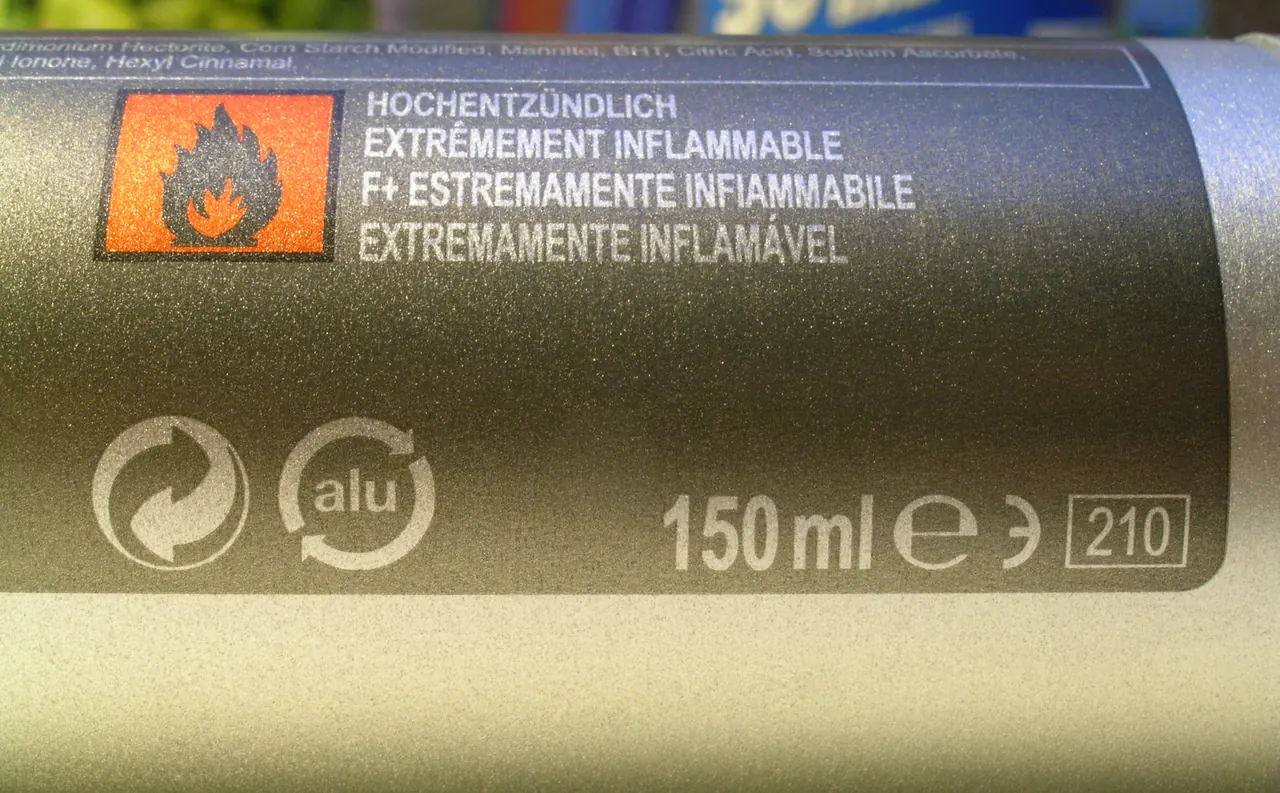
Italy: CONAI and the environmental label
Packaging producers and users join the national consortium CONAI (Article 221 of Legislative Decree 152/2006), unless a recognised independent system applies, and pay its environmental contribution, calculated per tonne by material. Since 1 January 2023, all packaging carries an environmental label indicating the nature of its materials, using the codes of Decision 97/129/EC (Article 219). For imported packaging, the contribution is payable by the importer, unless the foreign brand has itself joined CONAI, the consortium states.
Towards a common European label
National labels have an end date. According to the Commission guidance document, Member States will no longer be able to keep their labels alongside the European harmonised label after 12 August 2028, or 24 months after the act that defines it if that comes later. The material codes of Decision 97/129/EC remain applicable until that date. For a brand that prints its packaging for several countries, each reprint between now and then is an opportunity to leave room for this label.
The symbol showing that packaging is covered by EPR is also changing medium. By 12 February 2027 at the latest, it is displayed only in a QR code or other digital marking (Article 12), and the Commission reads this as a ban on physical labels of this kind.
3Who can support a brand across several countries?
The Regulation reserves this support to no profession. Before choosing who, you need to know what: the workload is measured in requirements to maintain, country by country.
The 5 requirements to maintain in each country
In each country of sale, the brand maintains the same 5 requirements, which are never fulfilled in the same way:
- The national register, with a number specific to the country: unique identifier in France, LUCID number in Germany, CONAI membership in Italy.
- The contract that funds collection, with a PRO in France, a dual system in Germany and the consortium in Italy, each with its own fee schedule.
- Quantity declarations, by material and by period, whose calendar differs from one country to another, such as the German completeness declaration, due before 15 May.
- Packaging marking: Triman and Info-tri in France, environmental label in Italy, no mandatory marking in Germany.
- The local authorised representative when the brand sells directly from abroad, with a written mandate and, in Germany, a power of attorney drafted in German.
Each country of sale adds its own register, contract, declarations and often an authorised representative
For a brand established in France that sells at a distance: add or remove countries.
13requirements to maintain for 3 countries, against 4 for France alone.
The count grows quickly: a French brand that adds Germany and Italy goes from 4 requirements to 13. The declared quantities must also remain consistent from one country to another: the same product references, split by destination country, and not estimates made separately for each organisation.
The roles that complement each other
None of the 4 roles involved covers all these requirements alone:
- The PRO, dual system or consortium funds collection and receives quantity declarations, but only for packaging placed on the market in its own country.
- The authorised representative takes on the brand's EPR obligations in a country where it is not established; the same provider can act in several countries, with one mandate per country.
- The compliance or consulting firm maps obligations country by country, organises the quantity data and links EPR to the Regulation's other requirements.
- The lawyer settles questions of classification, for example who is the producer when a brand sells through a distributor, an online marketplace or a fulfilment provider.
The one non-negotiable criterion: the right contact links each step to a legal text and to a country. It knows that the French unique identifier is worth nothing in Germany, that LUCID registration cannot be delegated, and that a sale through an online marketplace does not exempt the brand from registering in the consumer's country. It also knows the Regulation's other obligations, from the EU declaration of conformity to the technical documentation and its supplier evidence, including the banned packaging formats, which go through no national organisation.
Questions to ask
Before entrusting this work, 4 questions let you compare 2 offers:
- Which countries are covered in-house, and which go through a local partner, whose name and mandate the brand will know?
- Who holds the register identifiers and the portal access, and how does the brand recover them at the end of the contract?
- How are quantities by country calculated from sales, and who validates each declaration before it is sent?
- Does the service track rule changes, such as the switch to the VerpackDG in Germany, the vote on the European authorised representative requirement or the future harmonised label?
Warning signs
Some offers promise what the texts do not allow:
- A "European EPR compliance" sold as a single registration, when each Member State keeps its own register and its own organisations.
- A provider offering to register with the LUCID register or to file the data declarations there in place of the brand, when German law reserves them to the brand, unless an authorised representative is appointed (§ 5).
- Flat-rate quantity declarations, unconnected to actual sales by country, by product reference and by packaging material.
A useful deliverable links each finding to a specific obligation and a country, and says what remains to be done.
4What are the steps, and how much does packaging EPR cost abroad?
A compliance programme in several countries follows the same order everywhere: qualify the brand's role in each country, register, sign with the organisation, declare, then adapt the marking. The order matters, because registration conditions the sale: without it, the brand cannot make its packaging available in the country.
Deadlines at the end of 2026
In Germany, participation contracts with the systems concluded under the former law cease to apply by 31 December 2026 at the latest (§ 68 of the VerpackDG). In France, the ministry asks each producer of professional packaging to have joined a PRO by the end of the year. The PPWR timeline sets out the European deadlines that follow.
Contributions, on public fee schedules
Contributions are calculated on public fee schedules, which differ from one country to another. CONAI's gives the measure: at 1 October 2026, a tonne of steel packaging costs €5 and a tonne of glass €40. For plastic, the rate runs from €51 to €922 per tonne, depending on a category determined by how the packaging is sorted and recycled. The fee schedules of the French PROs are detailed in our guide to EPR schemes.
In Italy, a tonne of packaging costs €5 to €922 at CONAI
CONAI environmental contribution, in euros per tonne of packaging, at 1 October 2026.
Plastic9 categories
€51 to €922Paper and board6 bands
€45 to €285Compostablebiodegradable plastic
€246Glass
€40Aluminiumexcluding capsules
€12Wood
€10Steel
€5A tonne of plastic costs 18 times more in category C than in category A1.1. The dots mark its 9 categories.
To fix ideas, take a constructed example: 2 tonnes of plastic packaging placed on the Italian market cost €102 in category A1.1, the cheapest, and €1,844 in category C, the most expensive. The same tonnage therefore costs 18 times more depending on the category, which makes packaging eco-design a cost lever as much as a compliance one.
The price of support
There is no public price list for coordinating EPR across several countries, or for the authorised representative mandate. The cost depends on the number of countries, the number of product references and materials, and the quality of the sales data available.
5What should you prepare before getting support?
Support goes faster when the brand arrives with its data. The items to gather:
- The list of countries of sale, with for each the channel used: direct sales, local distributor, online marketplace or fulfilment provider that stores goods on site.
- Quantities sold by country, by product reference and by period, which make it possible to reconstruct the packaging tonnages to declare in each country.
- The packaging bill of materials for each product reference, with the weight and material of each component, from the shipping carton to the label.
- The numbers and contracts already obtained in each country, with portal access, signed mandates and renewal dates.
- The packaging artwork, to check markings country by country before the next print run.
The "Am I affected by the PPWR?" test helps to qualify the brand's role. For a small brand, our article on micro-enterprises and creators details the French obligations, and our PPWR guide covers the rest of the Regulation.
For us at Projet Celsius, EPR in several countries is managed first as a data problem: reliable quantities by country, an up-to-date packaging bill of materials, and a table that links each obligation to its country and its deadline. We recommend starting with the countries of direct sales, since that is where an authorised representative is required, then handling marking at the next reprint. Our PPWR support service links this mapping to the Regulation's other requirements, such as the recycled content of plastic packaging.
6Key takeaways
- Packaging EPR remains national, with a register, a contract and declarations in each country of sale.
- Since 12 August 2026, a brand that sells directly in another Member State appoints an authorised representative there, unless a suspension is adopted.
- Rules diverge from one country to another, from the French unique identifier and Triman to the German LUCID register and the Italian CONAI.
- No single provider covers these obligations alone: the organisation acts only in its own country, and the authorised representative, the firm and the lawyer complement each other.
The French obligations of each scheme are detailed in our guide to EPR schemes, and the case of a seller established outside France in our article on the authorised representative for EPR.
- European Parliament and Council, Regulation (EU) 2025/40 of 19 December 2024 on packaging and packaging waste, Articles 3, 12, 44, 45, 68 and 71.
- European Commission, Communication C/2026/3084, guidance document on Regulation (EU) 2025/40, OJ C of 10 June 2026, point 13 (labelling).
- European Commission, DG Environment, FAQ on Packaging and Packaging Waste Regulation, 3 August 2026, register of producers.
- European Commission, proposal COM(2025) 982 of 10 December 2025 suspending the application of the rules on the appointment of an authorised representative; European Parliament, Legislative Observatory, procedure 2025/0395(COD) (plenary vote scheduled for 20 October 2026).
- French Environmental Code, Article L. 541-10-9-1 (authorised representative, in force since 10 July 2026, Law No. 2026-602), Article L. 541-10-13 (unique identifier) and Article L. 541-9-3 (sorting signage). The Légifrance pages are in French.
- Ministry of Ecological Transition, press release on the EPR scheme for professional packaging (in French), 28 July 2026.
- Federal Republic of Germany, Verpackungsrecht-Durchführungsgesetz (VerpackDG) (in German), BGBl. 2026 I No. 207, §§ 4 to 7, 10, 39, 66 and 68; Zentrale Stelle Verpackungsregister, what changes on 12 August 2026.
- Italian Republic, Legislative Decree 152/2006, Article 219 (labelling) and Article 221 (CONAI) (in Italian); CONAI, Contributo ambientale (in Italian), fee schedule at 1 October 2026.
- Kingdom of Spain, Real Decreto 1055/2022 on packaging and packaging waste (in Spanish), Articles 15 and 17, transitional provision 3. Accessed 17 October 2026.


