
- 1Priority categories depend on the process, materials used and products sold.
- 2Targeted physical data collection connects emissions to industrial decisions.
- 3The site inventory and a product’s footprint respond to different requests.
- 4The plan specifies actions, those responsible and the data needed for monitoring.
Want to know where to act in your factory, prepare an investment or respond to a buyer? Bilan Carbone® can provide a common working basis for purchasing, production and management. First, clarify the decision required: ranking site emissions, a footprint per product and a comparison between equipment are different deliverables.
The factory inventory extends beyond the site’s walls
Select a flow to see the data to gather and the department to involve.
Tonnes by material, bills of materials and stock changes.
Manufacturing by suppliers falls under indirect emissions (scope 3).
The Bilan Carbone® method promoted by ABC combines emissions accounting with a transition approach. For a factory, this means bringing purchasing, production, maintenance and management together. The calculation must retain a connection to the site’s physical flows and the decisions to prepare.
1What scope should you choose for a factory inventory?
Scoping defines the activities and period studied. It also specifies the intended use of the result. This step avoids collecting all available information without knowing which is needed.
At Celsius, we can help from this scoping stage, even if your request is not yet settled. We examine the site’s activities, your customers’ expectations and the data already available with you. The expected result is concrete: an assignment scope, identified deliverables and a division of work between your teams and ours.
The site, shared activities and the group
The production site may share purchases, a warehouse or a sales function with other establishments. You need to decide how these activities will be included and how their contribution will be attributed. The scope note states the activities included, justified exclusions and the treatment of shared services.
Consolidation choices are part of the GHG Protocol accounting framework. The presentation categories must then correspond to the method chosen for the assignment. The choice between Bilan Carbone® and GHG Protocol therefore deserves consideration before promising several presentations from the same file.
Take a workshop that dispatches its parts from a platform shared by several factories. Attributing the whole platform to the workshop would overstate its logistics activity. Excluding it would leave part of the chain outside the assessment. The scope must provide for a documented allocation rule, consistent with the flows actually managed.
The annual inventory and a customer’s request
A buyer may request the emissions of a specific product. Dividing the factory’s annual total by its number of parts is not enough when products have different masses, processes or consumption. An average can support internal management, provided its scope is specified.
The organisational inventory and product analysis answer distinct questions. Before commissioning a study, it is useful to ask the customer for the expected format, the calculation scope and comparison rules. This clarification avoids delivering a site inventory when a product carbon footprint was expected.
2Which categories should you examine according to industrial activity?
Combustion, processes and leaks are possible direct sources; emissions may also arise at suppliers or during product use. The GHG Protocol guide to identifying sources distinguishes these situations. Their importance is determined from the activity studied.
Assembly and component purchases
A workshop assembling purchased components must examine what is manufactured upstream, even if its energy consumption seems modest. Data collection starts with the bill of materials, quantities and main families of suppliers. A metal purchase, a circuit board and a machining service cannot be treated as a single homogeneous category.
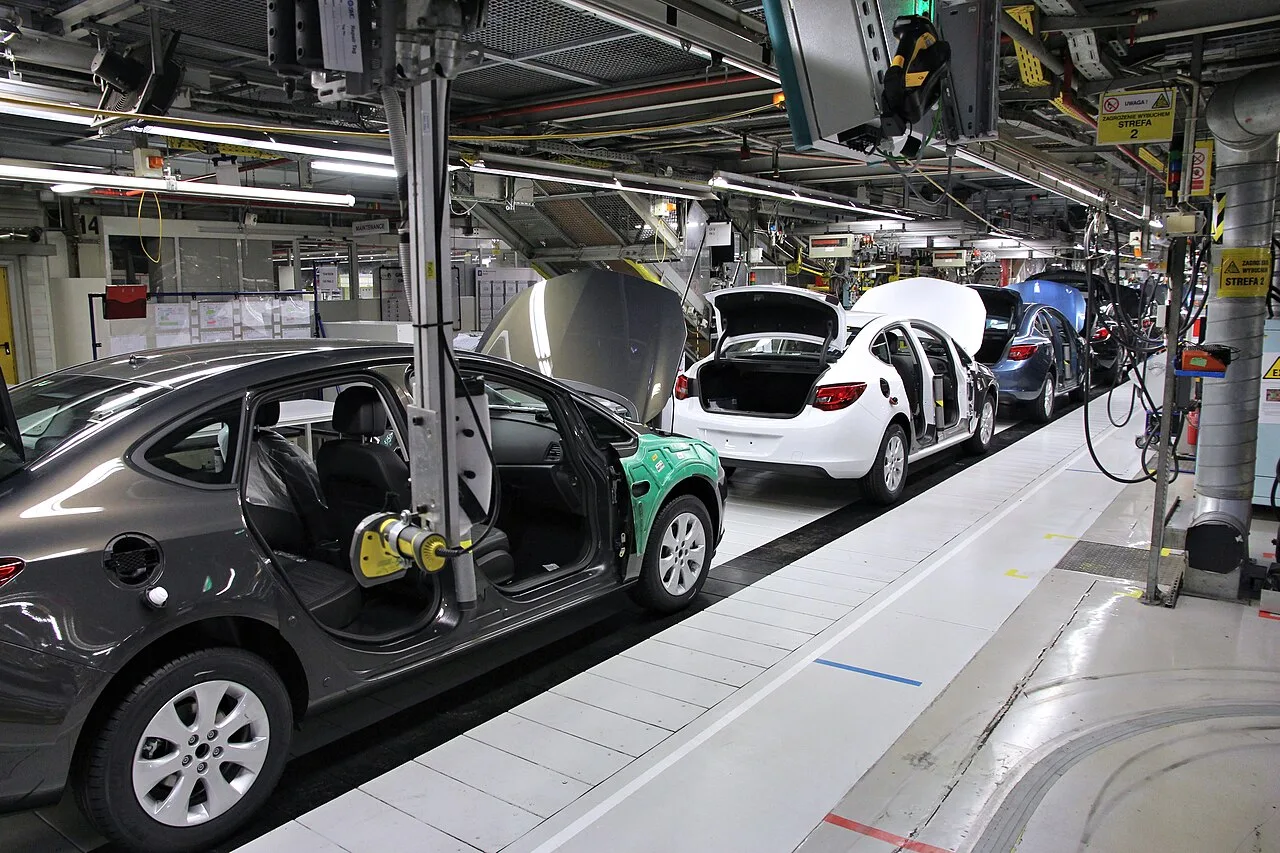
Scope 3 addresses these indirect emissions. An initial estimate helps identify categories to investigate further. For important components, you then need more representative data for the material, process or supplier. Specific data may raise or lower the result: its value lies in its relevance, rather than a favourable effect.
Processing, heat and process emissions
In a processing activity, you need to examine furnaces, boilers, dryers and utilities. Overall consumption gives an initial result, but is not always enough to choose an investment. To compare heat solutions, you need to know the useful heat demand, operating temperatures and production constraints.
Some industrial reactions also emit greenhouse gases. These process emissions must be sought separately from energy consumption. Maintenance, for its part, can document equipment containing fluids and associated interventions. The emissions inventory and energy audit can therefore complement each other, with different deliverables.
Subcontracting and product use
A surface treatment or firing entrusted to a subcontractor still needs to be examined within the value chain. Moving an activity off-site changes the location of emissions; it does not demonstrate their reduction. The inventory must maintain a view of the entire activity when industrial organisation changes.
For an equipment manufacturer, energy consumed during use may also become a major issue. The study must then explain the period of use and scenario chosen. This dimension may justify a complementary LCA on a pilot product, especially when a design change is considered.
3What data should you request from factory teams?
Data collection benefits from being organised by flow and information holder. The requested file must allow you to trace the source and understand what it covers. A large extraction without units or scope remains difficult to use.
Purchasing and production
Purchasing can supply quantities of materials and components, their descriptions, suppliers and known sourcing locations. Production completes these data with volumes manufactured, rejects, rework and stock changes. Reconciliation checks that the flows describe a consistent activity over the period.
For a priority material, a useful data collection extract includes:
- The description and quantity purchased are accompanied by the unit, to distinguish a mass, number of parts or volume.
- The supplier, product reference and known composition allow environmental data suited to the product actually purchased to be chosen.
- Opening and closing stocks explain differences between annual purchases and production consumption.
- The source invoice or export remains identifiable to allow correction and reproduction of the calculation when updating.
Maintenance, energy and logistics
Maintenance gathers energy bills and readings, the list of equipment concerned and data on fluids. Logistics specifies the masses transported, routes and known modes. Waste documents complete the description of outgoing flows. The person responsible for each data item must be able to explain its coverage and limits.
Monetary ratios remain useful for an initial examination of poorly documented categories. They become less suitable for monitoring a physical change when prices vary. The GHG Protocol methods for calculating purchases distinguish several data levels; the choice depends on the category and objective pursued.
Missing data and the level of precision
Missing information must lead to an explicit estimate, then a decision on the value of improving it. Requiring the same precision on every line is rarely appropriate. Work concentrates on important categories, decisive uncertainties and the data needed to compare actions.
Data collection must also remain transferable. The file name, period and departmental contact are recorded. This organisation prepares for updating the inventory and reduces reliance on one person, whether the company uses software or consultancy support.
Preparing these data may represent significant work. Our support can include the data collection plan, help for internal contacts, consistency checks and handling missing information. Your teams remain essential for explaining processes and validating data. The quote specifies what we prepare, what you supply and the discussions to plan.
4How do you choose actions from the results?
Ranking categories indicates where to look. To choose an action, you also need to estimate its potential, constraints and resources required. The largest emissions do not always correspond to changes immediately accessible.
Material losses and quantities purchased
Here is an educational example, unrelated to a client assignment. A workshop purchases 1,000 tonnes of material and delivers 800 tonnes of conforming products. With constant stocks, its material yield is 80%. The remaining outputs must be explained by rejects, offcuts or other process flows.
If yield rises to 90%, maintaining the same output requires around 889 tonnes of material. The purchasing requirement therefore falls by around 111 tonnes. This calculation gives an avoidable physical quantity; the emissions reduction still needs to be assessed using the material’s environmental data and treatment of residual flows.
Produce as much, with less material lost
Educational example: 800 tonnes of conforming products, with constant stocks and quality.
111 fewer tonnes of material to purchase. The carbon saving then depends on the material and how it is produced.
Calculation conditions must remain visible: unchanged product quality, identical output and constant stocks. The improvement may require tooling, tests or additional checks. Its financial value is calculated from the company’s actual costs. Recycling offcuts does not remove the need to examine preventing their production.
Investments and their constraints
Loss reduction, a change of supplier and a heating modification are compared across several dimensions. The decision document states the emissions targeted, investment, operating costs, technical constraints and possible timetable. It also specifies assumptions that may change the ranking.
Production checks in particular quality, production rates and equipment availability. Purchasing examines continuity of supply and supplier guarantees. Management can then choose a portfolio of actions compatible with its resources. This forms the substance of a Bilan Carbone® reduction plan, beyond the inventory alone.
An industrial action is compared against a defined output and service quality.
5Which deliverables should you plan and how do you monitor progress?
The contract must specify what will be delivered and how teams will be able to use it. The summary report must allow the data and assumptions explaining the results to be traced.
The documentation to hand over to teams
A useful presentation includes a scope note, a summary of results, data sources and significant limitations. For each workstream, the action plan identifies a responsible person, a deadline and a monitoring indicator. The company must know which files it can reuse and under what conditions.
The ABC method on the transition plan connects this plan to the organisation’s scope and emissions profile. For a site, operational monitoring must therefore correspond to the chosen actions: material yield, utility consumption or a change in sourcing.
Total emissions and production indicators
An improvement per part does not guarantee a reduction in the total. In a second educational example, output increases by 20% while emissions per unit fall by 10%. With a constant scope, total emissions increase by 8%, since 1.20 × 0.90 equals 1.08.
The dashboard therefore presents absolute emissions alongside relevant intensity indicators. It explains changes in activity, scope changes and data corrections separately. An industrial climate trajectory can then be monitored without confusing technical progress with an actual emissions reduction.
6How do you prepare the budget and start?
The price depends on the scope and work needed to produce the expected deliverables. Two sites of comparable size may require different effort according to their processes, products and data availability.
Information to send for a quote
A useful request for proposal describes the activity, establishments concerned, main processes and use of the result. It includes an overview of available data and identifies the departments participating in data collection. The provider can then distinguish what belongs to the initial inventory, a product study or further technical investigation.
The Bilan Carbone® price guide helps prepare the comparison. In particular, the quote must specify support for data collection, the treatment of indirect emissions and the action plan’s content. The time teams will need to spend on the project deserves discussion at the same time.
Funding and the starting level
Diag Décarbon'Action is a scheme to examine for eligible companies. Its conditions must be checked on the scheme’s public fact sheet at the time of the project. A budget must not assume a secured grant before confirmation.
Transition support schemes address distinct projects; the funded scope must correspond to the work commissioned. The presence of a BEGES obligation must also be examined separately from industrial management needs and customer requests.
You can start with a description of the site, your main flows and the request motivating the inventory. You do not need to have already completed an exhaustive inventory. We help you clarify the information to gather first and the useful level of support, from scoping to building the action plan with teams.
7Key takeaways
- The scope connects site activities, shared services and the value chain to an explicit reference period.
- Physical data for priority categories allow actions to be compared and changes monitored without confusing them with price changes.
- The action plan connects expected reductions to the technical resources, responsible people and production constraints needed to achieve them.
- Monitoring presents total emissions and production indicators, with scope and method changes explaining their evolution.
The scope 3 data collection guide extends this work on purchases and supplier data.
- ABC · Presentation of the Bilan Carbone® method, version 9. 2024. Accessed on 8 October 2026.
- GHG Protocol · Corporate Accounting and Reporting Standard, revised edition. 2004. Accessed on 8 October 2026.
- GHG Protocol · Identify your company’s emissions sources. Support page. Accessed on 8 October 2026.
- GHG Protocol · Technical Guidance for Calculating Scope 3 Emissions. 2013. Accessed on 8 October 2026.
- ABC · Introduction to the transition plan. Online method. Accessed on 8 October 2026.
- ADEME, support portal · Diag Décarbon'Action. Online conditions. Accessed on 8 October 2026.