
- 1A company's AI accounts for a few kilos to several tonnes of CO2e a year.
- 210 developers working with coding agents emit 1.2 tCO2e of AI a year.
- 3Use has tripled in 2 years, and data centre electricity should double by 2030.
- 4An office-based SME with 50 staff stays at about 12 kgCO2e a year.
The world's data centres used 415 TWh (terawatt-hours) of electricity in 2024, about 1.5% of global consumption. The International Energy Agency (IEA) expects them to use more than double that in 2030, around 945 TWh, slightly more than the whole of Japan today, and names AI as the main driver of this increase. In French companies, use is on the same curve: 18% of companies with 10 or more employees used AI in 2025, 3 times as many as in 2023, according to Insee, the French national statistics office (in French).
How much does AI weigh in your company?
From a few kilos to several tonnes a year: choose the size, sector, use and tools.
As much as 86 km in a petrol or diesel car, or the electricity of 1,400 phone charges. With agents, it would be 160 kgCO2e, 13 times as much.
Sources: Projet Celsius AI Database (v0.3, 2 Nov. 2026); electricity: Ember 2025; benchmarks: ADEME Impact CO2, EPA; median footprints: 1,938 SMEs from Décarbon'Action, ADEME's GHG assessment platform, Projet Celsius analysis.
The calculator above places each company using the engine of the AI Database (in French), Projet Celsius's open database on the impact of AI. The result depends less on size than on use: kilos with office assistants, tonnes when agents work on their own. Agents, images and videos are precisely the uses that are spreading fastest.
1Does AI weigh much in a company's carbon footprint?
It depends mainly on what you hand over to it. For an office-based company, the footprint is counted in kilos of CO2e (CO2 equivalent) a year, while the Bilan Carbone® (the French carbon accounting method) of an SME is counted in hundreds or thousands of tonnes. It becomes heavy in 3 cases, which have one thing in common: the AI works far longer than a person asking it a question.
An office-based company: a few kilos a year
An office employee who uses AI daily, for emails, meeting notes and questions, consumes about 1.3 kWh a year in data centres. With the world's average electricity, that comes to 0.59 kgCO2e a year, the equivalent of 4 km by car. A services SME with 50 staff, a quarter of whom use AI, reaches 12 kgCO2e a year. A company with 500 staff reaches 145 kg.
These figures are tiny next to a full carbon footprint assessment. SMEs supported by Décarbon'Action (a French carbon footprint programme) that have published their assessment on the platform of ADEME (the French Agency for Ecological Transition) report a median of 4,834 tCO2e a year for companies with 50 to 99 employees, according to our analysis of their assessments. Office AI accounts for less than one hundred-thousandth of that, far behind purchases, often half of the footprint.
The 3 cases where AI weighs heavily
The footprint changes scale as soon as AI works on its own for long periods, or produces moving images. The following 3 cases come from the same database, with the same conventions:
- A team of 10 developers working with coding agents, programs that write, test and fix part of the code on their own: 1.2 tCO2e a year, more than 200 times the AI of an office employee, per developer.
- An agency that produces its videos with AI: 8.4 kgCO2e for a single 3-minute video, made of 18 generated shots, as much as 14 years of an office employee's AI.
- A software publisher serving an AI feature to 100,000 users: 3.7 tCO2e a year, because every query from every customer runs servers.
Three uses of AI that weigh heavily in a company
Choose a case: its footprint appears on the photo, compared with an office employee.
207 times the AI of an office employee over a year (0.59 kgCO2e), per developer.
A coding agent works on its own for hours and rereads its whole context at every step.
Without agents, the same developer accounts for 2 kgCO2e a year.
Sources: Projet Celsius AI Database (v0.3, 2 Nov. 2026), world average electricity; use and data centre, excluding server manufacturing; car: ADEME, Impact CO2.
The third case is the one most often forgotten. AI sold within a product does not sit with employees' tools: it runs each time a customer uses it, and it is counted with sold products. For video, the breakdown by model is in our article on the impact of generated videos.
What these figures leave out
The AI Database counts the electricity used by queries, data centre included. It leaves aside the manufacturing of servers and chips, the training of models and employees' computers. These emissions exist, and equipment manufacturing weighs heavily in a company's digital footprint as in the footprint of AI over its whole life cycle. The orders of magnitude above are estimates built on assumptions, which the AI Database (in French) sets out in detail and lets you adjust.
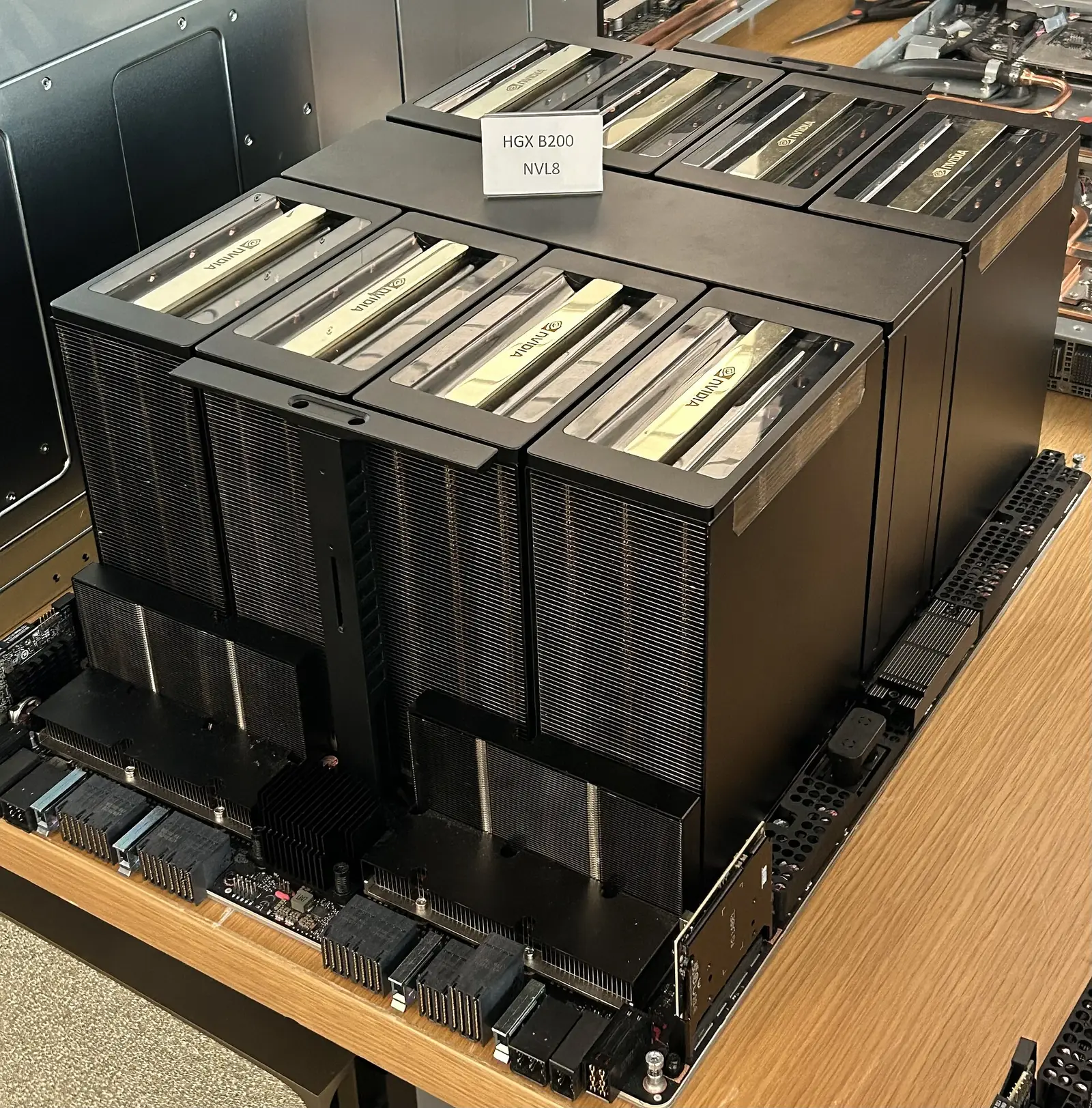
10 developers working with coding agents emit as much as 100 office-based SMEs with 50 staff each.
2Why will the AI carbon footprint grow?
The 2026 figures describe a use that is still young. 3 forces are pushing this figure upwards, and they add up.
More companies, more employees
In 2025, 18% of French companies with 10 or more employees used at least one AI technology, compared with 6% in 2023. The increase covers every size of company, and 58% of companies with 250 or more employees were already using it. Among companies using AI, 43% use an AI that generates text or speech, and 41% an AI that generates images, videos or sound.
Share of French companies using AI, 2023 and 2025
Companies with 10 or more employees, by size.
× 3 in 2 years for every size of company. More than half of companies with 250 or more employees were already using AI in 2025.
Source: Insee Première No. 2120, July 2026, figure 1; market sectors excluding agriculture and finance (in French).
Agents that work on their own
A quick question to an assistant uses about 0.3 Wh (watt-hours). One hour of a coding agent, which chains 120 steps on its own while rereading everything it has already done each time, uses 440 Wh, as much as nearly 1,500 questions. In the calculator, moving from an assistant to agents multiplies by 13 the footprint of a services SME. Use is growing in the number of people, and it is also changing in nature.
The number of employees matters less than the kind of tasks handed to AI: one hour of an agent uses as much energy as 1,500 questions.
Data centres doubling
Worldwide, the IEA expects data centre consumption to rise from 415 TWh in 2024 to about 945 TWh in 2030. The United States accounts for the largest share of this increase, ahead of China. Every company that adds AI uses takes its share of this electricity, whether it counts it or not, and AI's electricity consumption is becoming a grid issue as much as a climate one.
3How do you calculate the carbon footprint of AI?
The calculation comes down to 4 questions, in this order: how many people use AI, how many tasks each of them hands over to it, how much electricity each task uses, and how much carbon that electricity emits.
How many people, how many tasks
Not everyone in a company uses AI, and not at the same pace. For regular use, the AI Database assumes that a quarter of employees use it, with about 6 requests per working day in an office job. It counts 2 requests for occasional use and 21 for intensive use. An accountant, a developer and a graphic designer do not have the same tasks: the database counts them job by job, based on the breakdown of jobs in each sector published by Eurostat.
What a task costs
Each task has its own electricity use, measured or estimated, and the gap ranges from 1 to more than 1,000 between a quick question and one hour of an agent. The chart below places them on a scale where each step multiplies by 10. A generated image, for example, uses about 10 times as much as a question, as explained in our article on the footprint of an image.
Electricity used by a task handed over to AI
Choose a task: each step on the scale multiplies by 10.
Footprint = people × tasks per person × electricity of each task × carbon of the kilowatt-hour
One hour of work by a coding agent: 440 Wh, or 1,500 quick questions. In carbon: 200 gCO2e with the world's average electricity, 18 g with servers in France.
Source: Projet Celsius AI Database (v0.3, 2 Nov. 2026), average model, data centre included; electricity: Ember, 2025.
What makes up a company's footprint, then, is less the number of its employees than the kind of tasks they hand over to AI. One hour of an agent a day weighs more than 1,000 questions.
From electricity to carbon
The last step converts electricity into CO2e, using the carbon intensity of a kilowatt-hour in the country where the servers run. By default, the AI Database uses the world's average electricity, 458 g of CO2e per kWh in 2025 according to Ember, because you rarely know where a query runs. With servers in France, at 41 g per kWh, the same AI emits 11 times less.
4Can you calculate your company's AI footprint yourself?
Yes, for an order of magnitude. The figure becomes harder to defend when it has to go into a verified carbon footprint assessment, or when AI is part of what the company sells.
An order of magnitude in a few minutes
The calculator at the top of this article is enough to place your company. To go further, Projet Celsius's AI carbon footprint tool quantifies a use from its volumes. The AI Database (in French) gives, for each task, each job and each type of organisation, its value, its range, its sources and its assumptions, openly available, under a CC BY 4.0 licence. The hub on the impact of AI (in French) explains where these figures come from.
What the Copilot and GitHub consoles show
The admin accounts of these tools already provide part of the volumes. The Microsoft Copilot usage report shows active users by app and the number of prompts sent per user, which can be exported to a spreadsheet. GitHub Copilot metrics track active users, chat requests and agent activity.
None of these dashboards gives either the electricity or the emissions. They provide the hardest data to estimate, the real volume, which still has to be multiplied by the electricity of each task.

Where it gets harder
An in-house calculation reaches its limits in 4 situations:
- AI is hidden in software: the email client, the customer relationship management software or the translation tool use it without any invoice mentioning it.
- Agents dominate use: their consumption depends on how long the tasks last, and licences count in monthly credits with no published equivalence in agent hours.
- AI is in the product sold: every use by a customer counts, and the volume is read in the application's logs, not in an admin console.
- The footprint has to be verified by a third party: you then need dated assumptions, a source for every figure and a stated uncertainty.
These limits are not specific to AI: doing your own Bilan Carbone® always runs into data collection more than into the calculation itself.
5And in the company's Bilan Carbone®?
In a Bilan Carbone®, AI used by employees sits with purchases of digital services, such as hosting or software, among the indirect emissions of the value chain, which the methods call Scope 3. AI built into a product sold is counted with the use of sold products. The detail of this classification is in our guide to including AI in your Bilan Carbone®.
For most companies, this line will not change the result of the assessment. Measuring it now nonetheless gives a baseline year, to track a use that has tripled in 2 years and to spot the moment when agents or a product take it to the tonne. A first SME Bilan Carbone® can include it by collecting usage volumes along with the other purchases.
For us at Projet Celsius, the useful question concerns the uses that will change the scale of this line: coding agents, video and AI sold to customers. For an office-based company, the line currently comes to a few kilos and does not deserve days of calculation. We recommend identifying these 3 uses now, asking suppliers for their volumes, and measuring the line once to have a point of comparison.
6Key takeaways
- A company's AI accounts for a few kilos of CO2e a year, about 12 kg for an office-based SME with 50 staff, up to several tonnes with coding agents or AI sold to customers.
- Coding agents, generated video and AI built into a product sold change the order of magnitude, and these are the uses spreading fastest.
- Use has tripled in 2 years in French companies, and the IEA expects the world's data centres to use more than double in 2030.
- The calculation comes down to 4 questions: the people, their tasks, the electricity of each task and the carbon of the kilowatt-hour.
- An order of magnitude can be calculated on your own with the AI Database. A figure that has to be verified in a Bilan Carbone® requires real volumes and a documented method.
To see what lies behind these figures, read what is the carbon footprint of a data centre, and to choose the most frugal tool, which AI has the smallest environmental impact.
- International Energy Agency, Energy and AI, April 2025, executive summary, p. 13.
- Insee, Les technologies de l'information et de la communication dans les entreprises en 2025 (in French), Insee Première No. 2120, Clément Lefebvre, 21 July 2026.
- Projet Celsius, AI Database, environmental database of artificial intelligence (in French), version 0.3 of 2 November 2026, CC BY 4.0 licence.
- Ember and Our World in Data, Carbon intensity of electricity generation, 2025 data, accessed 3 November 2026.
- ADEME, Impact CO2, transport comparator (in French), accessed 3 November 2026.
- United States Environmental Protection Agency (EPA), Greenhouse Gas Equivalencies Calculator, calculations and references.
- ADEME, GHG assessment dataset (in French), Licence Ouverte 2.0, assessments of companies supported by Décarbon'Action, data of 2 November 2026.
- Microsoft, Microsoft Copilot usage report, Microsoft Learn, 14 July 2026.
- GitHub, Copilot usage metrics, GitHub Docs, accessed 3 November 2026.