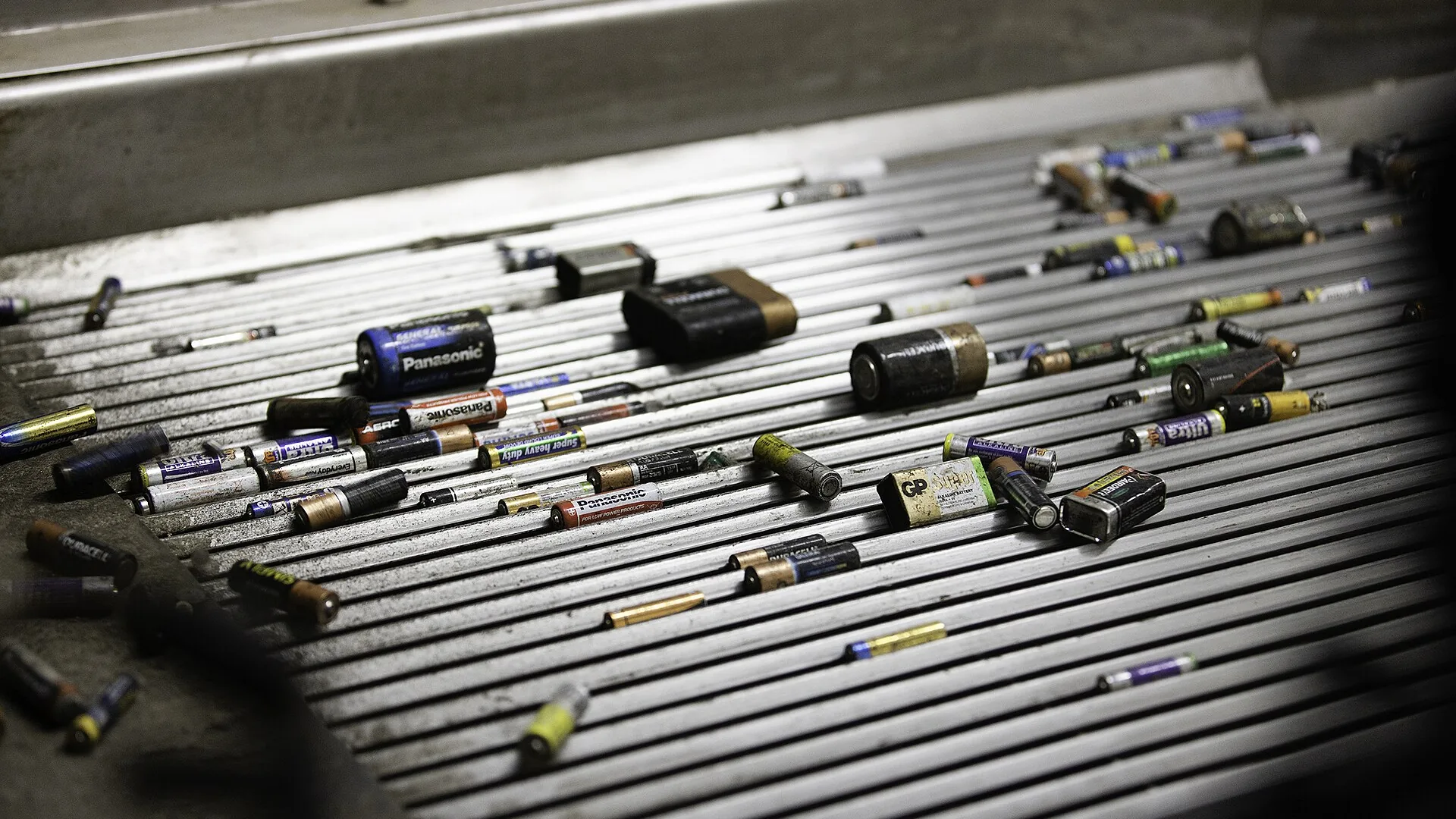

- 1An AI model harms the environment at 4 stages, from chip manufacturing to the answers it gives.
- 2In Mistral AI's life cycle assessment, training and answers account for 85.5% of greenhouse gas emissions.
- 3Server hardware accounts for 61% of mineral resource depletion in Mistral AI's life cycle assessment.
- 4Trial runs added 50% to training emissions in a study that measured them.
Artificial intelligence (AI) harms the environment because it relies on a deeply physical industry: chips to manufacture, data centres to build, models to train, then electricity and water for every answer. In the results published by Mistral AI for one of its models, training and answers account for 85.5% of greenhouse gas emissions, and server hardware for 61% of mineral resource depletion.
AI pollutes at 4 stages, from the mine to the answer
The life cycle of an AI model. Choose a stage to see where it takes place and how large its impact is.
1. Make the chips and servers
- Where:
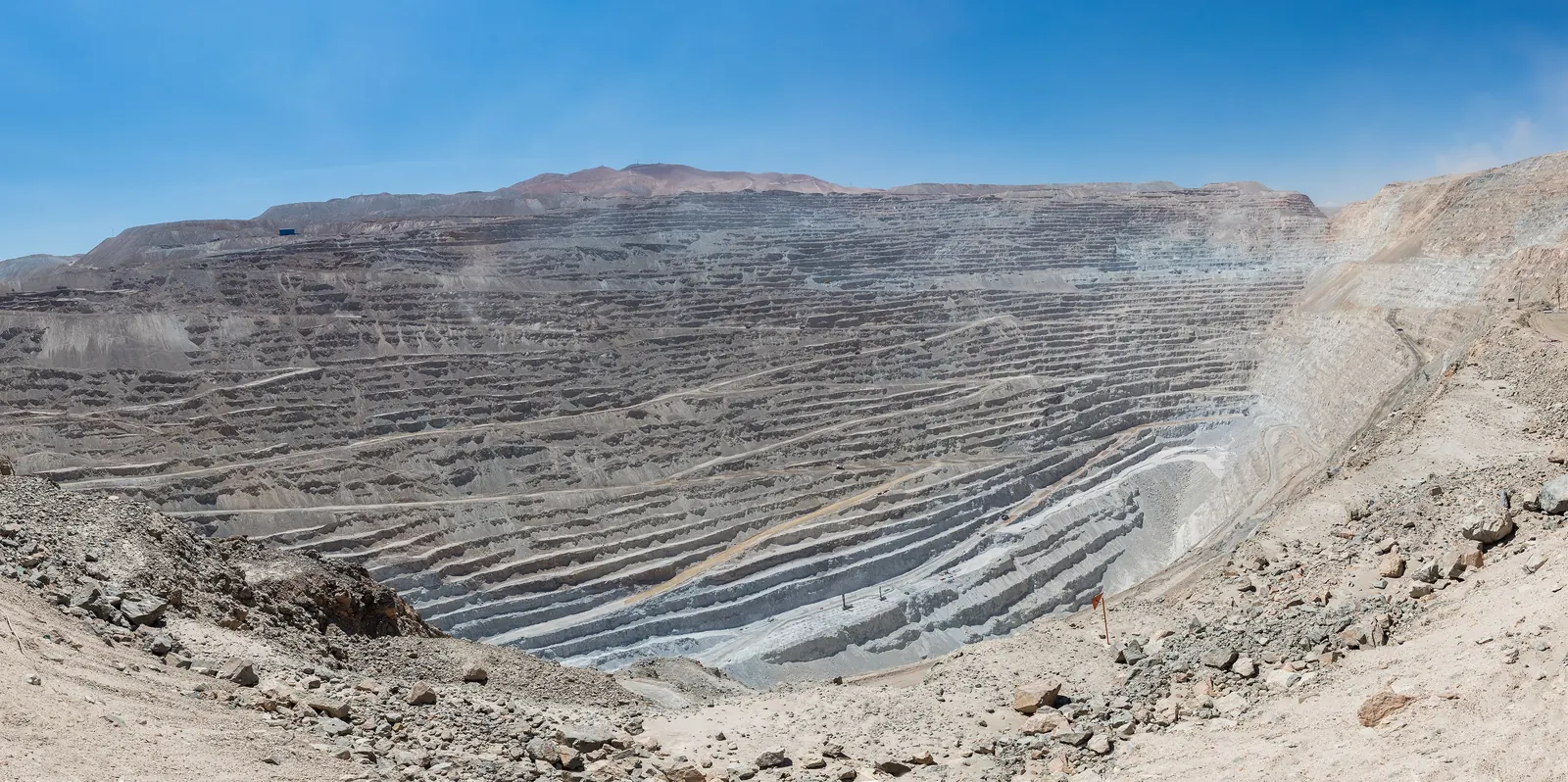
- In mines, then in chip factories in East Asia (Taiwan, South Korea, Japan).
- What happens:
- Extracting the metals, etching the chips, assembling the servers and transporting them.
- Size of the impact:
- 1,312 to 2,274 kgCO2e to make one baseboard of 8 graphics processors (GPUs), depending on the generation.
Share of server hardware (manufacturing, transport and end of life), in Mistral AI's analysis
This study is a life cycle assessment (in French): it counts a product's impacts from the extraction of materials to the end of life of the equipment. It shows that the dominant stage changes with the impact considered: running the servers for climate and water, their hardware for mineral resources.
1Why AI harms the environment: a life cycle assessment of one model
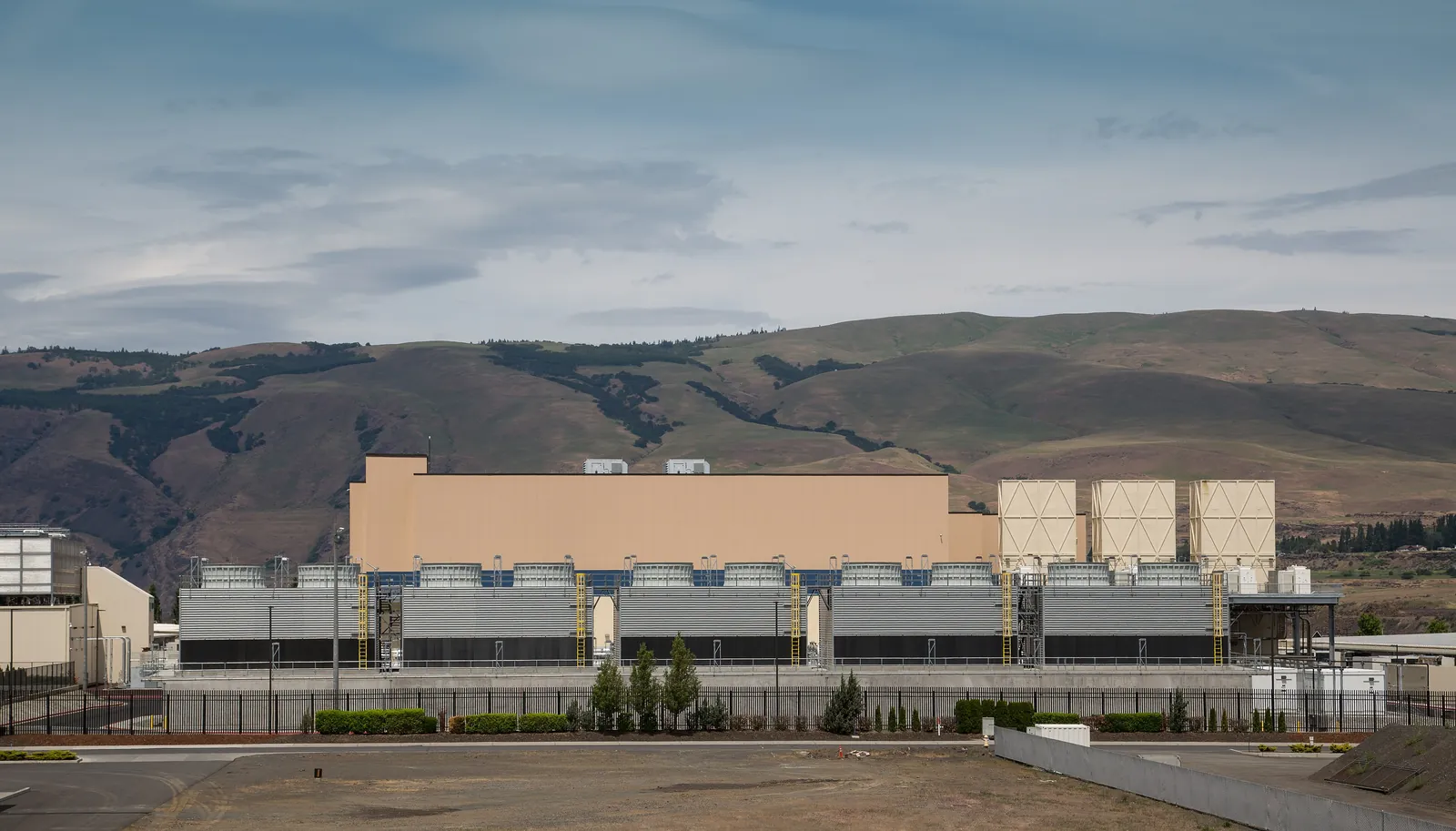
Behind the screen, servers in a data centre
An AI answer is computed by graphics processors (GPUs), chips specialised for this kind of calculation and mounted in servers lined up in their thousands in data centres, the buildings known as "the cloud". Our article on the environmental impact of AI puts figures on these impacts worldwide; this one explains where they come from.
4 stages, from chip to answer
An AI model goes through 4 stages: manufacturing the chips and servers, building the data centre, training the model (tuning it on vast quantities of text) and answering questions, a stage the industry calls "inference". The first 3 take place mostly before the first question, while stage 4 is repeated with every use.
A stage-by-stage life cycle assessment, published by Mistral AI
In July 2025, Mistral AI published the results of the life cycle assessment of its Large 2 model. The study was carried out with the firm Carbone 4 and ADEME (the French Agency for Ecological Transition), then reviewed by 2 engineering consultancies. It follows the frugal AI framework from AFNOR, France's national standards body: AFNOR Spec 2314.
As of January 2025, after 18 months of use according to the company, the model had emitted 20,400 tCO2e (tonnes of CO2 equivalent) and consumed 281,000 m³ of water, the annual household water use of about 5,400 people in France. The study also counts the minerals and metals extracted, expressed as a reference metal in the same way greenhouse gases are expressed as CO2: 660 kg of antimony equivalent. According to ADEME, 20,000 tCO2e is the annual footprint of more than 2,400 people in France.
These figures apply to a single model, from one developer, at one date. We have not found any equivalent results, broken down by stage and covering several impacts, published by another developer.
2Before the first question: manufacturing, construction and training
Chips etched in East Asia, a building to put up
According to Greenpeace East Asia, the AI chips from Nvidia and AMD that the organisation studied are etched in Taiwan, and their memory chips are produced in South Korea and Japan. The electricity used for this manufacturing rose 4.5-fold in a year, reaching 984 GWh (gigawatt hours) in 2024. Nvidia sells its GPUs in groups of 8 mounted on a motherboard, the board that links them. Making one such motherboard emits 1,312 kgCO2e, and 2,274 kgCO2e for the next generation. Memory accounts for 42% of the total in the first case and 49% in the second.
In Mistral AI's assessment, server hardware (manufacturing, transport and end of life) accounts for 11% of greenhouse gases and 5% of water consumed, but 61% of mineral resource depletion. Construction of the data centre stays under 1% of emissions and accounts for 1.5% of mineral resources.
Training: millions of hours of computation
Meta reports 39 million GPU hours and 11,390 tCO2e to train its 3 Llama 3.1 models in 2024, the equivalent of 4,500 GPUs running for a year. Google researchers estimated the training of GPT-3, the OpenAI model released in 2020, at 552 tCO2e: about 16 times less than the largest of Meta's 3 models (8,930 tCO2e).
These figures cover the training of published models. For a family of models whose authors also counted the trial runs, development added 50% to the emissions of the final training according to a 2025 study, a share that developers do not generally publish.
Training a model emits hundreds to thousands of tonnes of CO2e, and the trial runs come on top
The training of 2 large models, expressed in annual carbon footprints of one person in France, then a family of models whose trial runs were counted.
Published training
What the published figure leaves out
+50%for trial runs and development, rarely published
OLMo model family (2025): 493 tCO2e in total, on a different scale.
- final training runs, published
- trial runs and development
- hardware manufacturing, 22
3With every answer: electricity and water
1.14 gCO2e and 45 mL of water for an answer of about 320 words
Once the model is trained, every question triggers a computation. Mistral AI puts an answer of about 320 words from its assistant at 1.14 gCO2e, the equivalent of driving a car for 8 metres, and 45 mL of water, for the answer alone, not counting the user's device. Our article on how much energy a ChatGPT query uses covers this stage, and the one on AI electricity consumption shows what it represents across data centres.
The country hosting the servers changes the result
In France, 1 kWh of electricity consumed emits 51.9 gCO2e according to ADEME, including upstream emissions and grid losses. On average worldwide, 1 kWh generated emits 435 g of CO2 according to the International Energy Agency (IEA), measured at the power plant only. French electricity therefore emits at least 8 times less per kWh. Mistral AI's page does not specify the country of its servers; it states that electricity is counted at the carbon intensity of the local grid, without accounting for renewable electricity purchase contracts.
Water cools the servers, but most of it is used to generate their electricity
Servers heat up and must be cooled, often with water. According to the IEA, however, this direct cooling accounts for only a quarter of the water consumed by data centres: two thirds goes to generating their electricity, and the rest to manufacturing chips. Our article on the water consumed by AI sets out these scopes in detail.
4The stage that weighs most depends on the impact measured
For climate and water: training and answers
In Mistral AI's assessment, training and answers, meaning the servers' electricity and cooling, account for 85.5% of greenhouse gases and 91% of water. The published page does not separate the 2 stages, so it is impossible to say which weighs more. Worldwide, the GreenIT association finds the same order with a different method and scope (servers and data centres): the use phase accounts for 92% of a score that aggregates 15 impacts, and manufacturing for 7%.
Training and answers account for 85.5% of emissions, server hardware for 61% of mineral resources
The Mistral Large 2 model over its life cycle, as of January 2025. The published results do not separate training from answers.
85.5%training and answers
91%training and answers
61%server hardware
- The rest: design, construction of the data centre, network
- Users' devices
- Training and answers (electricity, cooling)
- Server hardware (manufacturing, transport, end of life)
For mineral resources: server hardware
For mineral resources, the order is reversed: server hardware accounts for 61%, training and answers for 29% and users' devices for 7%. This result points to the lifespan of servers and chips as the main lever for this impact. At the end of its life, this equipment becomes electronic waste (also known as e-waste): 1.2 to 5 million tonnes in cumulative terms between 2020 and 2030 for generative AI, according to a 2024 study.
What this assessment does not say
Mistral AI presents its study as a first approximation: in 2025, no reliable inventory of GPU manufacturing existed yet (in May 2026, ADEME published a life cycle assessment of 8 GPUs), which makes the hardware share less solid than the others. The full report is not public, and the results cover 3 impacts without detailing which metals are involved. The shares would differ for another model, trained elsewhere or used by more people. Nor does the study assess the indirect effects of AI, such as what its users do with it.
5Key takeaways
- AI harms the environment at 4 stages, from chip manufacturing to answers, including data centre construction and model training.
- Training and answers account for 85.5% of greenhouse gases and 91% of water in Mistral AI's assessment.
- Server hardware accounts for 61% of mineral resource depletion, compared with 11% of emissions.
- These shares come from a single model, the only one for which we have found figures published by stage: they do not apply to all AI.
Knowing which stage weighs most helps you prioritise the actions that count for reducing the impact of AI, and read what developers publish before choosing a more eco-friendly AI. Our comparison of ChatGPT, Claude and Gemini brings together the measurements available for each assistant. Our guide on AI in the Bilan Carbone®, the French carbon accounting method, explains how a company counts them.
- Life cycle assessment: Mistral AI, with Carbone 4 and ADEME, Our contribution to a global environmental standard for AI, 22 July 2025, reviewed by Resilio and Hubblo; AFNOR Spec 2314, general framework for frugal AI, June 2024; ADEME, opinion on generative artificial intelligence (in French), 22 July 2026, p. 6.
- Manufacturing and end of life: Nvidia, HGX H100 Product Carbon Footprint Summary and HGX B200 Product Carbon Footprint Summary, 2025, p. 3; Greenpeace East Asia, Chipping Point, April 2025, pp. 7 and 20; ADEME, Life cycle assessments of GPUs for artificial intelligence, May 2026 (presentation page); Wang et al., E-waste challenges of generative artificial intelligence, Nature Computational Science, 2024 (abstract); ADEME, Impact CO2, accessed 2 October 2026.
- Training: Meta, Llama 3.1 model card, 2024; Patterson et al., Carbon Emissions and Large Neural Network Training, 2021, p. 7; Morrison et al., Holistically Evaluating the Environmental Impact of Creating Language Models, 2025.
- Electricity and water: ADEME, Base Carbone (in French), 2024 average consumption mix; IEA, Electricity 2026, p. 105; IEA, Energy and AI, April 2025, pp. 242 and 243; Association Green IT (GreenIT), Impacts environnementaux de l'intelligence artificielle dans le monde (in French), September 2026; Observatoire Sispea, report on 2024 data (in French), June 2026.
- Images: Opening photo: Enrique Jiménez, Wikimedia Commons, CC BY-SA 2.0, cropped. Chuquicamata: Diego Delso, Wikimedia Commons, CC BY-SA 4.0. The Dalles: Tony Webster, Wikimedia Commons, CC BY 2.0, cropped.