
- 1Taken together, data centres worldwide consume 1.1 times France's electricity.
- 2AI accounts for between one fifth and more than one third of data centre electricity, depending on the estimate.
- 3Written questions to ChatGPT account for less than 1% of data centre electricity.
- 4By 2030, data centres are forecast to consume 2 to 3 times France's electricity, depending on the study.
Depending on the estimate, artificial intelligence (AI) used between 100 and 174 TWh of electricity in 2025 (1 TWh, or terawatt-hour, is 1 billion kilowatt-hours), the equivalent of 22 to 39% of France's electricity consumption. AI is not measured separately: it runs in data centres, buildings full of servers that also host websites, online storage and video on demand. For all uses combined, data centres consume 1.5 to 1.7% of the world's electricity according to the International Energy Agency (IEA), or slightly more than the whole of France.
Data centres already consume more than France, and would consume 2 to 3 times as much in 2030
Electricity consumed in one year, on the same scale. Each slice is worth 1 France: 451 TWh.
By 2030, data centres are forecast to consume 2.1 times France's consumption according to the IEA, and up to 3.3 times in the high trajectory of The Shift Project (a French think tank), which also counts cryptocurrencies. 3 recent forecasts range from 945 to 1,500 TWh, but they do not cover the same scope. In France, data centres account for about 1% of electricity; the trajectories of RTE, the operator of France's electricity transmission grid, put that share at 2 to 3% in 2030.
1How much electricity does AI use in 2025?
All data centres together: 1.5 to 1.7% of the world's electricity
Data centres consumed 415 TWh in 2024, or 1.5% of the world's electricity, and 485 TWh in 2025. That is a rise of 17% in a single year, against growth of 3% in global electricity demand. The United States accounts for 46% of data centre electricity consumption, China for a quarter and Europe for 15%. France as a whole consumed 451 TWh in 2025.
AI: from one fifth to more than one third of that total
No meter separates AI from other uses: its share is an estimate. The Shift Project uses the Schneider Electric figure of 100 TWh in 2025, about one fifth of data centre consumption. The IEA attributed 15% of 2024 consumption to servers fitted with graphics cards (GPUs), the chips that carry out AI's calculations, an indicator it considers imperfect.
The French association GreenIT starts from the hardware: it counts the graphics cards in service, then adds storage, networking and buildings. It arrives at 174 TWh, or more than one third of the 485 TWh estimated by the IEA. The IEA's figures give a lower result: by our calculation, less than 155 TWh for AI-specialised data centres.
AI alone already uses as much as a country such as the Netherlands
"AI will soon consume as much as a country": that claim is out of date. Data centres already consume more than France, and AI alone is of the same order of magnitude as the consumption of the Netherlands (about 110 TWh in 2024). Many figures quoted on the environmental impact of AI mix up these 2 scopes.
2Scaling up: from 0.3 Wh for one question to 485 TWh for the world's data centres
0.3 Wh for a question, 90 Wh for a video
A written question to ChatGPT uses about 0.3 Wh (watt-hour), a generated image 2.9 Wh on average and a 5-second video 90 Wh using the most downloaded open video generator. At home, a person in France consumes about 6 kWh of electricity a day (calculation based on RTE and Insee, the French national statistics institute), the equivalent of nearly 70 videos or 20,000 questions.
A year of ChatGPT questions: less than 1% of the electricity used by data centres
From a single action to a whole country, on one scale: each tick mark is 1,000 times the previous one. Choose a row.
One action
In a year
Questions to ChatGPT, in a year
0.32 TWh
884 MWh a day for 2.6 billion questions, according to a calculation by ADEME (the French Agency for Ecological Transition) based on OpenAI's figure: the electricity consumption of 145,000 people in France. About 1,500 times less than data centres.
ADEME opinion, July 2026. Annual total: Projet Celsius calculationChatGPT in one day: the electricity consumption of 145,000 people in France
In its opinion of July 2026, ADEME (the French Agency for Ecological Transition) estimates the consumption of ChatGPT: 2.6 billion questions a day, at 0.34 Wh each using the figure put forward by Sam Altman, the chief executive of OpenAI. On that basis, the service would consume 884 MWh (megawatt-hours) a day. The agency sees this as the equivalent of the electricity consumption of 145,000 people in France, which matches the 6 kWh per person per day used by households.
Over a year, that would come to 0.32 TWh, about 1,500 times less than all data centres combined. The IEA calculates more broadly: 10 billion simple questions a day, or 4 times ChatGPT's traffic, would consume 3.6 TWh a year. That implies about 1 Wh per question, 3 times our benchmark, and still comes to less than 1% of data centre electricity.
The rest goes to model training, heavy uses and everything that is not AI
Most of the electricity therefore goes to what is not AI (storage, websites and video watched online, the subject of our article on the carbon footprint of TikTok), to model training, covered in our article on why AI is bad for the environment, and to the heavy uses of AI. These include video, so-called reasoning models and agents (software that chains together dozens of steps on its own): according to the IEA, some consume hundreds to thousands of times more per request than a simple question.
3Why consumption is rising while each question needs less electricity
At Google, 33 times less electricity per question in one year
Google measured the electricity used by a text question put to its Gemini assistant: it fell 33-fold between May 2024 and May 2025, by its own method. The gain comes mainly from more efficient models (23 times less) and better-utilised servers (1.4 times less). Yet the company's total electricity use rose by 27% in 2024 and then by 37% in 2025, according to its environmental report: 43.6 TWh, the equivalent of nearly 10% of France's consumption.
At Google, electricity use per question fell 33-fold in a year, while total electricity use rose 37%
The 2 measures start from the same point, indexed to 100 in 2024, and diverge over 12 months.
+37%
in electricity consumed by the whole company
31.7 TWh in 2024, 43.6 TWh in 2025
33 times less
electricity per question put to Gemini
about 8 Wh in May 2024, 0.24 Wh in May 2025
More uses, and heavier ones: video, reasoning, agents
One explanation is the rebound effect: when a service becomes cheaper to provide, people use it more, and for heavier tasks. In France, 48% of people aged 12 and over used generative AI in 2025, up from 20% in 2023, according to the Baromètre du numérique (the French digital barometer).
A 5-second video consumes as much as 300 questions. In reasoning mode, the model breaks the problem down before answering: measurements on 22 openly available models for a report by Arcep, the French electronic communications regulator, show up to 92% more energy on average, and up to 9.5 times more on a code-writing task. In 2025, consumption by AI-specialised data centres rose by 50% according to the IEA, 3 times as fast as that of all data centres together by our calculation.
2 times as many graphics cards, each 3 times as powerful
GreenIT counts 13 million graphics cards dedicated to AI in service in 2025 and expects 25 million in 2030, each drawing 3 times as much power (from 700 to more than 2,000 watts). According to the IEA, the installed capacity of data centres is projected to rise from 114 GW (gigawatts) in 2025 to 226 GW in 2030, and the largest technology companies invested more than $400 billion in 2025.
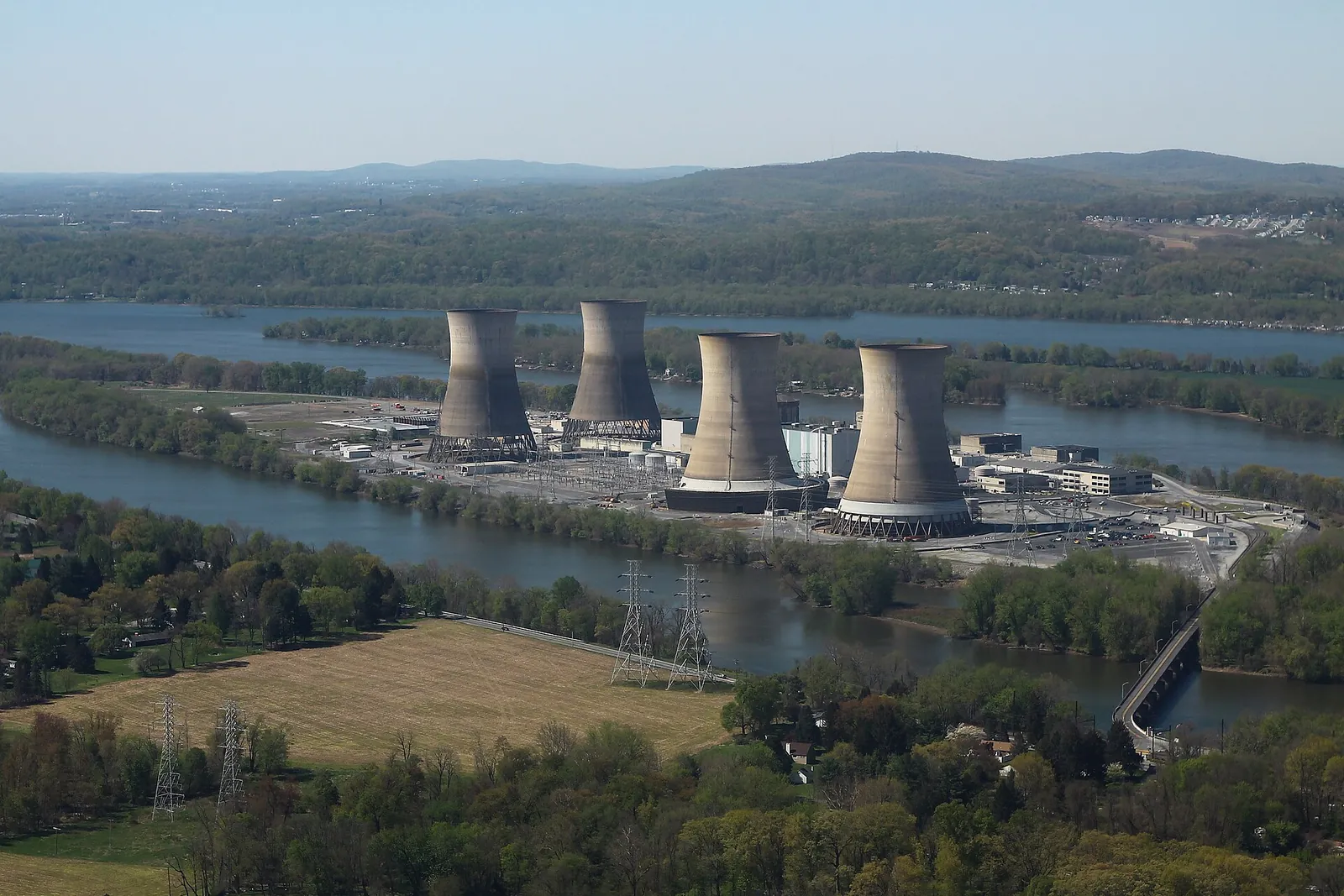
In September 2024, Microsoft committed to buying the output of Three Mile Island Unit 1 (about 0.8 GW), in Pennsylvania, for 20 years. Shut down in 2019 for economic reasons, the unit stands next to the reactor that suffered the accident in 1979; its operator aims to restart it in 2027. The IEA also expects data centres to have 15 to 27 GW of gas-fired power stations on their own sites by 2030, mainly in the United States.
4Forecasts for 2030: 2 to 3 times France's consumption
From 945 to 1,500 TWh, depending on what is counted
3 recent forecasts for 2030 cover 3 different scopes. The IEA expects 945 TWh for all data centres, excluding cryptocurrencies: 2.1 times France's consumption in 2025, and nearly double data centres' own consumption that year. The Shift Project forecasts 1,250 to 1,500 TWh, including cryptocurrencies, if current trends continue: up to 3.3 times France. GreenIT arrives at 1,169 TWh for AI alone, or 2.6 times France.
In 2030, 2 to 3 times France's electricity consumption, according to 3 studies that do not count the same thing
Annual electricity consumption. Solid line: past years; dotted line: each study's forecast.
International Energy Agency, April 2026
What is counted
All data centres, excluding cryptocurrencies.
The result
From 485 TWh in 2025 to 945 TWh in 2030, or 2.1 times France's consumption; from 833 to 1,008 TWh depending on its scenarios.
The gap comes down to 2 assumptions: how many data centres are built, and at what load they run
The first is the number of projects that will be built in practice. The IEA starts from expected server deliveries and takes account of manufacturing and grid connection lead times: its scenarios range from 833 to 1,008 TWh. The Shift Project extends current trends. GreenIT starts from forecast sales of graphics cards, 3 times as powerful in 2030, and its authors themselves wonder whether that many data centres can be built and powered.
The second is the operating load. GreenIT assumes that AI servers are used at 69% of their capacity all year round; the IEA assumes that data centres run on average at 48% of their power. In total, GreenIT forecasts 1,169 TWh for AI alone, more than the IEA's 945 TWh for all data centres. For AI-specialised data centres alone, the IEA puts the figure at 465 TWh: 2.5 times lower than GreenIT's, on comparable scopes.
Nearly 3% of the world's electricity in the IEA's base case
In the IEA's base case, data centres would consume as much electricity as Japan in 2030, nearly 3% of the world's electricity. They would account for less than 10% of the rise in global electricity demand by then, but for nearly half of the rise in the United States.
5Data centres use 1% of France's electricity and nearly a quarter of Ireland's
4 to 5 TWh in 2024, 10 or 15 in 2030
According to RTE's Bilan prévisionnel (forecast report), data centres located on dedicated sites consumed 4 to 5 TWh in 2024, or about 1% of the country's electricity; the total comes to 5 to 10 TWh once the in-house server rooms of companies and public administrations are included. For 2030, RTE sets out 2 trajectories, depending on the share of projects that go ahead among those that applied before that date for a connection to the transmission grid: 10 TWh if 30% go ahead and 15 TWh if 60% do, or 2 to 3% of French consumption.

A third trajectory, one of stagnation, assumes that investment moves to other European countries, that local moratoria are introduced or that a financial bubble bursts. For 2035, the first 2 trajectories give 21 and 32 TWh. Arcep, for its part, measures 2.7 TWh in 2024 among the 23 main hosting providers, up 12% in one year.
18 GW of signed connections, but only 20% of the requested power drawn in practice
As of May 2026, RTE had reserved nearly 18 GW of capacity for about 80 data centre projects, up from 5 GW at the end of 2024. Reserved capacity is the maximum power that a site will be able to draw; the energy it consumes depends on how long it draws that power. At full power all year round, those 18 GW would consume nearly 160 TWh, a third of France's electricity.
Yet data centres that have been connected to RTE's grid for 2 to 3 years draw on average only 20% of the power requested: at that rate, 18 GW would come to 32 TWh a year, as much as RTE's high trajectory for 2035. According to RTE, the main operators estimate that it will take them 10 to 15 years to reach about 80% of the requested consumption.
In France, 1 kWh in 100 goes to data centres; it would be 2 to 3 in 2030
Trajectories from RTE, the French grid operator, for data centres on dedicated sites, and, as a dashed outline, the capacity already reserved by projects.
1 square = 1% of France's electricity (451 TWh in 2025)
Data centres, dedicated sites
- 2024: about 1 square
- 2030: 2 to 3 squares in total
- 2035: 5 to 7 squares in total
- Reserved: 35 squares at full power, 7 at the observed load
More than half of France's digital usage is hosted abroad
These figures cover only the data centres located in France. Yet 53% of French digital usage was hosted abroad in 2022, according to an ADEME study published in 2025. Once those data centres are counted, the agency estimates in a 2026 study, cited by Arcep, that AI accounted for 13% of the consumption of the data centres serving France in 2025. Our article on digital pollution statistics puts these orders of magnitude in the context of the overall footprint of digital technology.
In Ireland, nearly a quarter of electricity goes to data centres
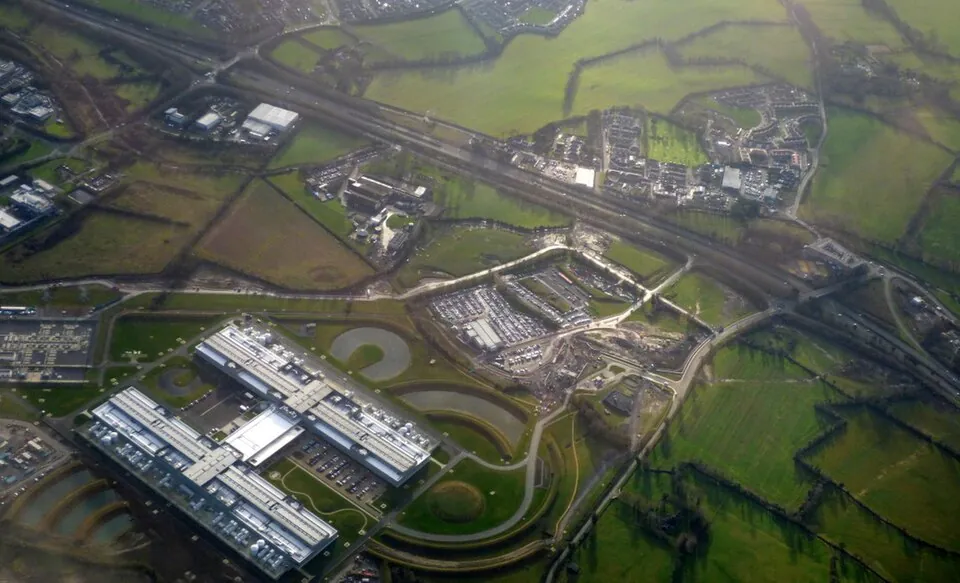
In Ireland, data centres consumed 23% of metered electricity in 2025, up from 5% in 2015, according to the country's Central Statistics Office: more than all urban homes combined (18%). In the European Union, data centre consumption would rise from 68 TWh in 2024 to 114 TWh in 2030, or 3.2% of electricity, according to a European Commission report that uses the IEA's figures.
6The carbon intensity of this electricity depends on the country and the accounting method
At least 8 times less CO2 per kWh in France than worldwide
Electricity in France emits 51.9 gCO2e per kWh (grams of CO2 equivalent), including upstream emissions and grid losses, against 435 g on average worldwide for power plant emissions alone: at least 8 times less. However, 70% of data centre electricity is consumed in the United States and China. The IEA put the emissions from the electricity consumed by data centres at 180 million tonnes of CO2 in 2024, and at about 320 million in 2030 in its 2025 base case.
Google's emissions for its electricity vary 5-fold depending on the calculation method
Google publishes 2 figures for the electricity it consumed in 2025: 2.8 million tonnes of CO2e once its renewable electricity purchase contracts are taken into account, and 15.1 million based on the carbon intensity of the grids to which its data centres are connected. Our guide to AI in the Bilan Carbone®, the French carbon accounting method, explains how a company that uses AI accounts for these emissions.
7Key takeaways
- Data centres consume slightly more than France: 485 TWh in 2025, or 1.5 to 1.7% of the world's electricity.
- AI accounts for between one fifth and more than one third of this, depending on the estimation method: 100 to 174 TWh.
- Written questions account for little: less than 1% of data centre electricity, even when counting 10 billion questions a day.
- Each question needs less electricity, yet the total keeps rising: at Google, 33 times less per question in one year, and 37% more electricity in 2025.
- For 2030, forecasts range from 945 to 1,500 TWh for all data centres, excluding or including cryptocurrencies, and reach 1,169 TWh for AI alone according to GreenIT.
- In France, data centres account for about 1% of electricity and would account for 2 to 3% in 2030 according to RTE's trajectories, excluding data centres located abroad.
For individuals, our ranking of the actions that reduce the impact of AI starts from these orders of magnitude, and our guide to choosing a more eco-friendly AI examines what 4 AI services and the main assistants publish. Our comparison of ChatGPT and a Google search and our article on the water consumed by AI complete the picture, as does our answer to those wondering whether to boycott AI. Our AI carbon footprint calculator gives a first estimate for a company.
- Data centres worldwide: IEA, Key Questions on Energy and AI, 16 April 2026, pp. 9 to 11, 17, 24 to 26, 33 and tables A.1 and A.4; IEA, Energy and AI, April 2025, pp. 14, 56 and 57, 65, 72, 87; IEA, Electricity 2026, February 2026, pp. 15, 105 and 216.
- AI share and forecasts for 2030: The Shift Project, Intelligence artificielle, données, calculs: quelles infrastructures dans un monde décarboné?, summary of October 2025, and final report; Association Green IT (GreenIT), Impacts environnementaux de l'intelligence artificielle dans le monde, September 2026.
- ChatGPT and usage: Arcep, Arcom, CGE and ANCT, Baromètre du numérique, 2026 edition, February 2026, p. 8; ADEME, opinion on generative artificial intelligence, 22 July 2026, pp. 6 and 7; Epoch AI, How much energy does ChatGPT use?, 7 February 2025; Luccioni, Jernite and Strubell, Power Hungry Processing, 2024; Delavande, Pierrard and Luccioni, Video Killed the Energy Budget, 2025; Arcep, Intelligence artificielle générative: quels défis environnementaux?, May 2026, pp. 14, 34 and 52.
- Google: Google, Measuring the environmental impact of delivering AI at Google Scale, August 2025; Google, 2026 Environmental Report, June 2026, pp. 19, 90 and 93.
- France: RTE, Bilan prévisionnel 2025-2035, consumption chapter, December 2025, pp. 13, 27, 28 and 35; RTE, Bilan électrique 2025, February 2026, pp. 4 and 14; RTE, Les data centers en chiffres clés, page dated 1 June 2026; Arcep, survey Pour un numérique soutenable, 2026 edition; ADEME, Évaluation de l'impact environnemental du numérique en France, January 2025, p. 7; Insee, Bilan démographique 2025.
- Carbon, Europe and grids: ADEME, Base Carbone, 2024 average consumption mix; Central Statistics Office, Data Centres Metered Electricity Consumption 2025, 7 July 2026; CBS, Data centres consume 4.6 percent of the Netherlands' electricity, 15 December 2025; European Commission, report on the energy efficiency of data centres, COM(2026) 500, 21 September 2026; Constellation, press release of 20 September 2024 and progress update of September 2025.
- Images: Opening photo: Wolfgang Moroder, Wikimedia Commons, CC BY-SA 3.0, cropped. Three Mile Island: formulanone, Wikimedia Commons, CC BY-SA 2.0. Magasin Vauban: Michael Kauffmann, Wikimedia Commons, CC BY 3.0. Clonee: Thomas Nugent, Wikimedia Commons, CC BY-SA 2.0.