
- 1No AI is eco-friendly in itself: model size changes the energy needed for a text about 100-fold.
- 2Generating 1 kWh in France emits 9 times less greenhouse gas than in the United States (our calculation).
- 3In none of the 4 services we read did we find the model, a figure per answer, its method and the server country together.
- 4With the same model, a Mac Studio chip uses 1.6 to 2.3 times more energy than a data centre card.
No AI is eco-friendly in itself. To choose an eco-friendly AI, or at least a more frugal one, we use 3 criteria: model size (the software that produces the answers), which changes the energy needed to generate a text about 100-fold; the country where the servers run, because generating electricity emits 9 times less greenhouse gas in France than in the United States, according to our calculation; and what the provider publishes, the part that can be checked.
What each service claims, and what can be verified
Situation as at 3 October 2026, services in alphabetical order.
Ecosia AIEcosia, Germany · no price shown
- The model used
Published
Mistral Small 4 for conversation, Mistral Small 3.2 for summaries
- A figure per answer
Not found on the pages read
No AI consumption figure found
- The method behind that figure
Not found on the pages read
EcoLogits method cited for its estimates; no results found
- The country of the servers
Partly published
Conversations passed to Mistral, its provider; country not found
- Producing more clean energy than its AI uses
- Using small models and avoiding video generation
- Letting users turn the AI off in 1 click
On 3 October 2026 we read what 4 services publish: Ecosia AI, Euria, GreenPT and Vibe, the name given to Mistral AI's Le Chat in May 2026. Each puts forward an argument of its own: renewable electricity, recovered heat, offsetting or a life cycle assessment, a method that counts impacts from manufacturing to end of life. For none of the 4 did we find all of the following: the model that answers, a public figure per answer, the method behind it and the country of the servers.
1What "eco-friendly" means for an AI, and the criteria that count
Frugality, renewable electricity, offsetting: 3 different promises
The word "eco-friendly" covers 3 promises. Frugality means using less: a smaller model, no video generation, better-cooled buildings. Renewable electricity means buying or generating it. Offsetting means funding projects elsewhere, often forestry ones, that are meant to balance out one's own emissions. The last 2 do not change how much energy an answer consumes.
Electricity described as 100% renewable does not show where a server's power comes from. ADEME (the French Agency for Ecological Transition) writes, about the offers sold to household customers, that on the grid "all green and non-green production is mixed" (our translation). According to the agency, a green offer only guarantees that the supplier buys certificates issued by renewable electricity producers, known as guarantees of origin.
Directive (EU) 2024/825 lists "eco-friendly" and "green" among the generic environmental claims, which are banned when the trader does not specify the claim and cannot demonstrate "recognised excellent environmental performance". It also bans claims of neutrality based on offsetting. Member States had to apply these rules from 27 September 2026.
In France, the bill that transposes these rules was passed by the Senate (the upper house of Parliament) in February 2026 but, according to its legislative file, had not yet been examined by the National Assembly (the lower house) in early October 2026. We express no view on the compliance of any service. Our articles explain banned environmental claims (in French) and how to substantiate an environmental claim (in French).
The 3 criteria we use
Model size. Models cut text into word fragments called tokens. For each token produced, a model with 70 billion parameters or more (its internal settings) uses about 100 times more energy than a small one, according to a 2024 study, revised in 2026 of 9 open models, that is, models that anyone can download freely.
Reasoning mode, in which the model works through intermediate steps, widens the gap further. In the AI Energy Score ranking, reasoning models use 30 times more energy on average than the others, and PEReN, the French state's digital regulation expertise centre, measures up to 92% more on average when this mode is switched on.
The country of the servers. Generating 1 kWh (kilowatt-hour) of electricity emits 41 gCO2e (grams of CO2 equivalent) in France, 39 in Switzerland and 57 in Finland, but 384 in the United States and 589 in Poland, according to 2025 data from the think tank Ember, as reproduced by Our World in Data. These figures cover electricity generated in each country, without taking cross-border exchanges into account. ADEME, which counts electricity consumed, uses 51.9 gCO2e per kWh for France, the value used in the rest of this series. The efficiency of the building matters much less: the energy gap between a very efficient data centre (the building where the servers run) and the sector average is 1.4 times, according to our calculation.
What the provider publishes. Without the model used, a figure per answer, the method behind it and the country of the servers, a promise cannot be checked. This is the approach we take to companies' claims, as set out in our method for avoiding greenwashing without knowing it (in French).
Model size changes the energy used for a text by about 100 times, the building by 1.4 times
The gap that the sources report for each of 4 levers. Each tick on the scale is 10 times the previous one.
- The size of the modelabout 100 times
- The reasoning mode1.9 to 30 times on average
- The country of the serversup to 21 times
- The efficiency of the building1.4 times
2Ecosia AI, Euria and GreenPT: what each one claims
Ecosia AI: producing more clean energy than its AI uses
The search engine Ecosia launched Ecosia AI in December 2025; its chat is in beta, according to its help centre. In a blog post of 2 July 2026, it says it produces more clean energy than its AI uses. On the pages we read, we found no figure for either the energy it produces or the energy its AI uses.
Ecosia publishes its installed capacities, including a 13 megawatt-peak solar farm in Germany (the maximum output of its panels), held in a joint venture, and €18 million invested in renewable energy projects. It also writes that in 2024 it produced 2 times the electricity used by its searches, a figure that predates the launch of Ecosia AI.
On frugality, Ecosia names its models: Mistral Small 4 for the chat and Mistral Small 3.2 for the summaries at the top of search results, although an older, undated help page still cites an OpenAI model. The service does not generate video, but it does generate images, and the AI can be turned off in 1 click. According to its help centre, Ecosia estimates the impact of each request with EcoLogits, an estimation method also used by the public comparison tool compar:IA, without counting model training, networks or the user's device; we found no quantified results from it. We found no mention of the country of the servers and no price displayed: the launch blog post presents Ecosia as free.
Euria: server heat fed into Geneva's district heating
Euria was launched in December 2025 by the Swiss hosting provider Infomaniak, which presents it as a sovereign and free assistant. According to Infomaniak, it runs on the company's own servers in Switzerland, with open models; Infomaniak cites their families (Mistral, Llama, DeepSeek and Apertus) but not their versions. It also announces certified renewable electricity: in 2024, 38% under the Naturemade Star label, 56% certified hydropower and 6% self-generated solar, according to its impact report.
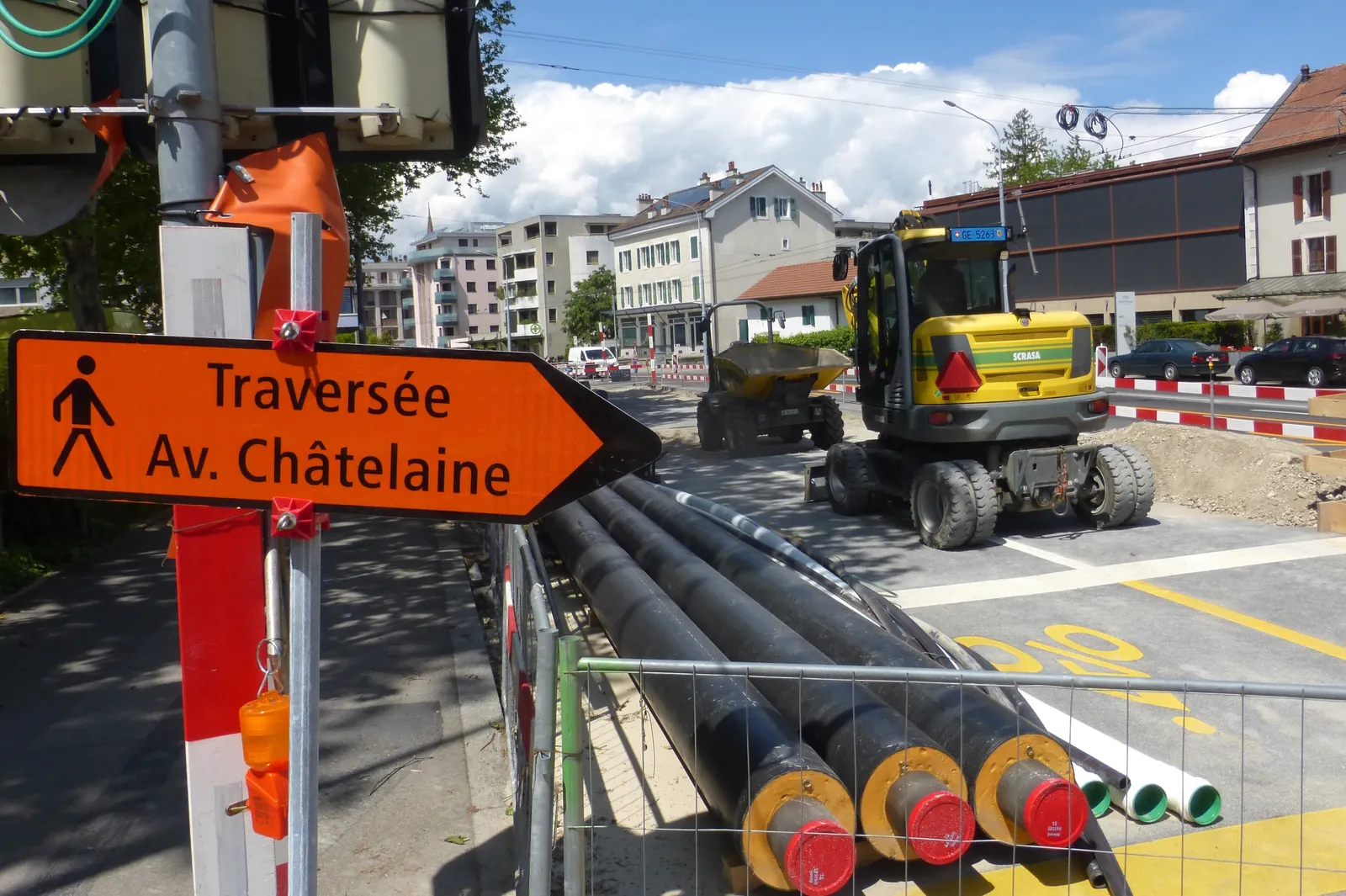
Infomaniak's environmental argument is that the heat from the servers is fed into Geneva's district heating, which at full capacity is enough to heat up to 6,000 homes in winter and to avoid 3,600 tonnes of CO2 a year, according to its press release.
The 6,000 homes and the 3,600 tonnes describe Infomaniak's Geneva data centre at full load, a level targeted by 2028, while a commercial page from Infomaniak and an article on its blog state the 6,000 homes figure in the present tense. In January 2025, the centre was running at 25% of its capacity, according to the inauguration press release; we found no more recent figure.
Infomaniak writes that all of the centre's electricity has been fed back as heat since November 2024; its impact report gives 65% for 2024, the year of start-up, since heat recovery could not yet run continuously. The company says it offsets 200% of its emissions by funding 2 forestry projects. We found no figure per question.
GreenPT: renewable energy and an indicator for each conversation
GreenPT, a Dutch company, charges for its assistant from €4.50 per month for 15 questions a day, and offers no free plan after a 14-day trial, according to its October 2026 pricing page. It names its hosting providers, Scaleway in France and Verda in Finland, and its models, which range from 24 to 120 billion parameters. Its sustainability page states that all its processing runs in the European Union; its documentation also offers developers a connection endpoint in the United States, the default one remaining in the Union.
GreenPT announces 100% renewable energy; Scaleway's impact report specifies that, for this hosting provider, this means guarantees of origin. GreenPT also cites an efficiency index of 1.25 (the PUE, or power usage effectiveness: the building's electricity divided by that of the servers); in Scaleway's report, that is the figure for a single site, while the average across the provider's sites is 1.37. We do not know which site hosts GreenPT's servers.
From Norway to Poland, 1 kWh of electricity emits between 28 and 589 gCO2e
Electricity generated in 2025, per kWh, in 9 countries and the European Union. In dark green: where 2 of the services whose pages we read say they run their servers by default.
- Norway28 g
- Sweden35 g
- Switzerland39 gEuria (Infomaniak)
- France41 gGreenPT, at Scaleway
- Finland57 gGreenPT, at Verda
- European Union210 gThe 27 countries combined
- Ireland257 g
- Germany330 g
- United States384 g56% of the world's AI data centres, according to GreenIT
- Poland589 g
GreenPT says it gives each user the energy of their conversations, through a 3-level indicator in the chat and figures in a dashboard. The method published by its co-founder starts from an assumed power of 300 W, calibrated against measurements of graphics processors (GPUs, the computing chips of servers), and counts the tokens produced. We found no public figure per question. GreenPT says it cannot verify that the models were trained with renewable energy.
3Mistral's Le Chat, now Vibe: a published assessment, but no basis for comparison
A life cycle assessment published in July 2025
In July 2025, the French company Mistral AI published the results of the life cycle assessment of its Large 2 model, carried out with the consultancy Carbone 4 and ADEME and reviewed by 2 engineering consultancies: it is the only one we found from a provider. The method also counts the manufacture of the servers. Mistral AI's assistant was then called Le Chat; it became Vibe in May 2026.
For Le Chat, this assessment gives 1.14 gCO2e and 45 mL of water for an answer of 400 tokens (about 320 words), excluding the user's device. We found no complete version of the study and no figure in Wh (watt-hours). A blog post of 22 May 2026 announces a different default model for Le Chat, Mistral Medium 3.5; on Vibe's current pages, we did not find the name of the model that answers. See what this study says about the stages at which AI harms the environment.
What the study cannot tell us
This study cannot show that Mistral AI's assistant emits less, or more, than its competitors. Google published 0.24 Wh and 0.03 gCO2e for a typical written question put to Gemini (the median one when questions are ranked by energy), together with its method. Mistral AI's figure and Google's do not count the same thing: an answer of 400 tokens for the former, a typical question whose length we did not find for the latter.
Electricity is not counted in the same way either. According to Mistral AI's blog post, the study calculates electricity emissions from the location of the servers; we did not find the country or the emission factor there. Google calculates them from its electricity contracts: 94 gCO2e per kWh in 2024, against 345 based on the location of its data centres, according to its own paper.
Google and Mistral AI each publish a figure per response; they do not count the same thing
What each figure counts, according to the 2 published documents. Companies in alphabetical order.
- What is measuredA typical written question put to Gemini (the median, by energy), in May 2025; length not found in the articleA response of 400 tokens from the Le Chat assistant, about 320 words
- The published figures0.24 Wh, 0.03 gCO2e and 0.26 mL of water1.14 gCO2e and 45 mL of water; no figure in Wh found
- Electricity emissionsCounted according to its electricity contracts: 94 gCO2e per kWh in 2024, compared with 345 based on the location of its data centresCounted based on the location of the servers, as the post states; country and factor not found
Mistral AI's study covers the Large 2 model, with data up to January 2025; we found no update since July 2025. Mistral AI proposes that all providers publish 2 indicators: the impact of training a model and that of an answer.
Data in the European Union, but no country found
Mistral AI's help centre states that data is hosted by default in the European Union, or in the United States for developers who choose the connection endpoint there, and refers to a list of subprocessors, which we could not read. We therefore found no country and no hosting provider for the processing of answers. For the European Union as a whole, generating 1 kWh emits 210 gCO2e; among the countries we recorded, the figure runs from 35 in Sweden to 589 in Poland.
In May 2026, Mistral AI announced a 10 megawatt site at Les Ulis, in the Essonne department, with an opening planned for the third quarter of 2026; we found no confirmation of this. When it announced its infrastructure offering Mistral Compute in June 2025, it mentioned the use of low-carbon energy; we found no figure.
4ChatGPT, Claude, Gemini and the others: start with the smaller model
As noted above, Google gives 0.24 Wh for a question put to Gemini, in a methodology paper. For ChatGPT, OpenAI's chief executive stated 0.34 Wh on average on his personal blog; we found no published method. For Claude, we found no figure on the Anthropic pages we read, and none for Lumo (Proton), Perplexity or Qwant on theirs. Our article on the energy of a question put to ChatGPT compares the figures from different sources.
We found no measurement, published by a provider, of the energy gap between its own models. Assuming that price partly follows the amount of computation, prices give an idea: in October 2026, in the price lists we read, the most expensive model costs developers 8 times as much as the cheapest at Google, and 10 times as much at Anthropic.
Our comparison of the ChatGPT, Claude and Gemini models puts them side by side, and the 10 actions ranked by effectiveness quantify what a smaller model changes.
5Running an AI on your own computer saves energy only with a smaller model
How much energy a local model uses
Some software lets you install an open model on your own computer. On a laptop, models with 2 to 8 billion parameters use 0.03 to 0.13 Wh per answer, according to the study already cited for model size, which counts only the processor and the graphics card.
Run locally, AI uses less energy only with a smaller model
With the same model, a computer consumes more than a data centre. 3 comparisons, each on its own scale.
1. The same model, on 2 chipsEnergy per request, data centre = 1
In a data centre
On a desktop computer (Mac Studio)
With the same model, the chip in the computer tested consumes more.
2. A large model online, a small one at homeWh per response
70 billion parameters, on a server
2 to 8 billion, on a laptop
17 to 70 times less per response, with a model 9 to 35 times smaller.
3. 1 kWh of electricity, in 2 countriesgCO2e per kWh generated
United States
France
9 times less CO2e per kWh generated in France.
In the same study, a model with 70 billion parameters uses about 2.3 Wh per answer on a server, which is 17 to 70 times more, according to our calculation, for answers of similar length. This ratio combines the effects of model size and of the machine.
A local AI is no more frugal with the same model
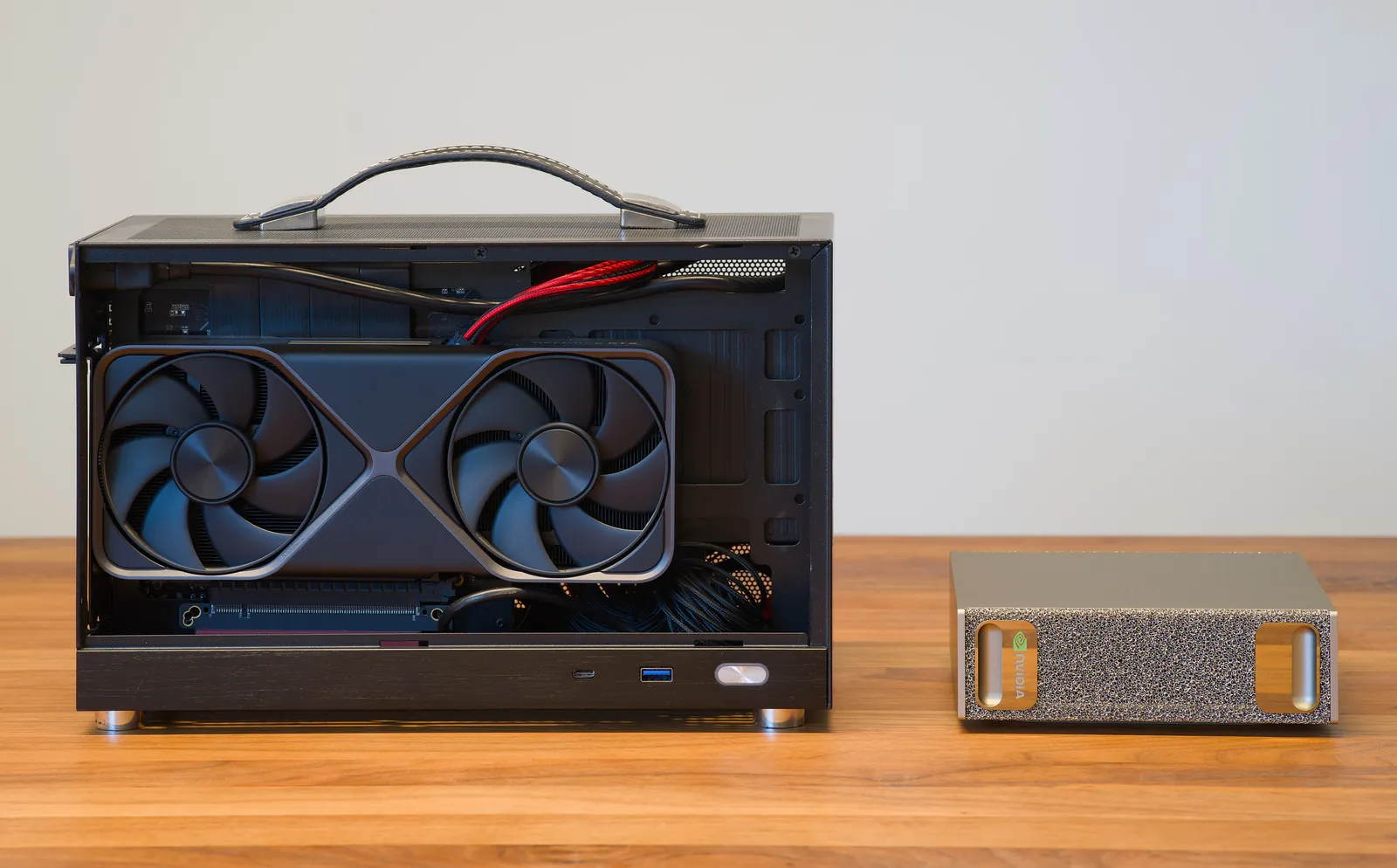
The idea that a local AI is necessarily more eco-friendly does not hold when the model is the same. In the study Intelligence per Watt, the chip of a high-end desktop computer, a Mac Studio, needs 1.6 to 2.3 times more energy per request than a data centre card running the same model. The saving appears when the installed model is smaller than the one behind the online service.
According to the same study, if each request were routed to the best of the local models tested, 88.7% of requests sent as a single message would be handled correctly; a single local model on its own does less well.
Who it makes sense for
Running a model locally makes sense for anyone who already owns a recent computer, asks simple questions and wants to keep their data on their own machine. In France, electricity at home has low emissions. Buying a powerful machine for this purpose, however, adds the impact of manufacturing it, which these studies do not count.
6How to choose an eco-friendly AI: 3 questions, and tools for estimating
Do I need a large model?
For summarising or translating, small specialised models use 15 and 35 times less energy respectively than a general-purpose model with 8 billion parameters, according to UNESCO and University College London. If your assistant offers several models, try the lightest one first, and keep reasoning mode for the questions that call for it. Video has a much larger impact: a 5-second video uses as much energy as 300 questions with the generator that serves as the benchmark for this series, one of the most energy-hungry of those measured. See the footprint of an AI-generated video and that of an image.
Where do the servers run?
A service that names its hosting provider and its country gives information that can be checked. Generating 1 kWh in Finland, France or Switzerland emits 7 to 10 times less CO2e than in the United States, according to our calculation from Ember's figures. Among the services we read, Infomaniak and GreenPT name their countries; Mistral AI states the European Union, and for Ecosia we did not find it. See how much electricity data centres consume.
What does the provider publish?
A figure per answer, with its method, can be checked, unlike an adjective. For a target, the date, the scope and the share already achieved must be stated. A company choosing a tool can write these 3 questions into its requirements specification. Our guides explain how to include AI in your Bilan Carbone® (the French carbon accounting method) and measure a company's AI footprint.
Tools for estimating impact
compar:IA, a public comparison tool run by the French Ministry of Culture, rates each model in a class from A to F according to its estimated energy use per million tokens produced, from less than 100 Wh (class A) to more than 10,000 Wh (class F). It uses the method of EcoLogits, which leaves out model training. Our AI footprint calculator gives a company an order of magnitude.
7Key takeaways
- No AI is eco-friendly in itself: model size changes the energy needed for a text about 100-fold.
- Ecosia AI and GreenPT name their models, while Infomaniak and GreenPT name the country of their servers; for Ecosia AI, Euria and GreenPT, we found no public figure per question.
- Mistral AI and Google publish a figure per answer, but on 2 different scopes; for Vibe, we did not find the country of the servers.
- With the same model, a Mac Studio chip needs 1.6 to 2.3 times more energy than a data centre card.
See also: all the impacts of AI, beyond carbon, the water that AI consumes and should you do without AI?.
- Services: main pages read on 3 October 2026; Ecosia's help centre was read again on 5 October 2026. Ecosia: help centre, updated on 2 October 2026, launch blog post, 2 December 2025, blog post on the solar farm, 2024 report, AI-free search, 2 July 2026, older help page, undated, and legal notice. GreenPT: sustainability, pricing, method (6 November 2025), regions and terms and conditions pages; Scaleway, Impact Report 2025, 2024 data. Infomaniak: Euria press release, 9 December 2025, data centre press release, 28 January 2025, 2024 impact report (in French), 2024 greenhouse gas inventory, AI services page (in French), article of 27 February 2026 and pricing (in French). Lumo (4 pages) and Proton, Qwant (4 pages), Perplexity (help centre and frequently asked questions).
- Mistral AI and the large providers: Mistral AI, Our contribution to a global environmental standard for AI, 22 July 2025; help centre, updated on 12 August 2026; AI Now Summit 2026, 28 May 2026; Vibe gets to work, 28 May 2026, and Le Chat is now Vibe, updated on 12 August 2026; blog post on Mistral Medium 3.5, 22 May 2026; Mistral Compute, 11 June 2025; pricing. Google, Measuring the environmental impact of delivering AI at Google Scale, August 2025. Sam Altman, The Gentle Singularity, June 2025. Anthropic, transparency page (3 pages read). Price lists of Anthropic and Google, read on 3 October 2026.
- Electricity and claims: Ember, Global Electricity Review 2026, 21 April 2026, and country chapter; Our World in Data, Lifecycle carbon intensity of electricity, based on Ember, updated on 30 June 2026; Green IT Association (GreenIT), impacts of AI worldwide (in French), September 2026, for the share of the United States; ADEME, Green electricity: the facts and the myths (in French), September 2024, and Green electricity offers (in French), December 2018; Directive (EU) 2024/825, 28 February 2024: Article 1 for the definition, recital 9, points 4a and 4c added to Annex I to Directive 2005/29/EC, Article 4 for the dates; Senate and National Assembly (in French), legislative files for the bill adapting French law to European Union law, consulted on 5 October 2026.
- Models and local AI: Husom, Goknil, Shar and Sen, The Price of Prompting, 2024 preprint, version of 3 March 2026, abstract and Table V; Saad-Falcon et al., Intelligence per Watt, version of 6 September 2026; Arcep and PEReN, Generative AI: what environmental challenges?, May 2026, p. 52 (Arcep is the French electronic communications regulator; the report is in French); Luccioni and Gamazaychikov, AI Energy Score v2, 4 December 2025; UNESCO and UCL, press release, 8 July 2025; Delavande, Pierrard and Luccioni, Video Killed the Energy Budget, 2025, and Epoch AI, How much energy does ChatGPT use?, 2025, for the video and the question.
- Tools: compar:IA, frequently asked questions (in French); EcoLogits, methodology, consulted on 3 October 2026.
- Images: Opening photo: Achim Lammerts, Wikimedia Commons, CC BY-SA 4.0, cropped. Nursery: Ariarymadachoix, Wikimedia Commons, CC0. District heating: MHM55, Wikimedia Commons, CC BY-SA 4.0. Computer: Daniel Lu (dllu), Wikimedia Commons, CC BY-SA 4.0. The photos illustrate a subject: they do not show the facilities of the services described, unless stated otherwise.