
Skip to content
Get in touchFR
Updated in May 2026
Explained

IT carbon footprint of a company: cloud, data centres and workstations

In France, switching off your PC in the evening helps only a little, whereas keeping your equipment for 6 years instead of 4 cuts the IT carbon footprint (also known as the digital carbon footprint) by 30 to 50%. This guide shows how to act on the emission sources that matter.

Guillaume Pakula
By Guillaume Pakula, co-founder of Celsius. Since 2019, he has helped 80+ organisations with their Bilan Carbone® and climate strategy.
March 2026
Updated May 2026 · 5 min
In the Bilan Carbone® (the French carbon accounting method) of a service-sector SME, IT accounts for 2 to 5% of the total footprint. In France, 80% of this impact comes from the manufacturing of equipment (PCs, screens, servers), not from its use. Switching off a screen in the evening makes little difference, whereas extending the lifespan of the equipment fleet from 4 to 6 years cuts the IT carbon footprint by 30 to 50%.
Key takeaways
  • 1Manufacturing accounts for 70 to 80% of the IT carbon footprint of a French company.
  • 2Extending equipment lifespan from 4 to 6 years cuts the footprint by 30 to 50% and saves money.
  • 3Refurbished equipment emits 70% less than new for the same standard office use.
  • 4Choosing the data centre changes cloud emissions by a factor of 5 to 10, depending on the country.

"How much of our carbon footprint is IT?" We hear this question more and more often, especially now that IT directors are being brought into CSR (corporate social responsibility) programmes, and the answer is almost always a surprise. Digital technology accounts for 3 to 4% of global greenhouse gas emissions, as much as air transport, and that share is growing by 6% a year (a study by ADEME, the French Agency for Ecological Transition, and Arcep, the French electronic communications regulator), driven by the boom in cloud, AI and video. What surprises people is the split between manufacturing and use, which is far from what most expect.

Summary

The digital carbon footprint in France: three figures that change everything

Why switching off your screen in the evening is not enough - and where to act effectively.

2-5%
of the Bilan Carbone® of a service-sector SME
A small emission source in relative terms, but...
70-80%
comes from equipment manufacturing
PCs, screens, servers - not from use
×5-10
difference depending on the data centre's country
France/Sweden vs USA/Germany
!

The counter-intuitive French case: thanks to the nuclear-based electricity mix, use has little weight. The real lever is the lifespan of the equipment fleet - going from 4 to 6 years means 30 to 50% less digital carbon footprint.

Sources: The Shift Project, ADEME (Référentiel général d'écoconception 2024, general eco-design framework), Celsius field experience.

1Where digital emissions come from: worldwide, mainly use; in France, mainly manufacturing

This figure comes from work by The Shift Project (a French think tank) and ADEME. Worldwide, about 40% of digital emissions come from manufacturing equipment (user devices, networks, data centres) and about 60% from use (the electricity consumed by data centres, networks and user devices). In France, thanks to a very low-carbon electricity mix (nuclear plus renewables), manufacturing dominates even more: it accounts for 70 to 80% of the IT carbon footprint of a French company.

In France, the electricity mix changes which levers matter most

This matters for any reduction strategy (in French): in France, measures that target use (switching off screens, limiting emails with attachments, deleting unnecessary data) have only a marginal impact compared with measures that target the equipment fleet (extending lifespan, refurbishment, pooling). The French electricity mix changes the order of priority among levers compared with a country that relies heavily on fossil fuels, such as Germany or the United States.

2Manufacturing, not use, drives the footprint of equipment

Manufacturing a laptop emits between 200 and 400 kg of CO2 (mineral extraction, processing, assembly in Asia, transport), whereas using it for 4 years in France emits around 6 kg of CO2, or about 1.5 kg a year according to ADEME, because French electricity is low in carbon. Manufacturing therefore accounts for more than 95% of the total footprint. The same reasoning applies to smartphones, screens, printers and all other electronic equipment.

Manufacturing accounts for 80% of the carbon footprint of a PC

Extending lifespan is the No. 1 lever in France

375kg CO₂ over 4 years
80%
12%
8%
Manufacturing300 kg
Use (4 years)45 kg
Transport30 kg
If lifespan goes from 4 to 6 years
-33% per year

User devices: the main emission source

The consequence is counter-intuitive: switching off your PC in the evening helps, but only marginally. Extending the lifespan of equipment from 4 to 6 years reduces the footprint by 30 to 50%, which makes it the most effective and the cheapest lever for decarbonising IT.
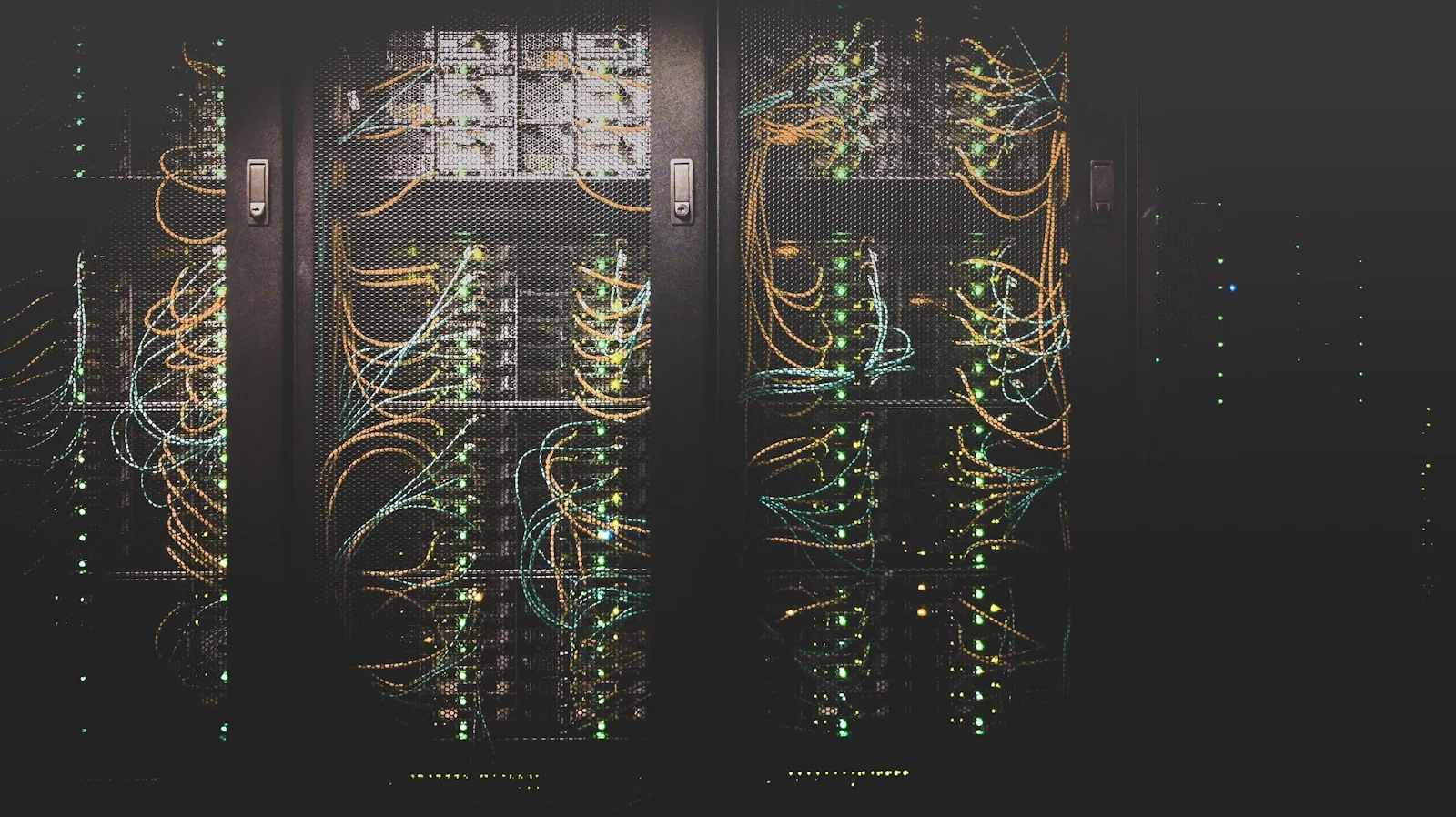
Data centre room with servers - the electricity mix of the hosting country changes the cloud footprint by a factor of 5 to 10

3The cloud: data centres and their electricity mix

The cloud has shifted part of companies' emissions to the data centres of their providers (AWS, Azure, Google Cloud). These data centres use very large amounts of electricity for computing and cooling, and water to remove the heat. The footprint of a cloud service depends mainly on the electricity mix of the country where the data centre is located: a service hosted in France (a mix that is 90% decarbonised) emits 5 to 10 times less than one hosted in the United States or Germany (a mix with a large fossil fuel share).
Open-plan office with workstations

Choosing the data centre: a factor of 5 to 10 depending on the country

IT directors must factor this into their hosting decisions. Choosing a cloud provider that hosts in France or Scandinavia (hydroelectricity) rather than in the United States divides the footprint of cloud services by 5 to 10. When we carry out a carbon footprint assessment, we systematically ask for the location of the data centres and for the cloud providers' emissions reports (AWS, Azure and Google Cloud all publish them). It is often the first time the IT director has looked at this figure, and surprise is a common reaction.

Extending the lifespan of a workstation from 4 to 6 years reduces its footprint by 30 to 50%, the most effective step in digital sobriety.

4Extending equipment lifespan is the first lever

Refurbishment: 70% lower footprint for the same use

Anatomy of a day

A digital worker's day in carbon terms

Use only (excluding device manufacturing) · 6 moments, 175 g CO₂e

18g
08:30
55g
10:00
22g
12:30
8g
14:00
60g
15:30
12g
18:00
08:30
PC wake-up + 50 emails18 g

Power-up + mailbox synchronised

10:00
1-hour video call in HD55 g

Camera on, 4 participants

12:30
Scrolling + streaming on break22 g

4G video, 30 min

14:00
Cloud storage (10 GB)8 g

Automatic syncs running in the background

15:30
20 generative AI queries60 g

≈ 3 g per LLM query (vs 0.3 g Google)

18:00
Sending reports + attachments12 g

5 emails with 5 MB PDFs

175g
per day
~40 kg
per year / person
2%
of an employee's footprint

Use weighs little compared with manufacturing (which accounts for 70-80% of the footprint of a workstation). But HD video calls and generative AI shake up the ranking: 1 LLM query ≈ 10 Google searches.

Source: ADEME, Arcep, Shift Project - 2026 (orders of magnitude)

Extending lifespan is the first lever (in French), by a long way. Keep workstations for 5-6 years instead of 3-4, repair rather than replace, and buy refurbished equipment where possible. A refurbished computer emits around 70% less than a new one, because it avoids the manufacturing phase. For standard office use (email, web, office software, video calls), a refurbished PC that is 2-3 years old is perfectly adequate. Resistance to change often has more to do with company culture (a new device as a status symbol) than with real technical needs.

5Generative AI: a fast-growing emission source, still marginal in most footprints

The rapid spread of generative AI in companies (ChatGPT, Copilot, Claude) adds a new source of consumption. Training large language models takes vast amounts of energy and computing resources. Day-to-day use is less energy-intensive per query, but volume becomes significant when a company rolls out an AI assistant to 500 or 5,000 users. Measurements published by providers remain scarce (Google reports 0.24 Wh of energy for a median text query on Gemini), but the trend is clear: according to the International Energy Agency (IEA), electricity consumption by data centres, driven primarily by AI, is expected to more than double between 2024 and 2030, from 415 to around 945 TWh. This is an emerging emission source that carbon footprint assessments will have to capture in ever finer detail. For a first estimate, our AI carbon footprint calculator estimates the footprint of queries by model and by task.

6Including IT in a carbon footprint assessment: the data to collect

To include IT properly in a carbon footprint assessment, you need to collect data on the equipment fleet (number and type of workstations, screens, smartphones and on-premises servers), average lifespan by category, cloud consumption (supplier invoices, ideally with their emissions reports) and, for network services, the volume of data exchanged. ADEME has published emission factors specific to digital technology in its Base Empreinte database, and tools such as Arcep's product category rules (RCP in French) help refine the calculations.

7Key takeaways

In France, most of a company's IT emissions come from manufacturing equipment, not from using it. Because the French electricity mix is low in carbon, measures on use have a marginal effect, so the real lever is how the equipment fleet is managed.

  • Manufacturing accounts for 70-80% of the footprint in France. A laptop emits 200-400 kg CO2 during manufacturing, compared with about 6 kg over 4 years of use
  • Extending lifespan from 4 to 6 years reduces the footprint by 30-50%: it is the No. 1 lever, and it generates savings
  • Refurbished equipment emits around 70% less than new: adding refurbished equipment to the IT purchasing policy is the second most effective lever
  • The choice of data centre matters: a factor of 5 to 10 depending on location (France versus the United States or Germany). In France, a locally hosted cloud is a carbon advantage
  • Generative AI is a rising emission source: consumption is growing fast but is still marginal in most carbon footprints, so it is worth monitoring and using in a targeted way

8Key takeaways

  • Manufacturing accounts for 70 to 80% of the footprint in France. A laptop emits 200-400 kg CO2 during manufacturing, compared with about 6 kg over 4 years of use.
  • Extending lifespan from 4 to 6 years reduces the footprint by 30 to 50%: it is the No. 1 lever, and it generates savings.
  • Refurbished equipment emits around 70% less than new: adding refurbished equipment to the IT purchasing policy is the second most effective lever.
  • The choice of data centre matters: a factor of 5 to 10 depending on location (France versus the United States or Germany). In France, a locally hosted cloud is a carbon advantage.
  • Generative AI is a rising emission source: consumption is growing fast but is still marginal in most carbon footprints, so it is worth monitoring and using in a targeted way.

Before signing a new hardware contract, check the average age of your fleet and the electricity mix of your cloud. These two questions lead to an IT carbon footprint that is 30 to 50% lower within a year, without giving up performance or user comfort. An IT director who asks them turns a replacement budget into an investment in digital sobriety, with no need for coaching or activist rhetoric: it is simply a rational calculation over the life cycle.


Further resources

Frequently asked questions

In the Bilan Carbone® (the French carbon accounting method) of a service-sector SME, IT typically accounts for 2 to 5% of the total footprint: a secondary emission source, though a traceable one. It is never the priority lever of a climate strategy for a service company (travel and purchases dominate), but it is well within the company's control, with immediate internal levers available. For a 100% digital business (a SaaS vendor, a platform), its weight rises accordingly and IT becomes a major lever.
No, but you need to check where the provider's data centres are. A cloud service hosted in France or Scandinavia (with a decarbonised electricity mix) emits 5 to 10 times less than one hosted in the United States or Germany, and AWS, Azure and Google Cloud all publish emissions reports by region. The sound approach for an IT director is not to leave the cloud but to choose the hosting region deliberately for recurring workloads.
A digital sustainability audit (equipment fleet inventory, average lifespan, cloud emission sources, purchasing policy) typically costs €8,000 to €20,000 excl. VAT for an SME or mid-cap company (ETI in French), depending on the size of the fleet and the complexity of the information system. Diag Décarbon'Action (a Bpifrance-subsidised carbon footprint programme for companies established in France) does not fund it as such: it covers a full Bilan Carbone® (net cost to the company: €6,000 excl. VAT), in which IT is treated as one emission source among others. The audit remains a reasonable investment set against the savings from extending lifespan.
Generative AI is an emerging emission source. Training large models is very energy-intensive and day-to-day use is less so per query, but volume becomes significant when a company rolls out an assistant to 500 to 5,000 users. Emission factors are still being developed (by ADEME, Arcep and providers). The sound approach is to track usage volumes (monthly queries, models called) and apply the first estimates available, with a data quality flag to be reviewed every 6 months.
Yes. For standard office use (email, web, office software, video calls), a refurbished PC that is 2-3 years old is perfectly adequate and emits around 70% less than a new one. Resistance usually has more to do with internal culture (a new device as a status symbol) than with real technical needs. For specific user profiles (video production, scientific computing), high-end refurbished equipment remains viable. Reputable suppliers offer warranties of 12 to 24 months and quick replacement.
You need to collect data on 4 emission sources: the equipment fleet (workstations, screens, smartphones, printers, on-site servers), cloud services hosted in providers' data centres, networks (estimated from the volume of data exchanged) and an emerging source, generative AI. In France, equipment manufacturing accounts for 70 to 80% of a company's IT carbon footprint, because electricity there is low in carbon. You therefore need to record the number and type of equipment, their average lifespan and cloud consumption, ideally with the providers' emissions reports.
A laptop emits 200 to 400 kgCO2e during manufacturing (mineral extraction, processing, assembly, transport), compared with about 6 kgCO2e over 4 years of use in France, where electricity is low in carbon. Manufacturing therefore accounts for more than 95% of its total footprint. The main lever is lifespan: going from 4 to 6 years reduces the footprint by 30 to 50%, and a refurbished computer emits around 70% less than a new one, because it avoids another round of manufacturing.
No, not in a French company. Limiting emails with attachments or deleting unnecessary data has a marginal impact because electricity in France is low in carbon: 70 to 80% of the IT footprint comes from equipment manufacturing, and IT itself accounts for 2 to 5% of the Bilan Carbone® of a service-sector SME. The most cost-effective measures therefore target the equipment fleet: extending workstation lifespan from 4 to 6 years, buying refurbished equipment and choosing where data centres are located.
The first lever is extending equipment lifespan: going from 4 to 6 years reduces the footprint by 30 to 50%. The second is buying refurbished equipment, which emits around 70% less than new and is sufficient for office use. Next come repairing rather than replacing, and the choice of cloud hosting region: a service hosted in France or Scandinavia emits 5 to 10 times less than one hosted in the United States or Germany. Changes to usage, such as switching off screens, have only a marginal effect in France.
or: [email protected]

More articles to read

View all →
French environmental cost label for clothing: what changed on 1 October 2026
Regulation

French environmental cost label for clothing: what changed on 1 October 2026

6 min read
Which garments can display an environmental cost in France? Timeline and thresholds, 2025-2027
Regulation

Which garments can display an environmental cost in France? Timeline and thresholds, 2025-2027

10 min read
Removable batteries and battery passports: who is affected in 2027?
Regulation

Removable batteries and battery passports: who is affected in 2027?

14 min read

No two situations are exactly alike.

Tell us about yours: your situation, deadline and budget. A senior consultant will reply within 24 working hours with an honest assessment.

Let us discuss it within 24 hours →
Our toolkit

A full range of free assessment tools

Cost estimator, obligation and eligibility checkers, footprint calculator.

Estimate costs and impacts
Réf. 2026·BC·0184RAPPORT · EXERCICE 2026Bilan Carbone®complet 1·2·3Restitution Comex · Plan d'action 2027SOMMAIRE01Synthèse exécutivep. 402Périmètre et méthodologiep. 1203Émissions par scopep. 2404Plan d'action 2027p. 5605Annexes méthodologiquesp. 78VOLUME84 pages · ConfidentielRÉFÉRENTIELISO 14064 · GHG ProtocolDEVIS · BC.2026.0184Émis 05·05·2026 · Validité 30 jCabinet Celsius · Paris 3eCHIFFRAGE INDICATIFVotre entrepriseETI · 180 collaborateurs · CSRD 2027PRESTATIONBilan Carbone®Périmètre 1·2·3 · 13 semainesAIDE BPIFRANCE · - 60 %FOURCHETTE INDICATIVE HT16 800à 22 400 €DÉTAIL DE LA MISSION01 · CADRAGE3 sem.~ 4 200 €02 · MODÉLISATION8 sem.~ 9 800 €03 · RESTITUTION2 sem.~ 4 800 €Estimation indicative · Affinée après cadrageSIRET 891 234 567 00012

Bilan Carbone® cost estimator

Your price range in 1 minute, based on 2026 market rates and public funding.

1 minStart
Estimate costs and impacts
EMPREINTE IA · USAGE MENSUELVOTRE EMPREINTE TOTALE4,2 kgCO₂eq sur 1 000 prompts type · Mai 2026COMPARAISON DES MODÈLES · 1 000 PROMPTS TYPEGPT-4oOpenAI6,8 kgClaude OpusAnthropic2,1 kgGemini ProGoogle4,5 kgMistral LargeMistral AI · FR1,6 kg

AI carbon footprint calculator

The climate impact of your AI queries, by model and task. Ecologits methodology.

3 minStart
Check an obligation
DIAGDÉCARBON'ACTIONACCÉLÉREZ LATRANSFORMATIONÉNERGÉTIQUE ETÉCOLOGIQUE DEVOTRE ENTREPRISEDISPOSITIF OFFICIEL · BPIFRANCE × ADEMESIMULATEUR · ÉLIGIBILITÉÉLIGIBLEVous remplissez les 3 critères du Diag Décarbon'Action.VOTRE FINANCEMENT10 000 € HT6 000 €HTReste à charge après subvention BpifranceRÉPARTITION DU FINANCEMENTBPIFRANCE 40%VOUS 60%4 000 €6 000 €DISPOSITIF SUBVENTIONNÉ PAR

Diag Décarbon'Action eligibility

Check in 30 seconds whether your business is eligible for Bpifrance funding covering 40% of a Bilan Carbone® assessment.

30 secStart
Check an obligation
RÉPUBLIQUE FRANÇAISEMinistère de la Transition ÉcologiqueOBLIGATION LÉGALEBilan d'Émissions deGaz à Effet de SerreArticle L.229-25 du Code de l'environnementDécret 2022-982 · publié 1er juillet 2022PÉRIODICITÉ · 4 ANSDÉPÔT · ADEMESIMULATEUR · OBLIGATION BEGESASSUJETTI720 salariés · obligation BEGESSANCTION ENCOURUE50 000 €amende max si non-réalisationart. R.229-50RÉFÉRENCE OFFICIELLE

BEGES checker

Does the BEGES requirement apply to you? An immediate answer, with the deadline and penalty.

30 secStart
Check an obligation
9:42SCANSCANNING DPP...DPP IDENTIFIÉT-shirt coton bioSKU TX-CB-220 · Lot L-26-04781CONFORME ESPR42 DATA POINTS · 5 SECTIONSORIGINEInde · GOTSCoton bioEMPREINTE5,2 kg CO₂eqACV ISO 14040RECYCLABILITÉ85%Filière cotonRÉPARABILITÉ7,5 / 10Pièces accessiblesFIN DE VIEFilière TLC · Bordeaux/FRRécupérateur agréé RefashionUE · ESPR 2024/178112.05.2026

DPP checker

Is your product covered by the Digital Product Passport?

1 minStart
Check an obligation
COÛTENVIRONNEMENTAL386POINTS257POUR 100 GMéthode officielleEcobalyse, v7.0.0SIMULATEUR · AFFICHAGE ENVIRONNEMENTALÉLIGIBLETextile · affichage volontaireCOÛT ENVIRONNEMENTAL386 ptst-shirt 150 g · 257 pts pour 100 gExemple : FAQ du ministère de la Transition écologique

Textile environmental labelling 2026

Voluntary labelling, but third parties can publish it from October 2026: where do you stand?

1 minStart