
- 1The PCAF score runs from 1, a verified assessment, to 5, the amount invested alone.
- 2A portfolio company's energy bills are enough to move Scopes 1 and 2 to score 2.
- 3The average score is weighted by outstanding amount, not by emissions.
- 4Deal first with the portfolio companies that emit the most, then have the data verified.
Without a carbon footprint assessment or energy data, an unlisted portfolio company is calculated from its turnover and an average for its sector. This is score 4 of the PCAF (Partnership for Carbon Accounting Financials) standard, on a quality scale that runs from 1, for an assessment verified by a third party, to 5, when only the amount invested is known. Yet its electricity, gas and fuel bills are enough to move its Scopes 1 and 2 to score 2.
What PCAF score does an unlisted holding get?
Answer 3 questions about the portfolio company: the tool gives its score, the calculation option and the data that would raise it.
Score 4Option 3a, sector factor per euro of turnoverThe portfolio company's turnover, multiplied by its sector average.
A sector average: nothing the portfolio company does changes the result.
Energy bills are enough to move Scopes 1 and 2 to score 2.
The financial year's energy and fuel bills, which the portfolio company's accounts department keeps.
Making the carbon data of an unlisted portfolio reliable therefore means replacing sector averages with data specific to each portfolio company, starting with those that matter. The following sections start from what the score measures, then describe data collection, the order of work and verification.
1What does the PCAF data quality score measure?
The data quality score is the rating that the PCAF standard attaches to each line of a financed emissions inventory. It shows where the data comes from, and therefore how far it describes the portfolio company rather than its sector average, without judging whether the figure is accurate.
The 5 scores, from verified assessment to amount invested
For business loans and unlisted equity, Table 5.2-1 of the 3rd edition of the standard, published in December 2025, distinguishes 3 calculation options and 7 cases:
- Score 1 corresponds to an assessment provided by the portfolio company, calculated under the GHG Protocol and verified by a third party.
- Score 2 covers 2 cases: an assessment calculated by the portfolio company without verification, or emissions that the investor calculates from its energy consumption, for Scopes 1 and 2.
- Score 3 corresponds to emissions estimated from the portfolio company's physical output, in tonnes or units, with an emission factor per unit produced.
- Score 4 multiplies the portfolio company's turnover by an average factor for its sector, expressed in tCO2e (tonnes of CO2 equivalent) per euro.
- Score 5 applies when only the amount invested is known: a sector factor per euro of assets is applied to it directly, or a factor per euro of turnover adjusted for the sector's asset turnover.
From score 1 to score 4, the table assumes that the investor knows the portfolio company's equity and debt, which are used to calculate its share of the emissions. Without these accounts, only the score 5 options remain possible, even if the portfolio company has carried out its assessment. If only the debt or only the equity is missing, the standard allows a fallback to the balance sheet total.
The 3rd edition of the standard covers 10 asset classes. Its Table 5.2-1 sets scores 1 to 5 for unlisted portfolio companies, and its section 5.7 deals with funds. Its additions have not been reviewed by the GHG Protocol, which had reviewed the first edition.
An average score weighted by outstanding amount
The standard asks for an average score weighted by outstanding amount to be published for each asset class: each line counts in proportion to the amount invested, not to its emissions. The rule is a recommendation ("should"), with an explanation to be given if the score cannot be published. The Scope 3 score is published separately from that of Scopes 1 and 2, and this time the standard requires it ("shall").
What the score does not say
A score 2 obtained with an unverified assessment can hide an incomplete boundary, an offset financial year or outdated factors, and a services company with a large outstanding amount weighs heavily in the score while emitting little. The standard partly addresses this, in 2 ways:
- It recommends that data be verified over time, at least to limited assurance, and that the investor state which data are verified and to what level.
- It requires disclosure of the share of the outstanding amount covered by the inventory, and a justification for each exclusion rather than leaving portfolio companies out of the calculation.
2How does PCAF treat an unlisted portfolio company?
The general formula is detailed in our guide to the PCAF method. For unlisted companies, 3 points determine what to ask each portfolio company for.
The fund's share, read from the portfolio company's balance sheet
An unlisted portfolio company falls under the "business loans and unlisted equity" asset class. The share of its emissions attributed to the fund is its outstanding amount divided by the sum of the equity and debt on its balance sheet. A listed company uses its enterprise value including cash instead, the EVIC. For equity, the outstanding amount is the share of securities held multiplied by book equity.
A fund holding 60% of an SME whose balance sheet shows €20 million of equity and €30 million of debt has an outstanding amount of €12 million. It is allocated 24% of the emissions of the SME, that is €12 million out of €50 million. If equity is negative, the standard sets it to 0, and all the emissions go to the lenders.
Funds, funds of funds and private debt
Depending on how the capital is invested, the line follows one of these 4 rules of the standard:
- A direct equity holding, or a direct loan from a private debt fund, is calculated on the company's balance sheet, using the amount still outstanding for a loan.
- An infrastructure project held in its own project company, such as a wind farm, follows the same formula on the project's balance sheet, with Scopes 1 and 2 mandatory, and its avoided emissions are published separately.
- A fund unit, held by a limited partner, goes through a double attribution: the investor's share in the fund, then the fund's share in each portfolio company.
- A fund of funds stacks these attributions in cascade, since the standard provides for a structure of this kind to invest in another one itself.
These rules for funds are an addition in the 3rd edition. Sums not yet invested do not emit, and a fund's score is the average of its portfolio companies' scores, weighted by outstanding amount.
Portfolio companies' Scope 3, required since 2025
Since reports published in 2025, the standard has required portfolio companies' Scope 3 in all sectors, published separately from Scopes 1 and 2, whereas earlier editions introduced it sector by sector. It is the part that is hardest to document, as our Scope 3 guide explains.
The PCAF score rates where a data point comes from, not whether it is accurate, so an assessment that nobody has checked gets the same score as gas bills.
3Who asks for these figures, and how demanding are they?
For a French management company, 3 requests overlap. They cover the same emissions, do not set the same requirements on data quality, and all fall within 6 months for a financial year ending on 31 December.
Deadlines for data requests to portfolio companies
For a financial year ending on 31 December: the 3 dates, and what each request requires on data quality.
The SFDR statement and the Article 29 report
What is due
The emissions, carbon footprint and intensity of investee companies (SFDR), and the Article 29 report, 6 months after a 31 December year end.
Data quality requirement
The share of estimated and actual data (Article 29), and a description of the efforts made to obtain missing data (SFDR).
The SFDR and its 30 June statement
Delegated Regulation (EU) 2022/1288, which supplements the EU Sustainable Finance Disclosure Regulation (SFDR), sets the principal adverse impact indicators. The first 3 cover the emissions, the carbon footprint and the GHG intensity of investee companies. The statement must be published by 30 June at the latest and covers the previous calendar year. It is mandatory for management companies with more than 500 employees. Below that, a management company may explain why it does not publish it.
The regulation defines enterprise value by market capitalisation, with no rule for unlisted companies, and Article 7 asks for a description of the efforts made to obtain missing data. The revision proposed on 20 November 2025 would remove this statement, but it has not been adopted as of mid-October 2026.
Article 29 of the French Energy and Climate Law
In France, Decree No. 2021-663, which implements Article 29, requires disclosure of the share of estimated and actual data in the outstanding amount, the regulatory equivalent of a quality score. Above €500 million of balance sheet total or outstanding amount, the Paris Agreement alignment strategy sets a 2030 target for direct and indirect emissions. The report is published within the 6 months following the year end.
Limited partners and the EDCI
Limited partners ask their own questions, increasingly in the format of the ESG Data Convergence Initiative (EDCI), which brings together more than 400 management companies and investors. Its latest benchmark compares around 10,000 portfolio companies on Scopes 1 and 2, Scope 3 as an option and the share of renewable energy, with data to be submitted before 30 April. The data are reviewed by a third party, but the initiative states that this validation is not an audit.
The starting point remains modest: according to the ESG survey by France Invest (the French private equity association), published at the end of 2024, 57% of the portfolio companies surveyed measured their emissions at the end of 2023, out of 1,921 responses. Those with more than 500 employees in metropolitan France already publish a BEGES (bilan d'émissions de gaz à effet de serre), France's mandatory greenhouse gas emissions report, a starting point updated every 4 years.
4How do you collect data from portfolio companies?
Data collection takes place once a year, with each portfolio company, and its quality depends mainly on what you ask for. A total with no methodology or boundary cannot be scored, whereas raw consumption data can be recalculated and checked.
A questionnaire aligned with the EDCI
Reusing the EDCI metrics avoids sending portfolio companies 2 sets of the same questions. To score each line under PCAF, the questionnaire also asks for the data needed to recalculate:
- The financial year's assessment if there is one, with its methodology, boundary, year covered and any verification report, which decides between score 1 and score 2.
- The financial year's energy consumption, in kWh for electricity and gas, in litres for diesel and heating oil, with the number of sites covered.
- Refrigerant top-ups, in kilograms by type of refrigerant, for portfolio companies that operate refrigeration or air conditioning.
- Physical output where the sector lends itself to it, in tonnes or units, and turnover by activity for a diversified group.
- Equity and debt on the closing balance sheet, which feed the attribution factor and which the fund often knows from its financial reporting.
What each portfolio company can provide
The data that raises the score is not the same in a factory, at a haulier or in a software company. The graphic below shows it for 5 types of portfolio company common in an unlisted portfolio.
5 types of portfolio company and the data to request
For each type of portfolio company: the data to request, where to find it and the pitfall to avoid.
The data to request
Gas, electricity and heating oil consumption at each site, and process emissions where there are any.
Score 2 on Scopes 1 and 2. Failing that, output in tonnes gives score 3.
Where to find it
Energy bills, meter readings and the records kept by the site's energy or maintenance manager.
The pitfall
Forgetting processes: limestone decarbonation, aluminium electrolysis or the fluorinated gases of some manufacturing processes are added to energy emissions in the score 2 option.
Scope 3, through purchases
The energy consumption option covers only Scopes 1 and 2. For Scope 3, a portfolio company that carries out its own assessment, purchases and travel included, moves its line to score 2. The France Invest Climate guide says so: an assessment limited to Scopes 1 and 2 is a first step but is not representative.
An SME with fewer than 500 employees and no full assessment in the last 5 years can use the Diag Décarbon'Action (a Bpifrance-subsidised carbon footprint programme for companies established in France), which leaves €6,000 excl. VAT for the company to pay, whereas an assessment by a consultancy costs more. For its own suppliers, the method is the one set out in our article on supplier carbon data, and our guide to responding to a carbon data request helps it complete the questionnaire.
5Where should you focus effort to improve the score?
A fund that wants to lower its average score and a fund that wants to make its emissions reliable do not start with the same portfolio companies, since the score is weighted by outstanding amount. The graphic below shows this on a fictitious portfolio of 7 holdings, for Scopes 1 and 2.
Which portfolio lines should you deal with first?
A fictitious portfolio of 7 holdings: choose the 2 lines to move to score 2.
Average score weighted by outstanding amount
3.43 instead of 3.85 (1 = best)
15Emissions calculated on actual data
80% instead of 7%
0%100%The lines that weigh in the score
In this example, the software publisher and the consulting firm account for 45% of the outstanding amount and less than 1% of emissions. Having them produce an assessment, which is simpler for office-based companies than for a factory, brings the average score down from 3.85 to 2.95. It is the most visible gain on the score, yet it documents almost no additional emissions.
The lines that weigh in the emissions
The foundry and the refrigerated haulier account for 21% of the outstanding amount and 74% of emissions. Their energy bills lower the score less, to 3.43, but they put 80% of emissions on actual data. Of the 2 routes, this is the one that makes the published figure reliable, and it answers in advance a limited partner's questions about the largest emitters.
A work plan that serves the 2 objectives comes down to 4 stages:
- Rank portfolio companies by estimated emissions, even at score 4 or 5: a sector estimate is enough to spot the few lines that carry most of the total.
- Ask these lines first for their energy consumption for the financial year, which moves their Scopes 1 and 2 to score 2 without waiting for a full assessment.
- Then collect the existing assessments of portfolio companies with large outstanding amounts, often services companies, which lower the average score at little cost.
- Keep Scope 3 for a second campaign, starting with purchases, and publish its score separately from that of Scopes 1 and 2.
Moving to score 2 through energy bills
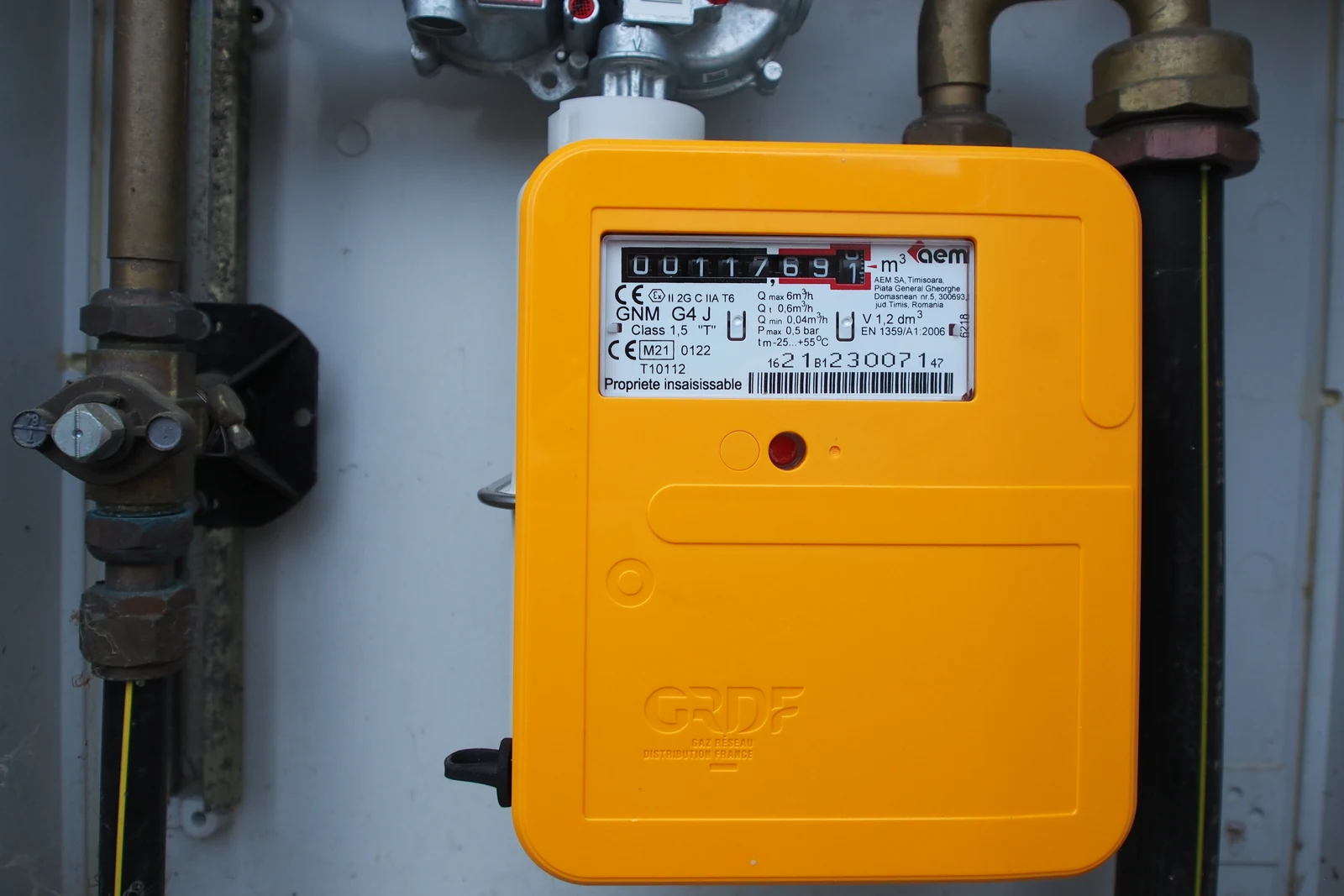
Option 2a of the standard starts from the portfolio company's energy consumption and emission factors specific to that data, adding the emissions from its processes. This means kWh of electricity and gas, litres of diesel and heating oil and, for a cement or glass plant, the process emissions themselves, such as the CO2 released by limestone decarbonation. The factors come from a recognised database, such as the Base Empreinte in France, the public emission factor database of ADEME (the French Agency for Ecological Transition).
6What should you check before publishing, and who should verify it?
Before publishing, the ESG team reviews each line received, then decides what to have verified by a third party.
Checks before publication
The discrepancies that distort an unlisted inventory can be spotted with a few simple checks:
- The year of the assessment received must match the reported financial year, or the offset must be stated: the standard accepts it, provided the data and their dates are described.
- The boundary must cover all the subsidiaries and all the sites that the fund finances, and the excluded Scope 3 categories must be named.
- Each portfolio company's emissions are compared with the score 4 sector estimate: a gap of a factor of 10 or more often betrays a unit error, such as kWh entered as MWh, which multiplies the result by 1,000.
- Scope 2 must follow the same convention throughout, average grid mix or electricity contracts, and this convention must be written into the methodology.
- Changes from one year to the next are explained, and the 3rd edition recommends separating the effect of amounts invested, of enterprise values and of emissions.
Third-party verification
The standard reserves score 1 for emissions verified by a third party, without setting the level of assurance. The Initiative Climat International guide for private equity, published with ERM in 2022, recommends an established standard, ISO 14064-3 or ISAE 3410. A portfolio company's assessment is verified like that of any company, as described in our article on third-party verification of a carbon footprint assessment.
At fund level, what is reviewed is the methodology: the choice of option line by line, the emission factors and attribution factors, the share covered and the published score. A management company subject to the EU sustainability statement also has its financed emissions verified as part of the assurance of that statement, whose scope is set out in our article on the revised ESRS (European Sustainability Reporting Standards).
At Projet Celsius, making an unlisted inventory reliable starts, in our view, with a review of the methodology, line by line, before relaunching any data collection: the option chosen, the emission factor, the share attributed and the year of the data. We then recommend asking the largest emitters for their energy bills, then publishing the score with the share of emissions calculated on actual data, rather than a flattering average score obtained on companies that emit little.
7Key takeaways
- The PCAF score runs from 1, for an assessment verified by a third party, to 5, when only the amount invested is known: it rates where the data comes from, not its accuracy.
- An unlisted portfolio company is attributed in proportion to the outstanding amount divided by its equity and debt, and a limited partner in a fund applies a double attribution.
- The average score is weighted by outstanding amount: the lines that lower it are not necessarily those that emit the most.
- Energy bills are enough to move a portfolio company's Scopes 1 and 2 to score 2, whereas Scope 3 needs a full assessment to reach that score.
- For a financial year ending on 31 December, the EDCI expects the data by the end of April, and the SFDR statement and the Article 29 report by the end of June.
The calculation method itself is detailed in our guide to investment fund emissions under PCAF, and the update cycle for an assessment in our article on how often to carry out a carbon footprint assessment.
- PCAF, The Global GHG Accounting and Reporting Standard Part A: Financed Emissions, 3rd edition, December 2025: Table 5.2-1 (p. 60), section 5.3 (p. 67), section 5.7 (pp. 98 to 109), section 6.1 and Box 6.1-6 (pp. 160 to 168).
- PCAF, Impact Report 2025, number of signatories at 31 December 2025, and contact page and FAQ on access to the emission factor database.
- European Commission, Delegated Regulation (EU) 2022/1288 of 6 April 2022, Articles 4 and 7, Annex I, Table 1.
- European Parliament, procedure file 2025/0361(COD) on the SFDR revision proposed on 20 November 2025 (COM(2025) 841), consulted on 17 October 2026.
- Decree No. 2021-663 of 27 May 2021 implementing Article 29 of Law No. 2019-1147 on energy and climate (Article D. 533-16-1 of the French Monetary and Financial Code). The Légifrance pages are in French.
- ESG Data Convergence Initiative, metrics and submission timeline, consulted on 17 October 2026.
- France Invest, ESG survey, indicators at end-2023, November 2024, question 16, and Climate guide, September 2022 (in French).
- Initiative Climat International and ERM, Greenhouse Gas Accounting and Reporting for the Private Equity Sector, May 2022.
- ISO, ISO 14064-3:2019, specification with guidance for the verification and validation of greenhouse gas statements.